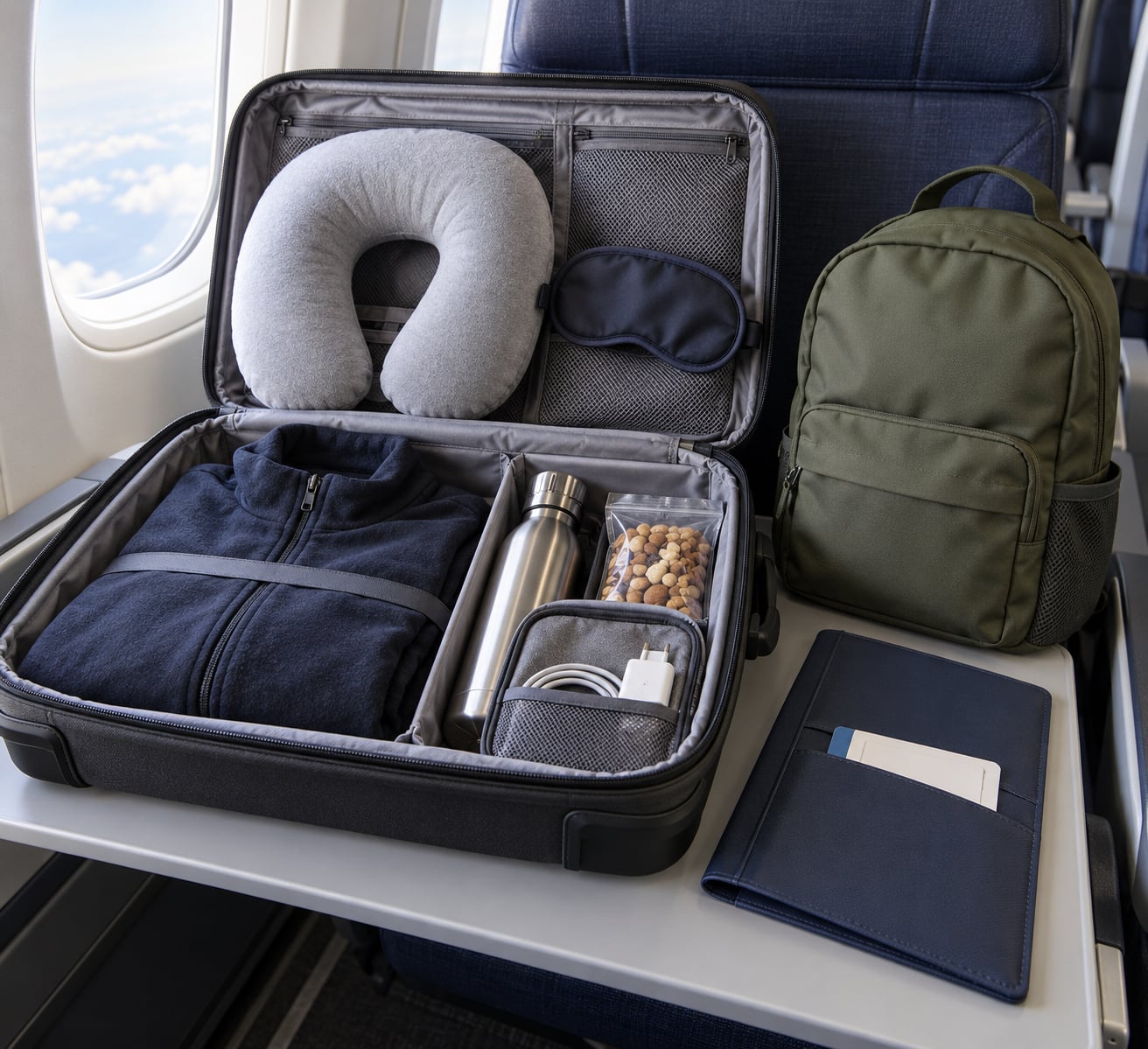
If you are searching what to pack in your carry on for a long flight, the short answer is this: documents, electronics, sleep gear, health basics, food and water, and one change of clothes. Ten items cover almost every long-haul trip, and each one earns its space by solving a specific cabin problem like dry air, an unreliable seat socket, or a gate-checked roller. Airline rules and security limits vary, so check your carrier’s policy and your departure airport’s rules before you fly.
Table of Contents
- What to Pack in Your Carry-On for a Long Flight at a Glance
- 1. Charged Phone and Reliable Power Bank
- How to pack power for a long-haul flight
- 2. Over-Ear Headphones or Comfortable Earbuds
- 3. Neck Pillow and Eye Mask
- 4. Reusable Water Bottle
- 5. Personal Care Kit in a Clear Pouch
- 6. Essential Medications and Travel-Size Health Supplies
- 7. Light Layer or Compact Travel Jacket
- 8. Small Snack or Protein Bar
- 9. Compression Socks or Travel Slippers
- 10. Minimal Toiletry and Organization Essentials
- Frequently Asked Questions
- What should I pack in my carry-on for a 10-hour flight?
- Can I bring a water bottle through airport security?
- Are compression socks worth packing for a long flight?
- What electronics and power banks are allowed in carry-on luggage?
- Should I bring snacks on a long flight?
- What should I keep in my personal item during an overnight flight?
- The Short Version to Pack First
What to Pack in Your Carry-On for a Long Flight at a Glance
| Essential | Why it matters on a long flight | Most useful form |
|---|---|---|
| Phone and power bank | Boarding pass, entertainment and photos need power for hours | Phone charged to full, 10,000 mAh bank with a short cable |
| Headphones or earbuds | Engine drone and cabin chatter make a long flight tiring | Over-ear noise-canceling pair, or sealed earbuds |
| Neck pillow and eye mask | Window-seat sleep is hard without support and darkness | Memory foam pillow plus a contoured sleep mask |
| Reusable water bottle | Cabin air dries you out within a few hours | Empty collapsible or hard bottle, filled after security |
| Personal care pouch | Long-haul cabins are dry and shared with hundreds of people | Clear pouch with wipes, sanitizer, lip balm, eye drops |
| Medications | A delayed checked bag can strand you without prescriptions | Original pharmacy packaging plus a copy of prescriptions |
| Light layer | Cabins run cold, especially at night | Folding zip jacket or merino hoodie you can wear |
| Snack or protein bar | Meal service gaps and delays leave you hungry | Solid, non-crumbly food that survives a warm cabin |
| Compression socks or slippers | Hours of sitting makes your legs feel heavy and stiff | Graduated compression socks, or slippers for a long layover |
| Toiletry and document organizer | Digging through an overstuffed bag in a dark cabin wastes sleep | Small zip organizer with liquids in a clear quart bag |
1. Charged Phone and Reliable Power Bank
A long flight drains a phone faster than most people expect, and there is no outlet to borrow on an older aircraft. Pack a phone charged to full, a power bank that meets your airline’s watt-hour limit, and one short cable in your personal item.
Seat power is never guaranteed. On many older planes the sockets are shared, some seat rows have none at all, and the ones that exist often need a seat belt to release the clamp. For a 15-hour route, treat a full charge as the floor, not the goal.
How to pack power for a long-haul flight
Carry the battery in your hand luggage rather than a checked bag, since checked bags are unloaded in unheated holds. Coil the cable with a tie or tuck it into a small pouch so you are not unpacking the whole bag at 40,000 feet. Boarding pass, passport photo and travel documents should live in the same pocket as your phone.
2. Over-Ear Headphones or Comfortable Earbuds
Over-ear noise-canceling headphones are the stronger choice on a long flight because they also block the low engine rumble that earbuds let through. Earbuds win on space and on passengers who cannot tolerate the pressure seal of a big cup, and they are easier to sleep in.
Bring whichever you would happily wear for ten hours. A pair that hurts or that you fiddle with nonstop does more damage than the noise it blocks. Download movies and podcasts before boarding, because in-flight entertainment can be thin or missing on smaller routes.
3. Neck Pillow and Eye Mask
A neck pillow and eye mask are the two items that decide whether a red-eye feels like a nap or like a long stretch of discomfort. The pillow stops your head tipping forward, and the mask gives your eyes darkness in a cabin where lights stay on for takeoffs, service and landings.
Pick your pillow by sleep position. Side sleepers do better with a contoured memory foam or inflatable ring, front sleepers often find a flat inflatable one more comfortable, and window-seat sleepers who dislike anything around their neck can skip the pillow entirely. A travel scarf is a low-bulk alternative for people who feel trapped by a pillow.
4. Reusable Water Bottle
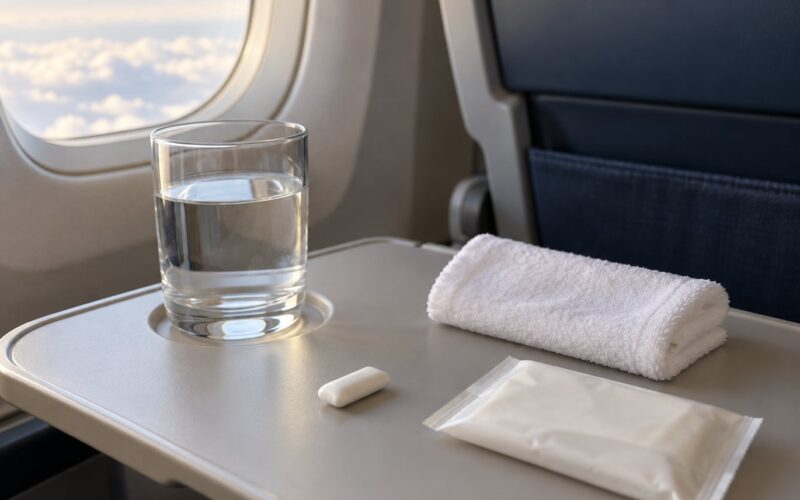
Cabin humidity is low, often around 10 to 20 percent, so a long flight leaves many travelers thirsty, tired and slightly lightheaded. Pack one empty reusable bottle and fill it at a fountain after security. Water is available in the cabin, but asking for a full cup every hour adds up and is not always practical during turbulence.
Collapsible silicone bottles save space when empty, while hard bottles are easier to drink from without squeezing. Either works; pick the one you will actually use. Avoid glass for the obvious reason.
5. Personal Care Kit in a Clear Pouch
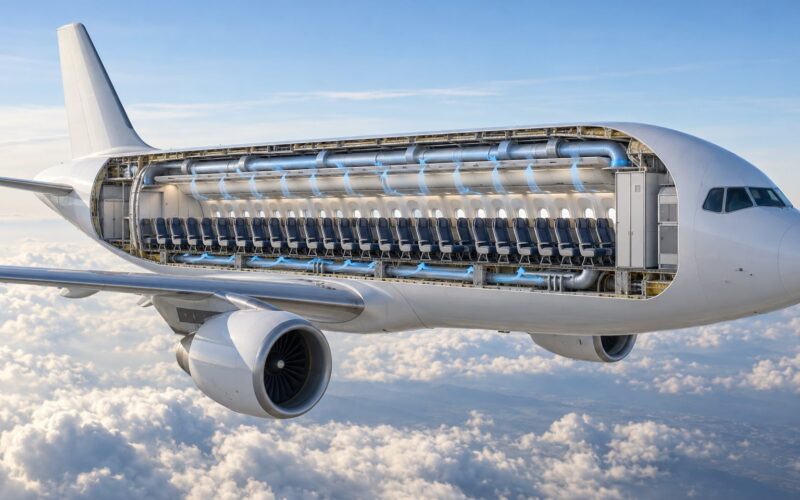
Dry cabin air pulls moisture from your eyes, nose and skin within a few hours, and you are breathing recirculated air all day. A small clear pouch keeps the fixers together and lets you find them without unpacking.
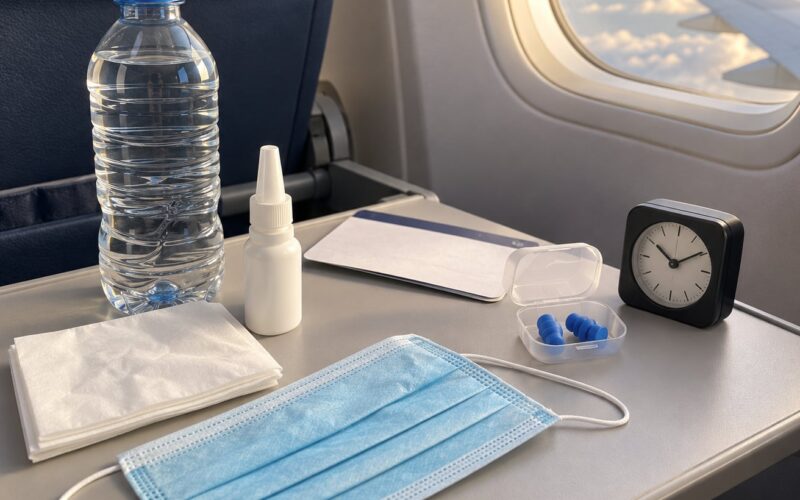
A useful kit holds disinfecting wipes for the tray table and armrests, hand sanitizer, lip balm, a travel moisturizer, preservative-free lubricating eye drops, a packet of tissues and a few bandages. Refillable hand cream in a 50 to 100 ml container fits the liquid rules below.
6. Essential Medications and Travel-Size Health Supplies
Keep every medication you rely on in your carry-on, in the original pharmacy packaging, because checked bags get delayed and replacements are hard to arrange abroad. On flights longer than eight hours, put the doses you need for the next 24 hours in your personal item so they stay with you even if the roller is gate-checked.
Carry a copy of your prescriptions or a doctor’s note, especially for controlled or injectable medication, and check both your airline and your destination country’s rules well ahead of departure. If you are flying with a service animal or mobility aid, the documentation requirements are separate from packing and are worth confirming in writing beforehand.
7. Light Layer or Compact Travel Jacket
Cabin temperature is not the room temperature outside, and most flights swing between warm and genuinely cold, usually toward cold at night. A light layer that folds small and can be worn on the plane beats a heavy sweater you cannot reach in the overhead bin.
This is also the easiest place to answer the question of what to wear on a long flight. Soft, loose clothing in natural fibers beats denim for a full day of sitting; jeans stay warm and stiff, and they hold the shape of the seat rather than your posture. Compression socks help with the same problem from the other end, which is item 9.
8. Small Snack or Protein Bar
Long flights run on a schedule, not on hunger. Bring at least one substantial snack for a flight over eight hours, because meal service can be delayed, skipped on a short route or shifted when the aircraft holds on the tarmac.
Choose food that is solid, non-crumbly and easy to eat with dry hands: a protein bar, nuts, dried fruit or a sandwich wrapped tightly. Loose crackers and anything that crumbles across your lap will last about two minutes. A small pack of gum or breath mints is useful for ear pressure during takeoff and descent.
9. Compression Socks or Travel Slippers
Compression socks earn their space on flights where you sit for eight hours or more. The graduated pressure helps reduce the heavy, swollen feeling in your lower legs and can help with the circulation issue that long periods of stillness create.
They are not a cure for anything, so if you have a history of blood clots or circulation problems, talk to your doctor before a long flight rather than relying on socks. If swelling is not your issue, lightweight slippers serve a different purpose: warm feet on a red-eye, and comfort through a three-hour layover where you end up walking more than you planned.
10. Minimal Toiletry and Organization Essentials
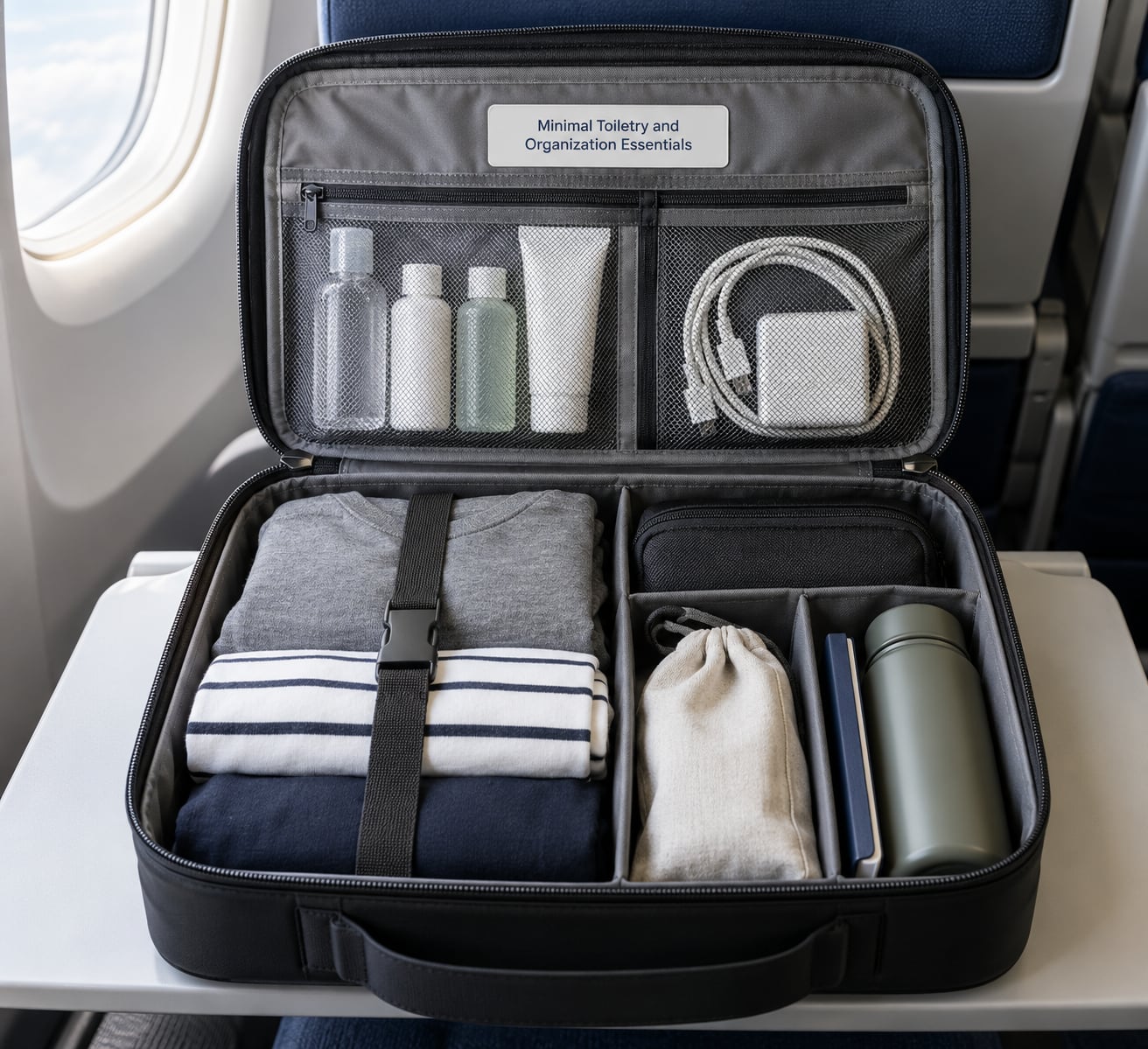
A small zip organizer turns a rummaged bag into a system. Put your travel liquids in one clear quart-size zip-top bag so you can pull it out at screening in one motion, and keep your pen, document folder and cable pouch in a second flat pouch.
Packing order matters more than people expect. Heavy items and shoes go to the bottom of the roller, clothing is rolled rather than folded, and everything you need in flight sits on top or stays in your personal item. A sticky note pen is useful for visa-on-arrival forms, which several destinations hand out on the plane.
Frequently Asked Questions
What should I pack in my carry-on for a 10-hour flight?
For a 10-hour flight, pack your documents and passport, your phone with a power bank and cables, headphones, a neck pillow and eye mask, an empty reusable bottle, medications in their original packaging, a light layer, a snack, compression socks, and one change of clothes. Put anything you cannot replace, such as medication, chargers and a travel document set, in your under-seat personal item in case your roller gets gate-checked.
Can I bring a water bottle through airport security?
You can bring an empty water bottle through the security checkpoint at most airports, but a full bottle is treated as a liquid and will fail the liquids rule. Fill it at a drinking fountain or bottle-filling station after screening. Rules differ by country and airport, and some smaller airports have no fountain after security, so check your departure airport before you travel.
Are compression socks worth packing for a long flight?
For most travelers on flights of eight hours or more, yes. Graduated compression socks can ease the heavy, swollen feeling that comes from hours of sitting with your legs bent. They are not a substitute for walking during long layovers, and if you have a history of blood clots or circulation problems, ask your doctor before flying rather than relying on socks alone.
What electronics and power banks are allowed in carry-on luggage?
Power banks and spare lithium batteries belong in your carry-on, not in checked luggage, because checked holds are not temperature controlled. Most airlines and airport authorities cap power banks at 100 watt-hours, and larger capacity batteries usually need approval or cannot travel in the cabin at all. Spare lithium-ion batteries must also stay in hand luggage. Check your airline and departure airport rules before packing.
Should I bring snacks on a long flight?
Yes, for any flight over about six hours. Meal service can run late, be skipped, or arrive when you have already missed it. Pick food that is solid and non-crumbly, like a protein bar, nuts or dried fruit, and pack it where you can reach it without opening a checked bag. Many travelers also pack gum or mints, which help with ear pressure during descent.
What should I keep in my personal item during an overnight flight?
Keep your passport, wallet, phone, power bank, charger cable, all medications for the next 24 hours, one change of underwear and socks, a snack, lip balm, a sleep kit and a travel-size toothbrush. The personal item sits under the seat in front of you, so it stays with you even when the overhead roller is gate-checked at the door.
The Short Version to Pack First
Start with the four items you cannot replace and cannot buy at the destination: passport, phone and power bank, medications, and one change of clothes. Add the sleep kit and the personal care pouch next, because they protect you from the two things a long-haul cabin does best, drying you out and keeping you awake. Everything else, snacks, slippers, a second pair of socks, can wait in your planner until a day before departure.