Flying with a cold or sinus congestion is usually doable, but congestion blocks the tiny Eustachian tubes that equalise pressure in your middle ear, so takeoff and landing can turn a stuffy nose into genuine pain. The routine that works: clear your nose before you leave the house, sip water the whole flight, and stay awake for the descent. That is the short version of how to fly with a cold or sinus congestion without spending the trip rubbing your temples.
What follows is general travel guidance, not medical advice. If you have a fever, an ear infection, significant chest symptoms, or a condition that makes breathing hard on the ground, talk to a doctor or pharmacist before you book anything, and skip the flight if they advise it.
Table of Contents
- What You Need
- How to Fly With a Cold or Sinus Congestion: Step-by-Step Plan
- How to fly with a cold or sinus congestion before you leave
- How to manage pressure and congestion during the flight
- How to choose your seat and cabin setup for easier breathing
- What to do if symptoms get worse in the air
- Common Mistakes
- Frequently Asked Questions
- Can I fly if I have a cold or sinus congestion?
- What is the best way to prevent ear pain on a plane?
- Should I wear a mask when flying with a cold?
- Can sinus congestion make breathing difficult during a flight?
- What should I do if my symptoms worsen after boarding?
- How long should I wait to fly after a severe cold or sinus infection?
- How to Fly With a Cold or Sinus Congestion: Start With the Basics
What You Need
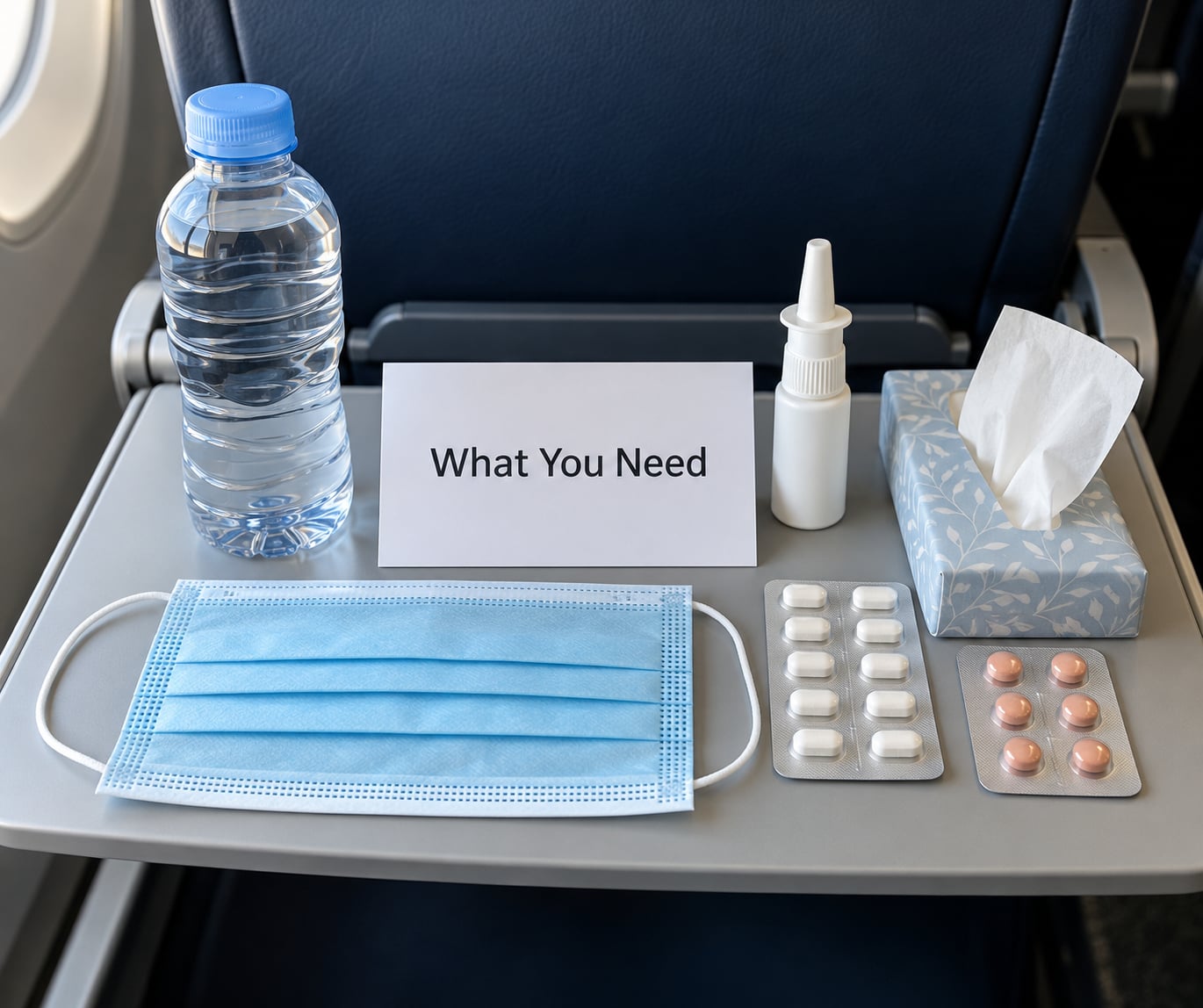
Nothing on this list is exotic. What matters is that each item is already in the house, because the airport shop is the worst place to be standing at 5am with a blocked nose and a deadline.
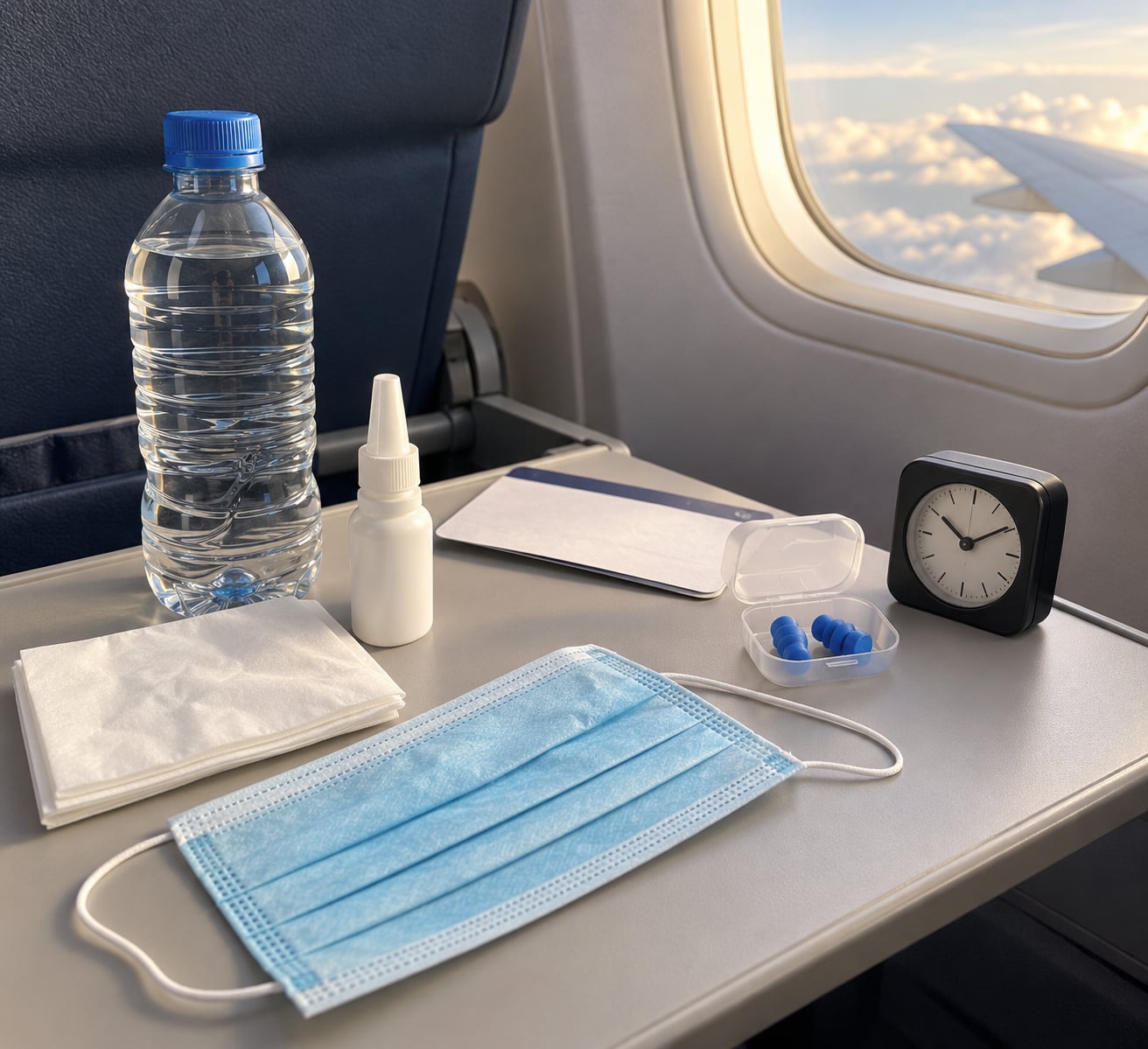
- Medicines you have already discussed with a clinician. Whatever your usual cold routine is, as long as a pharmacist or doctor has confirmed it suits you. Bring enough for the whole trip plus a day either side, in original packaging.
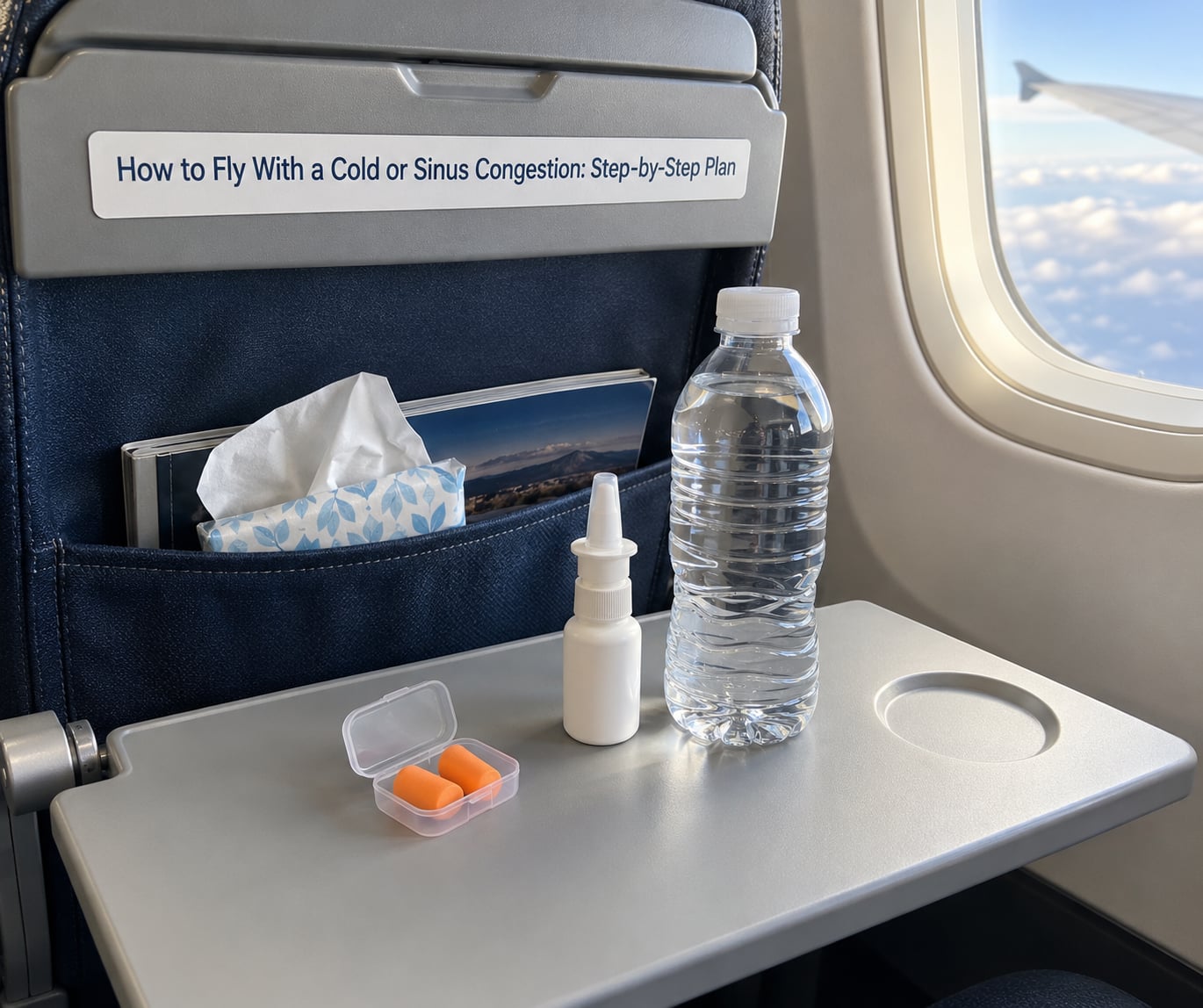
- Saline nasal spray. The gentlest option for loosening mucus and it carries no risk of a rebound effect. Use it on the ground and once in the air.
- A refillable water bottle and an electrolyte drink. Cabin air is very dry and dehydration thickens mucus, which makes clearing your nose harder.
- Tissues and a small rubbish bag. A blocked nose on a long flight gets messy fast.
- A face mask and hand sanitiser. A mask protects the people around you; sanitiser protects you from the tray table.
- Pressure-regulating earplugs if you already own them. They slow the pressure change reaching the eardrum instead of blocking it, so you can still hear announcements.
- Your documents and itinerary in one place. Being sick with a non-refundable ticket is much easier when you can answer airline questions fast.
- A quick check of your airline’s rules. Baggage limits for anything you add, and the general liquids rule of roughly 100 ml per container in carry-on, which catches people out with a full-size spray bottle.
One rule worth stating plainly: do not start a new medicine, supplement or herbal remedy in the days right before a flight. Reactions and interactions do not care that you are in the air.
How to Fly With a Cold or Sinus Congestion: Step-by-Step Plan
How to fly with a cold or sinus congestion before you leave
Start by being honest about severity. A runny nose with a scratchy throat is a nuisance. Fever, chest pain, wheeze, an ear that is already painful to touch, or sinuses that have been pressing behind your eyes for days are a different category.
Before you leave, run through a short self-check:
- Temperature. Any fever changes the decision entirely, because flying dehydrates you and low oxygen at cabin altitude does not help you fight an infection.
- Breathing at rest. If you cannot comfortably walk to the end of a street without stopping, flying is the wrong call.
- Your lungs. A cough that comes from the chest is different from a tickle in the throat. A deep cough and wheezing deserves a clinician, not a boarding pass.
- Your ears. If one ear is already blocked, painful or has had fluid in it since a recent infection, the risk of painful barotrauma on descent goes up sharply.
- Your itinerary. A four-hour hop with frequent pressure changes is a very different proposition from a fourteen-hour red-eye.
If you get a clear answer on all five, most people are fine to travel. If the honest answer is that you feel properly unwell, the cheaper option is almost always a change rather than a full flight plus a medical visit in a strange country.
Now check the practical side. Look up your airline’s policy for illness and missed travel, because rules differ and few people read them until they need them. If you are considering claiming travel insurance for illness, get the documentation lined up early: a medical certificate and receipts, with the insurer’s deadlines in mind.
Then prepare only what you have already used safely. Review your routine with a pharmacist rather than a search engine, especially if you take regular prescriptions, have high blood pressure, a heart condition, prostate problems, or are pregnant, since oral decongestants can be unsuitable in those situations. If you are travelling with a small child, check with a paediatric clinician or pharmacist about what is appropriate for their age, because many standard decongestants are not recommended for young children.
How to manage pressure and congestion during the flight
Cabin pressure changes fast during climb and descent, and it changes fastest on descent. Congestion is the problem, because swollen, blocked membranes at the back of your nose stop the Eustachian tubes from opening when they need to. That unequal pressure across the eardrum is what makes an ear feel blocked, painful or muffled, and clinicians call it barotrauma, or barotitis media when the ear is the problem. The same pressure differential gets held against the sinus openings and produces sinus pain and a headache that feels like it sits behind one eye.
Cabin air is also far drier than the air you walked out of. Relative humidity in a typical cabin sits around 10 to 20 percent, compared with 40 to 60 percent on the ground. Dry air dries out exactly the mucous membranes that are already swollen and sticky, which is why noses feel blocked worse at altitude and why a nosebleed is a fairly common travel annoyance.
What actually helps, in rough order of usefulness:
- Water, constantly. Small sips every 20 to 30 minutes. Hydrated mucus thins out and clears; dehydrated mucus thickens and clogs.
- Swallowing, chewing and yawning. These open the Eustachian tubes mechanically. Gum, a hard sweet or a sip of water all work. Do it continuously through descent, not just once.
- The Valsalva maneuver, gently. Pinch your nostrils shut, close your mouth and blow very softly as if you are slowly inflating a balloon, feeling for the pop. Force it and you can make things worse.
- Saline spray or a rinse. Two or three gentle sprays a few minutes before descent loosen secretions so the tubes can open. It takes a few minutes, so do it ahead of time rather than at the last second.
- Stay awake for the descent. This is the single biggest thing you control. Sleeping through it is the most common reason people land with a badly blocked ear.
What does not help: blowing your nose hard. It forces air back up the Eustachian tubes and can drive fluid and pressure the wrong way. Blow one nostril at a time, gently, if you need to clear your nose at all.
After landing, keep swallowing and yawning until the ear pops and sounds return to normal. A warm compress over the ear helps with the ache, and most ears clear within a few hours. If you still cannot hear properly, or the pain and fullness last more than a day or two, have a clinician look at it. That points to fluid behind the eardrum or an infection that wants treatment.
How to choose your seat and cabin setup for easier breathing
Aisle seat, and if you can manage it, one near the lavatory. Walking out occasionally matters more when you have a cough or a blocked nose, and a long queue for a toilet during a bad cough is miserable in a way you do not need to discover at 40,000 feet.
Avoid a window seat if you expect to get up. You will also need to get past two people every time, and nobody wants to be climbed over mid-cough.
Use the vent carefully. Pointing cool air straight at your face dries your nasal passages faster and encourages sore, cracked nostrils. Angle it toward your chest or the aisle instead, and turn it down rather than blasting it.
Keep your working kit within reach: water, tissues, spray, sweets for swallowing, and your travel documents. Digging through a bag under the seat while your ears are popping is not a good use of those two minutes.
If you are on a red-eye, set an alarm for the descent announcement. If a mask helps your breathing or simply reassures you, wear it, and keep it on for most of the flight rather than only when you feel terrible, so nobody is guessing whether sitting next to you is a risk.
What to do if symptoms get worse in the air
Most congestion discomfort on a flight is annoying, not dangerous. The point is to know the difference in advance, because a decision you make while panicked is rarely a good one.
Tell a flight attendant early if you notice any of these:
- Breathing that is getting harder rather than settling, or chest tightness that does not ease with a few deep breaths.
- Ear or sinus pain that keeps climbing after repeated gentle equalizing attempts.
- Dizziness, faintness, or a headache with light sensitivity and nausea.
- A nosebleed that does not stop after firm pressure for ten minutes.
- Fever that arrives in flight, or symptoms that clearly worsen over hours.
Cabin crew can ask other passengers with medical training to help, arrange oxygen from the aircraft’s supply, and put you on the crew list for landing priority. If the aircraft can divert, the captain has more tools on the ground than you do in the air. Say what you need early; nobody minds, and it changes how fast help arrives.
If you have asthma or a condition that can trigger an attack, carry the inhaler or rescue medication in your hand luggage, not in a checked bag, and keep it where you can reach it without unbuckling.
Common Mistakes
Flying while acutely unwell. This is the one that causes trouble after the landing, not during it. Fevers, chest symptoms and genuine breathlessness at rest all belong in front of a clinician.
Starting a new medicine the night before. A decongestant you have never taken before, taken at the worst time, can do things you did not plan for. Use what already suits you, and ask a pharmacist anything new.
Leaving the kit in the checked bag. Tissues, spray, sweets and rescue medication all need to be where you can reach them mid-flight.
Alcohol instead of water. Alcohol dries you out and disrupts sleep, which makes descent equalizing harder, not easier.
Blowing your nose hard on descent. Gentle, one nostril at a time. Forceful blowing can push air and fluid back toward the ear.
Wearing an over-tight or ill-fitting mask. A mask that squeezes your cheeks and jaw is uncomfortable and does nothing for anyone. Pick one that fits properly.
Sleeping through the descent. If you sleep, set an alarm and wake for it. This single change removes the most common cause of a blocked, painful ear after landing.
Ignoring warning signs. Do not spend three hours telling yourself it will pass. Tell the crew early.
Quick preflight checklist: symptoms reviewed honestly, medicines already approved and packed in hand luggage, water bottle filled, saline spray in the top pocket, aisle seat requested if it matters, descent alarm set, insurance and airline policy checked.
Frequently Asked Questions
Can I fly if I have a cold or sinus congestion?
Most people can. A runny nose, blocked nose or sore throat usually means an uncomfortable flight rather than a dangerous one, as long as you have no fever and no chest or breathing symptoms. Congestion makes takeoff and landing painful because the Eustachian tubes cannot open, so plan sprays, water and pressure equalizing. Fever, wheeze, or breathlessness at rest are reasons to stay home and see a clinician.
What is the best way to prevent ear pain on a plane?
Stay awake for takeoff and landing, swallow or yawn repeatedly during descent, drink water steadily, and use a saline spray a few minutes before the pressure change begins. A nasal decongestant spray used at the right moment helps open the passage into the middle ear, but ask a pharmacist first if you have never used one. Pressure-regulating earplugs worn for the whole flight slow the pressure change rather than blocking sound.
Should I wear a mask when flying with a cold?
It helps the people around you more than it helps you. A cold spreads mainly through droplets released when you cough, sneeze or talk, so a well-fitting mask worn for most of the flight lowers the amount you put into a shared cabin. Choose one that fits your face properly rather than a tight one that hurts, and combine it with a cough suppressant you already know you can take.
Can sinus congestion make breathing difficult during a flight?
It can feel that way, because you are breathing dry air at reduced cabin altitude through a nose you cannot use, so you end up mouth-breathing. That dries you out further and can turn into a dry cough or a sore throat. Water, saline spray and the medicines your clinician has already approved usually make this manageable. If you are genuinely short of breath, or breathlessness is present before you board, that is a reason to see a doctor rather than fly.
What should I do if my symptoms worsen after boarding?
Tell a flight attendant early rather than waiting until you cannot cope. Say plainly that your breathing is getting harder, your pain is increasing, or you feel dizzy. Crew can bring oxygen from the aircraft supply, ask medically trained passengers to help, and prioritise you at landing if the aircraft has to divert. Keep your rescue inhaler or usual medication to hand, and never push through worsening breathlessness.
How long should I wait to fly after a severe cold or sinus infection?
There is no fixed rule, but the practical test is whether you have returned to normal. Most airlines and travel-health services advise waiting until you are no longer contagious and no longer feverish, which often means several days after a chesty illness. Symptoms that persist, such as a cough lasting weeks or ears that stay blocked, deserve a clinician’s view before you commit to a flight. Ask your own clinician, not a forum.
How to Fly With a Cold or Sinus Congestion: Start With the Basics
Judge the severity honestly, use only medicines a pharmacist or doctor has already cleared for you, and pack a saline spray, tissues and water where you can reach them. Clear your nose before boarding, drink through the flight, and stay awake for the descent so your ears have a chance to equalise.
When you land, keep swallowing until the pressure pops and your hearing comes back. If breathing gets harder, pain keeps climbing, or an ear stays blocked for more than a day or two, that is a conversation with a clinician, not another airport bench.