To stay hydrated on a long flight, aim for roughly 8 ounces (240 ml) of water per hour in the air, sipped steadily instead of gulped, starting before you board. It takes about five minutes of planning and one habit to remember: a sip of water every 20 to 30 minutes.
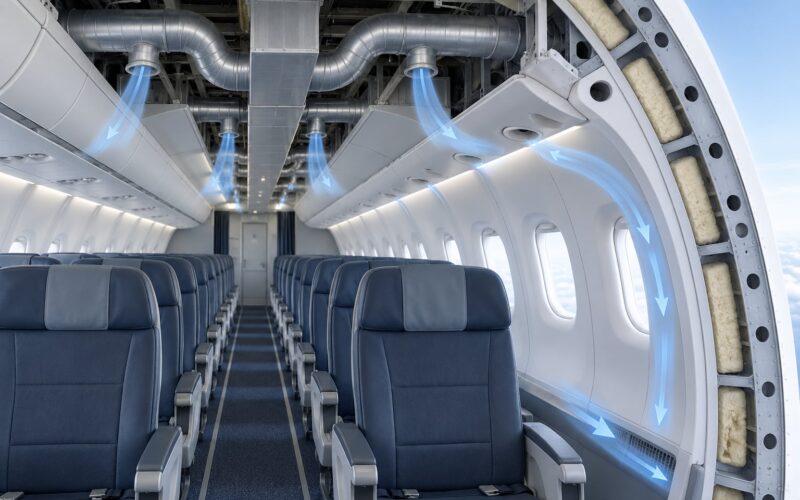
The reason it matters is simple. A cruise at 36,000 feet puts you in a cabin held near 8,000 feet, where the air holds about 10 to 20 percent relative humidity against the 30 to 65 percent your body prefers. You lose fluid through faster breathing and dry airways without ever feeling thirsty, and the thirst only shows up as a headache once you have landed.
This guide is written for anyone on a flight of six hours or more, in any cabin class. Economy passengers feel it hardest because the drink cart may come through once and because an aisle seat makes standing up socially acceptable while a window seat does not.
This is general travel information, not medical advice. If you have a heart, kidney or liver condition, are pregnant, or take medication that affects fluid balance, ask your doctor before changing how much you drink.
Table of Contents
- What You Need
- Step-by-Step: How to Stay Hydrated on a Long Flight
- Hydrate Before You Board
- Start With Water Instead of Waiting Until You Are Thirsty
- Use Electrolytes When They Suit Your Routine
- Adjust for Coffee, Alcohol, and Dry Air
- Take Care of Your Body Comfortably
- Rehydrate After Landing
- Check That the Routine Is Working
- Common Mistakes and How to Fix Them Fast
- Frequently Asked Questions
- How much water should I drink on a long flight?
- Why am I so dehydrated when I fly?
- Should I drink electrolytes while flying?
- What is the best way to stay hydrated on a long flight?
- How do I hydrate if the drink cart never comes back?
- When should I see a doctor after a long flight?
What You Need
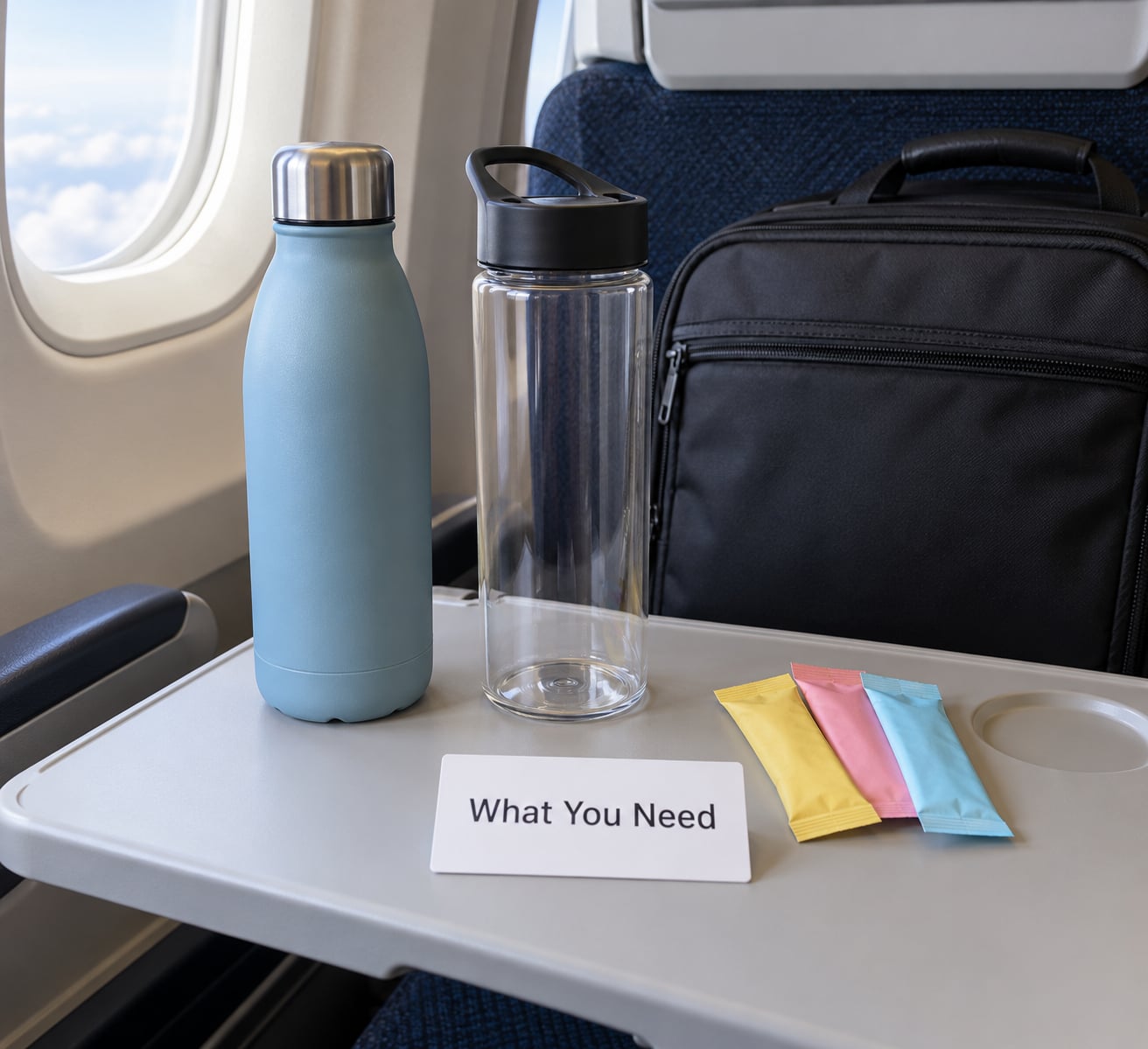
Almost everything on this list costs nothing and fits in the bag you already have. The whole setup lives or dies on one item: a bottle you can refill yourself.
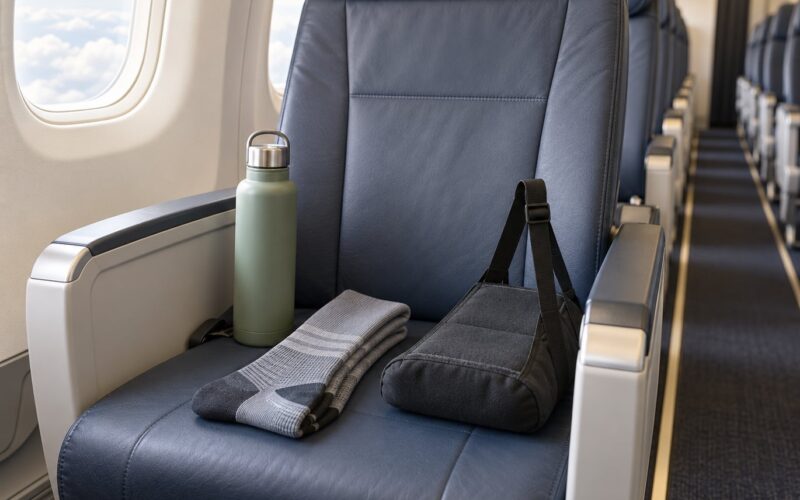
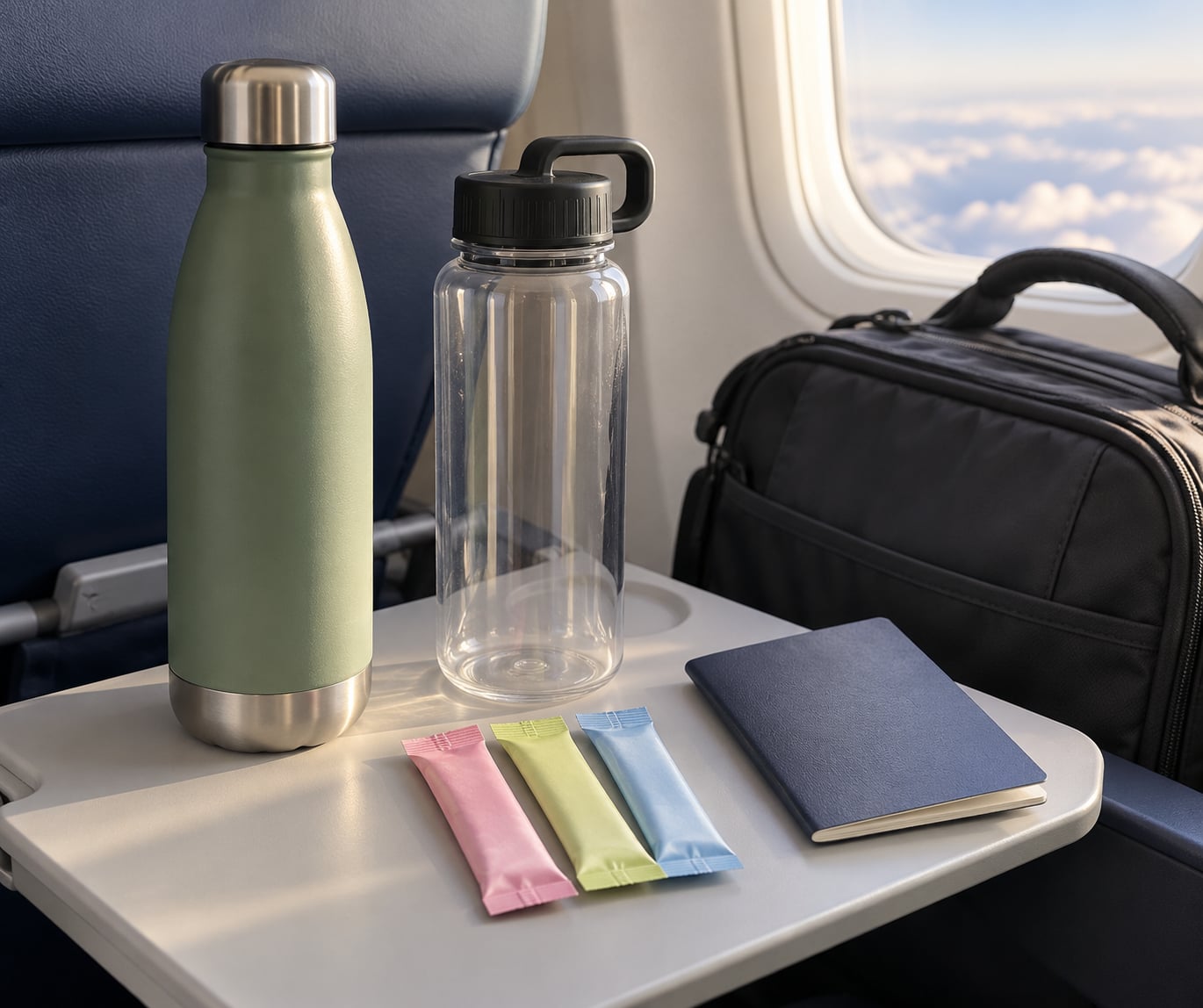
- An insulated bottle, 20 to 40 oz. Larger than a typical water bottle so you are not refilling at the lavatory every forty minutes. Vacuum insulation keeps water cold for hours, which makes it more likely you will actually drink it.
- An empty bottle through the checkpoint. Airport liquid rules mean your bottle has to be empty at security. Fill it at the gate fountain, at a lounge, or at the bottle-filling station past the checkpoint. This is the single most repeated tip in traveler forums.
- Electrolytes, if you want them. Sachets, tablets or a bottle of oral rehydration solution. Useful on very long journeys or when you are eating lightly. Plain water is fine for most people.
- Saline nasal spray. Dry cabin air congests sinuses and can trigger nosebleeds. A squirt bottle from any pharmacy is enough.
- Lip balm and a small moisturizer. Lips and hands are the first thing the dry air ruins.
- A timer on your phone. A repeating 30-minute reminder is the difference between a routine and good intentions.
- A plan for the drink cart. Know whether your flight serves water once, twice or not at all. On many low-cost and long-haul services the answer is once.
Leave the gallon jug behind. Carrying more than you can comfortably drink turns hydration into a bathroom problem, and I have seen people do exactly that in the first hour.
Step-by-Step: How to Stay Hydrated on a Long Flight
Hydrate Before You Board
Start the day before if you can. Drink normally through dinner the night before and keep a glass of water with your morning coffee. You are not trying to overdo it, just to arrive at the gate already carrying a normal amount of fluid.
On the day itself, have water with breakfast and drink steadily through the morning. What you want to avoid is the opposite mistake: arriving at the gate having downed three liters in an hour because someone told you to hydrate. You will spend the first two hours of the flight in the lavatory line, and that sets a bad tone.
Choose your pre-flight meal carefully. Salty food and heavily seasoned airport food pull more water into the gut, which feels uncomfortable in a cramped seat. Eat light if you can, and skip the extra-large coffee on purpose. Finish that coffee or tea before you reach the gate rather than carrying it on board.
At the checkpoint your bottle must be empty. Fill it straight through the airport, drink some of it in the terminal, and top it up again at the boarding gate. By the time the door closes you should already have had a glass or two since security.
Start With Water Instead of Waiting Until You Are Thirsty
Thirst is a late signal. By the time you feel thirsty, you are already behind, which is why a schedule beats a feeling. Set a repeating reminder for every 20 to 30 minutes and take three or four mouthfuls each time.
Small and regular wins for two reasons. Your body absorbs water better in small amounts than in half-liter gulfs, and steady drinking means you rarely have to decide whether the walk to the lavatory is worth it. FlyerTalk regulars describe the same pattern, a few sips every half hour, and it works because it never accumulates.
Spread the volume across the flight rather than front-loading it. If you are on a 12-hour route, roughly 96 ounces across 12 hours is the arithmetic, but you will not do it in the first three hours. Front-loading is the single most common way people wreck a long flight and end up dehydrated anyway because they spent the cruise in the bathroom.
Watch the color of your urine as a gauge. Pale straw is where you want to sit most of the time. Dark amber is a signal to add water, not a signal to double everything for the next hour.
Scale the target to the flight. A seven-hour hop and an eighteen-hour route do not call for the same total, and the rule of thumb is the same per hour either way.
| Flight length | Water in the air | Practical approach |
|---|---|---|
| Under 4 hours | 16 to 32 oz | A bottle refilled once |
| 6 to 8 hours | 48 to 64 oz | Top up at the meal service |
| 10 to 12 hours | 80 to 96 oz | Two refills, plus an electrolyte sachet |
| 14 hours and up | 112 oz or more | Refill twice in the second half as well |
These are rough totals to pace against, not a target to hit at any cost. If you have eaten normally and had water in the terminal, the lower end of each range is usually fine.
Use Electrolytes When They Suit Your Routine
Electrolytes are sodium, potassium and magnesium. They help your body hold on to the water you drink, which matters most when you are sweating, eating lightly or losing fluid steadily over many hours.
They suit the trip when it is 10 hours or longer, when you skip a meal or two because the food does not look good, when you land somewhere hot, or when you are recovering from something. One sachet in a bottle of water at hour three or four is plenty for most people.
They do not suit a routine that already has plenty of salt and regular meals. Drinking four electrolyte drinks on a six-hour hop is more than you need, and the sweetness can make the fluid harder to get down. Water alone is genuinely sufficient for most people on most flights.
Individual health needs vary, and anyone with a condition affecting fluid balance or sodium levels should ask a doctor or pharmacist before adding electrolytes. What you take on board also matters, so check the airline rules for powders and larger bottles before you pack.
Not every electrolyte product is the same thing. Oral rehydration solution is formulated for medical use and is quite sweet, which is why people often drink it only when they need it. Sports drinks and flavored water powders are lighter and easier to sip over many hours, but they carry more sugar. Read the label and pick on concentration and taste rather than on marketing claims.
One practical trick: mix the sachet into a partly full bottle rather than an empty one. Strongly flavored fluid straight from the packet is hard to drink, and diluting it spreads the intake over a longer window.
Adjust for Coffee, Alcohol, and Dry Air
Modulate caffeine rather than eliminate it. Coffee and tea are fine in moderation, and a cup at boarding is a nice way to settle in. The issue is volume plus diuretic effect: two large coffees and you may lose more fluid than the drinks replace. A refill of water between cups solves most of it.
Alcohol is the one thing to skip entirely on a long flight. It is a diuretic, it fragments sleep, and it compounds the worst of jet lag. The free drinks in economy are generous and that generosity is not a gift at 40,000 feet. If you want a nightcap, save it for the hotel bar on the other side of the ocean.
Dry air is the variable you cannot change. Mucous membranes pull moisture from the air and from you, which is why a dry throat often shows up before thirst does. Saline spray, lip balm, and a warm drink all help. Pull a sweater or blanket over your shoulders if you run cold, since cold skin feels thirstier than warm skin.
Here is a simple way to think about what is on the tray table.
| Drink | Verdict | Why |
|---|---|---|
| Water, still or sparkling | Lean on it | No sugar, no caffeine, easy to pace |
| Herbal tea | Good | Warm, soothing for a dry throat |
| Electrolyte drink or sachet | Useful in moderation | Helps retain fluid on long or light-eating trips |
| Coffee or tea | Limit | One cup, then water between drinks |
| Juice | Small amount | Sugar plus a full stomach in a cramped seat |
| Energy drinks | Skip | Heavy caffeine and sugar, plus a jittery red-eye |
| Alcohol | Skip on board | Diuretic, poor sleep, worse jet lag |
Take Care of Your Body Comfortably
Hydration and movement are the same task in a narrow seat. Getting up every hour or so does two things: it keeps your legs moving, and it gives you a legitimate reason to walk to the lavatory on a schedule instead of in a panic.
Ask for an aisle seat when you can. Forum travelers point out repeatedly that aisle passengers stand up without apologizing, which makes drinking on a rhythm easy. Window passengers tend to drink less because they would rather stretch out and hold it.
Plan bathroom breaks at the start, around the meal service, and once more before landing. The aisle and the row behind your seat are the practical spots, and a seat near a lavatory is genuinely useful on a red-eye. If you have mobility needs or use a catheter, talk to the airline’s special assistance desk before you fly so they can assign an accessible lavatory and you know where it is.
Keep water within arm’s reach in the seat pocket and use a lid that does not leak when the overhead bin gets bumped. Nobody wants to be the person mopping up a wet keyboard at hour seven.
A word on water quality. Tap water served on aircraft comes through storage tanks that are not emptied between every flight, and it often carries a noticeable chlorine taste. Bottled water from the service cart has the same issue in some regions. Your own filled bottle from past security sidesteps both, which is one more reason the bring-your-own-bottle habit wins.
Rehydrate After Landing
Many people land already behind on fluid, which is why they feel thirsty for hours afterward. Take water on the walk to your bag, and again at arrivals if you have a connection.
Eat something with water content and a bit of salt, and have plain water or a diluted electrolyte drink rather than a strong one. Regular food and normal drinking usually catch you up within a few hours.
If you are still thirsty the next day, keep drinking normally and watch for symptoms. Do not force large volumes to catch up, and do not ignore persistent symptoms such as dizziness, confusion, or being unable to keep fluids down. See a doctor if those show up after a flight.
Check That the Routine Is Working
A hydration plan is easy to follow on paper and easy to forget at hour six, so give yourself three checks. Look at your urine color every few hours, and if it is dark amber add water until it lightens. Notice whether your mouth feels dry or your throat feels scratchy when you swallow, since that usually shows up before real thirst does.
The third check is the simplest one. If you have not had a bathroom break in three hours and you feel fine, your intake may be too low. If you have made several trips and feel worse rather than better, you may be going too hard. Adjust by a glass or two rather than by doubling anything.
Most people who say the routine failed were not drinking too little. They were drinking in the wrong pattern, saving everything for after the meal service, or treating coffee as hydration. Those are pacing problems, and they are fixable in one flight.
Common Mistakes and How to Fix Them Fast
The mistakes are predictable, and each one has a quick correction attached to it.
- Waiting until you are thirsty. Thirst arrives late. Fix: a 20 to 30 minute phone reminder and three or four mouthfuls each time.
- Drinking a lot in a short window. Big volumes bloat and cost you an hour in the lavatory. Fix: pace the same total across more hours.
- Letting coffee and alcohol do the hydrating. Both are diuretics and both wreck sleep. Fix: water between every caffeinated drink, nothing alcoholic on board.
- Turning up with a full bottle. You cannot get through the checkpoint with water in it. Fix: empty bottle in, filled bottle out.
- Depending on the drink cart. On many services it comes once. Fix: know the pattern before you sit down and ask the crew early for a top-up.
- Forgetting the dry air half of the problem. A dry nose and throat make the whole flight worse. Fix: saline spray, lip balm, a warm drink.
- Padding the intake to compensate for yesterday. Trying to catch up on a dry week in one flight usually backfires. Fix: drink normally from the day before and start at a normal level.
If you only change one thing, start the timer. Most people already have a bottle and already refill it. What they miss is the pace, and pace is the whole difference between a comfortable flight and a headache at the gate.
Two habits cover most of the rest. Drink a glass of water in the terminal before boarding instead of nothing since breakfast, and get up at least once per hour even when the seat is comfortable. Hydration and circulation come as a pair on long flights.
A few situations deserve their own adjustment.
- Early boarding or long layovers. Hydrate through the airport rather than saving it for the plane. Airports are dry too, and the walk to the gate is free movement.
- Overnight red-eyes. Drink water before you settle in, then again when you wake. Set the reminder on vibrate so it does not wake the row.
- Connecting flights. Keep the bottle in your hand through the connection. Back-to-back long flights are where dehydration quietly stacks up.
- Children. Offer water on a schedule rather than on request, keep a small filled cup in the seat pocket, and expect more bathroom trips than you planned for.
- Pregnancy and older travelers. Both are more prone to swelling and to low blood pressure on long sits. Talk to a doctor before changing intake, and pair fluids with movement.
- Medical conditions. POTS, autonomic issues, gastric sleeve or other restricted diets, and heart or kidney conditions all change the calculation. Get individualized advice from a doctor before the trip, not at the gate.
- Newer aircraft. Boeing 787 and Airbus A350 hold cabin humidity better than older types, so the problem is milder, not gone. Your routine does not need to change.
Frequently Asked Questions
How much water should I drink on a long flight?
Aim for about 8 ounces (240 ml) of water per hour of flight time, which is the figure aviation medicine guidance commonly gives. For a 12-hour trip that is roughly 96 ounces spread across the whole journey. Sip it steadily every 20 to 30 minutes rather than drinking large amounts at once, and start some of that intake before you board. Water alone is enough for most people.
Why am I so dehydrated when I fly?
A cruising cabin is pressurized to the equivalent of about 8,000 feet, and its relative humidity sits around 10 to 20 percent, well below the 30 to 65 percent most people are comfortable in. You breathe faster in that air and lose fluid without noticing, and the air is recirculated through the aircraft, so it stays dry for the whole flight. Thirst lags behind the fluid loss, which is why dehydration often only shows up as a headache.
Should I drink electrolytes while flying?
They are optional, not essential. Electrolytes help your body hold on to water, so they earn their place on flights of ten hours or more, on trips where you eat lightly, or when you land somewhere hot. One sachet in a bottle of water partway through the flight is plenty for most people. Plain water is genuinely sufficient on shorter hops. Anyone with a condition affecting fluid or sodium balance should ask a doctor first.
What is the best way to stay hydrated on a long flight?
Bring an empty insulated bottle through the airport checkpoint, fill it past security and at the gate, and set a repeating reminder to take three or four mouthfuls every 20 to 30 minutes. Know your airline’s drink service before you sit down, since some flights offer water once. Keep alcohol off the menu, moderate coffee, and get up at least once an hour so bathroom breaks happen on a schedule instead of in a panic.
How do I hydrate if the drink cart never comes back?
Treat the service cart as a bonus rather than the plan. Your own filled bottle is the source, and the crew can usually pour water or fill a cup at request during service, even on flights without a cart. Ask politely early, before the meal is cleared. If you are in a cabin where service is minimal, a larger 30 to 40 oz insulated bottle removes the problem entirely.
When should I see a doctor after a long flight?
Mild thirst and tiredness usually clear within a day of landing, and drinking normally plus regular meals fixes them. Get medical advice if you have persistent dizziness, confusion, swelling in your legs that does not settle, a headache that will not shift, palpitations, or you cannot keep fluids down. Anyone with heart, kidney or liver conditions, or who takes medication affecting fluid balance, should agree a plan with a doctor before flying.
Start here: pack an insulated bottle, keep it empty until you are past the checkpoint, and set a 30-minute reminder before you take your seat. From there, three or four mouthfuls each time and a walk every hour will carry you the whole way.