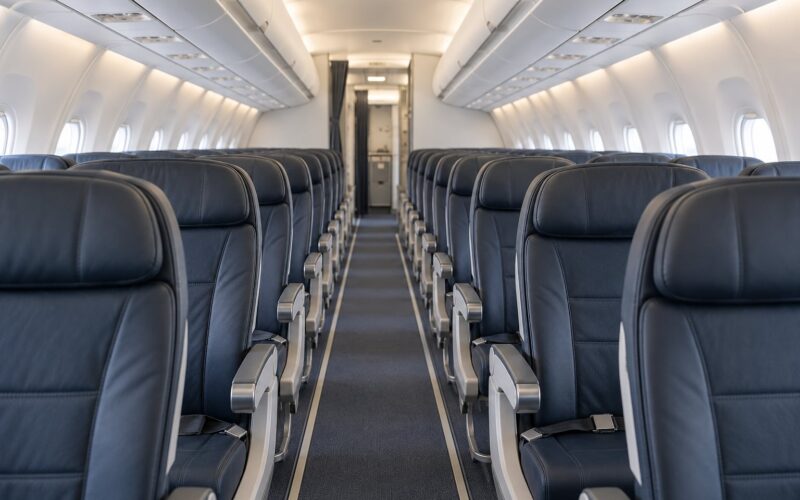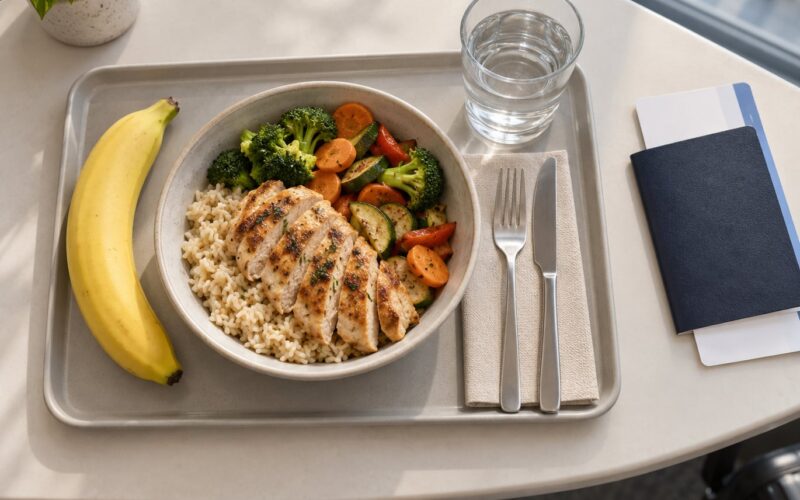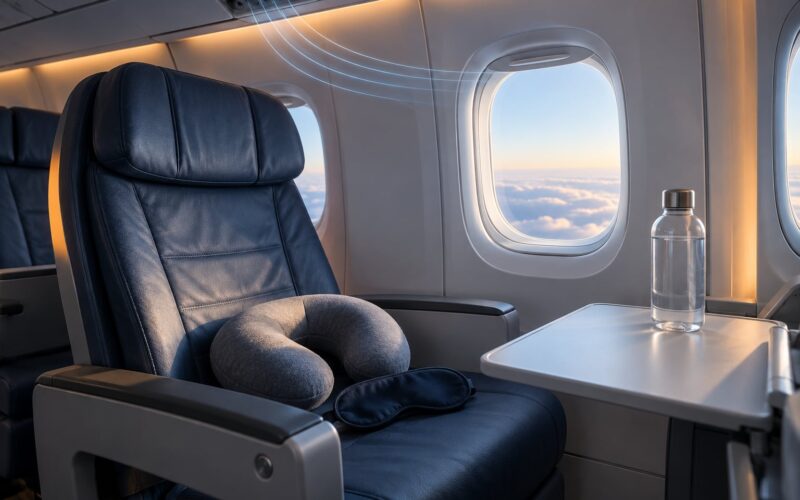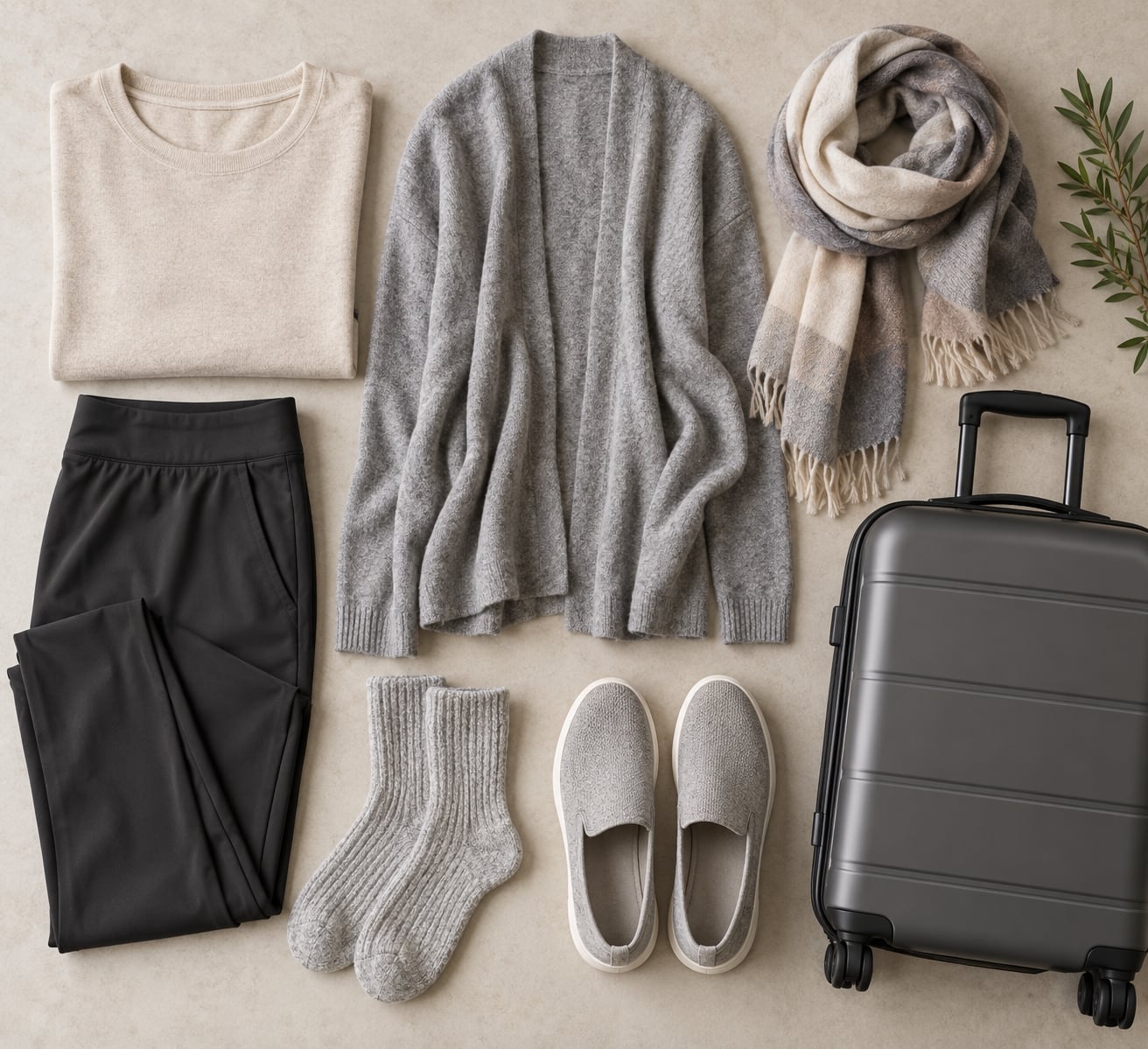
How to dress comfortably for a long flight comes down to four things: a soft, breathable base layer, bottoms with stretch and a waistband that does not dig, a removable mid-layer, and shoes you can step out of without unbuckling anything. Add a scarf or light wrap and you have an outfit that survives eight hours in a cold, dry cabin and still looks fine when you land. Last updated October 2026.
Cruises are not the enemy. It is the air conditioning on full blast, the dry pressurised air, and the fact that your ankles and waist swell after hour three. Get the fabric and the fit right and you will actually sleep. Get it wrong and you spend 13 hours shifting around in a too-tight waistband, freezing, and wondering why everyone else looks so calm.
Table of Contents
- What You Need
- How to Dress Comfortably for a Long Flight
- 1. Start With a Breathable Base Layer
- 2. Choose Flexible, Wrinkle-Resistant Layers
- 3. Account for Changing Cabin Temperatures
- 4. Pick Shoes and Socks for Hours Seated
- 5. Add Practical Accessories Without the Bulk
- 6. Make the Outfit Work Before and After the Flight
- Common Mistakes
- Frequently Asked Questions
- How do I stay warm on a long flight if I get cold easily?
- Do compression socks really help on long flights?
- How do I avoid wrinkles after a long flight?
- What shoes should I wear on the plane?
- What should I wear on an overnight flight so I can sleep?
- Conclusion
What You Need
You do not need a new wardrobe for this. Here is the kit list, and every piece can be something you already own.
- One breathable base layer — a soft T-shirt, undershirt or thin long-sleeve in merino wool or a moisture-wicking synthetic.
- Flexible bottoms — stretch trousers, wide-leg pants, soft joggers or travel trousers with an elastic or drawstring waist.
- One warm layer you can take off — a light sweater, cardigan, hoodie or a packable fleece that rolls into itself.
- Supportive shoes — slip-on sneakers, loafers or flat boots that are broken in and easy to remove.
- Two pairs of breathable socks — wool, cotton or a merino blend. Swap them halfway if you can.
- A light scarf, shawl or pashmina — works as a neck layer in the cold cabin and as a blanket later.
- A few small accessories — eye mask, earplugs or noise-cancelling earbuds. Nothing bulky.
- Compression socks, if your feet tend to swell — the mild 15-20 mmHg level, not the heavy medical ones.
One note on planning ahead: a layer is not optional on any flight over six hours. Cabin crews get asked for blankets constantly now because so many airlines stopped handing them out free.
How to Dress Comfortably for a Long Flight
Here is the six-step system I use. Work through it in order and each piece supports the one before it.
1. Start With a Breathable Base Layer
Your base layer sits against your skin for hours, so it decides most of how the flight feels. Cotton holds sweat and stays damp against your back; merino wool or a moisture-wicking synthetic pulls it away and dries fast.
Fit matters as much as fibre. A skin-tight base layer wicks well but can rub at the waistband and under the arms when you cannot shift position. A loose one traps warm air without sticking. Most travellers land somewhere between the two, which is why an oversized T-shirt or a soft long-sleeve works so well as a starting point.
2. Choose Flexible, Wrinkle-Resistant Layers
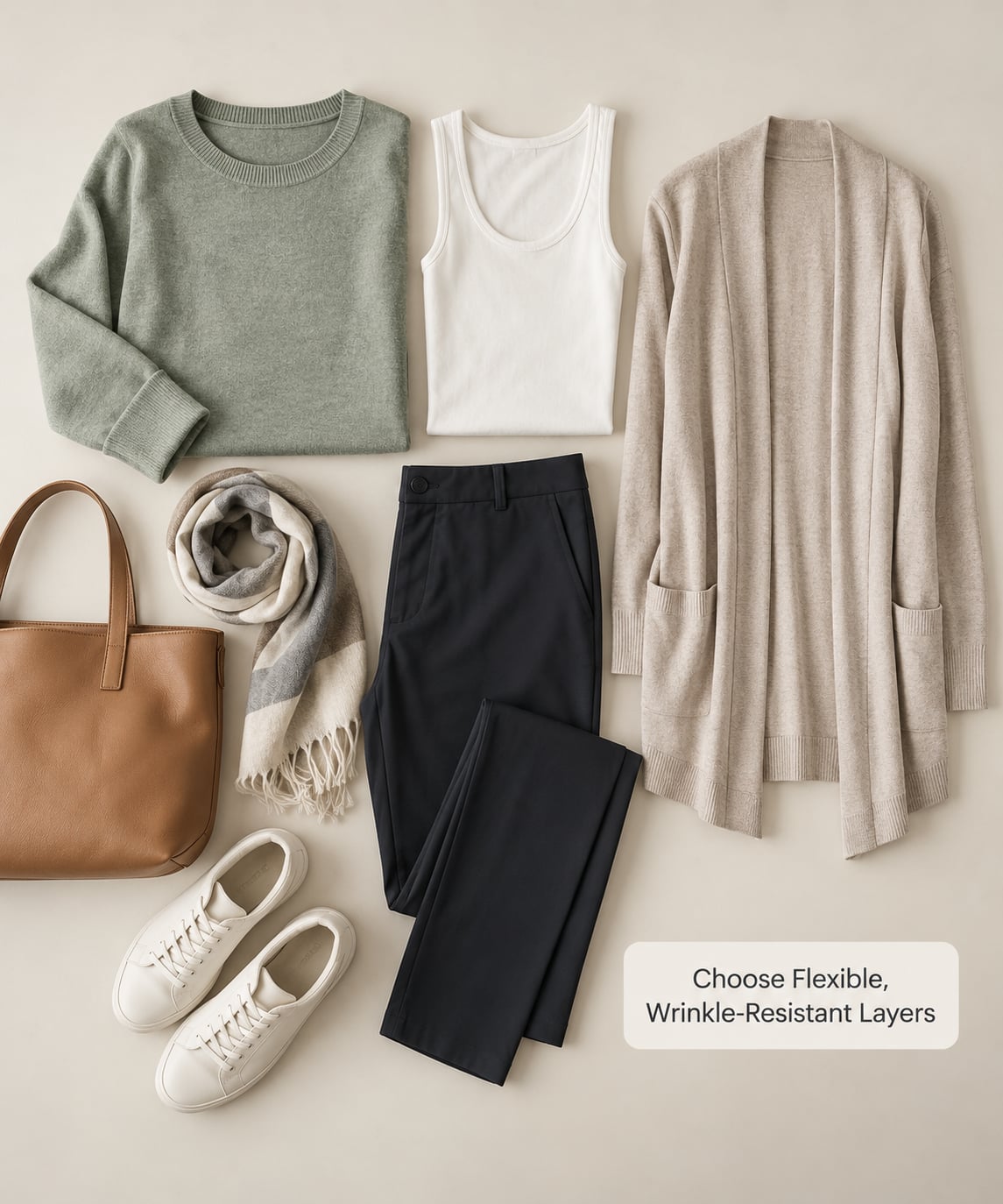
This is where most people get it wrong. Rigid denim and stiff cottons look smart in a mirror and then spend ten hours creasing into your legs, digging into a swollen waist, and holding the shape of the seat.
Look for four things: stretch in the fabric, a waistband that gives, a weave that recovers, and a hand-feel that stays soft after hours. Tencel, bamboo viscose, rayon blends and merino all do this well. Polyester and nylon blends wrinkle far less than cotton, which is why travel trousers are usually a blend rather than pure cotton.
On the jeans question, the honest answer is that it depends. Rigid non-stretch jeans are the worst option on a long flight. Stretch or wide-leg denim is genuinely fine, and plenty of people wear it. The rule is not no jeans. The rule is nothing that fights you.
If you are choosing between leggings and wide-leg trousers, both have fans and both work. Leggings keep hems off the aircraft lavatory floor and are the easiest thing to sleep in. Wide-leg trousers breathe better and feel less like pyjamas if you have a meeting on arrival. Pick on what you are doing after landing, not on what a list says.
3. Account for Changing Cabin Temperatures
Cabin temperature swings wildly and nobody tells you why. Aircraft are pressurised to the equivalent of roughly 6,000 to 8,000 feet of altitude, and the air is heated then blown cold directly at you from above and behind. Cabin humidity often sits around 10 to 15 percent, drier than most deserts, which is why your throat, nose and skin feel parched after two hours.
The answer is layers you can add and remove in under ten seconds without standing up. A thin cardigan, a light sweater, or a long scarf does more for you than any heavy jacket, which is miserable to sit in for eight hours and useless the moment you walk out into a warm terminal.
Most people underestimate this and dress for the airport rather than the cabin. The gate is warm. The plane is not.
4. Pick Shoes and Socks for Hours Seated
Feet are the most common source of misery on a long flight, and swelling is the reason. Sitting still for hours means blood pools in your lower legs and ankles. Shoes that fit fine at the start of the day will not fit at hour nine, and that is when the real discomfort starts.
Choose shoes that are already broken in, roomy at the toe box, and cushioned underfoot. Slip-on sneakers and flat boots are the usual answer for one simple reason: security. If a belt, lace or buckle takes more than about ten seconds to remove, it is the wrong choice, because every traveller ahead of you is doing the same thing.
Avoid new shoes entirely. Blisters at altitude last the whole flight. Heels, wedges and anything with a hard strap sit badly with swollen feet. Shoes you wear to walk the terminal and through three security queues are not the shoes you want at hour ten.
For socks, wool or a merino blend beats plain cotton, which stays damp. Compression socks at the mild 15-20 mmHg level are widely reported as comfortable on long flights and help limit swelling. One caution: if you have had a clot or have a vascular condition, ask your doctor before you wear compression garments, and never go above the mild level on your own.
5. Add Practical Accessories Without the Bulk
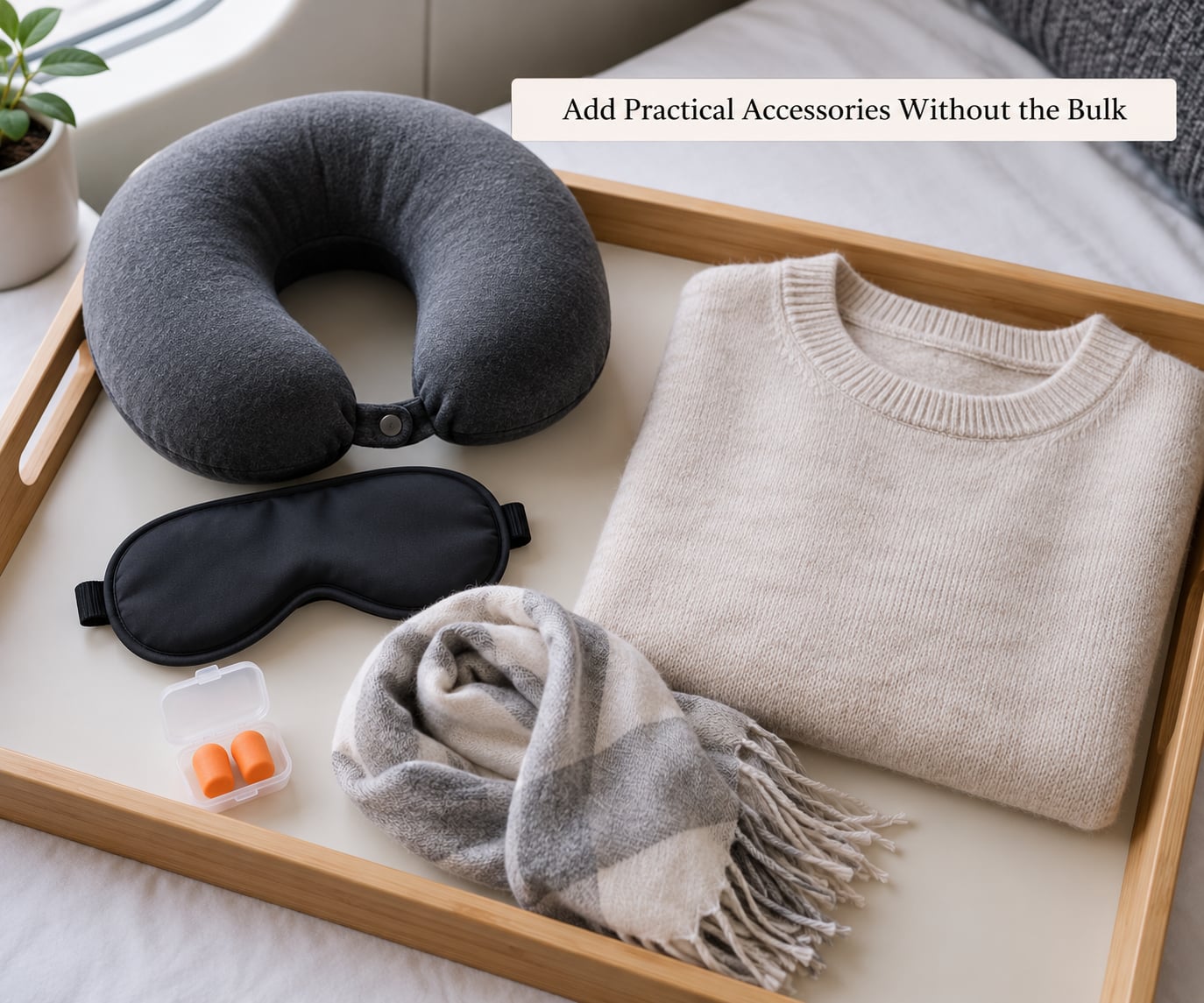
A few small items earn their space in your carry-on more than any extra garment does. An eye mask and earplugs or earbuds are the two that most reliably buy you sleep. A soft travel neck pillow or a rolled jacket behind your lower back stops the seat edge pressing into your spine, which is what makes hour three hurt.
On jewellery, keep it minimal. Anything on your wrists, neck or ankles slows you down at security and, on a long flight, tends to catch, scratch and get noticed. Watches and rings you can remove quickly are fine. Anything elaborate is a hassle for you and a problem for the person behind you in the queue.
The scarf or shawl deserves special mention because it does three jobs at once: extra warmth in the cold cabin, a cover when the air conditioning gets aggressive, and something to pull over your legs during an overnight flight.
6. Make the Outfit Work Before and After the Flight
A long-haul flight outfit has three jobs: airport, cabin, arrival. Most travel clothes handle the middle one well and the other two badly.
For the airport, you want a hands-free bag, pockets that hold a phone and passport, and shoes that survive a walk from parking or the train. Keep your documents somewhere reachable rather than buried at the bottom of a backpack.
For arrival, coordinate. A matching set or two pieces in the same colour family reads as intentional even after twelve hours in a seat. Add a layer that takes up no space — a packable jacket or that same scarf — and you can look put-together without carrying a change of clothes.
And dress for the climate you are flying into, not the one you are leaving. Flying from winter into a tropical city, pack a light top and leave the heavy knit in your carry-on as your layer. Reversing that mistake is how people end up too hot for nine hours and cold for the whole holiday.
Common Mistakes
Seven avoidable problems, and what to do instead of each one.
- Wearing new shoes. They look great and they will blister or rub for the entire flight. Wear a pair you have already walked in.
- Overdressing for the cabin. A heavy coat is unbearable in a seat and useless on arrival. Layers are the answer, not bulk.
- Choosing restrictive fabrics. Stiff cotton, rigid denim and anything with a hard waistband will dig in as you swell.
- Skipping temperature control. If you cannot add and remove a layer without standing up, you are wearing the wrong outfit for the cabin.
- Carrying bulky accessories. Travel pillows, oversized blankets and neck cushions eat the space you need for something you actually wear. Pack them flat and small.
- Wearing hard-to-remove jewellery. Bangles, dangling earrings, ties and watches with metal clasps slow you down at security and get uncomfortable after hour six.
- Forgetting the destination. Dressing for the departure airport rather than the arrival city means being uncomfortable in the air or on the ground. One of the two will be wrong.
One extra habit worth building: before you sit down, take your walk. Ten minutes of walking the cabin or standing in the aisle every couple of hours does more for how you feel than any garment choice. Good clothing makes sitting still tolerable. Movement makes the sitting not last as long.
Frequently Asked Questions
How do I stay warm on a long flight if I get cold easily?
Layer rather than over-dress. Wear a thin breathable base layer, then a light long-sleeve, then a cardigan, sweater or large scarf you can remove in seconds without standing up. Cabin air is pressurised to roughly 6,000 to 8,000 feet of altitude and can be genuinely cold for hours, and many airlines no longer hand out blankets. Keep the scarf in your lap and it doubles as leg cover.
Do compression socks really help on long flights?
They help many travellers feel less swollen and more comfortable after 10-plus hours seated, and the mild 15-20 mmHg level is the one usually recommended for travel. Lower is better for a plane than the heavier medical grades. If you have previously had a blood clot or have any vascular condition, ask your doctor before wearing them, and do not go above the mild level on your own advice.
How do I avoid wrinkles after a long flight?
Pick fabrics that recover instead of creasing: polyester and nylon travel trousers, Tencel, bamboo viscose and merino blends all spring back far better than rigid denim or heavy cotton. Sit with your back supported and avoid folding the same way for ten hours. If you are landing somewhere important, a wrinkle-release spray in your carry-on does more good than any outfit choice.
What shoes should I wear on the plane?
Broken-in slip-on sneakers or flat boots, roomy at the toe box and cushioned underfoot, with wool or merino socks. Your feet swell after hours of sitting, so avoid anything tight, brand new or strapped. Easy removal matters too, because a belt or lace that takes more than ten seconds slows you down at every security queue between here and the gate.
What should I wear on an overnight flight so I can sleep?
Treat it like pyjamas that still pass for clothes. Soft joggers or wide-leg trousers and a loose long-sleeve beat anything fitted. Skip waistbands and buttons, remove your shoes, cover your legs with a scarf and use an eye mask plus earplugs. Keep a light layer nearby, because cabin temperature usually drops further at night and you will not want to wake up cold.
Conclusion
If you only remember one thing, make it the removable layer. Everything else — fabric, shoes, socks — matters, but a cardigan or scarf you can add and drop in ten seconds solves the problem that ruins most long flights.
Build the outfit around it: a breathable base, bottoms with stretch and give, shoes that come off in one movement. Get those three right and the rest of the flight gets a lot easier.