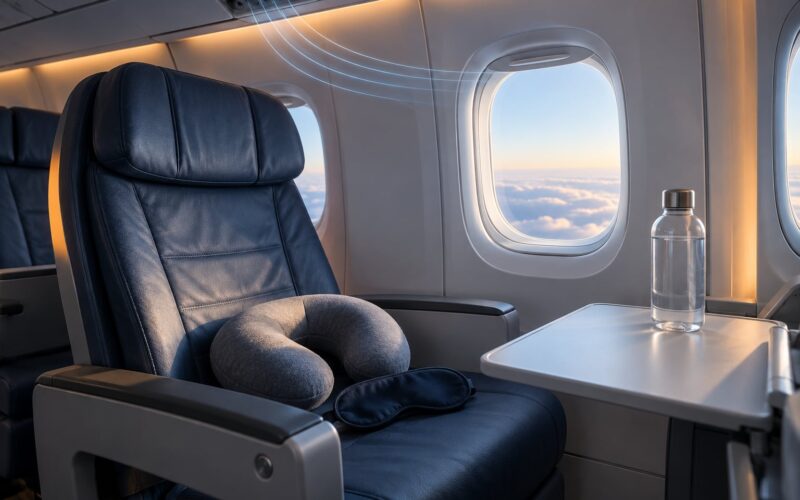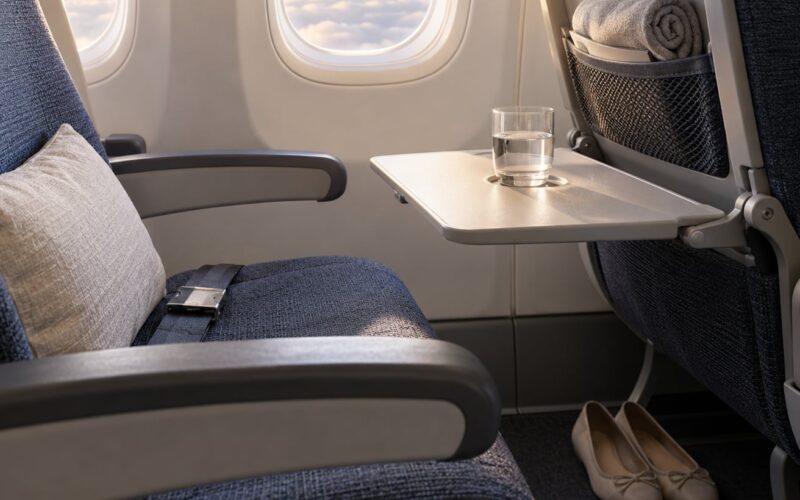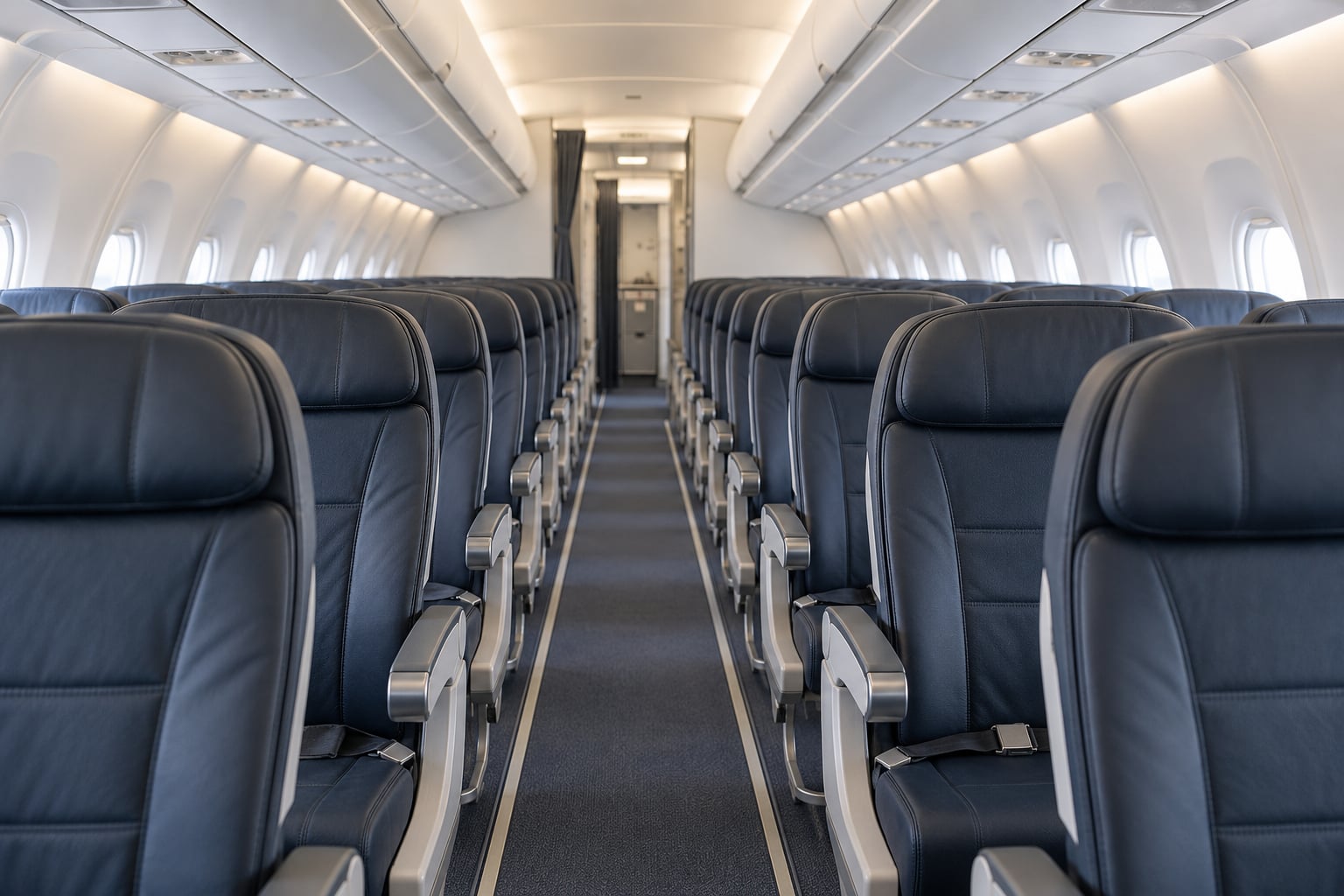
If you have ever typed how often should you get up on a long flight into a search box at 6am, the answer is short: stand and walk the aisle at least once every 1 to 2 hours. If you have never sat still for more than two hours, that cadence is the whole rule — you do not need to pace the cabin or set an alarm for every break.
For a 12-hour overnight flight, that usually means five or six walks of two to five minutes each. On shorter trips, and for anyone who cannot comfortably stand, in-seat movement covers part of the gap. Here is how the guidance actually works and how to make it fit your flight.
Table of Contents
- How often should you get up on a long flight?
- Why does getting up during a long flight help?
- What is a good walking and stretching routine?
- How can I stay comfortable without leaving my seat?
- When should I avoid walking and ask for medical advice?
- How do flight length and seat choice affect the plan?
- What should I do before boarding and after landing?
- Frequently Asked Questions
- Do I need to walk every hour on a long flight?
- Is standing up once during a long flight enough?
- Should I get up during an overnight flight if I want to sleep?
- Are in-seat leg exercises as useful as walking?
- How can window-seat passengers move around?
- When should I talk to a doctor before taking a long flight?
How often should you get up on a long flight?
The short answer: stand and move every 1 to 2 hours, and never sit completely still for longer than two hours on a flight of four hours or more.
You will see three different numbers quoted online. Some sources say every hour, some say every 90 minutes, and some say every 1 to 2 hours. They are not contradicting each other — they are describing the same idea at different levels of caution.
Read them like this:
- Every 1 to 2 hours is the baseline for an average healthy passenger on a long flight.
- Every 90 minutes is the baseline nudged tighter, usually for people who are older, travelling with children, or already uncomfortable sitting still.
- Every hour is the version aimed at higher-risk passengers and at overnight flights, where you will otherwise be asleep through the window.
Two hours is the ceiling, not the goal. If your schedule lines up so that you move every hour, you are doing better than the baseline, not breaking a rule.
Nobody is checking. Flight attendants do not count your trips to the lavatory, and other passengers are mostly focused on their own ankles. The only real constraint is space: a window seat with a sleeping passenger beside you needs a quieter version of the plan.
Why does getting up during a long flight help?
Sitting still for long stretches lets blood pool and stagnate in the deep veins of the lower legs. Walking and standing activate the calf muscle pump, the network of muscles and veins in your calves that pushes blood back up toward the heart.
Here is what movement on a long flight actually does:
- Keeps blood moving in the deep veins of the calf, which is where most travel-related clots form.
- Lowers the chance of deep vein thrombosis (DVT), a blood clot that develops in a deep vein, usually in the leg or thigh. A clot can break loose and travel to the lungs, which is called a pulmonary embolism (PE).
- Eases stiffness in your hips, knees and lower back, which usually shows up in the last two hours of a flight.
- Relieves that restless, heavy feeling in your legs and ankles, which many people notice most at the end of a long leg.
- Gives you room to move safely through the aisle without shoving past a row where someone is standing up.
The cabin adds to it. Pressurised cabins sit at an altitude where oxygen levels are lower than at sea level, and the air is very dry. Neither is dangerous on a normal flight, but both make long stretches of immobility harder on the body than sitting still would be on the ground.
Dehydration is the quiet piece of the puzzle. When you are dry, blood volume drops slightly and blood moves less efficiently. Drinking water on a schedule helps, and the bathroom stops it forces are a useful side effect — but water alone does not replace walking.
What is a good walking and stretching routine?
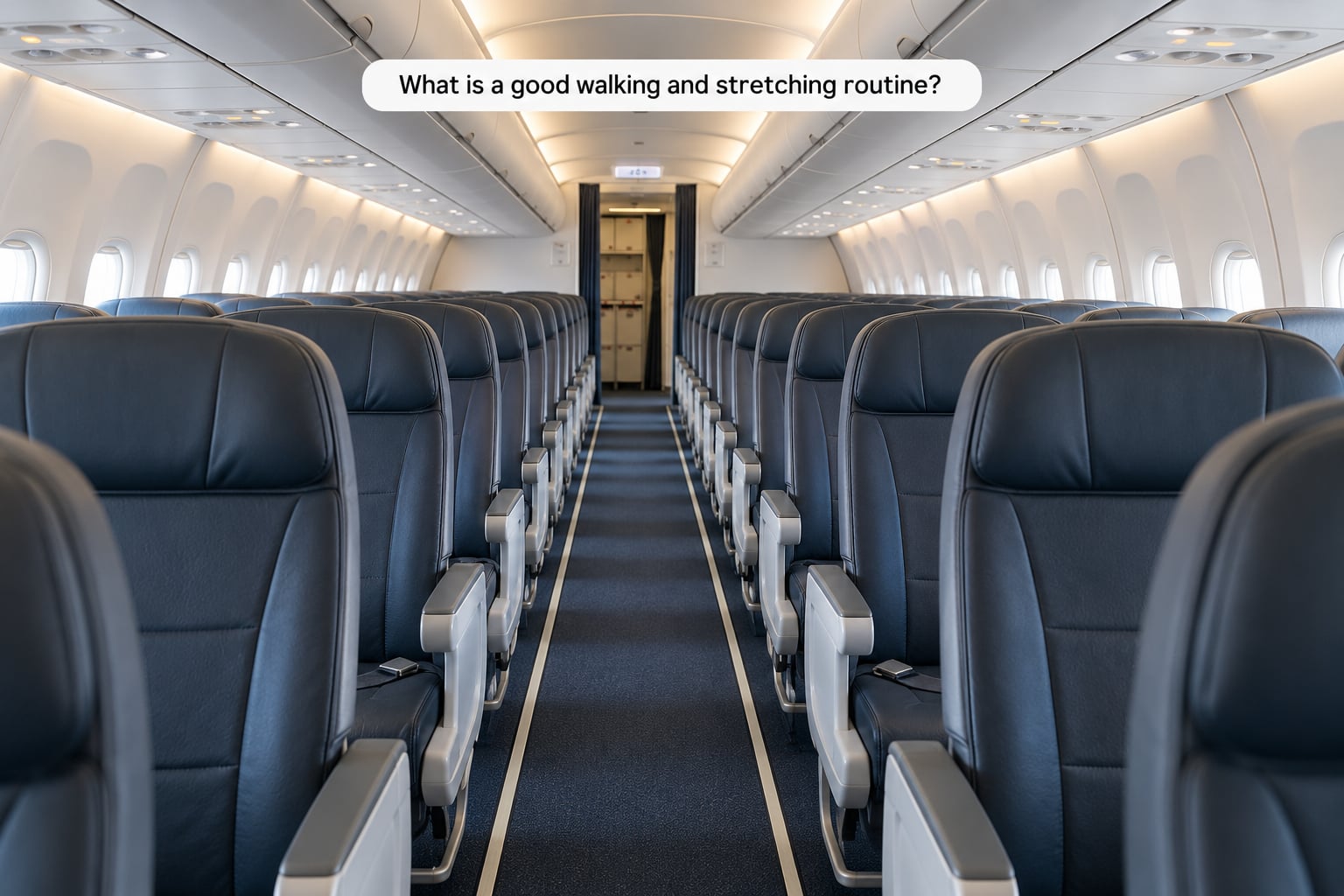
Two to five minutes in the aisle is enough. The point is to move your legs through a full range, not to cover distance. A short repeatable routine is easier to keep than a long one.
- Stand and walk to the back or front of the cabin and back. Turn around at the galley or the last row. Ten slow steps each way wakes up the calf muscles.
- Stop and do three calf raises on each leg, holding a seat back for balance. Lift the heel, pause, lower slowly.
- Roll your ankles ten times each direction while standing, then take five slow shoulder rolls backwards.
- Return to your seat. If the aisle is occupied or the seat belt sign is on, do the seated version in the next section instead.
Stretch gently, and never force a movement that pulls. Nobody needs to touch their toes in the aisle of a Boeing.
How can I stay comfortable without leaving my seat?
Middle seats, window seats with a sleeping neighbour, and anyone recovering from surgery can still do most of the useful work from the seat. Set a phone reminder so the movements happen regularly rather than in one long lump at the end.
- Ankle pumps — point your toes up, then down, 20 times each. This is the simplest movement and it keeps the lower-leg veins clearing.
- Ankle circles — draw slow circles with each foot, 10 in each direction.
- Calf raises — press your heels up off the floor and lower them back down, 10 to 15 times. You can do one foot at a time.
- Shoulder rolls — 10 slow circles backwards and 10 forwards, then squeeze your shoulder blades together and release.
- Seated hip and knee work — extend one leg at a time and gently draw it back in, then press both feet down and lift your heels again.
- Neck turns — turn your head left, hold, then right. Keep it slow and stop if it feels like a stretch beyond comfort.
Window-seat passengers can add one extra trick: take turns leaning into the aisle to swap which leg is bent for a few minutes, and flex the foot of the leg that is stretched back. It sounds small, and it is small, but it beats four hours with one knee bent in the same position.
When should I avoid walking and ask for medical advice?
This article is general information, not medical advice. If any of the following apply to you, talk to a doctor before you book a long flight rather than following a generic schedule.
- You have had a blood clot, or you have a condition that increases clot risk.
- You have varicose veins, chronic venous insufficiency or a history of clotting disorders.
- You are recovering from hip, knee, abdominal or pelvic surgery. Post-operative patients are often advised to move far more often than the general baseline.
- You are pregnant, or you have recently given birth.
- You have reduced mobility, a joint replacement still healing, or pain that makes standing difficult.
- You have a known circulation or heart condition.
For these passengers, the honest advice is that a two-hour interval may not be tight enough, and a doctor’s plan beats a magazine checklist.
Watch for warning signs after you land, particularly in the days that follow. Seek medical care promptly if one leg becomes noticeably swollen, painful, warm or red compared with the other. Chest pain, sudden breathlessness, a fast heartbeat or coughing up blood are emergencies — get help immediately rather than waiting to see if it passes.
How do flight length and seat choice affect the plan?
Flight length changes the number of breaks but not the interval. Below roughly four hours, most healthy passengers do not need a strict schedule. After that, the math is simple.
| Flight length | Movement breaks | Total time in the aisle |
|---|---|---|
| Under 4 hours | 1-2, mostly at the lavatory | 5-10 minutes |
| 4 to 6 hours | 3 | 10-15 minutes |
| 6 to 9 hours | 4 | 15-20 minutes |
| 9 to 12 hours | 5 | 20-25 minutes |
| 12 to 15 hours | 6-7 | 25-35 minutes |
| 15 hours and over | 8 or more | 30-40 minutes |
Seat choice changes how easily you keep to it. An aisle seat means you can step out whenever you like without stepping over anyone. A middle seat is the hardest case — plan to stand during service, when both neighbours are usually up anyway. A window seat is workable if you commit to the in-seat routine and use it before you use the aisle.
Ultra-long-haul flights add overnight hours, when nobody is moving at all. Set a vibration alarm rather than relying on feeling thirsty, and try to schedule one longer walk on the aisle when the cabin is quietest.
What should I do before boarding and after landing?
A few habits before you fly make the in-flight plan easier to keep.
- Choose an aisle seat when you can if regular walking matters to you.
- Wear loose clothing. Tight jeans and belts restrict circulation around the hips and thighs, which is one reason swollen feet after a flight are so common.
- Skip heavy meals and alcohol, and drink water steadily through the flight rather than in one go.
- Wear compression socks if you are a higher-risk passenger. They support venous return and reduce swelling, but they supplement movement rather than replacing it.
- Put your essentials in your seat pocket so getting up does not mean digging through an overhead bag.
After landing, keep moving for a while. Walk to your luggage, avoid a long car or train ride straight away if you can help it, and keep an eye on one-sided leg swelling in the days that follow.
Frequently Asked Questions
Do I need to walk every hour on a long flight?
No. Every 1 to 2 hours is the standard advice for most healthy passengers on a flight of four hours or more, so walking every hour is more often than the baseline requires. Hourly breaks make more sense on overnight flights, when you would otherwise sleep through the window, and for passengers with a higher risk of blood clots. If you are unsure which applies to you, ask your doctor before the trip rather than guessing.
Is standing up once during a long flight enough?
Once is not enough. A single five-minute walk on a 14-hour flight leaves you seated for the other thirteen hours, which is the situation movement advice is meant to prevent. The aim is a break every 1 to 2 hours, and each one only takes two to five minutes. Short and regular beats long and rare, so a quick stand and stretch in your seat counts more than nothing.
Should I get up during an overnight flight if I want to sleep?
Yes, but plan the break around your sleep rather than against it. Set a silent alarm for roughly every 90 minutes to two hours, and if you are asleep when it goes off, do the seated routine first — ankle pumps, calf raises and shoulder rolls — then stand and walk the aisle if the cabin is calm. Protecting two hours of sleep by skipping one walk is a reasonable trade; skipping five is not.
Are in-seat leg exercises as useful as walking?
Useful, but not equivalent. Seated ankle pumps, calf raises and ankle circles keep blood moving in the calf veins and work well as a top-up, particularly for window and middle seat passengers. Walking the aisle recruits the whole leg and lets you change position entirely, so it is the better option when the space allows it. Think of the seated routine as the fallback, not the substitute.
How can window-seat passengers move around?
Run the in-seat routine on a schedule: ankle pumps, ankle circles, calf raises and shoulder rolls every hour or so. Around once every 1 to 2 hours, if your neighbours are awake and the aisle is clear, take a short walk past them with a quick apology. If they are asleep, stay seated and stretch your legs out under the seat in front where you can. Swap which leg is bent for a few minutes at a time.
When should I talk to a doctor before taking a long flight?
Speak to a doctor before a long flight if you have had a blood clot or pulmonary embolism, have varicose veins or chronic venous insufficiency, are pregnant or recently gave birth, are recovering from hip, knee or abdominal surgery, or have reduced mobility or a known heart or circulation condition. These situations can call for a tighter interval than the general advice, a plan for compression socks, or advice about travel itself. Any one-sided leg swelling, warmth or pain after flying needs prompt medical care.
Start with one thing: on your next long flight, stand up and walk the aisle once every 1 to 2 hours, starting two hours before you would rather stay put. Set the alarm, keep a water bottle at hand, and if you cannot leave the seat, do the seated routine instead.