How to organize your seat back pocket takes about five minutes and needs nothing more than a slim zip pouch, a couple of small bags, and a clear rule for where every item lives. Empty the pocket, sort what you find into groups, protect anything fragile or valuable, give each item one fixed spot, and leave the safety card where it belongs. Once that is done, anything you need mid-flight comes out in one reach instead of a two-minute dig through a bag under the seat.
The reason it matters is less about tidiness than about movement. Reaching overhead on a plane that is taxiing, or standing up to rummage through a personal item while the aisle is dark, is how phones end up under a seat and earbuds end up left behind at the gate. A deliberate setup removes the rummaging, and it gives you a fixed moment at the gate to notice what you forgot.
Table of Contents
- What You Need
- Step-by-Step: How to Organize Your Seat Back Pocket
- 1. Empty and Sort the Pocket
- 2. Create a Quick-Access Pocket
- 3. Separate Fragile and Valuable Items
- 4. Group Entertainment and Comfort Items
- 5. Assign a Home and Run a Final Check
- Common Mistakes
- Frequently Asked Questions
- What should I keep in my seat back pocket?
- What should not be put in an airplane seat back pocket?
- Can I put a water bottle in my seat back pocket?
- What items should stay within easy reach during takeoff?
- How can I prevent spills or leaks inside the seat back pocket?
What You Need
You do not need a dedicated product for this. You need containers that fit the pocket, which on most aircraft is roughly the size of a paperback and often shallower than you remember.
- A slim zip pouch or travel wallet for documents, a boarding pass, and a pen. This is the container that keeps papers from folding into a soft, useless brick.
- A small waterproof bag for liquids, medicines, or anything breakable. A sandwich bag works. A small zip-seal bag works better.
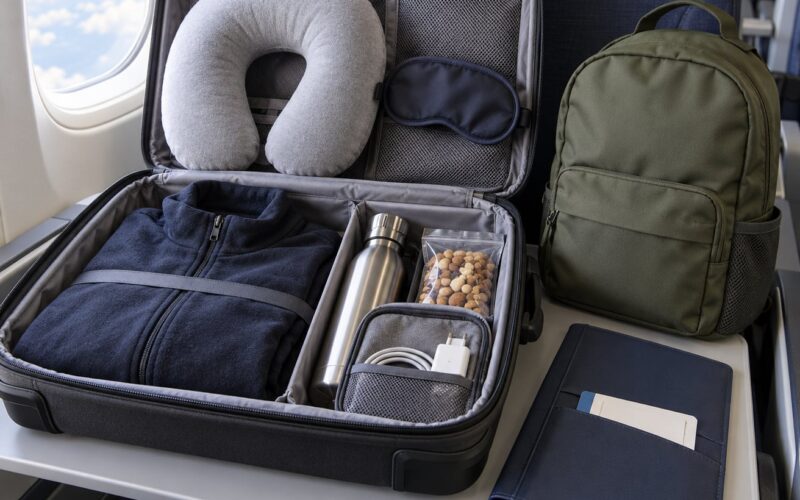
- A mesh pouch or packing cube for entertainment and comfort items, so the group comes out in one movement.
- A pen that clips or caps. A loose pen in the pocket is the item most often lost down the aisle.
- Optionally, a foldable seat pocket organizer that slips into the pocket or hooks over the tray table latch, and a clip or carabiner for anything you do not trust to gravity.
Skip anything bulky or heavy. Organizers add weight and volume to a carry-on allowance, and the point of the system is reach, not capacity.
Step-by-Step: How to Organize Your Seat Back Pocket
1. Empty and Sort the Pocket
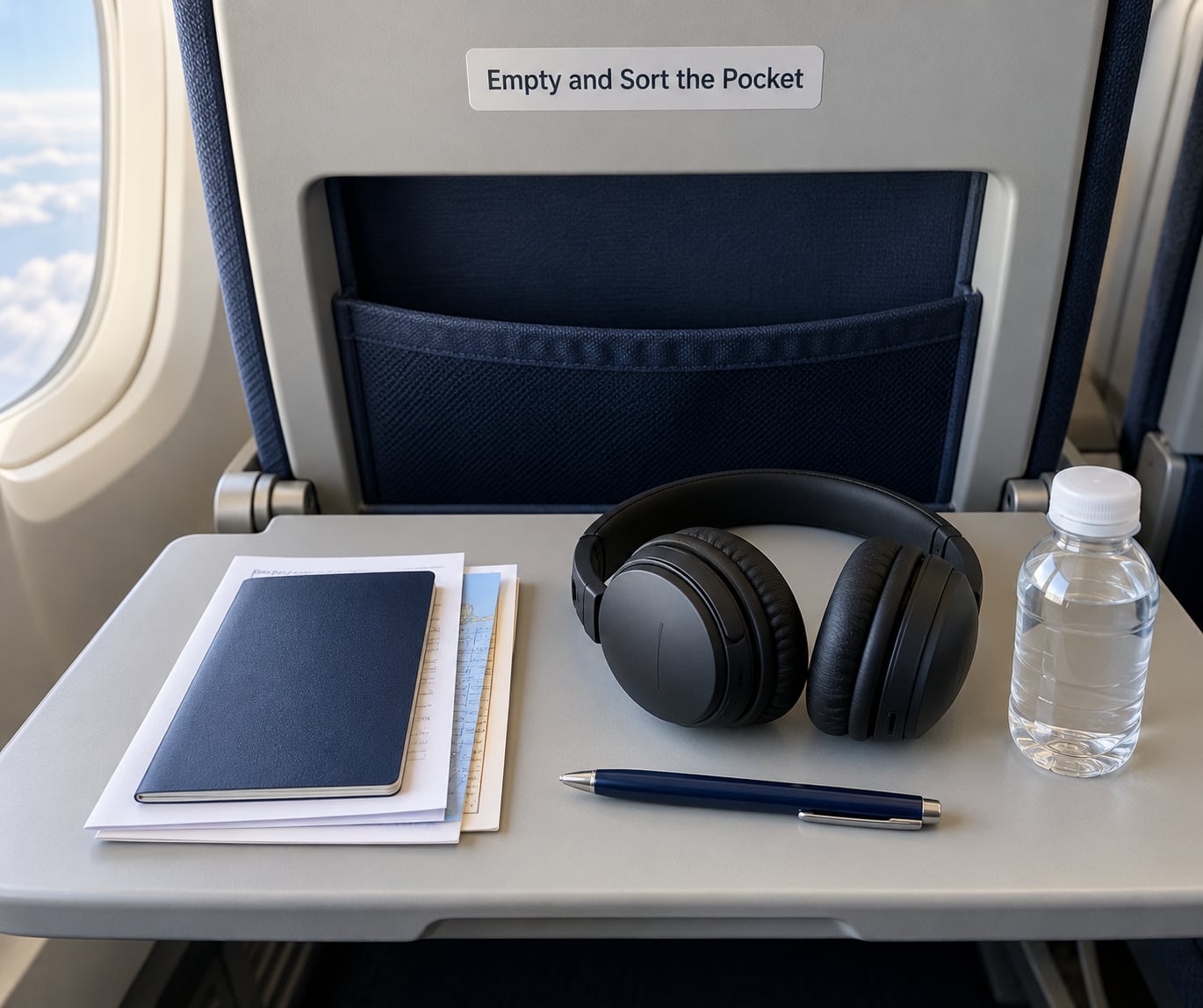
Take everything out before you add anything. Most people find a layer of old magazines, a boarding pass from three flights ago, and at least one item they cannot identify. Pull the airline safety card and literature out and put them in the seat pocket literature holder, which is the only place they belong.
Now sort what remains into five groups: documents, entertainment, health items, electronics, and loose miscellaneous objects. This is the step that does the real work. Once things are in groups, packing takes two minutes. Once they are still mixed, it takes ten and you will do it badly.
Discard anything expired, torn, or empty while the pocket is empty rather than later when you are cramped and in the dark.
2. Create a Quick-Access Pocket
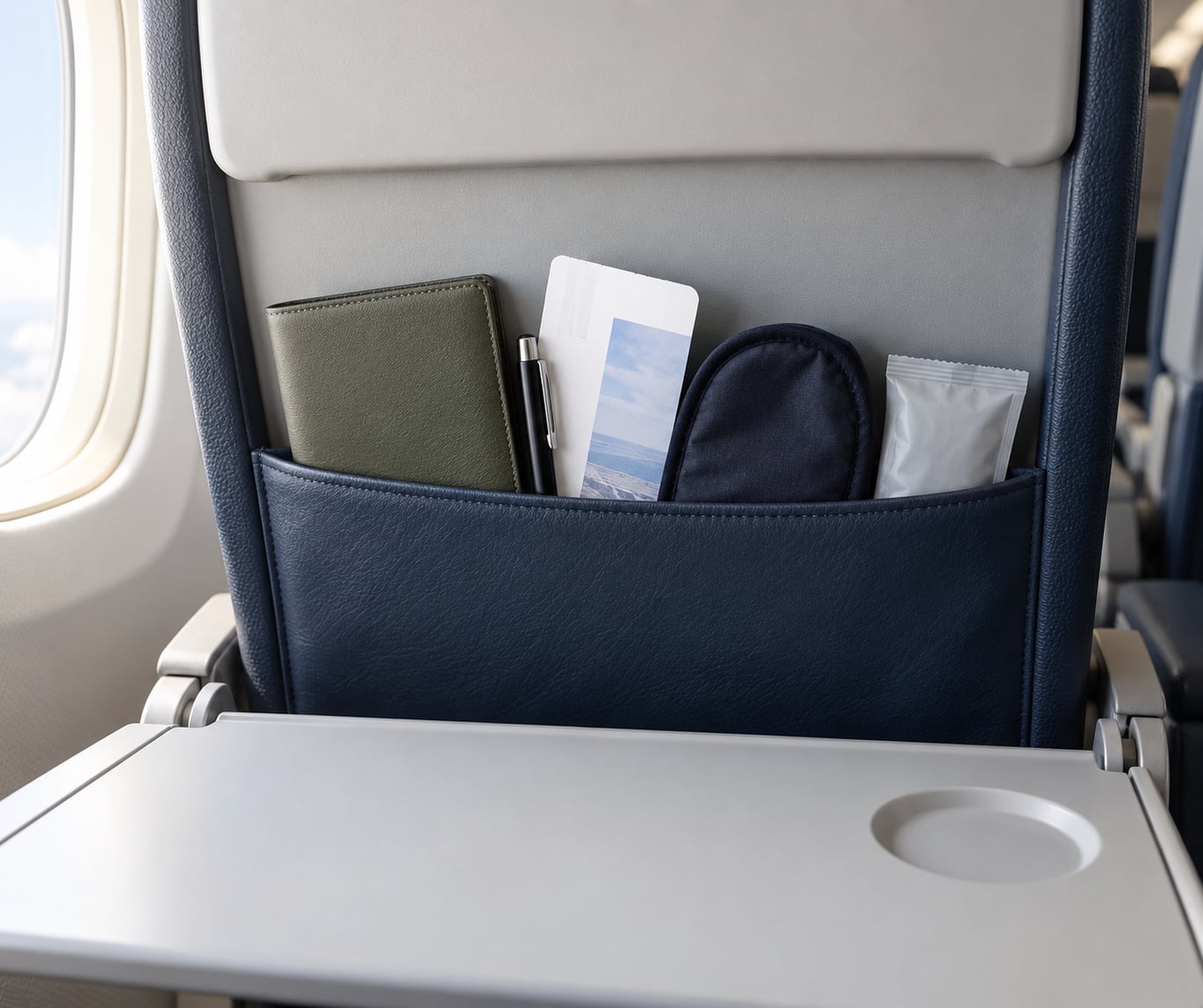
Reserve the front section, closest to you, for items you might need during taxi, takeoff, landing, or a short wait. In practice that is four things: your boarding pass, a pen, headphones or earbuds, and tissues.
Front section means front, not mixed in. If your hand goes into the pocket and finds three unknown objects before the tissues, the quick-access pocket has failed. Travellers who carry a slim travel wallet report the same thing: one zippered compartment you can find with one hand in the dark is worth more than three loose sections.
Put your phone here or in your own pocket, but not buried. A phone that slides to the bottom of a fabric pocket is the single most common thing left behind on deplaning.
3. Separate Fragile and Valuable Items
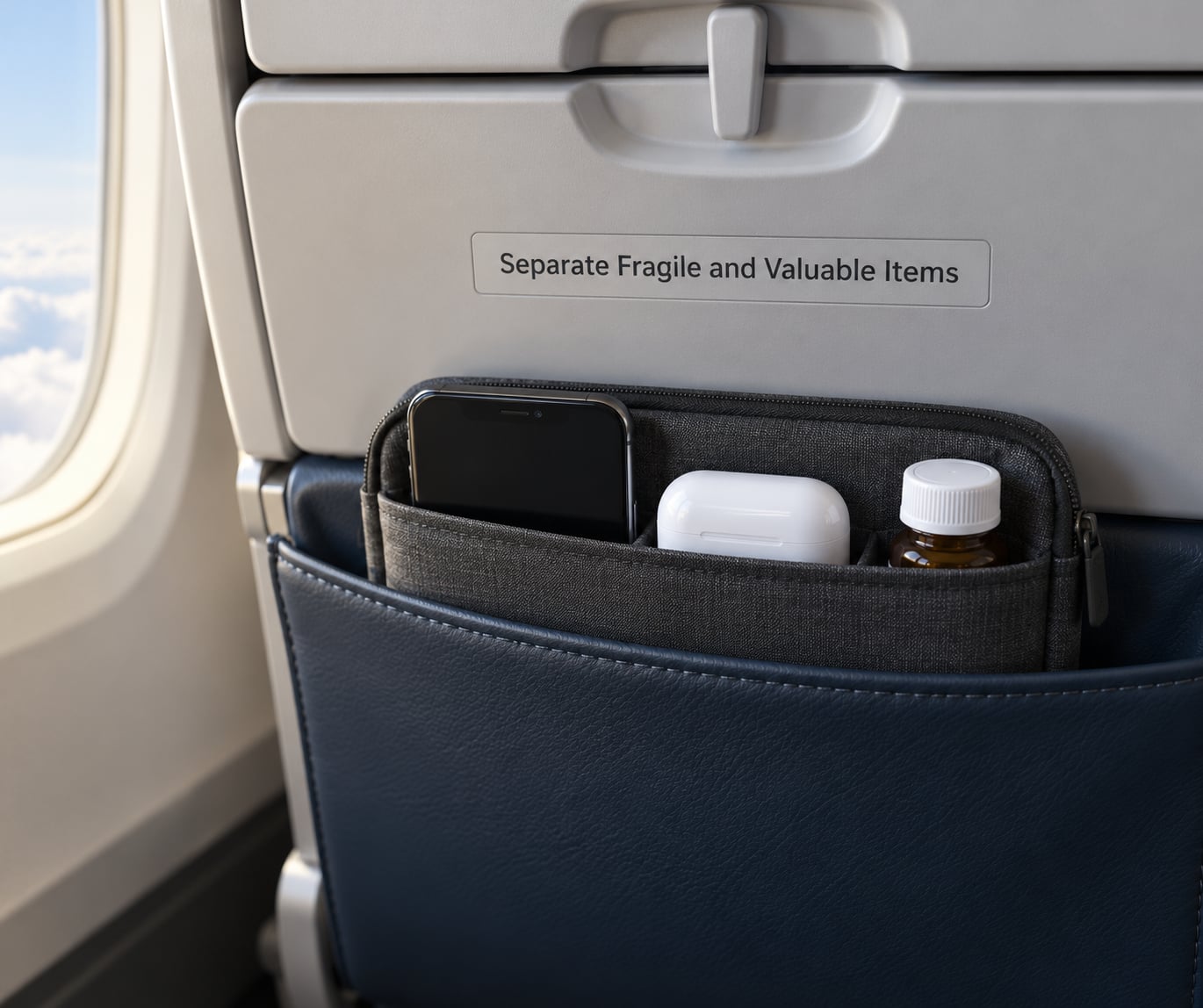
Everything breakable, spillable, or expensive goes into one secure pouch: medicines, liquids, glasses, headphones, e-reader cables, anything breakable. The point is that a passenger reaching past you cannot knock it, and a tipping water bottle cannot soak your passport.
Direct-to-pocket storage is the most common failure. A bottle of hand sanitizer, a tube of lotion, or a drink left loose will eventually leak, and it leaks into the seat pocket lining, which is one of the least washable surfaces on the aircraft. Double-bag liquids if the container is soft, and use a hard case for anything with a screen.
There is a second reason people skip the pocket entirely: hygiene. Regular travellers on travel forums say plainly that they never put anything into an unlined seat-back pocket, and the liners they use are a plastic produce bag, a gallon zip-seal bag, or a washable tray cover. If that is your preference, put the pouch inside a liner or work entirely from your own bag.
4. Group Entertainment and Comfort Items
Bundle the rest into one lightweight group: book, magazine, eye mask, earplugs, socks, charging cable, snacks. The test is whether the whole group can leave the pocket in one movement without emptying it.
Overweight groups collapse. An unstructured tote or cloth bag laid flat on the tray table will let its contents slide onto the floor, which is what happens when someone folds the tray table up mid-flight. Rigid-sided or zippered containers hold their shape and stay put.
For a long-haul flight, that group is where the headphones charger, the second snack, and the neck pillow live. For a short regional hop, it is usually a book and nothing else, and that is fine.
5. Assign a Home and Run a Final Check
Write down one location per item in your head: quick-access at the front, protected pouch in the middle, comfort group at the back, documents in the zip wallet on top. Then run the physical checks before the doors close.
Confirm nothing blocks the bottom seam or the safety card. Confirm no loose object can become a projectile during taxi and takeoff, which mostly means no uncapped pen, no keys, no loose scissors. Confirm every zippered container is actually closed, and confirm you are not reaching over the pocket after take-off when a tray table is about to come down.
Finally, check that your tray table area stays clear of anything loose before you leave your seat, and that the organizer is clipped to you or in a bright colour you will recognise at the gate. The goal is to look back at the seat once, on the way out, and know you would have seen a tablet left there.
Common Mistakes
Overpacking the pocket. A stuffed pocket is a pocket you cannot search. Bring less than fits and keep the overflow in your personal item or the overhead bin.
Leaving loose objects. Pens, keys, coins, and earbuds without a case migrate. Every loose item gets a container or stays on your body.
Storing liquids directly in the pocket. One leaking bottle ruins the lining and anything next to it. Seal liquids in a zip-seal bag, inside a pouch, ideally inside a liner.
Forgetting to retrieve valuables before arrival. People have reported leaving expensive earbuds and a tablet behind after deplaning. Set the rule that the last thing you do before standing up is emptying the front section, and check the seat pocket, not just the tray table.
Blocking the safety card or the pocket lining. Safety literature goes in the literature holder, and you should be able to see the pocket seam at a glance.
Two further cases come up often enough to plan for. Newer aircraft have small slit pockets with elastic that will not hold a phone or a bottle, so the solution is to clip a pouch to the pocket edge or wear a small crossbody bag instead of relying on the pocket. And in premium cabins without a seat-back tray table, hanging organizers have nothing to hook onto, so use a clip-on or worn system rather than a tray-table cover.
Frequently Asked Questions
What should I keep in my seat back pocket?
Keep a short list and group it: your boarding pass, a pen, tissues, and headphones or earbuds in the front quick-access section. Medicines, liquids, glasses, and anything breakable go in one sealed pouch in the middle. Books, eye mask, earplugs, cable, and snacks form one comfort group at the back. Documents go in a slim zip wallet so they stay flat and readable.
What should not be put in an airplane seat back pocket?
Do not store loose liquids, uncapped pens, keys, or loose scissors, since they can leak or shift during taxi. Skip anything heavy enough to hurt someone reaching past you, and keep valuables on your body when possible. If you are avoiding the unlined pocket for hygiene reasons, put a produce bag or zip-seal liner inside it first, or work from your own bag.
Can I put a water bottle in my seat back pocket?
Only rarely. Most seat-back pockets are too shallow and too flexible to hold a full bottle upright, and an uncapped bottle will fall or leak. On flights where the crew allows drinks at the seat, use a collapsible bottle clipped to the seat-back pocket edge with a carabiner, empty before landing, and keep the cap on until you are ready to drink.
What items should stay within easy reach during takeoff?
Keep the things you need before the aircraft is at cruising altitude in the front section: your boarding pass, a pen for the arrival forms, tissues, headphones, and your phone. Medication you take on a schedule should also be in the front zone rather than buried. Leave everything else stowed and closed until the seat belt sign is off and the tray tables are down.
How can I prevent spills or leaks inside the seat back pocket?
Never put an open or uncapped liquid in the pocket. Seal anything liquid in a zip-seal bag, put that bag inside a second pouch, and position that pouch away from papers and electronics. Line the pocket with a produce bag or a zip-seal bag if you want a washable barrier between your belongings and the seat fabric underneath.
Start with the empty step. Take the pocket completely out at the gate, sort what is there into the five groups, and give every loose item a container before you put anything back. That single pass takes five minutes and it is the part that makes the rest of the flight easier.
Everything after that is a location rule: quick-access at the front, protected pouch in the middle, comfort group at the back, documents in the zip wallet on top. Once you have applied how to organize your seat back pocket that way once, it becomes automatic, and you stop standing up mid-flight to dig through a bag.