What to avoid eating before a flight comes down to four things: food that makes gas, food that sits heavy, food that is high in salt, and drinks that pull fluid out of you. Cabin pressure falls during the climb, so gas already in your gut expands, and dry cabin air makes everything worse. There is no banned-food list, and honestly you do not need one. Most people feel fine eating normally, and the rules that follow are about the days and hours when you would rather not be dealing with a stomach in a middle seat.
I have watched this play out on more red-eyes than I care to count. The person who eats a fast-food lunch and a fizzy drink at the gate is the one standing in the aisle at hour four, trying to work something out quietly while two hundred people are settling in. The person who ate a sandwich two hours earlier and sipped water through security is usually asleep.
Table of Contents
- What to Avoid Eating Before a Flight
- Why Some Foods Are Uncomfortable Before Flying
- Which Foods Cause Gas or Bloating?
- Legumes and cruciferous vegetables
- Carbonated drinks and chewing gum
- Should You Avoid Fried, Greasy, or Very Rich Foods?
- Can Spicy or Acidic Food Cause Problems Before a Flight?
- How Much Water Should You Drink Before a Flight?
- What to Eat Before a Flight Instead
- What works for most people
- If you need something more specific
- How to Time Your Meal Before Leaving
- A countdown for a long-haul
- Short-haul and red-eye flights work differently
- Travelers With Special Dietary Needs
- Frequently Asked Questions
- Should I fly on an empty stomach?
- What is the best thing to eat before a flight?
- How do I stop feeling gassy on a plane?
- How long does airplane bloat last?
- Should I eat the airline meal on a long flight?
What to Avoid Eating Before a Flight
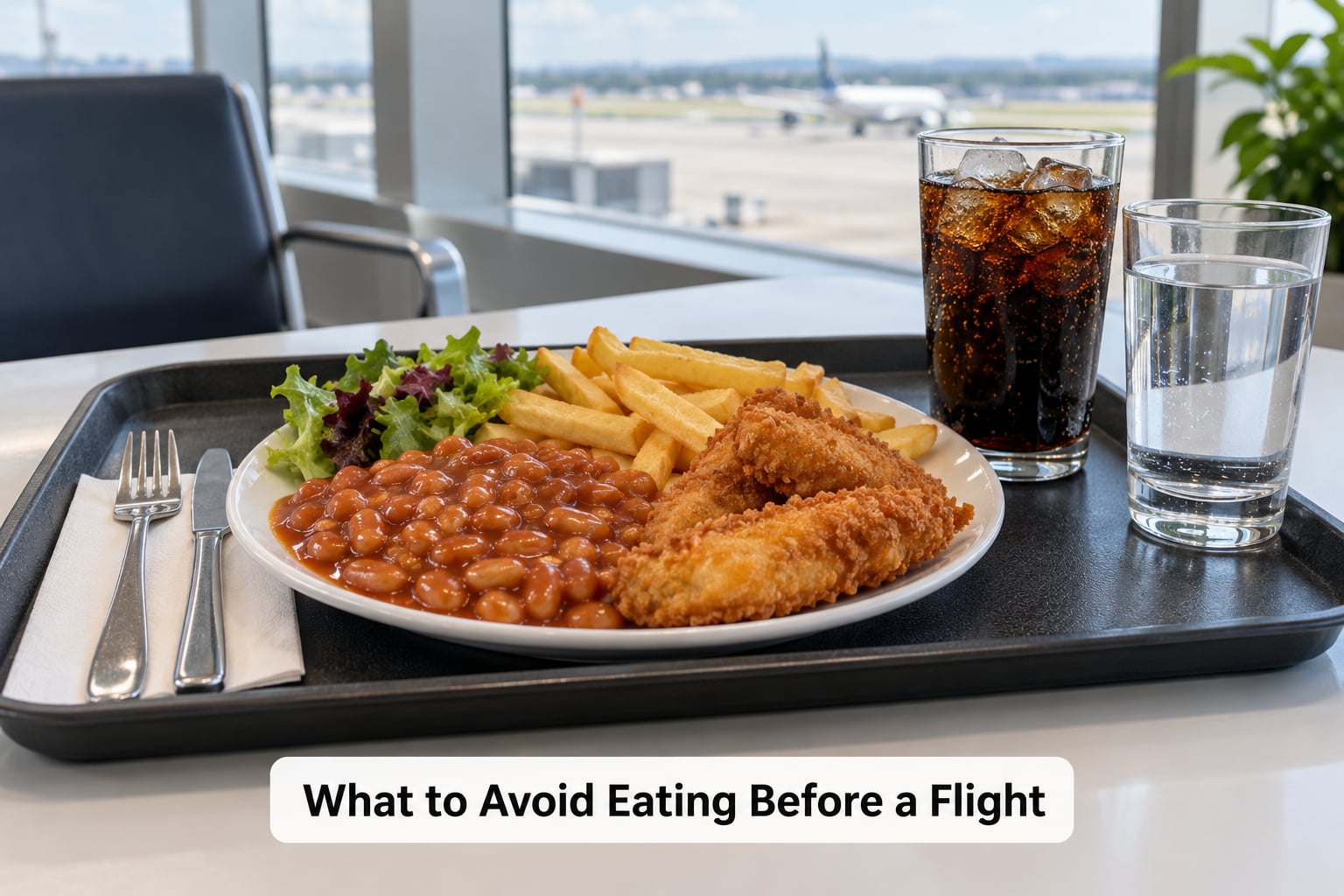
Here is the short version, grouped by what actually goes wrong in the air.
- Gas-producing foods such as beans, lentils, chickpeas, broccoli, cabbage, Brussels sprouts and onions. Trapped gas expands as the cabin pressurises, so a normal amount becomes an uncomfortable amount.
- Carbonated drinks and sparkling water. Soda adds gas to a gut that already holds some, and the same goes for swallowing air with fizzy drinks and chewing gum.
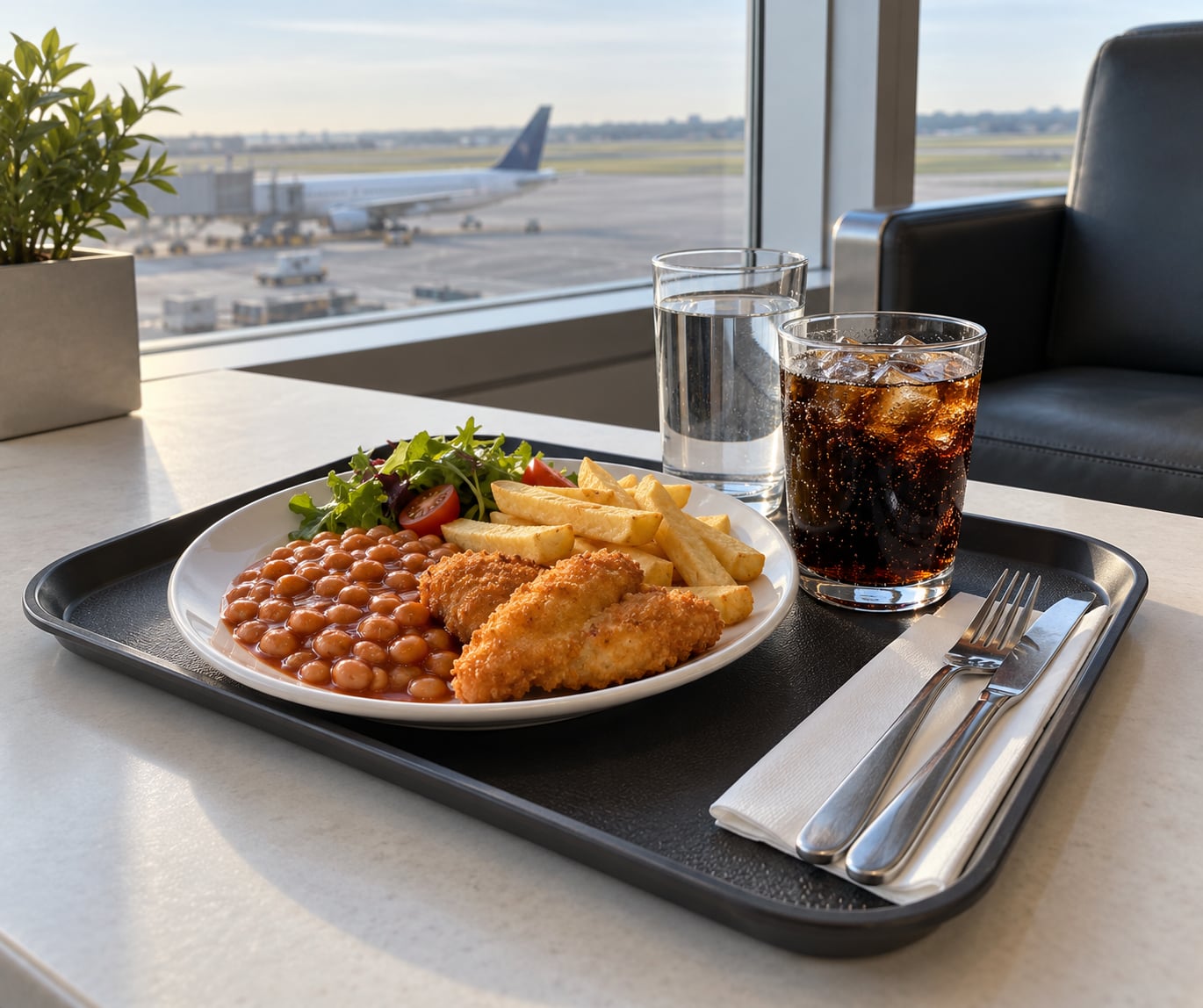
- Fried, greasy and very rich food. Fat slows gastric emptying, so a heavy meal is still sitting in your stomach during boarding and still there an hour into the flight.
- Salty, processed snacks such as salted nuts, crisps and packaged meat. High sodium encourages fluid retention, and you will feel that puffiness in your hands, face and ankles by the end of a long haul.
- Spicy and highly acidic food. Hot peppers, curry, chilli and large amounts of tomato or citrus can set off heartburn in people who are already prone to it.
- Large amounts of caffeine and any alcohol. Both act as diuretics. Alcohol also fragments sleep, and a poor night before an early flight is its own kind of stomach problem.
None of this makes you intolerant of anything. If beans never bother you, a bowl of beans on a Tuesday morning will not change that. These are things that amplify an ordinary digestion in an ordinary seat, which is a very different problem from a food intolerance.
| Instead of | Try |
|---|---|
| Chilli or heavily spiced curry | Rice, plain pasta, a mild stew |
| Beans and lentils | Quinoa, couscous, plain rice |
| Fried chicken and chips | Grilled chicken with salad, a plain sandwich |
| Soda or sparkling water | Still water, herbal tea, a small amount of juice |
| Salted nuts and crisps | Unsalted nuts, pretzels, crackers, plain popcorn |
| Coffee, energy drinks, alcohol | Water, peppermint tea, ginger tea |
| A big dinner right before the airport | A moderate meal two to three hours before departure |
Why Some Foods Are Uncomfortable Before Flying
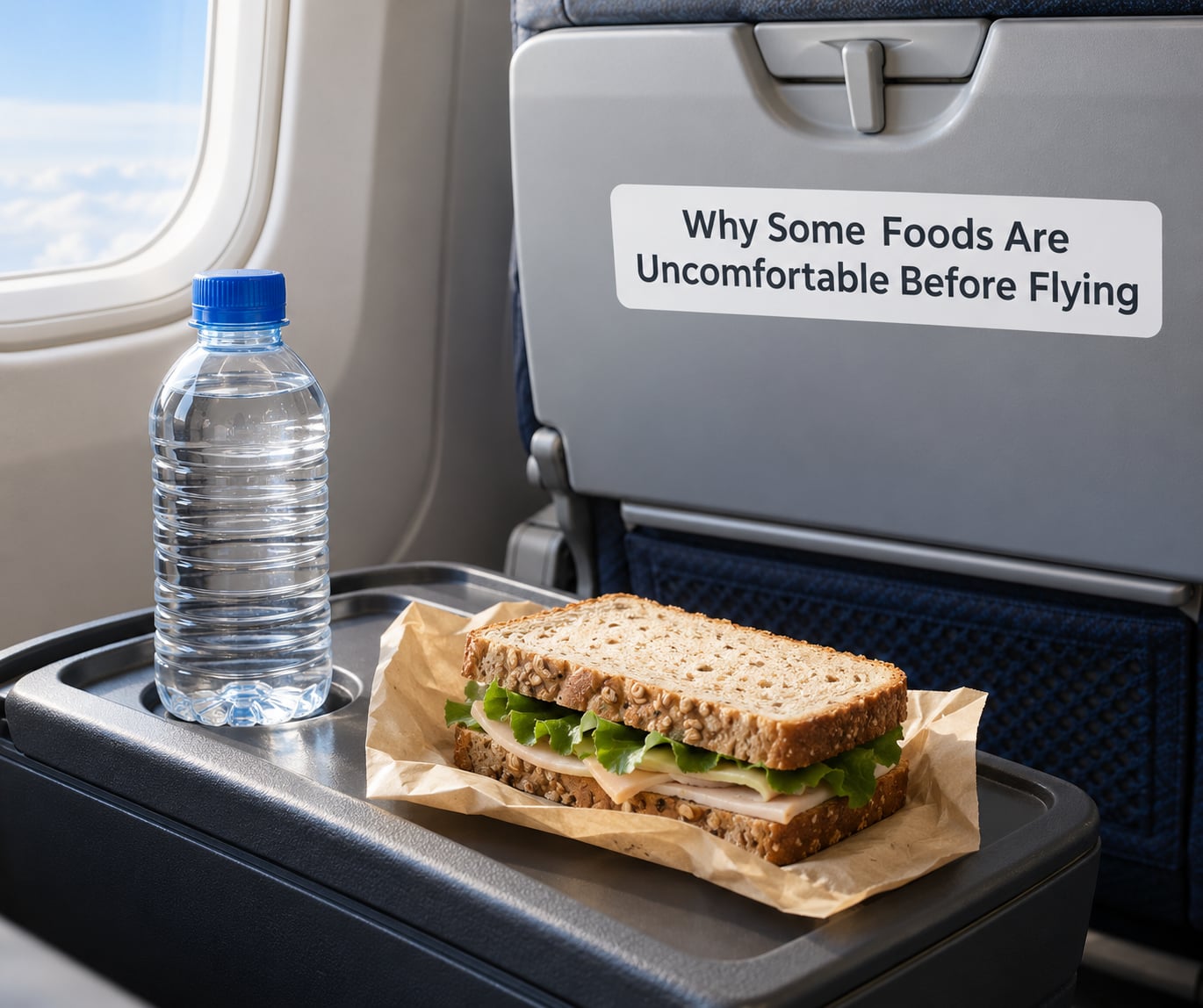
The physics is simple. Aircraft cabins are pressurised to roughly the equivalent of 6,000 to 8,000 feet, not the 30,000 feet the aircraft reaches. Gas expands as external pressure drops, and inside a pressurised cabin that trapped gas can grow by around a third. Whatever you digested at the gate is still in there, and it is now bigger.
Then there is the seat itself. An aisle seat gives you a narrow window to turn around in, and even a window seat means you are folded into a fixed position for hours. Gas that a restless body would normally shift by standing up and walking around just sits there. Add travel stress, which genuinely slows gut motility for plenty of people, and you have the standard recipe for a bad three hours.
Cabin humidity typically runs very low, somewhere around 10 to 20 percent, which pulls fluid from your body faster than many people realise. Dehydration is different from water retention, and both can happen on the same flight. The dry air and the diuretic effect of alcohol and caffeine dry you out; the salty meal and the long hours sitting down make you hold water. You end up thirsty and puffy at once, which is confusing until somebody explains it to you.
None of this means flying gives you food intolerance. It means the same meal lands differently when you cannot stand up, cannot burp comfortably, and cannot leave.
Which Foods Cause Gas or Bloating?
Legumes and cruciferous vegetables
Beans, lentils, chickpeas and peas contain fermentable carbohydrates that bacteria in the gut turn into gas. It is a normal process, and it happens at ground level too. At altitude there is simply more gas and less opportunity to move.
Brassicas are the other half of the list. Broccoli, cauliflower, cabbage and Brussels sprouts break down slowly and ferment in the gut, and a generous serving can be working on you for hours. This is a dose thing. A little broccoli is nothing. A large bowl an hour before a flight is a gamble.
Carbonated drinks and chewing gum
Carbonation is dissolved carbon dioxide in water, and it comes back out of solution as gas. That is the entire mechanism. A can of soda two hours before boarding means you will be burping on a descent when your neighbour is trying to sleep. Chewing gum and fizzy water work the same way, and swallowing extra air with them makes it worse.
The FlyerTalk travel boards are where this advice gets repeated most often, and the version that comes up is blunt: keep away from gas-producing food for a full day beforehand, not just on the morning of travel. The 24-hour window is the single most consistent piece of advice in the frequent-flyer community, and it is a lot easier to follow than a banned list.
Should You Avoid Fried, Greasy, or Very Rich Foods?
Yes, mostly because of how long they stick around. A high-fat meal slows down the emptying of your stomach, so digestion is still in progress when you are strapped in and unable to change position. Greasy food also sits badly with reflux, and a big rich meal before bed is a common trigger for night-time heartburn in people who never get heartburn otherwise.
Cabin crew say much the same thing in plain terms: avoid anything heavy, spicy or greasy before you fly. It is a small, memorable rule, and it survives a long security line better than a list of fifteen ingredients does.
You do not have to go hungry. Ask for the fried chicken grilled, skip the bun, and double the salad. The same flavour profile in a lighter form is not a compromise, it is just a different version of lunch.
Can Spicy or Acidic Food Cause Problems Before a Flight?
For most people, no. But capsaicin and high-acid foods such as tomatoes, citrus and vinegar are common triggers for heartburn, and there is less room in an aircraft seat for reflux to travel upwards without you noticing it.
Bending and slouching, which is most of the seated position, makes reflux more likely. Travellers who already get reflux know their own triggers, and pre-flight week is a bad time to test a new one. If you have a known trigger and a long flight coming up, skip it rather than gambling on a three-hour window you cannot leave.
If heartburn is becoming a regular feature of flying, that is a conversation for a doctor, not something to manage by rearranging dinner. The same goes for any burning that comes with difficulty swallowing, nausea or pain that does not settle.
How Much Water Should You Drink Before a Flight?
Enough that you are not thirsty, spread evenly across the day rather than crammed into the last hour. Most regular flyers aim to have eaten and drunk normally through the morning of travel, then stop loading up once they reach the gate.
Drinking three litres in the ninety minutes before boarding is not a strategy, it is a problem. A full bladder in a narrow seat is its own kind of misery, and you cannot get up once the belt sign comes on. Sipping steadily through check-in and security works far better.
Alcohol is the one to genuinely reconsider. It is a diuretic, so it dries you out, and it suppresses the first part of sleep, which means you wake tired. It also loosens the valve between your stomach and your throat, so it and reflux are not great company. A single glass in the air is a choice; three the night before a red-eye is a trade you will notice at 6am.
Caffeine is a milder version of the same issue, with one addition: it stays in your system for hours. Coffee at 9am on a 6am departure is a rough trade. Where caffeine fits is as an afternoon pick-me-up on a long flight, not as the thing that gets you to the gate.
Peppermint tea is the drink that comes up most often among frequent flyers and in flight attendant interviews, usually because people have found it settles things. Ginger tea or plain ginger candy gets recommended for queasiness. Neither is a treatment for anything, they are just low-risk options people report liking.
What to Eat Before a Flight Instead
The best thing to eat before a flight is a small, familiar, low-fat meal with some protein and a bit of carbohydrate. You want food that digests quickly, that you have eaten before, and that you can still enjoy when your taste is dulled by recycled cabin air.
What works for most people
- A plain sandwich on white or wholemeal bread with chicken, cheese or turkey. Compact, familiar, easy to hold.
- Rice, pasta or a grain bowl, eaten at a normal pace and not huge.
- Yogurt or a small pot of milk, if dairy is your friend.
- Crackers and a banana, which is the emergency option when you are already late for the airport.
- Cooked vegetables such as carrots or courgette, rather than a large raw salad.
- Unsalted nuts and a piece of fruit, in sensible quantities.
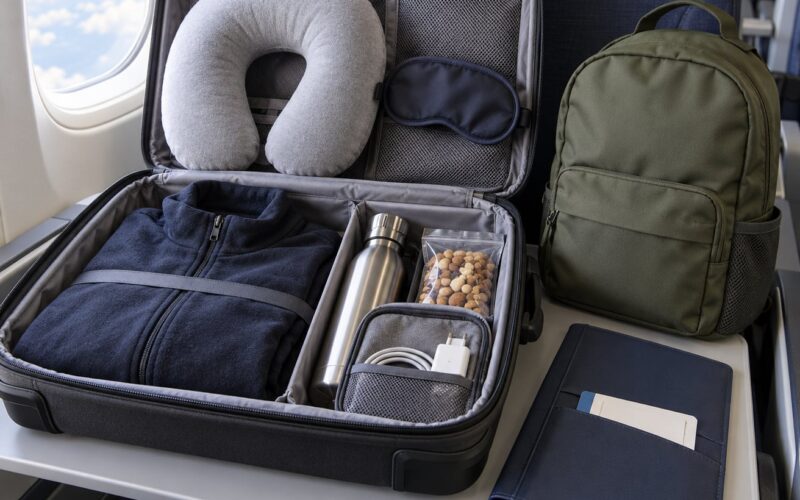
Travellers who pack their own food tend to list a very predictable set: crackers, granola bars, nuts, dried fruit, sandwiches, apples and cut vegetables. That list is unremarkable, and that is exactly why it works. Nothing on it is going to surprise you at 35,000 feet.
If you need something more specific
Low-FODMAP travellers pack for every flight, because airline meals are hard to predict and often trigger symptoms. Ginger candy or ginger tea is the common choice for people who feel queasy, and it is worth carrying either way. A thermos of something hot and mildly sweet is underrated on a red-eye, when the coffee on board tastes like it was brewed at the altitude.
If you can get aisle space when boarding, walk. Walking the cabin a couple of times on a long flight is the cheapest relief there is for trapped gas, and travellers report it works better than anything they have eaten around beforehand.
How to Time Your Meal Before Leaving
There is no universal wait time. A 90-minute hop and a 14-hour haul want completely different plans, and how long you can sit still changes everything. What follows is a shape rather than a rule. Move it to suit your own digestion.
A countdown for a long-haul
- 24 hours before: this is the window regular flyers cite for cutting back on beans, lentils, chickpeas, cabbage and other gas-producing foods. Dinner the night before is the meal most worth choosing carefully.
- 12 hours before: drop the fried food, the very rich dishes and anything salty in a packet. Keep eating normally, just lighter on fat and sodium.
- 4 hours before: your main pre-flight meal. Moderate, low-fat, nothing you have never eaten before.
- 1 to 2 hours before: stop eating. A snack is fine if you are hungry, but keep it small and drink water rather than coffee.
- At the gate: still water or herbal tea. Skip the carbonated drink.
Short-haul and red-eye flights work differently
On a two-hour hop, digestion has not got far before you land, so the 24-hour rule mostly does not apply. Eat normally, skip the fizzy drink, and be done with food an hour before boarding.
Red-eyes need a different question. Can you manage a small meal, or will eating at all make you feel worse? For most people, a few crackers or a banana about two hours before boarding gives you something in the stomach without costing you sleep. For others, an empty stomach on an overnight flight is genuinely uncomfortable, and skipping dinner is not the answer for them.
Jet lag adds its own layer. Eat close to the clock time of your destination rather than shifting everything at once, and keep the first few meals light. Trying to adjust your body clock with one large meal at an odd hour rarely works as well as several small ones.
Travelers With Special Dietary Needs
If you manage a condition rather than just an occasional sensitivity, general advice stops being enough. Travelling with IBS, coeliac disease, diabetes, a serious allergy or a prescribed low-FODMAP plan is a planning job, not a list of swaps, and the useful advice comes from your own clinician.
A few things are true for almost everyone in that group. Pack your own food, because what you did not bring is what you do not control. Check airport security rules for anything you need to carry, since liquids and gels have their own rules. Keep anything medically necessary in your hand luggage, not checked. And build in slack, because a connection that goes wrong without a backup meal in your bag becomes a real problem at short notice.
Anyone on regular medication should ask their pharmacist what to do if a flight is delayed across time zones, and pack enough for a few extra days. That conversation is free and saves a lot of trouble.
Children and older travellers deserve a mention too. For young children, plain familiar foods such as crackers, fruit and sandwiches are the safe bet, and new foods are a poor idea before a flight. For older travellers, appetite and thirst often drop, so small frequent sips matter more than large glasses, and sitting in an aisle or near the lavatory is worth asking for at check-in.
Frequently Asked Questions
Should I fly on an empty stomach?
Usually not, but it is not one rule that fits everyone. Most travellers feel better with something small, a few hours before boarding, than with either a heavy meal or nothing at all. An empty stomach on a red-eye can be uncomfortable in its own way. If you are prone to reflux or nausea, a light snack usually beats fasting. Only skip food if flying on an empty stomach is something you already know you tolerate well.
What is the best thing to eat before a flight?
A small, familiar, low-fat meal with protein and carbohydrate. A plain sandwich with chicken or cheese, rice or pasta, or yogurt all work well, eaten two to four hours before departure. The meal should be something you have eaten before, not a new dish from an airport you do not know. If you are late and only have a shop to stop at, a banana and crackers will do more good than a greasy pastrami sandwich.
How do I stop feeling gassy on a plane?
Prevention comes first: keep away from beans, lentils, chickpeas, cabbage, broccoli and fizzy drinks for about 24 hours before a long flight, which is the window the frequent-flyer community consistently recommends. Once you are in the seat, walk the aisle every hour or two, which most travellers report helps more than anything. Drink water rather than soda, and avoid chewing gum in the cabin.
How long does airplane bloat last?
For most people, discomfort clears within a few hours after landing, once you are upright and moving again. Gas that has had hours to expand does not clear instantly, and a tight seat can leave you tender for the rest of the day. It is worth speaking to a doctor if bloating is a regular or painful part of flying, or if it comes with changes in bowel habits, as those deserve a proper assessment.
Should I eat the airline meal on a long flight?
It depends on the airline and the route, and on what you can handle. Many travellers eat it and get on with the flight; others bring their own because airline meals tend to be salty and oily, which adds to water retention and tiredness. If you are travelling with a dietary condition or a sensitivity, bring your own food. Otherwise, look at the options when you board, eat the vegetable dish if there is one, and skip anything heavy.
If you only remember one thing, make it the 24-hour window. Pick an ordinary dinner the night before that is lighter on beans, fried food and salt than usual, have a modest meal a few hours before departure, keep the fizzy drink for after you land, and sip water through the gate. For long flights, ask for an aisle seat and walk the cabin once an hour. That is the whole routine, and it costs nothing.