Most people who feel unwell after a trip did not catch anything on the plane itself. They picked up a virus in the days around the flight and only noticed once the symptoms had time to build. Knowing how to avoid getting sick after flying comes down to three habits: protect your hands and surfaces, keep water and normal meals coming, and spend the first three days after landing looking after yourself instead of charging straight into a meeting or a holiday.
This is general information, not medical advice. If you have a condition, take regular medication or are pregnant, talk to your doctor before travelling.
Table of Contents
- What You Need
- How to Avoid Getting Sick After Flying: Step-by-Step Plan
- How to Avoid Getting Sick After Flying: Before You Board
- How to Avoid Getting Sick After Flying: During the Flight
- How to Avoid Getting Sick After Flying: After You Land
- Common Mistakes
- Frequently Asked Questions
- Can dehydration make you feel sick after a flight?
- Does airplane air make travelers sick?
- Should I wear a mask on a plane to avoid getting sick?
- What should I eat before and during a flight to avoid feeling ill?
- How soon after flying should I be concerned about symptoms?
- Can I take motion-sickness medicine before a flight?
- Conclusion: Start Before You Fly
What You Need
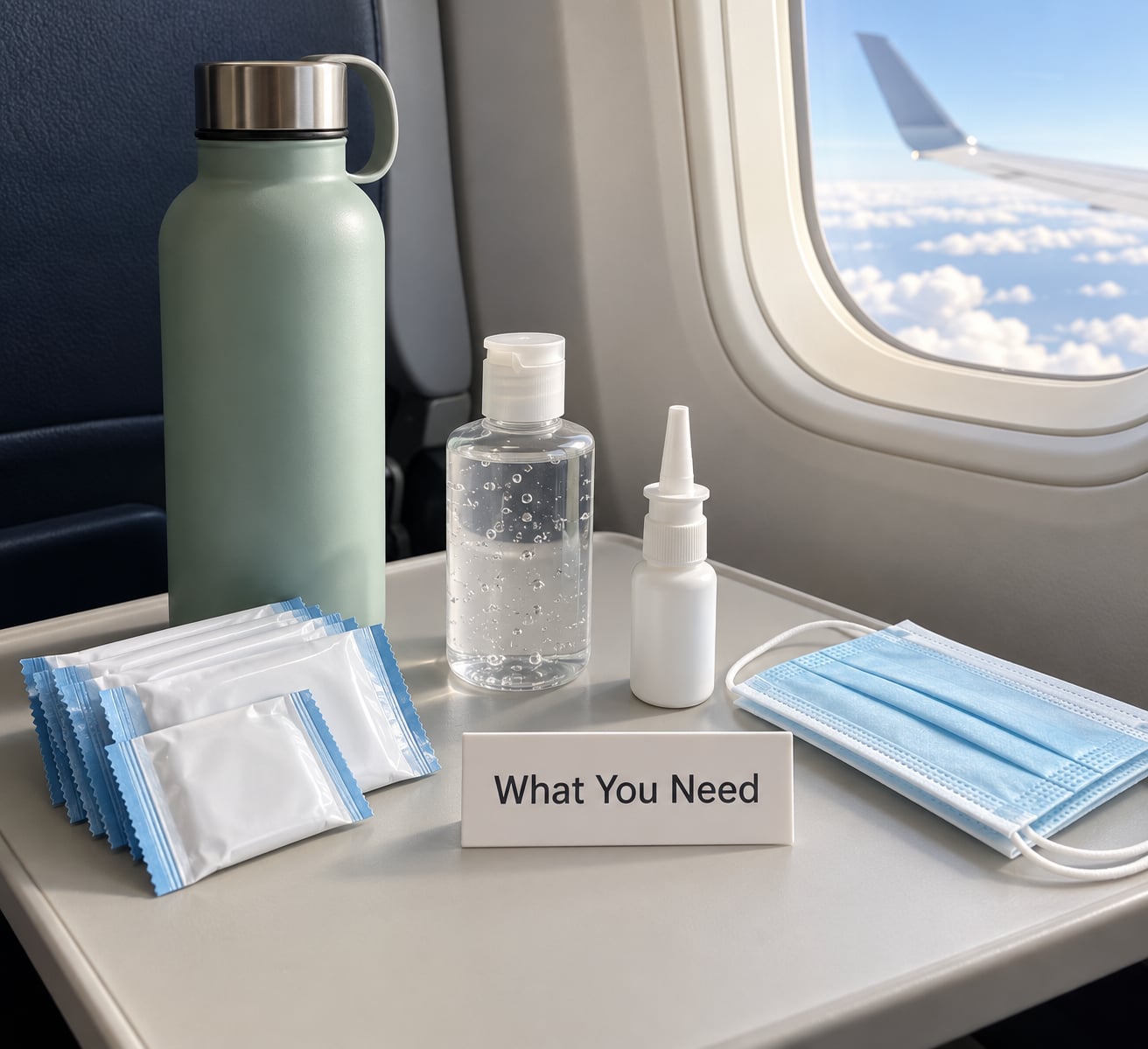
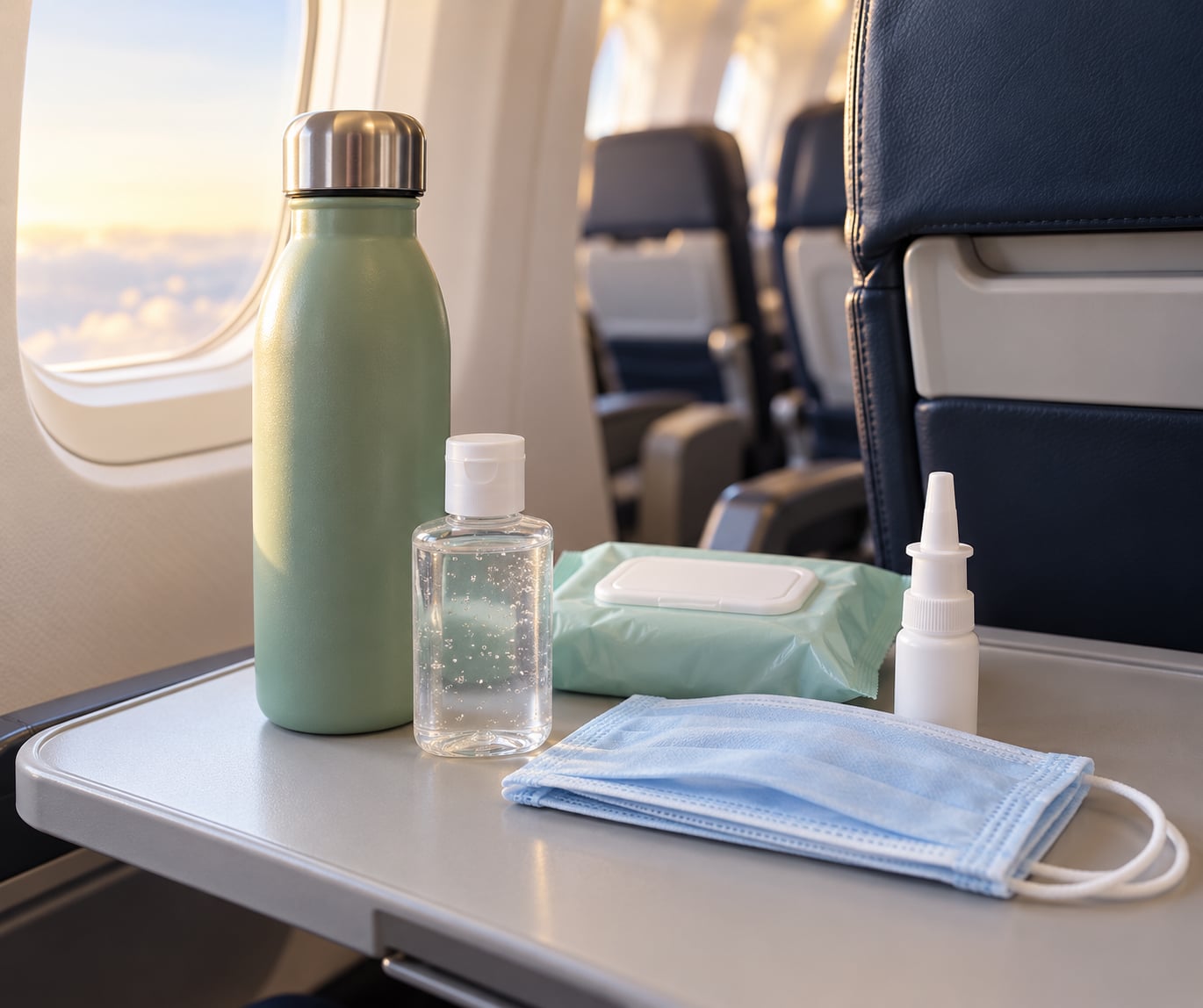
None of this is expensive or exotic. You can assemble the whole kit in about ten minutes the evening before a trip, and most of it lives in a carry-on bag for years.
| Item | What it does |
|---|---|
| Refillable water bottle | Cabin air is very dry, so sipping steadily matters more than drinking in one go |
| Hand sanitizer, 60% alcohol or more | Works when there is no sink, especially on deplaning |
| Disinfectant wipes | For the tray table latch, armrests and seat belt buckle |
| Own pillow case or scarf | Removes your face from airline laundered linen |
| Saline nasal spray | Moistens a nose dried out by low cabin humidity |
| Your usual medicines | Anything you take regularly, plus anything you normally keep at home |
| A mask or two | Useful on a full flight, on a sick flight, and in the terminal |
| Easy food you tolerate well | Something you have eaten many times before, for the arrival day |
Add a plan for the arrival day. The single most useful thing you can arrange before a flight is a free evening with nothing scheduled. Symptoms usually arrive in that window, and a quiet first night is a much better place to find out how you feel than the middle of a city dinner.
How to Avoid Getting Sick After Flying: Step-by-Step Plan
How to Avoid Getting Sick After Flying: Before You Board
Start two or three days out, because the useful changes are boring and slow. Get a normal amount of sleep in the nights before you fly. Sleep is the one lever that reliably affects how your immune system handles a germ, and a red-eye on two hours of sleep is the worst possible starting point.
Eat your usual meals and drink your usual amount of fluid. There is no point arriving dehydrated and then trying to fix it at 35,000 feet.
Check whether your routine vaccinations are current, especially the flu shot, which should go in a couple of weeks before travel rather than the day before. Keep those records somewhere you can reach them.
Pack the kit above, and fill your bottle after security rather than before. If the trip includes a stop in a region where tap water is not treated the same way, drink sealed bottled water instead.
Do not try a new restaurant, a new spice or a big night out on the night before the flight. A stomach that is busy on a plane is a stomach you cannot control, and you have no idea how your body will react to that new dish.
Skip the heavy drinking. Alcohol at altitude dries you out further, fragments sleep and makes dehydration harder to notice, which is a bad combination on a ten-hour flight.
How to Avoid Getting Sick After Flying: During the Flight
The most common myth about planes is that you are breathing recycled germs from the previous passenger. Modern aircraft have HEPA filters in the recirculation system that capture around 99.97% of particles, and cabins are typically refreshed many times an hour. The air itself is one of the cleaner parts of a travel day.
Cabin air does get circulated upward rather than back and forth along the cabin, so aiming your vent straight at your face pulls air from the ceiling area near you rather than from a coughing neighbour two rows back. A mask does the same job more reliably if you are seated next to someone who is visibly unwell.
The bigger transmission route is surfaces. When you sit down, wipe the tray table and its latch, the armrests, the seat belt buckle, the seat-back pocket handle and the touchscreen if your seat has one. The lavatory door handle and lock are the most-touched surfaces on the whole aircraft, and a paper towel to open the door costs nothing.
Sanitize your hands after wiping, after using the lavatory, before eating and before you touch your face. That last one is the hard habit. Eyes, nose and mouth are the entry points, and a hand that has been on an armrest for an hour does not need much encouragement.
Keep drinking through the flight. Aim for water most of the time, skip the alcohol, and go easy on coffee if you are sensitive to it. Choose food you would happily eat on the ground, and skip anything that is sitting out warm. Airline galleys are small, refrigerated spaces serving hundreds of meals, so a sandwich at the end of a long sector deserves a second thought.
Move your legs every hour or two and stretch your neck and shoulders. Staying still for ten hours is what makes you feel worse, not the altitude.
Use your own pillow case if you have one, and avoid airline blankets near your face if you are sensitive. Wipe the headphones, handset and touchscreen provided at the seat before you use them.
If someone beside you is coughing and you cannot move seats, do what several frequent flyers describe: put the mask on and turn your vent so the airflow is not angled across the space between you. It is a small thing that takes four seconds.
How to Avoid Getting Sick After Flying: After You Land
Here is the part almost every piece of advice online leaves out. If you caught something on that flight, you probably will not feel it yet. Common respiratory viruses have an incubation window that runs from about a day to three, which is exactly why so many people fall ill at the start of a holiday rather than in the air.
That delay is also why people get the cause wrong. Airport check-in kiosks, baggage belts, waiting lounges and the walk to your hotel all expose you to people, and the terminal is often a bigger risk than the cabin. If you feel rough three days into a trip, the flight is a reasonable suspect but not the only one.
For the first 72 hours after landing, keep to a simple routine:
- Drink water steadily and eat regular meals, including something with protein and vegetables at each sitting.
- Sleep at your normal local time where you can, and get outside into daylight early, because daylight is the strongest signal for resetting your clock.
- Move gently: a walk, some stretching, nothing heroic after a long sector.
- Wash your hands on arrival, change your clothes, and leave the travel kit in the bag until you have showered.
- Watch your symptoms for a couple of days rather than treating everything as a cold. A cough with breathlessness, chest pain, confusion or a high fever that will not settle needs a doctor, not a self-diagnosis.
If you do start feeling unwell, rest, fluids and time do most of the work, and over-the-counter remedies can ease symptoms. Anything else, including antibiotics, belongs with a clinician who can actually look at you. Travelers with underlying conditions, a weakened immune system or a pregnancy should speak to a doctor before the trip rather than after symptoms start.
Common Mistakes
- Assuming the air is the problem and ignoring surfaces. The filtration myth is one of the most persistent in travel. Wiping the tray table latch and armrests does more for most people than any mask ever will.
- Trusting tap water or a carafe poured from it. Fill your own bottle after security. If you want a hot drink, use sealed sachets rather than a machine filled from the aircraft tank.
- Skipping food because you are not hungry. An empty stomach at altitude makes nausea much more likely and gives you nothing to work with during a long sector.
- Touching your face all flight. Adjusting glasses, rubbing an eye, picking at your nose. Every one of those hands has been on a shared surface recently.
- Wearing a mask for hours when it is uncomfortable and wet. A damp mask does less than a fresh one. Bring two or three and swap them out.
- Alcohol before sleeping on the plane. It shortens the useful part of your sleep, dries you out and leaves you groggy at the gate.
- Booking the arrival day as if you will be fine. The symptoms that arrive on day one or two are the whole reason this article exists. Leave the first evening free.
- Expecting supplements to do the work. Airborne, Emergen-C and similar products have not been shown to prevent a cold. A normal diet, adequate sleep and up-to-date vaccinations are the parts that count.
If you want the minimum routine that still does most of the good: sanitize your hands, avoid touching your face, keep drinking water, choose normal food, and get a decent night’s sleep after you land. Everything above that is an upgrade.
Frequently Asked Questions
Can dehydration make you feel sick after a flight?
Often, yes, and it is the most easily missed explanation. Cabin humidity is very low, so you lose fluid through your airways and skin faster than you would at ground level. Combine that with alcohol, coffee and a long flight without eating, and headache, dry nose, sore throat, dizziness and tiredness can all follow. None of that is an infection, and it clears with fluids, food and sleep rather than anything else.
Does airplane air make travelers sick?
The air is less of a problem than most people assume. Modern aircraft filter recirculated cabin air through HEPA filters rated at about 99.97% particle capture, and the air moves from the ceiling downward rather than back toward you. Dry, low-humidity air irritates the lining of your nose and throat, which is what makes you vulnerable, so hydration and a nasal spray matter more here.
Should I wear a mask on a plane to avoid getting sick?
It depends on the flight. A well-fitting mask is genuinely useful when you are seated near someone who is coughing, on a long or crowded sector, or when respiratory illness is circulating at your destination. On a short empty hop in low season it buys you very little. Whichever you choose, bring more than one, and change it if it becomes damp.
What should I eat before and during a flight to avoid feeling ill?
Eat your normal meals and drink normally in the days before you fly. On board, choose food you already know you tolerate, avoid anything sitting out at room temperature, and skip the alcoholic drinks. Most cabins only serve dry or lightly perishable fare, so a sandwich at the end of a long sector is not worth the gamble if your stomach is already fragile.
How soon after flying should I be concerned about symptoms?
Most respiratory infections picked up on a flight start showing symptoms roughly one to three days after landing, which is why people so often blame the wrong part of the trip. Watch anything that gets worse instead of better after two or three days, and get medical advice straight away for breathlessness, chest pain, confusion, or a fever that persists or keeps returning.
Can I take motion-sickness medicine before a flight?
In general, yes, and motion sickness is a common reason people feel unwell during a flight rather than after it. Whether a specific medicine suits you depends on your health, other medicines you take and whether it causes drowsiness, so check with a pharmacist or your doctor rather than copying someone else’s routine. Take it at the label time, ideally before boarding rather than after the first symptom.
Conclusion: Start Before You Fly
Knowing how to avoid getting sick after flying starts before boarding. Sleep properly for two or three nights beforehand, eat your normal meals, drink water, keep vaccinations current, and pack the small kit: sanitizer, wipes, your own bottle and a spare mask.
On board, clean the tray table latch, armrests and seat belt, keep your hands away from your face, drink steadily and skip the alcohol. After you land, remember that symptoms usually arrive one to three days later, so keep the first evening free, sleep at local time, get into daylight and eat properly.
And if something does feel wrong, get it checked rather than guessing. A doctor can tell you in five minutes what a week of internet theories cannot.