Yes, you can bring coffee on a plane, as long as you know which form you’re carrying. Whole beans, ground coffee, K-Cups, instant sachets, and an empty insulated cup all sail through the checkpoint; a cup of brewed coffee larger than 3.4 ounces does not.
The distinction is liquid versus solid, not coffee versus not coffee. Brewed coffee is a liquid, so it falls under the same 3.4-ounce container limit as water or juice. Beans and grounds are dry solids, and the security rules treat them as ordinary food.
There is a second set of rules waiting on the other side of the flight, and it catches people out. Departure security in the U.S. is handled by the TSA; what you’re allowed to bring into the country you land in is handled by customs, which is a different authority answering a different question. We kept updating this guide as of 2026 because the details change more often than most travelers expect.
Table of Contents
- Can You Bring Coffee on a Plane? The Short Answer
- TSA Liquid Rules for Coffee
- What the 3-1-1 rule actually means for a cup of coffee
- Can You Bring an Empty Coffee Cup Through Security?
- Can You Bring Frozen Coffee on a Plane?
- Can You Bring Coffee Through Airport Security in Hot or Iced Form?
- What Happens at the Checkpoint If Your Coffee Is Too Large?
- Can You Buy Coffee After Security?
- Tips for Carrying Coffee on a Flight
- Frequently Asked Questions
- Can I take an empty coffee mug through TSA security?
- Does TSA allow hot coffee if the cup is small?
- Can I bring a frozen coffee or coffee with ice through the airport?
- What happens if my iced coffee has started melting?
- Can I bring a large cup of coffee bought before security?
- Are coffee rules the same at every airport?
- Conclusion
Can You Bring Coffee on a Plane? The Short Answer
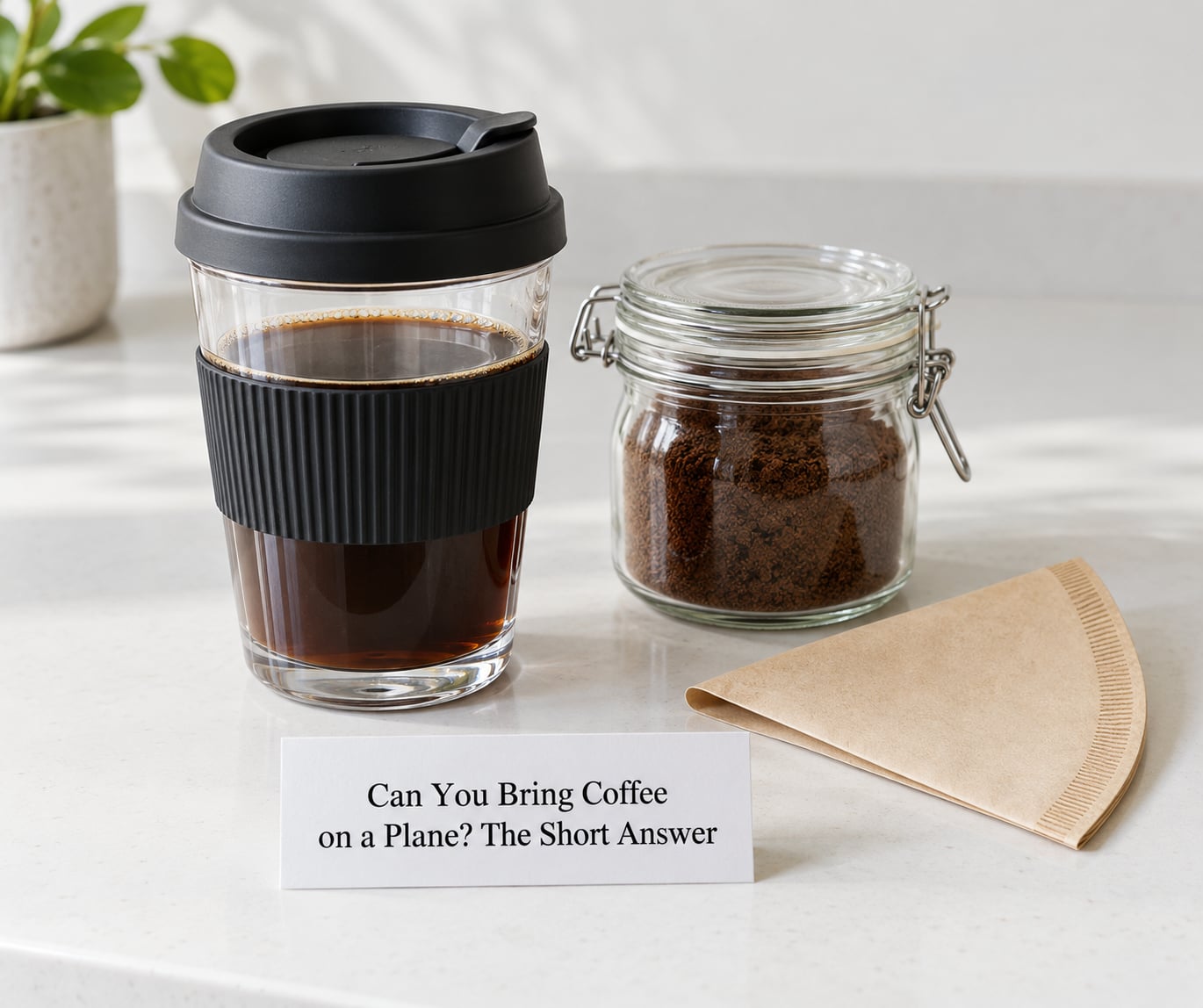
Here’s the version you need before you reach the checkpoint:
- Brewed coffee (hot, iced, cold brew, frappe): allowed in carry-on only in a container of 3.4 oz (100 ml) or less, inside your quart-size liquids bag.
- An empty cup, mug, thermos, or insulated tumbler: allowed. Fill it after security.
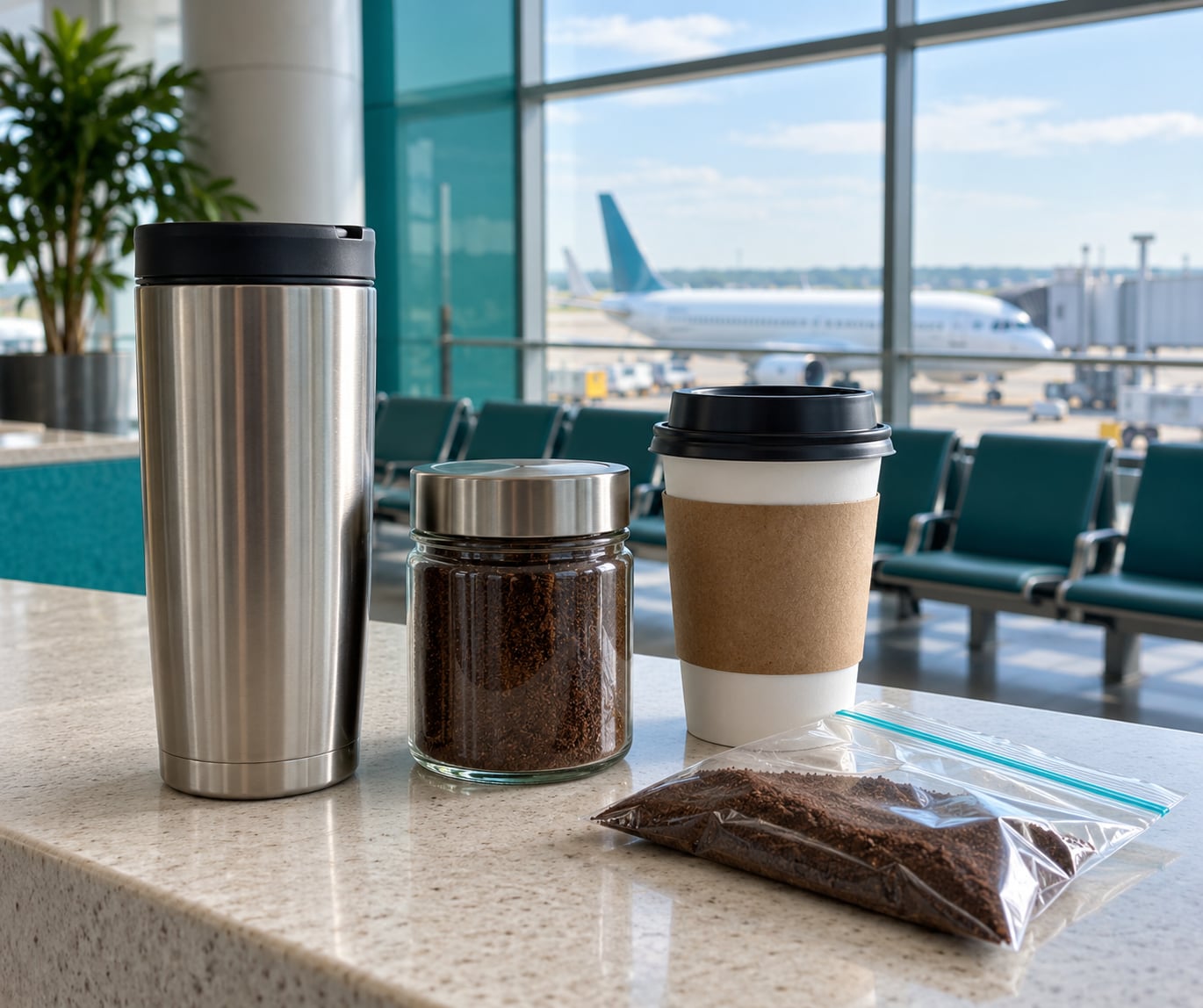
- Whole beans, ground coffee, K-Cups, instant sachets: allowed in both carry-on and checked bags.
- Coffee bought after the checkpoint: no size limit. This is the normal way people take coffee onto a plane.
- Coffee in checked luggage: no liquids limit at all. Wrap it well.
Two details worth remembering. TSA measures the size of the container, not the amount of liquid in it, so a 12-ounce cup with a teaspoon in the bottom is still a 12-ounce cup as far as the officer is concerned. And every liquid, gel, or aerosol counts toward the same single bag allowance, so a bottle of water and a latte are competing for the same space.
TSA Liquid Rules for Coffee
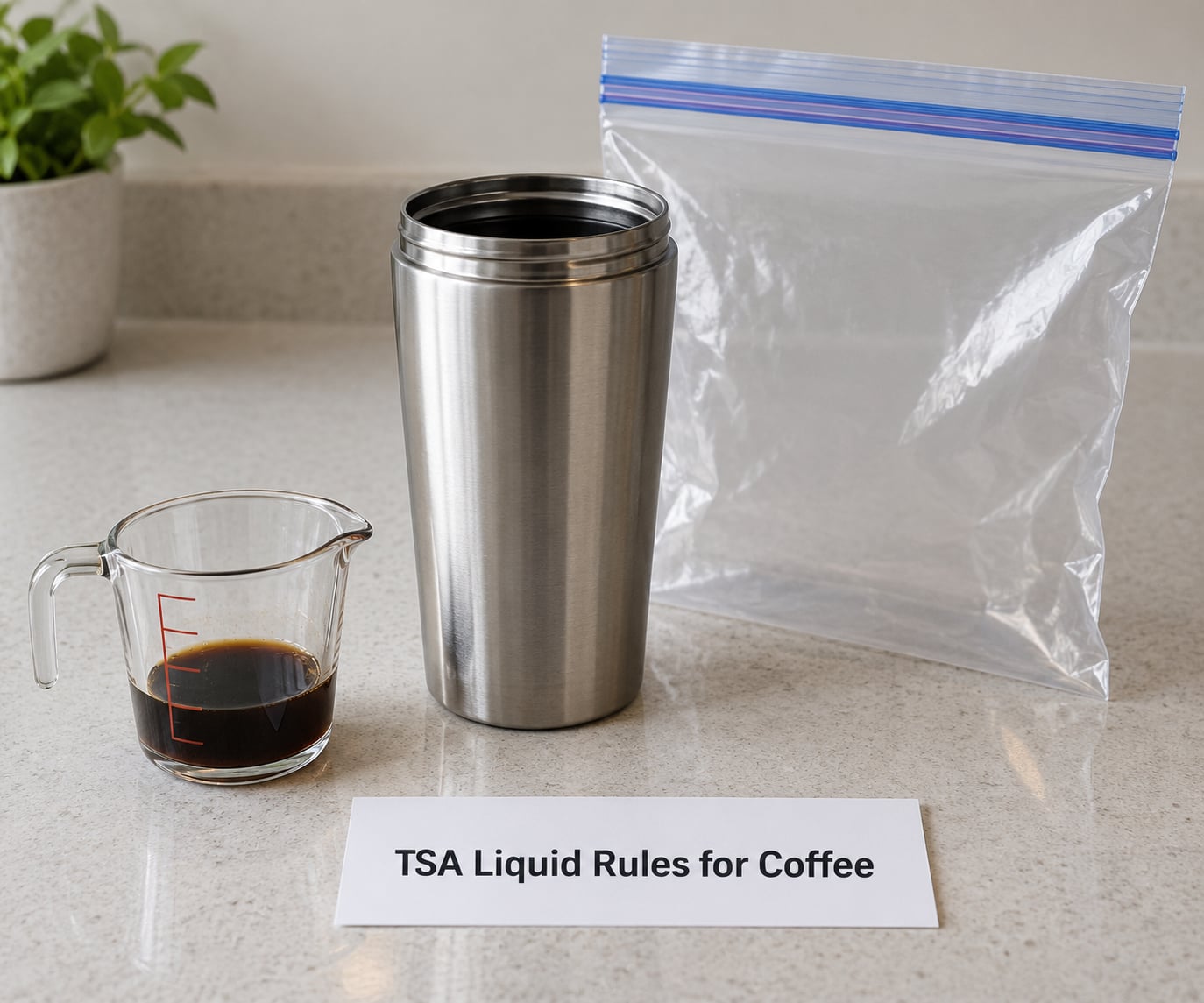
The TSA calls it the 3-1-1 liquids rule, and it is simpler than the name suggests. Three point four ounces per container, one quart-sized clear resealable bag, one bag per passenger. Anything outside those numbers gets pulled aside and tested.
What the 3-1-1 rule actually means for a cup of coffee
Three point four ounces is just over three tablespoons of liquid, which is why the rule feels so aggressive. It is aimed at containers that fit in a quart-sized bag. A standard 12 oz or 16 oz cafe cup will not pass, and neither will a large iced drink, even when the ice keeps the volume down.
Because the limit applies to the container rather than the contents, the practical answer for a cafe habit is to buy after security rather than trying to trim a cup down to three tablespoons.
| What you’re carrying | Carry-on through security | Checked bag | Notes |
|---|---|---|---|
| Brewed coffee, any size | No, over 3.4 oz | Yes | Liquid rule applies |
| Espresso or small concentrate, 3.4 oz or under | Yes, in your liquids bag | Yes | Container size is what counts |
| Whole coffee beans | Yes | Yes | Solid, not a liquid |
| Ground coffee | Yes | Yes | May draw extra screening |
| K-Cups, pods, instant sachets | Yes | Yes | Solid, no limit |
| Empty mug or insulated tumbler | Yes | Yes | Must be empty |
| Coffee bought after security | Yes | N/A | No liquids limit |
| Coffee creamer, syrup, condensed milk | Over 3.4 oz, no | Yes | Treated as a liquid |
One question that comes up constantly: yes, you still need the bag. Liquids, gels, and aerosols over 3.4 ounces have to sit together in one clear, resealable, quart-sized bag, and you only get one per passenger. A second bag without a reason is the fastest way to get pulled aside.
Can You Bring an Empty Coffee Cup Through Security?
An empty cup is not a liquid, so it goes through without complaint. That covers ceramic mugs, vacuum flasks, and the insulated tumblers people carry everywhere, from the big handled style to the narrow bottle shape. Fill it at a fountain, a cafe past the checkpoint, or onboard and you have coffee for the whole flight without touching the liquids bag.
The one failure mode is residue. A cup with a cold inch of coffee in the bottom, or one you rinsed but left a film in, is still a cup with liquid in it. Officers vary on how much they tolerate, and a partially filled tumbler is exactly the situation that gets you sent to additional screening. Empty it, give it a quick rinse, and pack it upside down in a bag so it stays empty in transit.
Travelers on travel forums describe this as routine: walk through with an empty insulated cup, get no questions, fill it after the checkpoint. It is the single most reliable coffee strategy there is.
Can You Bring Frozen Coffee on a Plane?
Frozen items get an exception, but it comes with a strict condition. Ice packs, frozen gel packs, and frozen drinks are allowed when they are completely frozen solid at the moment of screening. If the item is slushy, partly melted, or has any liquid sloshing at the bottom, it gets treated as a liquid and subject to the 3.4-ounce rule.
Cold brew slush, a frappe on its way to melting, or ice that has been sitting in a warm car on a long trip all fail the frozen-solid test. So does a block of coffee ice that has sweated into a puddle around it.
Practical advice if you want to try it: freeze the coffee solid the night before, use an insulated container with an ice pack, and get through the checkpoint before it softens. Then be honest about your odds. A frozen drink that is not rock solid when you reach the officer is a drink you will watch go in the bin.
Can You Bring Coffee Through Airport Security in Hot or Iced Form?
Temperature makes no difference to the rule. A hot latte in a paper cup and a cold brew in a plastic cup are both liquids, and both fail at the same size. Agents describe hot drinks as no easier to carry than iced ones, and a steaming cup is arguably worse because it also risks a spill on someone else’s bag.
Iced coffee has its own wrinkle: condensation. The outside of an iced cup is wet, and an iced drink with a straw in it reads like a drink someone has already been sipping from. Neither is a violation, but both invite a question and sometimes a wipe-down. Removing the straw and wrapping the cup is cheap insurance.
Concentrates behave the same way. Liquid coffee concentrate, bottled syrups, cream, and non-dairy creamer are all liquids, and the non-dairy stuff is a common surprise for travelers who treat it like a pantry item. Under 3.4 ounces goes in the bag. Over that, it goes in the checked bag or stays home.
What Happens at the Checkpoint If Your Coffee Is Too Large?
If you reach the officer with a full coffee, you have three realistic outcomes. The most common is that you pour it into a trash bin right there, which is the painful one everybody pictures. Sometimes you can transfer it into a small container you already have, though many officers will not do that with an open cafe drink. Sometimes you volunteer to be screened and keep it, which works better than it sounds but costs you time.
The reason none of this is negotiable at the counter is that the officer conducting screening has final say. That is official TSA language, not a catchphrase officers invented, and it is why the same drink can pass at one airport and not another on a different day.
Two more limits to keep in mind. There is no penalty for emptying a drink yourself before you reach the line, so the fix is always available if you plan for it. And all of this applies to U.S. checkpoints. Other countries run their own liquid limits, and a few airports with newer CT scanners offer screening that can approve larger containers, but you should not count on it.
Can You Buy Coffee After Security?
This is the normal way travelers take coffee onto a plane. Anything you buy from an airport cafe, a restaurant, or an airline lounge after the checkpoint is no longer subject to the liquids limit, so a 16 oz latte is fine. You can carry it to the gate, drink it while you wait, and take the rest on board.
Three practical wrinkles. If you have a connecting flight, your post-security coffee is only safe until the next screening, where it becomes a liquid again and will likely be dumped. If you buy sealed coffee in a duty-free shop, keep the receipt and keep the tamper-evident bag intact, especially on international connections. And on some small regional aircraft the cabin crew will not serve hot drinks in your own cup for safety reasons, which is more of a comfort complaint than a legal one.
Tips for Carrying Coffee on a Flight
If coffee matters to your trip, the order of operations matters more than the gear. Empty the cup before you leave the house, because there is no penalty for arriving at the checkpoint with an empty cup and there is a real cost to arriving with a full one.
- Carry the cup empty through security and fill it at a fountain or cafe past the checkpoint.
- Keep solids in the carry-on: beans, grounds, and K-Cups survive screening without a liquids problem and cost nothing to bring along.
- Use a leakproof bag for anything that is liquid or has been frozen, in case it needs to be dumped quickly.
- Label homemade bags of coffee with what is inside and where it came from. Unlabeled loose coffee invites more questions at the border than it is worth avoiding.
- Pack liquid coffee in checked luggage inside a sealed bag with padding, and remember that checked bags do not follow the 3.4-ounce rule at all.
- Keep whole beans rather than grounds in checked luggage. Grounds sometimes draw extra screening because of the powdery texture, and beans tend to move through a checkpoint more quietly.
On the international side, roasted and packaged coffee is generally straightforward. Whole coffee fruit is not. Green or unroasted beans, and anything still in the cherry, can be treated as an agricultural product by the destination country, which puts them under biosecurity rules rather than ordinary customs rules. Australia, New Zealand, and the European Union are all stricter than the U.S. on unprocessed plant material. Check the destination’s rules before you pack, and declare it if in doubt, rather than discovering the problem at the border.
Frequently Asked Questions
Can I take an empty coffee mug through TSA security?
Yes. An empty mug, thermos, or insulated tumbler is not treated as a liquid and passes through the checkpoint without any size restriction, which makes an empty cup the standard workaround for anyone who wants coffee in flight. The cup does need to be genuinely empty, since a small amount of leftover liquid can trigger additional screening. Rinse it, pack it upside down, and fill it once you are past the checkpoint.
Does TSA allow hot coffee if the cup is small?
Temperature is irrelevant to the rule. Hot, iced, and room-temperature coffee are all liquids, and each is measured by the size of its container. A cup of 3.4 ounces or less goes in your quart-size liquids bag and passes. A 12 ounce latte fails whether it is steaming or cold, so buying after security is the practical answer for anyone who wants a full-size drink on board.
Can I bring a frozen coffee or coffee with ice through the airport?
Only if it is frozen solid at the moment of screening. TSA allows frozen items, but anything partly melted, slushy, or sitting in a puddle of melt water is treated as a liquid and falls under the 3.4-ounce limit. This also applies to ice in a water bottle or tumbler. If it has started to soften in transit, expect to dump it rather than argue for it.
What happens if my iced coffee has started melting?
It gets treated as a liquid, which means a normal cafe cup will not make it through the checkpoint. The realistic outcomes are drinking it before you reach the line, transferring it into a container of 3.4 ounces or less if an officer allows, or pouring it out. Some officers will send you to additional screening and let you keep it, and the officer conducting screening always has final say.
Can I bring a large cup of coffee bought before security?
Not through the checkpoint, unless the container is 3.4 ounces (100 ml) or smaller. Coffee purchased before security is subject to the same liquids rule as any other drink, and a 12, 16, or 20 ounce cup will be discarded or transferred at the line. Buying the same drink after the checkpoint removes the limit entirely, which is why most travelers time their purchase to the airside side of security.
Are coffee rules the same at every airport?
U.S. checkpoints follow the same TSA liquids rule, and the officer at the checkpoint has final say on the day. Other countries set their own limits, which are often similar but not identical. A few airports with newer CT scanners can sometimes approve larger liquid containers, but that is airport-specific and never something to rely on. Arrival rules are separate again, and customs in the destination country decides what coffee you may bring in.
Conclusion
Start by asking what you are actually carrying. Coffee you have already bought and poured is a liquid and probably has to go. Coffee that is still beans, grounds, pods, or powder can come with you in any bag. A cup that is empty is the easiest coffee problem in the world to solve.
Travelers who never lose a coffee follow the same habit: carry the cup empty, bring the beans if you want your own, and buy the drink you actually want after the checkpoint. If you are flying internationally, check the destination’s biosecurity rules before packing green beans or coffee fruit, since customs asks a different question than security does.