Short answer: not really, not the way most people imagine. Cabin air passes through HEPA filters rated at 99.97% efficiency, so airborne germs are removed continuously, and the air that does circulate is refreshed every two to three minutes. The real exposure risk on a flight comes from sitting close to a sick passenger and from touching shared surfaces, not from the air itself.
I fly often enough that this question comes up in my own travel planning, and the confident answer you get from a stranger on a forum is usually wrong in one direction or the other. Some people treat a plane like a petri dish. Others wave it off entirely. The honest answer sits in between, and the details matter more than the vibe.
Table of Contents
- How Does Air Circulate Inside an Airplane Cabin?
- What the HEPA filters actually do
- How often is the air completely replaced?
- Can Airplane Air Spread Germs Between Passengers?
- So does the air on a plane spread germs after all?
- How long do germs stay in the air?
- Which Germs Are Most Likely to Spread on a Plane?
- Does the Air on a Plane Spread Germs More Easily Than Other Indoor Spaces?
- How Do You Reduce Your Risk of Catching Germs During a Flight?
- Are Airplane Airports and Crew Handling a Bigger Risk?
- What Should Travelers Do If They Feel Sick on a Plane?
- Frequently Asked Questions
- Does the air on a plane spread germs through the cabin?
- Are airplane cabins less safe than offices for catching respiratory germs?
- Can you catch a cold or flu from sitting next to someone on a plane?
- Do HEPA filters make airplane travel completely safe from COVID and other viruses?
- Is a mask worth wearing during a flight?
- Should you stay home if you have a mild illness before traveling?
- The Practical Takeaway
How Does Air Circulate Inside an Airplane Cabin?
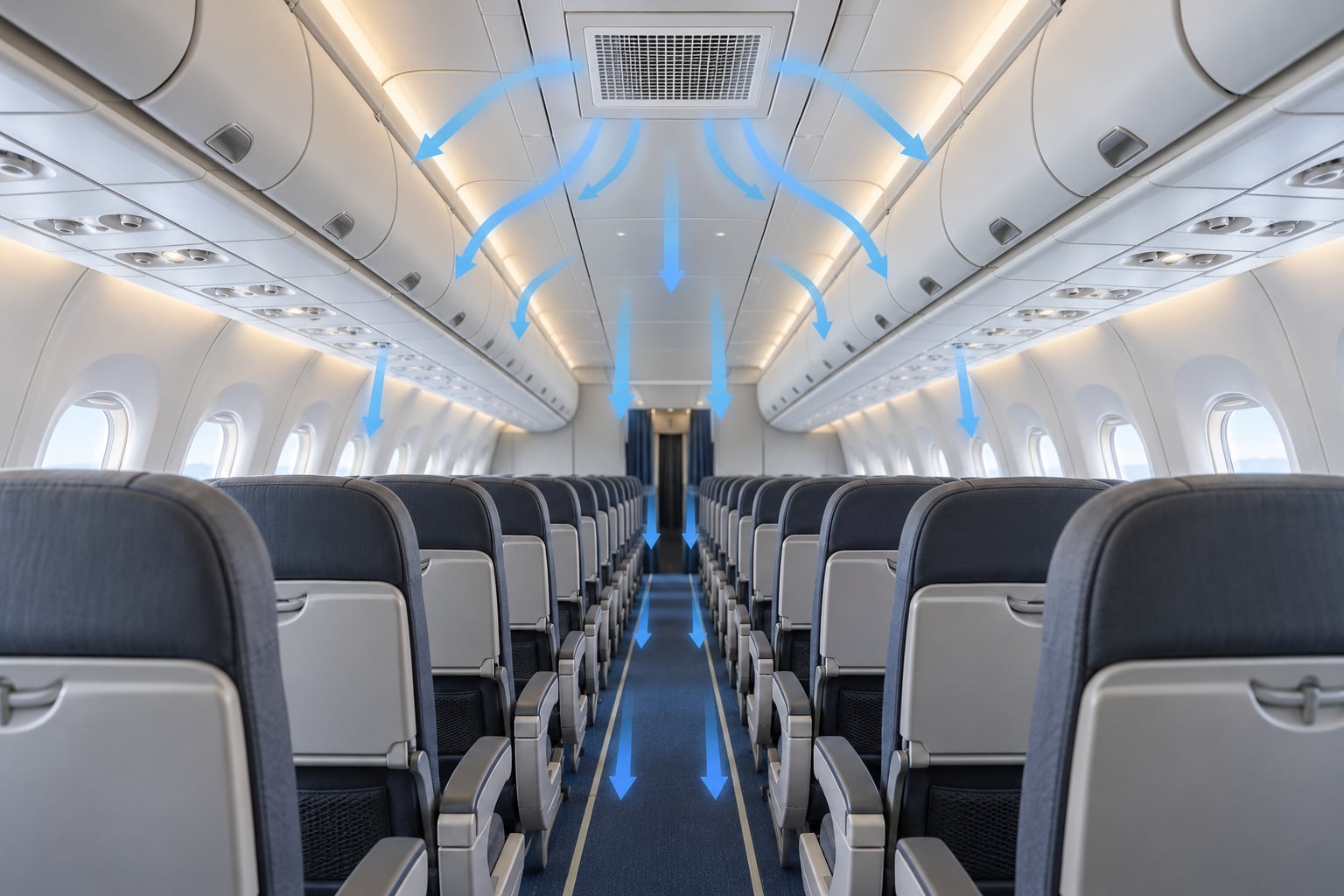
Modern airliners do not breathe the same stale air the whole flight. They pull fresh outside air through ports near the front and rear of the aircraft, mix it with recirculated cabin air, push the combination through HEPA filters, and deliver it along the ceiling before it falls toward the floor. The downward, ceiling-to-floor pattern is deliberate: it limits how far respiratory particles travel fore and aft along the cabin.
That blend matters. Your breath is not being blown back into your face in an unfiltered loop, but the cabin is also not being flooded with pure outside air. Around 20% of the airflow on a typical narrow-body is fresh air from outside, with the rest recirculated through filtration.
| Cabin air fact | What you will find |
|---|---|
| HEPA filtration efficiency | 99.97% for particles at 0.3 microns |
| Air volume refreshed | Roughly every 2 to 3 minutes |
| Fresh outside air | About 20% of cabin airflow |
| Airflow direction | Ceiling supply, falling to floor level |
| Cabin humidity | Often around 10 to 20% relative humidity |
| Risk zone for droplets | Most concentrated within about two rows of an ill passenger |
What the HEPA filters actually do
A HEPA filter is not a fan and it does not kill anything. It traps particles, including the aerosol-sized droplets that carry respiratory viruses, on a maze of fine fibres. The filters work hardest when the cabin is full and moving air hardest during a climb, which is also when crew usually ask passengers to keep their seatbelts fastened and stay seated.
How often is the air completely replaced?
Completely is the wrong word, and it is where most of the recycled-air myth lives. The whole cabin air volume is turned over every two to three minutes, but what flows through the ducts is a filtered mix rather than a full flush of new air. It is a fast, continuous cleaning process, not a periodic purge.
Regional jets and turboprops use different equipment from wide-body aircraft, and filtration detail varies by type and age. If a specific aircraft matters to you, ask the airline rather than assume.
Can Airplane Air Spread Germs Between Passengers?
It can, but the route is narrower than people assume. Germs reach you mainly as droplets and aerosols released when an infected person breathes, talks, coughs or sneezes, and those particles concentrate in the small volume of air near that person before dilution and filtration do their work. Spread beyond a couple of rows is uncommon.
The strongest evidence comes from a 2020 report in CDC’s Emerging Infectious Diseases journal, which traced a COVID-19 outbreak on a long-haul flight. Exposed passengers were concentrated in business and economy seats within two rows of the index case, and no cases were found in passengers seated further away. That pattern matches what public health guidance has said for years: proximity is the dominant factor.
Coordinated public health research, including work summarised by the CDC Yellow Book, notes that otherwise healthy adults can shed influenza virus for five to seven days, so a passenger who feels fine can still be infectious. That is the argument for masking in crowded indoor settings, not an argument against flying.
So does the air on a plane spread germs after all?
Yes, but at a lower rate than an unfiltered, tightly packed room, and concentrated near the source. A 2004 study in the Journal of Environmental Health Research found you were more likely to catch a cold in the air on a flight than from similar exposure on the ground, which surprised plenty of readers at the time. The filters and air changes do not make risk zero.
How long do germs stay in the air?
Larger respiratory droplets settle within minutes; the fine aerosols that hang around longer do not. A well-ventilated cabin with a HEPA filter removes most of them within minutes, which is why the ceiling-to-floor flow matters. The same is true of a room at home with a window open.
Which Germs Are Most Likely to Spread on a Plane?
Respiratory infections come first, because they travel on breath. That list covers influenza, COVID-19, RSV, the common cold and pertussis. Anyone who is coughing or sneezing nearby is the relevant exposure, and distance is your best defense.
Gastrointestinal illness plays a smaller role, and it travels by a different route. Norovirus and bacterial infections such as Salmonella or hepatitis A spread mainly through contaminated hands, surfaces and food handling rather than through the air. The lavatory, tray tables and seat-back pockets matter far more for these than the ventilation system does.
One 2018 study of terminal air sampling at an airport found 4 of 24 samples, about 17%, positive for influenza or adenovirus, which is a useful reminder that the terminal itself contributes exposure too. Tuberculosis is a theoretical concern that health authorities monitor on long-haul routes, and it is not a common reason to avoid flying.
Does the Air on a Plane Spread Germs More Easily Than Other Indoor Spaces?
Not obviously, and this is the comparison most people never make. A plane cabin has a certified filtration system and a hard ceiling on how long you are inside. A typical open-plan office, a commuter train or a school classroom may have none of that, plus more people per square metre and unlimited time.
Where a plane loses points is duration and density. A packed economy cabin puts you in close contact with the same people for hours with no way to leave, and a busy terminal before boarding can be the most crowded indoor space you will enter that day. Long-haul flights also create the conditions for a superspreading event, as the CDC report showed, because one infectious person stays near the same seat cluster for many hours.
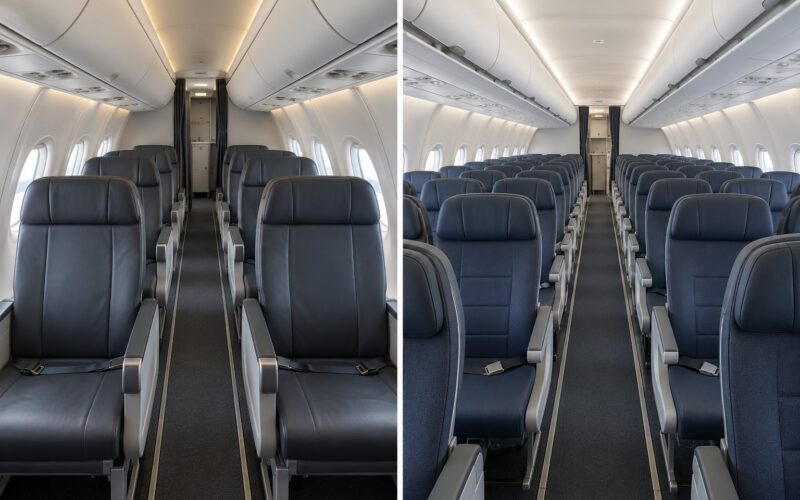
Cabin class changes part of this. More space between seats reduces the airborne exposure, and a premium cabin with fewer people in the row behind you means a cough travels a shorter distance. It does nothing for surface contact, because everyone still shares armrests, lavatories and tray-table surfaces in the same cabin.
How Do You Reduce Your Risk of Catching Germs During a Flight?
Most of this list takes under five minutes. The order matters: the first three steps do more than anything you can do with a wipe.
- Stay current on vaccines. Influenza and COVID-19 vaccination is the single highest-value step for air travel, and it protects the people seated next to you as well as you.
- Do not fly when you are acutely ill. If you have a fever, a productive cough or vomiting, postponing protects a whole row. Airlines would rather you stayed home, and rescheduling fees are usually cheaper than a sick week.
- Choose your seat and your boarding time deliberately. An aisle seat puts you in the traffic of the whole aisle as people shuffle past. A window seat has fewer people walking by you, at the cost of more direct airflow from the wall vent. If you can board late and skip the queue, many travellers do exactly that.
- Wear a well-fitting mask in higher-risk situations. If you are seated within a row or two of someone who is coughing, or you are immunocompromised, pregnant, elderly or caring for an infant, a well-fitted respirator is a reasonable precaution. Advice on masks in transit has swung over the years, but the physics of blocking an aerosol has not changed.
- Clean your hands and clean the surfaces you touch. An alcohol-based hand sanitiser goes in the seat pocket, and wipes belong on the tray table, armrests and any handle you are about to grip. Wash or sanitise before eating, and avoid touching your face.
- Use the overhead vent sensibly. Aim the nozzle toward you but slightly away from a coughing neighbour. It does not filter anything on its own, and it does not blow another person’s breath directly at you, but directed airflow does help move contaminated air away from your face.
| Surface | What the research found | Simple mitigation |
|---|---|---|
| Tray table | 2,155 CFU per square inch in a 2015 TravelMath analysis, about eight times the average lavatory flush button | Wipe before use and before putting anything on it |
| Lavatory door latch and handles | Consistently among the most heavily contaminated touchpoints in published cabin surveys | Use a paper towel, and sanitise afterwards |
| Armrests | Touched constantly by everyone in the row | Wipe the section nearest you |
| Seat-back pocket | Auburn University found E. coli and MRSA surviving on tray tables, seat pockets and armrests for up to a week | Do not stow a used napkin there |
| Overhead bin latch | Ranked behind tray tables and lavatory latches in University of Arizona testing | Use the latch rather than the bin edge, or a tissue |
One caution about that table. High bacterial counts on a surface do not automatically mean you will get sick. Respiratory viruses need a large enough dose and a route into your body, which is why hand hygiene and not touching your face matter more than the raw numbers suggest.
Are Airplane Airports and Crew Handling a Bigger Risk?
For most travellers, the terminal is a bigger risk than the cabin, and boarding is the part of the trip people underestimate. Before you are on the aircraft you are in a crowded, poorly ventilated space with people who have been sitting near each other for hours, often with a cough going around. Deplaning puts you back into that crowd while the aircraft is still emptying.
Once on board, the risk shifts again. Crew move through the cabin constantly, touching seat backs, overhead latches and service carts, and passengers queue in the aisle twice per flight. This is why aviation forum regulars describe the aisle seat as more exposed than the window, and why many of them board last.
Cleaning protocols have also changed. Airlines went through major disinfection upgrades during the pandemic, and much of that has since relaxed to standard touch-point cleaning. In the United States, cabin cleaning is not federally regulated, so practices vary a great deal between carriers and even between aircraft within the same fleet. If cleaning frequency matters to you, it is worth asking your airline directly.
What Should Travelers Do If They Feel Sick on a Plane?
Tell the crew early. They have a reporting process for ill passengers and can move you away from a crowded row, supply a mask or move you to an empty seat when one exists. You will not be asked to fly the rest of the way unwell in silence.
Until you are sorted, put on a well-fitting mask if you have one, keep your hands away from your face, and limit close conversation with the passengers around you. Crew guidance takes priority over anything on this page.
If you are seriously unwell before you travel, do not fly. If symptoms are severe or you are at higher risk of complications, get advice from a doctor or pharmacist before making travel plans, and seek urgent care for trouble breathing, chest pain, confusion or dehydration. This page is general information, not medical advice.
Frequently Asked Questions
Does the air on a plane spread germs through the cabin?
Partly, but the risk is narrower than most people assume. Cabin air passes through HEPA filters rated at 99.97% efficiency and the air volume is refreshed every two to three minutes, so particles get diluted and removed quickly. The CDC report on a long-haul COVID-19 outbreak found cases clustered within two rows of the index passenger, with no cases further away.
Are airplane cabins less safe than offices for catching respiratory germs?
It depends on the space. A certified cabin has HEPA filtration and a hard limit on how long you are inside it, which many open-plan offices lack. But economy cabins are densely packed for hours with no exit, so a busy terminal or a crowded train is not automatically safer than the plane you are about to board.
Can you catch a cold or flu from sitting next to someone on a plane?
It is possible, because respiratory viruses travel on breath as droplets and aerosols, and proximity is the dominant factor. The CDC Yellow Book notes that healthy adults can shed influenza for five to seven days. Distance helps more than anything else, and a well-fitting mask makes sense if you are seated within a row or two of a coughing passenger.
Do HEPA filters make airplane travel completely safe from COVID and other viruses?
No. Filters remove particles from recirculated air very efficiently, but no system catches 100% of what a person exhales, and a filter cannot help with surface transmission. Masks, hand hygiene and sensible seat choice still matter, particularly for immunocompromised, pregnant, elderly and very young travellers.
Is a mask worth wearing during a flight?
For most healthy travellers on an uncrowded flight, the benefit is modest. It is worth it when you are seated close to someone who is coughing, when the cabin is dense, or when you are at higher risk of complications. A well-fitted respirator blocks an aerosol far better than a loose cloth covering, whatever the guidance said at various points in the pandemic.
Should you stay home if you have a mild illness before traveling?
If you have a fever, a productive cough, vomiting or diarrhoea, staying home is the kindest thing you can do for the people beside you on the aircraft. Mild symptoms still add up, and the cabin gives an infected person hours of close contact with the same row. Rescheduling is almost always cheaper than a sick week.
The Practical Takeaway
So, does the air on a plane spread germs? It can, within about two rows of an infected passenger, and the air is already one of the better-filtered indoor spaces you will sit in for hours. It is not the weak point people claim. Proximity to a symptomatic traveller and the surfaces you touch are where your attention pays off.
If you do one thing before your next flight, stay home when you are acutely ill, and keep your vaccines current. Those two habits remove more risk than any wipe or mask in the seat pocket, and both are free. For anything specific to your own health, talk to a doctor or pharmacist before you travel.