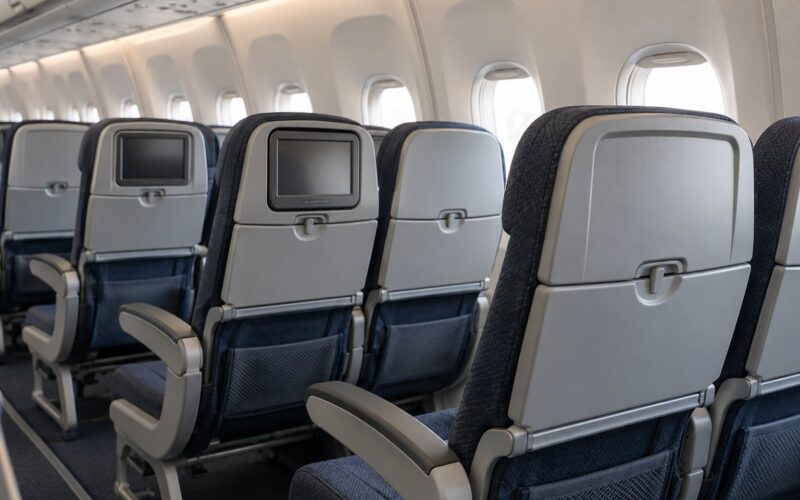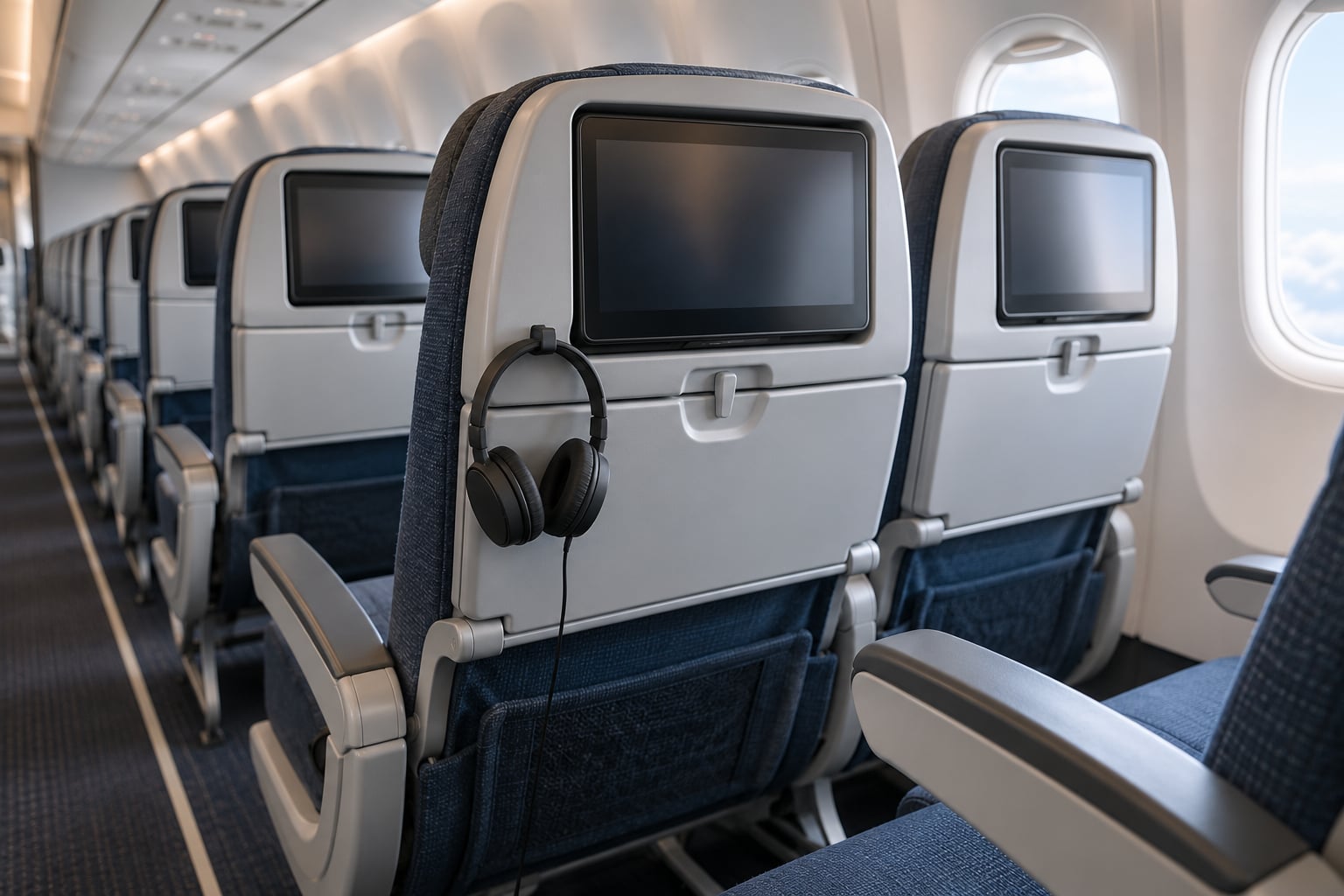
Long-haul widebodies almost always have a personal screen at every seat. US domestic narrowbodies usually do not. That single split explains most of what you will find when you search for which flights still have seat back screens, and it is a more reliable guide than anything a carrier’s marketing page tells you.
Last updated October 2026. Fleets change, cabins get retrofitted, and aircraft get swapped between routes, so treat everything below as the current pattern rather than a guarantee. The one carrier worth watching right now is American Airlines, which announced in August 2026 that it is putting screens back across its narrowbody fleet.
I have checked seat maps and amenity pages for years and the same three rules explain nearly every surprise: the aircraft type decides more than the airline does, the cabin decides the rest, and no carrier promises a specific aircraft on a specific route until the day you fly.
Table of Contents
- Which Flights Still Have Seat Back Screens? At a Glance
- 1. United Airlines Flights With Seat-Back Screens
- 2. Delta Air Lines Flights With Seat-Back Screens
- 3. American Airlines Flights With Seat-Back Screens
- 4. Southwest Airlines Flights With Seat-Back Entertainment
- 5. Alaska Airlines Flights With Seat-Back Screens
- 6. JetBlue Flights With Seat-Back Screens
- 7. Air Canada Flights With Seat-Back Screens
- 8. British Airways Flights With Seat-Back Screens
- 9. Lufthansa Flights With Seat-Back Screens
- 10. Emirates Flights With Seat-Back Screens
- 11. Singapore Airlines Flights With Seat-Back Screens
- 12. Qantas Flights With Seat-Back Screens
- How to Confirm Your Specific Flight Has a Screen
- Read the aircraft type on your confirmation
- Look up that aircraft type on a seat map
- Check the airline’s entertainment page for that cabin
- Recheck 48 hours before departure
- Ask at the gate
- Have a fallback ready
- What Has Replaced Seat-Back Screens on Some Flights?
- Overhead drop-down monitors
- Personal device streaming
- Phone and tablet downloads
- Frequently Asked Questions
- Which airlines still have seatback screens?
- Will American Airlines bring back seatback screens?
- Do any American flights have screens?
- How do I tell if my flight will have TV screens?
- Which airlines have TVs in economy class?
- What is the difference between overhead screens and seatback screens?
- Conclusion
Which Flights Still Have Seat Back Screens? At a Glance
Read the aircraft column before the airline column. Two passengers on the same airline on the same route can get completely different entertainment depending on which jet turns up.
| Carrier | Seatback screens? | Where you are most likely to find them | Best way to confirm |
|---|---|---|---|
| United Airlines | Yes, on long-haul and many international narrowbodies | 787, 777 and Polaris business on transatlantic and Asia routes | Enter your flight number on united.com and read the aircraft line |
| Delta Air Lines | Yes on widebodies; no on most domestic narrowbodies | 767, 777, 787 and A350 in every cabin | Delta.com flight status plus the seat map on the same booking |
| American Airlines | Yes on international widebodies; rolling out to new narrowbodies from 2028 | 777, 787 and A350 across long-haul routes | Check the aircraft on your confirmation, then recheck before departure |
| Alaska Airlines | Mixed; depends heavily on the aircraft assigned | Widebody long-haul and some single-aisle configurations | Alaska.com aircraft lookup for your exact flight number |
| JetBlue | Yes on some narrowbodies, most reliably in premium cabins | A321 and E190 fitted configurations, especially Mint | SeatGuru seat map for the aircraft type shown on your booking |
| Southwest | No personal screens on any aircraft | Personal-device streaming and gate-based entertainment instead | Treat every Southwest flight as screen-free |
| Air Canada | Yes on widebodies; varies on domestic narrowbodies | 777, 787 and A350, plus some transborder narrowbodies | Aircanada.com seat map before selecting seats |
| British Airways | Yes on long-haul and some newer short-haul aircraft | 787, 777 and A350 across all cabins | Manage booking, then the aircraft type shown against your flight |
| Lufthansa | Yes on long-haul; some routes add economy screens | 747-8, A350, 787 and selected 777 services | Lufthansa booking flow, aircraft shown per flight number |
| Emirates | Yes in every cabin on long-haul | A380 and 777-300ER, plus newer widebodies | Emirates.com flight details before you pay |
| Singapore Airlines | Yes, but not in every economy cabin | 777-300ER and A350; some 787 economy cabins ship without screens | Check the seat map for your exact aircraft and cabin |
| Qantas | Yes on international widebodies | A330 and 787 in business and premium economy | Qantas flight details plus the seat map |
| Spirit, Frontier, Allegiant, Ryanair, easyJet, Norwegian | No | Overhead monitors on some short-haul aircraft, nothing at all on many | Assume screen-free and prepare your own content |
The American row is the one most guides have wrong. Right now American screens sit mainly on international widebodies and a small number of other aircraft. The fleetwide rollout changes that over the next several years, not this month.
1. United Airlines Flights With Seat-Back Screens
United has the most confusing spread of the US big three, and the confusion comes from mixing two fleets. On transatlantic, transpacific and Latin America routes you will usually get a 787 or 777 with a screen at every seat in economy, plus the larger ones in Polaris business class.
Domestic is where it gets uneven. Some single-aisle aircraft in United’s inventory carry seatback entertainment and some do not, and the same route can swing either way. A r/unitedairlines thread titled Incorrect Amenities Listed on App? captures the problem exactly: a Boston to San Francisco flight on a 737 MAX 9 listed only Wi-Fi and personal device entertainment, while other United aircraft on the same network had screens.
United’s own entertainment page still explains the seatback system in the first person, which is a good hint that the product is alive rather than being phased out. Check the aircraft line on your booking page, and check it again a day or two before departure.
2. Delta Air Lines Flights With Seat-Back Screens
Delta’s pattern is the cleanest of the three US legacy carriers: screens on widebodies in every cabin, and generally no screens on domestic narrowbodies. If you are flying Delta to Europe, Asia or the southern hemisphere, assume a screen. If you are flying a short domestic hop, assume you bring your own device.
Older narrowbodies are the ones to watch. Some are wired for screens and some are not, which is why seat map checks matter more on Delta than on the big widebodies.
There is also a Delta-specific disappointment worth knowing about. A r/delta thread called Two Flights Today – No WiFi describes the worst outcome for a passenger: no seatback entertainment and no usable internet either. That combination does happen, and it means a downloaded library is your only backup.
3. American Airlines Flights With Seat-Back Screens
Yes, some American flights have seat-back screens. More than 140 of its long-haul aircraft already carry personal screens in every cabin, which covers the Boeing 777, 787 and Airbus A350 flying its international network.
Domestic main cabin is the part most people are asking about, and the honest answer there is no. On August 18, 2026 American announced a fleetwide programme to install seatback screens at every seat. Screens arrive on all new Airbus and Boeing narrowbody deliveries from 2028, with installation across the existing narrowbody fleet targeted for the early part of the next decade. The airline also pointed to 4K displays, USB-C fast charging and Bluetooth audio pairing as part of the package.
A long-time flyer in r/americanairlines described a recent American domestic flight with no screens as feeling like an old flight from back in the day, which tells you how strongly people read the removal. Until retrofit aircraft start showing up in service, book American domestic flights on the assumption that you will watch your own content.
4. Southwest Airlines Flights With Seat-Back Entertainment
Southwest does not have personal seatback screens on any aircraft in its fleet, and it does not plan to add them. Instead the airline sells personal-device entertainment you can load onto your own tablet or phone before boarding, and it has run gate-based entertainment events on some routes where you borrow a device on the ground.
What Southwest does not do is guarantee anything at booking beyond the aircraft type. Since the airline assigns 737s by demand and keeps a famously simple fare, two passengers on the same route can fly different variants of the same family.
Practical upshot: if entertainment at your seat matters, treat every Southwest flight as screen-free and download before you leave the house. If you rely on the airline, ask at the gate when you board and adjust your plans then.
5. Alaska Airlines Flights With Seat-Back Screens
Alaska is a mixed bag and honest guides have to say so. Its long-haul widebodies carry personal screens in every cabin, and some of its single-aisle aircraft have screens in certain configurations while others do not.
The variable is rarely the route name and almost always the aircraft. Alaska also rotates aircraft within a day, so the amenity you saw on the booking screen may not match the jet waiting at the gate.
The fastest check is to pull up Alaska’s flight status page, enter your flight number and read the aircraft type, then look up that type’s seat map. If screens matter, choose a premium cabin on a mixed-fleet route, where the configuration is more consistent.
6. JetBlue Flights With Seat-Back Screens
JetBlue’s screens concentrate in two places: its A321 and Embraer E190 configurations, and its premium products. On many of these aircraft the screen sits in the premium cabin while economy is set up for personal devices, so the question that matters is not just which aircraft but which row.
JetBlue also treats connectivity differently from most US carriers, with messaging and connectivity offered as part of the standard experience rather than strictly behind a paywall. That has historically made JetBlue one of the easier carriers for streaming on a screen-free aircraft.
Look at the seat map for the aircraft type printed on your booking before you pick a seat. On a mixed-cabin aircraft the screen location follows the seat map, not the fare you paid.
7. Air Canada Flights With Seat-Back Screens
Air Canada fits screens into its widebodies across every cabin on long-haul routes, including the 777, 787 and A350. Those aircraft are where the airline invests in the product, and where you can assume entertainment at your seat.
Domestic and transborder narrowbodies are the uncertain zone. Some single-aisle aircraft are fitted with screens and some are not, so a Montreal to Toronto or Ottawa hop can go either way depending on the day.
The reason is structural rather than accidental: Air Canada’s international operations carry hardware built for long-haul service, while its short-haul fleet competes on frequency and turnaround time. Always read the seat map before paying to select a specific seat.
8. British Airways Flights With Seat-Back Screens
On long-haul, British Airways screens are close to universal. The 787-9, 787-10, 777-300ER and A350 all carry personal screens at every seat in economy and above, which covers the Gulf, transatlantic and Asia-Pacific networks.
Short-haul is where British Airways screens survive selectively. Newer narrowbody deliveries in certain configurations include them, while older aircraft frequently do not. A London to Edinburgh hop can therefore have screens, overhead monitors or neither.
Check Manage My Booking for the aircraft type assigned to your specific flight, then look at the seat map. The route itself tells you very little.
9. Lufthansa Flights With Seat-Back Screens
Lufthansa screens cluster on the long-haul fleet: the 747-8, A350, 787 and the 777 services all have personal screens in economy, premium economy and business.
The airline’s Allegrisiya concept goes further than screens at the seat, adding larger displays and an upgraded cabin on some long-haul routes. On other routes you get a standard seatback screen, and on most short-haul European flights you get nothing at the seat and rely on your own device.
Because Lufthansa rotates widebodies by schedule, always read the aircraft type on your booking confirmation. It is the single most useful line of text on the page for entertainment purposes.
10. Emirates Flights With Seat-Back Screens
Emirates is close to a guaranteed yes. Its A380 and 777-300ER long-haul fleets carry a personal screen at every seat in economy, business and first, and newer widebody deliveries continue that pattern.
Economy seats on these aircraft typically come with a screen, a USB charging point and a headphone connection built in, which matters if you travel without a device or with children who need something to watch.
The route caveat here is small but worth knowing: not every Emirates flight is operated by Emirates, so codeshares and partner-operated services can behave differently. Confirm the operating carrier and the aircraft before you assume screens.
11. Singapore Airlines Flights With Seat-Back Screens
Singapore Airlines is a case where the aircraft matters more than the carrier’s reputation. The 777-300ER and A350 deliver screens at every seat, while some 787 economy cabins have shipped without seatback entertainment, with screens limited to premium economy and business.
That means a business-class booking on a widebody is close to certain, and an economy booking on certain 787 services is not. Read the seat map for the exact aircraft rather than the route or the fare brand.
The airline also tends to update cabin products on long-haul types more often than short-haul ones, so an aircraft that had screens last season may not have them this season. Check close to departure.
12. Qantas Flights With Seat-Back Screens
Qantas concentrates entertainment on its international widebodies. On A330 and 787 services, screens are standard in business and premium economy, and availability in economy depends on the specific aircraft and the status of its cabin refurbishment.
Domestic routes on narrowbody aircraft generally do not have personal screens, so a domestic hop with Qantas is a personal-device flight.
Since Qantas assigns widebodies across a rotating international schedule, check the aircraft type in your booking and again on the day. If screens are the deciding factor between two Qantas itineraries, the aircraft line should decide it.
How to Confirm Your Specific Flight Has a Screen
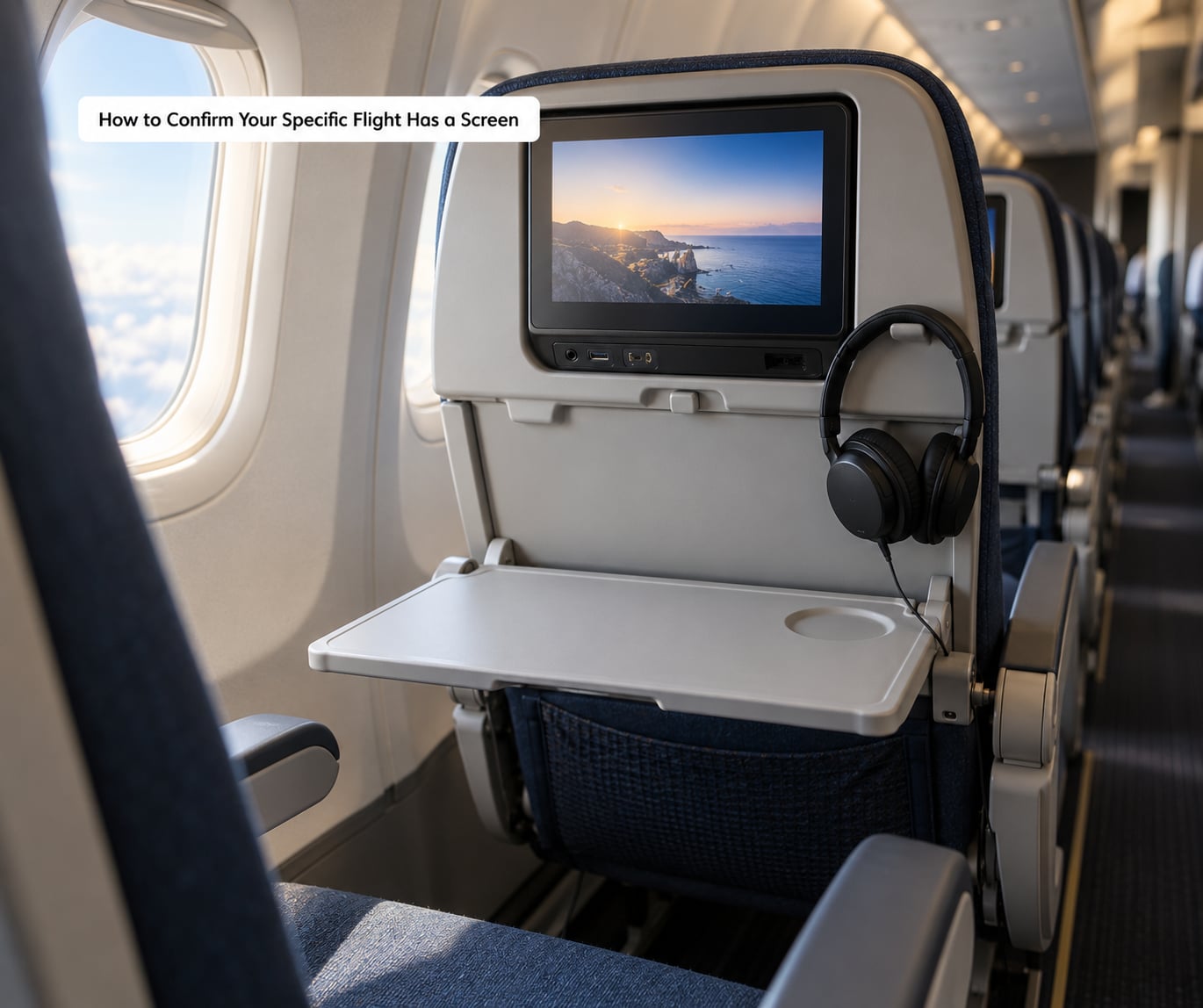
Any of these steps beats a carrier-level claim, and the first one catches most problems. Work through them in order.
Read the aircraft type on your confirmation
Find the flight number and the aircraft type printed against it. This is the only detail that tells you anything about the entertainment you will actually have.
Look up that aircraft type on a seat map
Seat map services and airline seat selection tools show the cabin layout, including whether a cabin has screens at every seat. If screens appear only behind premium rows, that is where they are.
Check the airline’s entertainment page for that cabin
Most carriers publish what their entertainment offering includes by cabin and sometimes by aircraft. United, Delta, British Airways and Lufthansa all keep current pages describing seatback systems, content and connectivity.
Recheck 48 hours before departure
Aircraft swaps are routine, and the roster can change inside two days. A r/unitedairlines example showed the app listing one entertainment setup while the aircraft actually delivered another, which is exactly the failure this step catches.
Ask at the gate
Gate agents know the assigned aircraft and cabin configuration. A quick question costs nothing and is more reliable than any third-party amenity list.
Have a fallback ready
Download your content before boarding regardless of what you found. Screens, Wi-Fi and streaming all fail, and the person with a downloaded library is the one having a good flight.
What Has Replaced Seat-Back Screens on Some Flights?
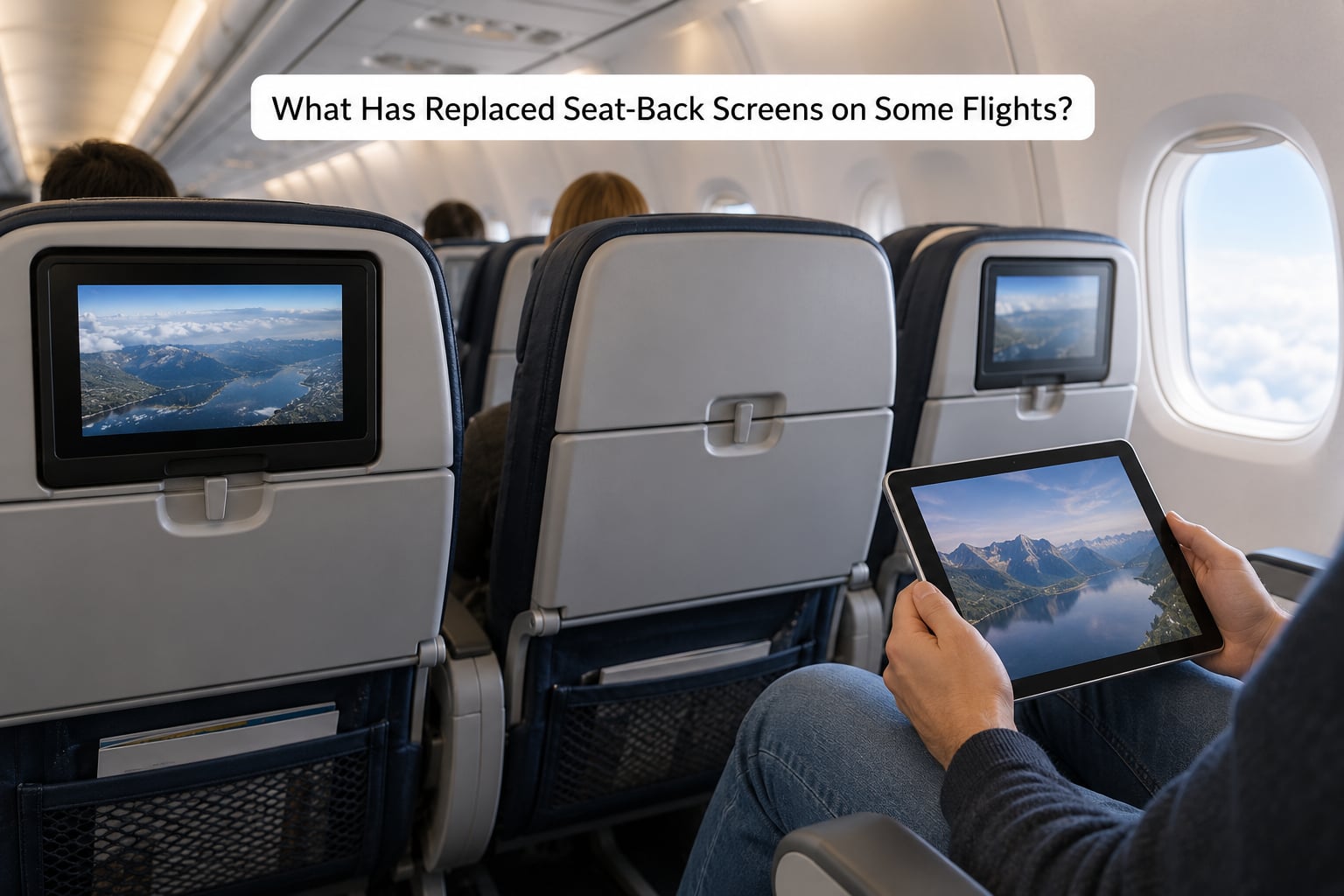
The reason screens disappeared from short-haul aircraft is arithmetic. A seatback entertainment system adds weight to every seat, which burns fuel on every flight, and it carries hardware, licensing and maintenance costs that a low-cost or high-frequency operation cannot justify on a two-hour sector.
What replaced it is not one thing but three, and knowing which one you have saves confusion.
Overhead drop-down monitors
These are the screens that lower from the ceiling at the front of the cabin. One screen serves many rows, content arrives on a schedule, and you cannot choose what to watch. Plenty of passengers mistake these for seatback screens, which is worth avoiding. A drop-down monitor is not entertainment at your seat.
Personal device streaming
Most carriers now sell or bundle access to a content catalog that you watch on your own phone or tablet over cabin Wi-Fi. The economics favour the airline, but the experience depends entirely on connection quality. Forum threads on United’s Wi-Fi video streaming debate this constantly, and the consensus is cautious: video works on some aircraft and not others.
Phone and tablet downloads
The only option that never fails. Downloading before you leave home removes the Wi-Fi variable entirely, which is why it is the sensible default for any flight you suspect will be screen-free.
One feature genuinely disappeared along with the hardware: seat-to-seat messaging. Passengers in a r/americanairlines discussion pointed out that losing chat between rows makes it harder to coordinate when a family is split across the cabin, and that is a real loss on aircraft without screens and without chat.
Frequently Asked Questions
Which airlines still have seatback screens?
Long-haul widebody operators almost always do, including Delta, United, American, Air Canada, British Airways, Lufthansa, Emirates, Singapore Airlines, Qantas, ANA, Japan Airlines, Cathay Pacific, Qatar Airways and Turkish Airlines. Among US carriers, screens are common on international aircraft and uncommon on domestic narrowbodies. Southwest, Spirit, Frontier, Allegiant, Ryanair, easyJet and Norwegian do not have personal screens at all.
Will American Airlines bring back seatback screens?
Yes, on a timeline. American announced on August 18, 2026 that it would install seatback screens at every seat across its narrowbody fleet, with screens fitted to all new Airbus and Boeing narrowbody deliveries from 2028 and installation across the existing fleet targeted for the early part of the next decade. More than 140 long-haul aircraft already have screens today.
Do any American flights have screens?
The international widebodies do. More than 140 American long-haul aircraft carry seatback screens in every cabin, including the 777, 787 and A350. Domestic main cabin generally does not, and the fleetwide retrofit programme has not yet reached those aircraft. Until retrofitted jets enter service, plan on bringing your own content on a US domestic American flight.
How do I tell if my flight will have TV screens?
Enter your flight number on the airline website and read the aircraft type listed against it. Then open the seat map for that aircraft to see whether screens are fitted and in which cabins. Check the same page again 48 hours before departure, because aircraft assignments change. If the booking never names an aircraft, ask at the gate and download content as a backup.
Which airlines have TVs in economy class?
Screens in economy are standard on widebody aircraft from United, Delta, American, Air Canada, British Airways, Lufthansa, Emirates, Qatar Airways, Singapore Airlines on most 777 and A350 services, Qantas in premium cabins, and carriers such as ANA, Japan Airlines, Cathay Pacific, EVA Air and Korean Air on long-haul. Exceptions exist, notably some Singapore Airlines 787 economy cabins and most domestic narrowbody aircraft.
What is the difference between overhead screens and seatback screens?
An overhead drop-down monitor is a shared screen that lowers from the ceiling at the front of the cabin and plays scheduled content to the whole cabin. A seatback screen is a personal display mounted on the back of the seat in front of you, letting you choose movies, TV, games and the flight map at any time. A flight can have overhead monitors and no personal screens at all.
Conclusion
Start with the flight number, not the airline. Enter it on the carrier’s site, read the aircraft type, open that aircraft’s seat map to see which cabins have screens, then check the airline’s current cabin and entertainment information before you book or pack. Recheck a couple of days before departure, and download something either way.