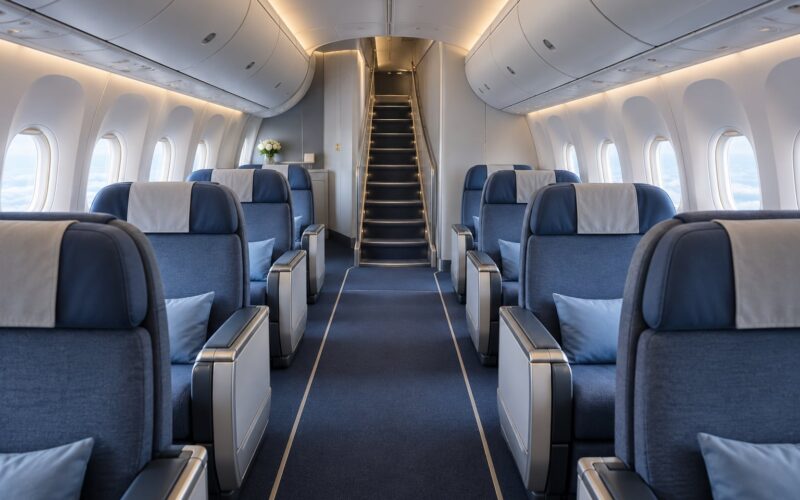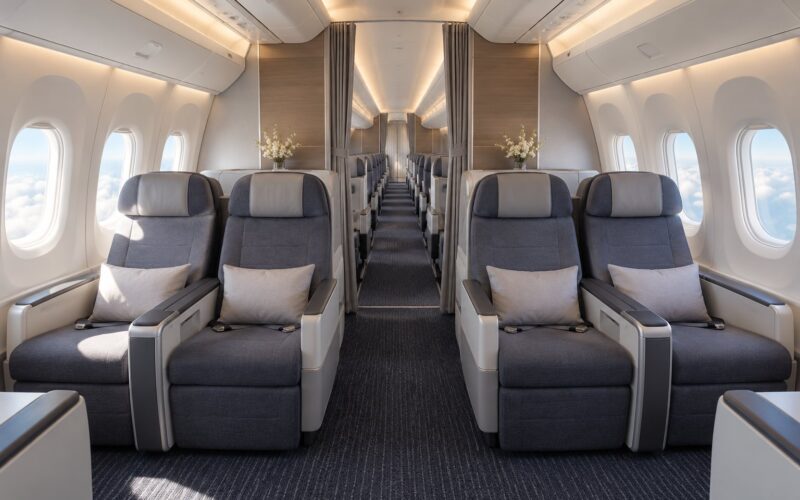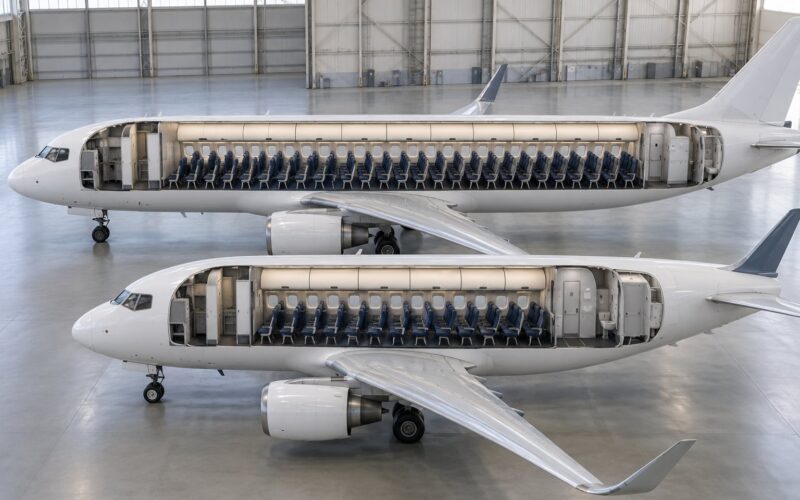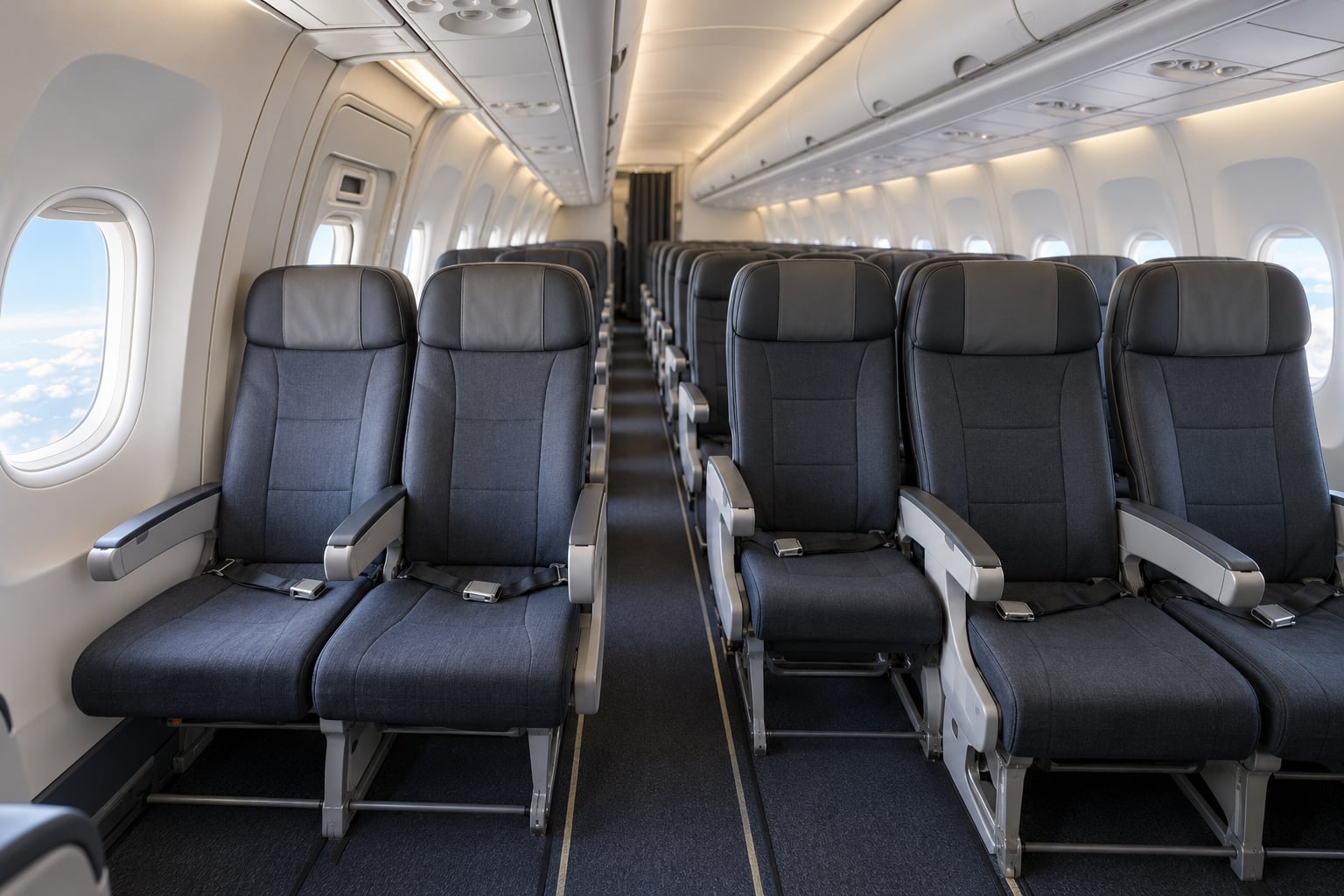
The best seats on an Airbus A220 are usually the rows on the two-abreast side, picked either just behind a bulkhead for extra legroom or just ahead of the wing for the smoothest ride in turbulence. Because the cabin is laid out 3-2, that side has two seats across and no middle seat at all, which is where most of the comfort lives.
That single layout fact explains most of the advice floating around on flight forums. On the three-abreast side you get three seats, one of them a middle seat, so choosing poorly there costs you space and an armrest fight. On the two-abreast side you get two, and the worst case is a neighbour rather than a sandwich.
Row numbers still matter, but treat them as a starting point rather than gospel. Airlines reconfigure cabins, and a seat that was a bulkhead on one aircraft can sit behind the lavatories on the next. Confirm the seat map for your exact flight before you pay for anything.
Table of Contents
- Best Seats on an Airbus A220 at a Glance
- 1. Bulkhead Window Seat
- Why These Rank as the Best Seats on an Airbus A220
- 2. Overwing Exit-Row Window Seat
- 3. Standard Window Seat Away From Service Areas
- 4. Bulkhead Aisle Seat
- 5. Quiet Window Seat on the Less-Noisy Side
- 6. Aisle Seat Near the Front of the Cabin
- 7. Center Aisle Seat Behind the Wing
- 8. Aisle Seat at the Back of the Cabin
- 9. Middle-Cabin Aisle Seat
- 10. Window Seat on a Two-Seat Premium Cabin
- Frequently Asked Questions
- Are the best seats on an Airbus A220 always in the first or last row?
- Can you choose an emergency-exit row seat on the Airbus A220?
- Are A220 exit-row seats louder or more comfortable than standard rows?
- Which side of an Airbus A220 is quieter?
- Are bulkhead seats on the Airbus A220 better than aisle seats?
- Conclusion: What to Book First
Best Seats on an Airbus A220 at a Glance
The table below ranks ten seat positions on the A220 by who benefits and what the trade-off is. Rows are described by position rather than number, because the numbers move between airline configurations.
| Seat choice | Who it suits | Main advantage | Main drawback | Usually worth paying extra? |
|---|---|---|---|---|
| Bulkhead window | Travellers over six feet, anyone wanting legroom | Extra knee room, no recline needed | Fixed wall, galley noise ahead | Yes, if the galley is not directly in front |
| Overwing exit-row window | Nervous flyers, anyone sensitive to motion | Smoothest ride and often the most legroom | Restrictions on who may sit there, no recline | Often, and it sells out early |
| Standard window away from service areas | Everyone who wants the wall and the view | Balanced comfort, full recline, quiet | Nothing dramatic, just solid | Rarely necessary |
| Bulkhead aisle | Families, travellers with mobility needs | Extra legroom plus quick aisle access | No under-seat storage, service traffic | Yes, especially with a large bag |
| Quieter-side window | Light sleepers and anyone bothered by engine noise | Least rumble for the cabin position you choose | Requires reading the seat map to judge | Sometimes |
| Front-cabin aisle | Short connections, parents managing children | Off the aircraft fast, close to lavatories | Busiest part of the cabin all flight | Only when deplaning time matters |
| Center aisle behind the wing | Travellers who want easy access over a view | Get up without disturbing anyone | Can sit over the wing with a louder view | Usually no |
| Rear-cabin aisle | People who want less foot traffic | Fewer people passing through the row | Back galley noise, longer walk to exits | No |
| Middle-cabin aisle | Anyone who wants simple, balanced comfort | Easy restroom access, quick boarding | Reclining neighbours, ordinary pitch | No |
| Premium two-seat window | Anyone paying for a wider cabin seat | Wider seat, more pitch, no middle seat | Sells out first, costs more | Already priced above main cabin |
1. Bulkhead Window Seat
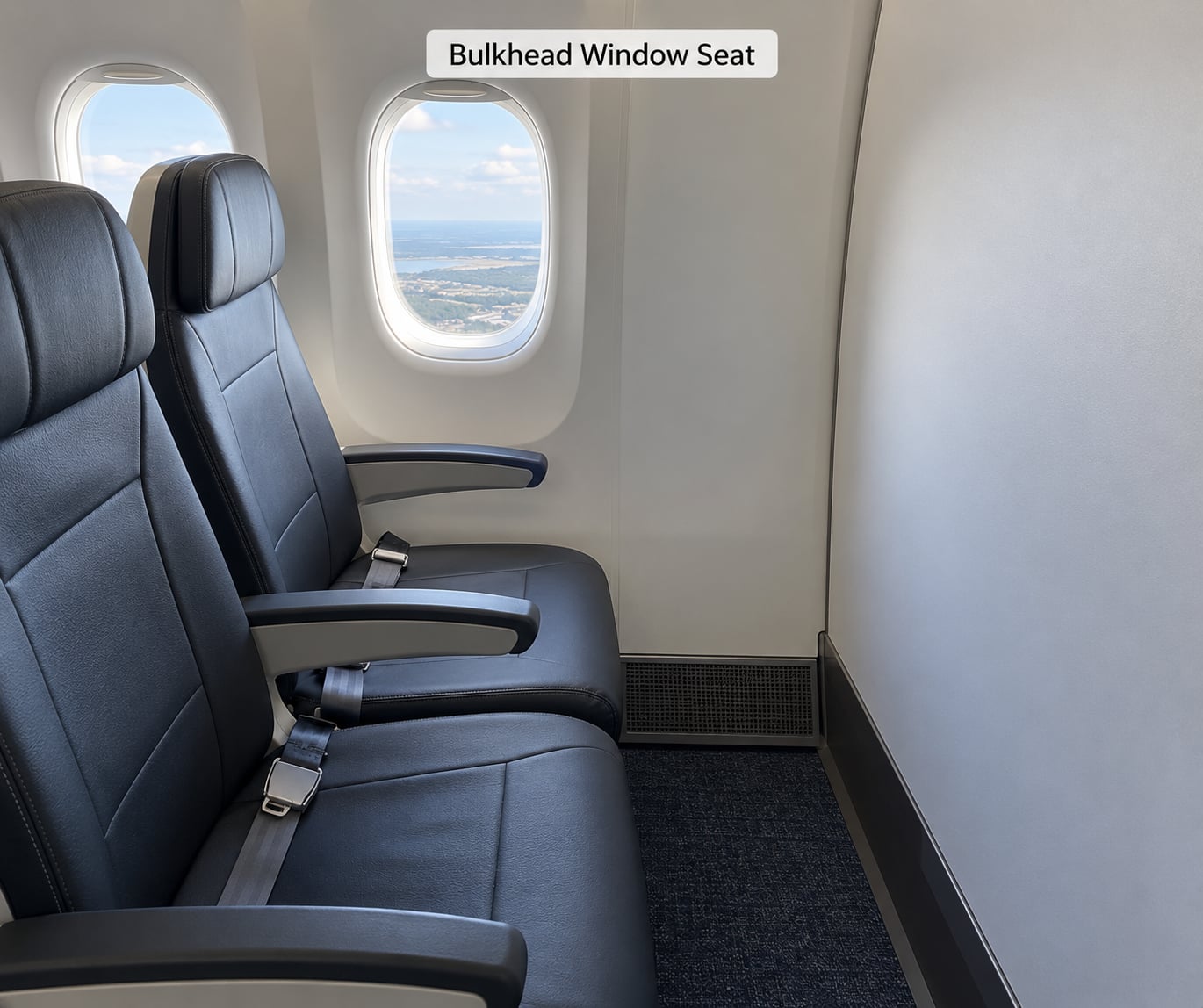
A front bulkhead window seat removes the seat in front of you entirely, which converts roughly an extra five inches of pitch into usable knee room. Tall travellers notice this more than anyone, and it is the reason the bulkhead is usually the first row to disappear from the seat map.
You pay for it in three ways. The seat does not recline, so a two-hour sector can feel long on a stiff seat. The wall in front means your tray table is upright and awkward, and often the area is used for bassinet storage, so bulky cabin bags can end up on your lap. You also sit close to the forward galley, where carts clatter and crew move past.
Check what is directly ahead before choosing. A row behind the main galley is louder than a row behind a partition. Where a cabin divider separates the premium cabin from the first main-cabin rows, that divider also blocks a sliver of the window view, which fliers debate constantly.
Why These Rank as the Best Seats on an Airbus A220
The honest answer is that there is no universally best row, because the strongest choice depends on the airline configuration, the cabin you are booked in, how full the rows in front of you are, and what you personally value. A bulkhead window wins on legroom and loses on recline. An exit row wins on ride quality and loses on flexibility.
A workable method beats a rule. Open the seat map for your specific aircraft, find the galleys and lavatories, note the bulkhead rows and the exit rows, then pick the one that matches your priority. Anyone who does five minutes of that beats the traveller guessing from a generic aircraft diagram.
2. Overwing Exit-Row Window Seat
Two things make the overwing exit rows stand out: extra floor space in front of the seat, and the best ride quality in the cabin. The aircraft pivots around its centre of lift above the wing root, so rows sitting near that fulcrum experience the smallest vertical movement when the jet hits rough air.
The physics point cuts both ways, though. Because the exit sits at a structural joint in the fuselage, the frame can flex more noticeably there than in rows further forward or aft. Most passengers feel this as a faint vibration through the armrest, not as a shake.
Two rules keep you safe and comfortable. Follow crew instructions on safety briefings, and keep the floor area in front of you clear at all times, since the exit route must stay usable. Also read the eligibility note before booking: many airlines restrict exit rows to passengers over a certain age who can perform the associated safety duties unaided.
Expect no recline in most cases. Expect to be asked to board or deplane early. Expect it to fill weeks ahead on a popular route, so book it when you buy the ticket rather than hoping a seat appears later.
3. Standard Window Seat Away From Service Areas
Sometimes the sensible pick is not a special row at all. A middle-cabin window seat, a few rows behind the galley and clear of the lavatories, gives you the wall on one side and a normal recline on the other, with none of the trade-offs that come with bulkheads and exits.
Position matters more than the seat letter here. Rows near the curve of the fuselage at the front taper slightly, so you feel closer to the wall. Rows in the middle of the cabin sit where the tube is widest, which reads as more space even when the published pitch is identical.
This is also the seat to choose when you care about under-seat storage. Bulkheads remove it, and exit rows sometimes reduce it, so if you travel with a laptop sleeve, a camera bag or a full day of work, a regular window row serves you better. For most domestic sectors, this row is the quiet answer that costs nothing extra.
4. Bulkhead Aisle Seat
The bulkhead aisle seat gets the same legroom bonus as its window neighbour and adds the fastest aisle access in the cabin. For anyone managing a toddler, a mobility aid or a heavy bag, being able to stand up and move without squeezing past strangers is worth more than any amount of extra pitch.
The costs are the familiar ones. No under-seat storage, since there is no seat in front to slide a bag under, and a non-reclining back. If the area is used for bassinet storage, the floor space can shrink, which defeats the point of choosing it for room.
Watch the galley placement. A bulkhead aisle seat directly behind a galley attracts service traffic for the entire flight, with carts, crew and sometimes passengers using it as a shortcut. A bulkhead row further aft, or one separated from the galley by a partition, is calmer. When the choice comes down to those two, take the calmer one.
5. Quiet Window Seat on the Less-Noisy Side
There is no rule that one side of the cabin is always quieter than the other. Engine position, where the wing sits relative to your row, the direction of landing and which side catches the sun all change the answer from one aircraft to the next. What holds everywhere is that rows closest to the engines are loudest.
Rows immediately beside or just forward of the engines hear the most. Rows a few seats ahead of or behind the wing usually sit quieter, though over-wing rows pick up airflow noise instead, which reads differently from engine rumble. Rows near the aft galley pick up a hum that runs through the whole cabin.
Practical advice: pick a window position that is well clear of the galley, the lavatories and the bassinet storage, then choose the side that keeps you out of direct sun if you plan to sleep. Landing direction matters too, since the sun side at cruise is rarely the same side as the sun side on the ground. Rather than chase a universal left-or-right rule, read the specific seat map and pick by distance from the noise sources you can see.
6. Aisle Seat Near the Front of the Cabin
A front-cabin aisle seat is a logistics choice. You are off the aircraft before most of the cabin, which matters enormously on a tight connection, and you are close to the lavatories, so nobody has to squeeze past you on the way back from them.
Families get a lot out of this. A parent can reach a restless child, get a bag down without disturbing a row, or step out for a stretch without apologising. The same applies if you have a knee or hip that stiffens on long sits, because standing up is easier from an aisle.
The drawbacks are the flip side. The front third of the cabin is busy the whole flight: boarding, service, lavatory traffic and conversations carry. You will also pass every seated passenger reaching the back, or they pass you. On a long sector that busyness is real. Choose it when time on the ground matters more than quiet.
7. Center Aisle Seat Behind the Wing
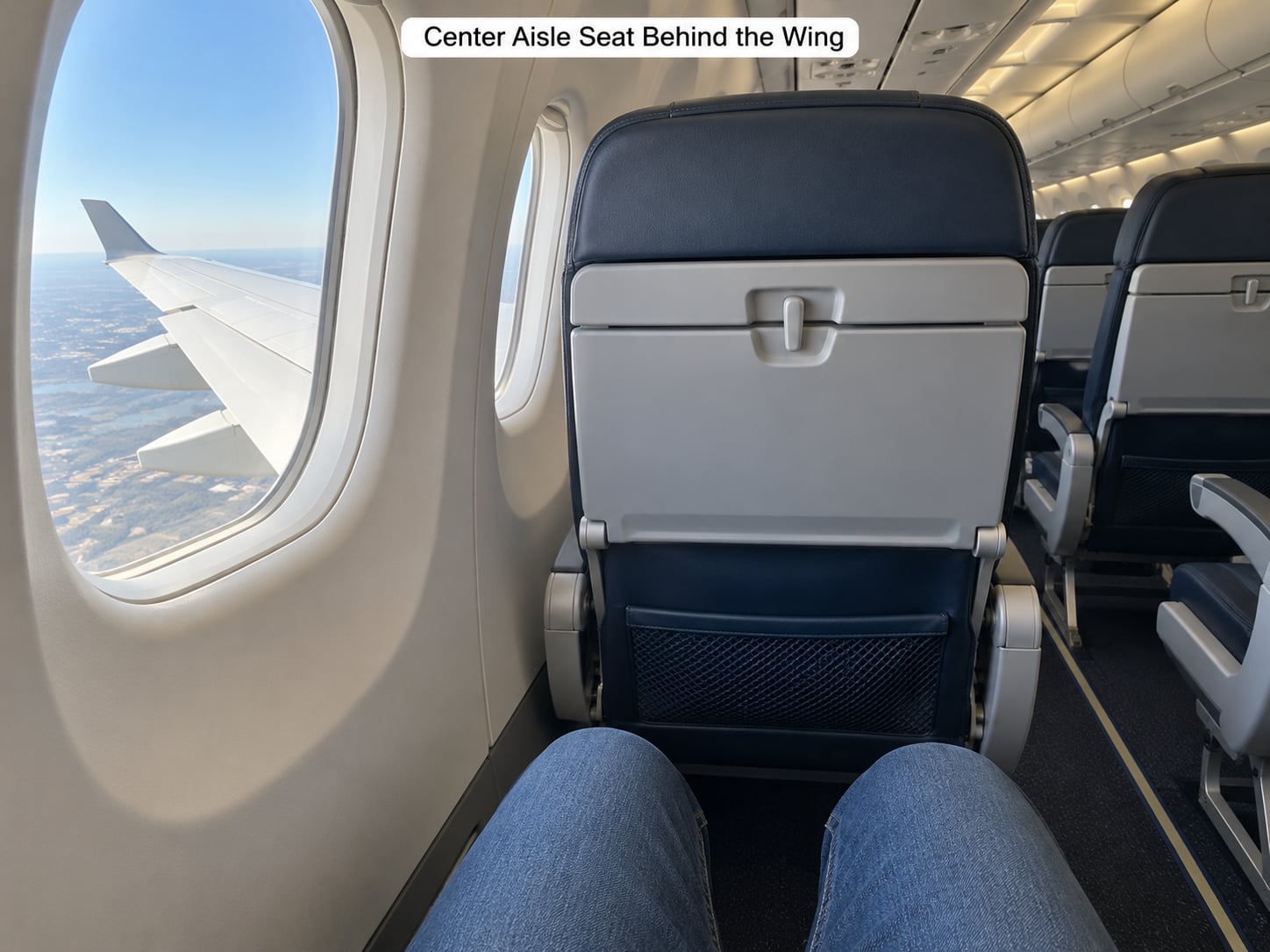
A center aisle seat behind the wing trades the view for movement. In a wide cabin it would feel buried, but the A220 is narrow enough that a center position on the three-abreast side is a reasonable place to sit if you do not care about the window.
The ride quality is the appeal. Sitting at the wing root gives you the smallest vertical motion in turbulence, so it is the position to pick if you dislike the feeling of the aircraft moving. Your knees also tend to clear the seat in front more easily there, because the wing root structure sits lower than the floor section further forward.
The catch is the wing itself. Over-wing rows give you a wing surface at eye level, which blocks the downward view and creates its own airflow noise. On the three-abreast side you may also end up in one of the middle positions, where a stranger sits on both sides. Check the seat map for the exact letter before paying extra for a center position.
8. Aisle Seat at the Back of the Cabin
Back-cabin seats are chosen by people who want the opposite of a social flight: fewer people moving through the row, less conversation and a calmer stretch. On routes where the back of the cabin is a designated quiet zone or a family cabin, this can be a genuinely restful choice.
Be honest about the costs. Seat pitch at the very back is often the tightest on the aircraft, because the last rows are used to fine-tune the cabin length. You will hear the aft galley. And a long walk to the nearest exit matters more than passengers expect, particularly if taxiing time is long or the row behind you is slow to gather belongings.
For most travellers on a morning flight, this position loses to a middle-cabin seat. For an overnight departure with a mostly empty back cabin, it can win. Check the load on your specific flight if the seat map gives any hint, since an empty back of cabin is a different experience entirely from a full one.
9. Middle-Cabin Aisle Seat
The ordinary aisle seat in the middle of the cabin is underrated. It gets you to the lavatory quickly, it boards before the window and aisle lines form, and it avoids the awkward shuffle of getting out from under a window with a bag on your lap.
It also handles the basics well. You can work, you can stretch one leg into the aisle when nobody is passing, and you are in a row where the seat in front is a normal seat, so recline is not a question you have to check. For a laptop worker on a three-hour sector, that combination beats most window seats.
The complaints are well known. A reclining neighbour takes your legroom with no warning, service carts park in the aisle during beverage runs, and standard pitch on the three-abreast side is not generous. If you are sensitive to either of those, pick an extra-legroom row or move one row forward into the empty-seat trick that works when a neighbour leaves the seat next to you empty.
10. Window Seat on a Two-Seat Premium Cabin
Where an airline offers a two-abreast premium cabin on the A220, the window seat in that cabin is the strongest seat on the aircraft. You get a wider seat, more pitch and, critically, no middle seat, so the same 3-2 fuselage yields a two-seat row instead of a three-seat one.
Frequent flyers rate the seat hardware on that cabin highly. A220 premium cabins typically use a well-established lie-flat or wide-recline seat design rather than a bespoke installation, which is why the seat feels familiar rather than novel on the first try.
Confirm before paying. Some premium seats are pod-style with a partition and a shell that reclines almost flat; others are simply a wider standard seat. Check the actual seat width in inches, whether the row reclines, whether bassinet storage takes the floor space, and whether the cabin ahead of you has a divider that narrows the view in the first row. The premium cabin also sells out first, so plan ahead if you are booking around holidays.
Frequently Asked Questions
Are the best seats on an Airbus A220 always in the first or last row?
No. Row numbers shift between airline configurations, and the front and back rows carry their own drawbacks: no under-seat storage, limited recline and close proximity to the galleys. The position that works best is usually a middle-cabin window seat on the two-abreast side, chosen by what sits in front of it rather than by its number.
Can you choose an emergency-exit row seat on the Airbus A220?
Yes, usually, subject to airline rules. Most carriers set a minimum age and require passengers to be able to perform the associated safety duties without assistance. Check the seat map notes at booking, because eligibility rules are often disclosed only there and only on the airline’s own site.
Are A220 exit-row seats louder or more comfortable than standard rows?
It varies by the row. An exit row over the wing centre section gives the smoothest ride, but the frame sits at a fuselage structural joint and can feel more flexible than rows further away. Expect no recline in most cases, extra floor space, and the requirement to keep the exit area clear throughout the flight.
Which side of an Airbus A220 is quieter?
Neither side is quieter in general, because engine placement, wing position, sun side and landing direction all vary. What holds on every aircraft is that rows nearest the engines are loudest, rows by the galleys pick up service noise, and a mid-cabin window position well clear of both is the reliably quiet choice.
Are bulkhead seats on the Airbus A220 better than aisle seats?
It depends what you are trading. A bulkhead gives extra legroom and no under-seat storage, with no recline. An aisle seat gives average pitch but easy movement and a full recline. Choose the bulkhead if you are tall or want space, and choose the aisle if you need to get up often or travel with a large cabin bag.
Conclusion: What to Book First
Check the aircraft assigned to your flight and open its seat map before anything else, because the same flight number can be flown by a different A220 configuration on different days. Then pick by priority: legroom means the bulkhead rows, ride quality means the overwing exit rows, and everything else means a mid-cabin window seat clear of the galleys.
Take the two-abreast side whenever the map allows, and avoid service-adjacent rows unless the location buys you something specific. Book the seat at the same time as the ticket where you can, since bulkheads, exit rows and premium window seats tend to go first. Whatever you choose, confirm it on the seat map again at check-in, because cabin configurations change between seasons.