The 737 MAX 9 cabin is the passenger interior of Boeing’s longest 737 MAX variant, a single-aisle narrow-body that seats roughly 150 to 190 people depending on the airline. Economy is almost always 3-3 with a centre aisle, and a premium cabin sits at the front in 2-2 or 2-3. Cabin width is the same as every other 737, so seat width rather than floor space is the number worth checking before you book.
That last point is where most disappointed passengers end up. The MAX 9 is longer than the MAX 8, which means more rows and usually more lavatories, not a roomier cross-section. Knowing what to know about the 737 MAX 9 cabin is mostly about the layout, and once you have that you can pick a row that fits how you actually travel.
Table of Contents
- What to Know About the 737 MAX 9 Cabin at a Glance
- How Is the 737 MAX 9 Cabin Arranged?
- Is the 737 MAX 9 Cabin More Comfortable Than the 737 MAX 8?
- Which 737 MAX 9 Seats Offer the Best Legroom?
- Exit rows
- Bulkhead rows
- Middle seats on a full flight
- Where Are the Quietest and Most Convenient Seats?
- What Amenities Are Usually Available?
- What the aircraft itself gives you
- What the airline decides
- What Should You Check Before Choosing a 737 MAX 9 Seat?
- Frequently Asked Questions
- Is the Boeing 737 MAX 9 wider than the 737 MAX 8?
- How many seats does a 737 MAX 9 have?
- Are 737 MAX 9 windows larger and more comfortable?
- Do 737 MAX 9 seats recline?
- How can I tell whether my flight uses a Boeing 737 MAX 9?
- Is the 737 MAX 9 quieter than older Boeing 737 models?
- Conclusion
What to Know About the 737 MAX 9 Cabin at a Glance
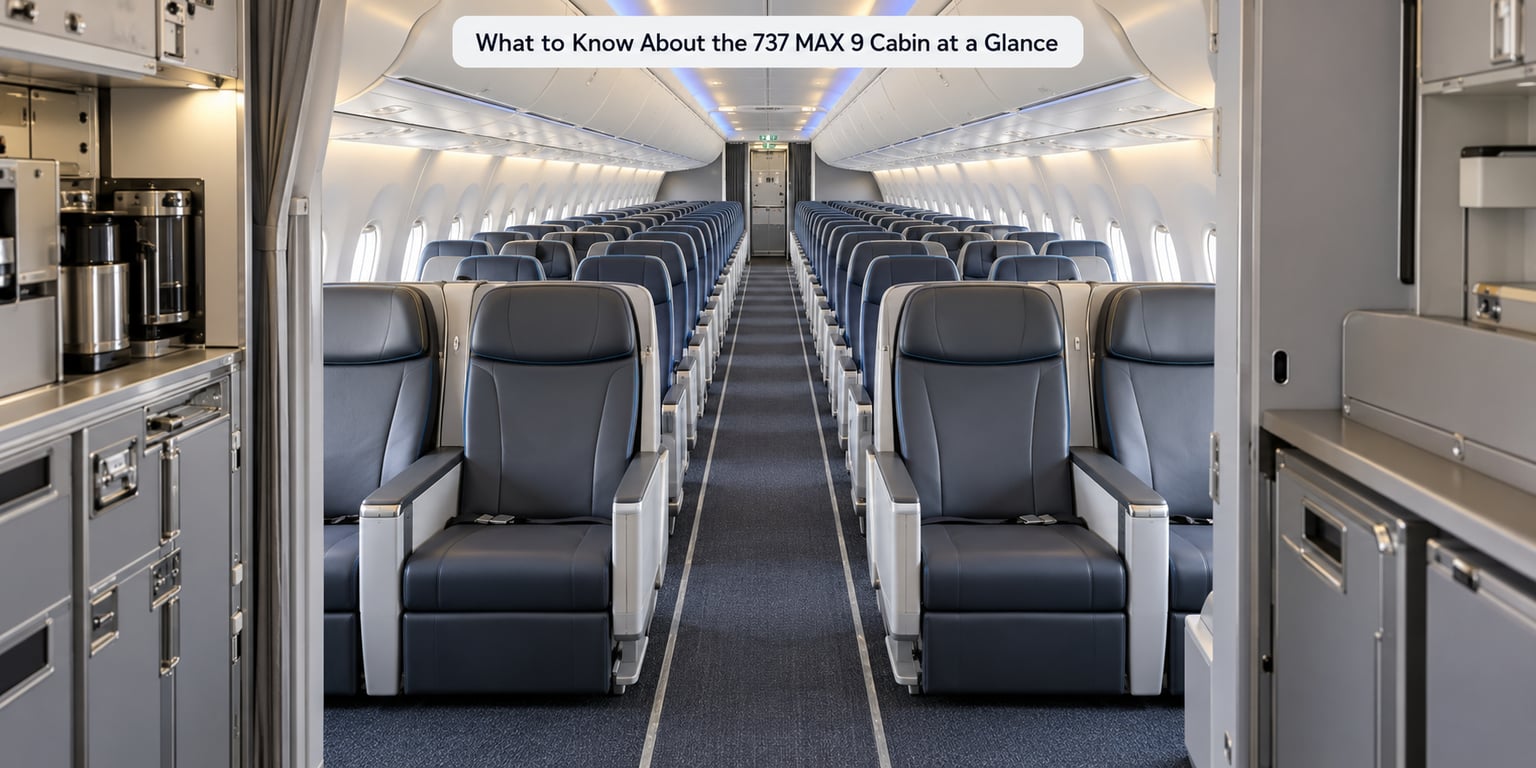
Two numbers decide whether a narrow-body seat works for you: seat pitch, the distance from one seat cushion to the next, and seat width, the usable width of the cushion. Airlines print pitch in brochures and bury width, which is why tall passengers get caught out.
| Cabin feature | Typical 737 MAX 9 | What varies |
|---|---|---|
| Fuselage | Single aisle, 737 cross-section | Nothing, it is the same as every 737 |
| Economy layout | 3-3 with a centre aisle | Occasionally 2-3 on smaller ship versions |
| Premium cabin layout | 2-2, occasionally 2-3 | Airlines that skip a premium cabin entirely |
| Total seats | About 150 to 190 | Operator and fare mix |
| Economy seat pitch | Roughly 30 to 34 inches | Extra legroom rows sit at the wider end |
| Economy seat width | About 16.4 inches on many operators | Some carriers fit a slightly wider cushion |
| Lavatories | One or two at the rear | A second forward lavatory on some ships |
| Cabin pressure | Pressurised to a safe altitude, not cabin altitude per seat | Nothing |
Pressurisation is aircraft-wide rather than row-by-row, so every passenger breathes the same air at roughly the same pressure. What changes comfort row to row is proximity to noise, traffic and recline limits.
How Is the 737 MAX 9 Cabin Arranged?
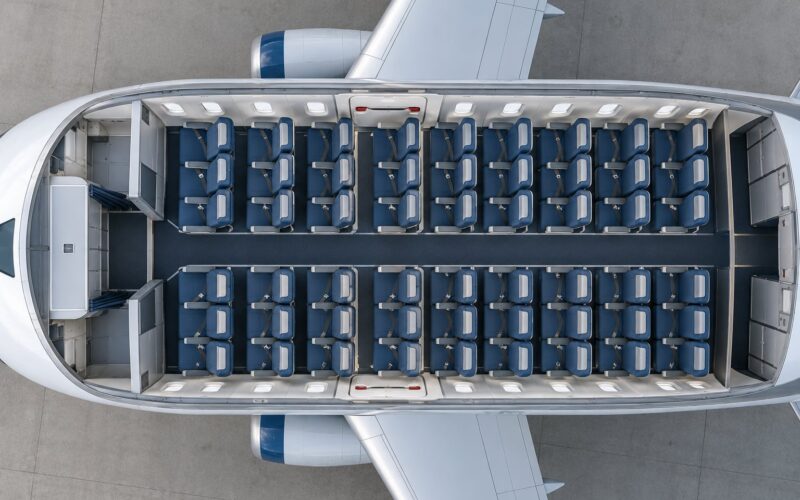
Economy is 3-3 in almost every configuration, which is the defining constraint of the whole aircraft. Three seats sit on each side of a single centre aisle, so your choices are window, middle or aisle, and the middle seat is shared with two armrests.
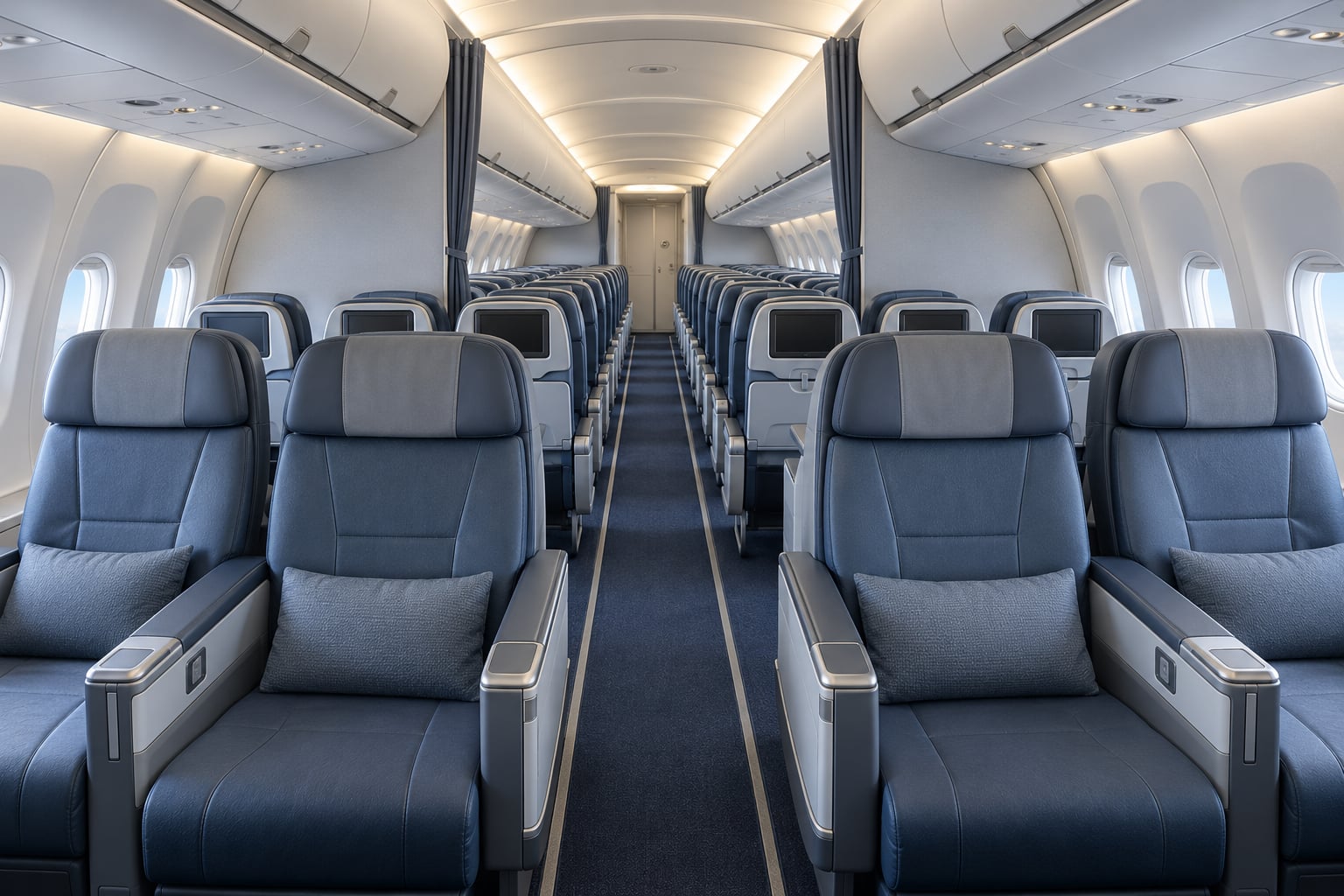
Premium cabins go at the front. United, Alaska and most other North American operators put a first or business cabin in 2-2, meaning every seat there is either a window or an aisle seat and nobody sits in the middle. A handful of airlines run a 2-3 premium-economy layout where the extra seat sits next to the aisle.
Three fixed spaces shape the rest of the cabin:
- The forward galley holds the carts and drink service. The rows immediately behind it hear cart rattle and conversation.
- The forward lavatory, on aircraft configured with one, produces the queue noise that catches people off guard mid-flight.
- The rear lavatory and galley sit behind the last economy row, which is where the queue for the toilet forms.
Because airlines own the cabin, not Boeing, the final seat map belongs to the airline and the individual airframe registration. Two MAX 9s operated by the same carrier can differ in exit row position and premium cabin size.
Is the 737 MAX 9 Cabin More Comfortable Than the 737 MAX 8?
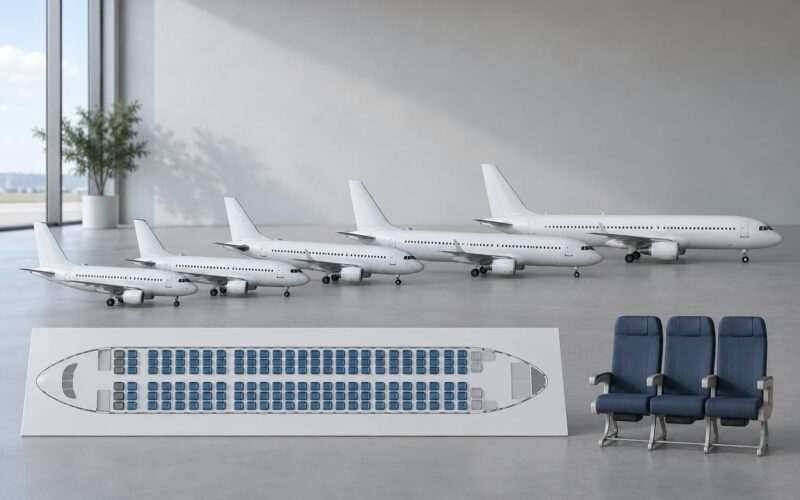
Marginally, and only because it is longer. The MAX 9 stretches about 8 inches beyond the MAX 8, which is small in passenger terms, roughly one row of seats. The MAX 10 extends further again and adds real length.
| Variant | Length vs MAX 8 | Typical cabin | How it feels |
|---|---|---|---|
| 737 MAX 8 | Baseline | Shortest MAX cabin | Fine on a quick hop, tight on a redeye |
| 737 MAX 9 | About 8 inches longer | A row or so more | More lavatory capacity, same seat width |
| 737 MAX 10 | Substantially longer | MAX 8 plus about 40 inches | Longest narrow-body in service with airlines |
What never changes across all three is the 737 cross-section, the seat width and the ceiling height. Posters on aviation forums sometimes claim Boeing shrank the fuselage for the MAX family; it did not, the width is identical to the 737NG it replaced.
A more useful comparison for many travellers is against the Airbus A321neo, which is a noticeably wider single-aisle with a taller ceiling. If your route has both aircraft options and seat price matters to you, the A321neo wins on room. If it only has the MAX 9, stop comparing it to widebodies and pick a good row instead.
Which 737 MAX 9 Seats Offer the Best Legroom?
Exit rows and the first row behind a bulkhead. On most operator seat maps these are the only rows with noticeably more space in front of you, and they come with strings attached.
Exit rows
The seat in front of an exit row is the classic trap. Passengers need to clear the row during an emergency, so that seat typically does not recline, or reclines only a few degrees. You get it on a window or aisle seat only, the armrest may be fixed, and the seat in front of you will not go back at all. Passengers under 15 and many over 70 are not eligible, and airlines check ID at the gate.
Bulkhead rows
Extra legroom, no underseat storage, and nothing to lean against if the screen in front is too far away. They are also usually the rows behind the premium cabin divider, so there is more movement and more cabin-crew traffic.
Middle seats on a full flight
On a packed aircraft, forum regulars argue the middle of a 3-seat row is the least bad place to be: two armrests instead of one wall, and two neighbours to politely pass a phone or reach the overhead bin. It is not the most comfortable seat in theory, but it wins in practice when you would rather not disturb strangers.
For tall passengers, check the width figure before anything else. Around 16.4 inches is workable if you can sit with your shoulders back. If you travel above roughly six feet or build wide, look for operators whose premium-economy rows are laid out 2-2, because those give you an aisle on one side and a window on the other without a shared armrest in the middle.
Where Are the Quietest and Most Convenient Seats?
Forward of the wing, and as far from the galleys as the layout allows. Engine noise is loudest near the wing root and tapers toward the tail and the nose, and cabin noise from the galley and lavatory queues travels further than most people expect.
Working from front to back:
- Rows just behind the premium cabin are the calmest zone. Distance from engines and from both service points, and the bins overhead are less full because boarders at the front fill theirs first.
- The middle of the cabin, ahead of the wing is the safe default. Engines sit beside and behind these rows rather than under them.
- Rows over and just behind the wing are the loudest economy seats on the aircraft.
- The last one or two rows before the rear lavatory get door bunks, light and queue traffic.
Convenience runs the other way. Bulkhead and front rows board first and deplane first, which matters when you have a connection or a tight onward transfer. Overhead bin space follows the same order: board early and you get a whole bin to yourself, board late and you may be opening one in front of three full ones.
Most MAX 9 operators do not offer bassinet fittings. Confirm with the airline before you fly if you need one, because it is not guaranteed by the aircraft type.
What Amenities Are Usually Available?
Every airframe feature and every service feature, kept separate, because airlines mix and match them freely.
What the aircraft itself gives you
- Overhead bins sized for a standard roller bag. Full-time carry-on-only travellers usually have room; a second bag can be tight behind the exit rows.
- Adjustable air vents on every seat, with the strongest flow above and below the wing where the air conditioning works hardest.
- The same seat width as the 737-800 it replaced, roughly 15.9 to 17.3 inches depending on the seat model chosen by the airline.
What the airline decides
- Seatback entertainment on some operators, with tilting screens on certain deliveries and Bluetooth headphone pairing. Where it is absent, you are relying on streaming over the wifi.
- Power in the form of USB-A, USB-C or both. Some narrow-body seats have a shared outlet per row rather than one per passenger.
- In-flight wifi varies more than anything else on this list. On-demand streaming is only realistic on the fastest installations.
- Bassinet fittings, meal service and cabin-crew numbers are airline policy, not aircraft specification.
On a typical domestic hop the service is small: a drink and a snack, sometimes a tray, and two flight attendants working the cabin. Long-haul style service only appears on European or transatlantic operators.
What Should You Check Before Choosing a 737 MAX 9 Seat?
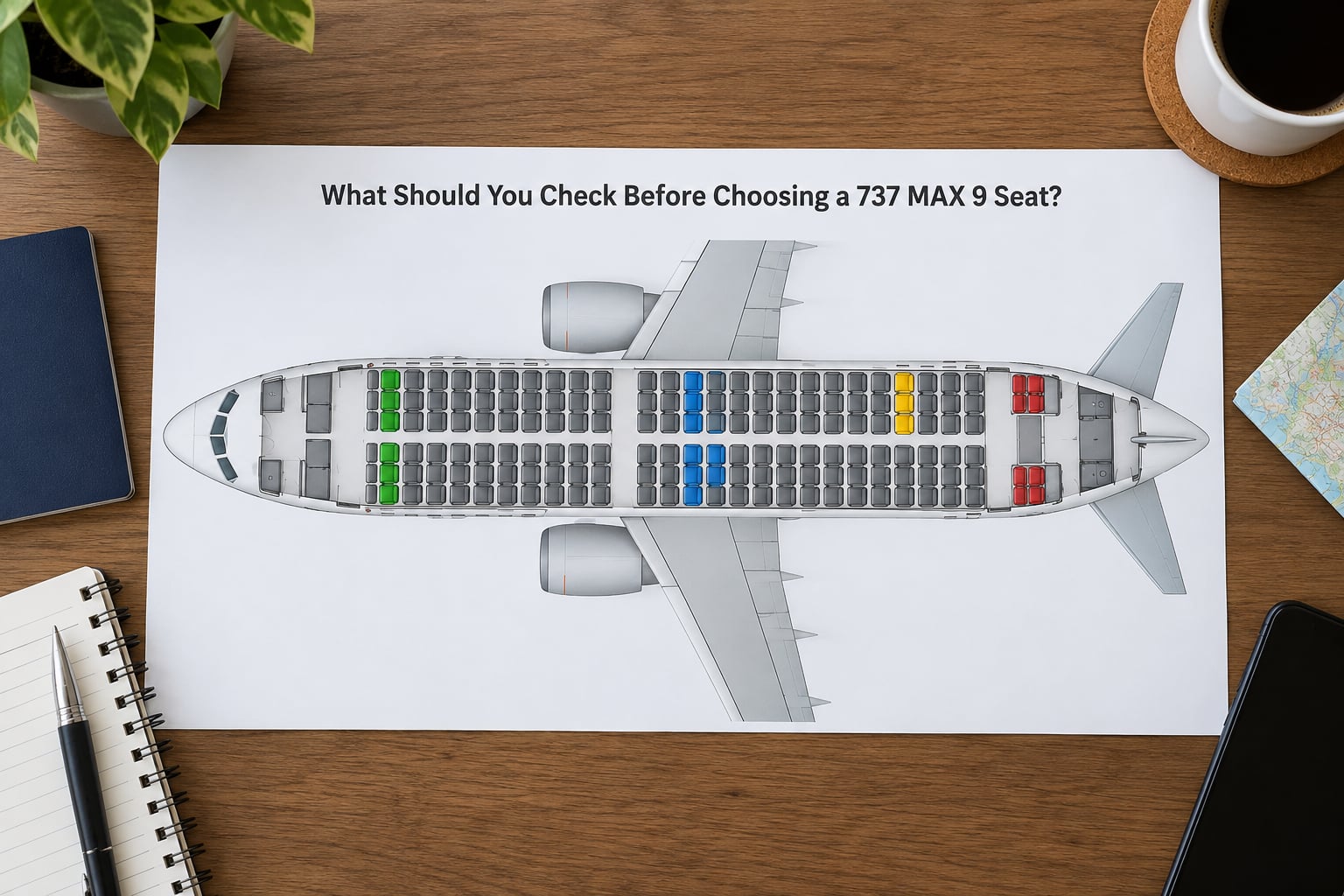
Run this list before you pay for a seat or settle for whatever is left.
- Confirm the aircraft. Check the flight number in the booking tool, not the route. The same route is flown by MAX 8, MAX 9 and MAX 10 on different days of the week.
- Open the airline’s seat map for that specific flight. Exit rows, lavatory positions and premium cabin size change between airframes within a fleet.
- Check the fare rules. Standard seats are sometimes free, sometimes bundled into the fare, sometimes a separate charge, and extra legroom rows almost always cost more. Reading the rules for your fare takes a minute and saves a bad surprise at check-in.
- Look for the seat pitch figure, and treat seat width as a question to ask. Most airlines publish pitch and none publish width, which is why the same plane looks different to different bodies.
- Confirm accessibility needs in advance. Reduced-mobility seating, service animals and medical equipment all need advance notice.
- Check exit row eligibility. Age limits apply and airlines verify identity documents at the gate.
- Read the operating airline name. A codeshare can put you on a different aircraft than the marketing airline plans, and the seat map changes with it.
A short comfort kit helps more than seat choice on a narrow-body: an eye mask, a neck pillow, compression socks for a longer hop, and an empty bottle to fill after security.
Frequently Asked Questions
Is the Boeing 737 MAX 9 wider than the 737 MAX 8?
No. Both use the same 737 fuselage cross-section, so the cabin width, ceiling height and seat width are identical. The MAX 9 is roughly 8 inches longer than the MAX 8, which buys you about an extra row of seats and sometimes a second lavatory rather than more shoulder room. If width is your priority, compare a 737 MAX 9 with an Airbus A321neo instead.
How many seats does a 737 MAX 9 have?
It depends entirely on the airline. Published economy seat counts on the MAX 9 range from about 153 to 165 seats, with total cabin figures commonly landing between 150 and 190 once premium cabins are added. Alaska, TAP, AeroMexico, Icelandair, Turkish and United all differ. Treat any single number you see as belonging to one airline’s layout, not to the aircraft.
Are 737 MAX 9 windows larger and more comfortable?
The MAX 9 uses the same window size as the rest of the 737 family, with the taller oval profile introduced on the 737NG and carried into the MAX. It is not larger than a 737-800 window. What you do gain is fuselage length, so the same number of passengers is spread across more rows on some operator configurations, which can mean less crowding in the aisle at boarding.
Do 737 MAX 9 seats recline?
Yes, standard economy seats recline, typically around 30 degrees or four to five clicks. The exceptions matter more than the rule: the seat in front of an exit row usually does not recline at all, some last rows have fixed seats, and bulkhead rows have no seat behind to lean against. Check the seat map icons for the specific flight before you assume your row reclines.
How can I tell whether my flight uses a Boeing 737 MAX 9?
Look at the flight number in your airline’s booking tool, which usually shows the aircraft type and often a small seat map with the exit rows marked. The IATA aircraft code for the MAX 9 is 7M9, which sometimes appears on boarding passes and third-party flight trackers. Routes are rarely aircraft-fixed, so a booking you made weeks ago can land on a MAX 8 or MAX 10 instead.
Is the 737 MAX 9 quieter than older Boeing 737 models?
Yes, and passengers notice it. The MAX family’s larger-diameter engines with chevron nacelles reduce fan noise noticeably compared with a 737-800 or earlier classic 737. Passengers who flew a MAX recently report finding it much quieter than expected. Inside the cabin the quietest economy seats are forward of the wing and away from the galley and lavatory queues.
Conclusion
Most of what to know about the 737 MAX 9 cabin comes down to one step: verify the airline’s seat map for your exact flight, because the cabin layout belongs to the operator and the individual airframe rather than to Boeing. Then pick the row that matches your trip: exit row or bulkhead for legroom, rows just behind the premium cabin for quiet, and the last rows if you want to be off the plane before everyone else.
The 737 MAX 9 is a competent, quiet narrow-body with an older-style cabin. Know that going in and it is an easy aircraft to enjoy.