Airplane etiquette is the set of shared courtesies that make a sealed cabin full of strangers bearable. Some are printed in the airline’s policy, most exist only as habit. These airplane etiquette rules every flyer should know cover seat choice, armrests, bins, noise, meals, sleepers and deplaning, and nearly all of them take under five seconds to follow.
It helps to split the list in two. A small set is a genuine requirement: follow crew instructions, keep the seatbelt fastened when the sign is on, obey the liquids limit at security, and never smoke. Everything else is courtesy, and courtesy is what decides whether the person beside you relaxes or spends nine hours tense.
Updated for October 2026. I fly most weeks, and the same handful of behaviours come up every time. None of them require money, status or a particular seat class.
Table of Contents
- Airplane Etiquette Rules Every Flyer Should Know at a Glance
- 1. Choose Your Seat Without Disrupting Boarding
- When someone asks to switch seats with you
- 2. Let Others Exit First
- 3. Keep the Shared Armrests Reasonable
- 4. Lower Your Tray Table and Stow Your Screen
- 5. Use Headphones at a Reasonable Volume
- Airplane etiquette rules for audio, calls and video
- 6. Keep the Overhead Bin Space Fair
- 7. Respect the Crew and Follow Safety Instructions
- 8. Be Considerate About Food, Drinks, and Allergies
- 9. Avoid Disturbing Sleepers During Overnight Flights
- 10. Leave the Cabin Better Than You Found It
- Frequently Asked Questions
- Who gets the armrest on a plane?
- Should you recline your seat on a plane?
- Is it rude to take off your shoes on a flight?
- When can I stand up after landing?
- How should I treat flight attendants when they ask me to do something?
- What to Do First on Your Next Flight
Airplane Etiquette Rules Every Flyer Should Know at a Glance
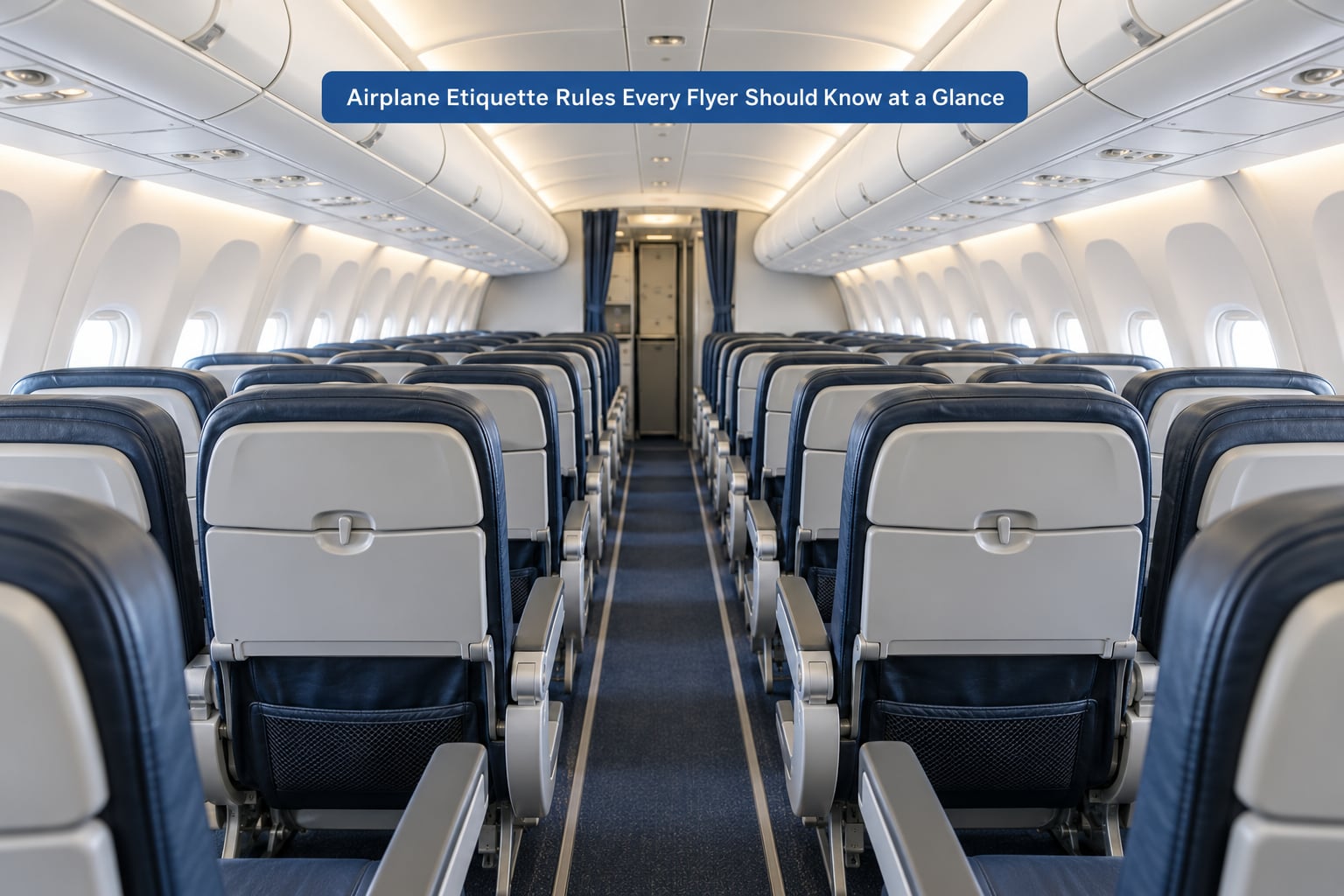
| Rule | When it matters most | The considerate move |
|---|---|---|
| Pick your seat without rearranging others | Boarding, first minutes onboard | Select it in the app, not by moving people |
| Let others exit first | Arrival, tight connections | Pack up early, then hold your row |
| Share the armrests | Every seat, tightest in a middle seat | Middle passenger gets both when both are free |
| Clear the tray and stow the screen | Before landing | Table up, screen locked, pockets checked |
| Use headphones properly | Media, calls, video with sound | No speaker audio, no speakerphone calls |
| Share the overhead bin | Boarding, deplaning | One big bag first, small items under the seat |
| Follow crew instructions promptly | Safety demo, takeoff, landing | Comply first, ask after the aircraft is safe |
| Considerate about food and scent | Meal service, cabin smells | Check the airline’s allergy policy first |
| Do not wake sleepers needlessly | Red-eyes, overnight | Pass quietly, dim your screen, speak low |
| Leave the cabin cleaner | Lavatory, seat pocket, exit | Tidy your space, take your rubbish with you |
1. Choose Your Seat Without Disrupting Boarding
Pick the seat you want before you board, using the seat map on the airline’s app. That is the whole courtesy. On a full flight, a passenger who decides mid-aisle that the row behind has better legroom has started a two-minute negotiation involving six strangers.
Window seats suit long trips and light sleepers who want to control the shade. Aisle seats suit anyone who expects to get up more than twice, plus tall passengers who value knee room over a view. The middle seat is the hardest: two armrests, two people to pass, and the shortest window to get out.
Occasionally there is a genuine reason to change seats mid-flight. A parent with a baby who needs a bulkhead row, or a passenger who took the wrong seat by mistake, is a normal situation and most people say yes. Say what you need in one sentence, accept a no without commentary, and stay put.
When someone asks to switch seats with you
It is fine to decline. “I’d rather keep this seat, but I hope you find a spot you’re happy with” is a complete answer, said pleasantly, with no explanation owed. What makes seat requests contentious is not the refusal but the negotiation afterwards: counteroffers, appeals to the person’s age, or standing in the aisle while it is settled. Frequent flyers describe the whole exchange as worse than the outcome. If the requester will not accept a no, the call button is the next step, and that is what the crew is there for.
2. Let Others Exit First
Stay seated until your row is called, then move. Passengers who stand the moment the seatbelt sign switches off block the aisle, knock against overhead bins, and force the people in front of them to wait anyway. On a deplaning tube this adds minutes to every single row behind you.
Aisle-seat passengers should pack before arrival rather than after, so nobody is standing over them while they dig through a laptop bag. A useful habit is to unbuckle, gather everything, and stand only when the row ahead has moved.
The same order applies on the way in. Board in your group, stow your bag, sit down, and stay out of the aisle. Boarding groups exist because the aircraft is refuelled, cleaned and loaded from the front, and the people who need more time are on board first for that reason.
3. Keep the Shared Armrests Reasonable
The middle seat gets both armrests when both are free, which is the one armrest rule almost everybody agrees on. Both neighbours still get to use theirs. Middle-seat passengers who plant both arms across the full width of the space are the reason a five-minute elbow fight ends up in online threads.
The polite version of the ask is low and specific: rest your forearm lightly on the shared armrest, or say “sorry, do you mind if I use this side as well?” and then do not mention it again. What makes it awkward is escalation, not the question itself. A window-seat passenger sleeping with their arm drifting across the shared side is worth waking gently, not shoving.
On smaller aircraft the armrests are narrow and often shared between rows rather than fitted per seat. That is a hardware limit, not an invitation to fight over an inch of plastic. Most people resolve it by simply alternating, and by lowering a tray table when elbows collide over food.
4. Lower Your Tray Table and Stow Your Screen
Clear the space in front of you before landing. Tray table up, seatback screen stowed and locked, seat pocket emptied, headphones and cables in your bag. It takes fifteen seconds and it is the difference between the person behind you having a normal last twenty minutes and standing up into a lap tray and a bright advert.
On older aircraft the screen sits in the seatback and takes real effort to stow, so do not leave it until the last second. On newer cabins with personal screens, put the device away in your pocket rather than leaving it loose on the tray.
There is a related point about tray tables and cleanliness. Wipe it before eating, use it as a surface rather than a storage shelf, and put your rubbish back in the cup holder. Crew cannot deep-clean between every seat on a short-haul turn.
5. Use Headphones at a Reasonable Volume
Airplane etiquette rules for audio, calls and video
Headphones on means audio stays with you. The common audio complaint on any flight is not noise-cancelling at moderate volume, it is video sound playing out loud or a speakerphone call that forty strangers hear in detail. A wired pair is equally acceptable; the point is that the sound does not leave your seat.
Some airlines do not permit voice calls at all, and many ask you to put devices into airplane mode once doors close. The boarding pass or the airline’s site lists the current wording, and it changes. Checking before you fly beats guessing at the seat.
Volume has a second rule attached: the person in front of you can hear everything through a thin seatback. If the person behind you can hear your music clearly enough to hum along, turn it down. If you cannot tell, assume they can.
6. Keep the Overhead Bin Space Fair
Stow the large bag first, wheels or wheels-down, and keep it tight against the wall of the bin so the next case slides in beside it rather than on top. Then put the small stuff, coat and personal item under the seat in front of you or between your feet. Travellers describe people who fill the entire bin with a coat and a personal item as the most resented boarding behaviour there is.
The 20-second version of a more careful approach: lay your case flat, turn it so the wheels face in, and place it on one side rather than dropping it in the middle. On a full bin, look for a gap before you start rearranging anyone else’s belongings.
Two cases fit in one bin on most narrowbodies, and one plus a personal item is normal. Anything larger belongs in the checked bag, and knowing the airline’s size limits before you pack is easier than the conversation at the gate.
7. Respect the Crew and Follow Safety Instructions
When a flight attendant gives an instruction, do it first and ask questions after the aircraft is in a safe phase. During boarding, takeoff and landing the crew are working a script under safety rules and genuinely cannot help with a non-urgent request. Ring for water during cruise and it will come. Ring during the safety demonstration and you will get a look.
Tone matters more than most passengers expect. Cabin crew deal with rude remarks far more often than people assume, and a passenger who is briefly distracted or clipped under stress rarely remembers it. Saying sorry, or accepting a correction without a sarcastic reply, costs nothing.
Requests are legitimate too. A blocked aisle, an overflowing bin, a passenger standing in a row during service, or someone who will not put the seatback up before landing are all reasonable things to raise with a call button. Aggressive passengers are rare, and the call button handles them better than a passenger-to-passenger confrontation ever will.
8. Be Considerate About Food, Drinks, and Allergies
Strong scent is the quiet grievance that outlasts a flight. Heated fish, reheated chicken, perfume, fragrance diffuser in a handbag and a garlic-heavy meal all recirculate in a cabin with no window open. Low-scent or unheated options are the considerate choice in a full economy row, and it is an easy one to make.
Before you board, check the airline’s own allergy policy. Most major carriers ask passengers with severe nut allergies to avoid bringing nut products onboard at all, and some still serve them. Bring safe food from home for a long flight rather than relying on the service.
Alcohol deserves a mention. Crew will stop serving anyone who is becoming a problem, and being asked to stop is not a punishment, it is the crew keeping the cabin safe for everyone else. A drink with lunch is a different thing from drinking through the flight. If you spill something, say so and clean it, because at altitude nobody can smell it but everyone behind you can see it.
9. Avoid Disturbing Sleepers During Overnight Flights
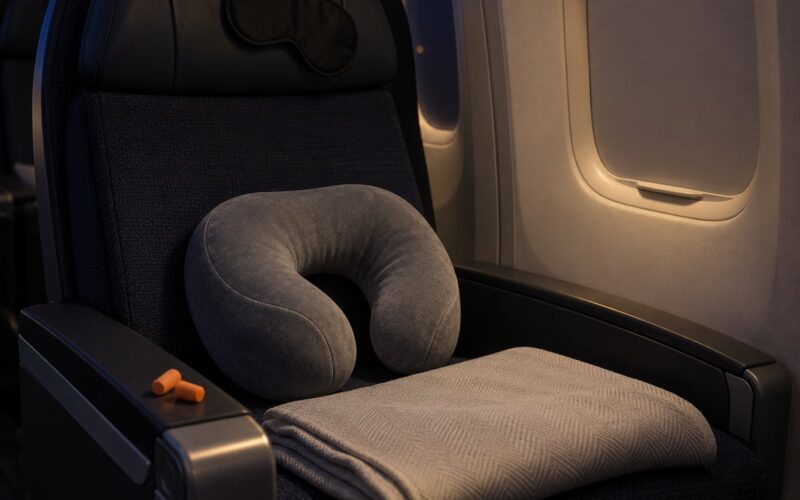
Red-eyes have their own code. Use the toilet before boarding, bring an eye mask and earplugs rather than an alarm, and set your brightness and notification settings to silent. When you do need to pass an occupied row, walk the length of the aisle first, then step across, and never step on a foot or an outstretched leg.
Talking is the thing to control. A phone conversation at midnight at 38000 feet has nowhere to go. If you must take a call, use the lavatory or the row at the back where some airlines provide a phone area, and keep it to a minute.
If you need something urgently, wake the passenger with a light touch on the arm and a short “sorry, excuse me” rather than reaching across them. Genuine emergencies justify a louder wake-up, but most things can wait. Passengers report that being elbowed repeatedly by an unknowing sleeper is the most upsetting thing that happens on a night flight, and that nobody ever thought to say anything about it.
10. Leave the Cabin Better Than You Found It
The last phase is the one everyone forgets. Check the seat pocket for your charger and your sunglasses. Put rubbish in the bin rather than the seat pocket, fold the blanket if there was one, and leave the tray table clean and level. If the lavatory is empty, use it and leave it tidier, including a quick wipe of the basin if you splashed.
Deplaning follows the same order as boarding. Wait for your row, aisle passenger first, take everything with you including the items that fell into the bin behind you, and do not stop in the doorway to make a call. At the carousel, stand to one side so the belt can turn, and check your bag before heading for the exit.
One last thing worth doing: tell the crew about a real problem on the aircraft, such as a broken tray latch, a faulty reading light, or a spill in the lavatory. They cannot fix everything, but they can pass it to maintenance, and that is the difference between a bad hour and a bad report.
Frequently Asked Questions
Who gets the armrest on a plane?
The middle seat passenger gets both armrests when both are free, which is the closest thing to a universal rule. Window and aisle passengers keep their own side but should still keep forearms rather than elbows on it, and give it back when asked. On aircraft with shared armrests, alternating quietly settles it. If someone asleep has drifted across the shared side, wake them gently and say sorry rather than waiting for them to move on their own.
Should you recline your seat on a plane?
Reclining is fine once the aircraft is cruising and meal service is not in progress, and a warning tap or a quick word to the passenger behind removes almost all the conflict. Most people react badly to a seatback hitting their knees with no notice, not to reclining itself. Ask for the seat upright during meal service, during take-off and landing, and on short flights where nobody has settled in. If you are asked to move up, doing it without a comment is the fastest resolution.
Is it rude to take off your shoes on a flight?
It is not forbidden, and a long flight with swollen feet is a real reason to do it. Feet and socks are the one hygiene complaint that almost everyone on board agrees on, so keep socks on and tuck your feet under the seat rather than stretching them into the row. Shoes go underneath the seat in front of you, not in the aisle, where they become a trip hazard for crew.
When can I stand up after landing?
Stay seated with your seatbelt fastened until the seatbelt sign switches off and the crew have given the all-clear. Standing early blocks the aisle, opens overhead bins before the people who need them have arrived, and adds delay to every row behind you. Once you are unseated, gather your belongings first so the aisle-seat passenger is not waiting over you, then stand when your row is called.
How should I treat flight attendants when they ask me to do something?
Just comply first and ask afterwards. During boarding, take-off and landing the crew follow a safety script and cannot step away for a non-urgent request, so ring the call button in cruise instead. A brief, pleasant manner matters as much as compliance; a passenger who is distracted and clipped under stress is quickly forgotten. If a crew member is wrong about something, they can usually correct it themselves with a note, so let them try first.
What to Do First on Your Next Flight
Pick your seat in the app, listen to the safety demonstration properly, and clear your tray table before landing. Those three cover most of what other people actually notice.
Then make one extra courtesy that costs nothing: give up the shared armrest without being asked, or let the person behind you know before you recline. One small gesture from one row is often the thing a stranger remembers about the flight.
The rest of airplane etiquette is mostly just noticing. Legroom, bin space, volume, scent, an early stand-up. None of it is a rule anyone will enforce, which is exactly why it works.