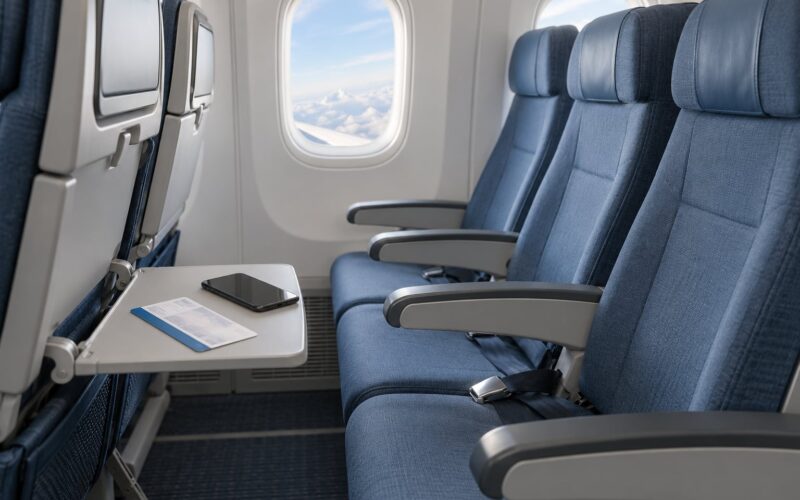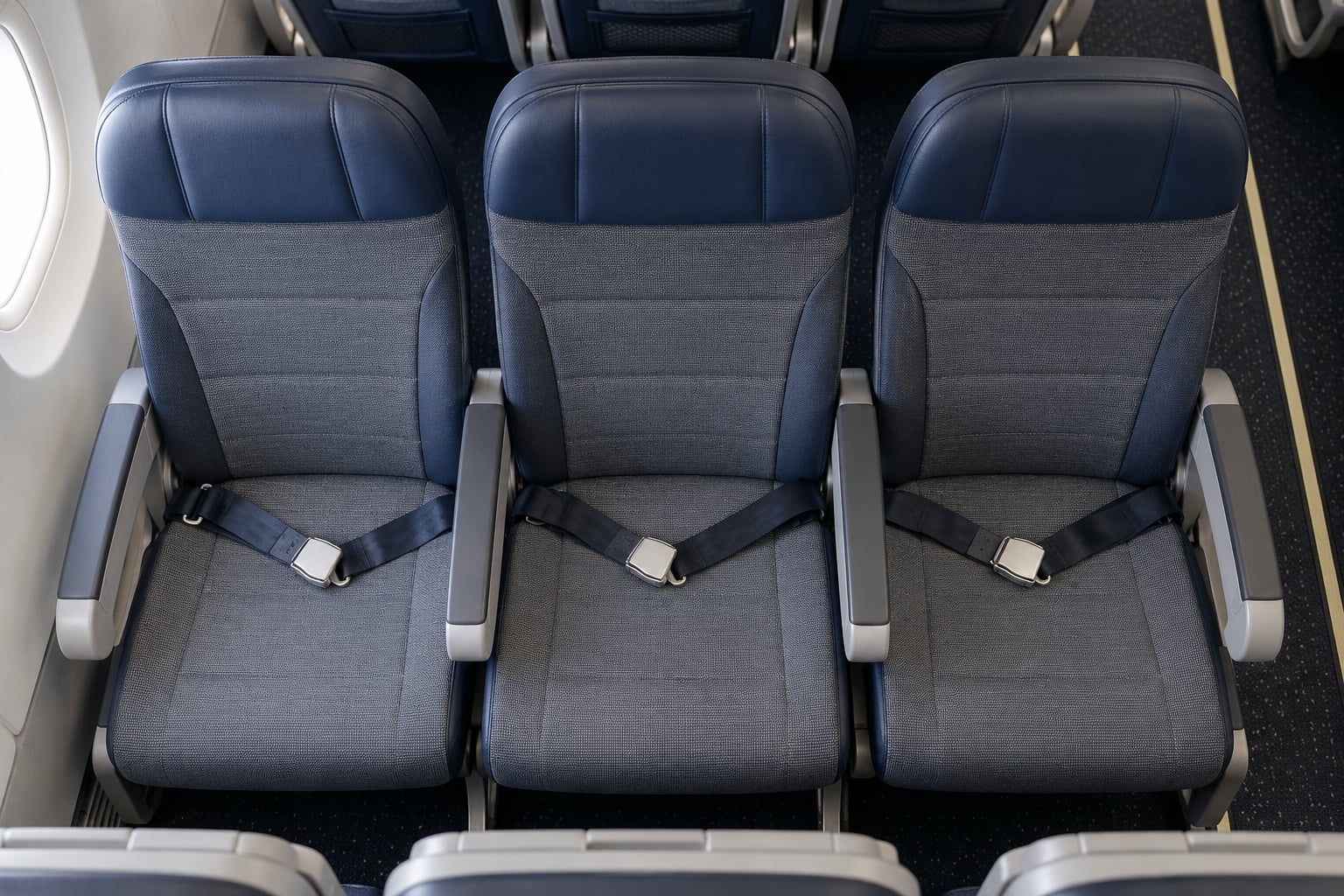
Who gets the armrest in the middle seat? The middle-seat passenger gets both of them. The window passenger keeps the fuselage wall, the aisle passenger keeps legroom and an easy exit, and the person in the middle is the one who has neither.
That is the settled answer among frequent flyers and the cabin crew who mediate this dispute every single day. It is also an unwritten rule, not an airline policy, which is exactly why it gets argued over.
Table of Contents
- Who Has Priority Over a Middle-Seat Armrest?
- Why Does the Middle-Seat Passenger Usually Get Both Armrests?
- When Should You Share or Lower an Armrest?
- Does the Rule Change on Narrow Airplane Seats?
- What If the Middle Passenger Is Using Both Armrests?
- Who Gets the Armrest in the Middle Seat When Someone Will Not Share?
- What About Families With Children and Accessibility Needs?
- How Does the Armrest Rule Differ by Airline and Seat Type?
- Frequently Asked Questions
- Who gets the armrest in the middle seat?
- Do I have to share an armrest with a middle-seat passenger?
- Can someone lower the armrest to give me more room?
- Who has priority if a child or accessibility need requires more space?
- Is it rude for a middle-seat passenger to use both armrests?
- Does the middle-seat armrest rule apply on airplanes with only two armrests per row?
- The Simple Rule to Remember
Who Has Priority Over a Middle-Seat Armrest?
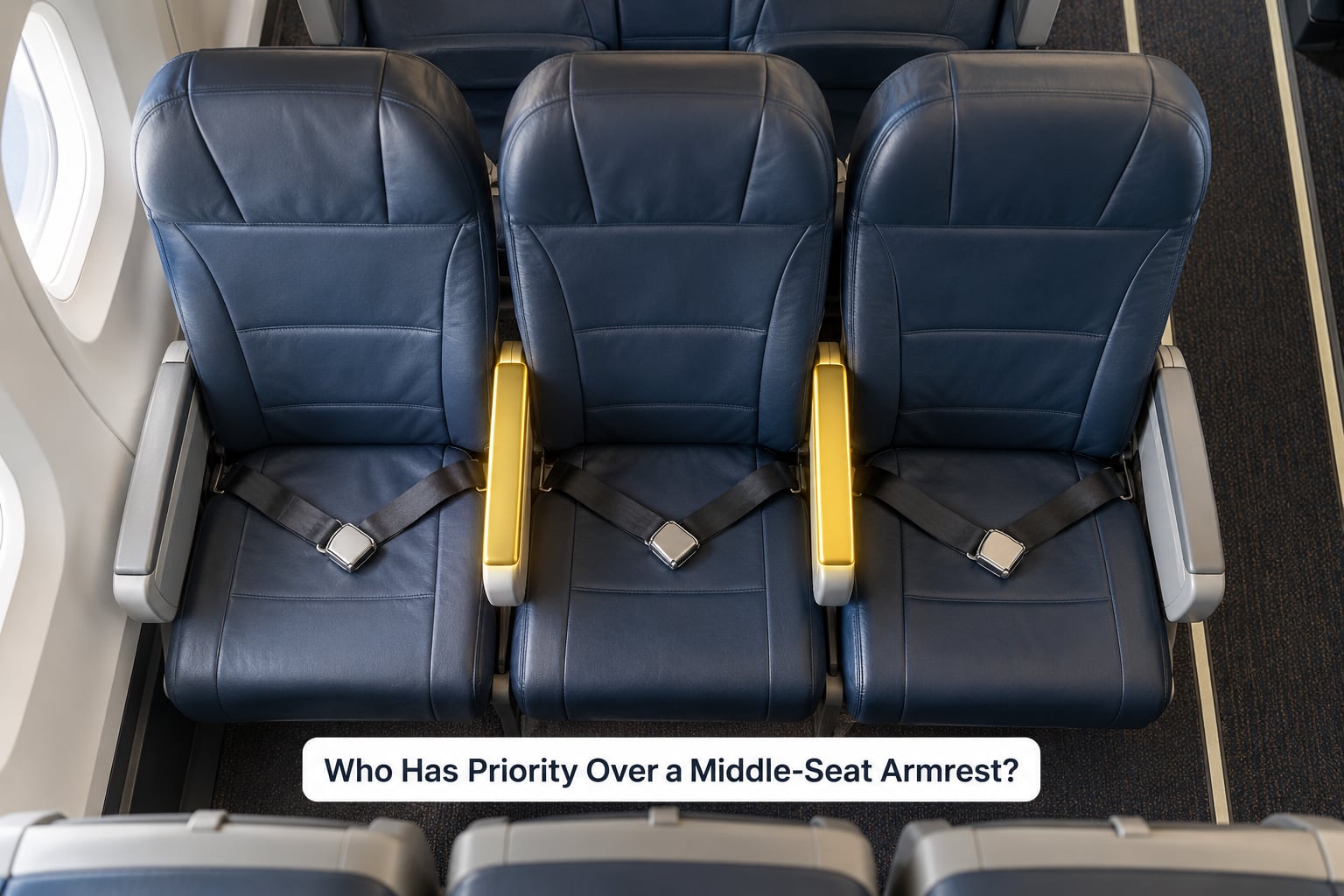
The short version: in a three-seat row, the middle passenger has the stronger claim to the armrest on each side, and the aisle and window passengers share with them. The middle passenger should not have to ask.
It is worth being precise about what this rule is and is not. Airlines sell you a seat, not an armrest. Armrests are not listed in the contract of carriage, no crew member has a written policy taped to the seat pocket about them, and there is no regulation that says the middle seat belongs to whoever is sitting in it.
So the honest framing is this: the rule is social, and social rules are strong until somebody does not agree with them. That gap between what is agreed and what is enforceable is the source of nearly every armrest fight I have heard about.
Plenty of experienced travelers argue the opposite, and their argument is not silly. Theirs is the physical case: the armrests belong to no one in particular, they are shared common space, and two average-sized passengers can generally get through a couple of hours on one without harm. Both positions are held sincerely, which is why the standoff usually ends with whoever is less tired winning.
Why Does the Middle-Seat Passenger Usually Get Both Armrests?
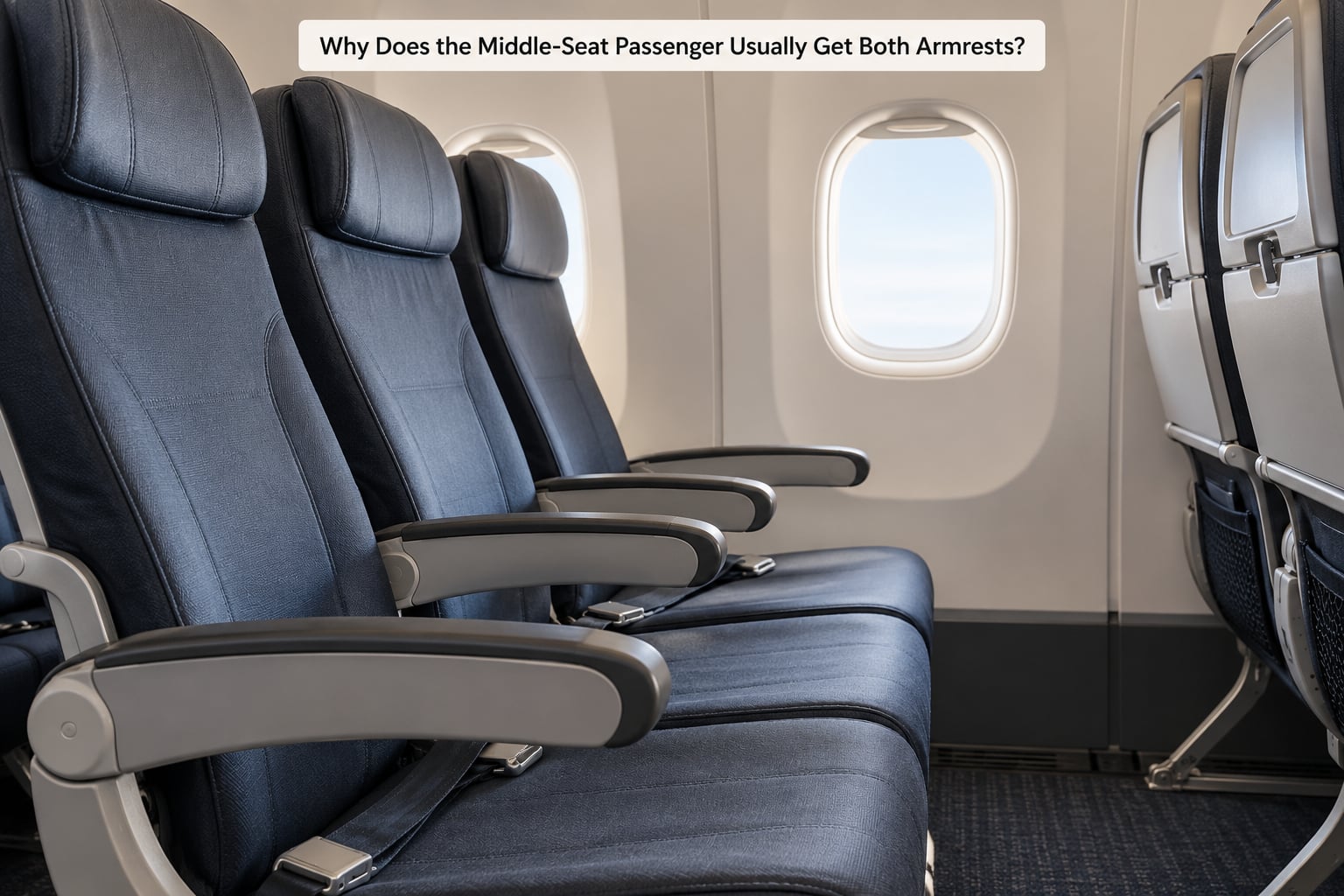
The reason is arithmetic, not manners. Everyone in a row brings something to the arrangement, and the middle passenger brings the least.
| Seat position | Armrest share | What you get instead |
|---|---|---|
| Middle | Both armrests, by convention | No window, no aisle access, two strangers either side, hardest seat to leave in an emergency |
| Window | Shares the aisle-side armrest | Fuselage wall, view, window shade control, nobody crossing them to reach the aisle |
| Aisle | Shares the window-side armrest | Legroom on the aisle side, stand-up access, easy lavatory trips |
| Row of two (regional jet) | One shared armrest between two people | Window or aisle on the same side; nobody is in the middle, so neither seat is senior |
The window passenger is not losing anything real. The aisle passenger can stand up without asking anyone. The middle passenger cannot do either without disturbing two people.
The argument against the rule is the physical one. A typical economy armrest is roughly three to four inches wide. Two average-sized people can share that if they each stay politely within their own space, which is why plenty of seasoned travelers insist the problem is only real when a neighbor is too large to stay inside their seat width.
When Should You Share or Lower an Armrest?
Lowering an armrest is almost never necessary, and asking someone to lower one usually makes things worse rather than better. It gives you maybe another inch of elbow room and takes away the other person’s forearm support, so both of you end up braced against something solid.
Sharing, on the other hand, is reasonable in a few clear situations: when the middle passenger has a laptop out and is angled toward one side, when the person beside them is asleep and has folded the armrest down already, or when you are on a short hop where nobody is settling in.
Accommodating rather than claiming is the right move when the person next to you has a child on their lap, a caregiver role, a body that does not fit the seat width, or a genuine mobility need. A middle passenger with a water bottle and reading light is not the same situation as a middle passenger bracing themselves with both arms.
Does the Rule Change on Narrow Airplane Seats?
It changes in practice and not in theory. On a narrow-body jet with 3-3 seating, average seat width has crept down over the years from around 18 inches toward 17, and armrests have not grown to compensate. The rule says middle gets both; the geometry says there is barely room for one.
Seat pitch makes it worse. When the row is pitched at 30 inches, leaning back means leaning into the person behind you, so sharing an armrest and reclining at the same time stops being possible. Anyone who asks you to share an armrest and recline simultaneously is asking for two things that fight each other.
Regional jets are the clearer edge case. A two-across row has no middle seat at all, just one armrest sitting between two equally ranked passengers. Nobody gets seniority there. The passengers who boarded first by assignment, or the one who needs the armrest more, uses it, and the arrangement is entirely ad hoc.
Fixed or non-reclining armrests show up on some regional and older configurations. When the armrest does not move, sharing it means negotiating over literal elbow territory, which is why those rows generate more friction than wide-body economy.
What If the Middle Passenger Is Using Both Armrests?
Ask once, calmly, early. Before takeoff is better than at hour three, because a request made at boarding is a request about the flight, while a request made at hour three is a complaint about a person.
Phrases that work are boring on purpose. “Excuse me, I’m in the middle and could I use the armrest on your side for a bit?” “No problem at all if you need it, but could I share?” A simple request gets a simple yes in the large majority of cases. Read enough passenger forums and the pattern repeats: people who ask get space, and people who shove elbows or sigh loudly do not.
Who Gets the Armrest in the Middle Seat When Someone Will Not Share?
If the ask fails, move up the ladder in order. Second step is to look for an empty seat nearby and ask the flight attendant whether you can move before anyone has stowed their tray table.
Third step is to flag it to a flight attendant directly. Cabin crew will usually mediate, and the crew view tends to match the convention: the middle passenger should have both armrests. Be honest about the outcome, because crew cannot fix what the cabin layout cannot fix.
Here is the honest limit. Crew can reseat you when the flight is not full. On a full flight they often cannot, and no one is going to physically remove a passenger from a row over an armrest. That is the moment when being reasonable beats being right.
What you should never do is make it physical, and never try to grab or hold the armrest by force. Airline responses to onboard altercations range from a warning to being off the plane before departure, and permanent consequences for touching or restraining another passenger are the kind of thing that follows a person for years.
What About Families With Children and Accessibility Needs?
Children change the math completely. A parent in the middle with a child on their lap, or with a child in the adjacent seat who needs a boundary, is going to use the armrest for balance and for keeping the child in place. Nobody reasonable is going to argue with that, and if someone does, that is a problem with the passenger, not with the etiquette.
Caregivers and companions get the same grace. Someone assisting a partner or parent with limited mobility may need both armrests to help that person shift position, transfer, or settle comfortably. This is also why seating requests made in advance matter: airlines seat passengers with mobility needs and their companions together deliberately, and that pairing is worth more than any armrest.
Accessibility aside, a larger passenger sitting next to you cannot share. This is the most common genuine exception and the one that gets argued about most in comments. If the person beside you physically fills their seat width, there is no etiquette answer that produces more elbow room. Move, ask to move, or accept that the flight will be tight for a few hours.
How Does the Armrest Rule Differ by Airline and Seat Type?
In premium economy and business class the rule largely dissolves. Seats there have wide double-width console armrests that function as a private table, a laptop surface, or a rest for a drink. You are not sharing a three-inch armrest with a stranger; you have your own.
On a fully lie-flat product the armrest becomes part of the seat’s console and folds with the bed. There is no neighbor to negotiate with at all, because you effectively have your own small room.
Then there is the seat-assignment side of things. Several major US carriers blocked middle seats for a long stretch in recent years, including Delta, Southwest, JetBlue and Alaska, and then sold those seats back as flying recovered. Many passengers are still mentally budgeting for an empty seat beside them, then finding a stranger there. That expectation mismatch causes more frustration than the armrest itself.
No carrier publishes an armrest policy, because as far as the contract goes, the armrest does not exist. What differs between airlines is not the rule but the enforcement reality: how full the flight is, whether crew will reseat you, and whether premium seating has real consoles.
Frequently Asked Questions
Who gets the armrest in the middle seat?
In a three-seat row, the middle-seat passenger has the stronger claim to both armrests. The window passenger has the fuselage wall and the view, and the aisle passenger has legroom and easy exit, so the middle seat is treated as compensation. It is an unwritten convention rather than an airline rule.
Do I have to share an armrest with a middle-seat passenger?
Usually, yes, and most people can manage it. An economy armrest is roughly three to four inches wide, so sharing works when each person stays within their own seat width. The middle passenger still has the stronger claim, but the armrest is shared common space, not private property.
Can someone lower the armrest to give me more room?
You can lower it, but it rarely helps. It buys you about an inch of elbow room while removing the other person’s support, so you both end up bracing against something harder. Asking politely for full use of the armrest works better than lowering it, and it keeps the peace.
Who has priority if a child or accessibility need requires more space?
The person with the actual need. A parent holding a child, a caregiver assisting someone with limited mobility, or a passenger with a body that does not fit the seat width has a stronger claim than a middle-seat passenger with a water bottle. Crew and fellow passengers generally treat those situations as settled.
Is it rude for a middle-seat passenger to use both armrests?
Using both briefly, then settling in, is expected and not rude. Holding both rigidly elbow-to-elbow for hours with no awareness of the people beside you is what turns the arrangement into a grievance. A quick thanks, and periodic awareness of your neighbors, keeps it fine.
Does the middle-seat armrest rule apply on airplanes with only two armrests per row?
Not quite. A two-across regional jet has no middle seat, so the single shared armrest has no senior user. Whoever needs it most, or whoever boarded into that seat assignment, uses it. On those planes the arrangement is agreed between the two passengers rather than settled by convention.
The Simple Rule to Remember
The middle passenger gets both armrests, the window passenger gets the view, and the aisle passenger gets the easy exit. That is the arrangement almost everyone agrees with, including crew.
Ask once, early, and politely if it is not happening. If the answer is no and the flight is full, let it go for a few hours rather than turn a shared armrest into a personal grievance.
And if you are taking the middle seat, take both, but check in with the people beside you. That is the part everybody remembers.