The seat printed on your boarding pass belongs to you, so the first move is simple: stand at the row, show the seat number on your boarding pass, and ask the passenger to move. If they decline, flag a flight attendant and let the crew sort it out — that part takes about two minutes and it works far more often than a debate would.
I’ve watched this go badly and go fine, and the difference is almost always whether someone treats it like a paperwork problem or a showdown. Paperwork problems get resolved. Showdowns get you moved to a random middle seat and a lecture you did not ask for.
Quick answer, if you want it in four lines:
- Check the seat number on your boarding pass before you say anything.
- Ask the passenger once, politely, and hold up the boarding pass so they can see it.
- If they say no, do not negotiate — get a flight attendant within the first minute.
- Take a photo of the seat and your boarding pass, then follow up with the airline after landing if you ended up in the wrong seat.
Last updated October 2026.
Table of Contents
- What You Need
- Step-by-Step: What To Do If Someone Takes Your Assigned Seat
- Confirm Your Seat Assignment
- Ask the Passenger Politely
- Call a Flight Attendant
- What To Do If Someone Takes Your Assigned Seat on a Full Flight
- Common Mistakes
- Frequently Asked Questions
- Can someone sit in my assigned airplane seat?
- What should I say to someone who took my seat?
- Can a flight attendant make a passenger move to my assigned seat?
- Do I have to move if the flight attendant says the seat is not mine?
- What if I cannot find an empty seat after reporting the problem?
- Can I contact the airline after the flight about an assigned-seat issue?
- Conclusion
What You Need
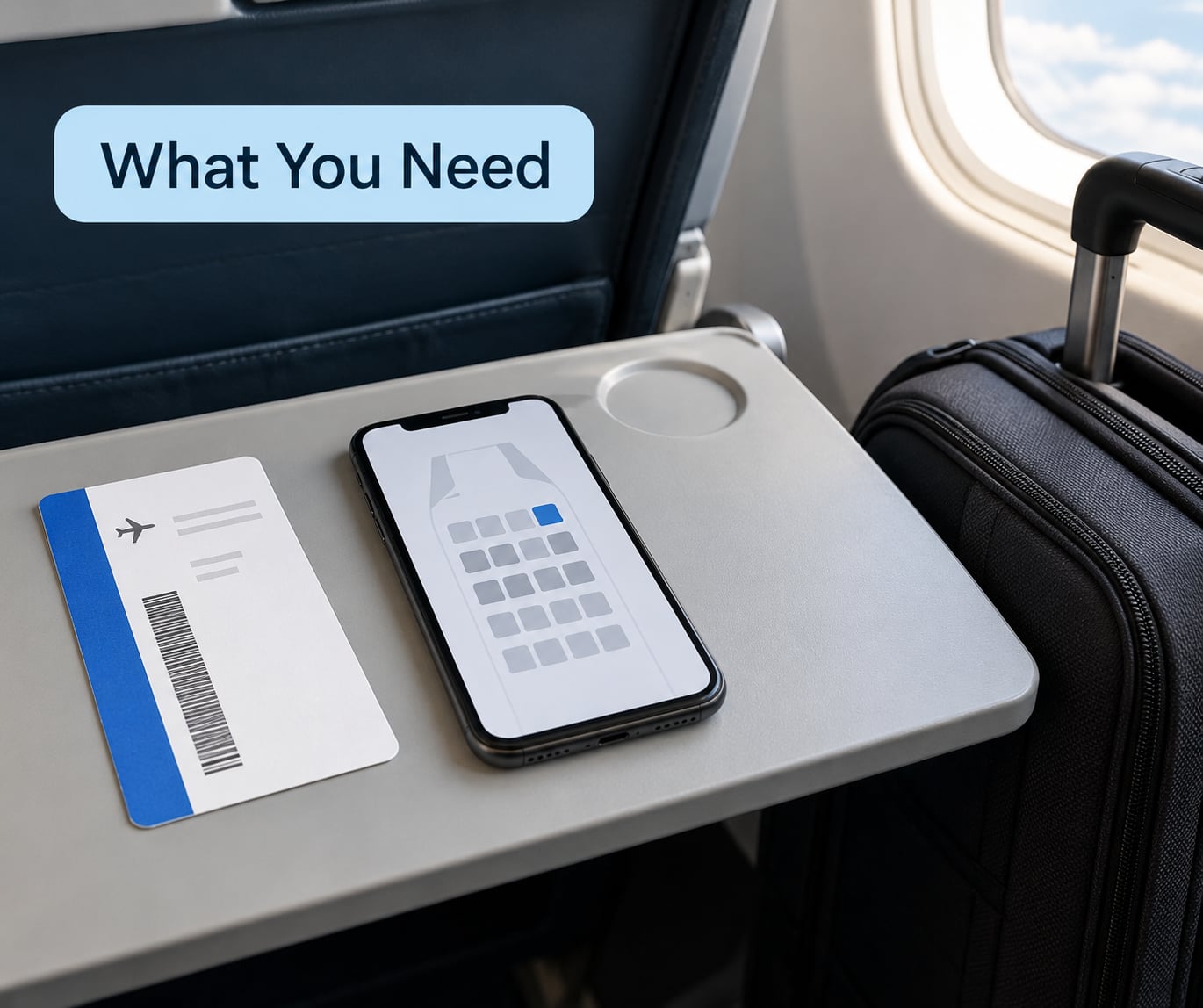
You need your boarding pass in hand, your booking confirmation open on your phone, and enough patience to keep your voice flat. That is the whole list. Everything else is optional, including a legal argument.
The boarding pass is the authoritative document. It carries the seat number, the cabin, and usually a bar code that cabin crew can scan. The airline app is the second source, and it is worth opening before you board because airlines move passengers around during schedule changes and aircraft swaps.
Your booking confirmation matters when you paid extra for a seat. Advance purchase and seat-selection fees often appear as separate line items, and that record is what you attach to a claim if you lose the seat and want the money back.
One honest note about authority. Your seat assignment is a strong claim, not an unbreakable one. Airlines can reassign passengers for safety, weight and balance, accessibility needs, or operational reasons, and when that happens your printed seat number stops being your seat. Cabin crew are the only people who can settle which assignment is live.
Step-by-Step: What To Do If Someone Takes Your Assigned Seat
Confirm Your Seat Assignment
Stand in the aisle, look at the boarding pass, and note the number. Then compare it with the seat you are physically standing next to. If the numbers match, you have a straightforward mix-up and a polite word fixes it.
Do not rely on memory. Travelers confidently misremember seat numbers all the time, and the passenger in the seat may be reading a boarding pass that says something different. Two pieces of paper beat one confident memory every time.
Ask the Passenger Politely
Say something short, neutral and specific: “Hi, I think this is my seat — 22A. Do you want to check your boarding pass?” Then wait. Most seat mix-ups are genuine mistakes, and a large share resolve in about ten seconds with nothing more than that sentence.
Keep it to one request. Etiquette guidance is consistent on this point: no one has an obligation to switch seats, so you have no right to expect a yes or to make a scene over a no.
If the passenger has a better seat and offers to swap, you get to decide. Worth a second: paid for that exact seat, you may be in an exit row they need, or you may be swapping a middle seat for the same middle seat in a worse row. If the offer is a straight even trade, saying yes is a reasonable choice and ends the problem in ten seconds.
Call a Flight Attendant
Do not repeat yourself. Say “I’ve asked nicely and I’d like a flight attendant to help, please,” then look for the nearest one or press the call button. Cabin crew handle this constantly, and they resolve it faster than any passenger-to-passenger negotiation.
Give the attendant three facts: your seat number, the seat number printed on the other passenger’s boarding pass if you can see it, and whether you paid for the seat. Then step back and let the crew decide. This is the part most people skip and regret — arguing your case to the attendant rather than to the stranger is what makes the crew take your side.
If the crew moves the person in your seat, that is the normal outcome. If the crew instead reassigns you, that is a policy decision about weight and balance, accessibility, or cabin load, and it is much harder to argue with than a passenger.
What To Do If Someone Takes Your Assigned Seat on a Full Flight
Sometimes there is no empty seat and the crew hands you whatever is left. Accept the seat calmly — arguing with a flight attendant while the door is still open helps nobody — but do not go quiet about it.
Ask two questions before you sit down: “Was I moved by the airline, and is my seat fee refundable?” Then take a photo of your boarding pass and the seat number you were given. That photo plus your booking confirmation is the whole evidence packet you need for a post-flight claim.
Then follow up. Contact the airline after landing, describe what happened with the date, flight number, original seat and the seat you ended up in, and attach the photos. Roughly a week after the flight is a reasonable window to submit it, and you should get a written answer to your claim rather than a form letter.
If the flight was overbooked and you were actually denied boarding, that is a different process with different rules. Compensation for an involuntary bump is set by the U.S. Department of Transportation rather than by the airline’s goodwill, and it is handled through the airline first and then through the Air Travel Consumer Report.
One thing to keep straight: a seat squatter is not the same as an involuntary bump. If a passenger takes your seat, they are in the wrong place, not off the flight. If the airline removes you from the aircraft entirely, that is a denied boarding case with its own compensation rules and its own paperwork.
Common Mistakes
Arguing with the passenger instead of the crew. This is the big one. A stranger has no authority and no interest in your itinerary, while a flight attendant can reassign seats in ten seconds. One polite request, then escalate to crew.
Reaching for the seat, the bag, or the armrest. Never touch the person, their belongings, or anything in their space. Airlines treat that as an onboard incident rather than a seat dispute, and it is the fastest route to being the one who gets pulled off the plane.
Treating a preference as a guarantee. Seat preference is a request the airline tries to honour. Seat assignment is part of what you bought. Know which one you have before you start a fight over it.
Waiting until after takeoff. Once the door closes, crew has far less flexibility. Boarding time is the cheapest moment to fix a seat problem, and almost nobody has to be removed from the aircraft to solve one.
Letting it slide because the cabin is watching. The deterrence argument is straightforward: tolerating a seat snatch rewards the behaviour. Other passengers read what happens to you, and the next person in row 22 does it too.
Forgetting to follow up. The seat you lose at the gate is rarely recovered on its own. A short, factual message to the airline with photos attached is what converts a bad morning into a refund, a credit, or points.
Confusing a swap with a theft. If the passenger asks before they sit, it is a seat switch and you can say yes or no freely. If they sit first and tell you later, that is the situation this article is about.
Frequently Asked Questions
Can someone sit in my assigned airplane seat?
Yes, and it happens constantly, usually by mistake. Your ticket purchased that specific seat, so the passenger sitting in it has no claim to it unless you agree to swap. Check the seat number on your boarding pass, ask once politely, and show the boarding pass so they can see it for themselves. If they decline, get a flight attendant rather than repeating yourself.
What should I say to someone who took my seat?
Keep it short and factual: Hi, I think this is my seat, 22A. Do you want to check your boarding pass? One sentence, a visible boarding pass, and then silence works better than an explanation. If they still say no, do not argue further. Say that you would like a flight attendant to help and flag the nearest one.
Can a flight attendant make a passenger move to my assigned seat?
Usually yes. Flight attendants resolve seat mix-ups routinely, and the standard fix is asking the passenger to move to their own assigned seat. Crew have the final say, though, because they also have to balance the aircraft and handle accessibility and cabin-load issues you cannot see from your row. Give them the seat numbers and let them decide.
Do I have to move if the flight attendant says the seat is not mine?
If cabin crew reassign you, you generally do have to move, because the crew hold the live assignment and any reassignment must be for operational or safety reasons. You do not have to accept it silently, though. Ask whether the change was made by the airline and whether your seat selection fee is refundable, and note the answer for a claim after landing.
What if I cannot find an empty seat after reporting the problem?
Then take the seat the crew offer, without a scene, and start building your claim. Photograph your boarding pass and the seat number you were given, write down the original seat and the flight number, and contact the airline after the flight with those details. Paying extra for a window or aisle seat and losing it at the door is exactly the situation most airlines will look at.
Can I contact the airline after the flight about an assigned-seat issue?
Yes, and you should. Send a short written message with the date, flight number, your original seat, the seat you were given or ended up in, and photos of your boarding pass. Ask specifically whether the seat fee is refundable and what credit you are owed. If the flight was overbooked and you were denied boarding entirely, that is a separate DOT-regulated process rather than a seat dispute.
Conclusion
Confirm the seat number on your boarding pass, ask the passenger once in a normal tone, and get a flight attendant the moment the answer is no. That sequence handles the situation in a few minutes and keeps you out of any kind of onboard incident.
If you end up in the wrong seat anyway, take the photos and write to the airline after landing with your booking confirmation in hand. A factual message with dates and seat numbers gets a real answer far more often than a complaint left on the phone.