The most reliable way to get an empty row on a plane is to book the window and aisle seats in the same row and leave the middle open, then sit in that middle yourself. On top of that, pick flights that load late, board early when you can, and ask a flight attendant rather than moving on your own.
No strategy gives you a guarantee. A full flight stays full, and crew can refuse a seat change when safety is involved. What the moves below do is raise your odds from almost nothing to a decent chance, and they cost you nothing more than a little planning.
I fly a lot of red-eyes and long-haul economy, and the difference between a middle seat wedged between two people and an open row is the difference between counting hours and actually sleeping. This is the routine I use, updated for 2026.
Table of Contents
- What You Need
- Step-by-Step: How to Get an Empty Row on a Plane
- 1. Check the seat map before you book
- 2. Book the window and aisle to hold the middle
- 3. Choose a less popular fare or itinerary
- 4. Prefer a boarding group that gets you in early
- 5. Board as early as the airline allows
- 6. Ask the gate agent or flight attendant for an empty row
- 7. Time your search around boarding and deplaning
- 8. Use the extra seat for comfort, not confrontation
- 9. Have a backup plan when nothing is open
- Common Mistakes
- Frequently Asked Questions
- Can I guarantee an empty row on a plane?
- Is an empty middle seat usually available on a full flight?
- Does priority boarding help you get an empty row?
- Should I ask a flight attendant to move a passenger?
- Are rows near the galley or bathroom less likely to be occupied?
- What should I do if no extra seat is available?
- Conclusion
What You Need
You cannot buy an empty row, so everything here is preparation and timing. Five things make the difference.
An accurate seat map. Open the seat map on the airline’s site or app before you book and look at how the cabin is filling, not just at the seat you want. Seat maps are snapshots and they lie constantly, so treat open rows as a hint rather than a fact.
Flexible booking decisions. The best lever you control is picking a flight that will not be full. That means comparing several departures, not just the convenient one.
Boarding confirmation. Know your boarding group before you get to the airport. It decides whether you walk past half the plane or behind most of it.
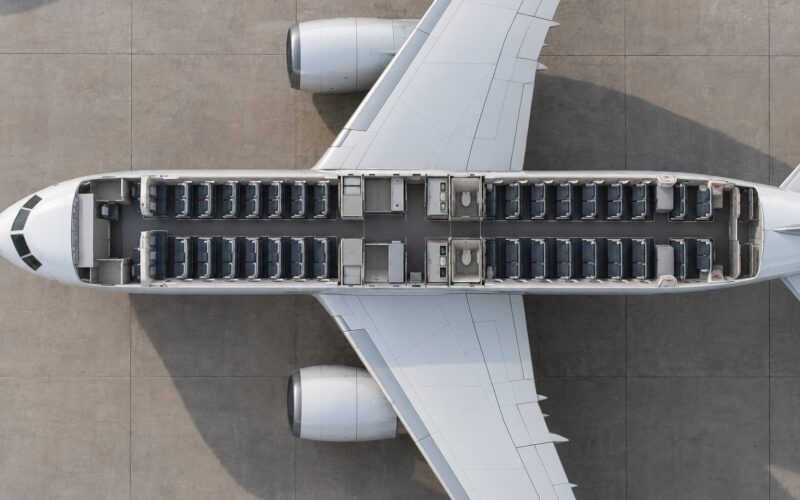
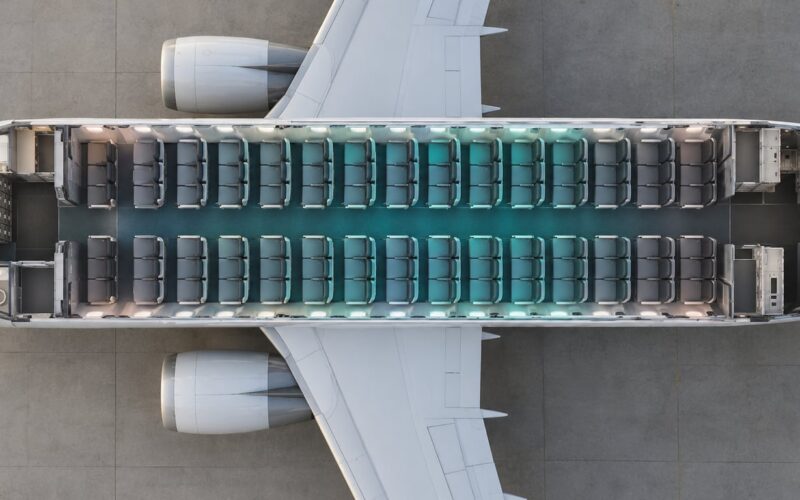
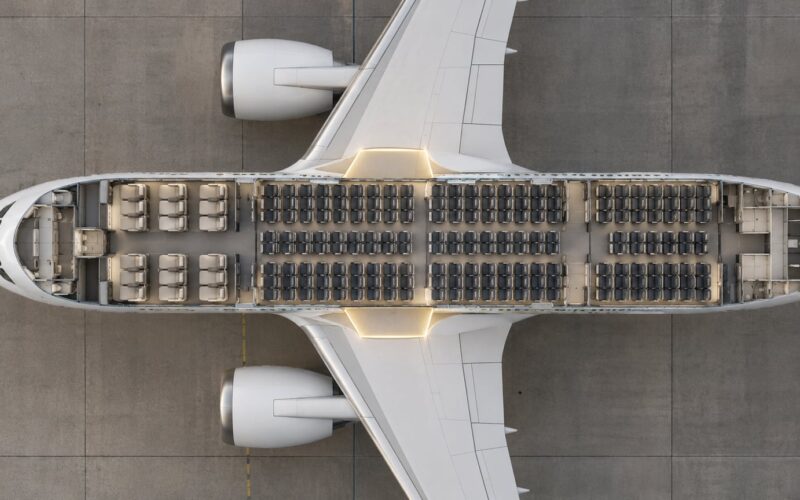
Awareness of the aircraft layout. A narrowbody, a widebody and a regional jet have very different odds. Regional jets are nearly hopeless for this, and knowing what you are flying tells you whether the flight is worth playing for.
A backup seating plan. Decide before you board which seat you are happy with if the row strategy fails. People get frustrated when they have no plan B.
Step-by-Step: How to Get an Empty Row on a Plane
1. Check the seat map before you book
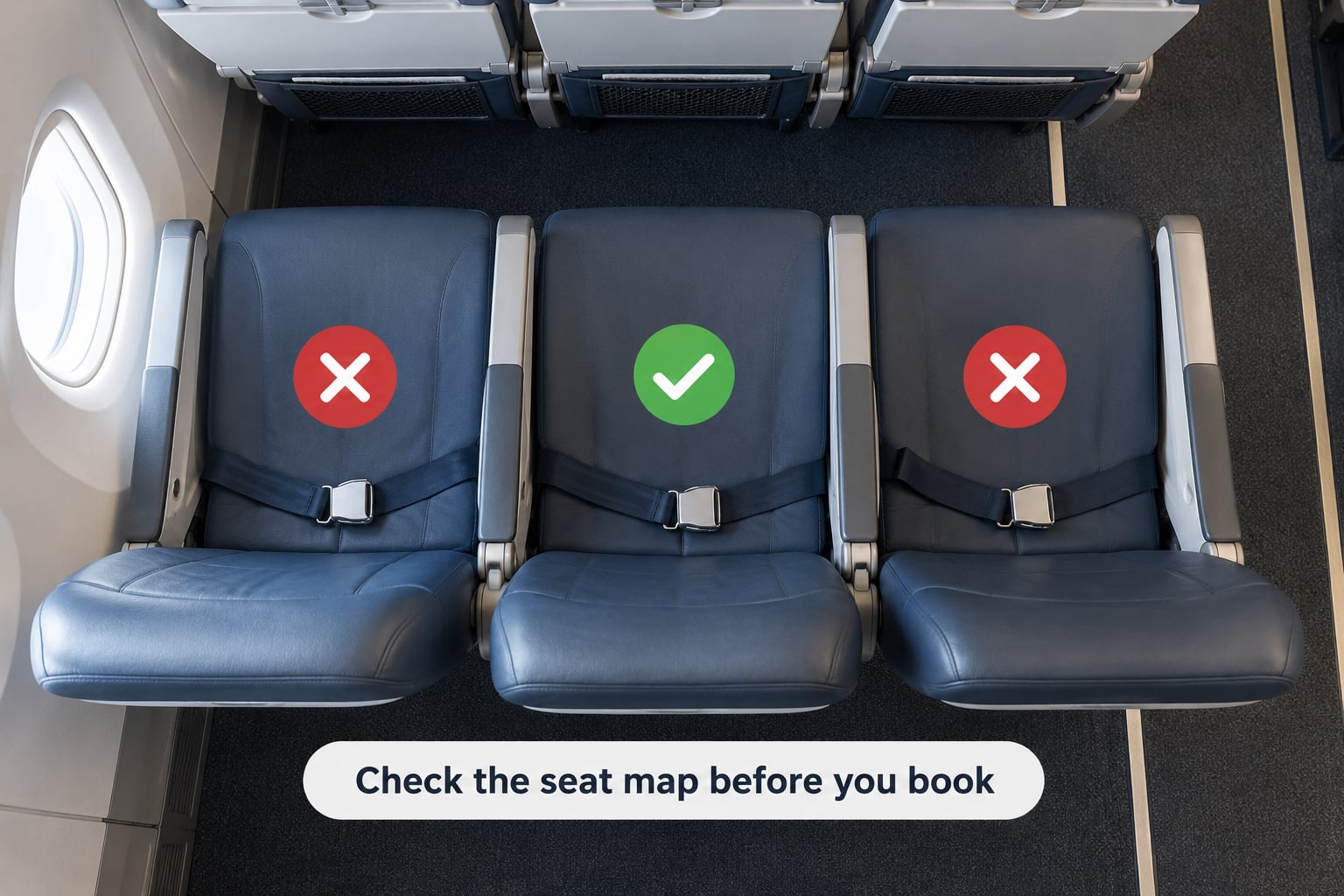
Open the seat map and look for rows where the middle seat is already gone but the window and aisle are still open. That pattern means two people booked the outside seats separately, which is exactly the configuration you want to copy.
Rows next to a galley or a lavatory often show fewer bookings because of the noise and the traffic. They are genuinely less likely to be full, though you trade quiet for the empty seat.
Seat maps are not accurate. Aircraft get swapped, and a seat shown as taken can clear hours before departure. Use the map to choose, not to be certain.
2. Book the window and aisle to hold the middle
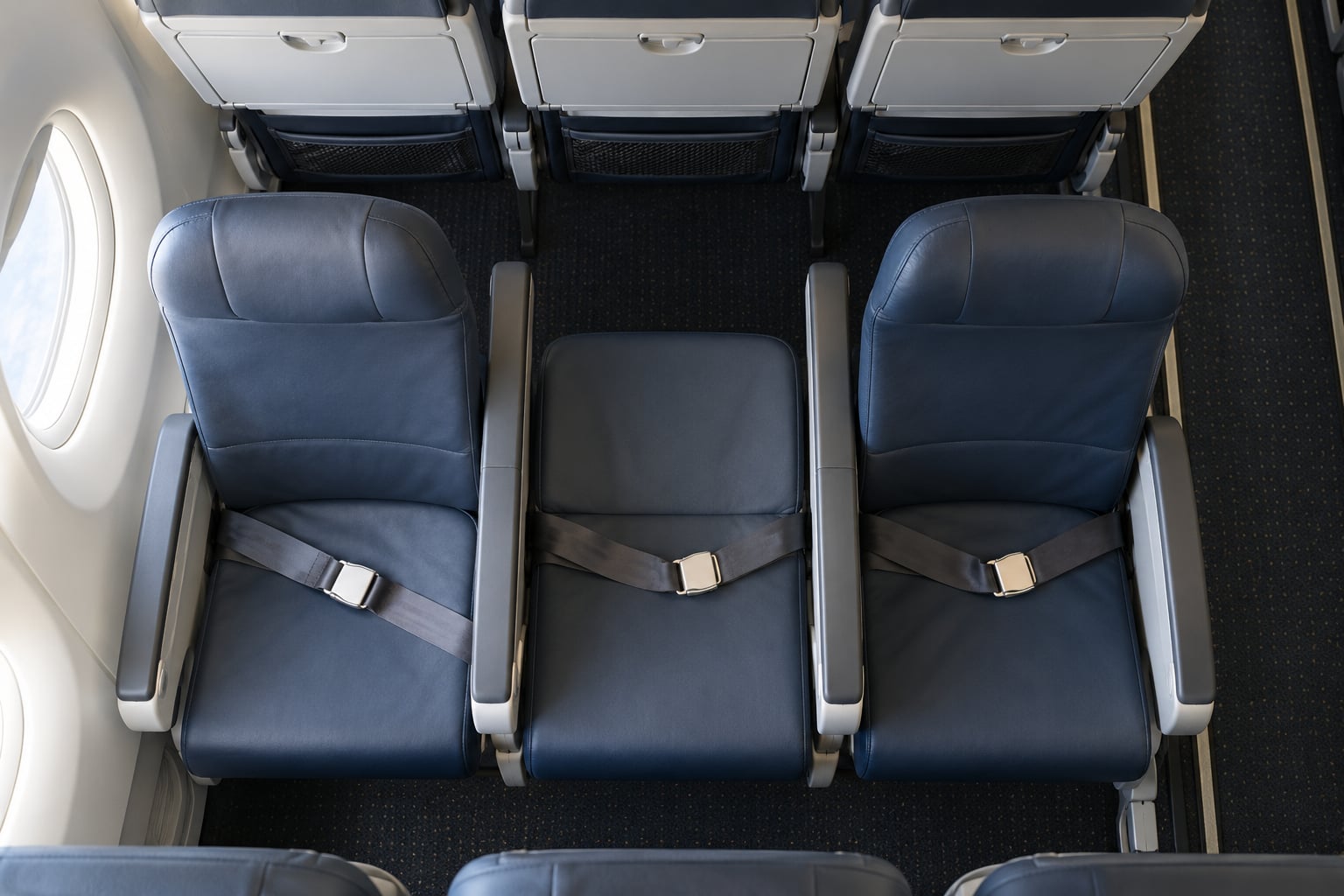
This is the move that actually creates the empty row. On a three-seat row, book the window and the aisle in the same row. Both outside seats are now yours, the middle has no stranger assigned to it, and you sit in the middle with an armrest on each side.
Most booking flows let you select a second seat in the same row during checkout rather than buying a second ticket. If that option is not offered, buy two seats in one booking. That way changes and refunds stay in one reservation.
The honest caveat: check the airline’s change and cancellation rules before you commit, because some carriers charge a fee to modify seat assignments. Two separate bookings mean two risks, since one can be cancelled or changed without the other.
3. Choose a less popular fare or itinerary
An empty row is mostly a supply problem. On a sold-out flight there is nothing to win, so spend your effort on flights with real seats left.
Compare every departure that gets you to your destination on the same day. Mid-morning, late evening and first flights out of a hub often carry lighter loads than the afternoon bank. Weekday beats weekend on almost any route.
If your schedule allows, a connecting itinerary split across two flights can give you a short-haul with genuinely open rows, which beats a full 8-hour direct leg.
The trade is real: a better flight costs time, connection risk or a longer day. Weigh that against how much the row matters to you.
Here is how the options compare, with rough odds and what each one costs you.
- Booking the window plus aisle in one row. High odds on most flights. Costs a seat fee or a second seat depending on the fare. Best for anyone who can plan ahead.
- Picking a low-load departure time. Medium to high odds, no extra cost beyond a possible fare difference. Best for flexible business and leisure travel.
- Boarding early and asking crew. Medium odds, and the cost is a priority boarding fee or your status. Best for travelers who already board early.
- Taking a premium economy row. Medium to high odds in a higher fare class. Best for long-haul and red-eye routes.
- Moving to an open seat mid-flight. Low odds on domestic, very low on international, and free. Best as a last-minute or oversold tactic.
- Regional jet with three-abreast rows. Very low odds, no extra cost. Best for short hops where you accept reality.
4. Prefer a boarding group that gets you in early
Priority boarding, a higher fare class, a mileage perk or an extra-legroom seat all put you on the aircraft earlier. Earlier means more open rows and more choice.
What it does not mean is a guaranteed row. Plenty of people in group one find the good rows already taken by faster boarders or by people who paid for the same thing.
On carriers with open seating you lose this lever entirely. Anyone can sit anywhere, so the race happens before the door opens.
5. Board as early as the airline allows
Be at the gate, keep your bag compact, and never block the aisle while you look. Crew notice the people who block the aisle and they remember it.
Walk the cabin quickly from the back or the front, look for rows with an open middle, and ask before you sit. If the flight attendant says no, move on immediately without arguing.
Never hover over seated passengers or read over someone’s shoulder to check if the seat is taken. That is the fastest way to turn a friendly crew member against you.
6. Ask the gate agent or flight attendant for an empty row
Asking is allowed. Moving on your own is what causes problems. The gate agent at boarding and the flight attendant once you are aboard can both authorize a seat change.
Keep it short and polite: “Excuse me, is it alright if I move to that open seat for the flight?” A simple question works far better than a story about why you deserve it.
You will get a yes most often when you give a real reason. Mobility issues, travelling with a child, needing aisle access, a broken seat or a broken screen, and a companion who needs to sit nearby all carry weight with crew.
You will get a no when weight and balance is the reason. On a regional jet or a small aircraft, moving passengers around can shift the center of gravity, and crew simply cannot allow it. That is not negotiable.
7. Time your search around boarding and deplaning
The best moments are before the door opens, right after the last group boards, and when passengers get up during service. The seatbelt sign being off matters, because until then crew need everyone seated.
r/solotravel regulars give the same advice: wait until the aircraft is airborne and the sign is off, then ask a flight attendant rather than moving quietly.
Use the moment and then settle down. Nobody is asking you to follow anyone to the lavatory or work out why they left. If a seat opens up and crew offers it, take it. If not, go back to yours.
8. Use the extra seat for comfort, not confrontation
An empty middle seat is a shared resource. Plenty of passengers beside you will want to put a bag down, shift their position or use the shared armrest, and most of the time that is completely reasonable.
Travel+Leisure has covered the unwritten rules for claiming an unoccupied middle seat, and the theme is mutual respect rather than who got there first.
Skip the bag-blocking trick. Travellers on r/delta report flight attendants refusing to let anyone stow a large roller in the empty seat beside them, so the widely believed rule does not hold on every carrier. If you place a small item there, place something light.
Keep the aisle and tray table space usable, and do not make assumptions about why the seat beside you is empty. It might be a working crew member, a family group, or someone who simply prefers the window.
9. Have a backup plan when nothing is open
Pick a window or aisle seat near a galley so fewer people walk past you. On long flights, ask about a later flight that has more room, or accept a premium seat if the fare difference is reasonable.
Noise-cancelling headphones, compression socks, a neck pillow and a decent eye mask do more for a hard economy seat than almost anything else. Long-haul comfort is mostly about managing discomfort, not solving it.
Forum consensus on FlyerTalk is honest: short of top-tier status, the chance of a complete empty row on an international flight is close to zero. Treat the strategy as an upgrade when it works, not a plan.
Common Mistakes
Trusting the seat map too much. It is a snapshot taken hours before departure and aircraft get swapped. Check it for patterns, never as a guarantee.
Arriving at the gate late. If you board late, the good rows are gone. On carriers where boarding groups exist, this single habit decides your outcome.
Assuming an empty middle seat stays empty. Someone can be assigned to it at the last moment, including standby passengers. r/aircanada users note that passenger positions are enforced before takeoff, with preferred seats as the usual exception.
Hovering over seated passengers. Looking down at someone in the next row while they are settling in reads as intrusive. Walk past, make a decision from the aisle, then ask crew.
Asking crew to move another passenger. That is not a thing crew can or should do. You are asking for a seat change for yourself, and framing it that way is what gets a polite answer instead of a flat one.
Choosing a row without considering noise and traffic. Lavatory and galley rows mean constant foot traffic. Bulkhead rows mean no under-seat storage and sometimes a seat that does not recline. Exit rows come with requirements: you generally need to be at least 15 and be able to assist in an emergency.
Getting the odds wrong. This is the most common mistake of all. r/americanairlines users report the best chances of open adjacent seats come from sitting toward the back of the plane, where families and slower boarders tend to cluster at the front.
Ignoring the fare rules. Basic economy usually locks seat selection and enforces assigned seating more strictly, so those passengers have the least room to maneuver. International and code-share itineraries can follow the operating carrier’s rules rather than the one you booked with. Check your airline’s own published policy page before you build a plan around moving seats.
Frequently Asked Questions
Can I guarantee an empty row on a plane?
No. Seat availability is fixed once boarding closes, and crew can still refuse a seat change for safety or operational reasons. The closest thing to a guarantee is booking the window and aisle seats in the same row yourself, so the middle cannot be assigned to a stranger. Everything else raises your odds rather than removing the risk.
Is an empty middle seat usually available on a full flight?
Rarely. On a fully booked aircraft, every seat has an owner even when the middle looks open on the map, and the last passengers to board include standbys who fill gaps. An open middle seat becomes likely on lightly booked domestic flights, red-eyes, and off-peak departures. On international routes, experienced flyers describe the odds of a full empty row as close to zero.
Does priority boarding help you get an empty row?
It helps, with limits. Priority boarding, a higher fare class, or a status perk gets you into the cabin earlier, when more rows still have open middles. It does not reserve anything, and faster boarders ahead of you may take the same rows. On carriers with open seating there is no priority at all, so the race happens before the door opens.
Should I ask a flight attendant to move a passenger?
No. Crew cannot move one passenger to accommodate another, and asking them to try reads as entitled. What you can ask is permission to change your own seat. Give a real reason when you have one, such as mobility, a child, aisle access, or a broken seat. A short, polite question gets a far better result than an explanation of why you deserve the row.
Are rows near the galley or bathroom less likely to be occupied?
Often yes, because of the noise and the constant foot traffic, which regular flyers avoid on long flights. Those rows also fill fast, because they are the ones people pick when they want to board early or get off quickly. Trade-offs vary by aircraft, and a bulkhead row offers more legroom but no under-seat storage and often a fixed seat back.
What should I do if no extra seat is available?
Settle into your assigned seat and make it work. Choose aisle or window over the middle when you can, use noise-cancelling headphones and an eye mask, and keep layers on for temperature swings. On longer trips, ask at the gate about a later flight with more room, or move up to a premium seat if the fare difference is reasonable.
Conclusion
Start with the seat map. If a row shows the middle open with both outside seats available, book the window and the aisle and sit in the middle. Otherwise pick a lighter departure, board as early as your fare allows, and ask crew once you are aboard instead of moving yourself.
An empty row can never be promised. The moves above simply give you more chances to get one, and being easy to help when the answer is no is what makes the next request go better.