An aircraft change, also called an equipment swap, is when the airline replaces the scheduled plane with a different one, usually hours or days before departure, and the new jet has a different seat map, different legroom, or no version of the premium cabin you bought. Most passengers find out from an app alert or an email, often after they already picked a seat. Here is the order that works: verify the current itinerary, pull up the new seat map, re-select your seat yourself, then contact the airline only if something you paid for disappeared.
The part that trips people up is what the swap does and does not entitle you to. A different aircraft on its own is usually not a significant schedule change, so it rarely triggers an automatic refund or compensation. What it very often does trigger is the loss of a paid seat, a lost Extra Space legroom, or a lie-flat product that simply does not exist on the substituted plane.
So before you fire off an angry message to the airline, work through the steps below in order. Each one takes a couple of minutes, and doing them in sequence means you will not spend an hour arguing about a seat on a plane the airline has not confirmed yet. We have pulled this together for readers on lovemyseat.com, where seat questions come up every week.
Table of Contents
- What You Need
- Step-by-Step: What to Do If Your Aircraft Changes Before the Flight
- 1. Check the Operating Carrier and Flight Number
- 2. Confirm the New Aircraft, Route, and Schedule
- 3. Review the New Seat Map and Cabin Layout
- 4. Check Amenities, Entertainment, and Power
- 5. Reconfirm Bags, Connections, and Ground Plans
- 6. Contact the Airline If the Change Affects Your Booking
- Common Mistakes When Your Aircraft Changes
- Tips for Handling a Last-Minute Aircraft Change
- Frequently Asked Questions
- Can airlines change my flight without asking?
- Can airlines change my seat if you paid for it?
- Do I have to accept flight changes?
- Am I entitled to compensation if my flight is changed?
- What is the 3-hour rule for airlines?
- At what point does an airline need to compensate you?
- Conclusion
What You Need
You need four things ready before you start, and none of them take long to assemble.
- Your booking confirmation. The six-character record locator and the email or app booking, not a screenshot someone else took six months ago.
- The airline app or website. This is where the live seat map and the operating flight number actually live.
- Your payment method. If you bought a seat, a cabin upgrade, or a lounge day pass with a card, keep that card handy.
- Photo ID and passport if you are flying internationally. Useful if the change lands you on a different carrier or a different airport.
Also know who sold you the ticket, which is not always the airline that flies the plane. On a codeshare, the ticketing carrier sells it and the operating carrier flies it. That distinction decides whose app has the seat map and whose phone number actually gets answers.
Step-by-Step: What to Do If Your Aircraft Changes Before the Flight
The sequence below runs from cheapest and fastest to most involved, so stop when your problem is solved.
1. Check the Operating Carrier and Flight Number
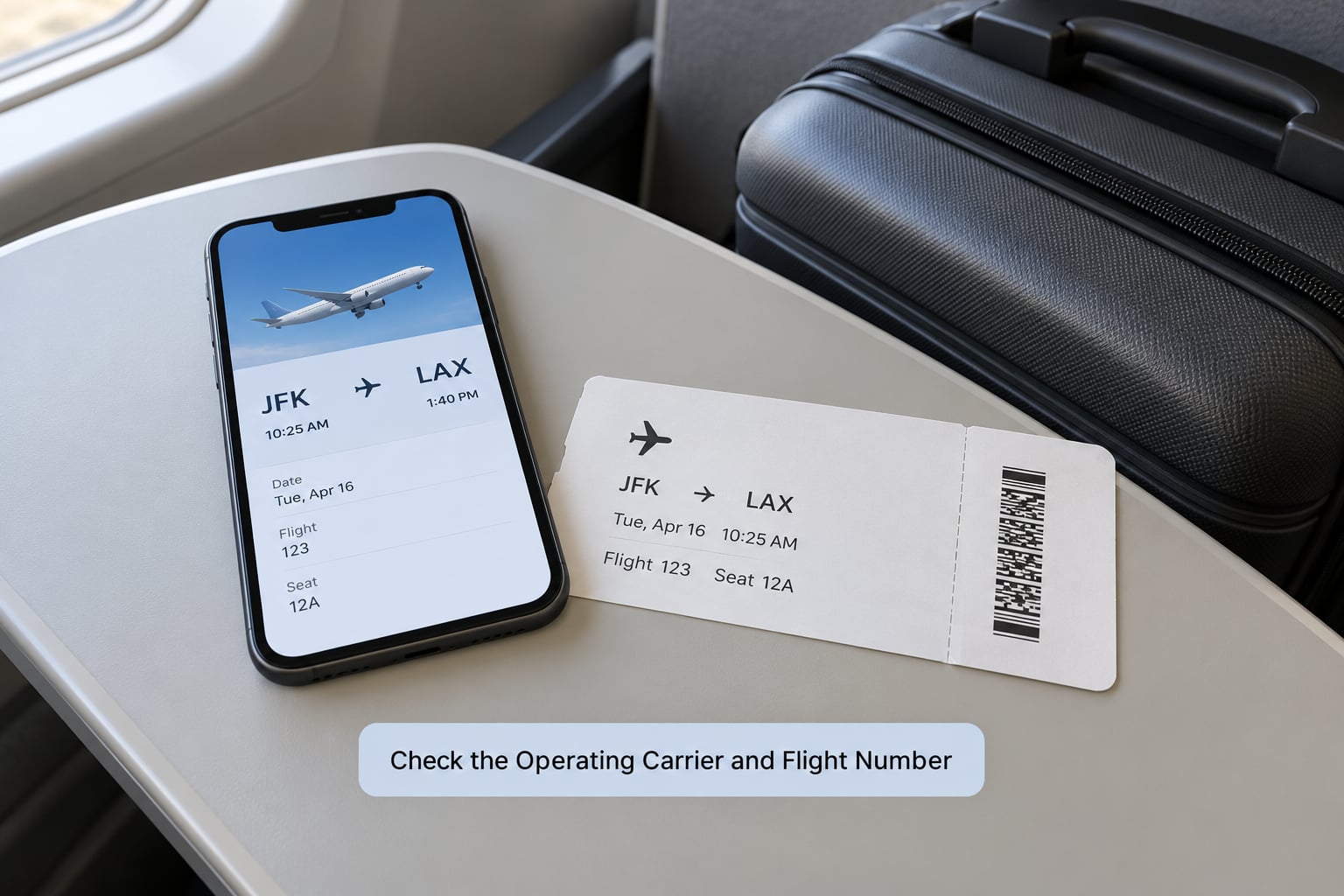
Open the itinerary, not the marketing email, and read the flight number and operating carrier line. Airlines can swap equipment by changing the flight number entirely, so a booking that says one carrier at purchase may show a different operator the day before departure.
Your three sources of truth are the airline app, the confirmation email, and the departure board or airport app on the day. If those three disagree, the app and the airport board win. FlyerTalk posters report that Flighty and similar monitoring tools sometimes flag an equipment swap before the airline’s own email lands, which is worth an evening of setting up alerts if you fly long-haul regularly.
2. Confirm the New Aircraft, Route, and Schedule
An equipment-only swap keeps your cities and your flight times. Anything else is a schedule change, and schedule changes carry different rules. Check the departure airport, the arrival airport, the scheduled departure and arrival times, the total duration, and any connection that follows.
Watch for two things that are easy to miss: a stopover that appeared or vanished, and a connection that now sits below the published minimum connection time. A connection that used to give you two hours in Atlanta can give you fifty minutes after a swap, and that is where missed connections come from.
3. Review the New Seat Map and Cabin Layout
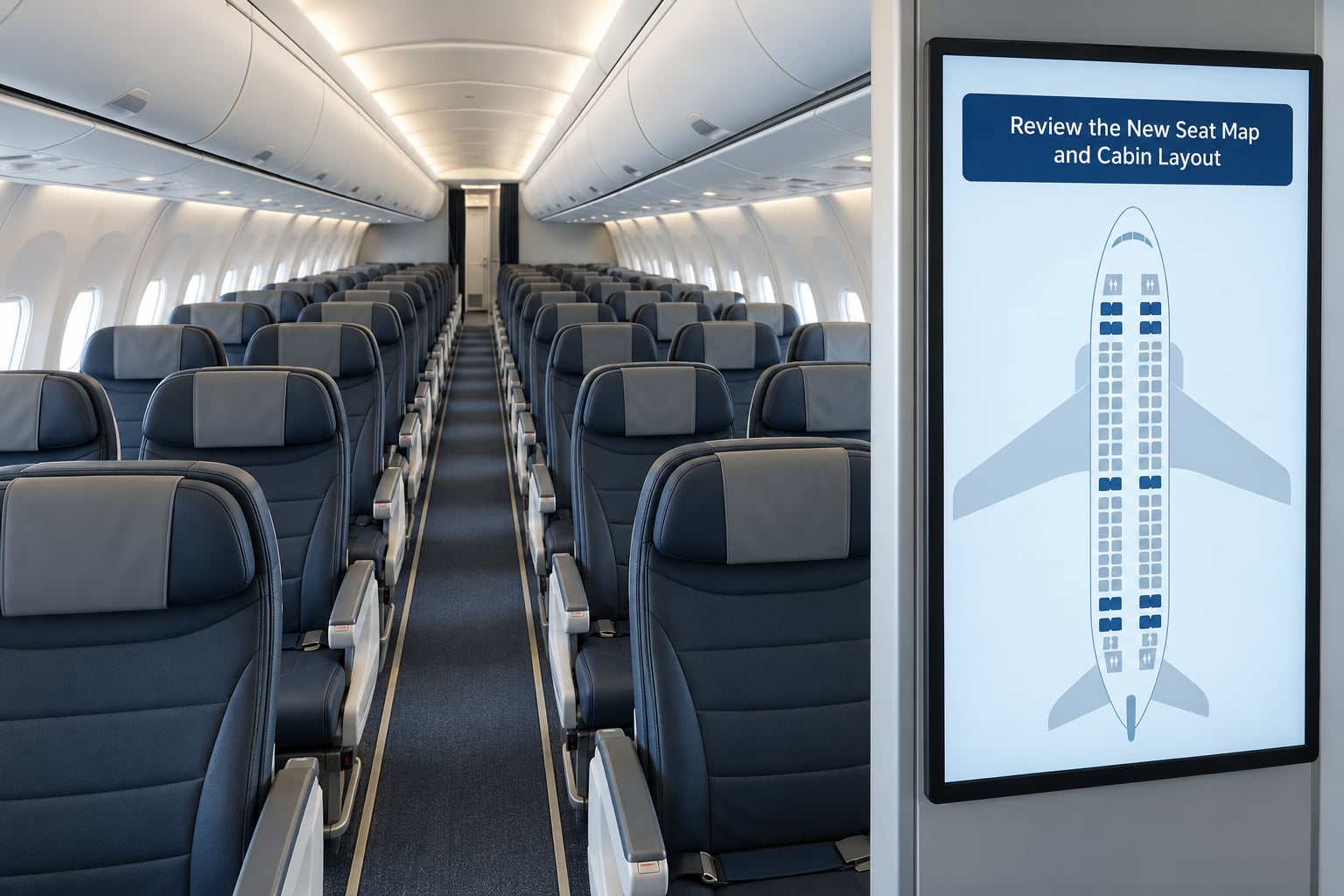
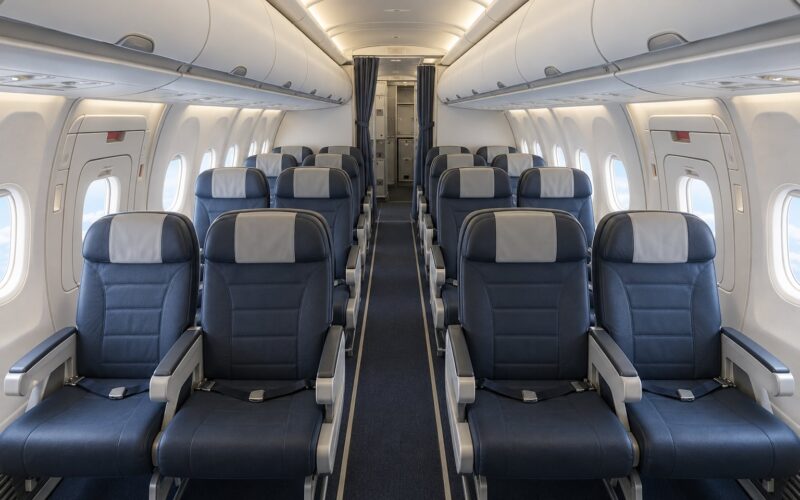
Open the seat map and compare it with the old one. Narrowbody to narrowbody swaps usually keep your seat number, but the surrounding layout changes: rows get skipped for galleys, exit rows shift, and a seat you picked for the view can end up facing a wall. A widebody swap changes row letters entirely.
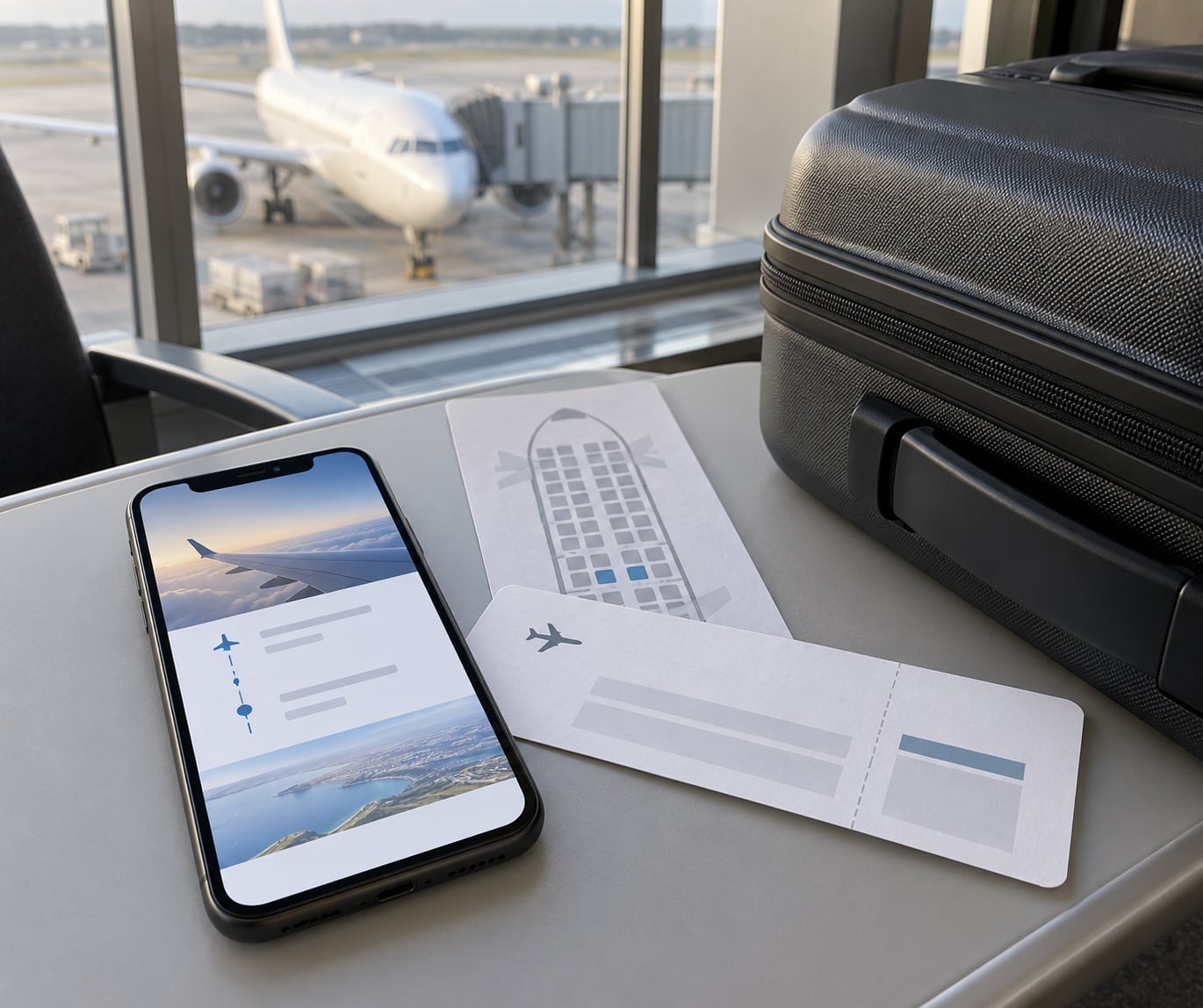
Do not assume your selection carried over. Re-pick it yourself even if the map shows the same seat highlighted, because an unassigned seat is far easier to fix from a laptop than from a gate podium with a line behind you. If the new aircraft type has no seat map published yet, that is common on newer narrowbody deliveries, and you are guessing rather than choosing, which is another good reason to call.
If you paid for the seat, the priority now is to say so explicitly. Travel forums fill with accounts of people who lost a paid aisle or a paid Extra Space after a swap and got it back by asking calmly at the counter, and also accounts of people who assumed it would reappear and found out at boarding. The pattern in those threads is consistent: ask, and be specific about which seat and what you paid.
4. Check Amenities, Entertainment, and Power
Aircraft families differ in more than rows. Compare seat-back entertainment, Wi-Fi availability and whether it is paid or included, power outlets and their type, meal service, and cabin classes that exist on the new jet. A domestic jet with no screens and no outlets replacing a widebody with both is a real downgrade in the experience of the flight.
Confirm anything you depend on directly with the airline rather than inferring it from the aircraft model. Accessibility equipment and assistance requests deserve a phone call. Service animals, mobility aids, and oxygen or medical needs should be re-confirmed on the new aircraft, in writing, so you have a record before you arrive at the gate.
5. Reconfirm Bags, Connections, and Ground Plans
Aircraft type drives baggage capacity, so a swap onto a smaller plane can tighten bag allowances, particularly on partner-operated segments where allowances are set by the marketing carrier. Re-check your allowance, and re-tag anything that will be rechecked if you are moved to another flight. On itineraries into the United States, checked bags generally must travel on the same flight as the passenger, which narrows your options if you are rebooked.
Then check the ground side: terminal, lounge access and whether your entry depended on the cabin you paid for, parking, and the arrival airport. A change in arrival airport means a different transfer, a different car rental location, and a different onward train.
6. Contact the Airline If the Change Affects Your Booking
Call or message the airline you booked with when a specific thing went wrong: your seat assignment is gone, your paid seat is gone, your premium cabin product does not exist on the new aircraft, the operating carrier is now a different airline, the route changed, the delay is long enough to matter, you have an accessibility need, or you are not sure your connection is protected.
On a codeshare, start with the airline that issued the ticket, then escalate to the operating carrier if the agent cannot see the swapped aircraft. If your booking came through a travel agency or a third-party site, the agency often has to request the change from the airline on your behalf, which adds a day. Contact the airline directly if you are close to departure.
Say what you want, out loud and specifically. Not simply that you are unhappy, but that you paid for an aisle seat and would like it restored, or that you want to know whether the connection is protected, or that you would like to be rebooked on the next flight with an aisle seat. FlyerTalk and Quora threads both repeat the same outcome here: a calm, specific request is usually the thing that gets the seat back, while anger gets nowhere.
For US flights departing from or within the country, the Department of Transportation refund rule applies to cancellations and significant changes, and also to delays of more than three hours on a domestic flight or more than six hours on an international one. EU Regulation 261/2004 covers flights departing from an EU airport where arrival is delayed three hours or more, or the flight is cancelled with less than two weeks notice. Both frameworks are built around time changes and cancellations, which is exactly why a plain equipment swap by itself does not create a compensation claim.
Common Mistakes When Your Aircraft Changes
- Assuming the swap is a cancellation. Different aircraft, same flight, still flying. Correction: read the cities and times before deciding anything.
- Trusting the old seat map. Seat 14A on the old jet may be an exit row on the new one and a middle seat on the aircraft you are actually boarding. Correction: open the live seat map and re-select.
- Assuming a through-ticket connection is safe. On a single ticket the airline usually re-protects you, but on separate tickets you absorb the miss. Correction: check whether both flights are on one booking reference.
- Waiting until the boarding gate to ask. By then seat inventory is first-come and your options are whatever is empty. Correction: contact the airline the day you learn about the swap.
- Forgetting the airline that sold you the ticket. The marketing carrier’s agents often cannot see the operating carrier’s equipment. Correction: know both names before you call.
Tips for Handling a Last-Minute Aircraft Change
Save your confirmation somewhere that works without a signal. Screenshots of the itinerary, the seat assignment, and your payment receipts live in your camera roll whether or not the airport Wi-Fi cooperates.
Check twice. Once when the alert lands, and again the evening before departure. Equipment swaps often happen in stages, and a second swap can undo your first re-seat.
Keep the things you cannot replace in your carry-on. If you end up on a different aircraft on a different day, a bag that was checked under the original itinerary is the thing most likely to complicate the new booking.
Write down what you asked and what you were told. Name, time, and what was offered. That one habit turns a vague dispute at the gate into a documented conversation, and it is the difference between asking for a seat restore and hoping one appears.
Ask early in the process, not at the last hour. Agents have more discretionary inventory to work with before the flight is oversold, and a swap disclosed days out leaves room to rebook a whole itinerary rather than scramble at one departure.
Know where you stand honestly. A swap far out with a comfortable margin is a weak moment to push. A swap under 24 hours that removes a paid product, or one that puts your connection below minimum connection time, is a much stronger position, and worth saying so in those words.
Frequently Asked Questions
Can airlines change my flight without asking?
Yes. Airlines may substitute equipment on a scheduled flight and they do not need your permission, because the contract is with the flight rather than with the specific aircraft. You are notified by email or app alert, and the substitution does not by itself cancel your booking or change your flight times. Checking your itinerary after each alert is the habit that catches it early.
Can airlines change my seat if you paid for it?
An airline can reassign seats when the aircraft changes, and a paid seat does not always survive the swap. Legally you are buying a seat on a flight rather than owning a specific numbered seat, and a different aircraft may not offer an equivalent seat at all. Ask the airline to restore your paid seat or offer an equivalent alternative, in writing, before you travel.
Do I have to accept flight changes?
You generally have to accept a pure equipment substitution, because the flight itself is unchanged. You do not have to accept a significant schedule change, such as a large time shift or a different routing, without being offered a rebooking or a refund. Whether a change counts as significant depends on the airline’s conditions of carriage and the rules that apply to the departure airport.
Am I entitled to compensation if my flight is changed?
A different aircraft by itself usually does not create a compensation claim, since compensation rules are built around delays and cancellations. In the US, the Department of Transportation refund rule covers cancellations and significant changes, plus delays beyond three hours domestic and six hours international. EU Regulation 261/2004 covers qualifying delay and cancellation cases on flights departing from the EU.
What is the 3-hour rule for airlines?
The rule used by the US Department of Transportation is that a passenger can request a refund to the original form of payment when the arrival delay exceeds three hours on a domestic flight or six hours on an international one. It also applies to cancellations and significant changes. Refund requests for credit card purchases are generally answered within seven calendar days of the airline receiving the request.
At what point does an airline need to compensate you?
Compensation and refund rights normally trigger on the size of the disruption and how late it is announced, not on whether the plane changed. Notice periods in EU passenger rights refer to how far in advance a cancellation is communicated, with the highest compensation for under two weeks. A large time change disclosed days ahead can be just as consequential as a short-notice cancellation.
Conclusion
Start with the itinerary in the airline app, because it tells you whether this is an equipment swap or a real schedule change. Then open the new seat map and re-pick your seat yourself, because assuming it carried over is the single most common source of frustration. Next, confirm your connection, bag allowance, and the amenities you actually rely on.
If something you paid for is gone, contact the airline the same day with a specific request and a record of what you paid. Handling what to do if your aircraft changes before the flight comes down to four quick actions, in this order, and none of them needs to wait until the gate.