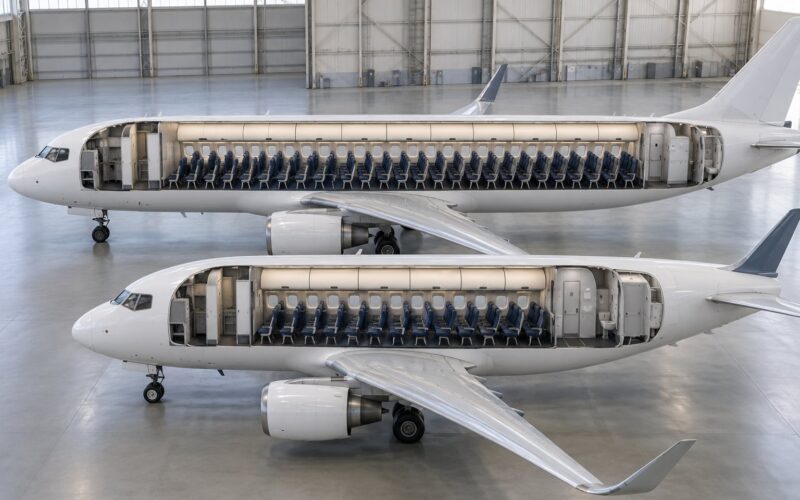
The upper deck of the Airbus A380-800 is a full-length second cabin that runs the length of the fuselage, and it holds fewer passengers than the main deck in a narrower, quieter, more enclosed space. Depending on the airline, it may hold premium suites, business and premium economy, or a small economy section at the back. If you are weighing what to expect on an Airbus A380 upper deck before booking, the honest answer is that it is usually a better cabin than the same airline’s main deck economy, with a few catches worth knowing.
I have spent a lot of time reading seat maps and passenger reports for this site, and the recurring theme is that people book an upper-deck seat expecting a loft and get something more subtle: fewer people, less engine roar, and a narrower cabin where your elbow room is genuinely tighter than they expected.
Table of Contents
- What to Expect on an Airbus A380 Upper Deck
- How is the upper deck cabin divided?
- What seat layouts are common upstairs?
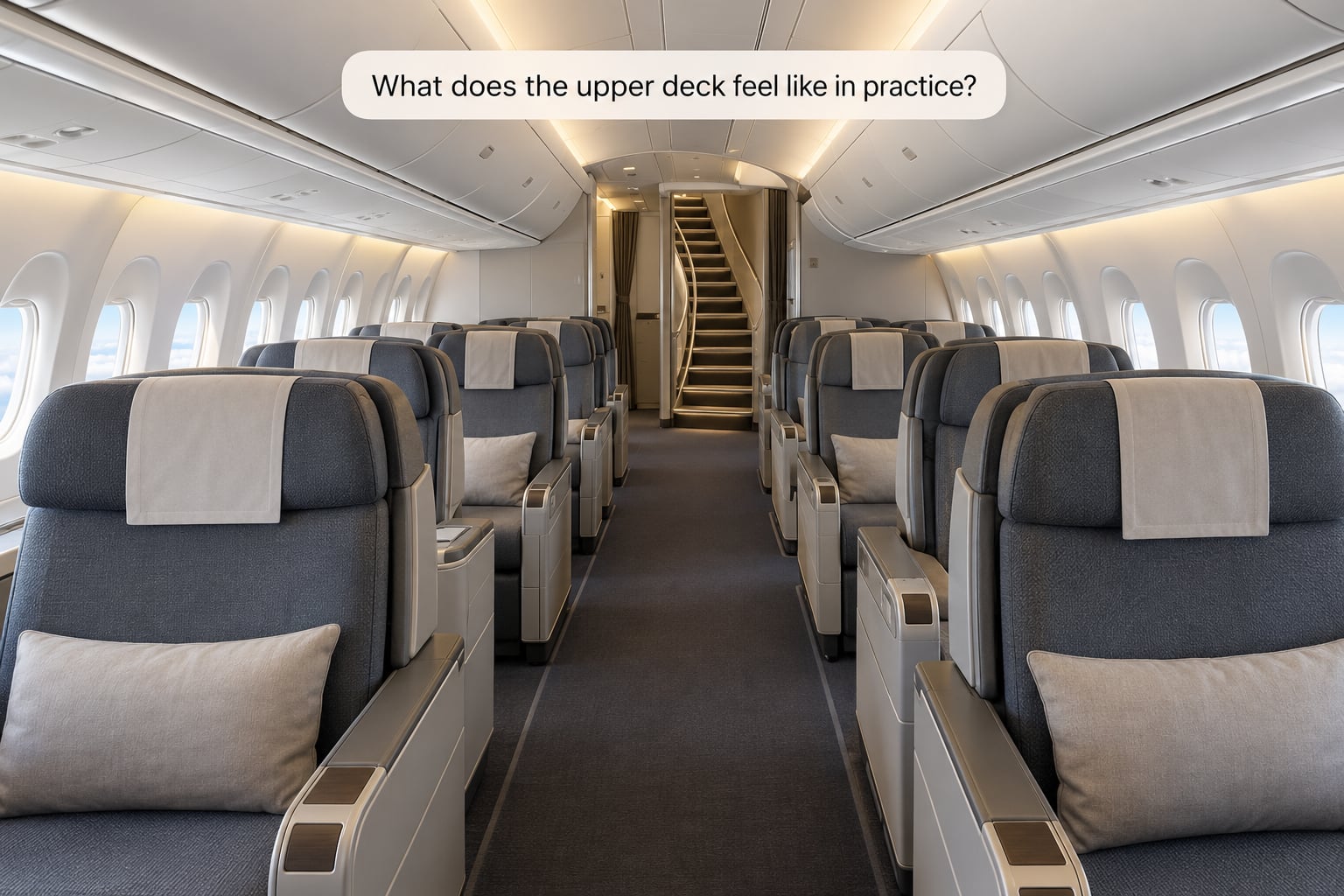
- What does the upper deck feel like in practice?
- What to expect on an Airbus A380 upper deck in each cabin
- Is the Airbus A380 upper deck better than the main deck?
- What amenities and service can passengers expect?
- How does boarding and moving around the upper deck work?
- What are the main drawbacks?
- How can you choose the best A380 upper-deck seat?
- Frequently Asked Questions
- Does every Airbus A380 have seats on the upper deck?
- Are premium economy seats available on the Airbus A380 upper deck?
- Is the upper deck quieter than the main deck?
- Can children or passengers with mobility issues use the A380 upper deck?
- How many seats are on the upper deck of an Airbus A380?
- Start with the seat map
What to Expect on an Airbus A380 Upper Deck
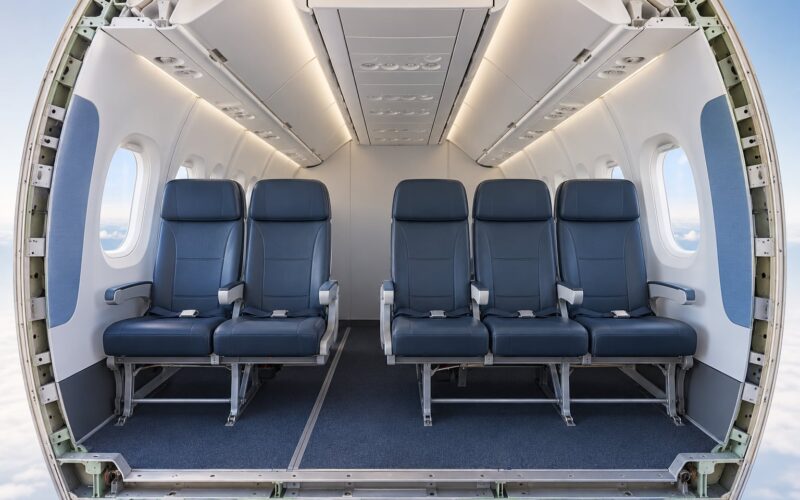
Expect a smaller, quieter, and more enclosed cabin that feels closer to a widebody business cabin than to a normal economy deck. The upper deck holds roughly 8.5 feet of usable width in front of the seats, laid out 2-4-2 in economy, against the 3-4-3 layout on the main deck. Ceiling height is lower and the sidewalls slope inward, so tall passengers feel it more than average travellers do.
How is the upper deck cabin divided?
Cabins sit one behind another along the upper deck, and where the divisions fall depends entirely on the airline and how it has configured the aircraft. Treat the following as the usual pattern rather than a fixed rule.
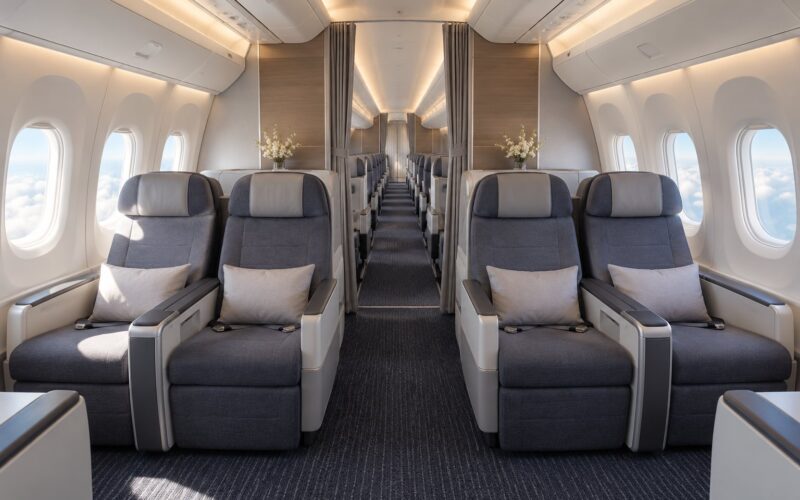
- First class typically occupies the front of the upper deck, sometimes as enclosed suites with doors, sometimes as more open lie-flat seating.
- Business class sits behind first class or at the front when there is no first cabin, usually in a staggered or herringbone arrangement.
- Premium economy appears on some airlines in the middle or at the rear and is the quietest value seat on the whole aircraft.
- Economy exists upstairs only on a subset of operators, and when it does, it is usually a short section at the back with around 20 to 40 seats.
British Airways, Emirates and Qatar Airways have sold upper-deck economy sections in some configurations. ANA, Lufthansa, Singapore Airlines and Thai keep the upper deck entirely premium. Cabin layouts get changed between deliveries and even between aircraft on the same route, so check the specific flight rather than the airline.
What seat layouts are common upstairs?
Layouts upstairs are a step up in personal width compared with the main deck, but a step down in total cabin width. Here is what you will actually meet.
- 1-2-1 in business gives every seat direct aisle access, no climbing over a neighbour, and usually a window on both sides of the cabin.
- 1-1-1 in first or in staggered business seating gives every passenger two side surfaces.
- 2-2-2 in premium economy is common, meaning only the window and aisle seats have an aisle.
- 2-4-2 in economy is the standard upper-deck economy layout. The centre block of four seats is noticeably tighter than a main-deck 3-4-3 centre block.
The trade is straightforward: a wider seat and a calmer cabin in exchange for less shoulder room and fewer seats per row. Seat pitch upstairs in economy is typically in the low-to-mid 30 inch range, which is tighter than many travellers expect from a double-decker.
What does the upper deck feel like in practice?
It feels smaller and more cocooned. Because airflow noise is reduced, conversations carry further, and cabin announcements are more audible than they would be one deck down.
Window seats upstairs get an extra storage bin built into the fuselage curve on some airlines, which is a genuine perk that rarely gets mentioned. The windows also sit higher and look more steeply downward than main-deck windows, so the view reads as a wide-angle look at the ground rather than a horizon.
There is no lounge or bar upstairs, no matter what some cabin walkthrough videos suggest. Crew base is downstairs and comes up to serve you.
What to expect on an Airbus A380 upper deck in each cabin
The right cabin upstairs depends on what you paid for and what you need. This table sets out who usually sits up there, what works in their favour, what does not, and whether they are a good fit.
| Cabin upstairs | Who sits there | Main benefits | Main drawbacks | Best for |
|---|---|---|---|---|
| First class | Premium and loyalty passengers, few in number | Suites or lie-flat seating, shortest cabin, highest service level | Only a handful of seats available, most expensive of any cabin on board | Sleep quality on overnight long-haul, privacy seekers |
| Business class | Business travellers and upgrade candidates | 1-2-1 or staggered layouts, direct aisle access, fewer passengers | Centre seats on staggered layouts lose floor space, premium economy competes for the same section | Passengers who need to work or sleep in a lie-flat seat |
| Premium economy | Passengers upgrading from economy or buying the cabin outright | Wider seats, recline, extra service in a quiet cabin | Not offered on every upper-deck configuration, rear seats sit near the stairs | Economy passengers who want a calmer cabin without a business-class fare |
| Economy | Holiday and connecting travellers, small numbers at the back | Quieter than the main deck, side-bin storage at windows, calmer cabin overall | Tight centre block, limited overhead bin space, few seats so they sell out, lavatory queues overhead | Travellers who book early, want a window and can handle stairs |
Is the Airbus A380 upper deck better than the main deck?
For most passengers in economy, yes, and the main reason is not the seat. It is the smaller cabin, the lower noise floor and the sense that fewer people share the space. The trade-offs are stairs, fewer seats, tighter centre-block seating and a cabin that is more affected by movement over the wing.
| What to compare | Upper deck | Main deck |
|---|---|---|
| Cabin width | Narrower, roughly 8.5 feet of usable width | Wider, laid out 3-4-3 in economy |
| Seat layout | 2-4-2 in economy | 3-4-3 in economy |
| Noise | Quieter in airflow terms, voices and announcements more audible | Louder overall, engine and airflow noise |
| Movement | More noticeable in a small cabin, especially over the wing dip | Calmer feeling, larger cabin absorbs bumps |
| Boarding | Separate boarding group, rear stairs or dedicated jet bridge, slower flow | Longer queues, faster once at the door |
| Lavatories | Fewer, so queues are common after take-off | More, more spread out |
| Seat choice | Fewer seats, so limited availability | Large selection, more chance of sitting together |
| Accessibility | Steeper access, tighter aisles | Level access, more space for assistance |
What amenities and service can passengers expect?
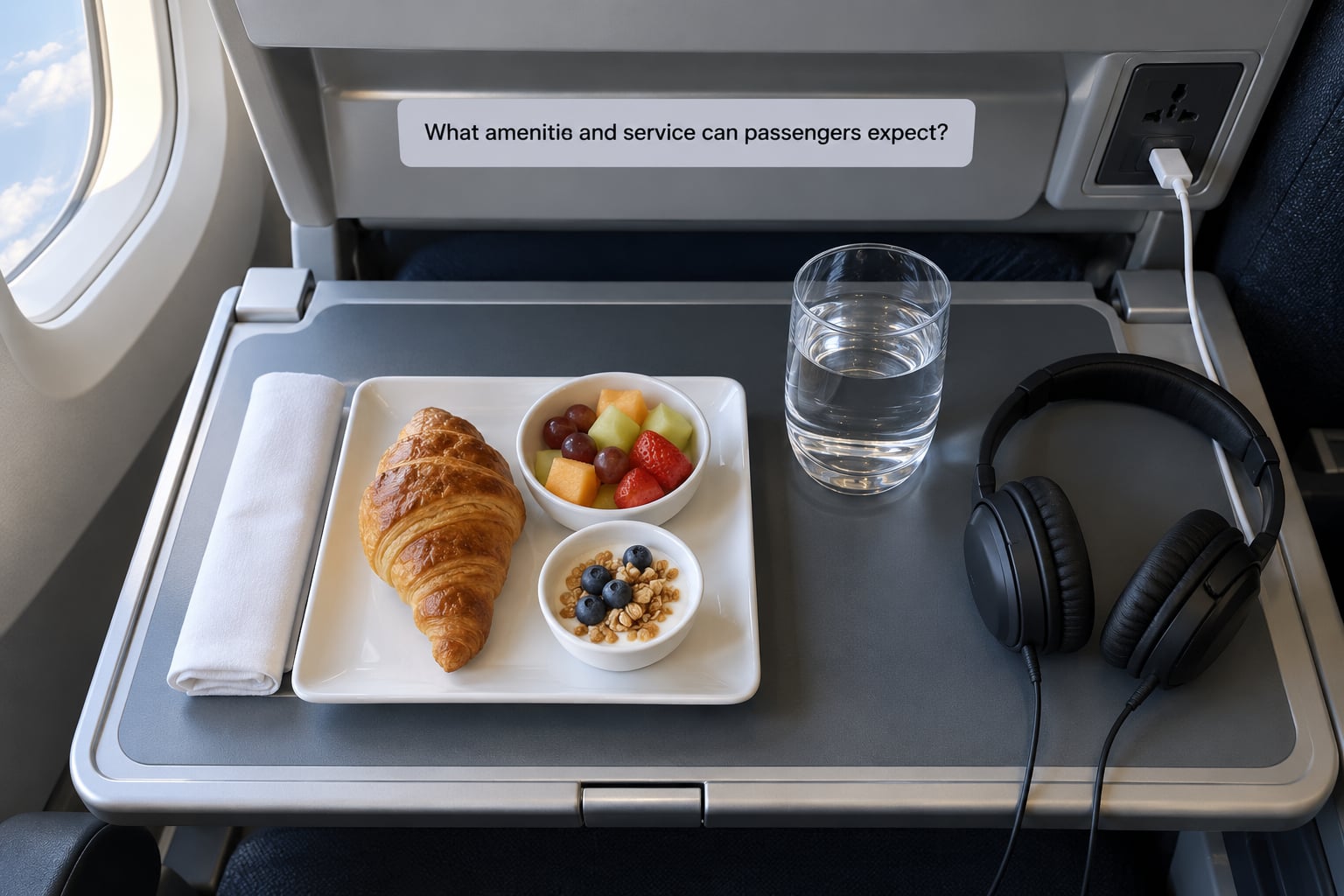
Amenities follow the cabin, not the deck. Business and first class upstairs usually get the same meal service, bedding, power and entertainment as their main-deck equivalents, delivered from a downstairs galley.
Economy upstairs typically means economy catering, a seat-back screen on most current airlines, power outlets or USB at many seats, and Wi-Fi where the airline sells it. Do not expect free Wi-Fi, streaming or a lounge upstairs on any airline.
One detail worth planning around: because the cabin is small, meal carts come round less often and trolley service can run out of some items earlier than it does downstairs.
How does boarding and moving around the upper deck work?
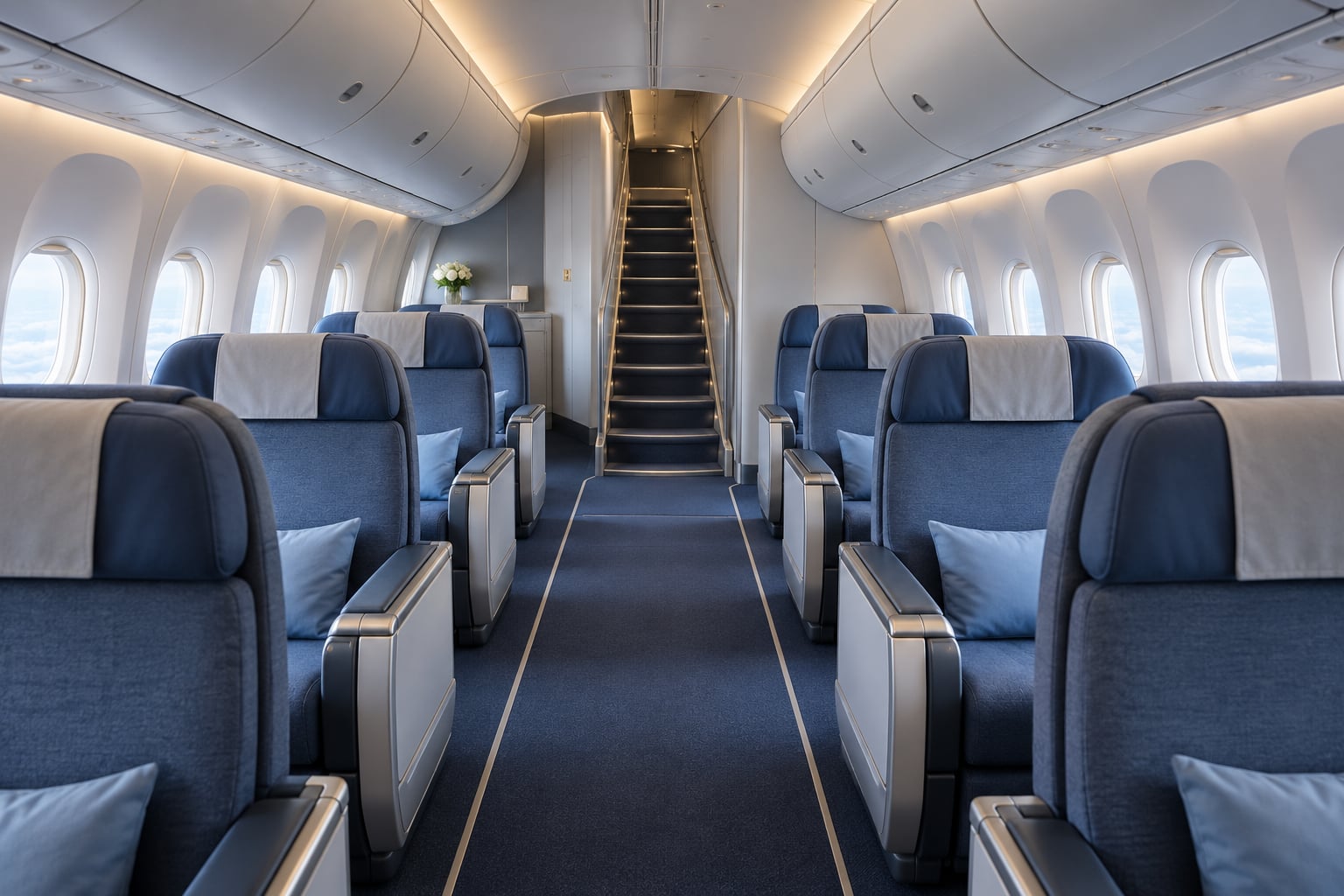
Most passengers reach the upper deck by stairs at the rear of the aircraft, or by a dedicated third jet bridge at airports that have one. Either way, boarding runs in a separate group from the main deck, and the group is usually small enough that it feels calm even when the main-deck queue is long.
The stairs are steep and narrow. Anyone with reduced mobility, a recent knee or hip operation, or a large wheeled bag should expect to need more time and a second handrail. Cabin crew will usually take larger bags up separately.
Once inside, the cabin is short. Lavatories are usually clustered toward the rear, which creates foot traffic past the last few rows for the first hour after takeoff and again after the meal service. Crew numbers upstairs are smaller in proportion to the passenger count, so service can feel brisk rather than rushed, but restocking happens less often.
Turbulence on the upper deck feels more pronounced than it does downstairs simply because the cabin is smaller and closer to the centre of gravity. Most reports describe the rear upper deck as calm and the mid-cabin section over the wing dip as the least comfortable zone. Rows just ahead of or behind the wing, and rows close to the lavatories where vibration and resonance have been reported, are the ones experienced flyers tend to skip.
What are the main drawbacks?
- The stairs. Narrow, steep and not ideal with heavy luggage or a stiff knee.
- Fewer seats. Upper-deck economy is a short section, and it goes early.
- Tighter seating. The 2-4-2 centre block gives less shoulder room than a main-deck 3-4-3 centre block.
- Fewer lavatories. Queues upstairs are the most common complaint from business class passengers, not from economy.
- Bin pressure. A small cabin with full boarding means roller bags get repacked more than once.
- Bulkhead quirks. Some upper-deck bulkhead seats have fixed armrest tables, which narrow the usable space and remove arm movement.
- Fewer flights. With several airlines retiring the A380, an upper deck may not be on your route at all, and aircraft swaps are routine.
- Layouts change. A seat map that was accurate last year can be wrong this year, on the same airline.
How can you choose the best A380 upper-deck seat?
Work through this in order and you will usually land on a seat that suits you. What to expect on an Airbus A380 upper deck comes down to that one row on that one aircraft.
- Confirm the aircraft. Check that the flight you are booking is operated by an A380-800 and not substituted with a 777 or a 787.
- Confirm the airline’s upper-deck configuration. Some operators keep the deck premium-only, so there may be no economy seat to select at all.
- Open the seat map for that specific flight, not the generic route map, and look at the cabin zones.
- Check a seat map tool such as SeatGuru or ExpertFlyer for that aircraft variant and airline to see which rows are bulkheads, exit rows or near the galley and lavatories.
- Decide between window and aisle. Windows upstairs get the side storage and the higher view; aisles avoid being disturbed on a small cabin where people shuffle past more often.
- Aim for the middle third of the upper-deck cabin unless you specifically want a bulkhead for the legroom.
- Have a backup. If a rear row is the only thing left, check whether it is beside the lavatory before you commit.
- If you are travelling with a baby, ask about bassinet fittings on the aircraft and confirm one exists in your cabin rather than assuming.
- Recheck the seat map shortly before departure. Aircraft swaps happen even when you booked a specific aircraft type.
Most people who end up regretting an upper-deck booking regret a row near the lavatories or a last-minute economy seat at the very back by the stairs. Everything else tends to be a preference rather than a mistake.
Frequently Asked Questions
Does every Airbus A380 have seats on the upper deck?
Every A380-800 has a full-length upper deck built for passengers, and airlines do sell seats in it. What differs is which cabin sits upstairs. British Airways, Emirates and Qatar Airways have used upper-deck economy sections, while ANA, Lufthansa, Singapore Airlines and Thai keep the deck premium-only. Configurations change, so check the seat map for your specific flight.
Are premium economy seats available on the Airbus A380 upper deck?
On some airlines, yes, and it is often the best value seat on the aircraft. You get a wider seat, real recline and a quieter cabin without paying business-class money. The catch is availability: not every upper-deck configuration includes premium economy, and on the ones that do, the section is small and fills early. Check the cabin breakdown for your flight before you search for a seat.
Is the upper deck quieter than the main deck?
In airflow and engine terms, yes, noticeably so, because there are fewer passengers and less cabin volume. That said, a small cabin means voices carry further and announcements are easier to hear. Passengers who are sensitive to conversation rather than to aircraft noise sometimes prefer the main deck for that reason. Overhead bin noise is also lower upstairs until everyone has stowed a bag.
Can children or passengers with mobility issues use the A380 upper deck?
Yes, but plan ahead. Access is usually by a steep internal stair or a third jet bridge, so travellers using a wheelchair, walking frames or with limited hip and knee mobility should check the specific boarding arrangement in advance. Bassinet fittings are limited to certain rows and cabins and are not guaranteed. Large families also find the narrow centre block seats and shared armrests awkward at upper-deck seat widths.
How many seats are on the upper deck of an Airbus A380?
It depends entirely on the cabin mix the airline chose. A premium-only upper deck holds a few dozen passengers in suites and lie-flat seats, while one configured with economy at the back runs to roughly a hundred-plus seats in total. The physical deck is about 147 feet long, so the count you see on the seat map is a configuration decision rather than a fixed aircraft specification.
Start with the seat map
If you take one thing from this guide, let it be this: confirm the operating airline, the aircraft variant and the current upper-deck seat map before you pay attention to anything else. What to expect on an Airbus A380 upper deck changes with the cabin the airline has fitted, and that changes more often than most travel guides admit.
Once the seat map is open, pick the cabin that matches your budget, then work down the list of rows and rules above. Verify again close to departure, and enjoy the quieter cabin.