Last reviewed for 2026.
Cold cabins are the norm on most flights, and the vent above your head will not fix them. To keep warm on a cold flight, dress in three layers you can add or shed, block drafts at your neck, head and feet, and carry a compact blanket that folds small enough to live in your personal item.
People freeze because aircraft ventilation pushes cool air out of ceiling supply vents and draws it back through floor-level returns, so your head and feet get colder than the middle of the cabin. Humidity runs low up there too, which makes that air feel colder against your skin than the thermostat reading suggests, and the temperature is set for the crew moving around the aisle, not for you sitting still for eleven hours.
Below is the kit I would pack, the order I would use it in, and the mistakes that leave people shivering halfway to the Atlantic.
Table of Contents
- What You Need
- The cold-proof carry-on checklist
- Step-by-Step: How to Keep Warm on a Cold Flight in Six Steps
- How to keep warm on a cold flight before you board
- How to choose a seat that feels less cold
- How to use cabin blankets effectively
- How to use hand and foot warmers safely
- How to warm up without disrupting the flight
- How to respond to a freezing cabin
- Common Mistakes When You Try to Stay Warm on a Cold Flight
- Frequently Asked Questions
- Are airplane cabins always cold during a flight?
- Is a window or aisle seat better in a cold cabin?
- Should I bring my own blanket on a plane?
- Can hand warmers be used safely during a flight?
- How can I keep my feet warm on an airplane?
- What should I wear for a long cold flight?
- Conclusion
What You Need
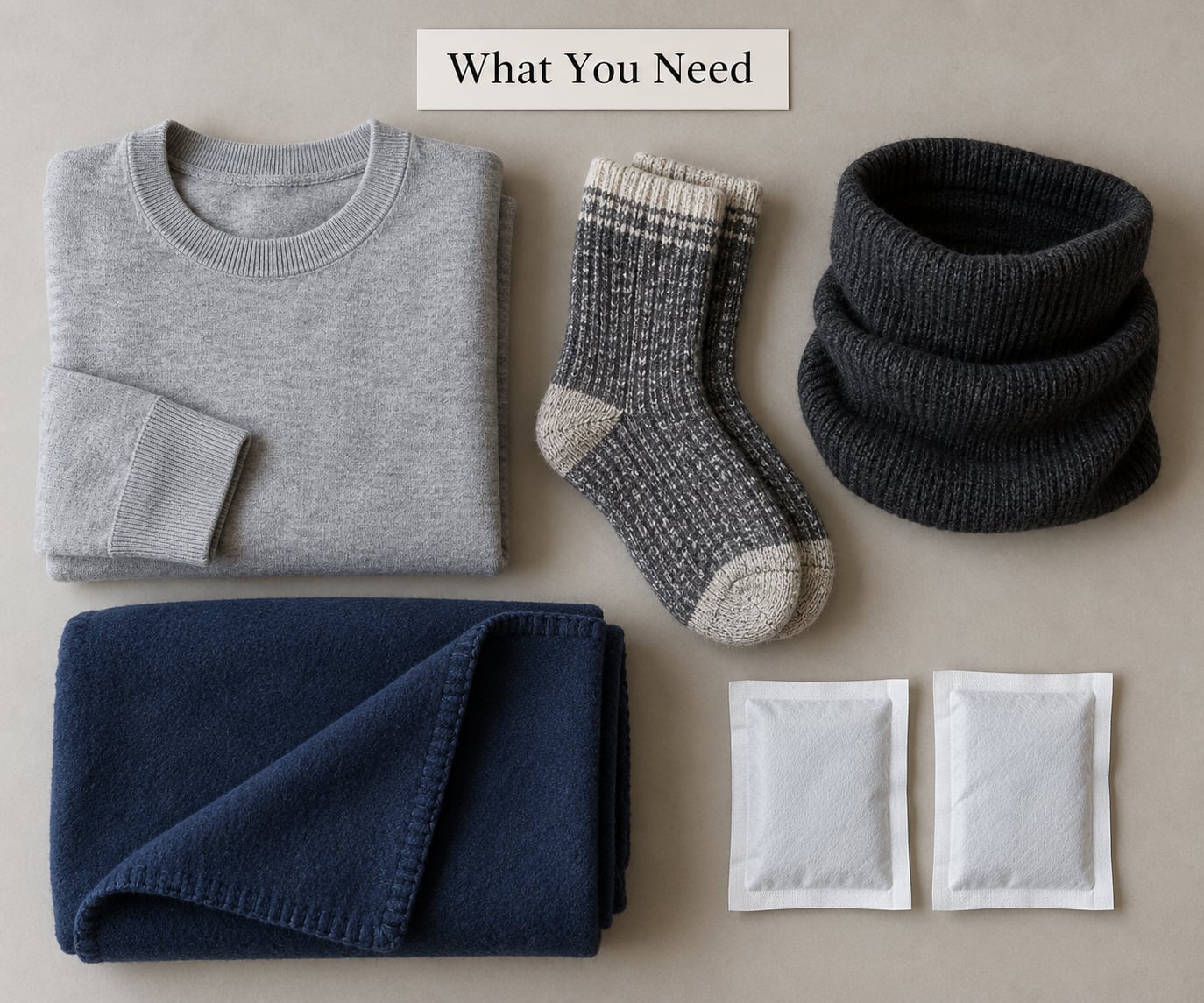
Cold arrives at the edges first, so buy and pack in this order: neck, torso, feet, hands. Get those four right and the rest is finishing touches.
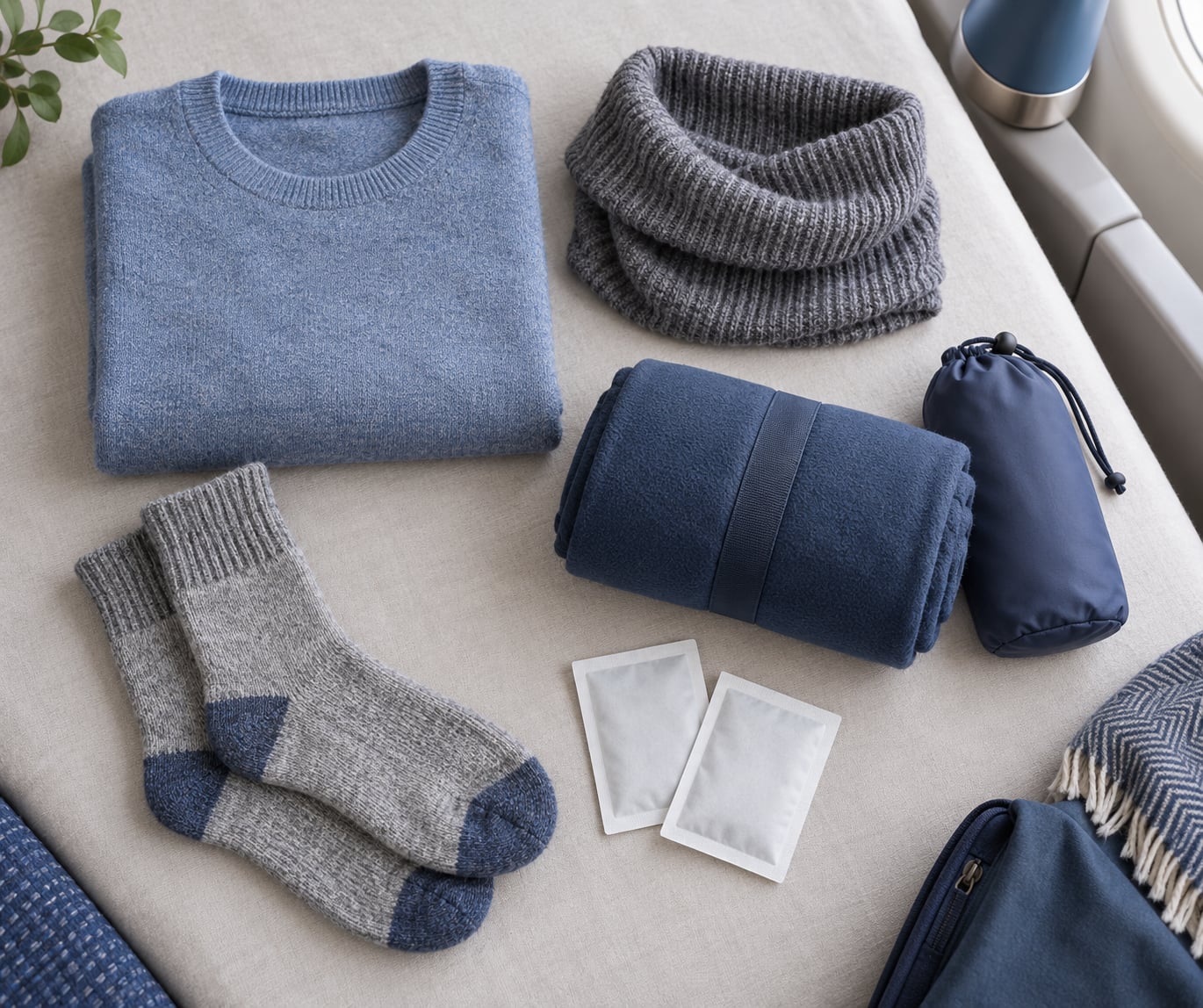
- A thin wicking base layer. Merino or a similar synthetic, not cotton, because cotton holds sweat and wet fabric stops insulating. This layer exists to stay dry so the next one works.
- One mid layer you can open. A zip fleece or a hoodie. A zip matters more than the weight: you can vent heat from your chest without stripping anything off in a cramped seat.
- A neck warmer. A blanket scarf, an infinity scarf or a cashmere-style wrap. More heat escapes from an uncovered head and neck than from any other uncovered area on a flight.
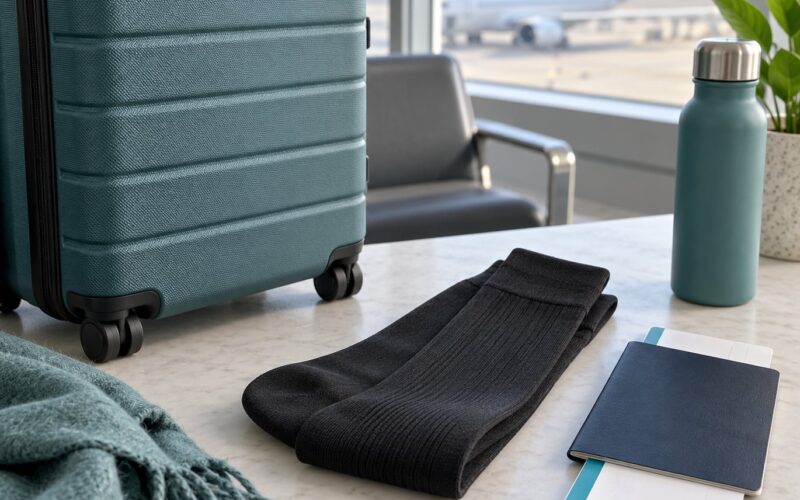
- Two pairs of warm socks. Wool or merino crew socks, and a spare pair in your personal item for the second half of a long-haul. Fuzzy socks over compression socks is a popular pairing for overnight legs.
- A compact travel blanket. A lightweight camping-style blanket with a stuff sack does the job and takes almost no bag space. One frequent flyer quoted on r/travel carries an ultralight version that weighs about 15 ounces packed.
- Hand and foot warmers. Air-activated packets, two to four of them. Readers on Travel Fashion Girl’s post report four to six hours of warmth and no problems at security.
- Optional extras. A sleep mask blocks the draft off the ceiling vent on your forehead, flip mittens keep your hands usable with a phone, and a packable down vest adds core warmth without a heavy coat.
The cold-proof carry-on checklist
Everything below fits in a personal item. The pack note column is the part most people forget at the airport.
| Item | Why it helps | Pack note |
|---|---|---|
| Blanket scarf or wrap | Seals the neck, the biggest heat loss spot | Doubles as a pillow or a scarf on arrival |
| Compact travel blanket | Covers shoulders the airline blanket never reaches | Packs to the size of a water bottle |
| Wool socks, spare pair | Cold feet make a warm torso feel cold | Keep the spare in your personal item |
| Zip fleece or hoodie | Opens and closes without removing | Wear it, do not check it |
| Air-activated warmers | Target hands, feet and lower back | Activate only when you are seated and settled |
| Sleep mask | Blocks the ceiling vent draft and light | Worth the 20 grams |
Step-by-Step: How to Keep Warm on a Cold Flight in Six Steps
How to keep warm on a cold flight before you board
Dress for the plane, not the destination. Three adjustable layers beat one thick outfit, because you will be overheated walking to the gate and freezing an hour later.
Start with the base layer, add the zip fleece, and keep the coat for arrival. Wrap the neck warmer loosely so you can pull it over your mouth and nose without suffocating, and pull your socks up before you sit down rather than fishing around the seat afterwards.
Stuff the travel blanket into its own sack so it disappears into your bag instead of adding a visible lump. Check that it works when you need it: if you cannot open and close the zip fleece in five seconds, it is the wrong fleece.
How to choose a seat that feels less cold
Aisle seats usually win in a cold cabin because they get up close to the moving air along the aisle, and window seats draw cold air off the glass for the whole flight. Neither rule is absolute, because airflow shifts with the aircraft and the phase of the trip.
What matters more is the row. Rows directly under the ceiling supply vents, right beside a bulkhead or near a galley tend to feel draftier, and floor-level outlets dump cold air straight down at legs and feet.
Ask the seat map for a row near the centre of the cabin and away from the toilets and galleys. You will feel the difference after takeoff, when the cabin settles and the vents start pushing harder.
How to use cabin blankets effectively
Use an airline blanket waist down, and put your own layer underneath it. Blankets provided by the cabin are thin by design and rarely washed between every flight, so treat them as an extra layer rather than your main one.
Fold the blanket so it sits across your lap and tucks the top edge under your chin. Tuck the bottom edge around your feet, where cold collects, and keep your arms on top so your sleeves stay dry if you spill something.
Do not wrap it around you like a sleeping bag cocoon. Circulating air around your shoulders matters more than pressing the blanket flat against you, and a tight wrap can leave your arms numb and your coffee somewhere you did not intend.
How to use hand and foot warmers safely
Activate air-activated packets once you are seated and settled, not while walking through the terminal. Shake them, wait for them to warm, and slide them under your outer layer against your shirt or trousers, never against bare skin.
Foot warmers work best tucked into your socks; hand warmers go into your pockets or under your sleeves. Follow the printed times and never leave a warmer in place after it goes flat, because the heat stops gradually and it can leave a red mark if you sit on it.
If you travel with anything that plugs in or holds water, such as a heated blanket, hot water bottle or wired heating pad, check your departure airport’s security rules first and keep the device out of your pocket at the checkpoint.
How to warm up without disrupting the flight
Movement warms you faster than another layer. Run your ankles up and down under the seat a dozen times, flex your toes, and squeeze your heels together for a minute whenever the cold sets in.
Calf raises work too, though do them slowly and hold the seat armrest so you do not stand up in the aisle and annoy the crew behind you. Swivel your hips every half hour, roll your shoulders back, and change which way you are leaning so one side does not freeze solid.
If you travel with someone, a quick shoulder squeeze or a hand held for a minute moves more heat than a second blanket. Skip anything that pins your legs across the seat or that holds your neck bent for long stretches, since both cut off circulation and make hands and feet colder over a long flight.
How to respond to a freezing cabin
Work through this in order. First, close the vent above you if the draft is hitting your head directly, then add the layer you saved for the middle of the flight rather than the one you are already wearing.
If that is not enough, ask a flight attendant politely. A short line like “Is there a spare blanket if the cabin is cold?” goes over fine, and they can also bring hot water or a pillow. If the cabin is running cold for everyone, crew often adjust the temperature, and overnight flights are frequently set a little warmer.
Before landing, decide what you are removing and in what order. Take off the blanket, open the fleece, unwrap the neck warmer, then walk to keep your blood moving before you step outside, because a warm cabin plus a cold airport is the fastest way to feel the chill.
Common Mistakes When You Try to Stay Warm on a Cold Flight
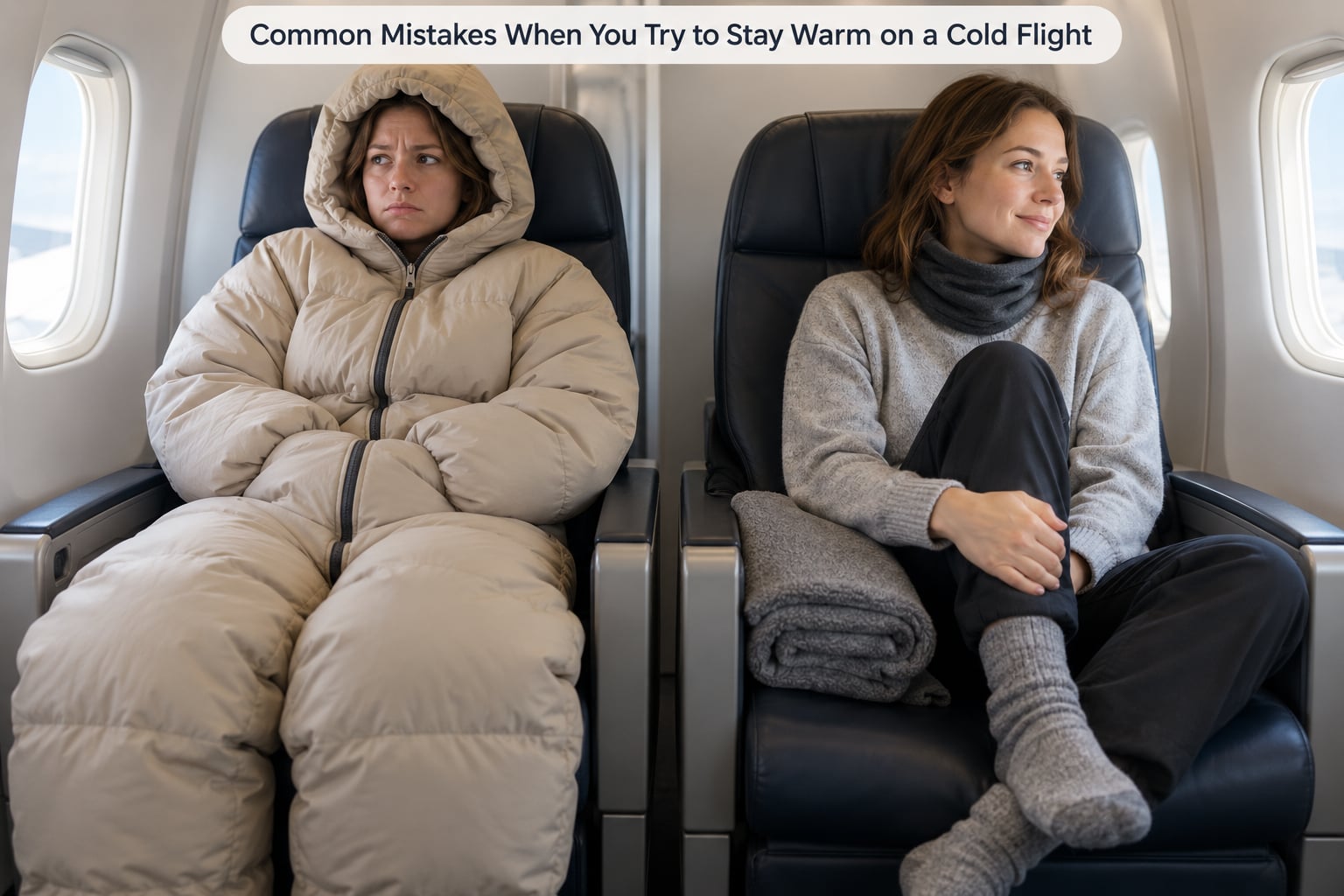
Almost every freezing flight traces back to one of five habits. Each has a straightforward fix.
Wearing one thick outfit. You sweat through the terminal, feel fine for an hour, then cannot get comfortable in any direction. Three thin adjustable layers solve the same problem without the overheating.
Using the blanket as a seat cover. Spreading it flat under you looks tidy and traps almost no air, so you end up cold on top of cold. Fold it over your legs and tuck the edges instead.
Bare feet against a cold wall or side panel. Legs and feet lose heat fast in a cabin, and the floor-level outlets make it worse. Keep socks on and tuck a folded layer around your ankles.
Putting warmers straight onto skin. Air-activated packets are designed to sit over a layer of clothing. Against bare skin they can leave a red patch, especially if you sit on one after it has gone cold.
Staying cramped for the entire flight. Sitting still and still for nine hours leaves you stiff and cold. Stand in the aisle when the seatbelt sign is off, use the ankle pumps, and change position every half hour.
Expecting foil emergency blankets or hot water bottles to save you. An emergency foil blanket is a genuine emergency item, not something to plan a trip around, and water-filled or wired heat devices bring spill and cabin safety questions. A travel blanket and air-activated packets do the job without any of that.
Frequently Asked Questions
Are airplane cabins always cold during a flight?
They are often cool rather than freezing, and it varies by aircraft, airline and time of day. Cabin ventilation supplies cool air from ceiling vents and recirculates it constantly, humidity runs low, and the set point is chosen by the crew for their own comfort. Overnight flights are frequently run a little warmer than daytime ones.
Is a window or aisle seat better in a cold cabin?
An aisle seat usually feels warmer because you are away from the cold window glass and the drafts that settle along the fuselage. But the row matters more than the position. Choose a seat away from the ceiling vents, the bulkhead and the galley, and away from the toilets, and you will feel better than someone in a window seat with a draft on their head.
Should I bring my own blanket on a plane?
Yes, if you are cold on flights regularly. Cabin blankets are thin, stop insulating once damp, and are rarely cleaned between every departure. A lightweight travel blanket with a stuff sack gives you full coverage including your shoulders, folds down to nothing in a personal item, and doubles as a blanket or pillow on the ground at your destination.
Can hand warmers be used safely during a flight?
Air-activated hand and foot warmers are permitted through security and are common in carry-on bags. Shake them to start, wait for them to warm, and place them over clothing rather than against bare skin. Foot warmers work well inside your socks, hand warmers go in your pockets, and you should follow the printed timing and remove them once they go flat.
How can I keep my feet warm on an airplane?
Warm socks do most of the work, so wear wool or merino crew socks and pack a spare pair in your personal item for the second half of a long flight. Choose a row away from the floor-level outlets and the bulkhead, tuck a folded layer around your ankles, and add a foot warmer if your legs run cold. Movement helps too, so flex your ankles regularly.
What should I wear for a long cold flight?
Three adjustable layers: a thin wicking base layer, a zip fleece or hoodie you can open and close, and a coat kept for your arrival. Add a blanket scarf or wrap around your neck, warm socks, and a compact travel blanket in your personal item. Jeans are not ideal for a night flight since thick cotton holds cold once you have sat in it for hours.
Conclusion
Start with four things in your bag: a zip layer you can open, a neck covering, a spare pair of warm socks, and a compact travel blanket. That kit covers the neck, torso, feet and hands, which is where cold actually gets in.
Then adjust as the flight goes, adding a layer in the middle hours and taking the blanket off before landing. Do the same six things every trip and staying warm on a cold flight stops being something you think about at all.