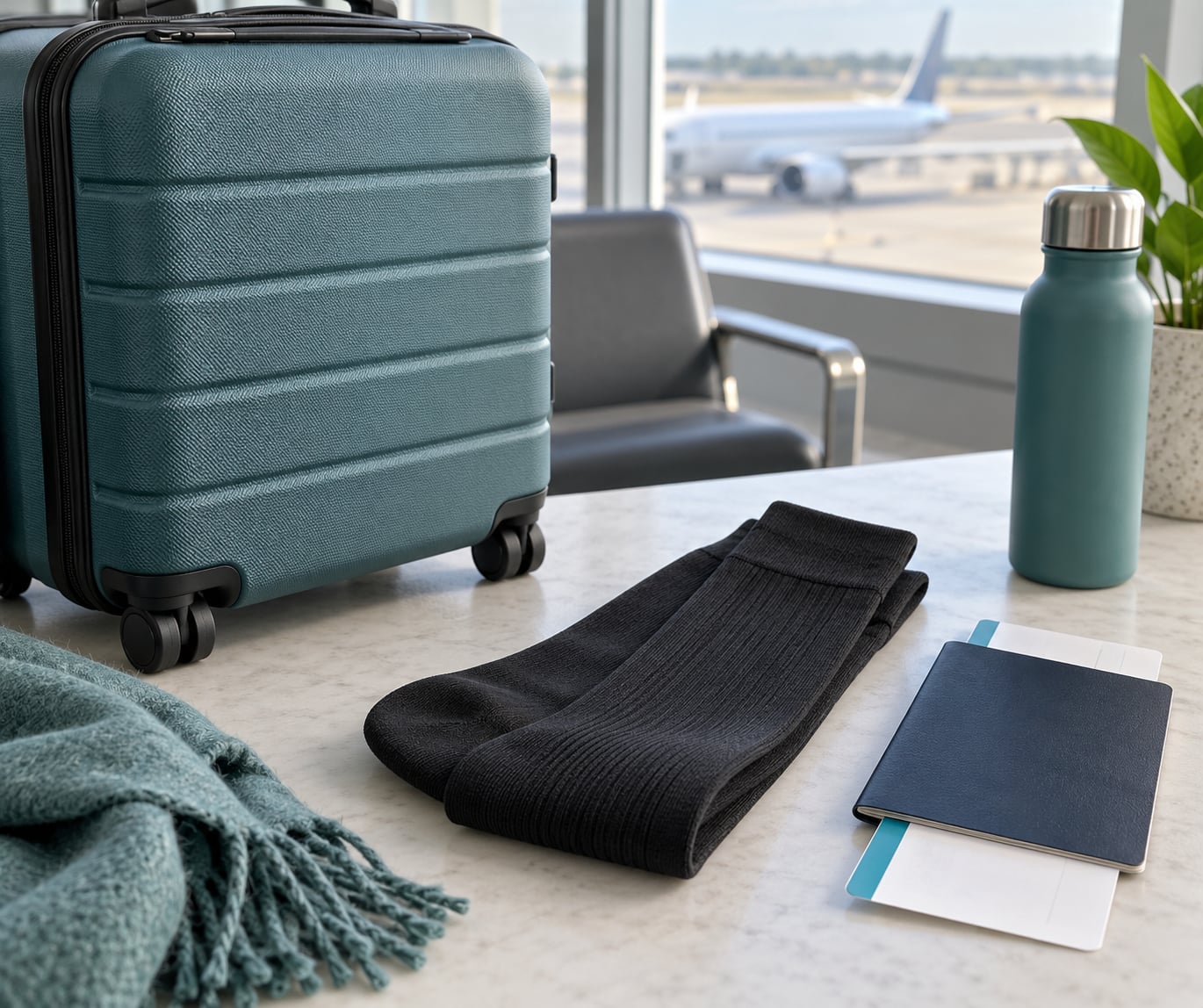
Short answer: yes, most travellers on flights of about four hours or more notice less ankle swelling and lighter legs wearing them, and 15-20 mmHg graduated knee-high socks are the level most people pick. Under four hours they are optional. They are comfort gear, not a guarantee against blood clots.
The question behind the question is usually “will my feet still fit in my shoes when I land”. That is a real and unglamorous problem. Sit still for six hours with your calves bent at 90 degrees and fluid settles in the lower legs, which is why socks come out of a suitcase at the end of a long route and nothing else does.
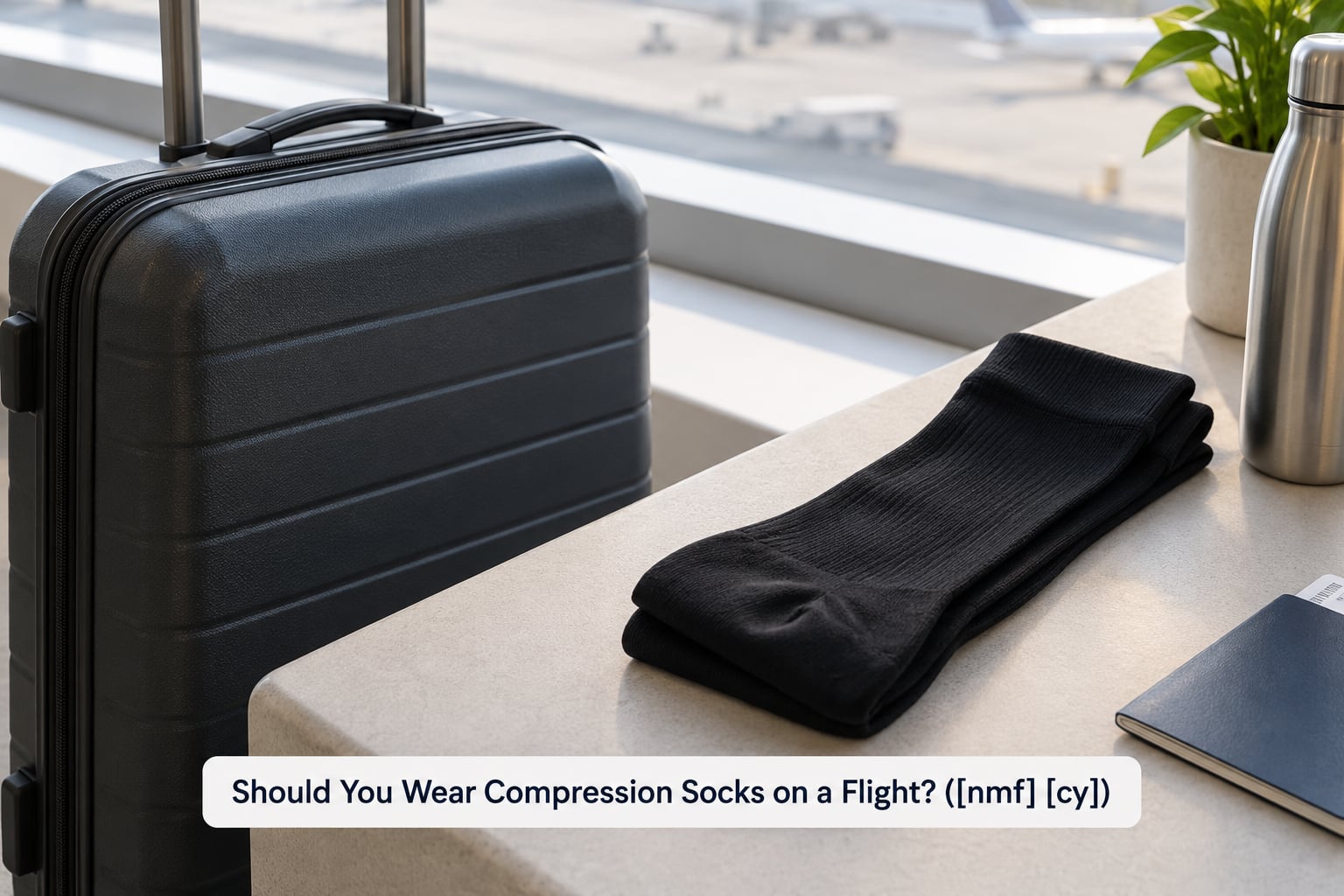
Table of Contents
- Should You Wear Compression Socks on a Flight?
- The quick verdict by flight length
- What Are Compression Socks and How Do They Work?
- Who May Benefit from Wearing Them on a Plane?
- Do Compression Socks Prevent Deep-Vein Thrombosis?
- What Level of Compression Should You Choose?
- Who should ask a healthcare professional first
- How to Choose Compression Socks for a Flight
- Wear them for a full day before you travel
- Fit problems and what they mean
- When to Wear Them and How Long
- What Else Helps Reduce Flight-Related Swelling?
- Frequently Asked Questions
- How long of a flight should you wear compression socks for?
- Who should not wear compression socks on a flight?
- Do compression socks prevent DVT on planes?
- Is 15/20 mmHg enough for compression socks?
- Should I wear compression socks if my feet are already swollen?
- What is the downside of wearing compression socks?
- Conclusion
Should You Wear Compression Socks on a Flight?
You are the ideal candidate if any of these are true: your trip is four hours or longer, you already get puffy ankles on flights, you have varicose veins or a family history of clots, you are pregnant, or you have had surgery on a leg recently. You can skip them if you are healthy, moving around freely, and hopping on a short hop.
The quick verdict by flight length
| Block time on your boarding pass | Worth it? | Level to use | Protocol |
|---|---|---|---|
| Under 4 hours | Optional | Mild, 8-15 mmHg | Wear from the gate, take off at your hotel |
| 4 to 8 hours | Recommended | Moderate, 15-20 mmHg | Put them on before boarding, keep on for the whole flight |
| 8 hours and over | Yes | Moderate, 15-20 mmHg | Wear through the flight and the layover, remove on arrival |
Read the block time, not the departure time. A 6:40 pm departure arriving at 11:20 am local time is a long-haul even if the clock says “overnight”.
One more practical note: window seats win on legroom but lose on movement. If you cannot reach the aisle without squeezing past strangers, the socks matter more, not less, because your walking option is limited.
What Are Compression Socks and How Do They Work?
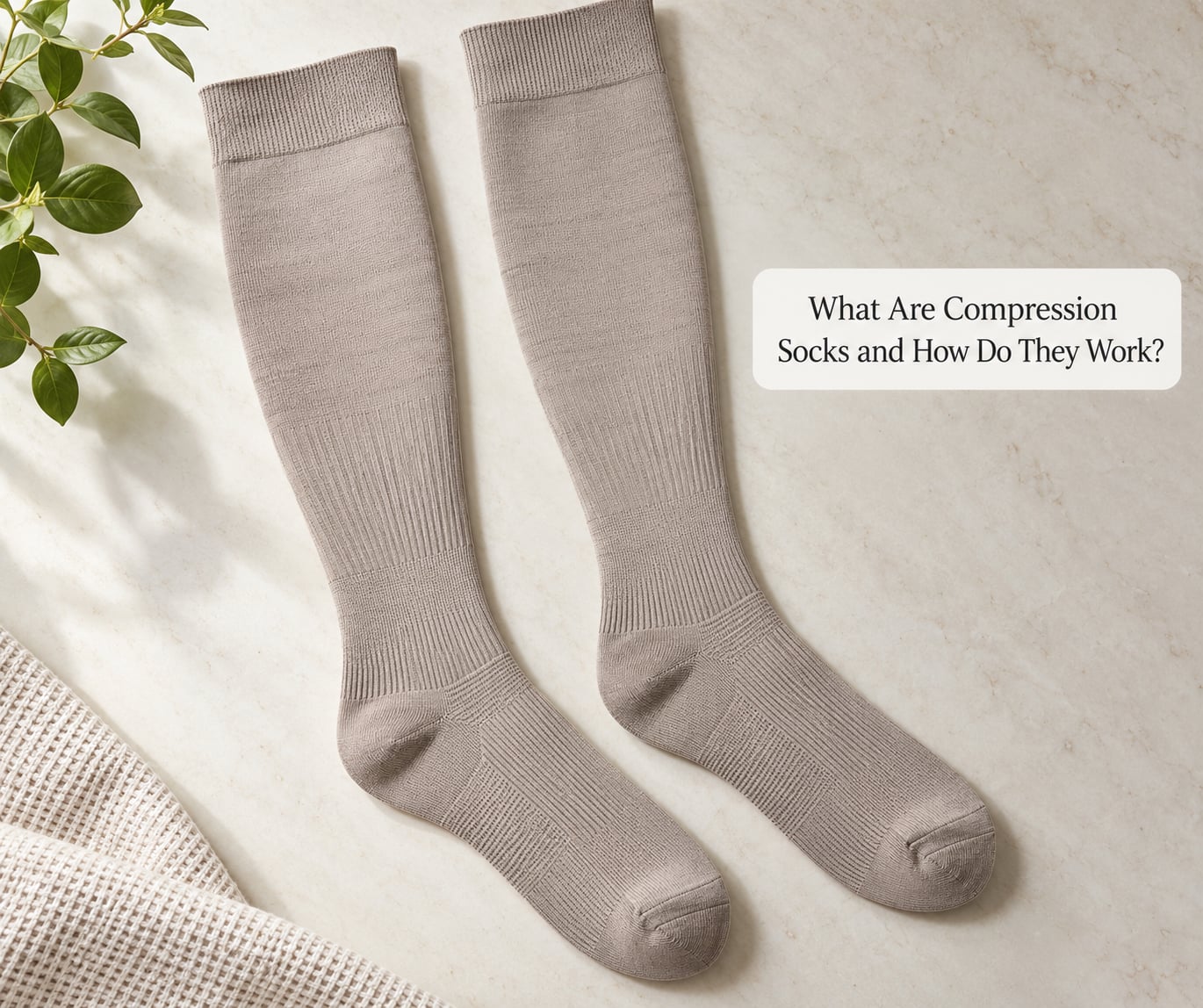
Compression socks apply pressure to the leg, and travel socks apply it in a graduated way: tightest at the ankle, easing up through the calf. That gradient matters more than the number on the box. Fluid in the lower leg does not flow back to the heart on its own, and the squeeze gives it a nudge, which is why your ankles look closer to normal on landing.
Not all compression is the same. Medical graduated compression is prescribed, usually in millimetres of mercury, and fitted to a measurement. Flight or travel socks use the same idea in a lighter weight. Uniform compression, the kind found in athletic recovery sleeves, presses evenly and does less for venous return.
mmHg is simply the unit the pressure is measured in. A 15-20 mmHg sock squeezes harder than a 10 mmHg one and less than a 30 mmHg prescription stocking.
Who May Benefit from Wearing Them on a Plane?
Long-haul passengers see the most obvious difference, because there is more sitting time for fluid to accumulate. People who already notice mild swelling in their lower legs tend to get the clearest result too. FlyerTalk regulars describe 15-25 mmHg as the practical ceiling for over-the-counter support hose.
Anyone a clinician has already told to use compression should follow that advice rather than this page. That includes people with a history of clots, recent leg surgery, varicose veins and pregnancy.
Socks do not replace walking, water or medical advice. They are one layer in a routine, and a thin one.
Do Compression Socks Prevent Deep-Vein Thrombosis?
They may lower the odds, and they will not remove them. A Cochrane systematic review found reduced swelling and a reduction in DVT incidence among travellers who wore compression stockings, but the studies were small, event rates were low, and the authors stressed the limits. Read that as encouraging and incomplete, not as a clean bill of health.
Can you still get a clot wearing compression socks? Yes. Nothing you wear on a plane covers every risk factor, and immobility, dehydration, recent surgery, pregnancy, smoking and a personal or family history all matter independently of what is on your legs.
Know the warning signs. One-sided swelling in the calf or thigh, pain that feels like a deep cramp, redness or warmth in one leg, or sudden unexplained shortness of breath needs urgent medical attention, not a sock adjustment.
What Level of Compression Should You Choose?
For self-directed travel use, 15-20 mmHg is the standard and it is where the evidence and the comfort overlap. Going higher is not automatically better.
| Band | Typical use | Who it suits |
|---|---|---|
| Mild, 8-15 mmHg | Resting support, short hops | People who feel any pressure is a lot, or who are new to compression |
| Moderate, 15-20 mmHg | Long-haul travel, everyday leg fatigue | Most travellers on flights of four hours or more |
| Firm, 20-30 mmHg | Prescribed medical use | Only on a clinician’s advice |
Vendors push the 20-30 and 30-40 ranges for travel, and forum complaints usually trace back to exactly that. Firm compression on healthy legs delivers no extra benefit and reliably produces numb toes and cold feet.
Who should ask a healthcare professional first
- Peripheral arterial disease or poor circulation in the legs
- Advanced neuropathy or diabetes with reduced sensation in the feet
- Reduced heart function or a clinician has restricted fluid intake
- Recent leg surgery, a current leg injury, or an active skin condition
- A clot in the leg within the past year, or a history of them
Reduced heart function deserves a specific note. Socks press fluid back into the circulation, and in people whose heart cannot handle a larger volume well, that has to be a conversation with a doctor first. This is general information, not a substitute for individual medical advice.
How to Choose Compression Socks for a Flight
Shoe size is a poor guide. Measure the circumference of your ankle at the narrowest point and your calf at its widest, usually in the morning before you fly when your legs are at their least swollen, then match those numbers to the brand’s chart.
| Style | Best for | Trade-off |
|---|---|---|
| Knee-high | Most flights | Can slide down on slim calves |
| Thigh-high | Long-haul, post-surgery, larger calves | Hotter, harder to get on |
| Calf sleeve or footless sock | People who cannot tolerate a full sock, warm climates, red-eyes | Covers the calf only, so less help for swollen feet |
The sleeve question comes up constantly on travel forums. A calf sleeve is a reasonable lower-commitment option, and for many travellers it is the difference between wearing something and wearing nothing. It just will not do much for feet that are already puffy.
Wear them for a full day before you travel
Put them on at home and keep them on for several hours. If you cannot get them on without wrestling, they are the wrong size. If they leave deep dents in your skin, ache, or make your toes go numb, the fit is wrong too.
Fit problems and what they mean
- Numb or tingling toes: too tight, wrong size, remove immediately
- Cold feet or pale toes: circulation being restricted, take them off
- Dents that stay for minutes: too much pressure for your skin, size up or drop a band
- Bunching in the calf: wrong length, or the sock has rolled under itself
- Sliding down the leg: ankle is too narrow for the chosen size
Never wear socks that are wrinkled, rolled into a cuff at the ankle, or folded back on themselves. A folded band acts like a tourniquet, which is the opposite of the point.
When to Wear Them and How Long
Put them on in the morning at home when your legs are least swollen, which most travellers find far easier than wrestling with them in a gate lounge. If you have forgotten them, a pair bought at the airport beats nothing, and putting them on before boarding still leaves the whole flight covered.
Wear them for the journey. For a red-eye, keeping them on through sleep is fine if they feel right; the alternative is waking up with everything pooling in your ankles.
Take them off once you are at your accommodation, or at least as soon as you are walking around normally again. Then wash them as the label says, usually cool water and air drying, and roll rather than fold them for storage.
If your legs hurt more while wearing them rather than less, they are doing harm. Remove them.
What Else Helps Reduce Flight-Related Swelling?
Movement is the part that actually matters, and it is free. Walk the aisle every couple of hours when the seatbelt light is off, even if it is four rows and back. If you cannot walk, do seated calf raises and ankle circles every half hour or so; flexing the ankle actively moves blood through the vein.
Choose an aisle seat if your legs are already a problem, and reclaim the foot hammock or seat-back space that the person behind you may otherwise occupy. Sit back with your feet supported rather than tucked under the seat in front, because bent knees make venous return harder.
Stay hydrated and cut back on alcohol, which does the opposite of what you want. Skip jeans and anything tight at the waist or calf on a long route. And keep your bag under the seat in front of you rather than in the bin, so you are not hauling it out to dig for a bottle of water.
Frequently Asked Questions
How long of a flight should you wear compression socks for?
Use the block time on your boarding pass, not the clock. Under four hours they are optional. Four to eight hours, wear 15-20 mmHg socks from the gate through to arrival. Eight hours and over, wear them for the whole flight including layovers, then remove them once you are walking around normally at your accommodation.
Who should not wear compression socks on a flight?
Ask a clinician before wearing them if you have peripheral arterial disease, advanced neuropathy or diabetes with reduced foot sensation, reduced heart function, recent leg surgery, an active skin condition, or a clot in the leg within the past year. Compression pushes fluid back into circulation, and for some of these people that is the wrong direction. A doctor can confirm what is safe.
Do compression socks prevent DVT on planes?
They may reduce the risk, but they do not remove it. A Cochrane systematic review found reduced swelling and lower DVT incidence among travellers who wore them, while noting the studies were small and event rates low. Immobility, dehydration, recent surgery, pregnancy, smoking and personal clot history still matter. Get urgent care for one-sided swelling, deep calf pain or sudden breathlessness.
Is 15/20 mmHg enough for compression socks?
For travel, yes. Fifteen to twenty mmHg is the moderate band and the level most guidance recommends for long-haul flights. Eight to fifteen mmHg suits people who find any pressure uncomfortable or are new to compression. Twenty to thirty mmHg and above is medical territory and should be used only on a clinician’s advice, since firm pressure brings numbness and cold feet with no added benefit.
Should I wear compression socks if my feet are already swollen?
Be careful. Socks pull fluid back into circulation, which can be uncomfortable or unsafe in someone with heart or circulation problems. If your legs are swollen from a long drive or a previous flight, put them on in the morning when you can, choose mild or moderate compression, and test them at home for a few hours first. If swelling is new, one-sided or unexplained, ask a doctor rather than treating it with socks.
What is the downside of wearing compression socks?
The main drawbacks are fit problems: numb toes, cold feet, deep dents in the skin, bunching at the calf and sliding down the leg. Firm levels bought without advice cause these more often than gentle ones. Other downsides are heat, difficulty getting them on at a gate, and a false sense of security that replaces walking the aisle, which is the habit that actually protects your circulation.
Conclusion
For an otherwise healthy traveller, a properly fitted pair of 15-20 mmHg graduated knee-high socks is a reasonable thing to wear on a flight of four hours or more, and unnecessary below that. They are optional, they are most comfortable at the mild-to-moderate end, and they are not a substitute for walking the aisle or for medical advice.
Start by checking your fit. Measure your ankle and calf, buy moderate compression, wear them around the house for a few hours, and if that feels normal you are set for the trip.