Knowing how to take care of your eyes on a flight comes down to three things: moisture, glare and how often you blink. A drop of lubricating solution before boarding, a few deliberate blinks and screen breaks while you are in the air, and a short recovery routine after you land will cover almost everyone. Preparing takes about five minutes, and during the flight it asks for a couple of minutes of attention every hour or so.
This is general comfort guidance for healthy eyes, not a treatment plan. If you have diagnosed dry eye disease, glaucoma drops, recent eye surgery or an eye infection in progress, whatever your optometrist or ophthalmologist has told you comes first.
Table of Contents
- What You Need
- Step-by-Step
- Prepare Your Eyes Before the Flight
- How to Take Care of Your Eyes During the Flight
- Manage Lighting, Screens, and Sleep
- Handle Contact Lenses Safely
- Recheck Your Eyes After Landing
- Common Mistakes
- Frequently Asked Questions
- Does flying cause dry eyes?
- Are eye drops allowed through airport security and on a plane?
- Should I wear contact lenses on a long flight?
- Does an eye mask help with dry eyes on a plane?
- How do I take care of my eyes on a flight when symptoms last after landing?
- Conclusion
What You Need
None of this is essential, and every item is optional depending on how long you are flying and whether you wear contacts. The list is short because the useful kit fits in a jacket pocket.
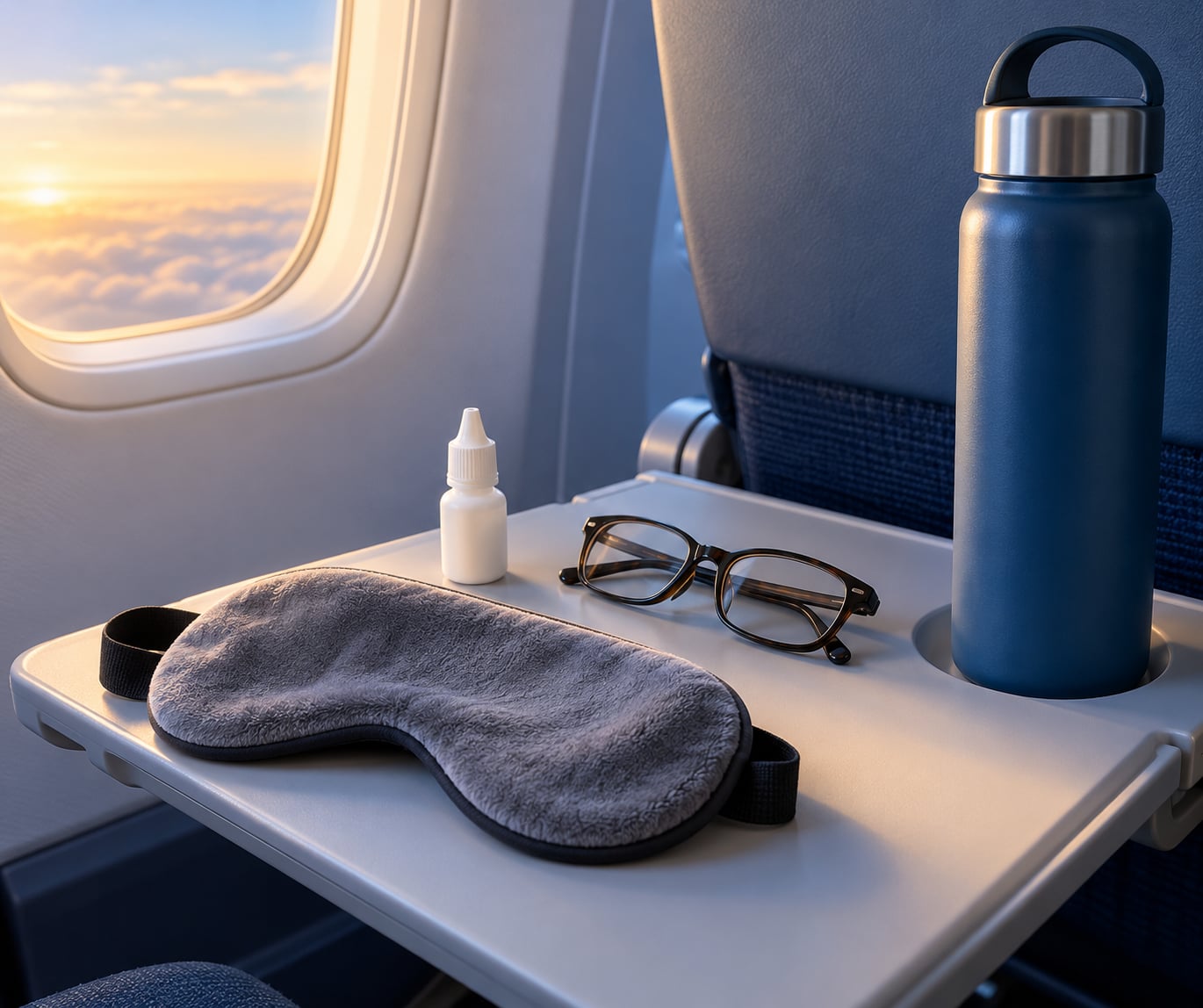
- Preservative-free lubricating drops made for frequent use. Single-dose vials are the easiest to keep clean in a cabin.
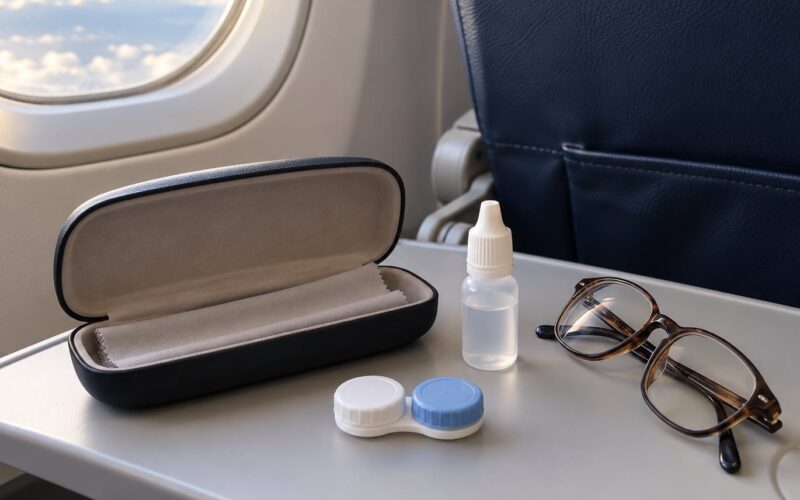
- A clean contact lens case and fresh solution, if you wear lenses. A travel bottle you topped up at a hotel sink is not a safe substitute.
- A spare pair of glasses. This is your exit from a lens problem at 35,000 feet, and it weighs almost nothing.
- A sleep mask, the soft kind that closes around the nose and cheeks rather than the thin airline ones.
- A microfiber cloth for a cold compress and for cleaning smudges off your screen.
- A refillable water bottle filled after security, so you are not paying cabin prices to stay hydrated.
Two rules apply to all of it. Never share eye drops or lenses with another traveller, and use only products that are appropriate for your own eyes and any prescription you are already on. If a drop has been opened and the tip has touched your eye or your fingers, treat it as finished.
If you are flying from the US, lubricating drops and saline generally pass airport security in your carry-on. Contact lens solution counts as a liquid, so it needs to be 3.4 oz or smaller and inside your quart bag. Rules differ outside the US and they do change, so check your departure airport’s guidance before you pack.
Step-by-Step
The whole routine takes a few minutes of effort, split before, during and after. It works for almost everyone, which is a good sign. The exception matters though: persistent pain, blurred vision that does not clear, marked redness, sensitivity to light or any discharge needs a clinician, not more self-care at 30,000 feet.
Prepare Your Eyes Before the Flight
Start the day before if you can. Put a lubricating drop in the evening and again before you leave the house, which gives your eyes a head start before the cabin air does its work.
On the morning of travel, skip eye makeup or keep it light. Makeup, along with the natural oils and residue around the lashes, can thicken the oily layer of the tear film and make dryness feel worse in a dry environment.
If you wear contacts, this is the moment to take them out and put your glasses on for the journey rather than for the whole day. If you are going to wear lenses in flight, pack the case and solution so you can remove them properly rather than wrapping them in a napkin.
Resist the urge to sit on your phone during the drive to the airport with the vents at full blast. Screen use already cuts your blink rate, and moving dry air on top of that is a bad combination right before a flight.
How to Take Care of Your Eyes During the Flight
Cabin air is circulated from the overhead ducts, is heated and pressurised, and carries very little moisture. Relative humidity in a typical cabin sits below 20%, drier than the Sahara Desert. Here is what actually helps while you are up there.
- Put drops in before the doors close. One round of preservative-free lubricating drops on the ground or at the gate gives your eyes a coating before the dry air starts pulling moisture off them.
- Use drops on a schedule, not on a sting. Reapply at sensible intervals rather than waiting until your eyes are already burning. Aiming for roughly every hour or two is a reasonable starting point, and your own eye-care professional may give different guidance.
- Blink fully and deliberately. A normal blink spreads tears across the whole eye surface. Screen staring produces partial blinks, so close your eyes properly for a second or two when you remember to.
- Redirect the overhead vent. Use the little ball knob to angle it away from your face. If the passenger beside you turns it back, a tissue held loosely over the vent diffuses the stream without blocking it for everyone.
- Lower the screen brightness and angle it away from glare. Match the brightness to the cabin rather than the sunlit window, and turn night mode on for a red-eye flight so the light stays dim.
- Drink water steadily. Sip through the flight instead of downing a litre at once, and go easy on alcohol and caffeine, which work against you on a long route.
- Use a sleep mask if you doze. Closed eyelids still lose moisture in dry air, which is why many dry-eye travellers find the morning worse than the evening. r/Dryeyes and Dry Eye Zone users consistently recommend a mask for exactly this.
- Warm your hands and let the cabin settle. Cold hands and cold air make the eyes clamp and sting more than they need to. If your eyes burn in the first half hour after takeoff, that is often cabin adjustment rather than damage, and the drops still help.
Mini humidifiers get mentioned often in dry-eye communities, and chronic sufferers describe them as lifesavers on desert routes. They can help at close range, but they add a wet object and a little water to your seat pocket area, so weigh that against how dry your eyes really get.
Manage Lighting, Screens, and Sleep
Most of the strain people blame on the flight is ordinary screen fatigue that a dry cabin makes worse. Reading a phone in a moving cabin means your eyes are constantly refocusing on a shifting target, which tires the focusing muscles.
Use the 20-20-20 habit if you are going to work or watch films: every 20 minutes, look about 20 feet away for 20 seconds. During a movie, a two-minute break at each credit sequence is easier than any other reminder you will manage.
Turn the overhead reading light off if you can and rely on the screen, which is usually dimmer and easier on your eyes at night. Wipe the screen with your cloth before you settle in, since smudges make you squint and lean closer, and squinting is the enemy.
On an overnight flight, keep the mask on even during a light doze. Users in dry-eye forums describe the first hour after waking as the worst of the trip, and the mask is the cheapest thing you can do about it.
Handle Contact Lenses Safely
Lenses are the biggest single risk in this whole guide. They sit on a cornea that already has less moisture than usual, and a lens that dries out can scratch. Long flights make it worse because you cannot easily wash your hands and re-wet a lens properly.
The clean answer is glasses for the flight. That does not have to mean the whole day. Many wearers take their lenses out at home, travel in glasses, and put fresh lenses in at the destination, which is a well-established routine in the dry-eye community.
If you do wear them in flight, carry your own case and solution and never top a lens up from a travel bottle or a bottle you have rinsed out. Do not sleep in your lenses on a long or overnight flight, where a delay can stretch far past your plan. Take them out the moment your eyes start stinging or blurring, because a lens that needs rewetting constantly is a lens that should come out.
Ask your optometrist how long to wait after a flight before you put lenses back in if your eyes are still irritated. Many people find their eyes sensitive for a day or more after a long trip.
Recheck Your Eyes After Landing
Dryness often outlasts the flight. Forum users report gritty, light-sensitive eyes lasting into the next day, particularly after red-eye routes or long delays, so plan for the recovery rather than expecting to walk off the plane fixed.
Wash your face, remove makeup with a damp cloth or a gentle cleanser, and rinse around the eyes without scrubbing the lashes. A cool compress held loosely over closed eyes for a few minutes settles a hot, tired feeling. There is no universal answer on warm versus cold: some eye-care professionals recommend warmth to loosen the oils in the eyelid glands, others tell their patients to stop using warm compresses and use cool ones instead for comfort, so go with what your own clinician recommends.
Replace or disinfect your lens case and solution rather than topping up what you travelled with, and leave lenses out until your eyes feel normal again. Give your eyes a break from screens for the first few hours if you can. If symptoms are still there a day or two later, or they are getting worse, that is the point to book an appointment.
Common Mistakes
- Rubbing your eyes. It feels soothing and it makes irritation worse. Press a cool compress over closed lids instead.
- Borrowing someone else’s drops. Redness-relief drops and prescription products are not sharing items, and a shared bottle is an infection route.
- Using the wrong lens solution. Never put water or saline meant for the eye into a lens case as a top-up. Use the solution your lens care provider specified.
- Staring at a bright or dim screen without a break. Both extremes strain your eyes. Adjust brightness to the cabin and take short breaks.
- Sitting under a vent that blows straight at your face. Aim it away, or soften it with a tissue.
- Sleeping with an open fan or without a mask. Closed lids still leak moisture in dry air.
- Ignoring warning signs. Pain that lasts, blurred vision that will not clear, marked redness, light sensitivity, double vision or discharge all mean stop self-treating and see an eye-care professional.
Prevention is the easy part. Once your eyes are already irritated at the gate, you are soothing a problem instead of avoiding it, and soothing takes far longer.
Frequently Asked Questions
Does flying cause dry eyes?
Yes, for most travellers it is the classic cause. Cabin air is heated, pressurised and circulated fast, and relative humidity often sits below 20%, so moisture evaporates from the tear film faster than blinking replaces it. Screens make it worse because you blink far less while looking at them. Symptoms usually show in the first half hour after takeoff.
Are eye drops allowed through airport security and on a plane?
Lubricating drops and saline are normally fine in your carry-on. Contact lens solution counts as a liquid, so in the US it must be 3.4 oz or smaller and inside your quart bag. Once airborne you can use drops as often as you like, since there is no restriction in the cabin. Rules vary by country, so check before you travel.
Should I wear contact lenses on a long flight?
Glasses are the safer choice for the flight itself, since a lens on a dry cornea can scratch. If you wear lenses anyway, bring your own case and solution, remove them the moment your eyes sting or blur, and never sleep in them on an overnight route. Many wearers travel in glasses and put fresh lenses in at the destination.
Does an eye mask help with dry eyes on a plane?
It helps, because closed eyelids still lose moisture in moving dry air. A soft mask that closes around the nose and cheeks is better than a thin one for this. Dry-eye travellers on r/Dryeyes and Dry Eye Zone note that the first hour after dozing is often the worst part of the trip, so the mask is worth packing.
How do I take care of my eyes on a flight when symptoms last after landing?
Gritty, tired or light-sensitive eyes can linger for a day or more after a long or red-eye flight. Wash your face, remove makeup gently, use a cool compress over closed lids, and leave contact lenses out until your eyes feel normal. If symptoms persist beyond a couple of days or get worse, book an appointment with an optometrist or ophthalmologist.
Conclusion
Start by packing the boring things: preservative-free lubricating drops, a clean lens case with fresh solution, a spare pair of glasses and a soft sleep mask. Put drops in before boarding rather than waiting for the sting, redirect the overhead vent, blink properly on every screen, drink steadily and skip the alcohol. Then give your eyes an easy few hours after you land, with no lenses and no rubbing.
If you need to take care of your eyes on a flight because of a diagnosis, an operation or a medication, your eye-care professional’s instructions outrank everything here. And if you finish the flight with pain, blurred vision, marked redness, light sensitivity or discharge, book an appointment instead of trying more drops.