Airlines substitute the aircraft you booked when the planned jet is unavailable, unsuitable for the route, uneconomical to operate, or impractical on the day. The usual triggers are maintenance, crew shortages, weather, delivery delays, demand shifts, and network recovery. The flight number and times usually stay the same, so the change is easy to miss.
It is worth being blunt about one thing first. If you picked a route because of the seat, the equipment change is a real loss, not a technicality. A lie-flat seat, a 1-2-1 layout, an aisle position you paid extra for, an accessible seat, or a cabin layout that works for a mobility need can all disappear without notice.
I have read through years of passenger threads on this exact complaint, and the same pattern keeps repeating. The swap is rarely a decision about you. It is a scheduling and operations decision made somewhere else in the airline, often weeks before you ever looked at the booking.
Table of Contents
- Why Airlines Swap Aircraft Types
- What Can Trigger an Aircraft Swap?
- Common Reasons Airlines Change the Planned Aircraft
- Eight reasons airlines swap aircraft types
- How Airline Fleet Assignments Work
- How Swaps Happen at the Last Minute
- What an Aircraft Swap Means for Passengers
- What you are owed after a swap, and where
- How to Check Before You Fly
- Frequently Asked Questions
- What is an aircraft swap in flying?
- Does an airline have to compensate me if they change my flight?
- How can I find out if my flight has been changed to a different airplane before boarding?
- How do airlines decide which aircraft gets assigned to a specific route?
- How often do airlines actually swap aircraft?
- Can I move to another flight that still uses the aircraft I booked?
- Conclusion
Why Airlines Swap Aircraft Types
Airlines swap aircraft types when the aircraft printed on your reservation no longer works for that flight on that date. In practice that comes down to four conditions: the planned aircraft is unavailable, it is unsuitable for the route, it is uneconomical to run, or it is operationally impractical. Any one of those is enough.
The swap happens silently more often than not. The flight number, the dates and the departure times stay identical, so the reservation record simply gets overwritten. Unless you look at the seat map or the aircraft assignment yourself, there may be no notification at all.
Last updated October 2026. Schedules, fleet plans and policies change, so verify anything specific with your airline before you rely on it.
What Can Trigger an Aircraft Swap?
Triggers fall into two very different buckets, and the timing tells you which one you are looking at. The first happens weeks ahead, when the airline builds and reshapes its schedule for a season. The second happens in the hours before departure, when something on the ground goes wrong.
Planned triggers look unremarkable on paper: the type is not available in the needed quantity, the route changed length, the airline decided a different gauge works better, demand shifted after tickets were sold. Last-minute triggers are messier: an unserviceable aircraft, a crew pairing that fell apart, a departure slot that disappeared, a diversion that ate the following rotation.
Both end up in the same place for the passenger. You are sitting on a different aeroplane than the one you paid attention to when you booked.
Common Reasons Airlines Change the Planned Aircraft
Eight reasons airlines swap aircraft types
These are the causes that come up again and again, in roughly the order I would expect an operations team to hit them.
1. The aircraft is unserviceable. Every airliner has scheduled and unscheduled maintenance. A check that runs long, a part that does not arrive, or a defect found on the morning of the flight puts the aircraft out of service, and the airline covers the rotation with whatever else it has positioned nearby.
2. Crew availability and duty limits. Pilots and cabin crew are rostered to specific aircraft types, and duty time limits cap how long a crew can work. If the qualified crew is already committed elsewhere or out of hours, the jet may be perfectly airworthy and still not flyable today.
3. Range, payload and fuel capability. A transcontinental route that was a 787 job in winter may be flown by a different type in summer, when winds, fuel loads or the payload required change. Substitute types have to make the same fuel and range numbers, which narrows the choices sharply on long sectors.
4. Airport and runway limitations. Not every airport can take every aircraft. Runway length, pavement strength, weight limits, gate size and curfews all rule types in or out. When a bigger plane is planned for an airport that turns out to be closed for work, the substitute has to be the biggest thing that fits.
5. Seasonal and demand-driven changes. Airlines build a schedule months out using forecasts, then revise it as the real numbers land. A route that overperformed in one period, a holiday spike, or a weak quarter on a neighbouring route all push capacity around, and a different type is the fastest way to move seats.
6. Network rotation and empty positioning legs. A single aircraft flies a chain of sectors across several days, and one late or cancelled flight ripples through the rest. The airline also repositions aircraft to where they are needed, so a jet that was supposed to be somewhere else at midnight is no longer available in the morning.
7. Delivery delays and grounded fleets. A new aircraft on order can arrive months late, and an inspection or grounding programme can remove capacity from the fleet without warning. Both force the airline to keep published flying on types it did not plan around.
8. Disruption and recovery. Weather at a hub, an air traffic control restriction, or a mass cancellation somewhere else means aircraft, crews and passengers all pile up in the wrong place. When the airline needs to fly a stranded aircraft forward to clear the backlog, it uses whichever type is actually there.
How Airline Fleet Assignments Work
Before any of those reasons fires, a planning team has already decided which type flies which route. That decision starts with what the airline physically owns and where those aircraft sit today. Then it works through route economics: how far, how often, how competitive, and what the fare mix supports. Cabin demand comes next, because a route full of premium bookings justifies widebody capacity in a way a leisure route does not.
Gauge is the part most people misread. A bigger aircraft is not automatically better on a short route, because a large jet on a short sector burns fuel carrying empty rows. Airlines also watch the network as a whole, since moving a type between routes to feed a hub often matters more than the economics of any single flight.
The published schedule carries a planned type so passengers and travel agents can see what they are buying. That plan is a snapshot, not a guarantee, and the closer you get to departure the more the operations side is free to adjust it.
That gap between the published plan and the actual operation is the whole answer to this question. A schedule has to be published months ahead to be useful; operations has to be flexible on the day to keep flying. Aircraft swaps are where those two requirements meet.
How Swaps Happen at the Last Minute
A planned schedule change is a commercial decision, made days or weeks out and often communicated as a schedule change with new flight numbers. A last-minute swap is an operations decision made hours before departure, and it almost never produces a message.
Both come from the same place: the aircraft assigned to your flight is somewhere else, or cannot go. At short notice the airline is not choosing the ideal type for the route, it is choosing from what is on the ground. That is why late swaps more often move a passenger sideways in their own cabin rather than up.
A common sequence runs like this. An aircraft finishes the previous day with a fault. Maintenance signs it off late or not at all. A crew duty limit expires before the required relief arrives. The departure gets delayed past the point where the connection downstream still works. And then the aircraft that was supposed to fly your sector gets reassigned to a busier rotation, while something else is turned around and given to you.
Because the times and flight number usually hold, the reservation system shows nothing unusual. That is why passengers so often discover the change at the gate, or by noticing that their seat number no longer exists on the new seat map.
What an Aircraft Swap Means for Passengers
A swap can quietly remove the specific thing you chose the flight for. The flight itself still gets you to the same city at roughly the same time, but the product underneath you is different.
The most common losses are a lie-flat seat replaced by an angled or flat-but-not-flat seat, a 1-2-1 or 2-2 layout replaced by three-abreast, a wider seat replaced by a standard one, a paid seat selection that no longer exists on the new map, and a quieter cabin replaced by a noisier one. A smaller substitute on an oversubscribed route can also mean bumping from a premium cabin, which British Airways passengers have documented repeatedly when a 787-10 is replaced by a 787-9.
Here is the practical breakdown:
| Reason for the swap | What usually changes for you | How much notice you get |
|---|---|---|
| Scheduled maintenance overrun | Later departure, sometimes a different type at the gate | Hours |
| Demand or seasonal change | Different gauge, seat map and cabin mix, booked weeks earlier | Weeks to months |
| Aircraft repositioning in the network | Different type with a different seat layout and cabin sizes | Days to a week |
| Crew availability or duty limits | Type change plus schedule adjustments | Hours to a day |
| Weather or air traffic control disruption | Everything at once, often with rebooking on a different type | Minutes to hours |
| Delivery delay or grounded fleet | Wider lasting substitution across many rotations | Days to weeks |
What you are owed after a swap, and where
Rights after an equipment change depend almost entirely on where you are flying and what you bought. A change of aircraft on its own is usually not a compensable event in the way a delay or cancellation is, and the honest answer is that most passengers get nothing automatic.
What does exist, in plain terms:
| Situation | What you can generally get | Where it comes from |
|---|---|---|
| US domestic flight, aircraft changed | Usually no compensation for the change itself. Refund of ancillary fees you cannot use, such as seat selection, is the common ask | Airline policy and contract of carriage |
| International flight on a US carrier | Some carriers treat a change of equipment as a schedule change, which can trigger rerouting, a fare difference credit or a change-fee waiver | Carrier contract of carriage, sometimes the General Rules of the International Tariff |
| Flight departing the EU or UK | Protection centres on delay, cancellation and rerouting. A pure equipment substitution with no schedule impact generally does not qualify on its own | EU261 and UK261 |
| You bought a flexible or fully refundable fare | Much wider choice, including cancelling or moving to a flight with the aircraft you wanted | Fare rules and contract of carriage |
| Booked through a travel agent or an online travel agency | Every request goes through that agent first, who then contacts the airline | Your booking channel |
Two practical warnings. First, agents often tell you nothing has changed because the flight number and times are identical, which is technically true and practically useless. Second, the original aircraft is usually no longer visible in the reservation record, so if you booked weeks or months ago, bring proof of what was sold to you.
Passengers who got results generally describe the same approach: email customer relations rather than calling, quote the carrier’s own tariff language, ask for a supervisor or a written authorization reference, and be specific about the fare class and the seat product that was lost. The inconsistency is real. American Airlines passengers on the same Los Angeles to Shanghai route report free rerouting, a fare difference credit, and a flat refusal for near-identical situations.
How to Check Before You Fly
You cannot stop a swap, but you can find out about one before you reach the airport. The further out you check, the more useful this is, because a swap found two weeks out is something you can reroute around.
1. Check the seat map, not just the flight number. Open your booking and look at the seat map for the exact date. If the row numbers or the cabin layout have changed since you selected seats, the equipment has changed. This is the single most reliable signal, and it is the one the forums keep pointing out.
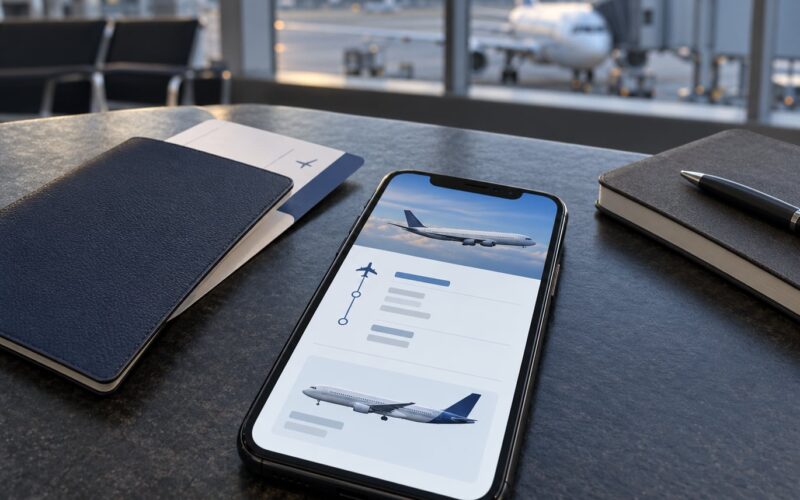
2. Check the aircraft assignment in the booking app or on the airline site. Most carriers show the planned tail number and type once a schedule is loaded, and again closer to departure.
3. Look at the same flight in a flight tracking tool such as FlightAware or FlightRadar24 a few days out. The registration and type usually appear there before the airline tells you anything.
4. Check the seat pitch and layout for what you actually care about. If you chose this flight for width, legroom or a lie-flat seat, confirm the layout on the aircraft type now flying that route rather than the type in your original screenshot.
5. Re-check 48 hours out and again the evening before. Long-haul assignments often firm up late, and a stable booking can still change.
6. If you booked through a third-party agent, remember that you will have to go through them. The airline will not see your booking, and the agent may not know the original equipment either.
7. If the swap has already happened and it matters to you, write rather than call. State the flight, the fare class, the seat product you lost, and ask for the carrier’s position in writing, including any change-fee waiver or fare difference credit they are willing to apply.
One more habit worth having: if you fly a route often, prefer airlines that run a narrow family of aircraft on it. Single-type fleets, which is how many European low-cost carriers operate, are far easier to protect yourself on, because the seat map you learned is the seat map you will get.
Frequently Asked Questions
What is an aircraft swap in flying?
An aircraft swap, also called an equipment change or equipment substitution, is when an airline operates your booked flight with a different type of aircraft than the one shown on your reservation when you booked. The flight number and times usually stay the same, so the reservation record is simply overwritten. You normally find out through the seat map, the aircraft assignment in your booking, or at the gate.
Does an airline have to compensate me if they change my flight?
Usually not for the aircraft change itself. Most carriers treat a pure equipment substitution as an operational change rather than a compensable event, especially on domestic flights. Where you have more leverage is a fare difference credit, a change-fee waiver, a reroute on a comparable service, and a refund of seat selection fees for a seat that no longer exists. Rules differ by country and by fare class, so check your contract of carriage.
How can I find out if my flight has been changed to a different airplane before boarding?
Check the seat map in your booking first, because row numbers and cabin layout change when the equipment does. Then look at the aircraft type and registration in the airline app or website, and cross-check the same flight in a tracking tool such as FlightAware or FlightRadar24 a few days before departure. Re-check about 48 hours out, since long-haul assignments often change late.
How do airlines decide which aircraft gets assigned to a specific route?
Planners start with where the aircraft are today, then weigh route economics, distance, frequency, fare mix, and cabin demand. They also consider runway length, airport slots, curfews, and how the type fits the wider network and hub connections. The published schedule carries a planned type so passengers know what they are buying, but that plan stays flexible until close to departure.
How often do airlines actually swap aircraft?
There is no reliable public figure. A statistic claiming that around 40 percent of flights change aircraft after booking circulates widely on social media, but nobody can trace it to a study, and I would not plan around it. Swaps are common enough on widebody and premium routes that frequent flyers expect them, and rare enough on short domestic sectors that most travellers never notice.
Can I move to another flight that still uses the aircraft I booked?
You can ask, and on a fully flexible fare you often can. On a basic or standard fare the airline will usually say no, because the aircraft is not part of what you purchased, the route and schedule are. It is still worth asking when you booked a specific seat product, since several carriers will offer a move, a credit, or a fare difference rather than lose a premium-cabin passenger.
Conclusion
Airlines swap aircraft because the schedule they published months ago and the operation they are running today are two different documents, and the airline has to keep flying. Maintenance, crew limits, range, airport restrictions, demand and disruption are the reasons that come up again and again.
If the aircraft mattered to you, do one thing early: open your booking and look at the seat map for your exact travel date. That single check catches most swaps before you reach the airport, and it gives you time to ask for a move or a credit before the record disappears.