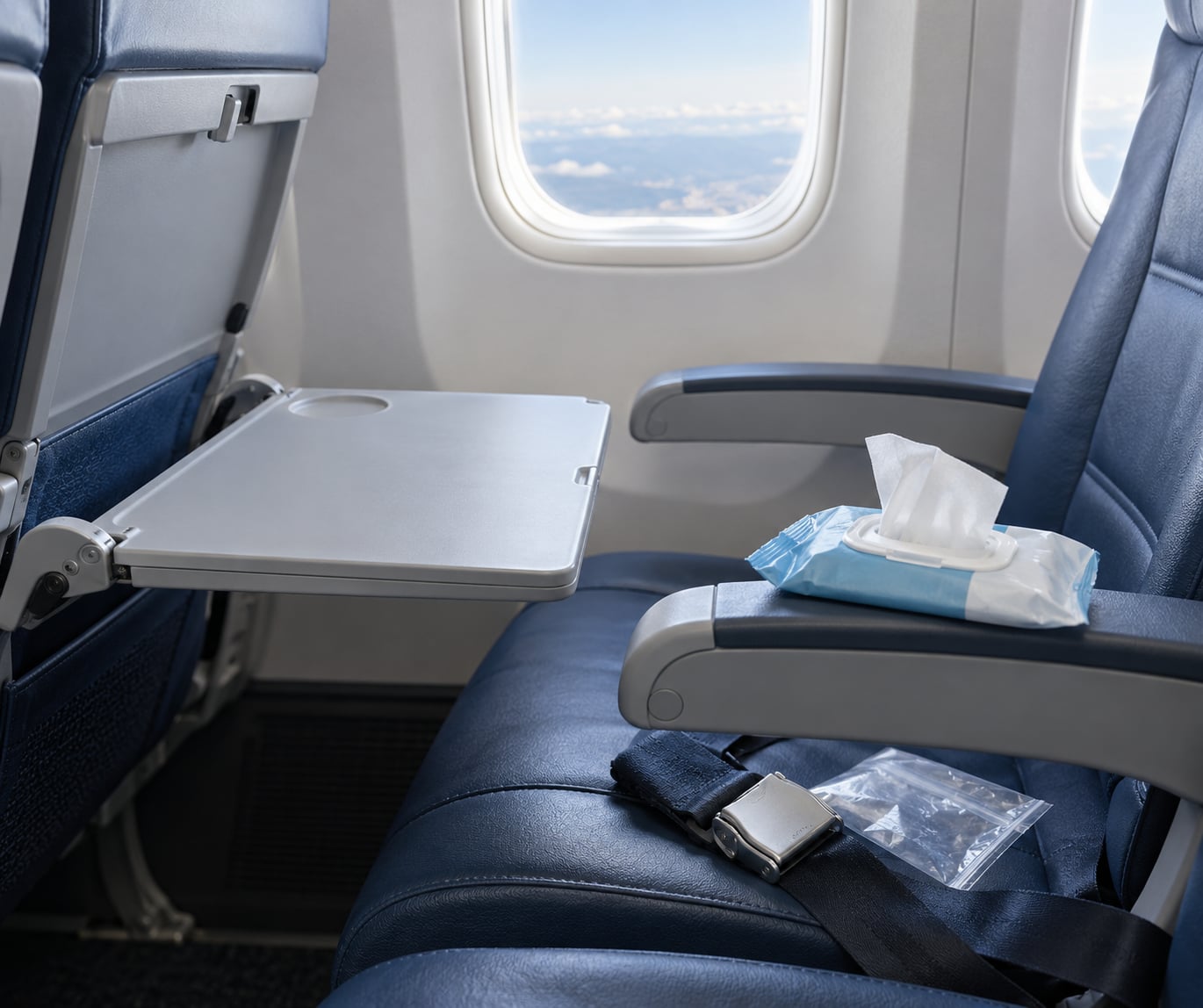
To clean your seat area before a flight, wipe the seatbelt, armrests, headrest, tray table, entertainment screen and controller, and window shade with a wipe labeled as a disinfectant before you sit down, then again before you eat. It takes about 60 seconds and costs nothing extra if you bring your own wipes. Bring wipes, not sprays, because aerosolized cleaner sets off coughing and allergy reactions in the people around you.
Last updated October 2026.
There is a good reason to do this yourself. Cabin crews typically have somewhere around ten to thirty minutes to reset a full aircraft between flights, and there is no universal deep-clean standard across the industry. Some carriers schedule a heavier clean at intervals measured in hundreds of flight hours rather than after every leg, which means the tray table and armrest you are about to touch may never have been disinfected since the previous passenger put their phone on it.
A 2018 Marketplace investigation swabbed ten aircraft surfaces and ranked the dirtiest: the headrest, the seatback pocket, the lavatory door handle, the tray table and the seat belt. Every one of those sits inside your seat zone, except the lavatory handle, which is where you touch last and everything else after.
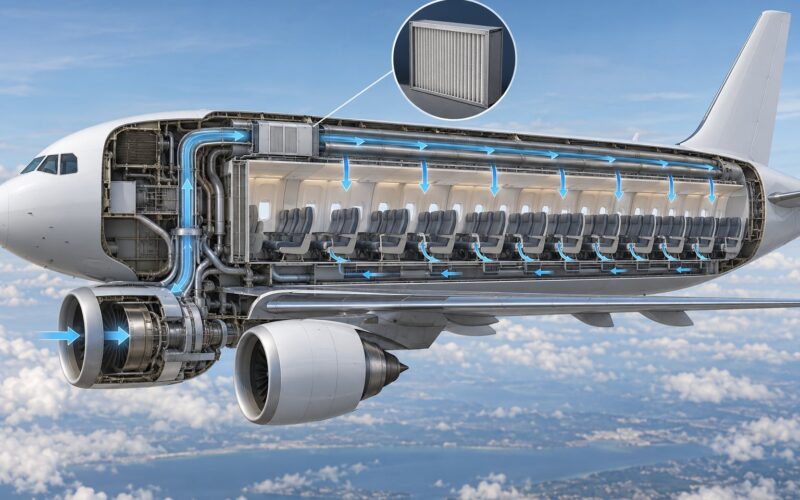
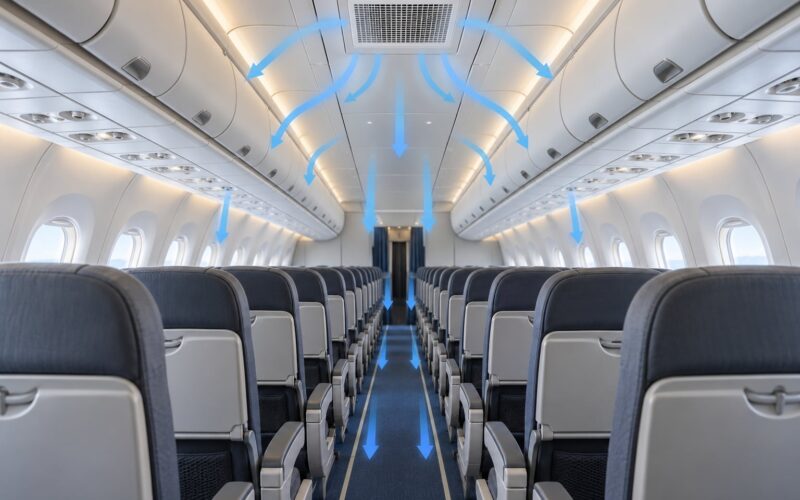
I want to be straight with you about the balance here, because too many of these articles skip this part. Cabin air is HEPA-filtered and moves top to bottom, so the air you breathe is handled far better than most people assume. Wiping a seat is a cheap, low-effort reduction in surface contact, not protection against airborne illness. On a short daytime hop with no reported illness in your row, skipping it is a perfectly reasonable choice.
Table of Contents
- The 60-Second Checklist
- What You Need
- What You Can Bring Through Security
- Disinfectant Wipes vs Sanitizing Wipes
- Step-by-Step: How to Clean Your Seat Area Before a Flight
- How to Prepare Before You Sit Down
- How to Clean Your Seat Area Once You Are Seated
- Clean High-Touch Surfaces One by One
- Check the Seat and Finish Hygiene
- Common Mistakes
- Frequently Asked Questions
- How often should I clean your seat area before a flight?
- Is it safe to use an ordinary disinfecting wipe on an airplane seat?
- What is the best way to clean an airplane tray table?
- Can I spray sanitizer on airplane seats or touchscreens?
- How should I clean a seat if I have a sensitive skin reaction?
- Do I need to clean the seat area if the airline already sanitizes it?
- Conclusion
The 60-Second Checklist
- Sanitize your hands at the gate before you step into the jet bridge.
- Empty the seatback pocket onto your lap, or skip the pocket entirely.
- Wipe the tray table top, the edges and the latch.
- Wipe both armrests, the headrest cover and the seatback.
- Wipe the seatbelt webbing and the metal buckle, then let them dry.
- Wipe the entertainment screen and controller with an electronics-safe wipe.
- On a window seat, wipe the shade, the air vent and the reading light.
- Set your bag on a folder or bag liner rather than bare seat fabric.
That is the whole routine. Everything below is the reasoning, the supply list and the fixes for when people get it wrong.
What You Need
You need four things, and three of them fit in a jacket pocket: disinfectant wipes, hand sanitizer with at least 60 percent alcohol, a few tissues or a paper towel, and a small bag to hold used wipes.
- Disinfectant wipes, not plain antibacterial or hand wipes. Look for the word disinfectant on the label, since that is the claim that means something.
- Hand sanitizer at 60 percent alcohol or higher. That threshold is the one that makes it effective, and it is the same number to look for on bottles everywhere.
- Tissues or a folded paper towel for crumbs, sticky spots and for opening the lavatory door.
- Electronics-safe wipes for the in-flight entertainment screen, if the pack you already own says it is safe for screens.
- A clear plastic bag for used wipes. Tossing them into the seatback pocket is worse than not cleaning at all.
- Optional: a hanging seat organizer, which keeps your belongings out of the seatback pocket entirely.
What You Can Bring Through Security
Wipes are not subject to the 3-1-1 liquids rule. They are not liquids, so they go through the checkpoint in your carry-on with no size limit, and nobody is going to confiscate a packet of them. The same is true in checked baggage.
Hand sanitizer is the one that trips people up. Since 2020 the TSA has allowed sanitizer in carry-on bags, including containers larger than the standard 3.4 ounce liquid allowance, but it has to be a liquid and you may need to declare it at the checkpoint. Travel-size bottles under 3.4 ounces are the friction-free choice.
Aerosol cleaners are a different story. Aerosol cans are allowed in carry-on when properly capped and no larger than 3.4 ounces, and you do not need one. Small personal spray bottles under the liquid limit are legal, but see the etiquette section below before you pack one.
Disinfectant Wipes vs Sanitizing Wipes
This is the distinction most people miss, and it is the whole reason so many wipe-downs achieve nothing. A sanitizing wipe reduces germs to a level considered safe by public health standards. A disinfectant wipe is registered to kill a specific list of pathogens. For the job you are doing on a tray table, you want the disinfectant.
The second thing is contact time. The surface has to stay visibly wet for the time printed on the wipe, which is often around four minutes. Wipe, then walk away and come back. The moment you move on, whatever was left sitting on that armrest is still there.
Step-by-Step: How to Clean Your Seat Area Before a Flight
The order matters more than people expect. Working from cleanest to dirtiest and from surfaces nobody touches to surfaces everyone touches means you are not wiping germs from the armrest onto the tray table you are about to eat off.
How to Prepare Before You Sit Down
Start at the gate. Sanitize your hands before you pick up your bag rather than after, because your phone, your boarding pass and the bag itself are already handled by half a dozen people before you reach the aircraft.
Once you are at the door of the aircraft, look at the seat before you touch it. If it is visibly soiled, or if the previous passenger was clearly unwell, tell a flight attendant rather than wiping around it. Crews follow a biohazard protocol for those situations with a dedicated cleanup team, and they would much rather hear about it than have you handle it.
Pull everything out of the seatback pocket onto your lap. If you do not need it, leave it in your bag instead, because the pocket itself ranked near the top of that Marketplace swab.
How to Clean Your Seat Area Once You Are Seated
Sit down first, then work forward from your body outward. Start with the tray table stowed and latched, because folding it open and closed is how crumbs and sticky residue end up in the latch and along the hinge. Wipe it, then open and close it once more and wipe the latch separately.
Next come the armrests, which are the most contested real estate in the cabin. One person rests a full arm on them for a three-hour flight, and the same armrests get used by the person on the other side of the aisle row. Wipe the flat top, the outer edge and the rounded front end, not just the surface you can see from your seat.
The headrest and the seatback are last in the upholstery pass, because that is where the previous passenger’s head and hands were. Wipe the headrest cover, the back of the seat shell and anything you plan to lean against.
The seatbelt gets its own pass, and this is the surface most people skip. Wipe the metal tongue and buckle housing first, then the webbing you will hold against your neck and stomach for hours. If the belt looks visibly worn or soiled, ask the cabin crew whether they have a spare.
Clean High-Touch Surfaces One by One
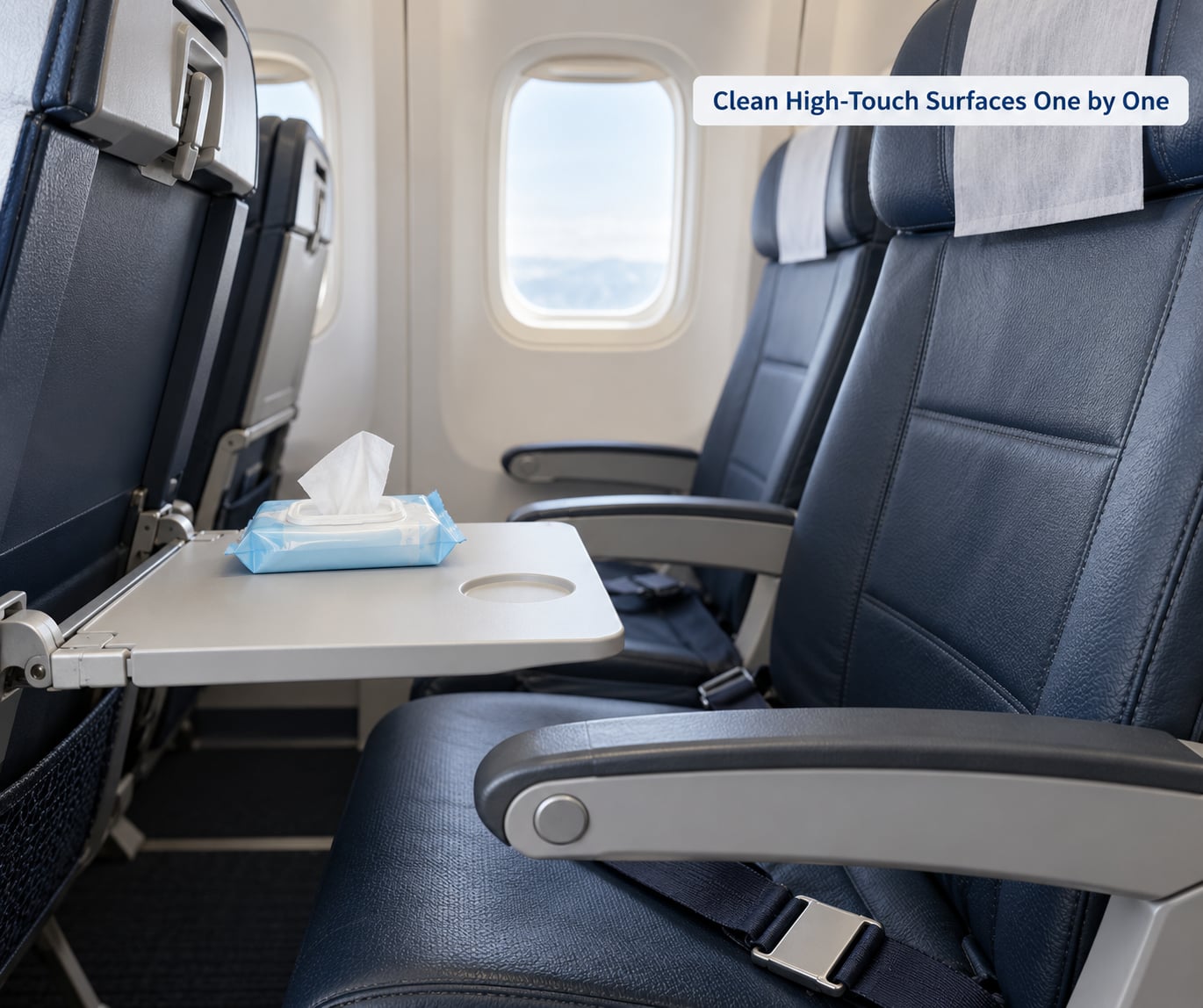
Here is how each surface in your seat zone ranks and what to do about it.
- Headrest cover — wipe. Direct skin and hair contact from the previous passenger. Full wipe, front and sides, and let it dry.
- Seatbelt buckle and webbing — wipe. Held against skin by every passenger on board. Metal part first, then the full length of the webbing.
- Armrests — wipe. Constant contact, usually missed by everyone. Top, edge and rounded end in one pass.
- Tray table and latch — wipe. Food and drinks go straight onto it. Wipe closed, open and close it, then wipe the latch.
- In-flight entertainment screen — wipe gently. Touched by many hands across a long flight. Electronics-safe wipe only, no spraying.
- Touchscreen controller or handset — wipe. Handed between passengers, sometimes mouth-adjacent. Electronics-safe wipe, avoid the gaps.
- Window shade, vent and reading light — wipe. Handled constantly on window rows by many passengers. A dry or lightly damp cloth is enough.
- Seatback pocket — skip. Ranked near the top of cabin germ swab studies. Skip it, or use a hanging organizer instead.
- Lavatory door handle and lock — wipe with a tissue. The highest-traffic touchpoint on the aircraft. Use a tissue or paper towel to open the door.
A few technique notes. Never spray liquid directly onto a screen, an armrest hinge or a seat gap, because it runs into the electronics or the seat mechanism and can cause a fault. Dampen the wipe, not the surface. And work seams, hinges and crevices with the corner of the wipe rather than pressing hard, since that is where residue hides and where liquid pools.
On electronics, the rule is simple and it is not negotiable. If the wipe is not labeled for screens, use a dry or barely damp cloth instead. A droplet down the side of a seat-back screen can cost you the screen for the rest of the flight.
One more surface people forget: the vent above the armrest. You adjust it, then you adjust it again, and every passenger in the row does the same. It is a small target, so a quick pass is enough.
Check the Seat and Finish Hygiene
Before you put anything down, look at the seat properly. Check under the seatbelt for crumbs from the tray table above, look for sticky spots on the armrest, and feel the fabric for dampness. Anything sticky gets a second pass; anything damp gets dried before you set a bag on it.
Then put something between your belongings and the seat. A folder, a bag liner or even the plastic bag your coat arrived in works. It takes five seconds and it means your laptop bag never rests on fabric a stranger used for three hours.
Sanitize your hands again once you are done, and before you eat. Most of the actual risk reduction in this whole routine comes from clean hands, not from a spotless armrest.
When you eat, put a napkin or a wrapped cutlery sleeve down on the tray table as a barrier. It costs nothing and it stops your meal from making direct contact with a surface you have already cleaned but cannot verify.
Common Mistakes
The most common mistakes are spraying cleaner onto cabin surfaces, using fragranced or harsh products, soaking electronics, and cleaning only the tray table. Each one has a simple correction.
- Spraying anything. Aerosolized disinfectant in a cabin triggers coughing and asthma or allergy reactions in nearby passengers, and a 2025 incident on a Delta flight, where a passenger sprayed her whole row with Lysol, spread online for that reason. Wipe, never spray.
- Fragranced cleaners. A scented product gives you a short-lived smell instead of a disinfected surface, and it is one of the fastest ways to get unkind looks from a seatmate. Unscented, always.
- Over-wiping electronics. Saturating a screen or pouring liquid into the gap around a screen is how you turn a hygiene step into a broken seat.
- Cleaning only the tray table. The tray table is one of five ranked hotspots. The seatbelt, armrest and headrest are where you actually put your hands and your head.
- Ignoring contact time. A quick swipe that dries instantly has barely started working. Four wet minutes is the number on most disinfectant wipes.
- Creating a slip hazard. If the armrest is wet enough to drip, someone standing up is going to land on it. Wipe it down and let it dry before anyone moves.
Etiquette is a real concern and worth addressing directly. Commenters on travel forums split sharply between people who see the wipe-down as sensible and people who find it theatrical, and a 2022 story about a passenger being criticized online for cleaning her seat did nothing to help. The version that works: wipe quietly, quickly and while you are still settling in, with a pack of wipes rather than a bottle. Nobody objects to a packet. Several people object to a spray.
If you do need to clean a seat mid-flight, after a lavatory trip or a seat swap, do it in the lavatory with a wipe rather than wiping down where your neighbors can watch.
When you land, wipe the things that touched the cabin rather than leaving them for the next passenger. Your phone, your headphones, your passport, the handle of your bag. If you restocked the communal magazines or bottles mid-flight, put them back on the tray rather than sliding them into a pocket.
And if the flight is short, in daylight, with nobody sick in your row, doing none of this is fine. Being honest about that is what separates useful advice from fear-mongering.
Frequently Asked Questions
How often should I clean your seat area before a flight?
Once, before you sit down, plus a second pass before you eat if you are using the tray table. Wipe the seatbelt, armrests, headrest, tray table, screen and controller in one sweep rather than circling the seat repeatedly. On a long-haul flight, repeat the high-touch surfaces after any lavatory visit or if you move seats. Anything beyond that is past the point of useful.
Is it safe to use an ordinary disinfecting wipe on an airplane seat?
Yes, as long as you wipe rather than spray, keep the wipe damp rather than soaking, and let the surface dry before you set a bag or food on it. Never spray liquid onto upholstery, seat gaps or electronics, because it runs into mechanisms and screens. Avoid seams and gaps where liquid can pool, and keep the wipe away from the seat-back screen unless it is labeled electronics-safe.
What is the best way to clean an airplane tray table?
Wipe it while it is still folded and latched, then open and close it once and wipe the latch, hinge and inner lip separately. Those seams collect crumbs and sticky residue that a single flat pass misses. Finish by laying a napkin or the cutlery wrapper on the surface as a barrier before you eat. Skip sprays entirely, since mist over an open tray table settles onto your food.
Can I spray sanitizer on airplane seats or touchscreens?
No. Spraying in a cabin releases aerosolized chemicals into shared air and can cause coughing, asthma and allergy reactions for people nearby. The same spray can soak a screen and damage it. Use a wipe instead, dampened rather than dripping, and let it dry. Aerosol cleaner cans are legal in carry-on when capped and under 3.4 ounces, but you do not need one, and personal spray bottles fall under the standard liquid limits.
How should I clean a seat if I have a sensitive skin reaction?
Skip perfumed and fragranced products entirely, since the scent is what usually triggers a reaction, and use an unscented alcohol-based wipe on hard surfaces only. If you react to latex or to adhesives, avoid the seatback pocket and stick to your own belongings. Wash or sanitize your hands right after, and stop wiping if you develop redness or itching. A pharmacist can suggest a fragrance-free option that suits your skin.
Do I need to clean the seat area if the airline already sanitizes it?
Treat airline cleaning as the first pass, not a guarantee. Crews usually have around ten to thirty minutes between flights, and deep cleans happen on schedules measured in hundreds of flight hours, so your seat may not have been disinfected after the previous passenger sat down. A 60-second wipe-down is a cheap second layer. On a short daytime flight with no reported illness, skipping it is a reasonable call.
Conclusion
The first thing to do is simple: sanitize your hands at the gate, then wipe the seatbelt, armrests, headrest, tray table and screen with a wipe labeled as a disinfectant before you sit down. That is how to clean your seat area before a flight in about a minute, without bringing chemicals into a shared cabin. Let the surfaces dry, put your bag on a folder instead of bare fabric, and skip the whole thing on a short easy hop without guilt.