If you want to know how to pick a seat for motion sickness, aim for a window seat over the wings on a narrowbody or an over-wing row on a widebody, then keep your eyes on the horizon for the whole flight. That spot sits closest to the aircraft’s centre of gravity, so you feel less movement than anywhere else in the cabin, and the view gives your eyes a reference that matches what your inner ear is telling it. Add a light meal, steady water and a cool air vent, and most people who get queasy in cars never reach that stage in the air.
The seat matters, but it is only about half the job. A brilliant window seat will not save you if you spend nine hours reading a book or scrolling on a phone with the blind down, because a moving inner ear plus a still visual field is the exact combination that triggers nausea. This guide walks through picking the seat, checking the layout, cutting the cabin triggers and knowing when to ask for help.
Most of this takes about five minutes at booking, plus a small plan for the day of the flight. No equipment, no special seat and no gadgets.
Table of Contents
- What You Need
- Step-by-Step: How to Pick a Seat for Motion Sickness
- Step 1: Choose a Seat Away From the Most Disturbing Areas
- Step 2: Pick the Window or Aisle Position That Helps You
- Step 3: Check the Aircraft Layout Before Booking
- Step 4: Reduce Triggers Before and During the Flight
- Step 5: Know When to Ask for Assistance
- Common Mistakes to Avoid
- Frequently Asked Questions
- Is a window seat better for motion sickness than an aisle seat?
- Where should I sit on a plane to reduce motion sickness?
- Are exit-row seats a good choice for motion-sensitive travelers?
- Does sitting over the wings make turbulence feel worse?
- What should I do if I feel nauseated during a flight?
- When should I see a doctor about motion sickness?
- Conclusion
What You Need
Nothing physical. What you do need is a bit of information before you click on a seat map.
- Your flight length. A 45-minute hop tolerates almost any seat. A 11-hour redeye will punish a bad one.
- The aircraft type. The same seat number means something completely different on a Boeing 737 and a Boeing 787.
- Your usual symptoms. Do you get mildly green during turbulence, or do you reach for a bag within ten minutes?
- When seat selection opens. Most carriers release the seat map at check-in, commonly 24 hours before departure, and the good over-wing windows go quickly.
- Whether you need to move. If you might need to stand up, walk or reach a child, an aisle seat has to enter the decision.
Step-by-Step: How to Pick a Seat for Motion Sickness
Step 1: Choose a Seat Away From the Most Disturbing Areas
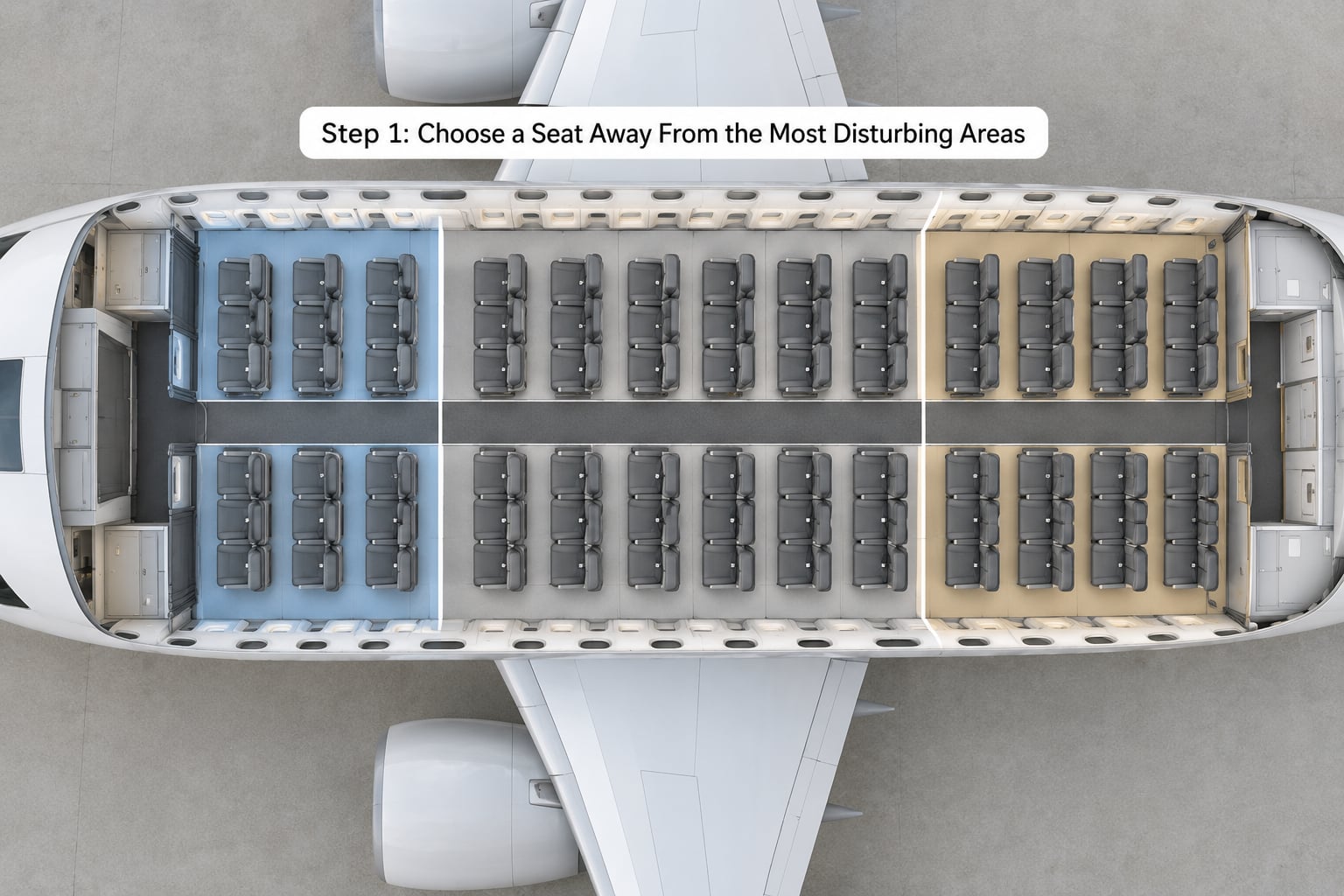
The calmest place on any aircraft is a mid-cabin row close to the wings, because that is where the airframe is stiffest and closest to the centre of gravity.
What makes a seat worse? Position, not class. Engines and their associated vibration sit forward, so forward rows get more noise and low-frequency rumble. Lavatories and galleys create queues, doors slamming and smells, so avoid the row directly in front of a galley or lavatory. The last five to eight rows sit over the tail and flex the most, which is why so many people describe the back of the plane as bumpier.
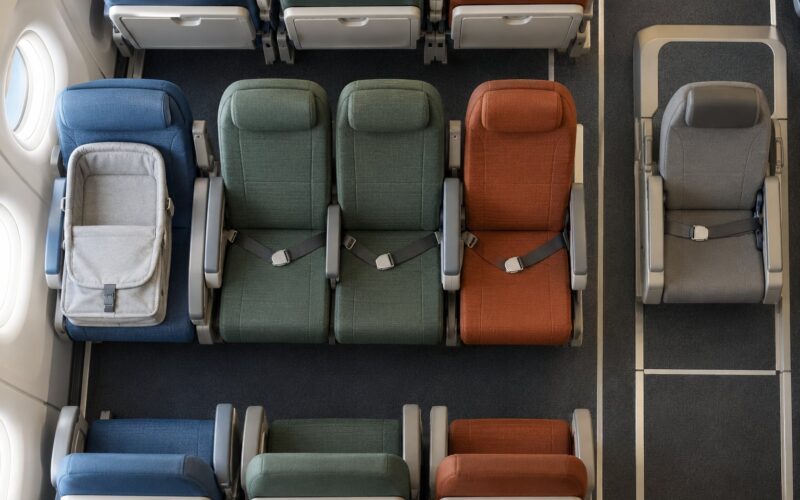
Bulkhead rows have their own trade-off. Extra legroom is nice, but no window and no view of the curve of the horizon, and babies sometimes bassinet right in front of you.
Step 2: Pick the Window or Aisle Position That Helps You
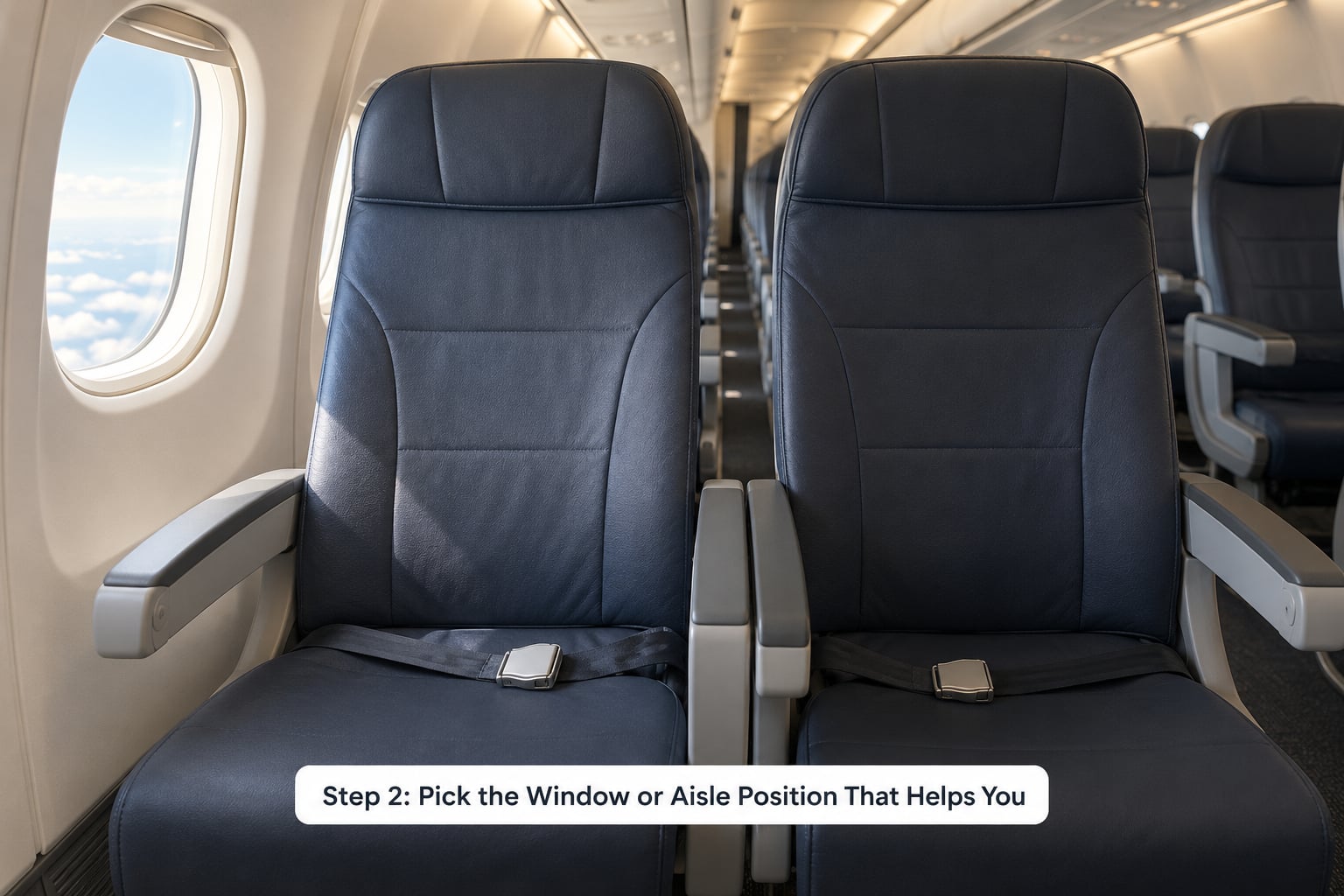
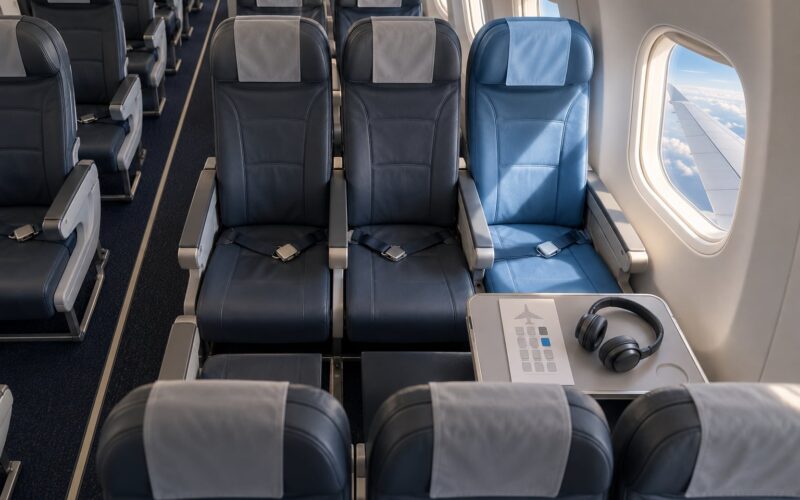
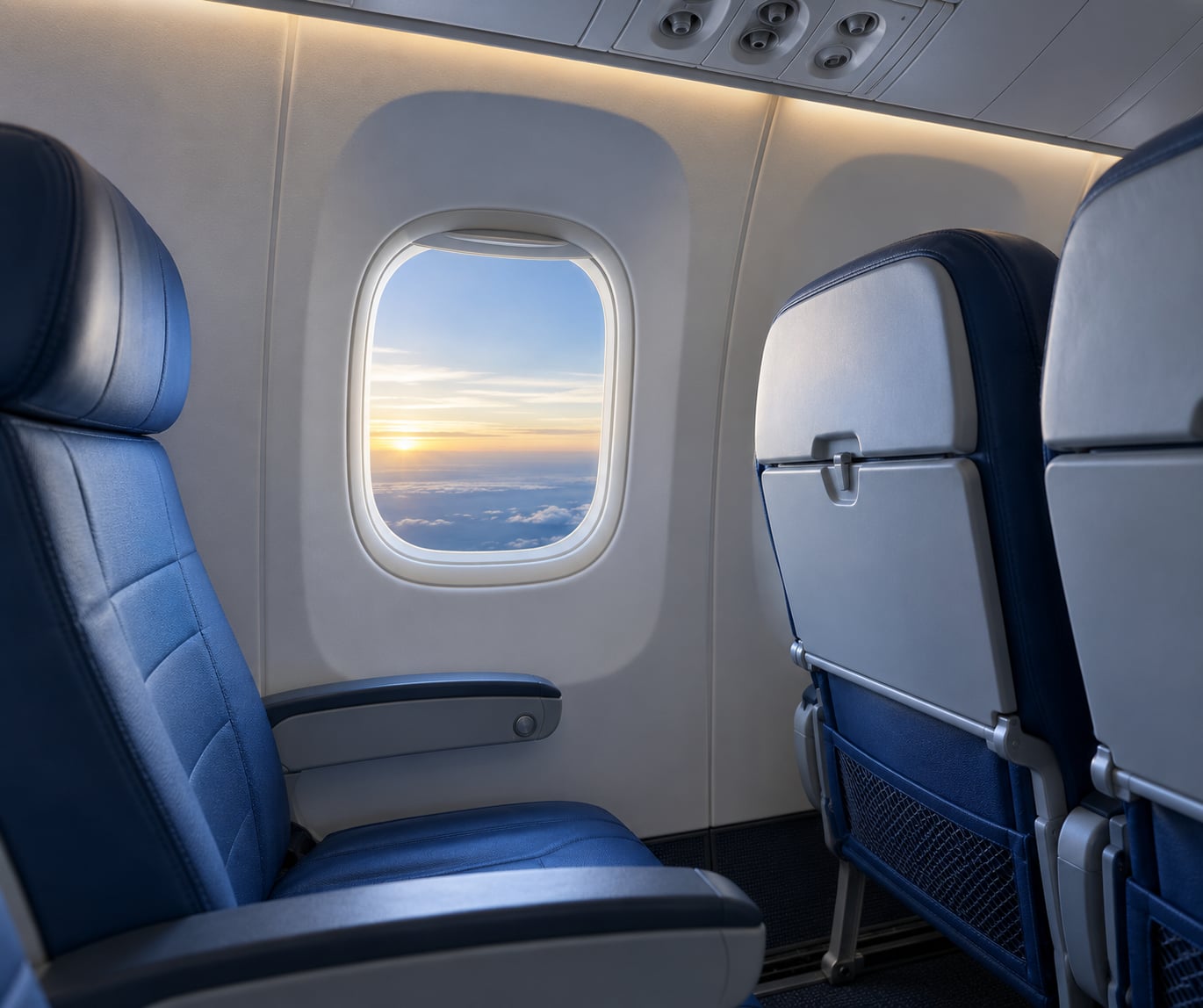
Take the window if nausea is your main problem. A window gives you a moving reference point, and the horizon stays visible through a turn.
Take the aisle if you may need to move or get out fast. The trade-off is real: an aisle seat removes your view of the horizon and puts you in the walking lane, so every time someone brushes past, your body registers movement it cannot see. That is the aisle-seat problem for motion-sensitive flyers, and it is worth weighing before you book.
A sensible middle ground is the seat just behind the wing on the aisle side of a two-seat row, or better still, a three-seat row where the middle seat gives you a view on one side and a quick exit on the other.
Step 3: Check the Aircraft Layout Before Booking
Every seat map shows rows. Almost none show where the wings actually are.
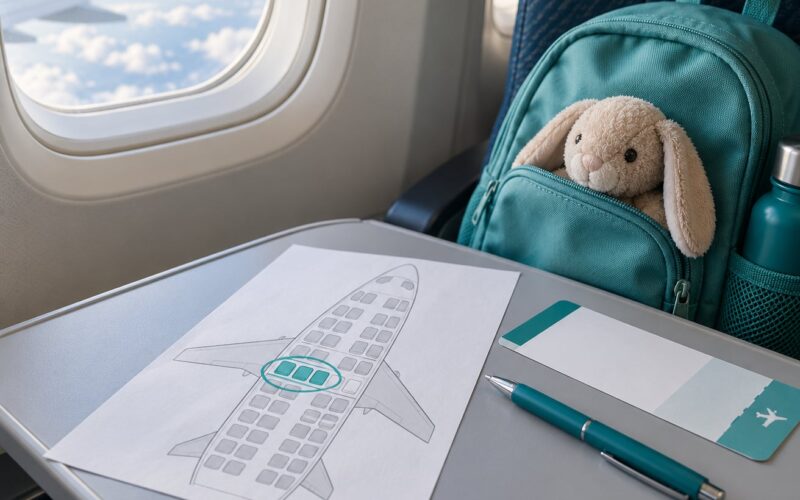
On a Boeing 737 or an Airbus A320, the wing sits roughly between rows 12 and 20 depending on the variant, so rows 14 through 18 are your target. On a Boeing 787 or an Airbus A350 the cabin is longer and the wing band moves aft, usually around rows 20 through 30. Small regional jets put the wing much further forward, sometimes around rows 6 to 10.
Two habits make this quick. Check the aircraft code on your booking confirmation rather than assuming your route uses the same model every day. And skim the seat map for the lavatory and galley icons, because an over-wing window next to a lavatory queue gives you the movement of the aisle without the benefit of a quiet cabin.
Step 4: Reduce Triggers Before and During the Flight
Seat choice sets the baseline. Habits decide whether you cross the line into nausea.
- Eat light. Skip the heavy meal and the alcohol before you board. An empty stomach or a few plain crackers usually settles better than a full one.
- Keep water coming. Dehydration makes nausea heavier, and cold water is easier to keep down than coffee or alcohol.
- Aim your eyes forward. Look at the horizon, a distant object on the far wall or the back of the seat ahead. Close your eyes and you remove the visual signal that keeps the inner ear in agreement.
- Use the air vent. Point the vent at your face. Cool air on the forehead and nose helps more people than almost anything else on board.
- Skip heavy reading. If you must be glued to a screen, look out every fifteen minutes for a few seconds.
- Move when you can. Stand up in the aisle, walk the cabin, or stretch your legs and ankles in your seat during a smooth patch.
On medication: dimenhydrinate, meclizine and the scopolamine patch are the most commonly discussed options, and over-the-counter labels generally call for taking them before travel. Talk to a doctor or pharmacist first, especially if you take other medicines, drive soon after landing, are pregnant or are caring for a small child, since several of these options cause drowsiness.
Step 5: Know When to Ask for Assistance
Tell a flight attendant early if you start to feel ill. They can move you, adjust the airflow, get a sick bag and sometimes re-seat you when the load allows. Asking at the first queasy wave is far better than waiting until you are too far gone to walk.
Go beyond the cabin if you get repeated vomiting, symptoms that last days after the flight, severe headache, chest pain, blurred vision or double vision, or any trouble hearing or balancing. Those are not ordinary travel discomfort. Talk to a doctor before the next trip, and mention it if you have a known inner-ear or vestibular condition such as Ménière’s disease. Children aged 2 to 12 and pregnant travellers tend to be more susceptible, so it is worth a routine check-in with a paediatrician or your own doctor before a long journey.
Common Mistakes to Avoid
- Choosing by price alone. The cheapest seat in the cabin is often a back-row middle or a bulkhead aisle. Look at the seat map before you look at the fare.
- Sitting beside or behind a lavatory. You get the queue, the door and the smell for the whole flight.
- Booking an exit row without reading the rules. Crew may reassign you at boarding for height, language, weight or mobility reasons, and you could lose the seat at the gate.
- Counting on the seat beside you being empty. Three hours into a full cabin, that hope is gone. Never build your plan around an empty neighbour.
- Assuming an aisle seat means less motion. It means more people moving past your eyes. Take it only when you need the exit.
- Reading through the whole flight. The most common self-inflicted trigger is a still visual field with a moving inner ear.
- Forgetting the return journey. Seat selection opens again for the trip back, often at check-in. Set a reminder.
Frequently Asked Questions
Is a window seat better for motion sickness than an aisle seat?
Yes, usually. A window seat gives your eyes a moving reference point and keeps the horizon visible during turns, which stops the sensory mismatch that drives nausea. An aisle seat is easier to leave quickly but puts you in the walking lane with no view. Pick the window if nausea is your problem, the aisle if you may need to stand, stretch or reach a child.
Where should I sit on a plane to reduce motion sickness?
Choose a mid-cabin window seat close to the wings, since that area is nearest the centre of gravity and the stiffest part of the airframe. On a 737 or A320 that is usually rows 14 to 18; on a 787 or A350, roughly rows 20 to 30. Avoid the last five to eight rows over the tail, and avoid the row in front of a lavatory or galley.
Are exit-row seats a good choice for motion-sensitive travelers?
They can be, because exit rows sit over a wing and near mid-cabin, which is a good position. But there are trade-offs. Extra legroom means more room to move, and there is no underseat storage. Crew can also reassign you at the gate if you do not meet the airline’s age, language, weight or mobility requirements, so check those rules before choosing.
Does sitting over the wings make turbulence feel worse?
No, the opposite is generally true. The wing box is the stiffest structural area of the airframe, and the aircraft’s centre of gravity sits near it, so passengers over the wings report the smoothest ride. The rows that feel worst are the rearmost ones over the tail, where the airframe flexes most in bumps and gusts.
What should I do if I feel nauseated during a flight?
Aim your eyes at the horizon, point the air vent at your face, loosen anything tight around your waist and keep sipping cool water. Stop reading and stop looking at your phone. Tell a flight attendant early, because they can help with a sick bag and may be able to move you to a calmer row. Avoid alcohol and heavy food until you land.
When should I see a doctor about motion sickness?
See a doctor if you vomit repeatedly, if symptoms last for days after the trip, or if you get severe headache, chest pain, blurred or double vision, or hearing and balance problems. Talk to a doctor or pharmacist before flying if you take other medicines, might drive soon after landing, are pregnant, or have a known inner-ear condition. Children aged 2 to 12 are more susceptible and worth discussing beforehand.
Conclusion
Start with the seat map. Find the wing band for your specific aircraft, aim for a window there rather than at the front or the back of the cabin, and steer clear of the row in front of the lavatory or galley. Then handle the rest the same way every time: light food, steady water, eyes on the horizon and the vent on your face.
Updated for 2026. This is general information, not medical advice. If motion sickness is stopping you from travelling, speak with a doctor or pharmacist about the options before your next flight.