Airline seat selection fees work like a second, optional charge layered on top of your fare. You pay to pick a specific seat yourself; if you decline, the airline still puts you in a seat at no extra cost. The amount depends on where that seat sits, which fare you bought and how full the flight is. Understanding the pricing model is the quickest way to stop paying for something you did not need.
I have paid this fee more times than I would like to admit, and almost every time it was for a seat I could have had for nothing by waiting. Here is how the system actually works, where the money goes, and what to do about it in 2026.
Table of Contents
- How Airline Seat Selection Fees Work
- What Is a Seat Selection Fee?
- Why Do Some Seats Cost More?
- Why the seat map shows seats as unavailable
- When Can You Choose or Pay for a Seat?
- How Airline Seat Selection Fees Work by Booking Channel
- How airline seat selection fees work in the app and on the airline site
- What third-party sites show
- Can You Avoid Paying for a Seat?
- What Happens If You Do Not Select a Seat?
- Airline Rules Can Change Before Your Flight
- Frequently Asked Questions
- Can I avoid an airline seat selection fee?
- Why does my seat cost more when I book through the airline website?
- Is a seat assignment included with a basic economy ticket?
- Are airline seat selection fees refundable?
- Does choosing a paid seat guarantee that seat on the flight?
- Can airlines change my paid seat assignment?
- What to Do First
How Airline Seat Selection Fees Work
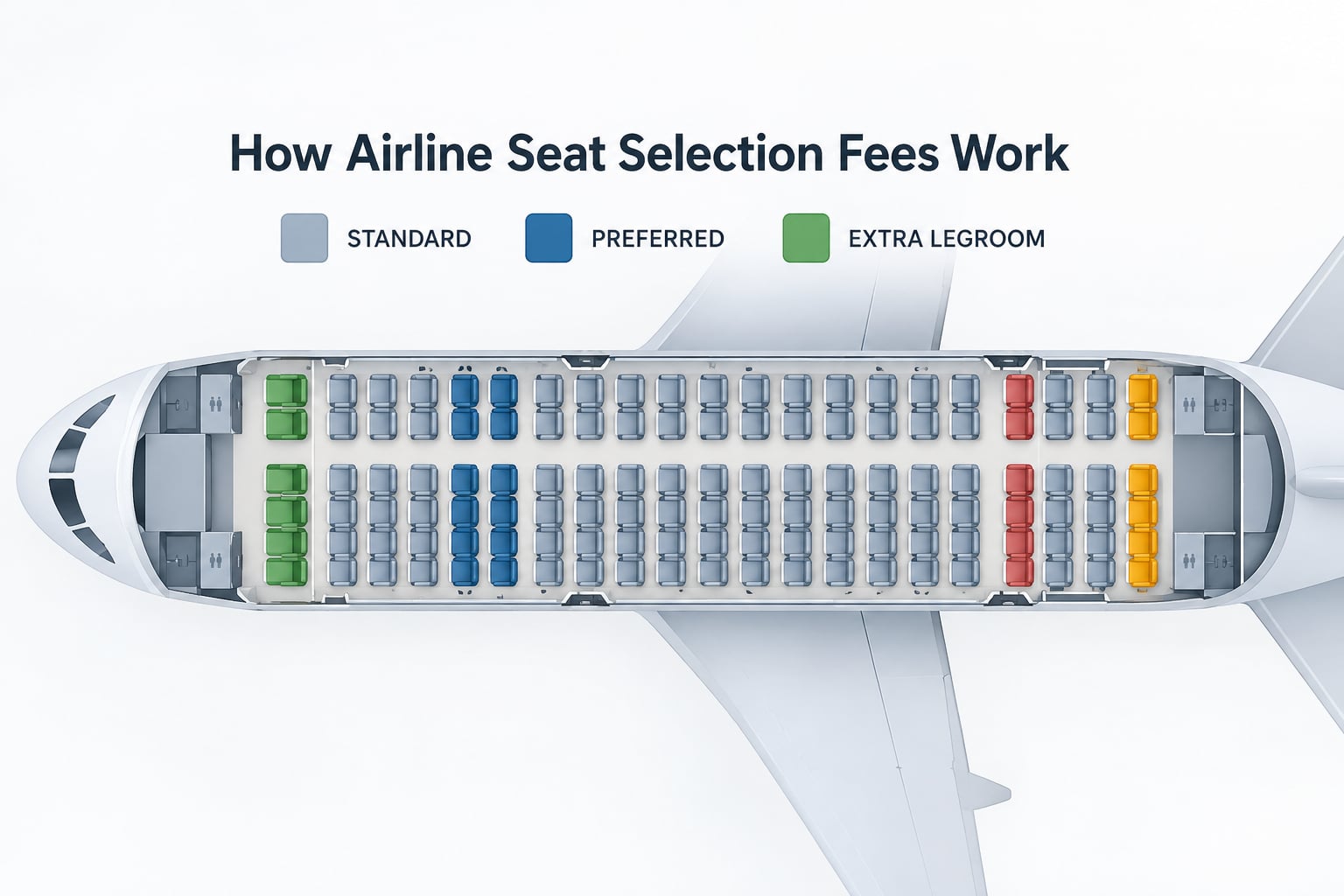
A seat selection fee is what an airline charges when you choose your own seat before check-in. It exists because seat inventory is priced separately from the fare. The base fare buys you transportation from A to B. The seat map is its own little catalogue with its own prices, and it moves as the flight fills up.
Three things shift that price. First, location: a middle seat near the back of the cabin is worth less to most passengers than an aisle seat near the front. Second, the fare you bought, since a basic or restricted fare usually gives you no choice at all. Third, demand, because the airline raises prices on popular seats as the departure date approaches and often cuts them as check-in nears and the airline expects to fill every row.
| Seat type | What it is | Why it costs more |
|---|---|---|
| Standard | A regular economy seat with normal legroom and a standard recline | Usually included with most full-fare tickets; costs extra mainly on restricted fares |
| Preferred | A standard seat in a better spot, often toward the front or with more pitch | Sold to capture the value passengers place on position and space |
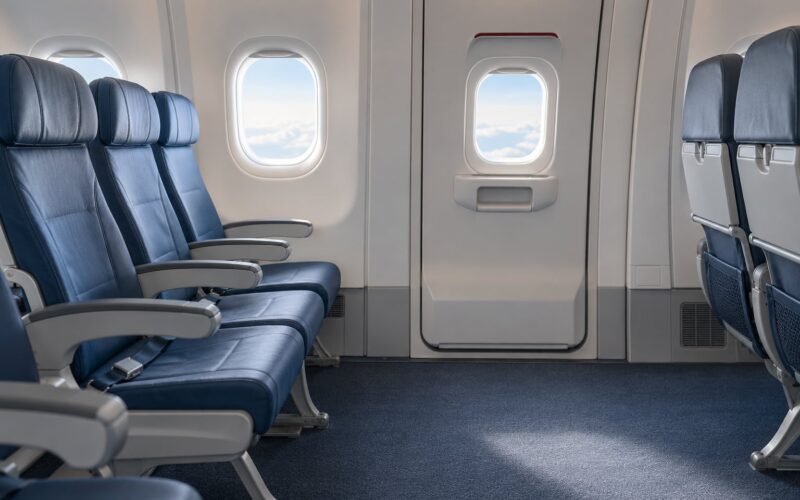
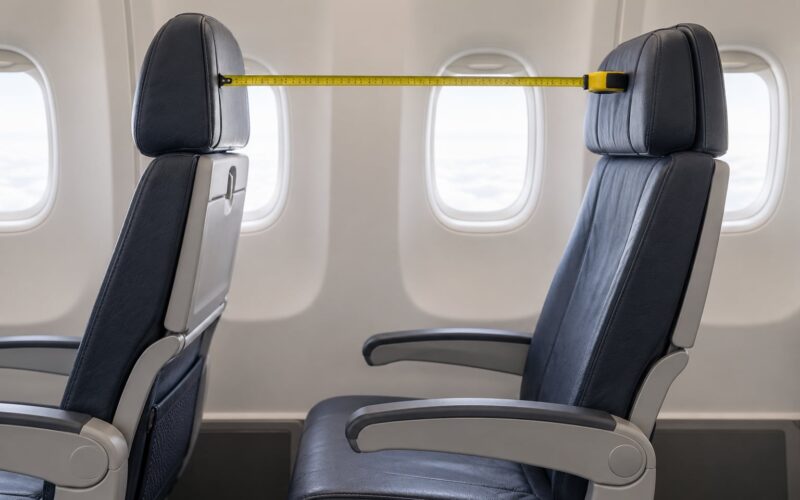
| Extra legroom | A row with a removed seat-back screen or tray table, or more space in front | Fewer of these rows exist, so demand outstrips supply |
| Bulkhead | The first row behind a cabin divider wall, sometimes fitted with bassinets | More knee room, but no under-seat storage and a divider in front of you |
| Exit row | A wider row with an extra duty and restrictions on who can occupy it | Widest seats on board and the highest demand of any economy row |
| Preferred seats kept back | Rows behind bulkheads or the wing, plus much of the rear cabin, withheld from the open map | Held as stand-alone products or for premium cabin passengers and later bookers |
What Is a Seat Selection Fee?
A seat selection fee is a charge for choosing a specific seat yourself before you arrive at the airport. It is separate from the fare, separate from checked baggage, and separate from any upgrade to a better cabin. If you do not pay it, you are still guaranteed a seat on the aircraft.
That distinction trips a lot of people up, so it is worth being precise. A checked bag fee pays for transporting luggage in the hold. A carry-on allowance is set by the fare, not by the seat. A basic economy restriction means your fare does not include advance selection at all. An upgrade fee buys you a different cabin with its own seats. None of those are the same thing as paying to pick 14A instead of 31C.
What makes a seat fee feel optional is that you can always decline it. What makes it feel mandatory is that the fare rules on some tickets remove the choice entirely until check-in, so you pay or you take whatever is left.
Why Do Some Seats Cost More?
An airline prices seats roughly the way it prices anything else: by what a passenger is willing to pay for it. Rows with more space sell for more because fewer people say no to them. Exit rows and bulkhead rows are limited in number, so the airline can charge whatever the market tolerates.
Cabin makes an even bigger difference. Business and first class seat maps are priced as a separate, far higher tier, and on international carriers the best positions there can cost many times what an economy seat does. Long-haul flights also charge more per seat than short ones, because demand for a good seat lasts longer on a longer trip.
Why the seat map shows seats as unavailable
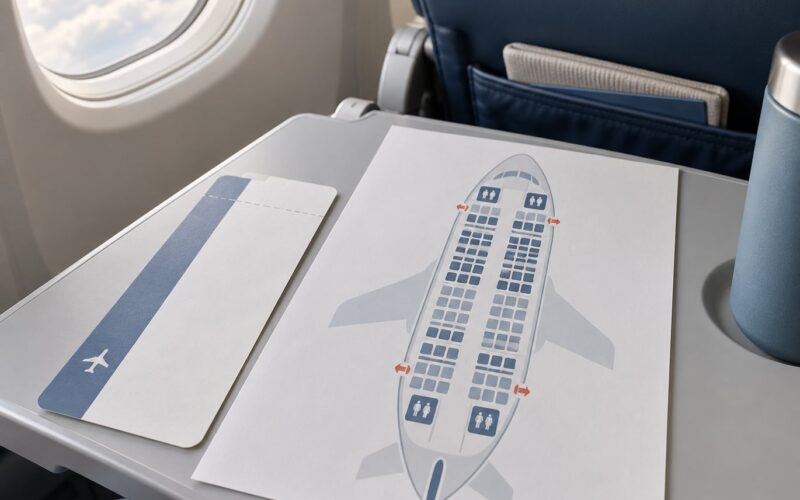
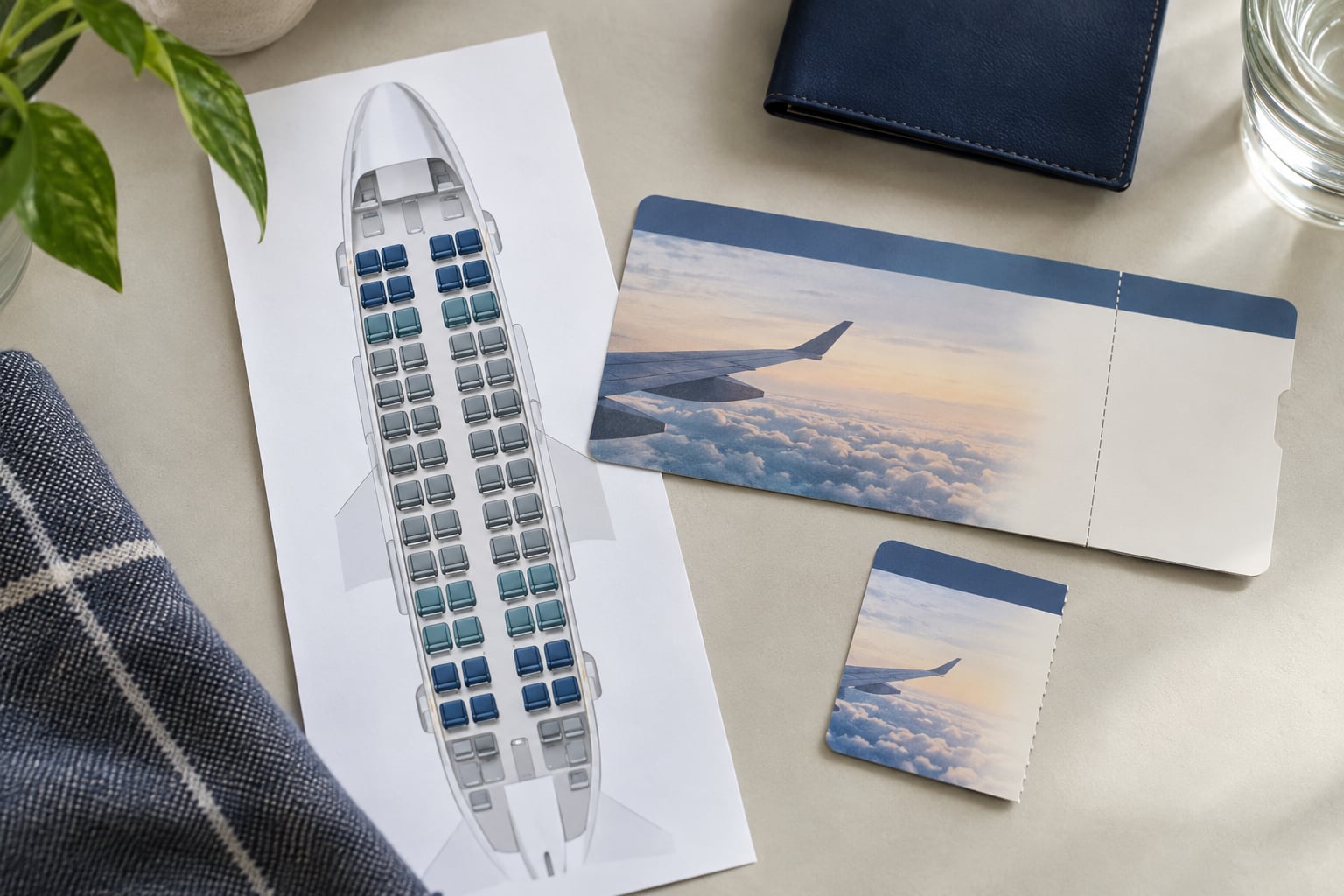
People often complain that a half-empty flight shows a seat map covered in blocked seats. The answer is that a map is a sales display, not a headcount. Airlines routinely withhold rows behind bulkheads, seats next to galleys and lavatories, and the rear cabin, either as stand-alone products released later or as inventory reserved for premium cabin and special-needs travellers. A seat marked unavailable can be genuinely occupied, held back, or simply not for sale to your fare.
The same logic explains rows you would not want anyway. Seats next to a lavatory get discounted. Seats near a galley come with noise on both sides. Those are sold cheaply on purpose.
When Can You Choose or Pay for a Seat?
The fee can surface at four points during the booking journey, and the price you see can differ at each one.
- During purchase. The seat map appears after you pick your itinerary, sometimes as a separate step after payment. This is where prices are usually highest for the best rows.
- In manage-my-booking. Adding a seat to an existing reservation pulls up the same live map, often with a slightly different set of available rows.
- At online check-in. Most airlines open check-in about 24 hours before departure. For many fares this is the moment standard seats are released free of charge, so the map looks completely different from the one you saw at booking.
- At the airport. The kiosk, counter and gate agent can all assign a seat, but by then the free inventory has already been claimed by earlier check-ins.
A free assignment is not locked in until it is confirmed. Seat availability changes constantly, and a seat held for you at check-in can be reassigned by the airline before boarding.
How Airline Seat Selection Fees Work by Booking Channel
The same seat can cost different amounts depending on where you book, and some channels do not show seat prices at all.
How airline seat selection fees work in the app and on the airline site
The airline’s own website and mobile app show the widest selection, including preferred, extra-legroom and exit-row options, plus the exact fare rules for your ticket. This is where the full pricing model is visible. The app sometimes shows a different map layout or a different set of available rows than the desktop site, because the two systems refresh at different times.
Manage-my-booking pages use the same engine. If you booked through a third-party site, the reservation-management flow on the airline’s own site is usually where you will find seat selection without the reseller’s markup.
What third-party sites show
Online travel agencies and many airline-affiliated booking tools either omit seat selection entirely, hide the fee until the final step, or add their own service charge on top of the airline’s price. Booking through a third party does not make the seat cheaper. It usually makes it harder to see what you are paying.
Travel agents work the same way. They can add value on complex itineraries, but they rarely have access to seat fees that are cheaper than what the airline shows you directly.
Can You Avoid Paying for a Seat?
Most of the time, yes. These are the approaches that work most reliably, roughly in order of how often they succeed.
- Pick your seat at online check-in. About 24 hours before departure, most airlines release standard seats free. The catch is that popular rows go quickly, so set a reminder rather than checking whenever you remember.
- Check whether your fare already includes selection. Full-fare economy tickets normally bundle advance selection. If a basic fare is cheaper by more than the seat fee would be, the fare may be the better deal even after you add the seat.
- Use your status or card. Many programs waive seat fees for elite members or for holders of a co-branded credit card, and some airlines open selection to them earlier than the general check-in window.
- Compare the seat map before you pay, not after. The map at checkout tells you what the fee buys. A middle seat in the rear cabin is rarely worth paying for.
- Travel at off-peak times. On a full flight, good rows sell early and cheap ones sell out first. On a quiet flight, the check-in window has plenty left.
- Book through the airline and manage it there. This avoids reseller markups on the seat itself and keeps your options visible if plans change.
None of this is universal. Some airlines, some fares and some itineraries genuinely offer no free choice. Check the fare rules on your specific ticket rather than assuming.
What Happens If You Do Not Select a Seat?
If you skip the fee, you still board with a seat. What varies is how you end up in it.
- You check in online on time. Standard seats open for selection and you choose one, free, about 24 hours before departure.
- You leave it to the airline. A remaining seat is assigned to you automatically, usually at check-in or at the gate. It is free, and it is often a middle seat.
- Your fare blocks the choice. On a basic economy ticket, some airlines refuse advance standard selection and only allow it once check-in opens, or they offer you a paid seat or a full-fare upgrade instead.
Declining the fee never removes you from the aircraft. You are not denied boarding for not paying, and an airline cannot sell your seat out from under you and bump you.
Airline Rules Can Change Before Your Flight
A seat you selected weeks ago is a selection on a particular flight on a particular aircraft, and airlines keep the right to move passengers. Equipment changes are routine, and a different aircraft means a different seat map, sometimes with fewer of the rows you paid for.
Schedule changes and re-accommodations after a delay work the same way. If a flight is cancelled and you are moved onto another, your paid seat selection does not automatically travel with you. Airlines normally re-seat you into an equivalent seat in the new cabin, and the fare difference moves with you rather than staying with the seat.
Two habits reduce the sting. Confirm the seat selection on your boarding pass rather than assuming it held, and check with the operating airline directly if the itinerary was sold by someone else. The rules follow the airline flying the plane, not the website you bought from.
Frequently Asked Questions
Can I avoid an airline seat selection fee?
Often, yes. Most airlines release standard seats free of charge when online check-in opens, usually about 24 hours before departure, and many waive selection fees entirely for elite status or certain credit cards. A fare that includes advance selection also removes the charge. No method works on every airline and every itinerary, so check the fare rules on your own ticket before you pay.
Why does my seat cost more when I book through the airline website?
The airline site shows its own live seat inventory and pricing, including preferred, extra-legroom and exit-row options that other sellers never display. That wider choice is why the total looks higher. Third-party sites may hide seat choice or add their own service fee, but booking direct usually means fewer markups and an easier conversation if something goes wrong with the seat.
Is a seat assignment included with a basic economy ticket?
No. A basic economy fare is sold without advance seat selection, so the seat map will ask for payment before you can choose. You are still guaranteed a seat on the aircraft. It gets assigned free of charge when you check in online, unless you upgrade your fare or pay to pick a seat earlier in the booking process.
Are airline seat selection fees refundable?
It depends on the fare rules and what happened to the flight. If you cancel under a flexible fare, some carriers refund seat fees as part of the ticket total, while restrictive fares usually keep the charge. If the airline cancels or re-times the flight, or moves you out of the seat you paid for, ask for the fee back at the gate or through the service centre.
Does choosing a paid seat guarantee that seat on the flight?
Not absolutely. A paid seat is a selection recorded on your reservation, not an unbreakable promise. Equipment changes, aircraft swaps and re-accommodations after an irregular operation can move you, and the airline usually re-seats you into an equivalent seat rather than refunding the difference. Paying protects your seat on the flight you booked, not on every future one.
Can airlines change my paid seat assignment?
Yes. Airlines keep the right to reassign passengers for operational or safety reasons, including a change of aircraft, a re-accommodation after a delay, or moving premium cabin passengers forward. In most cases you are moved to a comparable seat at no extra cost. Ask at check-in, because a specific, polite request at the counter travels further than a phone call.
What to Do First
Before you book, open the fare rules and look at the seat map on the airline’s own site, then compare the total cost of the cheaper fare plus a seat against the full fare with selection included. Set a reminder for online check-in 24 hours before departure if the fare does not include a seat. Pay for a preferred seat only when the location or the extra space genuinely changes your trip, such as travelling with a child, a long flight, or a body that will not thank you for four hours in a middle seat.