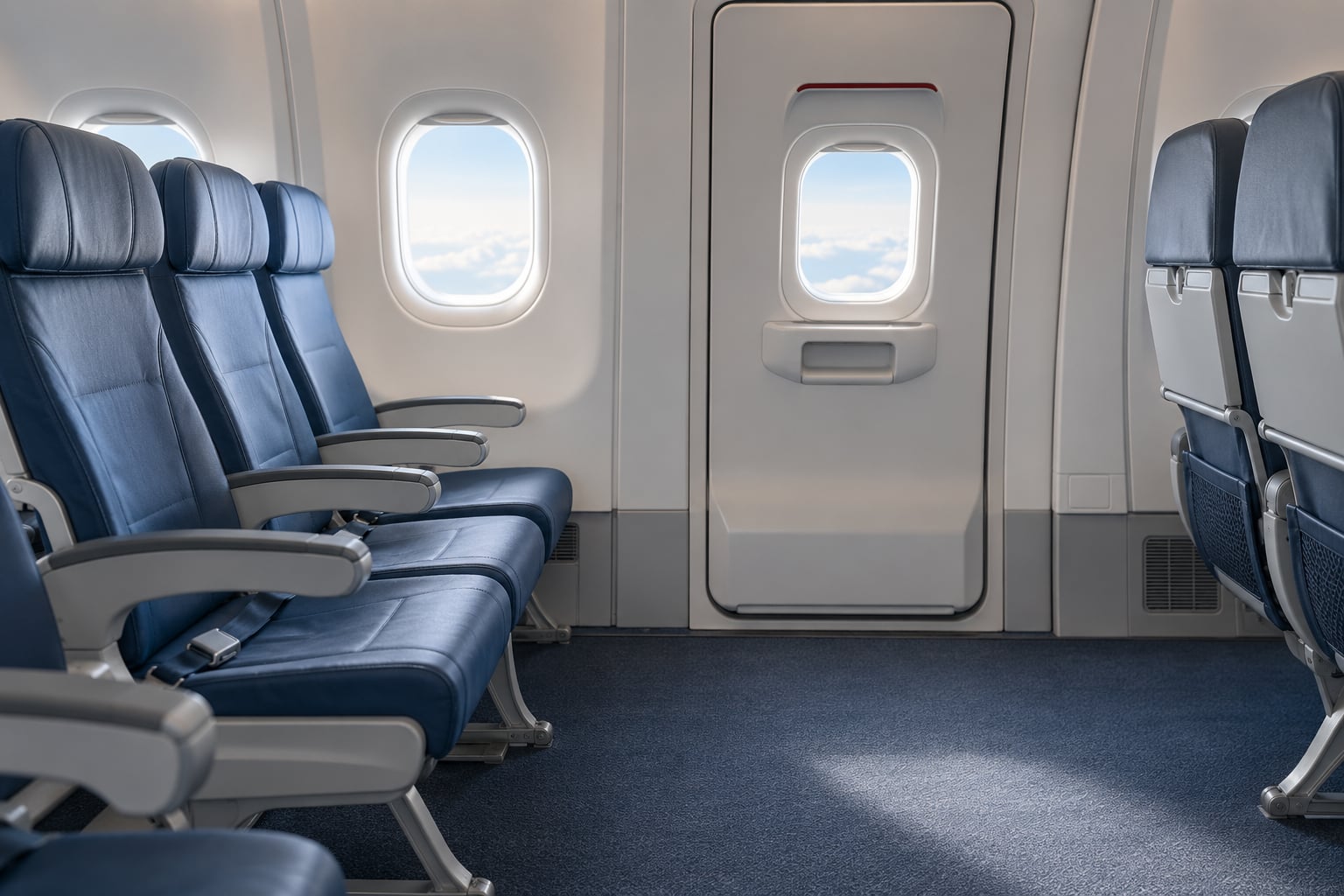
Exit row seats have more legroom because the floor area in front of them has to stay clear. That space is part of the escape path and the working room a passenger needs to reach and open the emergency exit door, so the cabin designer skips the seat in front and gives you the pitch instead.
It is a good trade on a red-eye, and a poor one on a daytime hop where you want to lean back and nap. Here is what the extra room actually is, how much of it you can expect, and what the airline takes away in return.
Table of Contents
- Why Exit Row Seats Have More Legroom
- Why exit row seats have more legroom: the design reason
- How Much Extra Legroom Can You Expect?
- What Gives Exit Row Seats Their Advantages?
- What Are the Tradeoffs?
- Who Can Sit in an Exit Row?
- How to Choose Whether an Exit Row Is Right for You
- Frequently Asked Questions
- Are all exit row seats extra legroom?
- Can you recline in an exit row?
- Why do people avoid exit row seats?
- What are the FAA rules for exit rows?
- Can senior citizens sit in the exit row?
- Do exit row seats have to be full?
- Conclusion
Why Exit Row Seats Have More Legroom
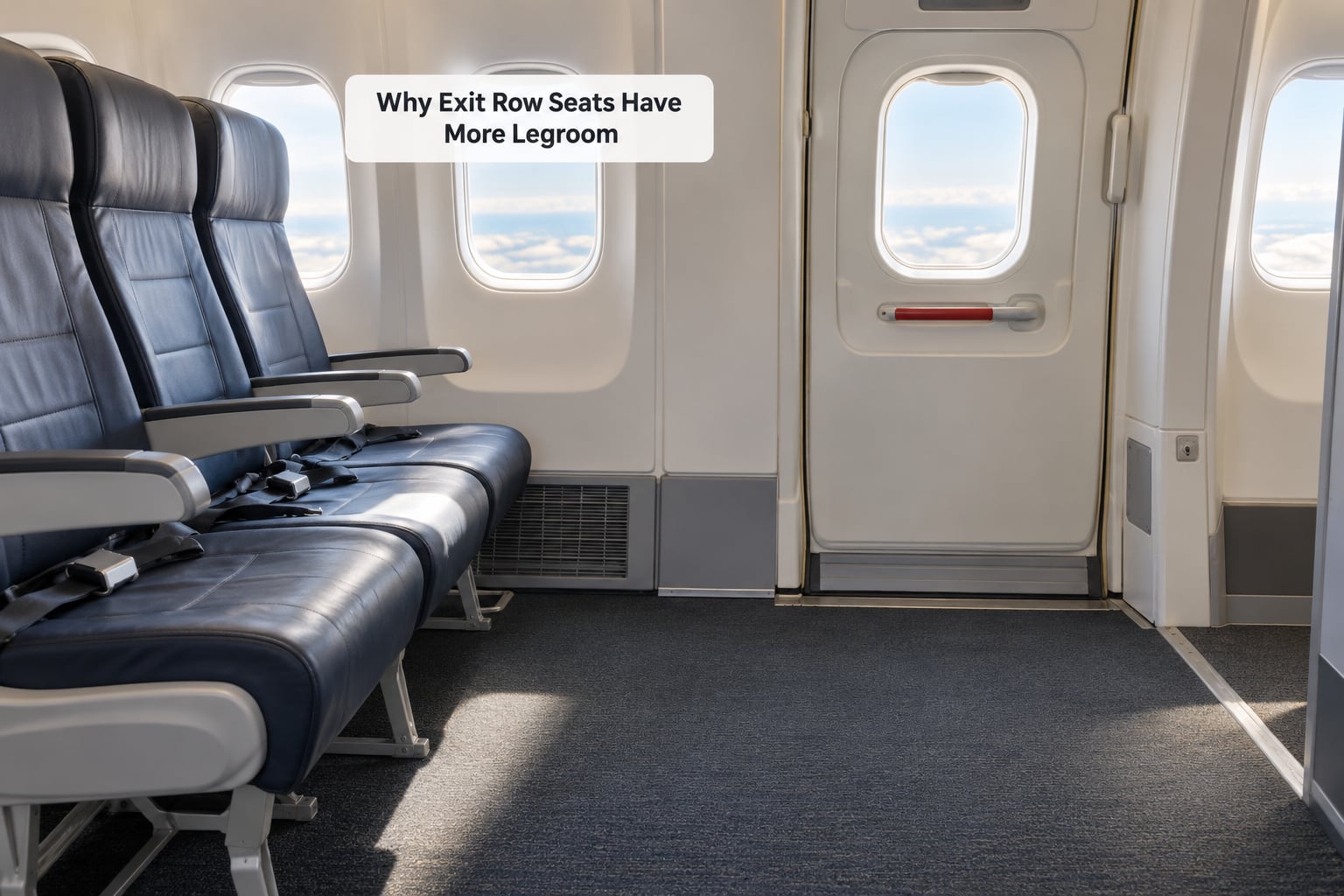
The gap is not a comfort feature that got added later. It is a requirement created by the exit door itself, and everything else in that row is designed around it.
Why exit row seats have more legroom: the design reason
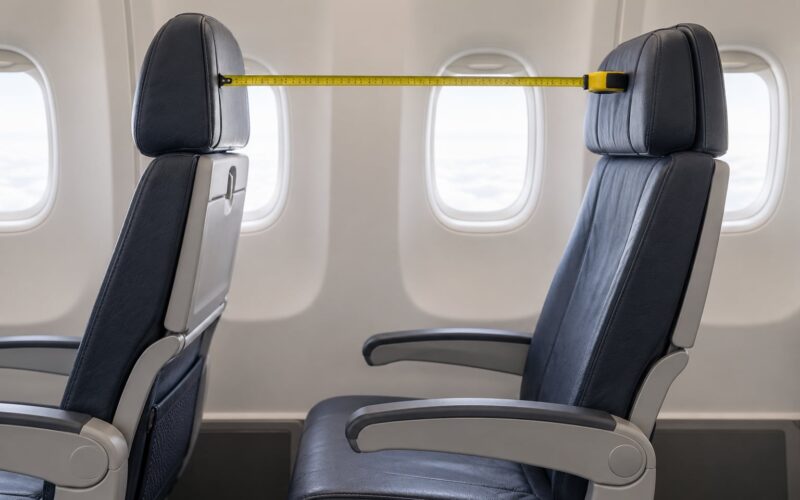
There is no seat row in front of you, so the entire pitch of that missing row is available to your legs. On a narrowbody, a standard row is roughly 30 to 32 inches of pitch. Add the missing row and you can land somewhere around 34 to 40 inches depending on the aircraft.
The escape path is the second reason, and it is the one most people never hear. The area in front of the exit row has to remain usable as a route out of the cabin, so nothing bulky is placed there and nobody’s seatback can block it. A cabin designed around a clear escape path leaves more usable floor space than a standard row, where a seatback, a seat pocket, and a tray table all intrude on the space between your knees and the wall in front.
Third, door operation needs clearance. Opening a hatch or a door and getting a passenger moving through it takes room. That work space is set aside in the floor plan before a single seat is drawn.
Fourth, the airline chooses how to spend the recovered space. Most of them put a chunk of it into pitch for the occupant, which is the legroom you notice. On some aircraft the extra room is divided more evenly, and you get a modest gain instead of a dramatic one.
How Much Extra Legroom Can You Expect?
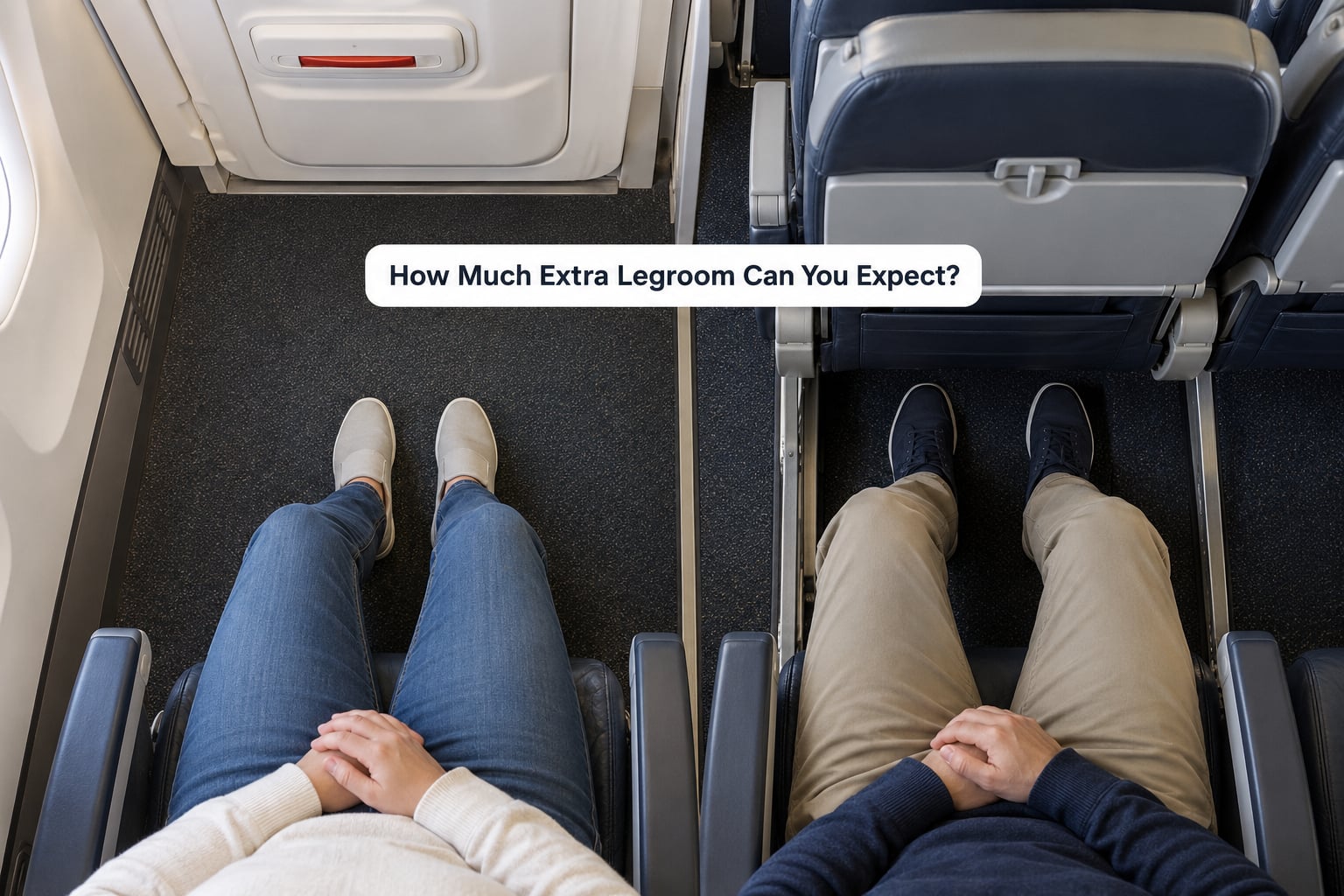
Numbers vary by aircraft and by airline cabin layout, so treat these as typical ranges rather than guarantees. If you want exact figures for a specific flight, plug the aircraft type into a seat map before you book.
| Seat type | Typical pitch | Recline | Storage and armrests |
|---|---|---|---|
| Exit row (first exit row) | About 34-40 inches | Fixed or limited | No under-seat space, fixed armrest on many aircraft |
| Row behind the exit row | Standard to slightly above standard | Often limited so the back does not block the path | Normal under-seat storage |
| Bulkhead row | Often 6-10 inches above standard | Usually limited on many carriers | No under-seat storage, no tray table or entertainment screen mounted behind the seat |
| Paid extra legroom row | About 34-38 inches on most narrowbodies | Full recline on most carriers | Under-seat storage usually available |
| Standard window or middle seat | About 30-32 inches on a narrowbody | Full recline | Normal under-seat storage |
| Standard aisle seat | About 30-32 inches on a narrowbody | Full recline | Normal under-seat storage, easy aisle access |
Aircraft type changes the number. On the Boeing 737 MAX and 737-800 family, exit row legroom commonly lands near 34 inches against roughly 31 to 32 inches in a standard row. On the Airbus A321neo, which has a longer fuselage, exit row space can run closer to 34 inches with standard rows nearer 30 to 31. Widebodies like the Boeing 787 and 777 run larger all round, so the gap narrows in relative terms even when the absolute inches are generous.
Not all exit rows are equal, either. On a narrowbody with two over-wing exits, the first exit row may be less generous than the second, and the seat directly behind an exit row often inherits extra space because the seat track there has to be positioned to keep the path clear.
What Gives Exit Row Seats Their Advantages?
Stretching without invading the next passenger’s space is the main draw. On a long flight that is worth a lot, especially if you are tall enough that a standard 31-inch pitch puts your knees against the seatback tray table.
There is no seatback in front, so nothing digs into your shins and there is no tray table to slam your knees into when the person ahead reclines. That contact point is the thing many flyers like least about economy, and it disappears here.
Bag placement is easier. With no under-seat storage, you can stand a backpack on the floor in front of you instead of fighting for bin space, which reduces one of the most common sources of boarding stress.
Getting up is faster too. No step over a stranger, no shuffling past an aisle with a drink in hand. On the window side you also get the door-side armrest arrangement rather than a fixed middle armrest, and on many aircraft that armrest can be raised so you can slide in without squeezing past a neighbour.
For a budget flyer on a full flight, an empty exit row is one of the few genuine free upgrades still available.
What Are the Tradeoffs?
The recline is the big one. Most exit row seats do not recline at all, and the ones that do travel only a few degrees before they stop. The reason is the same as the reason you have the legroom: a seat that leaned back into the escape path or into the door clearance zone would block the route out. On narrowbodies with two exits, the first exit row is often fixed upright for the same reason, since a reclined back would obstruct the passage to the second exit.
Seat width often goes down, not up. Extra legroom sometimes comes with a narrower cushion, and on many aircraft the tray table and the seatback entertainment screen live inside the armrest instead of on the seatback in front of you. That design choice removes an armrest but also removes some usable width, which is why a large passenger can find an exit row tighter than the row behind it. FlyerTalk regulars put it plainly: exit rows are usually narrower, colder, have less padding, and put the meal tray in the armrest.
There is no under-seat storage, so the overhead bin becomes non-optional. On a full flight that bin is already the most contested space on the plane.
Cold and noise show up near the over-wing hatch. The fuselage skin is thinner there, so the area runs cooler, and you hear door cycling, galley chatter, and lavatory traffic more clearly than a mid-cabin passenger would. On an over-wing exit on a red-eye, that is a real trade against the legroom.
Lastly, there is the responsibility. Sitting there means the crew has named you as someone who may be asked to open a door and help with an evacuation. People who feel anxious about that, or who travel with a small child they would not want beside an emergency hatch, are better off elsewhere.
Who Can Sit in an Exit Row?
The rules come from the FAA, and US carriers implement them through cabin crew training and their own policies. The federal framework lives in 14 CFR 121.585 for Part 121 airlines and 14 CFR 135.129 for commuter and regional operators. In broad terms, an exit row occupant must be at least 15 years old, able to understand and follow instructions in English or a language the crew can use, and physically able to operate the exit door and assist others without special help.
Carriers add their own conditions on top. Common ones include a minimum age of 15 or sometimes 18, no infant or child needing assistance seated alongside, no need for a mobility device in the cabin, and no passenger who is required to care for another occupant.
Eligibility is checked at check-in and confirmed again at the gate. If you no longer meet the criteria, you are moved to a standard seat. Flyers report this happening routinely, and there is no way around it. You can also decline the exit row duty at the gate, but you should expect to be reseated rather than keeping the assignment.
International carriers such as Air France and Lufthansa apply their own age thresholds and screening questions, and they change from time to time. Check the specific airline before you travel.
How to Choose Whether an Exit Row Is Right for You
Start with flight length. Below about three hours, a few extra inches rarely beat a seat that reclines. On a six-hour overnight segment, the opposite is usually true.
Then size the seat, not the row. If you are around six feet or taller, the legroom argument is strong. If you are broad across the shoulders, check whether that aircraft puts the tray and screen in the armrest, because that narrows the seat and may erase the gain.
Count your bags. One carry-on that fits under a seat is no problem. A large roller plus a personal item means you depend on the bins, and an exit row gives you no fallback.
Think about who you are sitting with. A baby or toddler in the exit row is both a comfort problem and an eligibility problem. If you want to sleep on a red-eye, remember that an upright seat is the price of the legroom.
Finally, decide whether you want the responsibility. If the idea of being asked to open a hatch makes you tense, take the row behind the exit, a bulkhead row, or a paid extra legroom seat instead. Plenty of travellers prefer full recline and normal under-seat storage over the extra inches.
Bookings open at varying times by airline and route, and the best approach is simple: check the aircraft type and seat map first, note whether the exit row reclines, and take it if it fits how you travel.
Frequently Asked Questions
Are all exit row seats extra legroom?
Most are, but the amount varies widely by aircraft and cabin layout. Exit rows typically run about 34-40 inches of pitch against 30-32 inches in a standard narrowbody row. On widebodies the absolute gain is smaller because standard rows are already wider apart. Some exit rows give back much of the space as a wider seat rather than more legroom, so always check the seat map for your specific flight.
Can you recline in an exit row?
Usually not. Most exit row seats are fixed upright or recline only a few degrees, because a seat leaning back into the escape path would block the route to the door. On narrowbodies with two over-wing exits, the first exit row is often locked upright for the same reason. Airlines that allow any recline, including Delta and Southwest, still stop it well short of flat.
Why do people avoid exit row seats?
The usual complaints are a seat that does not recline, a narrower cushion, a fixed or armrest-mounted tray table, no under-seat storage, thinner padding, and colder air near the over-wing hatch. Travellers who want to sleep or who need a full recline to get comfortable often decide the extra four inches are not worth it. Travellers with young children usually cannot sit there at all.
What are the FAA rules for exit rows?
The requirements sit in 14 CFR 121.585 for Part 121 airlines and 14 CFR 135.129 for regional operators. In short, an occupant must be at least 15, able to understand crew instructions in English or another usable language, and physically able to operate the exit door and help others without assistance. Airlines add their own conditions, and carriers can move you to a standard seat at the gate.
Can senior citizens sit in the exit row?
Age alone does not disqualify a senior passenger. The test is capability: if you can understand the safety briefing, follow crew instructions, and physically open the exit door and assist others, you are generally eligible. Some carriers set a higher minimum age of 18. If you use a mobility device stored in the cabin, airlines usually will not seat you in an exit row.
Do exit row seats have to be full?
No. Airlines do not fill exit rows on purpose, and an empty exit row is a common free upgrade on a busy flight, especially near the end of the booking window. The seat map often shows the row as available, and some carriers leave it as a last-minute option. Seats beside an exit row must be sold or given away in the normal way, so an empty neighbour is luck rather than design.
Conclusion
Exit row seats have more legroom for a plain reason: there is no seat in front of you, and the floor space there doubles as the escape path and the working area for the exit door. That clearance is what you are paying for, and the price is a seat that barely reclines, sometimes narrows, and comes with no under-seat storage.
Before you book, check the aircraft-specific seat map for the actual pitch, check whether that exit row reclines, and confirm the airline’s age and ability rules. If the flight is long and you would rather stretch than lean back, the exit row is the right call. If you plan to sleep or you are travelling with a small child, take the row behind it, a bulkhead row, or a paid extra legroom seat instead.