When you board late, the fastest way to find overhead bin space is to walk straight to your row, check the bins directly above and just ahead of your seat, and stop at the first one with a real gap rather than a hand’s width. If nothing usable turns up, ask a flight attendant before you handle the bag yourself — a voluntary gate check at the jet bridge beats shoving a roller into a space that will not hold it.
That whole situation takes about ninety seconds once you know the order to look in. Most of the trouble comes from searching randomly, blocking the aisle while you think, or grabbing space that was never really yours.
Here is the routine I use, plus the preparation that makes it unnecessary half the time.
Table of Contents
- What You Need Before Boarding
- Step-by-Step: How to Find Overhead Bin Space Late in Boarding
- Check the Boarding Situation
- Start With Bins Near Your Seat
- Look Above and Below Your Normal Reach
- Use a Smaller or Lighter Bag
- Keep a Last-Resort Storage Plan
- Protect the Bag and Respect Other Passengers
- Common Mistakes to Avoid
- Quick Tips for the Next Flight
- Frequently Asked Questions
- What happens if the overhead bins are full and I have a big carry-on?
- When you gate check a bag, where do you leave it?
- What happens if my carry-on is 1 inch too big?
- Am I allowed to access the overhead bin during a flight?
- Can I use a first class overhead bin if the bins are full?
- What are the new rules for carry-on luggage in 2026?
- Conclusion
What You Need Before Boarding
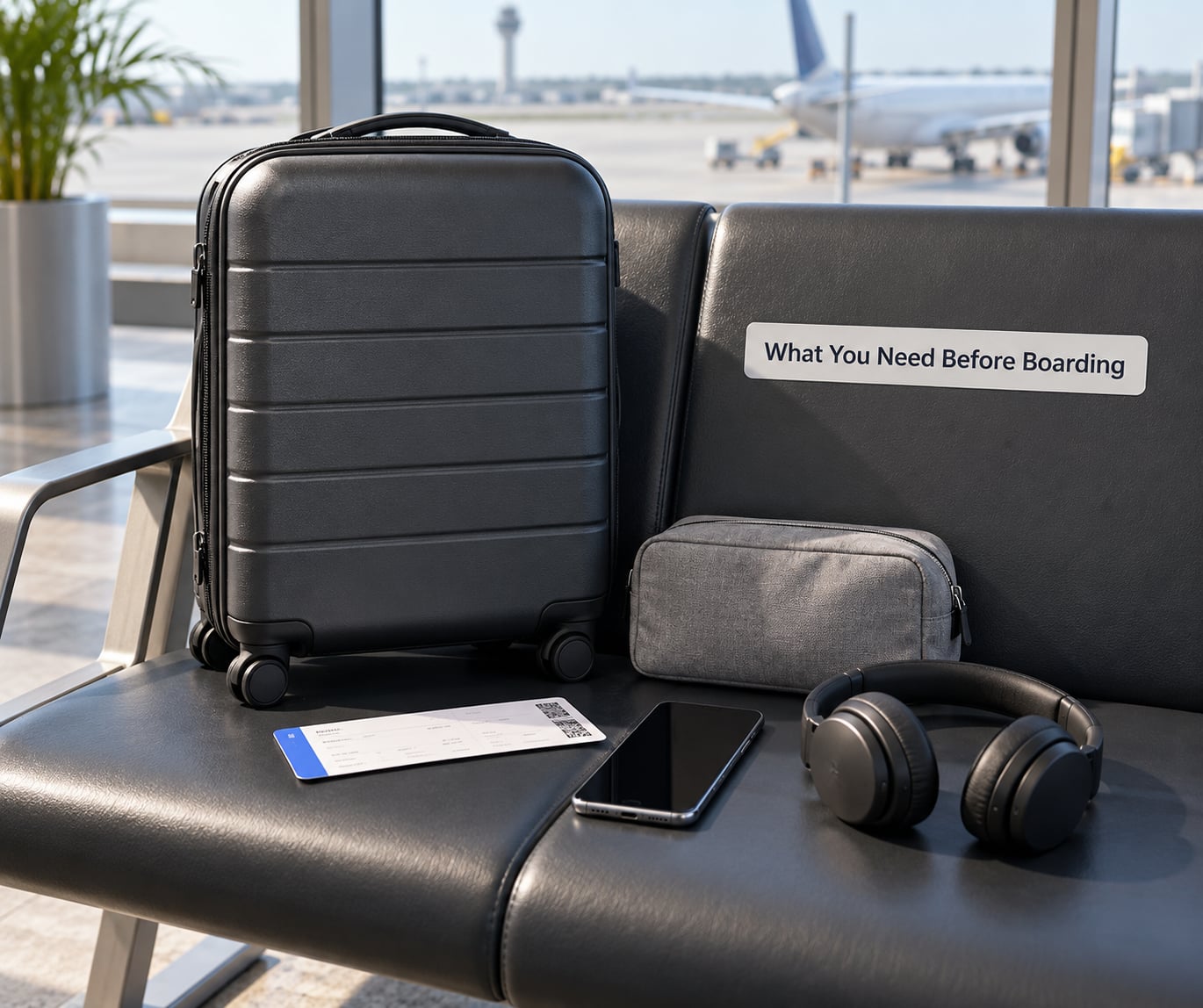
Five minutes of prep at the gate does more for you than any trick once the aisle is full.
- A bag that passes the sizer without arguments. The gate sizer is a metal frame the size of the cabin allowance. A bag that slides through it will slide onto a plane, and you stop being an argument at the door.
- A separate personal item with the day-one essentials. Medication, a charger, a change of clothes, documents, headphones, a snack. This is the bag that stays with you if the roller gets tagged.
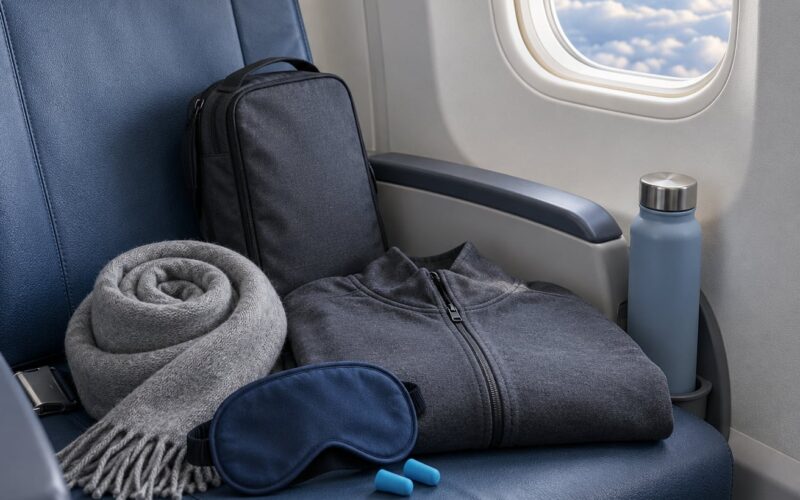
- A soft layer you can move. A jacket or bulky sweater takes up bin volume that a rigid roller could have used.
- Your boarding group number. It is printed on the boarding pass and it tells you how much of the cabin will already be settled.
- The carrier’s current baggage allowance. Basic economy fares on several airlines no longer include an overhead carry-on at all. Check your own itinerary rather than assuming.
One more thing worth doing: when the gate agent announces the last group, glance back down the jet bridge. If they are still handing out boarding passes while the line is half the length of the cabin, there is real space left. If the whole queue just emptied onto the aircraft, you are boarding into a nearly full plane.
Step-by-Step: How to Find Overhead Bin Space Late in Boarding
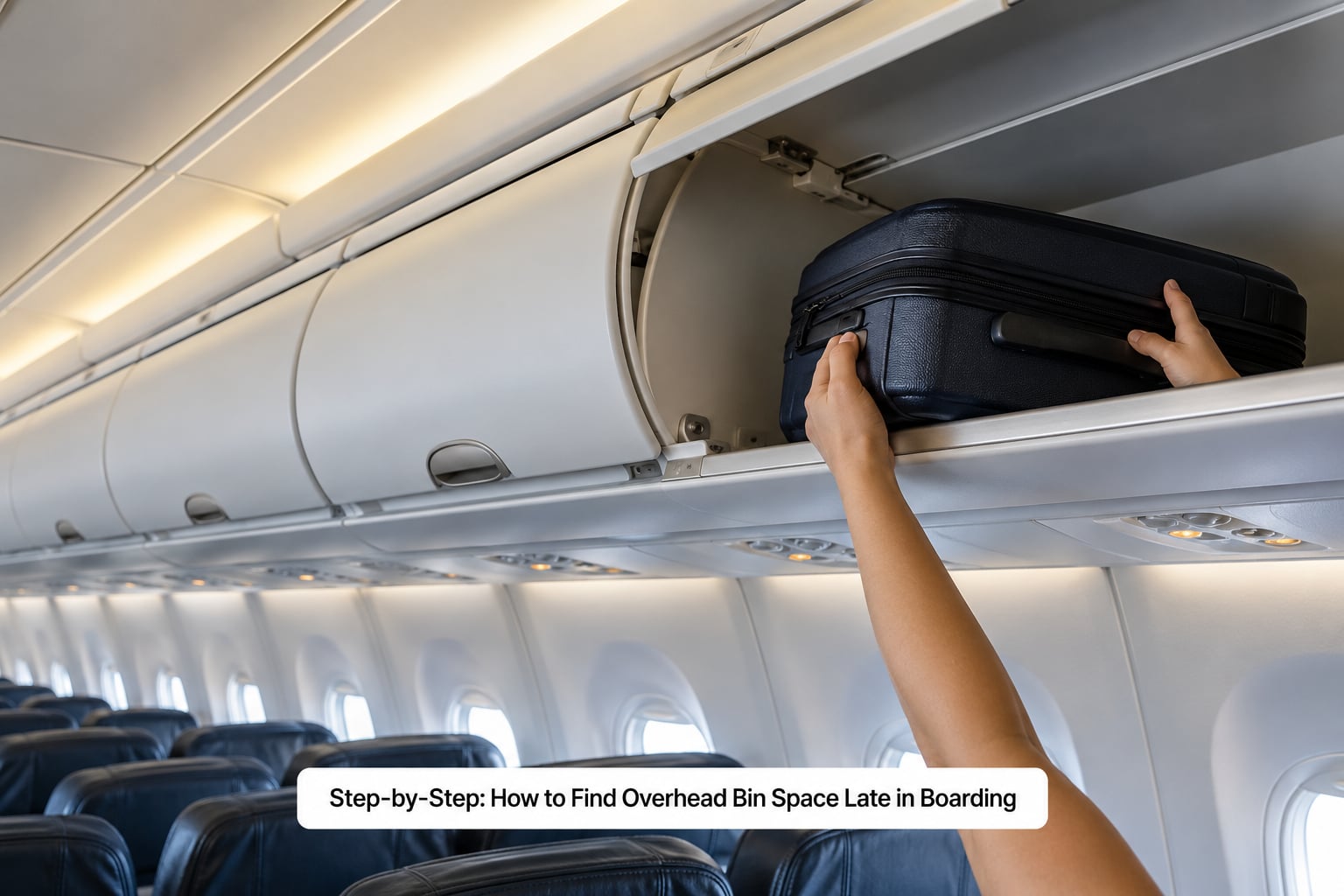
Check the Boarding Situation
Read the cabin before you move. On a small regional aircraft with bins running the length of a single seat row, space that looks open on one side is usually swallowed by a bag stowed on the other.
Note which bins hold strollers, wheelchairs or mobility equipment. Those get cleared and returned at the front of the cabin, and crew keep them clear of passenger rollers. If a flight attendant is standing near a bin with their arms folded, that bin is under active management and worth a question rather than a squeeze.
Start With Bins Near Your Seat
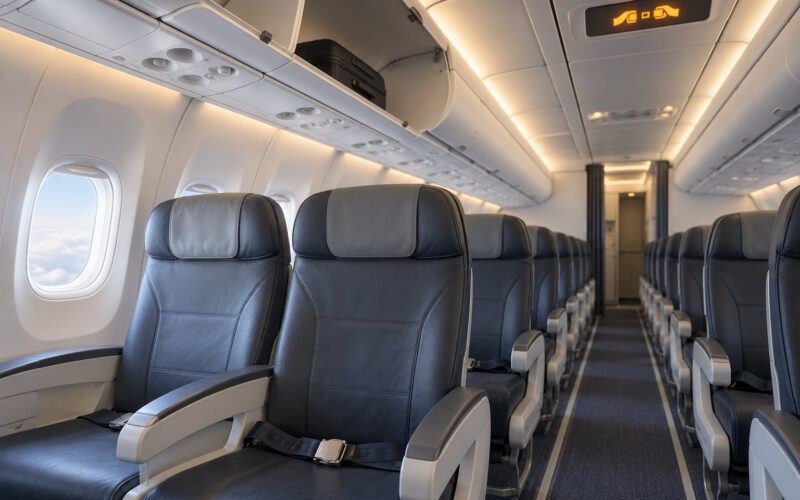
Walk directly to your row and check the bins overhead and one bin ahead of you before scanning further. Stowing above or slightly ahead of your seat means you can reach your bag without crossing an aisle later, which is also what crew prefer.
Searching from the front of the cabin backwards works fine for business class passengers with no checked bags. For someone in a later group it usually means walking past every full bin and losing time you do not have.
Look Above and Below Your Normal Reach
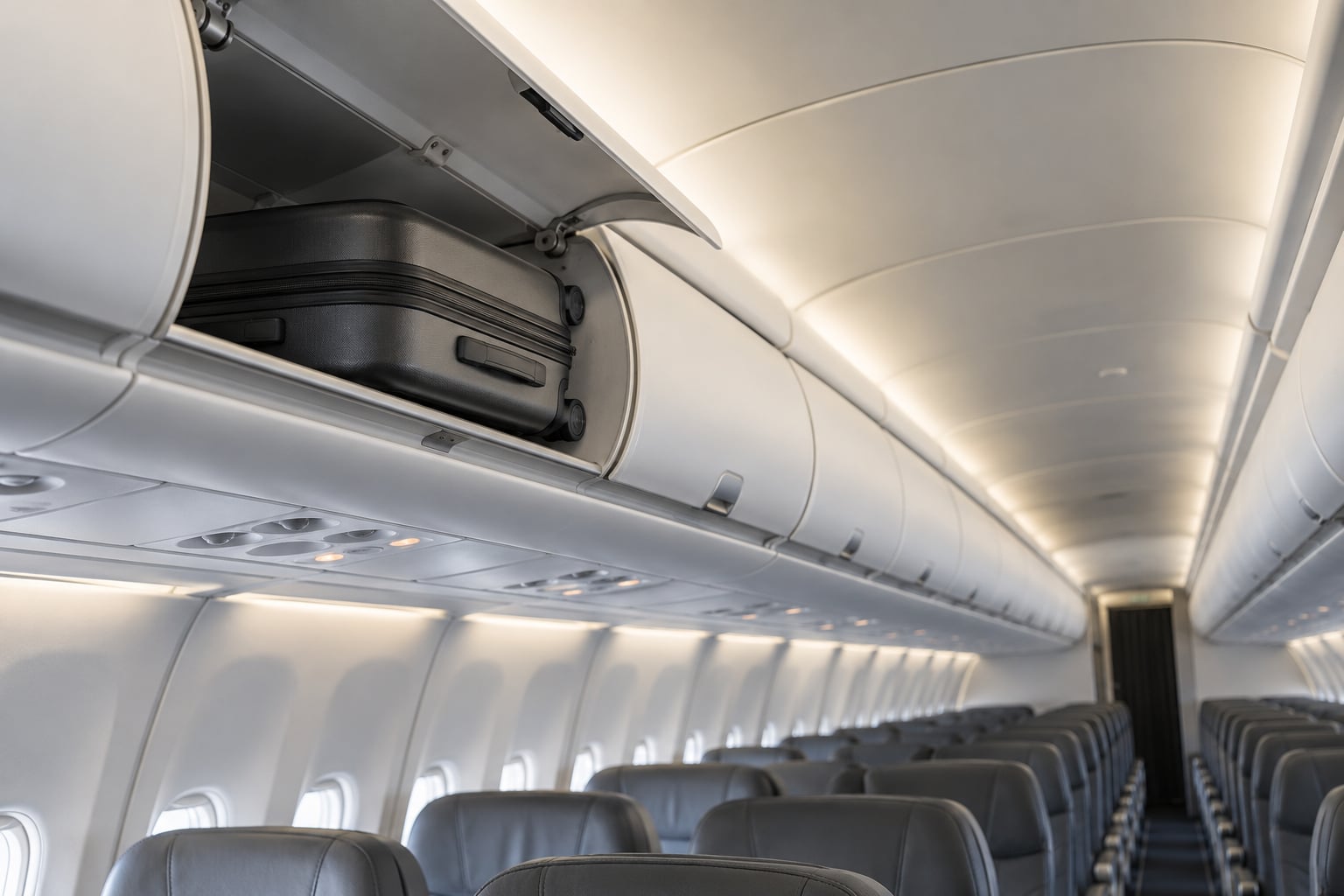
Open the bin that looks full and look at the bottom of it. A bag lying flat across the shelf leaves usable space at the back corner that a roller can slide into on its edge.
Tall, thin bags stand upright better than they lie down, with the wheels toward the front of the bin and the handle end toward the aisle. That single change frees the flat length that two or three soft bags would otherwise occupy. Check the bin in the row behind you and the one across the aisle if your own row is finished, but do not reach into someone else’s bag to make it fit.
Use a Smaller or Lighter Bag
If the only gap is a sliver, make your bag smaller before you make the bin bigger. Pull out the soft items, wear the jacket, and slide the personal item down under the seat in front of you if it fits within the published limits.
Once a roller is on its side, it can wedge into a space that looked impossible when it was upright. Turning a problem bag into a thin object is the single most useful move in a full bin.
Keep a Last-Resort Storage Plan
Know your fallbacks before you get stuck. Approved under-seat space is the first one, and it only works if your bag meets the personal item dimensions. Beyond that, galley and bulkhead storage exist on some aircraft, usually for crew and operational equipment, and only when a flight attendant tells you to use them.
The last resort is a voluntary gate check. Hand your roller to the crew at the door with a tag, keep the personal item with you, and collect the roller at the carousel on arrival. On a connecting itinerary, ask one specific question before you hand it over: is the bag tagged to my final destination or to the transfer airport? That single sentence saves a lot of guessing.
Protect the Bag and Respect Other Passengers
Whatever you choose, the bag needs to stay where it cannot fall on someone’s head during turbulence. Push it fully in so the door latches, put the heaviest bags at the bottom of the bin and loose soft items on top, and leave enough of the bin clear that a crew member can move bags without unpacking everything.
Two rules hold even when the plane is full. Never take the bin above a bulkhead row unless you are sitting in that bulkhead row, because those seats have no under-seat storage and must put both bags overhead. And if a bin is still being unpacked by a seated passenger, wait or find another one rather than rearranging their belongings yourself.
Common Mistakes to Avoid
Assuming every bin has room. A half-open door does not mean a full roller fits. Measure the gap against your bag before you commit, because a jammed bin can cost more time than walking two rows forward.
Blocking the aisle while you search. Open bins from your seat position when the aisle allows, and if you do need to walk, step to one side and pull the bin door toward you rather than standing square in the walkway.
Moving or lifting another passenger’s bag. Even with good intentions, rearranging someone else’s belongings is where most of the awkwardness in a full cabin comes from. Ask a flight attendant instead.
Ignoring crew instructions. If someone tells you a bin is reserved or that the aircraft is full, take it at face value. Arguing with a gate agent costs more than any bin you lose.
Handing over a bag with your essentials still inside. Gate-check the big bag first, then pack down from it into your personal item before you hand it over.
Hunting into the premium cabin. Using a forward business class bin while those passengers are still boarding reads badly and gets you moved. Waiting until the cabin ahead is settled is the version people accept.
Quick Tips for the Next Flight
- Board calmly and stay out of the aisle once you stop moving. Looking for space slowly costs less time than searching fast.
- Keep the bag small enough that it passes the sizer without a conversation.
- Use the nearest bin that genuinely fits, not the nearest bin with any gap at all.
- Ask a flight attendant when a storage option is unclear. A short question is always faster than a failed stow attempt.
- Keep medication, valuables, documents and a change of clothes in the cabin, never in a bag that might be tagged.
- Fly with one bag that fits under the seat if the trip allows it. Travelers who carry a single sizer-friendly bag report far fewer gate checks than the ones expecting them.
Frequently Asked Questions
What happens if the overhead bins are full and I have a big carry-on?
A flight attendant will usually ask you to gate check it. Your bag is tagged at the aircraft door and goes into the hold, and you collect it from the baggage claim carousel at your destination or transfer point. You keep your personal item, so anything you need in flight stays with you. Offer the bag yourself before you are asked and the process is faster and less awkward.
When you gate check a bag, where do you leave it?
You hand it to a crew member at the aircraft door during boarding, not at the jet bridge sizer and not with a curbside agent. They loop a baggage tag around the handle and put it in the hold. On a connecting itinerary, confirm whether the tag sends it to your final destination or to the transfer airport before you let go of the handle.
What happens if my carry-on is 1 inch too big?
At the gate sizer it may be checked on the spot, which is why bags that slide through the frame without argument are worth the effort. Once you are on the aircraft, bin capacity is about shape and volume, not measured dimensions, so a slightly oversized roller usually still fits if you turn it on its edge. Very large rollers often have to lie flat, which is why one bag can fill a three-seat bin.
Am I allowed to access the overhead bin during a flight?
Reach for the bin above your own seat whenever you need it, and keep your bag where you can see it. If crew relocate a bag for weight balance or an unclaimed-bag check, they will usually tell you and point out the new bin. Ask before taking a bag from a bin that is not assigned to your row, since those may belong to passengers still boarding.
Can I use a first class overhead bin if the bins are full?
Once everyone in the cabin ahead of you has boarded and is seated, plenty of travelers use an empty forward bin and nobody objects. While that cabin is still filling, it reads as cutting the queue and you are likely to be asked to move your bag. The same reasoning applies in reverse to a premium passenger working backwards into coach.
What are the new rules for carry-on luggage in 2026?
Rules vary by airline and fare class, and several carriers now limit or exclude overhead carry-ons on basic economy tickets while keeping a smaller personal item. Sizes and allowances also change by aircraft type. Check the specific airline and fare on your booking rather than relying on general advice, because a bag that fails on one flight is checked at the gate with no warning.
Conclusion
Start at the bins above and just ahead of your seat, judge the gap against your actual bag, and if it will not hold, use an approved alternative rather than forcing it in. Pack down and volunteer the roller at the door with your essentials already in your personal item, and the late-boarding scramble turns into a thirty-second decision.