You must keep your seat belt fastened because an aircraft can hit turbulence with almost no warning, and an unbelted passenger keeps moving when the aircraft stops moving. The belt restrains you, spreads the force across your pelvis and chest, and stops you being thrown into the seat in front or across the aisle. That is the whole reason, and it applies on takeoff, in cruise, on landing and during the taxi to the gate.
I fly a lot and I have been on the wrong end of this. A few years ago I unbuttoned halfway through a red-eye because I wanted to shift position, and forty minutes later the flight dropped hard enough that the ceiling felt close. Nobody was hurt, but the passenger beside me who had stayed buckled did not move an inch while I braced against a tray table. I have not skipped a buckle since.
This is not a scary story about turbulence, because turbulence itself is not the danger. Airliners are built to be flown through rough air, and pilots fly through severe turbulence regularly. The risk lives in the ten seconds before the belt goes on, and in the habit of standing up the second the wheels touch. Here is how the rule actually protects you.
Table of Contents
- Why You Must Keep Your Seat Belt Fastened on Flights
- How Sudden Turbulence Causes Injuries
- When the Seat Belt Sign Must Stay On
- Children, Infants and Passengers Who Need a Seat Belt Extender
- What the Seat Belt Sign Does Not Guarantee
- Do You Have to Keep Your Seat Belt Fastened When the Sign Is Off?
- Do Seat Belts Hurt You or Slow Down an Evacuation?
- What to Do During Turbulence
- What to Do if Turbulence Hits While the Seat Belt Sign Is Off
- How to Buckle a Plane Seat Belt Correctly
- Why You Must Keep Your Seat Belt Fastened Even When You Are Tired
- Frequently Asked Questions
- What does the seatbelt sign on an airplane mean?
- Can you get up on a plane when the seatbelt sign is on?
- What do seatbelts on airplanes do?
- Can turbulence bring down a plane?
- Why do pilots turn on the seat belt sign during moderate turbulence?
- Is it necessary to wear a seatbelt on a plane at all times?
- Conclusion: Fasten Before the Light Comes On
Why You Must Keep Your Seat Belt Fastened on Flights
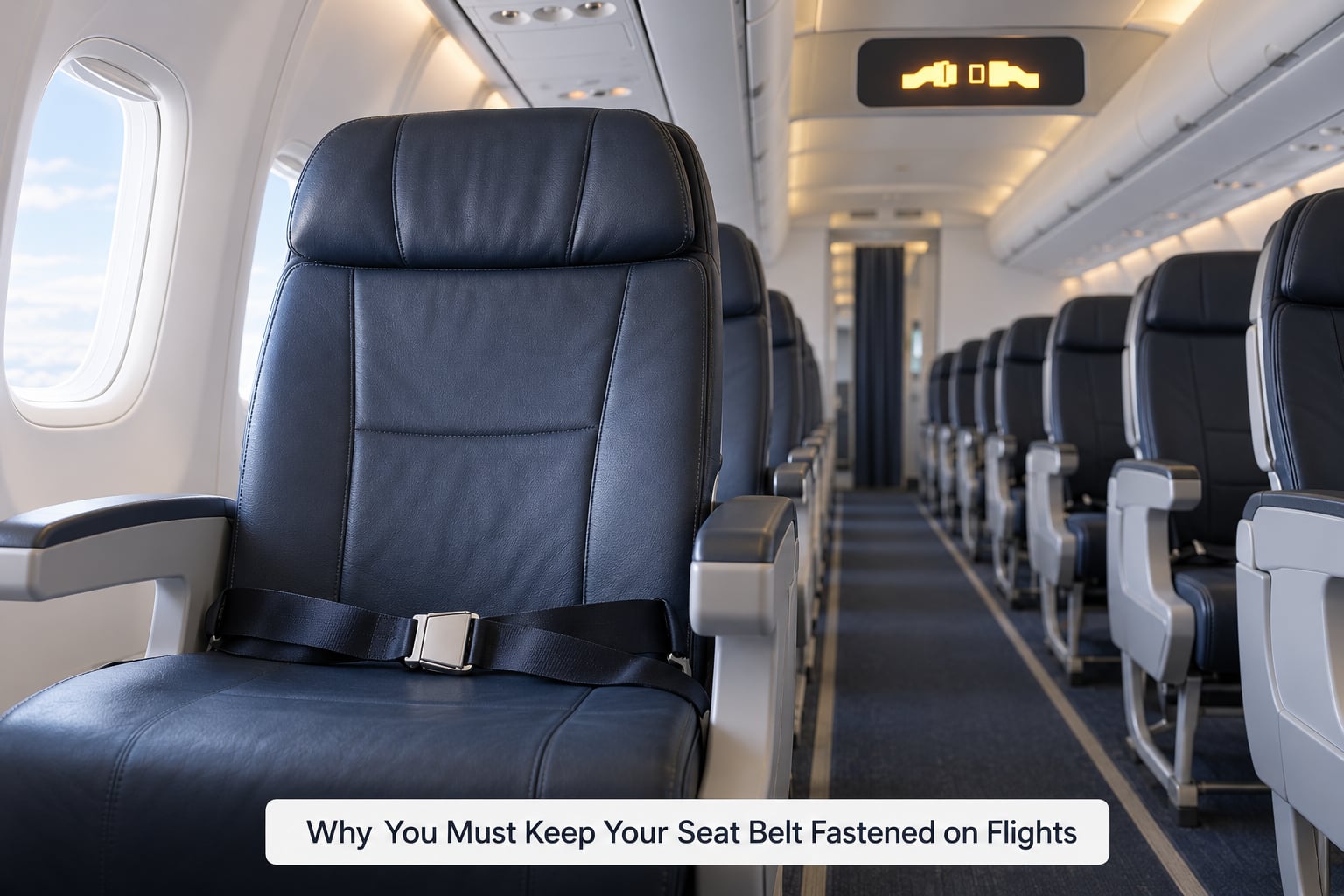
An unbelted passenger in an aircraft that suddenly changes altitude or pitch is a loose object with a seat number. Turbulence is a rapid change in the aircraft’s attitude, and during a strong jolt your body wants to keep travelling the way it was. The belt is the only thing that makes you move with the seat instead of past it.
The force is not subtle. Aviation enthusiasts who post on r/aviation make the point constantly: the airframe is engineered to survive severe turbulence, but the human body inside is not built for it. Restraining the body reduces the distance it can travel, which reduces the speed of impact, which reduces the injury.
How Sudden Turbulence Causes Injuries
When the aircraft drops or rolls quickly, an unbelted passenger rises off the seat. The most common contacts are the ceiling panel above the aisle, the open overhead bin, the seat in front and the floor. Injuries reported from unrestrained passengers include head and neck injuries from ceiling contact, broken bones, bruised ribs, twisted ankles and knees, and being struck by a bag that came out of an overhead bin.
Aerocorner, an aviation site, cites roughly 60 turbulence injuries a year involving passengers who were not wearing their belts. It is not a huge number in aviation terms, but every one of them happened in a second where a belt would have kept the passenger in place.
Airlines carry the cost of those injuries, which is one practical reason they care. The passenger carrying them is the one who cannot unclench their jaw for a week.
When the Seat Belt Sign Must Stay On
The seat belt sign is an instruction from the flight deck, and the legal requirement in the United States and Europe follows that instruction rather than the passenger’s mood. FAA and EASA rules tie the seat belt requirement to the operator’s instructions, which is why the captain, not you, decides when it applies.
- Boarding and pushback. Belts off or on as you like until the doors close and the aircraft starts moving.
- Taxiing to the runway. Belts fastened, seats upright, seat backs upright.
- Takeoff and initial climb. Belts fastened throughout.
- Climb with the sign on. Remain seated and belted; ask a flight attendant before moving.
- Cruise with the sign off. You may unfasten and move about, though staying buckled while seated is the safer habit.
- Landing. Belts back on before the aircraft reaches the runway.
- Taxi after landing. Belts stay fastened until the sign goes off, often after the aircraft has stopped.
- Deplaning. Wait for the sign and the crew’s instruction before standing.
The phase most people break is the one at the bottom of that list. Travellers routinely unbuckle the moment the aircraft touches down and start standing in the aisle while it is still rolling toward the gate. Braking, steering and docking a jet bridge all happen while the sign is still on.
For nervous flyers, the announcement itself is often the hard part. Posters on r/fearofflying describe hearing “fasten seatbelts” and reading it as a warning of an imminent crash. It is not. It means conditions ahead are worth sitting through.
Children, Infants and Passengers Who Need a Seat Belt Extender
Children who can walk but cannot stay strapped in should travel with an FAA-approved child restraint system, and the CARES harness is the one most families can borrow from an airport or airline. Infants in a lap should move into their own approved seat with a restraint rather than being held.
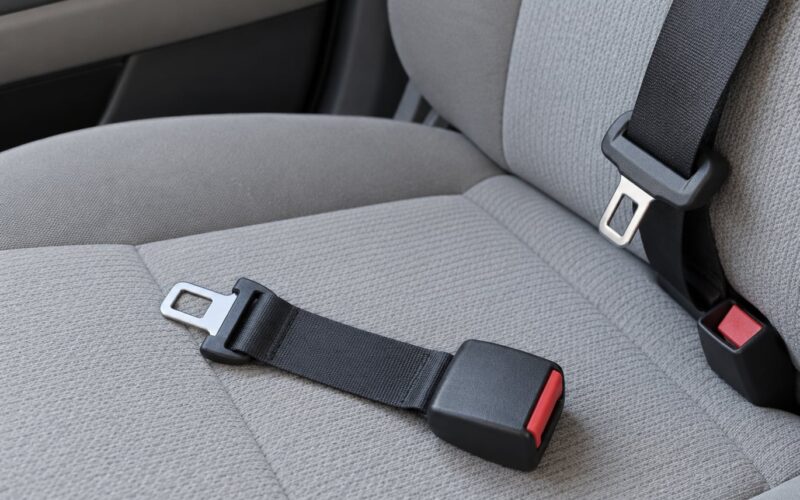
Adults who cannot get a snug fit from the standard lap belt should ask a flight attendant for a seat belt extender before takeoff, not after. It is a normal request and crews carry them. The rule still applies to everyone regardless of fit: the belt needs to sit low and tight across the hips.
What the Seat Belt Sign Does Not Guarantee
The sign tells you the flight deck expects you to be seated. It does not tell you the next ten minutes will be calm, and it does not switch off when the rough patch ends. Pilots often keep it on through a run of moderate chop because the air ahead has not been surveyed and the next patch can be worse than the last.
The bigger gap is clear air turbulence. It is turbulence with no visible cause, no cloud marker and no signature on radar, and it appears suddenly out of clear sky. No pilot can see it coming, which is why a passenger who waits for the sign to be a reliable warning is waiting on a signal that does not exist in every case.
Do You Have to Keep Your Seat Belt Fastened When the Sign Is Off?
No, you are allowed to unfasten when the sign is off. Keeping the belt fastened while you are seated anyway is simply a lower-risk way to spend the flight, and it means you are already in position if a jolt arrives. It costs nothing and removes the scramble.
Do Seat Belts Hurt You or Slow Down an Evacuation?
The belief that a lap belt causes internal bruising in a crash is one of the more persistent aviation myths. Aircraft seat belts are designed to spread the load across the strongest bones of the body, and study after study has found that wearing one reduces the chance of serious injury rather than raising it.
The second myth is that belts slow evacuation. They do not. The buckle is a quick-release type, and it is not a mechanical interlock that holds you to the seat.
What to Do During Turbulence
None of this needs thought. That is the point of doing it the same way every time.
- Sit down and fasten the belt. Low and tight across the hips, not up on the stomach.
- Stow what is loose. Laptop into the bag, tray table closed, overhead bin shut, phone away from the cupholder edge.
- Brace and hold. Forearms on the armrests or the seat in front, head against the seat back.
- Do not walk the cabin unless a flight attendant tells you to.
- Follow crew instructions and stay put until the flight deck gives the all-clear.
What to Do if Turbulence Hits While the Seat Belt Sign Is Off
If you are standing when it starts, get back to your seat if you can do so without pushing past anyone. If the aisle is moving too much, hold the seat back in front of you, stay low and protect your head with your arms. Do not attempt to reach an overhead bin or a window, and do not stand in the aisle.
If you are in the lavatory, hold the grab handle. If you are in the middle of the cabin, that is the argument for never spending the cruise standing in the first place.
How to Buckle a Plane Seat Belt Correctly
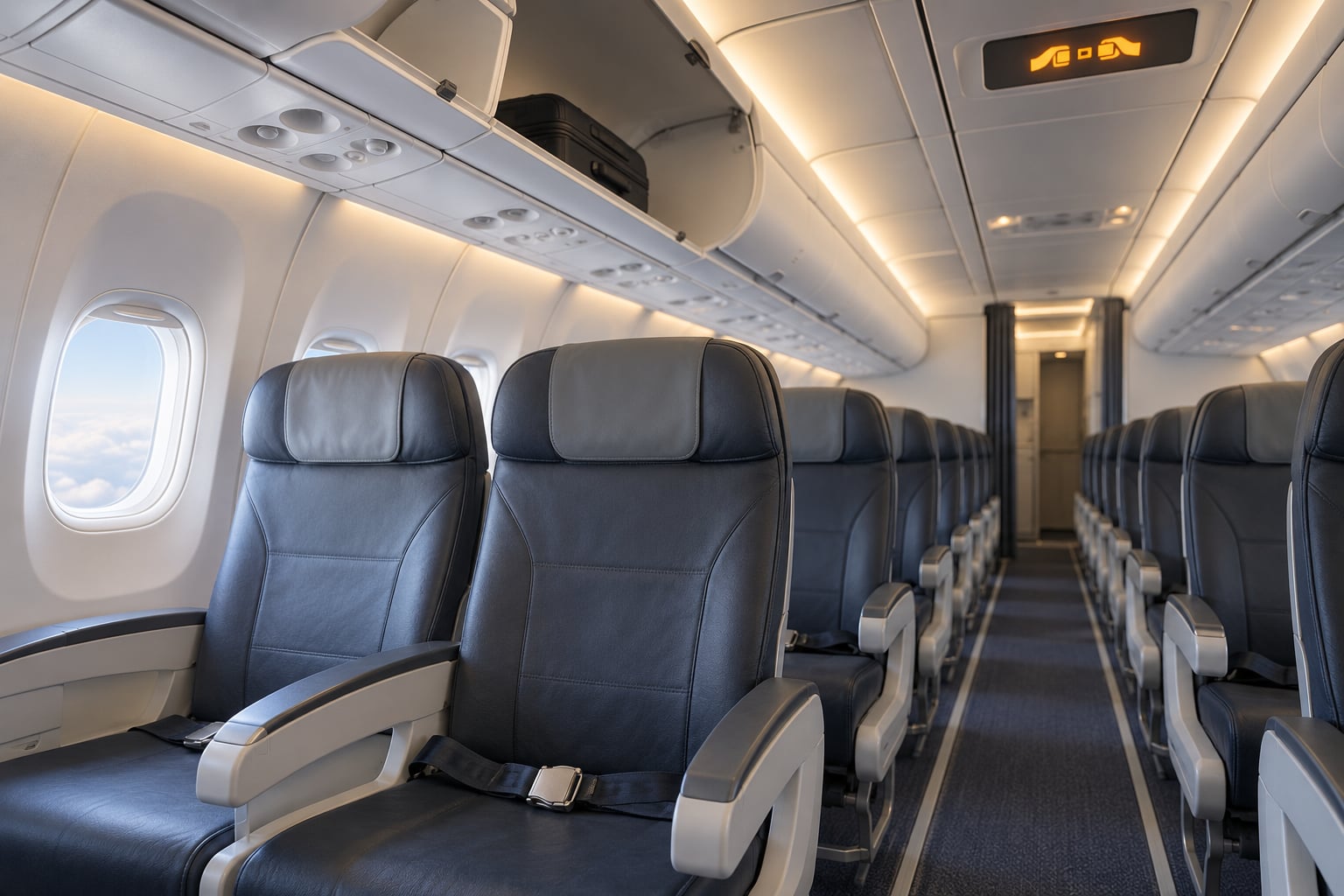
Most airline belts are two-point lap and shoulder combinations. Set the shoulder strap across your collarbone and chest, slide the lap belt down until it sits on the bony pelvis at your hipbones rather than across your stomach, and pull the free end until the belt is snug with no slack. You should be able to fit a flat hand between the belt and your body, not a fist.
Leave the buckle accessible so you can release it in a second, and do not drape a blanket or coat over the buckle because it is a lever you will not find quickly when you are panicked.
Why You Must Keep Your Seat Belt Fastened Even When You Are Tired
The excuses are predictable. You are dozing and the strap digs in. A call comes in and the belt is under the laptop. The lavatory queue is long. The flight has been glassy smooth for two hours and you are certain it will stay that way.
Every one of those reasons describes a moment of inattention, and turbulence is a moment of inattention. Aviation enthusiasts put it plainly: the aircraft is strong, the passenger is not. Seat belts identify no bodies, hide no bruises, and slow no evacuation.
FlyerTalk threads go back and forth over the etiquette of standing the moment the wheels touch, and the argument only exists because people keep doing it. On the other end of that debate, plenty of regular travellers simply stay buckled for the whole flight and say it is the easiest way to stop worrying.
Being tired is the reason to fasten the belt, not to undo it. Click and click again takes a second, and it happens before the seat belt sign comes on rather than after.
Frequently Asked Questions
What does the seatbelt sign on an airplane mean?
The illuminated seat belt sign tells you the flight crew expects every passenger to be seated with a belt fastened, normally from taxi through takeoff and again for landing. It is an instruction from the flight deck, and the requirement follows that instruction under FAA and EASA rules. When the sign goes off you may unfasten, though staying buckled while seated is the safer habit.
Can you get up on a plane when the seatbelt sign is on?
You should stay in your seat with the belt fastened. Crews may allow a specific passenger to move, for example someone with a genuine medical need, but the standard answer for the lavatory or the overhead bin is to wait. Most carriers still permit lavatory use during the cruise phase, and a flight attendant will tell you if that is not possible right now.
What do seatbelts on airplanes do?
A seat belt restrains the passenger when excessive force is applied to the aircraft, whether that comes from a crash, a hard braking manoeuvre on the ground or severe turbulence. A belted passenger moves with the seat, and the belt spreads the load across the strong bones of the pelvis, chest and shoulder. An unbelted passenger keeps travelling and takes that force through the head, neck and limbs instead.
Can turbulence bring down a plane?
Almost never. Airliners are certified to withstand turbulence far more severe than passengers ever experience, and the wings and tail are built to flex and unload rather than break. Severe turbulence can injure people who are standing or unbelted, and it can throw loose cabin objects around, which is why the danger is to the passenger rather than to the aircraft.
Why do pilots turn on the seat belt sign during moderate turbulence?
The switch happens for the next patch, not just the current one. Turbulence often arrives in runs, and the flight deck turns the sign on early so passengers are already seated before conditions worsen. Pilots also cannot detect clear air turbulence, which forms with no visible marker, so the sign is switched on well before the aircraft reaches anything the crew can actually feel.
Is it necessary to wear a seatbelt on a plane at all times?
It is not required once the sign is off, but staying fastened while seated costs nothing and removes the gap. Clear air turbulence can arrive without any warning sign, so a passenger who unbuttons for comfort has decided in advance to be unrestrained if it happens. Many frequent travellers keep the belt fastened for the entire flight for exactly that reason.
Conclusion: Fasten Before the Light Comes On
Fasten the belt while you are still seated and settled, before the sign comes on, because the moment you need it is the moment you are least comfortable. Keep it fastened whenever the sign is illuminated or a flight attendant asks you to, buckle it low and tight across your hips, and stay in your seat until the crew says the aircraft is safe to move around.