Boarding with a bag bigger than the airline’s limit comes down to three things: measure it before you leave home, board as early as your group allows, and know exactly what to do in the jet bridge if it fails the sizer. A bag an inch or two over is not automatically a paid checked bag, because gate agents have discretion and the difference between a free gate check and a paid one usually comes down to how you handle the last two minutes. Here is how to board a plane with a large carry on without losing your bag or your boarding position.
Most of the work happens at home, where you can fix a problem calmly. The gate is where you can only react.
Table of Contents
- What You Need
- How to Board a Plane With a Large Carry On Step by Step
- Check the airline’s size and weight limits
- Measure the bag before packing
- Pack the bag for efficient use of space
- Prepare the bag for the airport and gate
- Board the plane and respond at the gate
- Common Mistakes
- Frequently Asked Questions
- What happens if your carry-on is 1 inch too big?
- Do airlines measure carry-on bags with the wheels and handles in?
- Why are compliant bags gate checked when the bins are full?
- Do I pay to gate check an oversized carry-on?
- Can I get a free gate check on a connecting flight?
- Does priority boarding actually help with carry-on space?
- Conclusion
What You Need
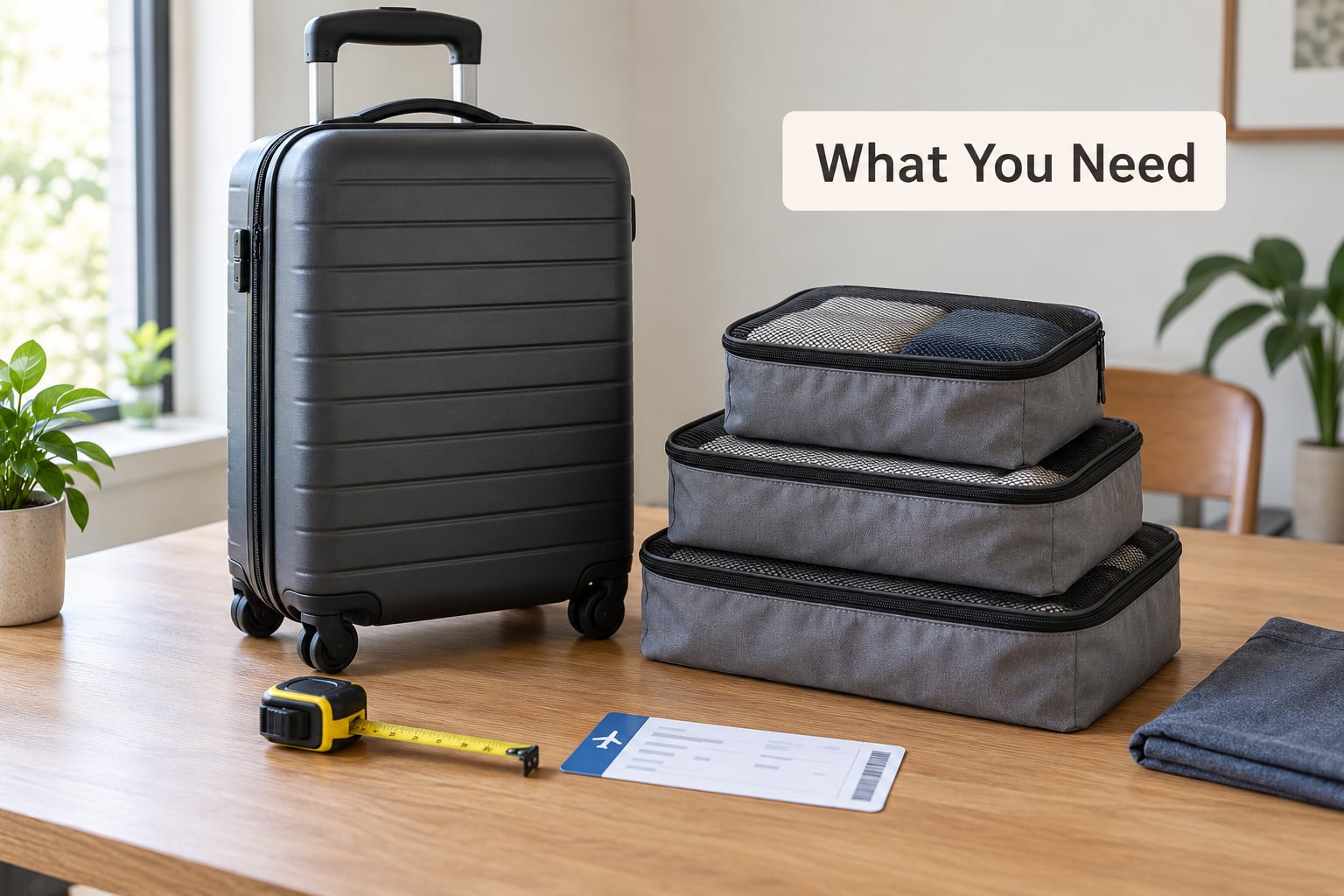
Start with the operating airline’s published carry-on allowance, not the airline you think you booked. On a codeshare, the aircraft and crew belong to a partner carrier, and on some routes the partner applies its own dimensions. Pull up the baggage page for whoever is flying you and note the length, width, and height, plus any weight limit.
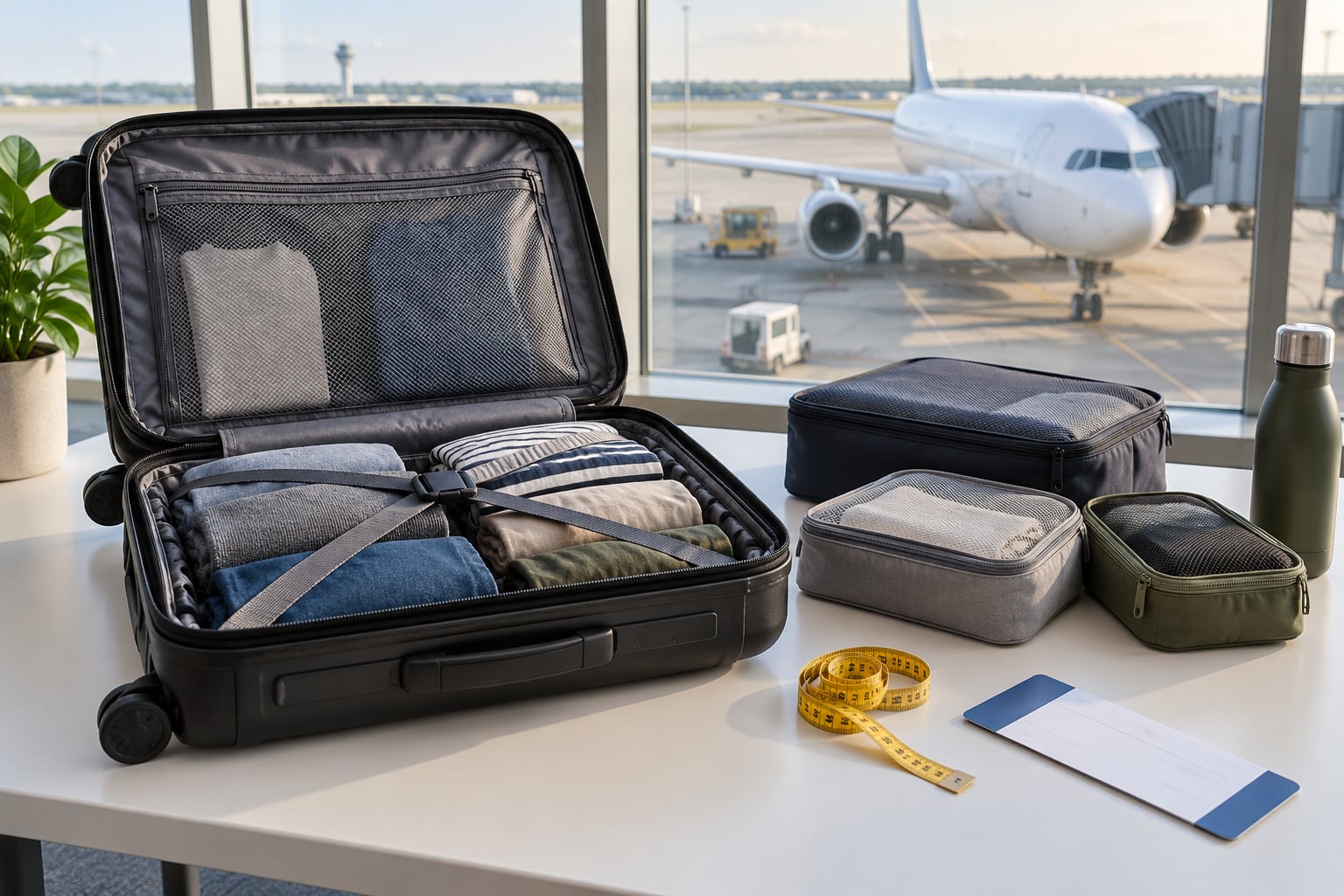
You also need a tape measure. Airlines measure the outside of the bag, so a figure taken from a product page for the empty bag body is not the same as the bag in your hand with wheels and handles fitted.
A way to identify your bag is worth ten minutes of thought. Put contact details inside the main compartment as well as on an external tag, because an unclaimed-baggage claim starts with the tag inside the bag if the outside one is lost.
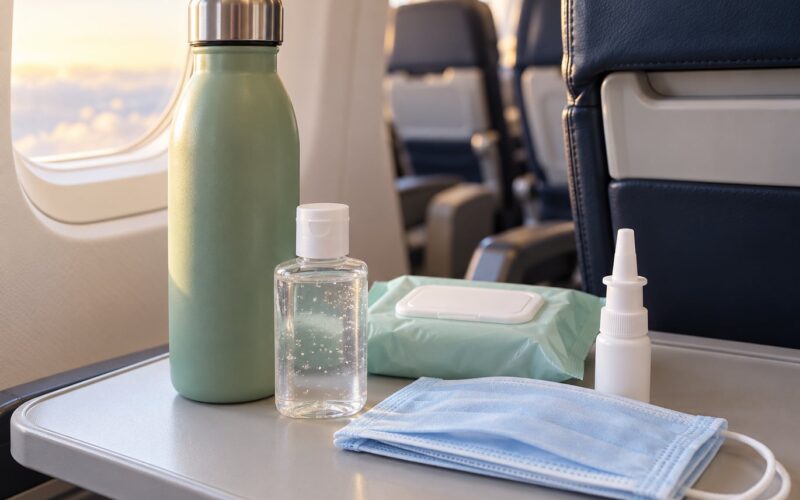
An under-seat personal item matters more than most people expect. It is the one bag with a guaranteed place on the aircraft, so keep your laptop, chargers, documents, and anything you need in flight there rather than in the big bag.
Finally, have a removal plan. Know what could move into your personal item or onto your body in about thirty seconds: a jacket, a laptop sleeve, a book, chargers, a toiletry pouch.
How to Board a Plane With a Large Carry On Step by Step
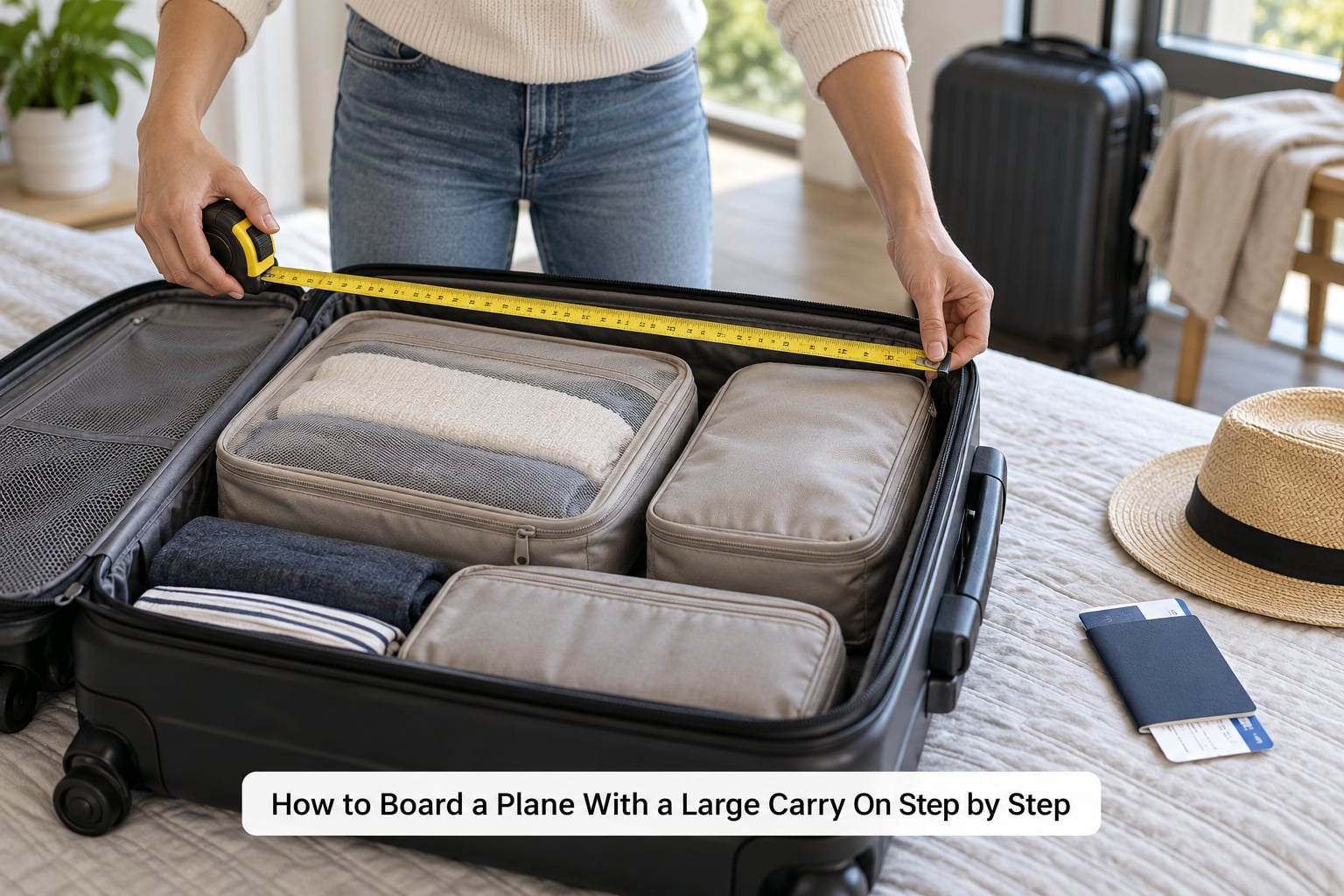
Work through these in order. The first four happen at home, where you have time to solve a problem. The last three happen in the jet bridge with a line of passengers behind you.
- Check the operating airline’s published carry-on dimensions.
- Measure the bag externally, wheels and handles included.
- Lock the expander shut and keep the top of the bag light.
- Board as early as your boarding group allows.
- Keep your personal item stocked and your removal plan ready.
- Load toward the front of the bin, wheel-side in.
- Ask the gate agent before anyone else offers to check your bag.
Check the airline’s size and weight limits
The standard US benchmark is 22 x 14 x 9 inches, measured externally, including wheels, handles, and any pocket that bulges. That works out to 56 x 36 x 23 cm for anyone thinking in metric, and it sums to 62 linear inches.
The table below is the working reference I use when a bag is close to the line. Last verified in October 2026 against each carrier’s published baggage page.
| Airline | Carry-on | Personal item | Watch for |
|---|---|---|---|
| American | 22 x 14 x 9 in | 18 x 14 x 8 in | Basic Economy includes a personal item only |
| Delta | 22 x 14 x 9 in | Must fit under the seat | Main Cabin fares include the overhead bag |
| United | 22 x 14 x 9 in | Typically 18 x 14 x 9 in | Basic Economy adds a carry-on charge later |
| Southwest | 24 x 16 x 10 in | Must fit under the seat | More generous height than the rest of the majors |
| Alaska | 22 x 14 x 9 in | Must fit under the seat | Carry-on included on most published fares |
| JetBlue | 22 x 14 x 9 in | Must fit under the seat | Blue Basic fares are one bag total |
Weight is the part people forget. Several US carriers publish a carry-on allowance with no weight cap attached, while international long-haul carriers commonly apply a combined cabin baggage weight limit around 23 kg, roughly 50 pounds. If you are crossing an ocean, check the specific carrier’s number rather than assuming the domestic rule applies.
Fare class matters just as much as size. The cheapest bucket on most US carriers is a personal item only, and adding an overhead carry-on later, at the airport, costs more than adding it when you booked. If your bag is oversized and your fare excludes overhead bags, expect a conversation at the counter rather than the gate.
Measure the bag before packing
Measure it empty, then measure it again packed, because a full soft bag and an overstuffed pocket both add inches.
- Length is the tallest dimension with the handle fully extended, not the handle retracted.
- Width is the widest point, including wheels if they sit outboard of the shell.
- Depth is measured with the expander zipped shut, with any bulging pocket pressed flat.
- Add the three numbers and compare the total against the airline’s limit, not just the single dimensions.
- Repeat the check after packing, because soft-sided bags stretch.
Leave roughly an inch of headroom. Gate measurement is not lab measurement: some gates use a rigid sizer, some use a measuring frame on the wall, and plenty of them simply watch how your bag looks going into the bin. A bag at exactly 22 inches can pass one day and fail the next with the same airline and the same bag.
Pack the bag for efficient use of space
A bag that is physically too big is a packing problem before it is a gate problem. Rolling clothes rather than folding them is the single biggest space saver, and compression cubes do the rest on top of that.
Put flat, crushable items against the flat panel of the bag, fill the shoes with socks, and wear your bulkiest clothing instead of packing it. Keep the top of the bag light, because agents lifting the bag to read a tag will notice a heavy top and a soft bottom immediately.
Do not overfill a soft-sided bag on the theory that it will squash into the bin. It compresses, yes, but a visibly stuffed duffel is the thing gate agents reach for. Pack it to the limit, then check whether you actually need the extra layer.
Soft-sided earns its place here. FlyerTalk and travel forum threads repeat the same point: a slightly oversized soft bag can compress and wedge into a partly filled bin where a rigid shell of the same dimensions cannot. If your bag is a hard shell with a fixed frame, you have less room to negotiate.
Prepare the bag for the airport and gate
Do your prep at home, not in the terminal. Tag the bag inside and out, tighten or remove any strap that flops around, and make sure nothing is resting against the shell in a way that bulges it.
Move your laptop, chargers, medication, documents, and valuables into the personal item before you reach the jet bridge. If the bag is checked at the gate, that bag does not open again until you land at the destination, so anything you need in flight has to travel with you.
Protect the fragile things from a gate check rather than from the packing. A camera or a glass bottle riding at the bottom of a bag that gets lifted, stacked, and tossed is taking a risk with no upside, so carry those items in your personal item instead.
Board the plane and respond at the gate
The sizer test happens at the front of the jet bridge, and it is mostly a visual judgment made in a few seconds. Here is the sequence that works.
First, ask rather than assume. Saying you are unsure about the bin and asking whether the crew would prefer to check the bag yourself changes the conversation entirely. Travelers on Reddit’s airline communities report volunteering their carry-on and being tagged without charge, because the crew needed the space. A bag that visibly fails the sizer is a different situation, and gate agents typically charge for that one.
Second, know what you are agreeing to. Before you hand anything over, ask what the charge would be and confirm that your personal item is staying with you. You are negotiating at the worst possible moment, which is exactly why asking the question first is worth it.
Third, know the fast fix. If the bag is one or two inches over, open the top in the bridge, pull out the jacket and the laptop sleeve, hand them to the crew or slide them into your personal item, and try the sizer again. Forum threads make the same point: removing items at the sizer is expected, not a confrontation, and it works far more often than travelers expect.
What if your bag is fully compliant and the bins are still full? This is the most common frustration on a full flight and it is not your bag’s fault. Walk to the rear of the aircraft, where bins are often untouched, and check the bins in the aircraft parked at the adjacent gate, which the crew will sometimes let you use. Ask a flight attendant rather than another passenger, because crew can authorize space that a stranger cannot. If you are traveling with children or need a bulkhead seat, cross-board and use the empty space around you.
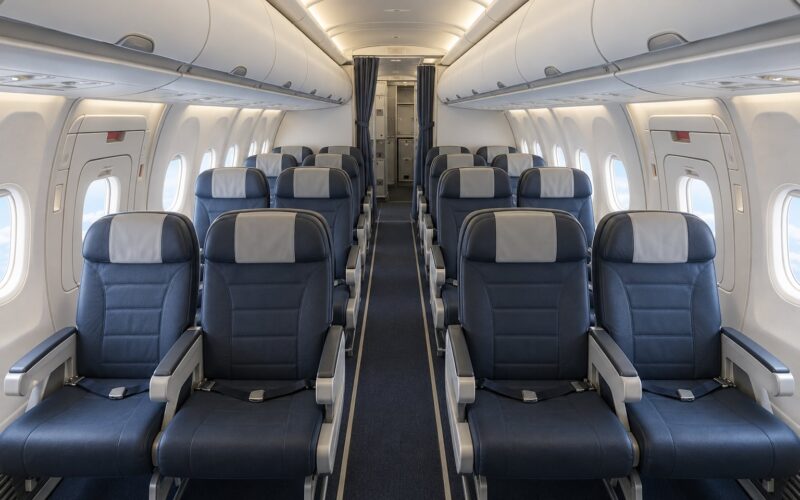
One aircraft-specific caveat: on regional jets and small aircraft, the overhead bins are smaller, and a bag that passes the sizer in the terminal can still not fit on board. If your connection goes from a mainline aircraft to a smaller one, the crew will very often gate check the larger bags free of charge, and you can offer before they ask.
Load slowly and kindly when you do get bin space. Turn the bag wheel-side in, put the heavier edge toward the bin wall, and leave the bin in a state where the door can latch. The last passenger to load has the worst odds, and everyone on the jet bridge can see how much room is left.
Common Mistakes
- Checking the wrong airline’s page. Look up the carrier operating the flight, not the one whose site you used to pay. Fix: open the itinerary and confirm the flight numbers, then check that carrier’s baggage policy.
- Measuring the bag body and forgetting wheels and handles. The handle in its extended position is the most commonly missed inch. Fix: measure with the bag fully assembled as it will travel.
- Trusting an old measurement. Bags get replaced, expander zips stretch, and rules get updated. Fix: measure the bag in front of you the week you travel, not from a saved note.
- Packing fragile items at the bottom. A gate check is a handling event, not a storage decision. Fix: fragile and valuable items go in the personal item.
- Assuming a free gate check is automatic. It depends on the reason. A bag checked to free up space is often free; a bag that fails the sizer usually is not. Fix: ask which situation you are in before agreeing.
- Bringing two overstuffed bags. Two big bags means the personal item reads as a second carry-on, and both get flagged. Fix: keep one bag within the limit.
- Assuming crew will stow a compliant bag. Gate agents rarely do this, because they need that space too. Fix: board early instead.
Enforcement is genuinely inconsistent. Flyers describe weeks where a 23-inch bag went on board without comment, and other threads describe the same bag being tagged at the gate on a full flight. Nobody can predict which day you will get, so treat prevention as the only reliable option.
Frequently Asked Questions
What happens if your carry-on is 1 inch too big?
It depends on the gate and the load on the aircraft. A bag an inch over may be looked at, measured, and waved through, or it may be tagged and checked, usually at the normal checked-bag rate rather than an oversized rate. You can improve your odds by removing a jacket or a laptop sleeve in the jet bridge and trying the sizer again, and by volunteering to be checked before the agent reaches for a tag.
Do airlines measure carry-on bags with the wheels and handles in?
Yes, measurement is external. Wheels, extended handles, feet, and any pocket bulging beyond the shell all count toward the dimensions. Measure height with the pull handle fully up, width across the widest point including outboard wheels, and depth with the expander zipped shut. If you measure it collapsed and it later grows in the case, that is another inch the gate can see.
Why are compliant bags gate checked when the bins are full?
Because the decision is about space, not size. When bins fill before your boarding group is called, crews tag bags to make room, and a compliant bag can be caught in that. Board as early as your group allows, walk to the rear of the aircraft where bins are often emptier, and ask a flight attendant rather than another passenger. On a full flight, early boarding is the only reliable fix.
Do I pay to gate check an oversized carry-on?
Usually yes, if the bag fails the sizer. Gate agents treat an oversized bag as a checked bag, and the charge is typically the same as a checked bag or higher, and often collected on a card at the gate. Volunteering to check a bag that is within the limit to free up bin space is more often tagged free. Ask the agent which category you are in before you hand over the bag.
Can I get a free gate check on a connecting flight?
Very often, yes. When an itinerary includes a smaller aircraft with smaller overhead bins, crew routinely gate check larger bags at no charge, since the bin physically cannot take them. You can speed this along by offering before boarding rather than waiting to be asked, and by keeping anything you need for the next leg in your personal item rather than the checked bag.
Does priority boarding actually help with carry-on space?
It does, more than any packing trick. Priority boarding, status, or premium cabin access puts you in the aircraft while bins still have room, which is the difference between choosing a bin and being handed a tag. If you fly often, that access is worth more than a better bag. If you do not have it, ask politely at the gate whether early boarding is available on your fare.
Conclusion
Take two actions before you leave home: check the published allowance for the airline actually operating your flight, and measure your bag with the wheels, handles, and expander in place. Those two steps prevent nearly every gate problem, and the boarding behavior afterward, board early, ask before you are tagged, and keep removal options handy, handles the rest.
The final call belongs to the gate agent and the airline. Their rules vary by aircraft, load, and day, and no blog, including this one, can promise an outcome. Prepare so that both answers work for you.