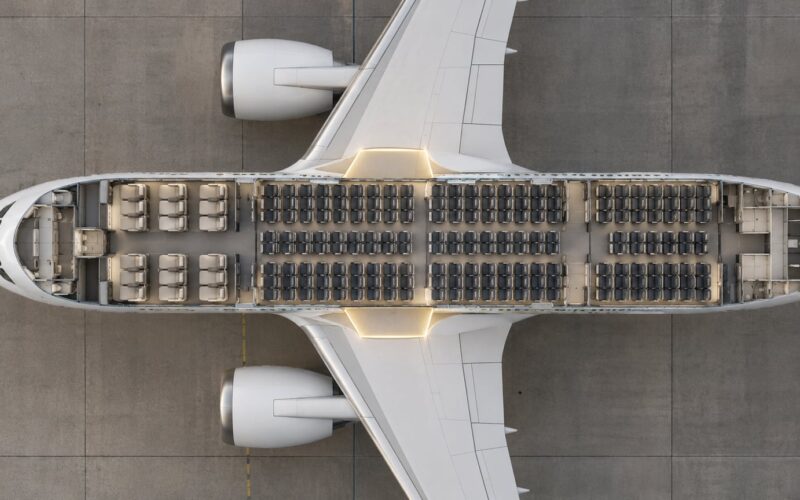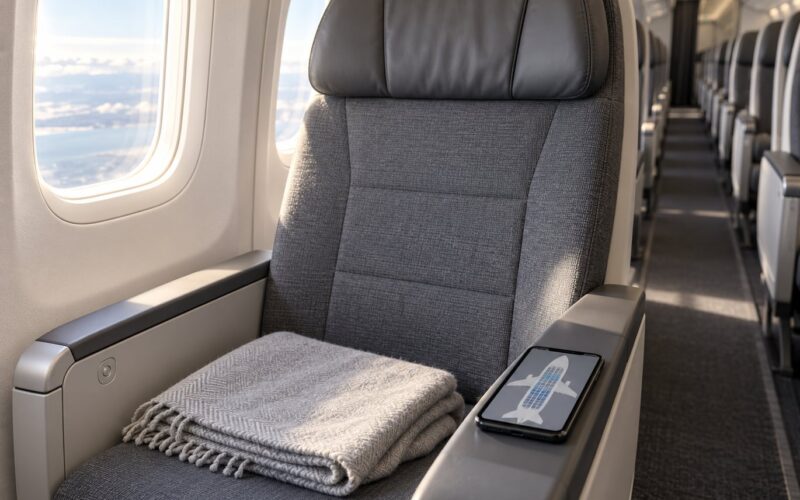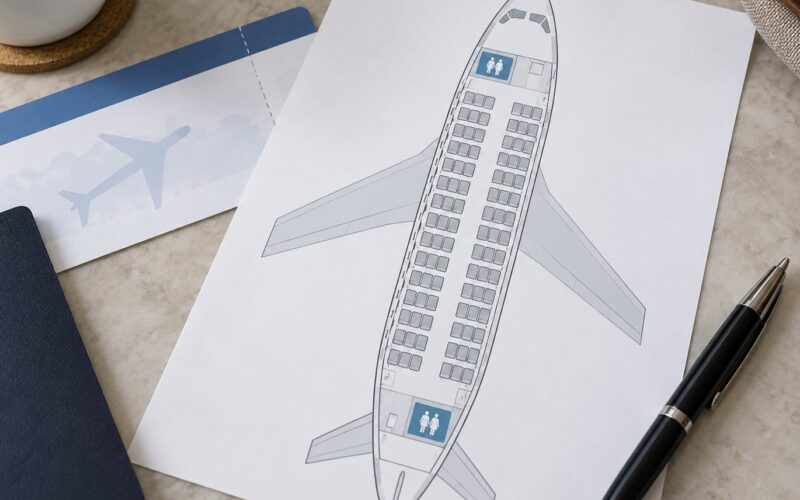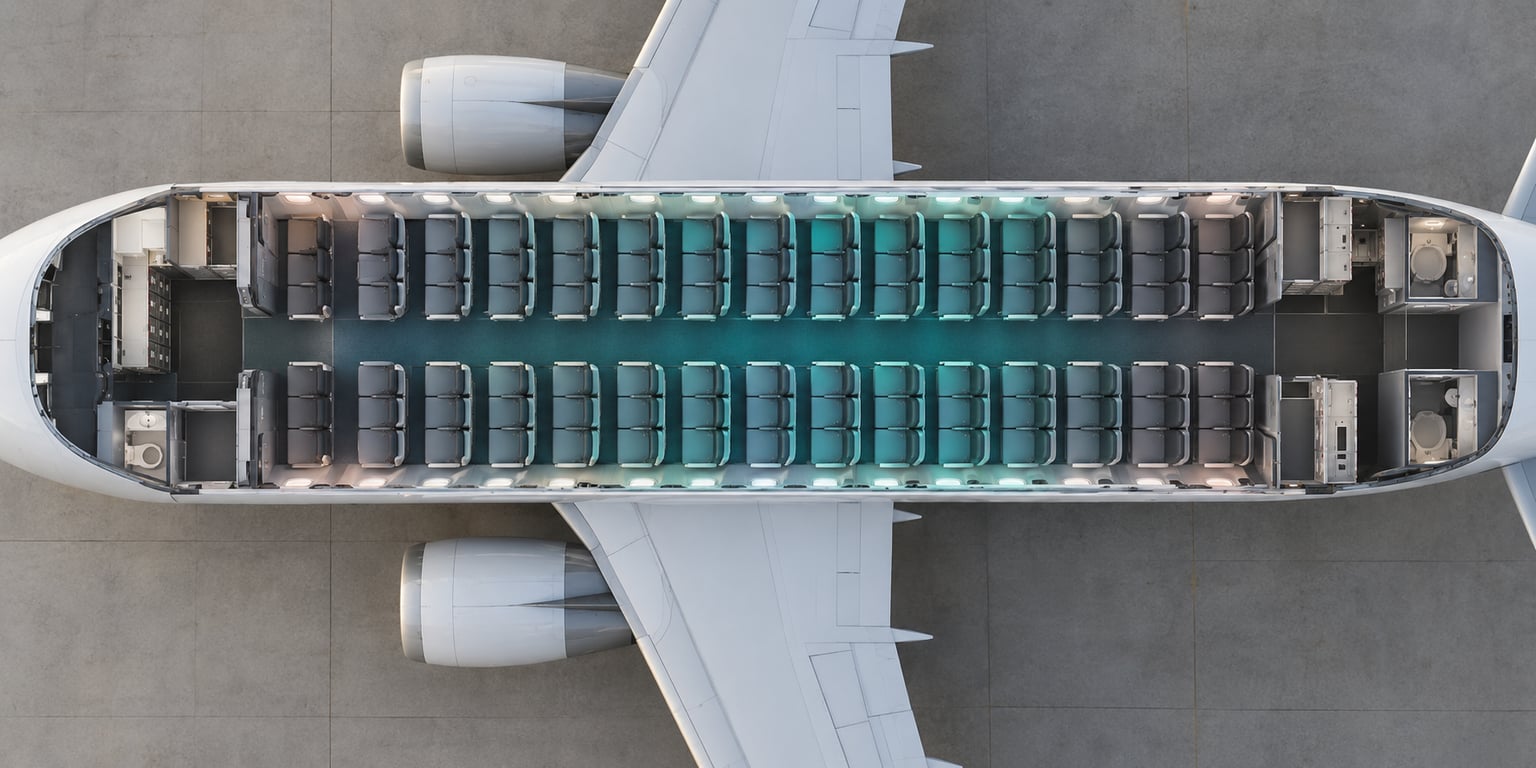
Seats near the galley are noisy because the galley is an open, hard-surfaced kitchen built right against the cabin wall, separated from the cabin by a curtain or doorway instead of a soundproof bulkhead. Cabin crew voices, catering cart casters, ovens, coffee urns, tray prep and lavatory traffic all transmit straight into the first few rows.
I fly this route often enough that I stopped pretending it is random. The same seat can be quiet on one airline and a running commentary on another, and the difference is usually not the aircraft at all. It is where the galley sits, how many crew are working in it, and what time of day you are there.
Table of Contents
- Why Seats Near the Galley Are Noisy
- Why Seats Near the Galley Are Noisy on Different Aircraft
- Which Sounds Travel the Furthest From a Galley?
- Galley noise by time of flight
- How Far Away Should You Sit to Avoid Galley Noise?
- Why Seats Near the Galley Are Noisy During Peak Service Times
- How to Choose a Quieter Seat Without Giving Up a Preferred Area
- When a Galley Seat May Still Be the Best Choice
- Frequently Asked Questions
- Are seats in the first or last row the noisiest?
- Why can a seat beside one aircraft’s galley be quieter than the same row on another plane?
- Are front and rear galley seats equally noisy?
- Do airplane lavatories make nearby seats noisy too?
- Can earplugs or headphones reduce galley noise during a flight?
- Conclusion: What to Do First
Why Seats Near the Galley Are Noisy
The short version: the galley is a shared work area, not a closet. Cabin crew store meals there, heat them, break them down, argue about the timing, and talk to each other across a narrow aisle while passengers ten feet away are trying to sleep. That background activity is unavoidable during service, and no airline fully soundproofs it.
A galley is a compact kitchen: carts that lock into floor tracks, ovens and warmers, a coffee urn, storage bins for drinks and ice, waste containers, and a work surface. Walls, floor and ceiling are hard surfaces chosen for weight and cleanability, not for absorbing sound. Open a doorway into that space and the cabin picks up everything happening inside it.
Two paths carry the sound. Airborne sound travels through the open doorway, which is why voices and cart rattle reach your ear so clearly. Structure-borne sound travels through the floor and seat frame, which is why you feel a cart lock into position rather than just hear it.
Why Seats Near the Galley Are Noisy on Different Aircraft
Identical row numbers do not produce identical noise levels. Cabin length, galley count, floor build and where the crew rest area sits all change what reaches you, and the same airline reuses a seat number for different physical positions on different aircraft.
Narrowbody jets on short-haul routes usually run one forward galley and one aft galley with the lavatories tucked close by, so noise arrives from the front and the back of a short cabin. On a long flight the forward galley works continuously, which is exactly the galley most travelers notice.
Widebodies have more room and often an additional mid-cabin galley, so the noise sources are spread further apart but each one serves more people. Premium cabins near a forward galley can be quieter than economy rows in the same position, simply because the airline places more soft trim and thicker carpeting there.
Older aircraft are often worse. Thin floor carpeting and light insulation transmit footsteps and vibration from the aisle, so carts and crew movement arrive as a thump rather than a sound. Traveler forum threads about front-row seats usually blame the floor build rather than the galley itself, which matches what you feel underfoot.
Position matters as much as aircraft. A seat on the opposite side of the cabin from an active galley is often quieter than the same row on the galley side. Plenty of people take that trade knowingly: a busy galley two rows ahead on the other side of the aircraft barely reaches them at all.
Which Sounds Travel the Furthest From a Galley?
Different galley sounds travel differently, and the loudest one for you depends on where you sit and when. These are the sources travelers report most often, roughly in order of how far they carry into the cabin.
- Cabin crew conversation. Voices carry the furthest and the fastest. Crew work shoulder to shoulder in a narrow space and raise their voices over the ovens and the cart noise, which is why a group chat in the galley is the complaint you will hear most. On a night sector it can run for an hour without a break.
- Catering carts and casters. Wheels on a smooth cabin floor amplify vibration, and a cart being pushed into its floor track produces a short, sharp thud that carries through the seat frame. Two carts meeting in the aisle are the loudest mechanical event of the service.
- Ovens, warmers and the coffee urn. These add a steady hum and rattle rather than peaks. You notice them most in the first rows and least in the middle, where the noise floor of the cabin masks them.
- Tray and cutlery prep. Trays set down, lids peeled, ice dropped into glasses and ice buckets jostled. This is short, sharp and irregular, and it happens in concentrated bursts around each service round.
- Overhead bins and storage. Bin doors slamming and bags being shoved into a full bin come from the whole aisle, not the galley, but they cluster around galley rows because that is where late boarders stash their bags.
- Lavatory traffic and waste handling. Doors, queues, flush cycles and the service cart that parks outside the lavatories. This source is frequently blamed on the galley because they usually share the same end of the cabin.
- Curtains, doors and crew rest. The galley curtain sliding on its track and the crew rest area opening and closing sit low in the list, but the rest area explains the talking you hear on night sectors.
The pattern is not unique to aircraft. Passengers in cabins directly under a ship galley describe ruined nights from thrusters, tenders and deck machinery instead of carts and ovens. Different machinery, same complaint, same fix.
Galley noise by time of flight
Timing predicts the noise better than seat letters do. Here is what you are likely to hear at each stage.
| Stage of the flight | What you hear from the galley | How intrusive it is |
|---|---|---|
| Boarding | Early-rising crew, cart setup, carts being locked into place, bin doors | Short, but it lands on the passengers trying to sleep first |
| Pushback and take-off | Final prep chatter, door checks, crew call | Brief; masked by engine noise soon after lift-off |
| First service | Ovens running, tray prep, cart movement, sustained crew conversation | The loudest sustained period of the flight |
| Second service | More carts, more prep, beverage rounds, waste runs | Often louder than the first because fewer passengers are asleep |
| Night crew rest | Crew talk, the rest area door, quiet service in dim light | Quiet by day standards, devastating on a red-eye |
| Arrival and disembarkation | Carts returned, bins emptied, cleaning | Mild; most passengers are already standing |
Light behaves the same way, by the way. Galley lighting spills through the curtain or doorway, and on a night sector that is often the bigger complaint. If you book these seats, bring an eye mask as well as earplugs.
How Far Away Should You Sit to Avoid Galley Noise?
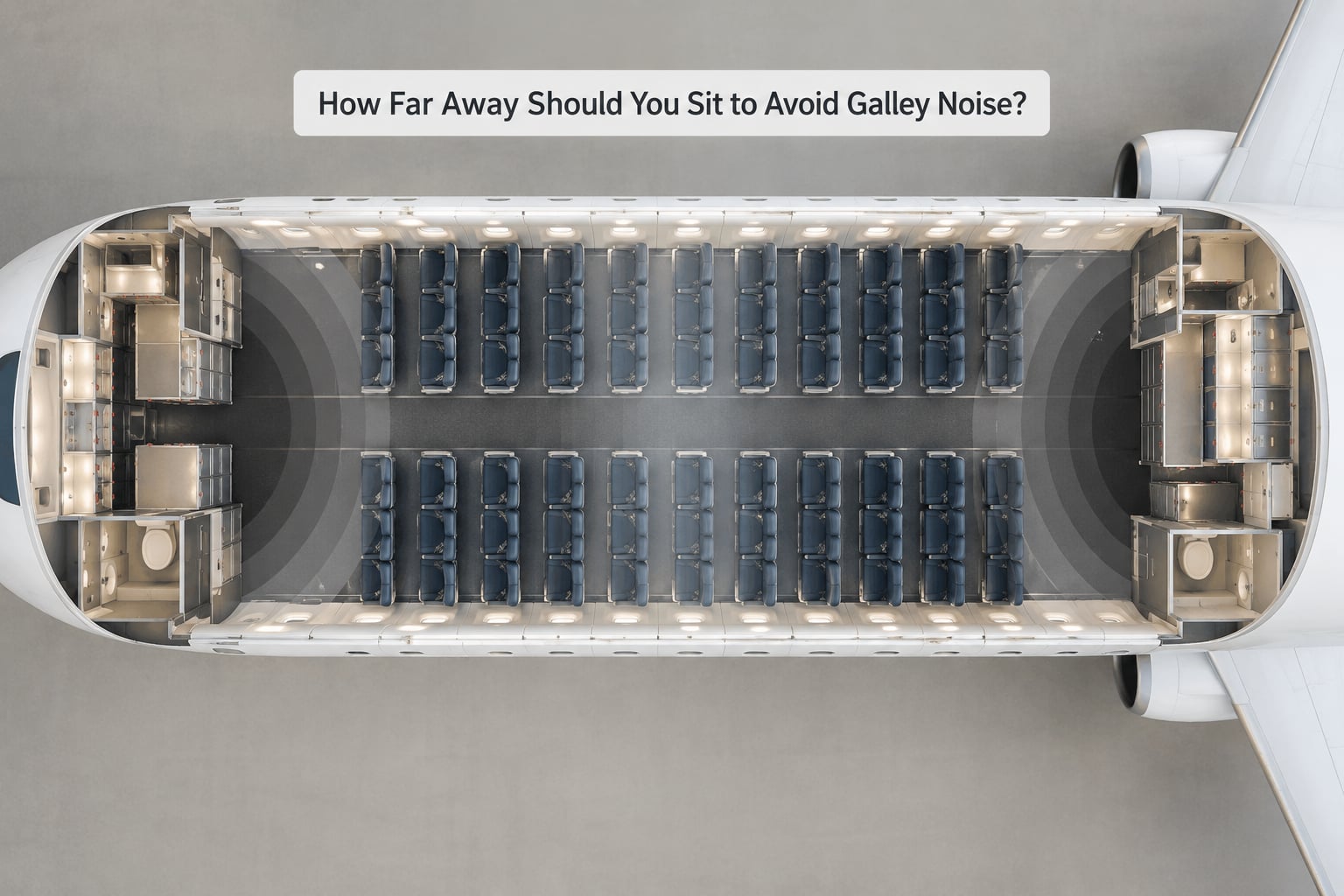
There is no universal row rule, and anyone who gives you one is guessing. Sound falls off gradually rather than stopping at a line, and cabin geometry matters more than a seat number. Three rows back on one aircraft can be quieter than one row back on another.
| Seat position | What you get | Who it suits |
|---|---|---|
| Immediately beside a galley or its doorway | Full-volume crew voices, cart thuds, light spill during service | Short daytime flights where legroom matters more than rest |
| Several rows back from a galley | Service noise arrives muffled, low hum still present | Most travelers on an overnight or long flight |
| Mid-cabin, away from galleys and lavatories | Mostly the steady cabin noise floor; conversation rarely carries | Light sleepers, anyone working, red-eye passengers |
The rule of thumb that holds up best: distance helps, but a side-wall position across the cabin beats a shorter distance on the same side. Two rows back on the galley side is often noisier than six rows back across the aisle from it.
Why Seats Near the Galley Are Noisy During Peak Service Times
Galley noise is not steady. It clusters around the moments when the crew most needs the space, and those moments are predictable from the flight length.
On a short flight there may be a single service run, and the loudest window is boarding plus that one round. On a long flight you get a full meal, a second round, then quiet hours. The quiet hours are when galley noise hurts most, because you are trying to sleep while other people are working fifteen feet away.
Schedules differ by airline and by cabin, so the safest approach is to look at the service pattern for your specific flight rather than trusting a general rule. Some carriers run quieter service on night sectors, and a few run explicit quiet-crew policies in the galley. That is real and not universal across airlines, which is why the same seat can be peaceful on one operator and unusable on another.
How to Choose a Quieter Seat Without Giving Up a Preferred Area
Seat selection is where this problem is actually solved. Six things help, and the first one does most of the work.
- Look at the seat map for that specific aircraft, not just the route. Airlines swap equipment by season and by crew, and the same flight number can leave from a different aircraft type. The seat map attached to your booking is the only accurate picture.
- Identify the galleys before you pick anything. Forward and aft galley locations, the mid-cabin galley on widebodies, the crew rest area and the lavatory clusters are all visible on a good seat map. Score each candidate seat by distance from all of them, not just the front one.
- Compare the same seat letter across aircraft if you fly the route often. Seat 12A might sit beside a lavatory on one jet and in mid-cabin on another, which is why frequent flyers block seats rather than picking row numbers.
- Avoid the row that sits directly behind or ahead of a galley door or a lavatory queue. Those spots get the aisle foot traffic and door noise as well as the galley noise, so they are worse than the row number suggests.
- Prefer mid-cabin over either end. Most people assume the back is loud because of the engines and the tail, but the front is where the kitchen is. Mid-cabin, near the wings, is usually the quietest stretch on a single-aisle jet.
- Weigh the trade honestly. A window seat against the side wall gives you more cabin wall and less foot traffic. An aisle seat is quieter in one sense and louder in another, since you absorb every bag that gets stowed late.
One more habit helps: check reviews for the route shortly before you fly. Service patterns, aircraft swaps and crew policies all change, and travelers do post about galley noise on specific flights and seat numbers.
If your airline lets you choose at check-in, check in late. Boarding groups and general boarding both open up rows away from the galley first, which naturally pushes you toward the noise.
When a Galley Seat May Still Be the Best Choice
Some galley-adjacent seats are the best seats on the aircraft. Row 1 and the bulkhead row in a premium cabin often have the most legroom, the easiest bathroom access and the shortest walk to the door on a red-eye. Bassinet spaces sit near the front, so families need those rows deliberately. A seat next to an empty galley on a three-hour daytime flight is barely a trade at all.
So the answer is not to avoid these seats forever. It is to pick them knowingly and prepare for the loud window. Earplugs work, and travelers consistently favour double-padded foam over basic ones for the dull rumble of carts and voices. Noise-cancelling headphones are better still for mid-frequency voices, though they help less with the sharp peaks of a cart hitting its track.
Plan around the timing too. If you land on an early morning short flight, sleep before you board and stay awake through the service run. On a long night flight, use the quiet hours when service has finished rather than trying to sleep through the meal.
And the thing most nervous flyers need to hear: a noisy galley is a comfort issue, not a safety one. Aircraft are built so passengers cannot easily overhear each other, which means a cabin is acoustically tighter than most rooms you sit in. Rattling carts, crew chatter and thin floor insulation tell you about the layout of the aircraft, not about its condition.
Frequently Asked Questions
Are seats in the first or last row the noisiest?
Usually the first few rows and the last few rows, for different reasons. Forward rows sit next to the galley, so you get crew voices, carts and light spill. Rear rows are close to the aft galley and lavatories, which adds cart noise and queue traffic, and on some aircraft the engines are noticeably louder from behind. Middle rows are the quietest on almost every layout.
Why can a seat beside one aircraft’s galley be quieter than the same row on another plane?
Because the row number is a label, not a location. Aircraft differ in cabin length, galley count, whether there is a mid-cabin galley, where the crew rest area is, and how much soft trim surrounds the seat. Seat letters also move between aircraft on the same route, so the seat you know from one flight may sit somewhere completely different on the next one.
Are front and rear galley seats equally noisy?
Not quite. Forward galleys tend to work longer and harder, because they serve the whole cabin from the first service onward, and on many aircraft they are on the opposite side from the aft galley. Aft galleys serve the last rows and tend to be busier at the end of a flight when carts are being returned. A busier forward galley will reach row 1 more than row 40.
Do airplane lavatories make nearby seats noisy too?
Yes, and passengers often blame the galley for it because the two usually share the same end of the cabin. You get door open and close, flushing cycles, queues in the aisle and the lavatory service cart parked outside. Aisles next to a lavatory also collect heavy foot traffic all flight long. If both a galley and a lavatory cluster are near a row, choose the other direction.
Can earplugs or headphones reduce galley noise during a flight?
They help, and most travelers use them. Double-padded foam earplugs do well against the steady hum of ovens, the rumble of cart wheels and the crew chatter that arrives as mid-range sound. Noise-cancelling headphones are stronger against voices and dull rumble but weaker against sharp peaks, such as a cart locking into its track. Both work far better when fitted before service starts than after.
Conclusion: What to Do First
Start with the seat map for the actual aircraft, before you book if you can and before you check in if you cannot. Mark the galleys, the crew rest area and the lavatories, then pick the seat that sits farthest from all of them on the side you want. If the only seats left are galley-adjacent, take them anyway and bring double-padded earplugs and an eye mask. A noisy galley tells you where the aircraft keeps its kitchen, nothing more.