Learning how to choose a seat when flying with a toddler comes down to four things: keep the child away from the aisle, keep an adult within arm’s reach, stay clear of the galley and lavatory, and skip exit rows. Add a car seat or a bassinet request to that and the decision gets narrower still. Here is how the seat map actually works, and what parents wish they had known before booking.
The good news is that a toddler is the easiest age to seat well. They don’t need to unbuckle, reach an aisle, or understand the armrest debate. The whole job is picking the right pair of letters in the right row, then claiming it before someone else does.
What you don’t want to do is pick a seat by price or by whatever remains at checkout. That is how families end up in the last row near the galley, or split across an aisle with a toddler in a car seat on one side and a parent on the other.
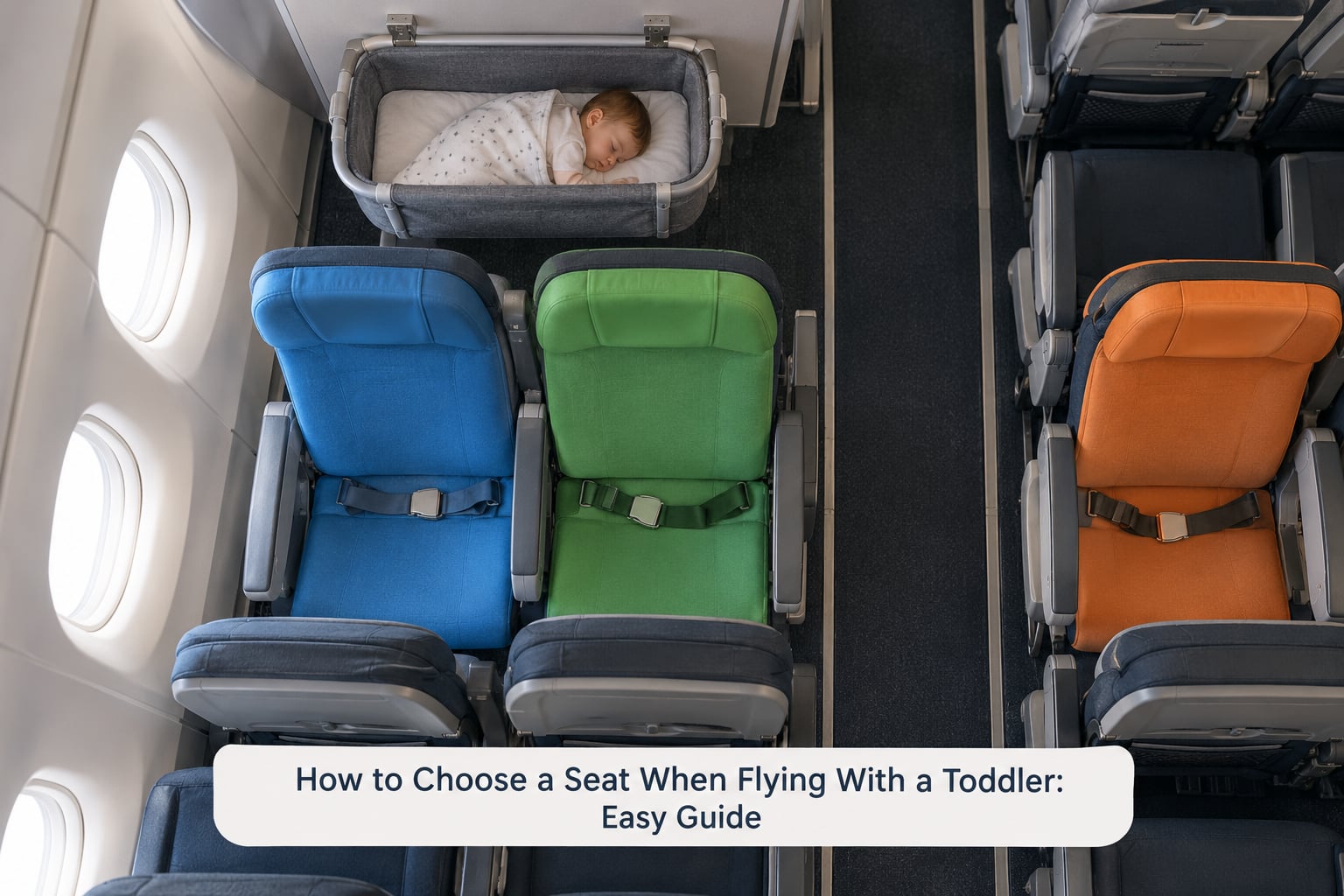
Table of Contents
- What You Need to Choose a Seat When Flying With a Toddler
- The aircraft type and cabin layout
- The seat map itself, with the galley and lavatory marked
- Bassinet availability, if a bassinet is even relevant
- Airline policy on your specific booking
- Your child’s actual needs
- The car seat or stroller logistics
- How much time you actually have
- How to Choose a Seat When Flying With a Toddler: Step-by-Step
- 1. Start With the Basics: How to Choose a Seat When Flying With a Toddler
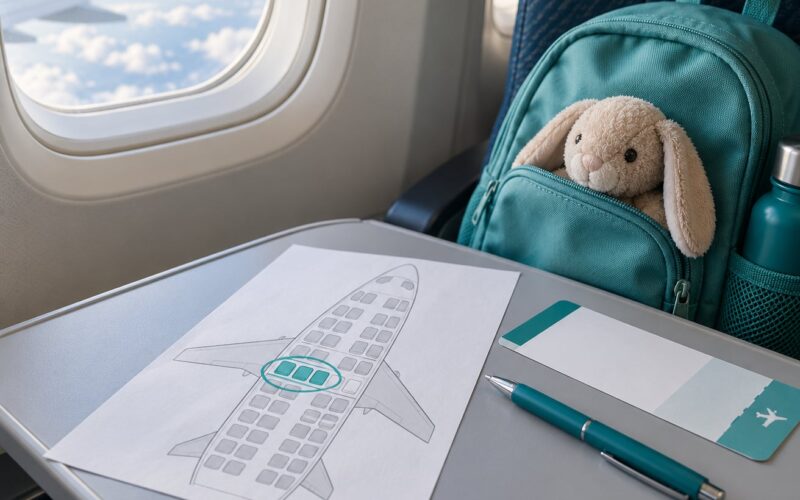
- 2. Check the Aircraft and Seat Map Before Booking
- 3. Book Early and Look for a Back Cabin Favorable Pair
- 4. Confirm Bassinet, Car-Seat, and Airline Rules
- 5. Plan for Boarding, Takeoff, and Landing
- Common Mistakes When Choosing a Toddler-Friendly Seat
- Choosing by price instead of position
- Assuming every row is the same
- Ignoring the lavatory and galley
- Buying an exit row
- Counting on a bassinet that was never confirmed
- Forgetting how old and how big the child is
- Splitting the family across an aisle
- Leaving the travel day itself unexamined
- Frequently Asked Questions
- Is a window seat or an aisle seat better for a toddler?
- Where should I sit if my toddler needs a flight bassinet?
- How early should I choose seats when flying with a toddler?
- Does my toddler need their own seat, and can I bring a car seat?
- Why can’t my child sit in an exit row?
- What happens if the airline swaps the aircraft after I picked seats?
- Conclusion: Make the Seat Choice Early
What You Need to Choose a Seat When Flying With a Toddler
Before you open a seat map you need five pieces of information. Without them, any seat you pick is a guess.
The aircraft type and cabin layout
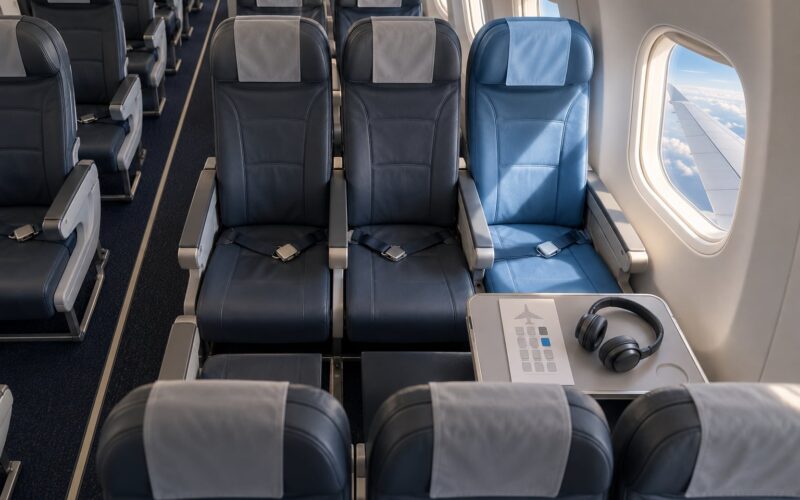
The same seat letter means different things on different planes. On a 737 or A320 you get a narrow-body 3-3 layout with no seatback screens and about 31 inches of pitch. On a 777, 787 or A350 you get a wide-body where the same letter may sit in a 3-3-3, 3-4-3 or 2-4-2 arrangement.
Check the aircraft assigned to your flight number before you look at seats. Airlines swap equipment routinely, and the layout you planned around can change overnight.
The seat map itself, with the galley and lavatory marked
You need to know which rows sit beside the toilets, which sit beside the galley, and which are the first and last rows of the cabin. Every seat map tool shows the aircraft, but most parents never scroll to find the lavatory block before picking.
Bassinet availability, if a bassinet is even relevant
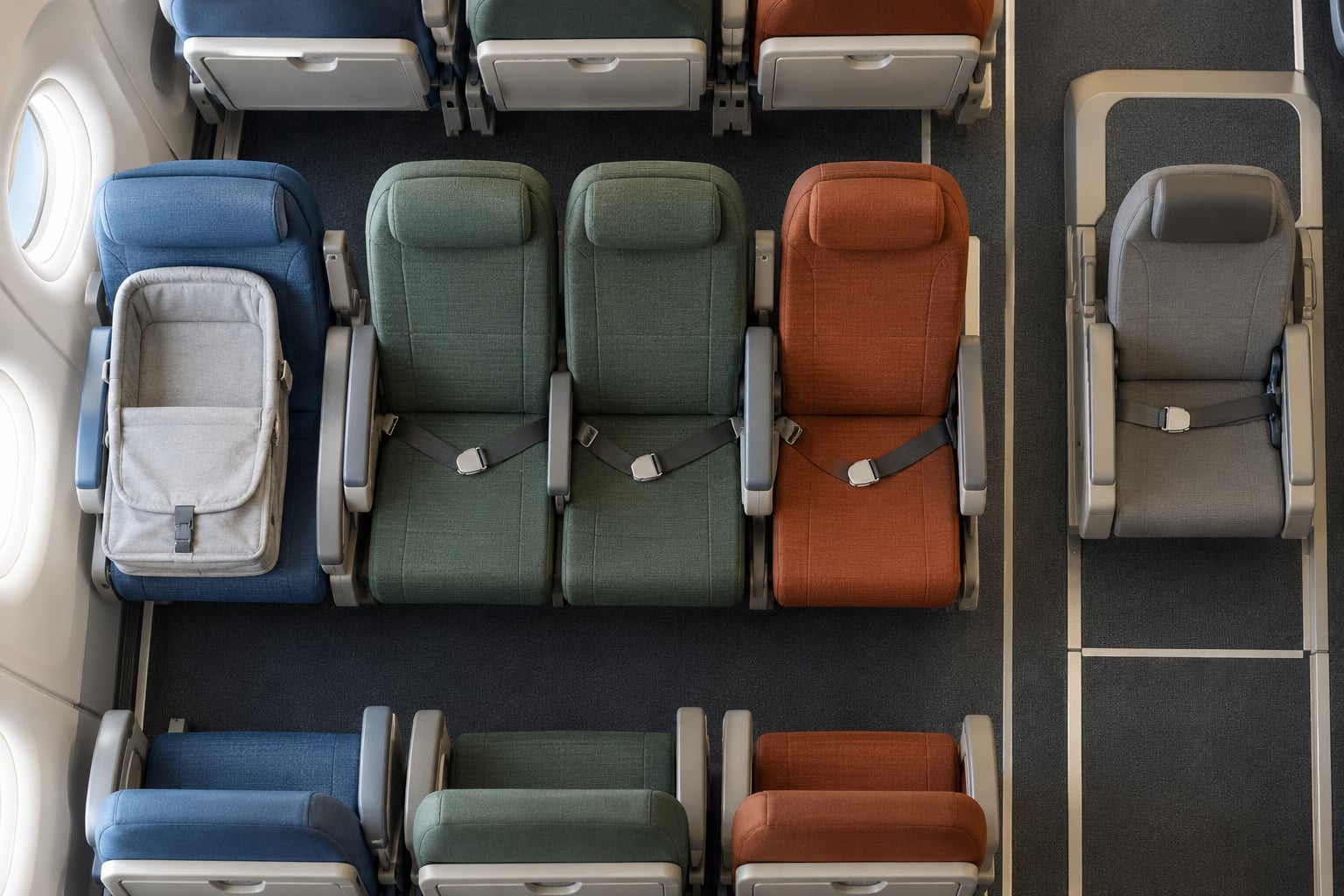
Bassinet attachment points only exist in bulkhead rows on most aircraft, and the number per plane is small, often four to ten. Availability is by seat, not by request order, and it has to be arranged through the airline rather than assumed from the seat map.
Airline policy on your specific booking
Two rules matter most: the age limit for lap infants, which is under 2 on every major US carrier, and the exit row age requirement, which is 15 on all of them. Beyond that, carriers differ on when free seat selection is included and how early bassinet requests can be made.
Your child’s actual needs
Decide before you book whether the toddler will sit on your lap, in their own seat, or in a car seat you are bringing on board. That single answer eliminates about half the options on the map, and it changes which row you are aiming for.
The car seat or stroller logistics
If a car seat comes into the cabin, it must be installed in a window seat. If it is gate-checked, the installation happens in the jet bridge and your boarding time grows by ten minutes or more. Know which one you are doing before you pick letters.
How much time you actually have
Preferred rows in the middle of the cabin go months ahead on a busy route and stay open on a Tuesday afternoon flight in February. Seat choice is a supply problem more than anything else, and early is the only reliable strategy.
How to Choose a Seat When Flying With a Toddler: Step-by-Step
Here is the order of operations that gets it right. It takes about fifteen minutes once you know what to look for.
1. Start With the Basics: How to Choose a Seat When Flying With a Toddler
Start by naming the constraint, then work outward from it. Most families fall into one of four setups, and each one points at a different seat type.
Toddler in a car seat: the car seat goes in a window seat, so the child is out of the aisle and out of foot range. The adult takes the middle seat beside them. This is the most common setup for 18-month-olds to 4-year-olds, and it constrains you to the two-seat side of a narrow-body.
Lap infant plus a toddler: one adult holds the baby, which usually means that adult takes the aisle or middle seat next to the other adult. Neither adult can easily get up, so proximity to the lavatory matters more than usual.
Toddler in their own unbuckled seat: the child can be in a middle or window seat. Put an adult on the aisle, the child in the middle, and the second adult on the window. This is the arrangement most parents land on, and it is the easiest one to sell.
Solo parent with one or more children: take the aisle seat yourself and put the children in the middle and window beside you. On a 3-3 narrow-body that is a single-seat island, which is workable. On a 3-3-3 wide-body, request a two-seat pair if you can get one.
Write your setup down before you open the seat map. Once you are looking at a grid of letters, it is very easy to fall for a row that looks nice and solve a problem you do not have.
2. Check the Aircraft and Seat Map Before Booking
Open the airline’s seat map for your exact flight number and confirm the aircraft type in the flight details. Then look for four specific things.
Find the lavatory block. On a narrow-body there is usually one pair of lavatories at the back and sometimes a small one at the front. Rows beside them get the door opening and closing, the queue, and the hand-washing noise for the whole flight. Two rows back is the sweet spot: close enough for a fast diaper change, far enough to avoid the traffic.
Find the galley. On a narrow-body it is usually at the front and again at the back near the lavatories. The rear galley means carts rattling for coffee service in the first and last hour. On a 2-4-2 wide-body, seats in the middle pair sit right beside a galley on some aircraft, which is the worst possible spot for a toddler who is going to be awake at 3 a.m.
Check the window alignment. On some wide-body layouts the middle section’s windows do not line up with the seats, so a child in the middle of a four-abreast section gets a wall instead of a view. Not a dealbreaker, but worth knowing if your toddler is the kind who needs to stare at something.
Check the seatback screen situation. A seat without a screen in front of it is not automatically bad with a toddler, since most of them will ignore it. But if the row behind the bulkhead has no screen and no legroom, skip it.
Then eliminate exit rows outright. Exit rows are off limits to anyone under 15, and airlines will refuse to seat a family with a toddler there even if you paid for it. A bulkhead row behind an exit row also has a fixed tray table that does not stow, which rules it out for the same reason.
3. Book Early and Look for a Back Cabin Favorable Pair
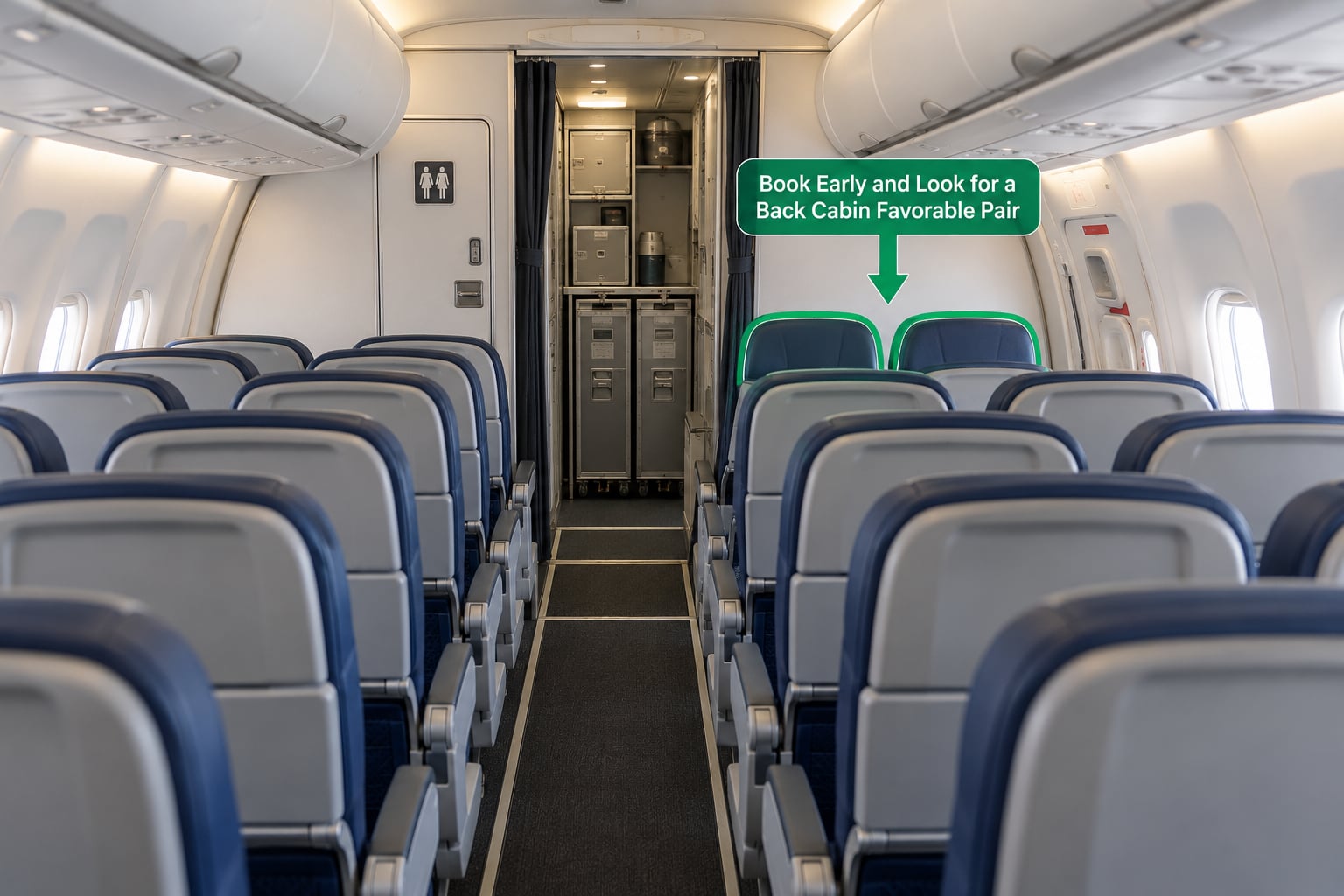
Seat selection on a popular route is a race, and the middle of the cabin fills first. If you want a specific pair, book it the day the schedule opens.
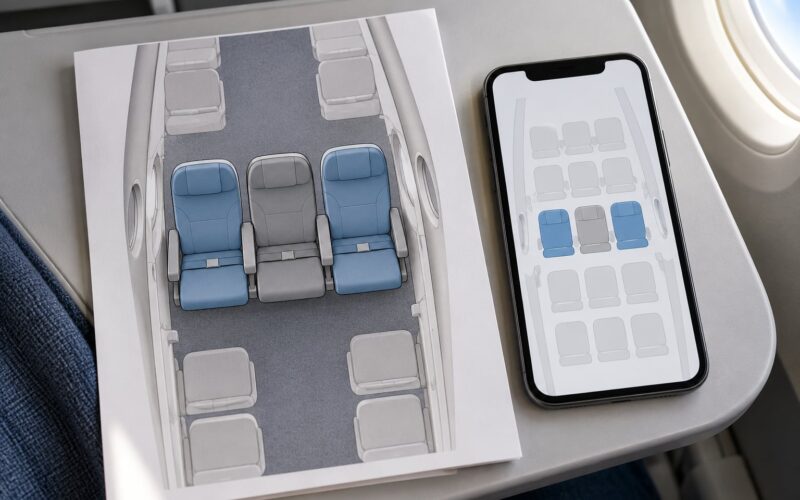
What counts as a favorable pair depends on your setup. On a 3-3 narrow-body, the best real estate for a family is a three-seat row roughly one third back from the front of the cabin, away from the lavatories. On a 3-3-3 or 3-4-3 wide-body, look for the two-seat or three-seat groups at the edges of the cabin rather than the four-abreast middle.
For overnight long-haul, weight the quiet end of the cabin over the front. A parent on the aisle in the back third, with the toddler in the middle and the other adult on the window, tends to stay quieter through the second half of the night.
On the TripAdvisor Air Travel Forum, parents keep recommending the first row of either cabin for exactly one reason: there is no seat in front, so a restless child has nothing to kick. That is a real trade. You lose underseat storage and sometimes a tray table, but you gain the only thing that actually causes most toddler meltdowns on a plane, which is being told to sit still while a foot hits a stranger’s seatback repeatedly.
There is one more strategy worth naming, because it shows up constantly in family travel forums and works more often than it fails. On a three-seat row, book the window and the aisle and leave the middle seat vacant. If the flight is not full, the middle becomes extra space and the toddler gets a play surface. If it does sell, the middle passenger almost always moves to sit with their own travel companion, and the family ends up together anyway.
Parents on r/Travelwithkids describe running this arrangement on nearly every 3-3-3 flight. The caveat is that you are betting on the kindness of one stranger, and it fails occasionally. If your child is a toddler who needs an adult physically within reach at all times, book three seats rather than gambling.
4. Confirm Bassinet, Car-Seat, and Airline Rules
This is where good intentions meet paperwork, and it is the step most families skip.
Bassinet requests. Bassinets attach only in designated bulkhead rows, they must be removed for takeoff and landing, and there is usually a weight limit around the low twenties in pounds, which rules out most toddlers over about a year old. Request them when you book, not at the gate, and get confirmation in writing. Mumsnet threads are full of parents who requested a bulkhead bassinet, got a confirmation email, and arrived to find the bassinet already taken or broken.
Car seats on board. Any car seat installed in the cabin must be FAA approved, which you can verify by checking the label on the seat itself. It must be installed in a window seat, and you will need a belt extender, which you request from the flight attendants after boarding and which is not guaranteed on every aircraft. Wide-body seats are wider, so a car seat that feels cramped in economy on a 737 may fit fine in a 2-4-2 or a 3-3-3.
The kick problem. A toddler in a rear-facing car seat cannot see the seat in front, so their feet go against the seatback. This is the single most common source of guilt on family flights, and it is a seating decision. Choosing the first row of the cabin, so there is no seatback to kick, solves it completely. Experienced flyers on FlyerTalk make a related point about bulkheads being good for car seat installs, since there is no seat in front, and bad for storage, since you give up the underseat bin.
Lap child versus own seat. Under 2 on US domestic flights, lap travel is allowed and the fee is usually a fraction of a ticket, typically ten percent of the adult fare plus taxes. At 2 and older, lap travel stops being an option and you need a seat or a car seat. Many parents buy the seat anyway on long flights because a strapped-in child can sleep and a lap child usually cannot.
Gate checking. If you gate-check a stroller or a car seat, it is usually free but it comes back at jet bridge height, not the baggage carousel, and that varies by airline. If you are installing a car seat at the gate, build in extra time. On a wide-body with a bassinet request and a car seat install simultaneously, you are looking at a considerably longer boarding.
5. Plan for Boarding, Takeoff, and Landing
The seat is only half the trip. The other half happens in the twenty minutes around boarding and the forty around takeoff and landing, when a toddler cannot sit still and cannot be distracted much.
Ask the airline about preboarding. Most carriers board families with small children first or offer priority boarding, and the benefit is real: you get overhead space before the bins fill, you can settle the car seat without rushing, and you board before the aisle queue forms.
Put the adult nearest the aisle in the aisle seat. A WhatToExpect parent who flew with a 6-month-old recommended exactly this, aisle plus middle, and said it worked well. On r/SouthwestAirlines the same logic gets applied with a car seat present: car seat in the window, adult on the aisle, older child on the aisle too.
Think about overhead space. The bin above a bulkhead row sometimes does not open, and in a 3-3-3 the middle seat has no direct bin access. If you are carrying a diaper bag, a change of clothes and snacks, aisle access and bin access matter more than the view.
Time the lavatory runs before takeoff and after landing, and note where you sit relative to it. A potty-training toddler with a two-hour runway needs a short walk, not a hike past forty rows.
Keep dinner and the toddler’s comfort item within reach during takeoff and landing. Ear pressure is at its worst on descent, which is exactly when a toddler is usually melting down, so have the comfort item in your lap rather than in the bin.
Common Mistakes When Choosing a Toddler-Friendly Seat
Most bad seat choices come from skipping one of these steps. Here are the ones I see repeated constantly, with the fix.
Choosing by price instead of position
The cheapest seat on the map is often the last row next to a lavatory and a galley, because nobody wants it. If a carrier is charging separately for seat selection, that charge buys you a specific row, so spend it on the row you would have picked anyway rather than on a random assignment.
Assuming every row is the same
On a wide-body, the middle four-abreast section has noticeably less width and often no window alignment. On a narrow-body, the last row may have a fixed tray and no recline. Rows are not interchangeable, and the seat map is the only place that tells you so.
Ignoring the lavatory and galley
Parents research the view and the legroom, then get ambushed by the coffee cart at 6 a.m. or the toilet queue at 30,000 feet. Locate both before you pick, and aim for two rows away.
Buying an exit row
Exit rows are prohibited for anyone under 15, full stop. Some site-level fare listings let you select one anyway, and you find out at the gate. If a good deal comes with an exit row, skip it.
Counting on a bassinet that was never confirmed
A bassinet is a limited, per-flight resource. An unconfirmed request is not a reservation. If the bassinet matters, call the airline and get a reference number.
Forgetting how old and how big the child is
A 14-month-old and a 4-year-old are not the same seating problem, and neither is a 4-year-old and a 7-year-old. Weight drives bassinet eligibility and car seat mode, and age drives exit row eligibility and whether lap travel is legal at all.
Splitting the family across an aisle
A car seat on one side of the aisle and a parent on the other is the most complained-about arrangement on family travel forums, because nobody can reach the other. It happens when the middle seat sells out and nobody wants to ask for a swap. Ask. Or buy the middle seat.
Leaving the travel day itself unexamined
A red-eye that lines up with your toddler’s bedtime beats a morning flight every time. Seat selection cannot fix a flight that starts at the wrong hour, but it is worth solving the timing problem first and then choosing the best seat that flight offers.
Frequently Asked Questions
Is a window seat or an aisle seat better for a toddler?
A window or middle seat is better for the child, and the aisle seat goes to the adult. The window side keeps the toddler out of foot traffic and away from the aisle, and it is the only position where a car seat can be installed. Adults take the aisle so they can stand up, reach the lavatory and manage the aisle seat without climbing over anyone.
Where should I sit if my toddler needs a flight bassinet?
You need a bulkhead row, because bassinet attachment points only exist there and most aircraft have between four and ten of them. Request the bassinet when you book and confirm it with the airline, since availability is per flight and per seat. Note the weight limit, usually around 22 pounds, and that the bassinet has to be removed for takeoff and landing.
How early should I choose seats when flying with a toddler?
As soon as the schedule opens, and at minimum before you pay for anything else. Mid-cabin pairs on popular routes go quickly, and families who wait for check-in get whatever is left. If you need a specific row, book it immediately when the flight appears. Seating a family of four together is a supply problem, not a preference problem.
Does my toddler need their own seat, and can I bring a car seat?
Under 2 on US domestic flights, a lap infant is allowed. At 2 and older, lap travel is no longer permitted and you need either a purchased seat or a car seat. You can bring your own car seat into the cabin if it is FAA approved, but it must be installed in a window seat, and you should request a belt extender from the flight attendants after boarding.
Why can’t my child sit in an exit row?
US airlines prohibit passengers under 15 from occupying an exit row, because the seat carries extra responsibility during an evacuation and younger passengers cannot perform it. Airlines check ages at boarding and will move your family to a standard seat even if the exit row was paid for. The same rule is why rows behind a bulkhead are sometimes unsuitable, since they have a fixed tray table.
What happens if the airline swaps the aircraft after I picked seats?
Your seat letters may not mean what they did. A swap from a 737 to a different narrow-body is usually harmless, but a change to a wide-body changes the cabin layout entirely, and your window seat can land in a three-abreast or four-abreast section instead of two. Check the aircraft on your confirmation again the day before departure, and have a backup row in mind that works in either layout.
Conclusion: Make the Seat Choice Early
Do one thing first: check the aircraft assigned to your flight, mark the lavatories and galleys on the seat map, and request your favorable pair or bassinet position the moment the flight opens for booking.
Then confirm the bassinet or car seat rules with the airline, put the child in a window or middle seat and the adult on the aisle, and stay clear of exit rows, the galley and the seats beside the lavatory. Check the aircraft again the day before you fly, because that is the variable most likely to undo your planning.