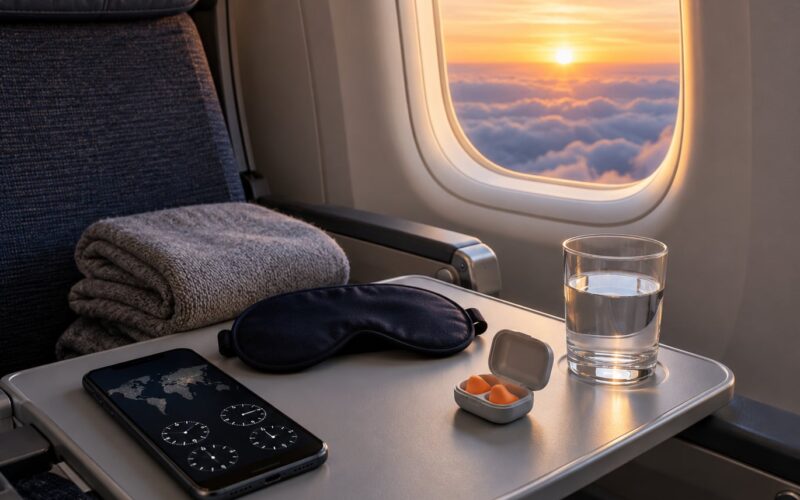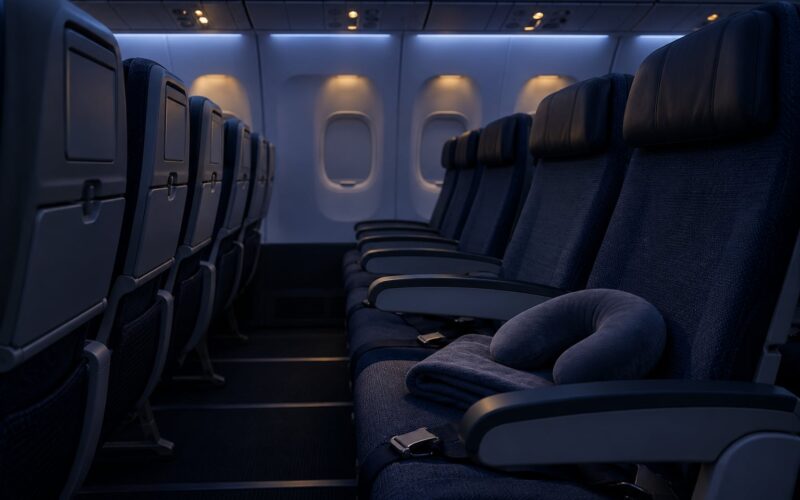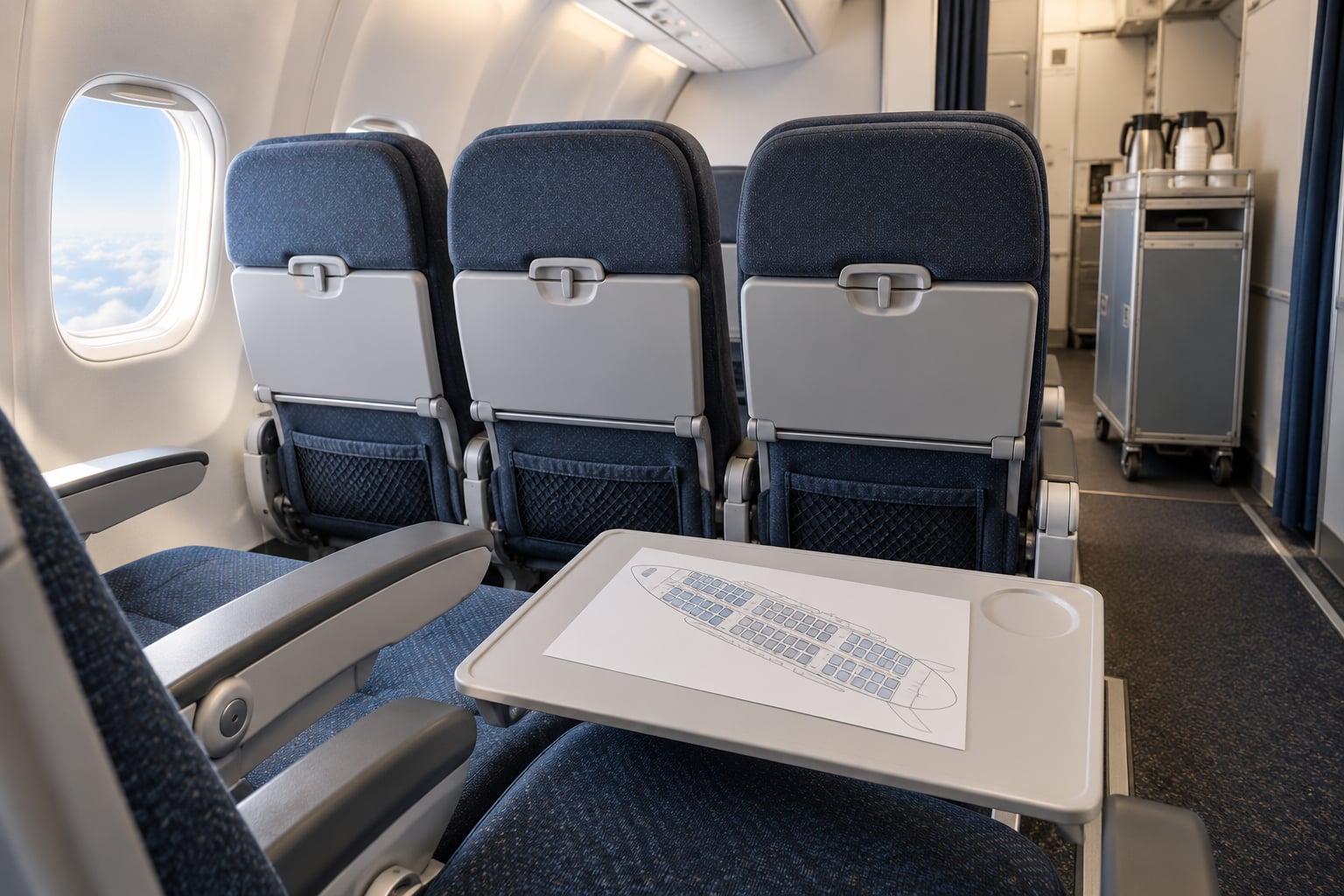
Knowing how to pick a seat for a long flight takes about five minutes and changes more about your trip than any other decision you make yourself. Most people do it backwards, choosing a row number first and worrying about window or aisle afterward. Reverse that: confirm the aircraft, decide what matters most on this particular flight, check the current seat map, then claim the seat early and recheck before departure.
The reason it matters is that seat pitch, recline and noise vary row by row on the same aircraft, and the same seat number can be a different physical seat on a different plane. A 34-inch pitch and a seat that reclines flat will get you through a 12-hour flight. Thirty inches with a fixed upright back will not.
Table of Contents
- What You Need
- Step-by-Step: How to Pick a Seat for a Long Flight
- 1. Identify What Matters Most for Your Trip
- 2. Confirm the Aircraft and Current Seat Map
- 3. Read the Seat-Map Symbols and Cabin Layout
- 4. Compare Position, Space, and Noise
- How to Pick a Seat for a Long Flight by Aircraft Type
- 5. Check the Price, Fare Rules, and Selection Deadline
- 6. Make the Selection and Verify It Before Travel
- Common Mistakes
- Frequently Asked Questions
- What is the best seat for sleeping on a long flight?
- Is a window seat or aisle seat better for a long flight?
- Are bulkhead seats worth choosing for extra legroom?
- How far forward should I sit on a long flight?
- When is it worth paying for a preferred seat?
- Conclusion
What You Need
Before you open a seat map, gather five things. Without them you are guessing, and guessing is how people end up in a lavatory row.
- Flight duration and time of day. Six hours in daylight and six hours overnight call for completely different seats. Overnight, recline and width win. Daytime, a table surface and an outlet matter more.
- The aircraft type. A narrow-body 3-3 cabin and a wide-body with a 2-3-2 economy section are different rooms. Seat numbers repeat across both.
- Your cabin and fare rules. Which seats are included, which cost extra, and which need eligibility.
- Your personal ranking. Legroom, quiet, easy movement, a view, or proximity to a bassinet fitting if you are travelling with an infant.
- Any accessibility needs. Aisle access, a seat that accommodates a service animal, or the ability to reach an exit without crossing a row.
One caveat runs through all of it: seat assignments, layouts and equipment can change by aircraft, departure and fare class. Treat every map you see as a snapshot, not a promise.
Step-by-Step: How to Pick a Seat for a Long Flight
1. Identify What Matters Most for Your Trip
Rank your priorities before looking at rows. On an overnight flight, most people want the deepest recline and the least foot traffic. On a daytime flight with work to do, a sidewall or window shade for a screen matters more.
- Sleep: recline angle and how far you sit from a lavatory or galley. Wall-side bulkhead rows do not recline, which rules them out.
- Legroom: an exit row or a bulkhead row, both of which trade storage for space.
- Easy movement: an aisle seat. Choose it if you have joint or back issues, a toddler, or a tendency to get up during the flight.
- Calm: rows away from the two lavatories and the galleys, and away from the cabin doors.
An exit row adds real legroom but removes under-seat storage, often fixes the seat upright, and carries a duty to help in an emergency. Bulkhead rows add space and lose storage too. Travellers who value a lie-flat recline usually do better giving up a little width instead.
Note the trade-off early: the further forward you sit, the stronger the smell of food and the busier the service. The further back, the more likely you get a quieter ride and the greater the chance of an empty neighbour.
2. Confirm the Aircraft and Current Seat Map
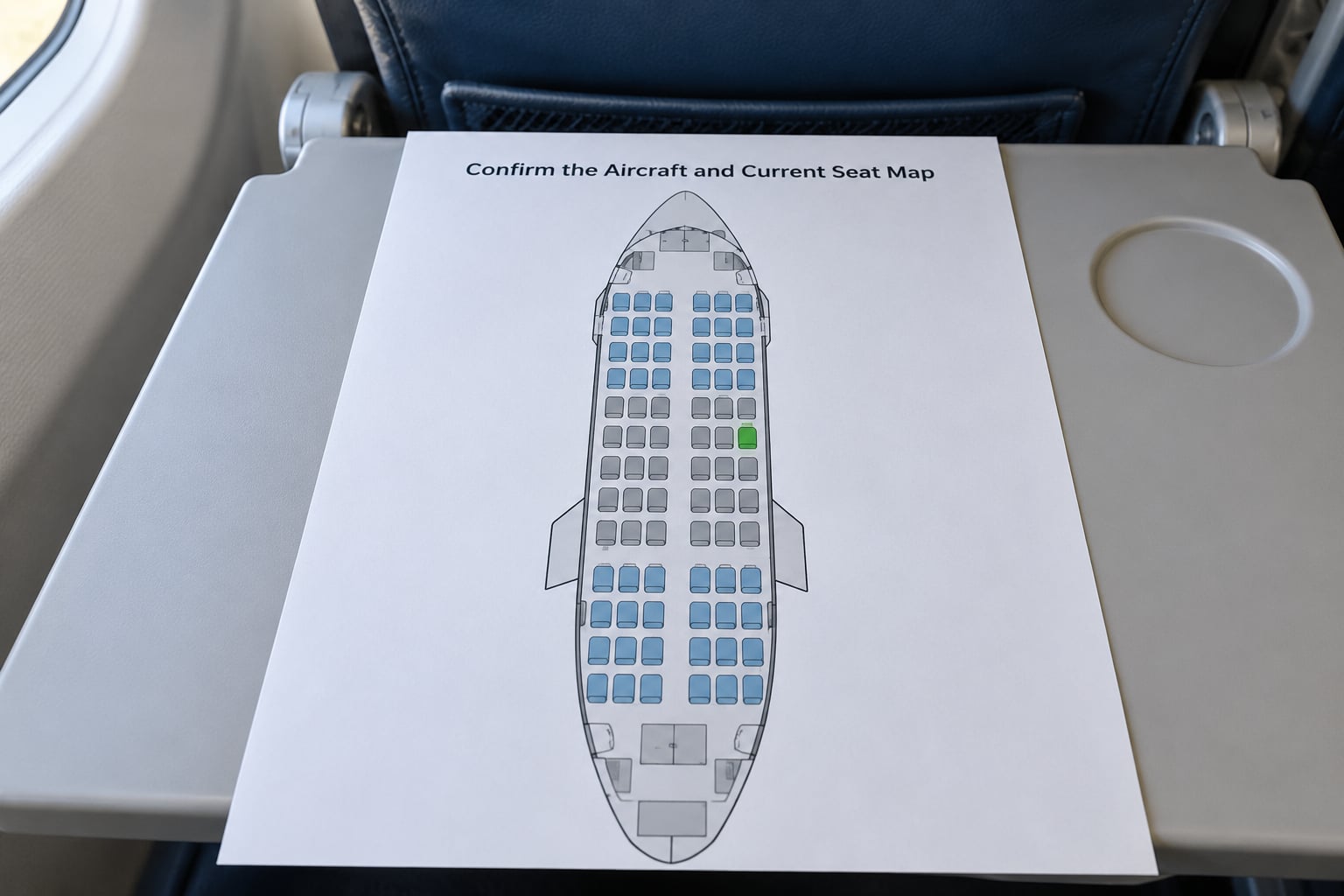
Check the aircraft before the seat. Your confirmation email usually names a code such as 738 or 789, which tells you the aircraft type even when the marketing name is vague.
Then open the seat map in the airline’s app or website for that specific flight, not a generic cabin chart. Seat numbers get recycled across equipment, so row 24C is a completely different amount of space depending on the airframe.
Cross-check with a specialist seat map database such as SeatGuru or AeroLopa if you want legroom figures and exact galley and lavatory positions. One caution worth repeating: some of these tools lag behind real configurations, so treat them as a strong hint rather than a measurement.
Schedules change, and equipment swaps happen on long-haul routes with some regularity. Set a reminder for 48 hours before departure and open the seat map again. That is late enough for most swaps to show up and early enough to change your seat if the aircraft in the booking is not the one at the gate.
3. Read the Seat-Map Symbols and Cabin Layout
Airline seat maps carry a legend, and the symbols are not decorative. Extra legroom is usually marked with a highlighted block or a leg icon. Reduced legroom often appears as a narrower block or a warning marker. Seats that do not recline are usually flagged separately.
Look for these specific symbols:
- Bassinet or nursery fittings at bulkhead rows, sometimes only on wide-bodies.
- Accessible seating with extra door or floor space, often requiring a request during booking.
- Power outlets, which on many aircraft sit under the seat or at the console between pairs.
- Preferred and paid seats shaded differently from standard ones, usually at the front or in exit rows.
- Galley and lavatory icons that mark where noise and queueing will happen.
Symbols and restrictions vary by airline and by aircraft type, so read the legend in the booking flow rather than assuming what a colour means from another carrier.
4. Compare Position, Space, and Noise
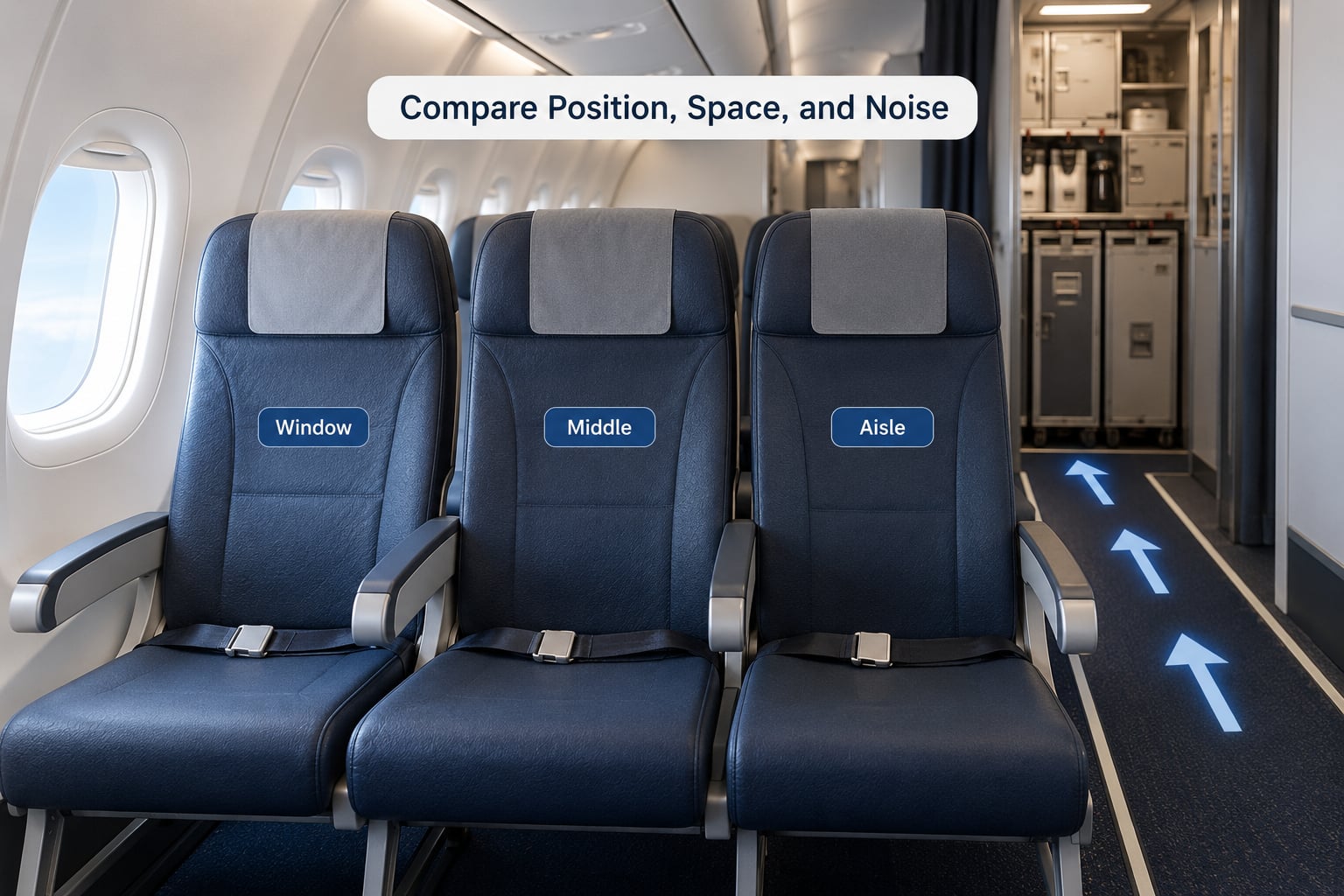
Three choices decide most of it: seat position, row position, and cabin zone. Here is how they stack up.
| Choice | Wins | Costs | Best for |
|---|---|---|---|
| Window seat | Sleeping, view, a wall to lean on, fewer disturbances | Harder to get up, must climb over someone for the lavatory | Overnight flights, light sleepers, anyone who rarely moves |
| Aisle seat | Fast lavatory access, easy standing, legroom on most aircraft | Seats bumped during service, draft, more noise | Tall travellers, mobility needs, parents, frequent lavatory trips |
| Middle seat | Two armrests, sometimes narrower | Trapped on both sides | Short flights, or last resort on a full aircraft |
| Overwing rows | Smoother ride, close to the middle of the aircraft | Wing may block the view | Motion-sensitive travellers, anyone who wants less turbulence |
| Front cabin | Quick deplaning, stronger meal service | Galley noise, food smells, sometimes narrower seats | Short connections, tall passengers wanting extra room |
| Rear cabin | Quieter, steadier, better odds of an empty neighbour | Last to board, last to deplane, extra walking | Anyone hoping for a spare seat to spread into |
Row position sets the noise. Lavatories attract a queue at unpredictable times, and galleys mean carts, lids and conversation. Avoid the row directly in front of a lavatory and any seat within a row or two of a galley if you plan to sleep.
One widely held belief is worth a quick correction. Sitting over the wing does feel steadier because you are nearest the aircraft’s centre of lift, but experienced travellers often choose a rear-cabin window seat anyway, trading a little ride quality for quiet and distance from the service traffic. Both are defensible; they optimise for different things.
How to Pick a Seat for a Long Flight by Aircraft Type
The framework does not change, but the best row does. On a narrow-body in a 3-3 layout, an aisle seat over the wing balances pitch, access and stability well, and a window seat one or two rows behind the wing keeps the view while staying in the smooth zone. On a wide-body, a 2-3-2 economy cabin has sidewall seats in the first and last columns that other passengers avoid, which makes them worth a look if your fare includes them.
Premium economy changes the equation entirely, because a seat that reclines further and a real seat width usually matter more than row position on a very long flight. In business or first class, pick for layout rather than speed: a 1-2-1 staggered arrangement gives you a window and direct aisle access, while a herringbone layout trades privacy for the aisle. Equipment and spacing vary by airline, so verify rather than assume.
5. Check the Price, Fare Rules, and Selection Deadline
Open the fare rules before deciding a preferred seat is worth paying for. The options are usually three: the seat is included, it costs extra, or it requires eligibility such as cabin class, loyalty status or a qualifying card.
Compare the fee against what you actually gain. An extra-legroom fee for twelve hours of real space is a different decision from a preferred seat fee for a window you may have gotten free at check-in.
Timing matters as much as cost. Standard seats usually open at booking. Preferred, extra-legroom and exit-row seats typically appear later, often in the 24 to 72 hour window before departure. Check-in usually opens around 24 hours out, which is the last reliable moment to pick a seat yourself.
Airline policies differ widely. One US carrier still uses open seating, where a good seat is a matter of boarding order, while most others assign seats at booking and charge for preferred ones. Budget carriers frequently deprioritise seat choice to the back of the aircraft.
Elite status and airline-branded credit cards often waive the seat fee. It is worth checking whether your own status or card already covers it before you pay.
6. Make the Selection and Verify It Before Travel
Run this list once the seat is chosen:
- Review the itinerary and confirm the flight number, date and cabin.
- Reconfirm the aircraft and terminal when the airline publishes them.
- Save the confirmation, screenshot or add the flight to the airline app so the seat is visible offline.
- Set a calendar reminder for roughly 48 hours before departure to reopen the seat map.
- Set a second reminder for check-in opening, in case the seat has moved or improved.
- Recheck the selection after any schedule change, since equipment swaps can relocate you.
If a paid seat disappears or degrades after an equipment swap, contact the airline before departure and ask about a refund or a move. Documented, specific requests get answered far more often than vague ones.
Common Mistakes
Choosing by row number alone. Row 12 means nothing until you know which aircraft. Fix: confirm the airframe first.
Assuming every bulkhead or exit row is wider. Some are identical to standard seats. Fix: read the legroom figure for that exact seat, not the seat category.
Ignoring recline limits. Bulkhead rows and rows in front of an exit row often sit upright. Fix: check for a recline symbol before choosing.
Overlooking galley and lavatory noise. A window seat beside the lavatory can mean a lit queue all night. Fix: cross-check the map for icons near your seat.
Paying for extra legroom when your fare already includes it. Fix: read the fare rules and your card benefits before checkout.
Forgetting to recheck after a schedule change. Fix: put the 48-hour reminder in your calendar the moment you book.
Travelling with a group across separate bookings. The cabin may split you apart. Fix: book everyone in one transaction and choose seats in the same block.
Frequently Asked Questions
What is the best seat for sleeping on a long flight?
A window seat away from the lavatory and galley, in a row where the seat reclines fully, is the usual answer. Sidewall bulkhead rows look tempting but often sit upright, so check for a recline symbol first. Rows over the wing feel steadiest, which also helps if you are a light sleeper.
Is a window seat or aisle seat better for a long flight?
It depends on how often you move. A window seat gives you a wall, a view, fewer bumps during service and better sleep if you stay put. An aisle seat gives you faster lavatory access, easier standing and more room to stretch, which matters for tall travellers or anyone with joint issues. Overnight, lean window; in daylight, lean aisle.
Are bulkhead seats worth choosing for extra legroom?
Sometimes, rarely as a default. Bulkhead rows give you space in front and no seat to lean into, but they lose under-seat storage and the seat usually cannot recline because of the wall. They suit travellers who value legroom more than sleeping upright. Everyone else should read the specific seat’s measurements before committing.
How far forward should I sit on a long flight?
For most long flights, the middle third of the cabin is the sweet spot: close enough to the wing for a steadier ride, far enough back to avoid galley noise and service traffic. Sitting further forward gives you quick deplaning but more noise and food smells. Sitting further back is quieter and sometimes leaves an empty neighbour, at the cost of boarding last.
When is it worth paying for a preferred seat?
Pay when you have a specific need that a standard seat will not meet: overnight sleep, tall or plus-size frame, a long-haul itinerary, or an exit row you would not otherwise get. Skip it on short daytime hops, when check-in often reveals a free better seat, or when your fare, status or airline-branded card already covers selection at no charge.
Conclusion
Start with the aircraft, not the row number. Confirm what is actually flying your route, rank your own priorities for this trip, then read the current seat map before you commit to anything.
That is how to pick a seat for a long flight without overthinking it: verify the layout, filter out galley and lavatory rows, pick window or aisle to match how you sleep and move, select as soon as the seat opens, and recheck the map 48 hours before departure in case the equipment changed.