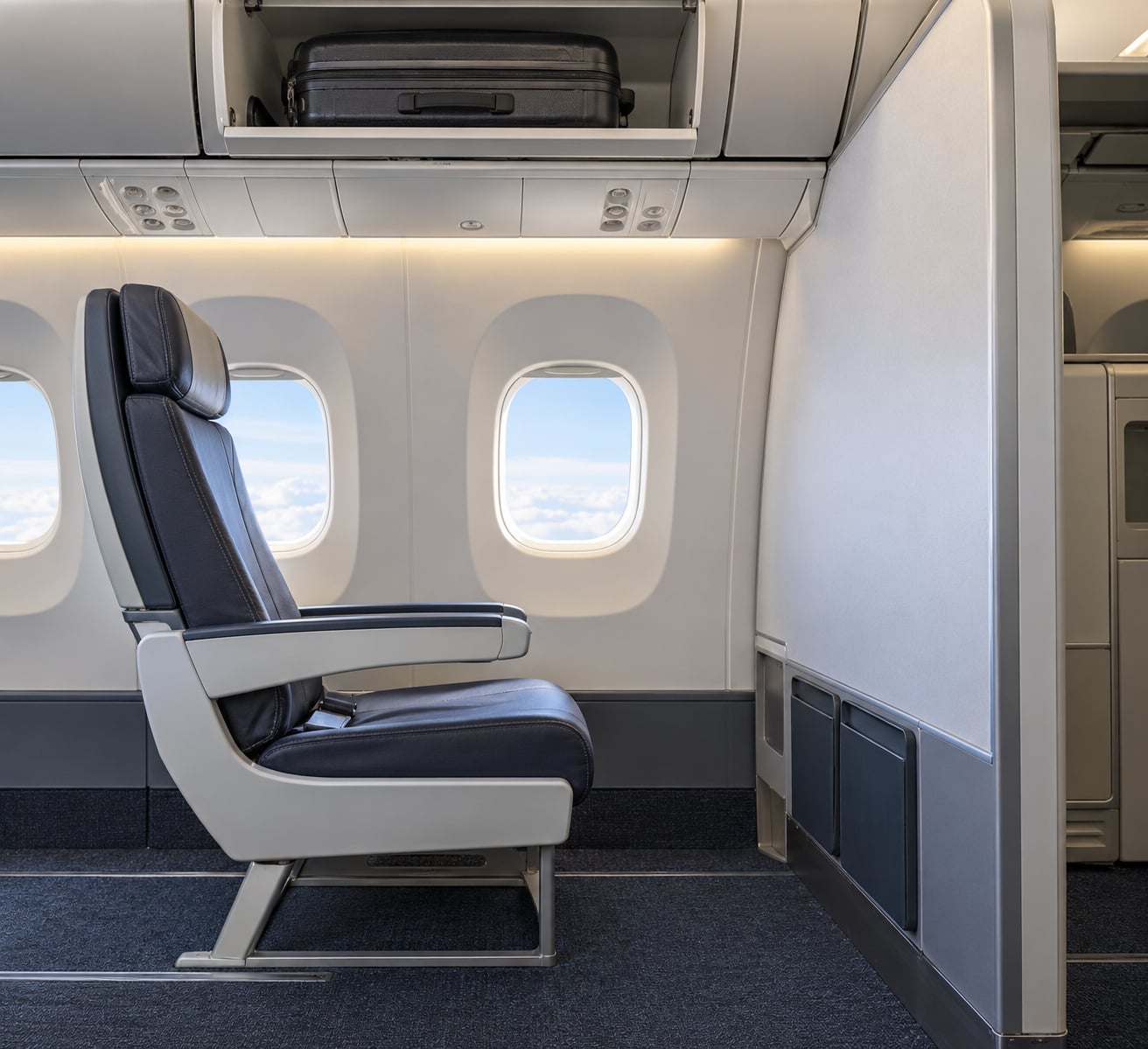
Bulkhead seats have no under seat storage because the floor in front of the row is the cabin’s emergency evacuation path, and a bag sitting there would block it. With no seat row ahead to absorb luggage, airlines require bulkhead passengers to stow everything in the overhead bin.
It catches people out constantly. You pick a bulkhead row for the legroom and the freedom from a reclining neighbor, then stand up at the gate realizing every bag you own is going in a bin that another passenger may already have filled. That is not a missing feature or a mistake on the aircraft. It is a deliberate cabin-layout decision, and understanding it changes how you pack.
There is one important wrinkle before you throw your hands up: not every bulkhead is a hard wall. Where the “wall” is really a cabin-class change or a curtain divider, there usually is a usable space under the seat in front. I will get to that, because it is the difference between a bad seat choice and an unfairly maligned one.
Last updated October 2026. Cabin layouts change with every aircraft retrofit and every seat map refresh, so treat anything below as the reasoning behind the rule, then verify your specific flight before you pay for a seat.
Table of Contents
- Why Bulkhead Seats Have No Under Seat Storage
- What Space Is Used for Instead?
- How Bulkhead Seats Differ by Aircraft and Airline
- What Are the Advantages and Disadvantages?
- How to Check Your Bulkhead Seat Before Booking
- Frequently Asked Questions
- Do all bulkhead seats have no under seat storage?
- Can I use the overhead bin for a backpack when sitting in a bulkhead row?
- Are bulkhead rows always better for extra legroom?
- Why are some bulkhead seats used for bassinets?
- How can I tell whether my flight has a different bulkhead layout?
- Is it worth choosing a bulkhead seat if I travel with a carry-on?
- What Should You Do First?
Why Bulkhead Seats Have No Under Seat Storage
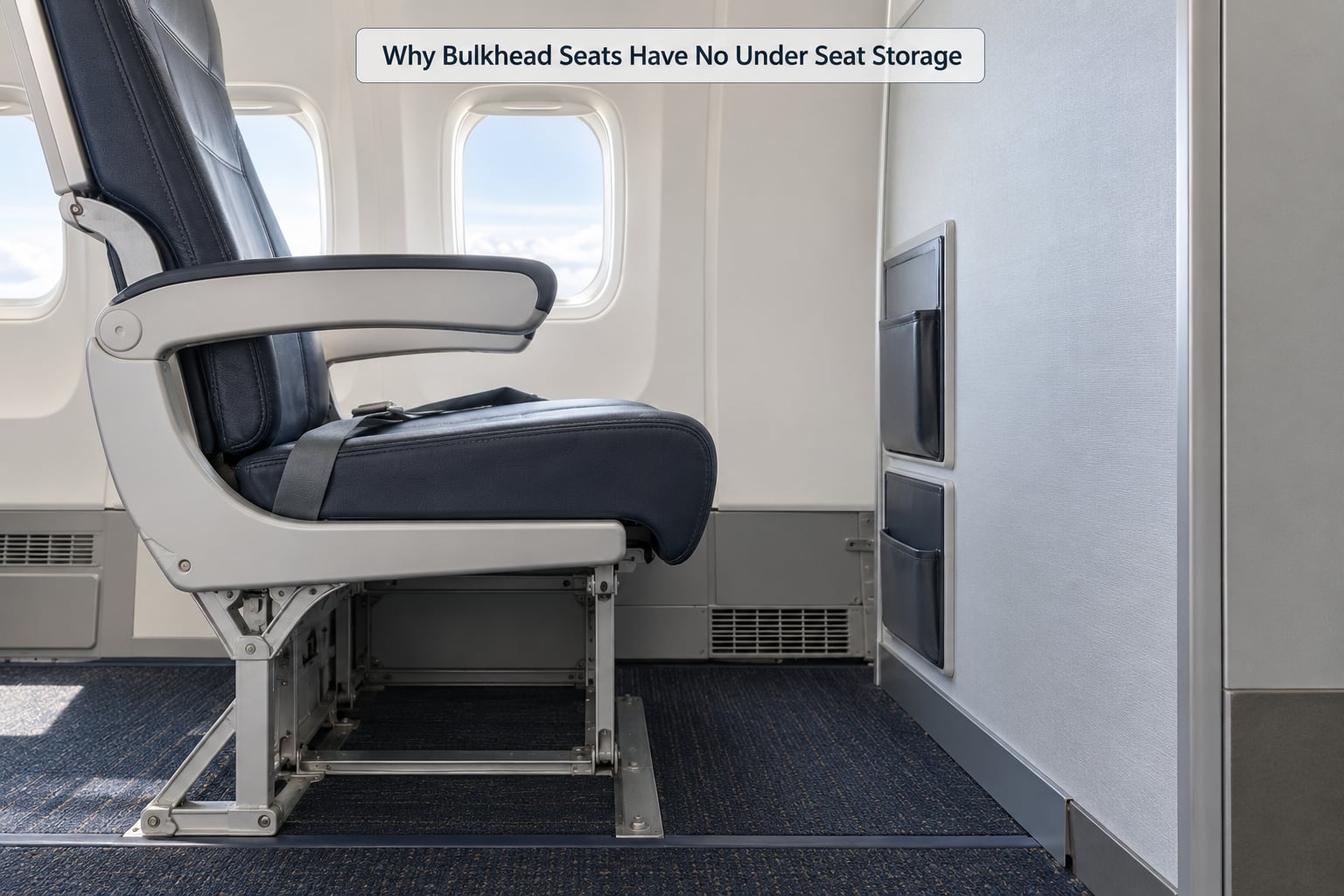
The short answer is evacuation. The floor space directly in front of a hard-wall bulkhead row is the route passengers move along to reach the nearest exit, and a standard carry-on sitting in that space turns a walkway into an obstacle in exactly the situation where nobody has time to step around one.
On a normal row the arrangement solves itself. The seat in front of you has its own under-seat cavity, so your bag slides underneath and stays out of the aisle. At a hard bulkhead there is no seat ahead to lend you that cavity, and the wall behind it means there is nowhere else on the floor to put the bag that does not sit in the egress path.
Airlines solve that by removing the option entirely rather than policing it. Cabin crew cannot enforce a floor rule in the seconds available during an evacuation, so the design just takes the storage away. Passengers on r/unitedairlines put the frustration bluntly: sitting in a bulkhead, there was no way at all to store luggage under the seat in front.
What you get instead is a rule: everything goes in the overhead bin. That single rule is what makes the trade-off so lopsided, and it is worth understanding before you compare bulkhead rows against other front-cabin seats.
What Space Is Used for Instead?
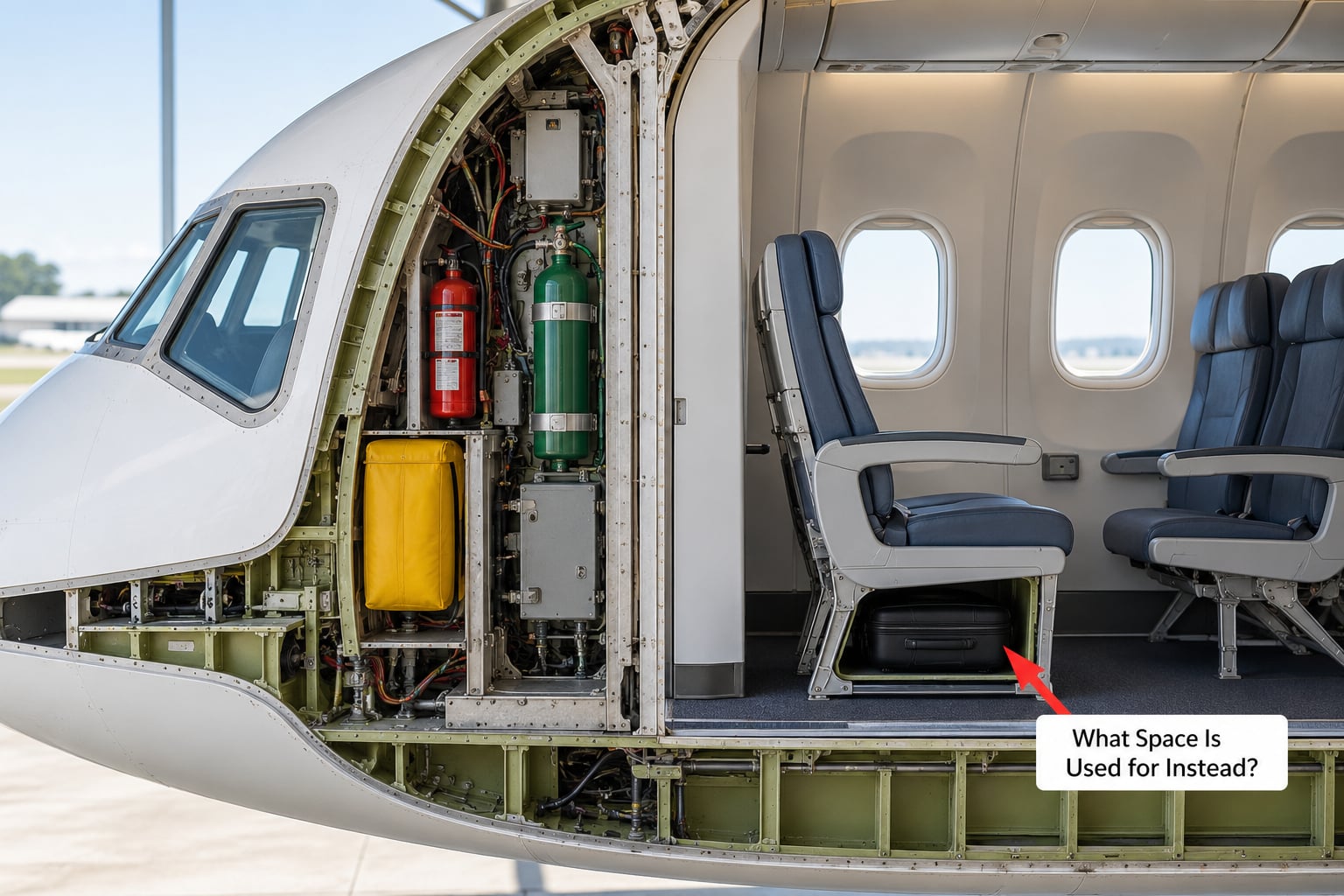
In most hard-wall cabins the volume in front of a bulkhead row is not passenger storage at all. It holds equipment and structure that has to be there regardless of where people sit.
- Safety and emergency equipment. Briefings, first-aid oxygen, flashlights, life-vest stowage and similar kit are distributed through the cabin, and the front rows are a natural place to mount them.
- Structural and service components. Frames, floor beams, ducts, wiring runs and the galley or lavatory module often sit directly ahead of the first passenger row.
- Baggage restraint fittings. Seat tracks and floor-mounted restraints that help keep bags from moving in a slide are fixed to that same front floor area.
- Bassinet attachment points. Bulkhead rows are the only rows where a cabin crew member can attach a bassinet, because the restraint has to reach the floor and the seat does not recline into the space.
- The egress route itself. The last item is the important one. Even when everything else is present, the clear floor path remains.
The exact mix depends on the aircraft. A wide-body with a galley directly ahead of the cabin has a different cavity from a narrow-body with a forward lavatory, and a refurbished interior can change it again. What does not change is the conclusion: the space in front of a hard-wall bulkhead belongs to the aircraft, not to you.
How Bulkhead Seats Differ by Aircraft and Airline
Two completely different rows share the name “bulkhead,” and telling them apart is the single most useful thing you can learn about this topic.
A hard-wall bulkhead sits behind a fixed divider panel at the front of a main cabin. Nothing can pass under it, so there is no floor storage and no front seat. This is the row most people picture when they hear the word.
A soft bulkhead is a change in cabin class rather than a wall. On a regional jet flying from a main cabin into a smaller coach cabin, or behind a curtain partition, there is no fixed panel in front of you. There are seats in the next row, and the space under them is stowage.
Passengers on r/delta described exactly this on a CRJ-900: it was a soft bulkhead, so the storage was under the seat ahead in row 5, and the person they were describing knew the exact seat. Another flyer in the same thread put the trade-off the other way, noting that with everything in the overhead there is no access to belongings during taxi, takeoff and landing.
Cabin class changes the picture too. In premium economy or business, a bulkhead may have a footwell, a fixed ottoman or an underseat drawer instead of an open cavity, and the storage you lose is usually less painful because premium seats already include a seat-back screen and more usable space. Economy is where the missing cavity hurts most.
| Row type | Legroom | Under seat storage | Overhead bin | Deplanes |
|---|---|---|---|---|
| Hard-wall bulkhead | Often generous, sometimes wall-limited | None | Only option, sometimes reduced | Early |
| Curtain or no-divider bulkhead | Generous | Usually, under the row ahead | Standard | Early |
| Standard economy row | Standard pitch | Yes, shared with the seat ahead | Standard | Mid-cabin |
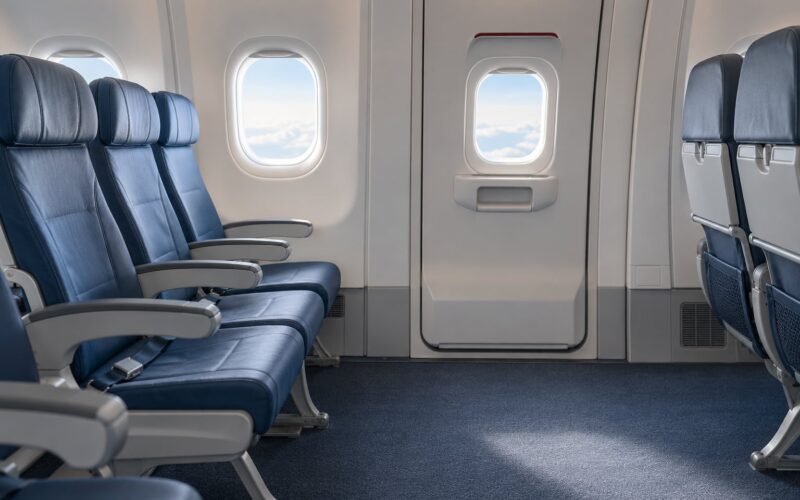
| Exit row | Very generous | No, in most layouts | Reduced above the exit | Fastest |
Note the last row. An exit row gives up under-seat storage for a related reason, so if you need both the space and the stowage, a standard row two or three back from a curtain bulkhead is often the better compromise. The front rows are where airlines assign bassinets for lap infants, which is another reason the rows stay configured without floor storage.
What Are the Advantages and Disadvantages?
There is a fair case on both sides, and the balance depends almost entirely on what you are carrying.
In favor of a bulkhead:
- A fixed wall means nobody’s seatback is in your knees for six hours.
- You are usually among the last deplaned, which matters on a red-eye or a tight connection.
- Meal and drink service usually reaches the front of the cabin first.
- It is the only row that works for a bassinet, and it is a sensible pick if you want legroom without exit-row restrictions.
Against a bulkhead:
- No under seat storage, so a backpack, laptop bag or roller goes to the bin.
- Some bulkheads sit under a shallower overhead bin, so both options can be degraded at once.
- Lavatory and galley noise, door swings and cleaning traffic are close by on many layouts.
- Some bulkhead seats are narrower, with a fixed armrest or a tray table mounted for a wall that limits how far you can stretch out.
The pilot in your seatmate’s legs is the benefit almost everyone notices first. The missing stowage is the drawback they notice second, usually when the boarding queue stops moving.
One more practical consequence deserves its own mention. Putting everything overhead means nothing is within reach during taxi, takeoff and landing, so a phone, a document or a snack is out of reach for the first twenty minutes of the flight.
How to Check Your Bulkhead Seat Before Booking
You can find out what you are getting in about two minutes if you know where to look.
- Find the aircraft type first. Check your confirmation for the aircraft code, then look that code up. A CRJ-900, an E175 and an A320 behave completely differently at the front of the main cabin.
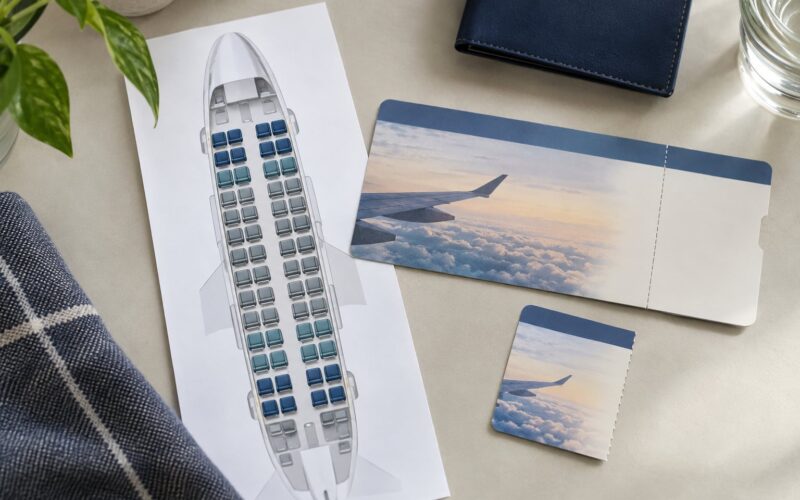
- Open a seat map for that specific type. Seat maps such as SeatGuru annotate row notes. Look for the wording: a note about a curtained or no divider bulkhead usually means storage exists, while wording about restricted legroom or restricted storage signals a hard wall.
- Read the airline’s own seat map note for the row, not just the third-party one. Airlines change interiors between aircraft subtypes that share a code.
- Compare with the row behind. Two rows back from the bulkhead often gives back full under-seat storage while keeping most of the legroom benefit.
- Ask the airline directly when the layout is genuinely unclear, particularly for a long-haul or premium cabin where equipment placement varies.
And if you are already at the gate, board earlier when you can, put your personal item at the deep end of the bin rather than the front where everyone piles on, and check with the gate agent before boarding closes if you have nowhere to go with a bag. On a full flight, r/SouthwestAirlines passengers report being singled out for a gate check with agents citing no carry-on seat, while the row ahead of them sat empty. If that happens, say so politely and ask whether an empty space is genuinely available.
That last point touches a common misconception. Under-seat space on a normal row belongs to the passenger sitting in front, not to you. A flight attendant can ask that passenger to move their bag, and usually will, but it is a request rather than a right.
Frequently Asked Questions
Do all bulkhead seats have no under seat storage?
No. Hard-wall bulkheads usually have none, because the floor in front is the evacuation path. Soft bulkheads, where a curtain or a cabin-class change separates rows instead of a wall, usually do have under-seat storage under the row ahead. Regional jets such as the CRJ-900 are the most common place to find one.
Can I use the overhead bin for a backpack when sitting in a bulkhead row?
Yes, and you have to. The overhead bin is the only storage a hard-wall bulkhead passenger is given, so a backpack, laptop bag or personal item all goes there. Board earlier if you can and place your bag at the deep end of the bin, because the front of the bin fills first and some bulkhead rows sit under a shallower section.
Are bulkhead rows always better for extra legroom?
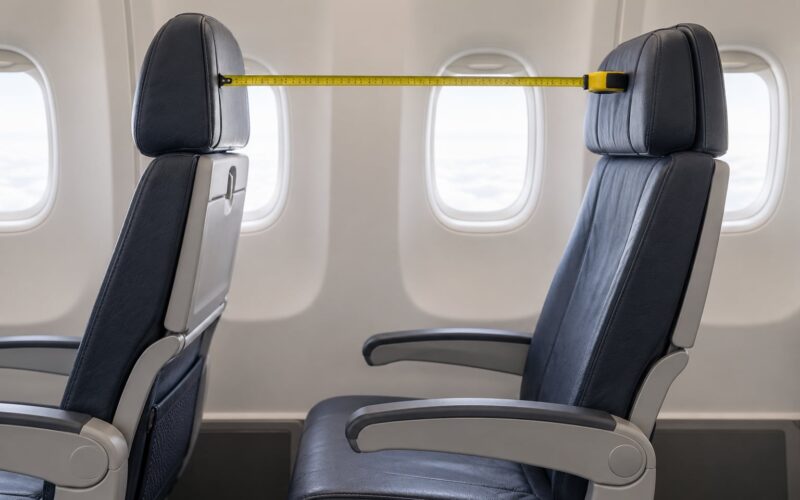
Not always. On some aircraft the divider wall and the way the row is positioned limits how far you can stretch, and some bulkhead seats are narrower with a fixed armrest. Where legroom is the priority, check the specific row on the seat map. A curtain bulkhead, or a standard row two back from one, can beat a cramped hard-wall row.
Why are some bulkhead seats used for bassinets?
A bassinet attaches to the floor and needs a fixed position, and it cannot be used where a seat in front reclines into the space. Bulkhead rows are the only ones that satisfy both conditions, which is why airlines assign them to families with lap infants. They are usually free if requested in advance, but availability is not guaranteed.
How can I tell whether my flight has a different bulkhead layout?
Check the aircraft type on your booking confirmation, then open a seat map for that exact type and read the note on the bulkhead row. Wording about a curtained or no divider bulkhead points to storage. Wording about restricted legroom and restricted storage points to a hard wall. Airline seat maps can change, so verify close to departure.
Is it worth choosing a bulkhead seat if I travel with a carry-on?
It depends what is in the bag. With a light personal item and an early boarding slot, the trade is usually fine because the bin is nearby. With a roller you want to keep with you, or anything you need during taxi and landing, a standard row two or three back is better: you keep most of the legroom and regain under-seat storage.
What Should You Do First?
Look up the aircraft type on your booking, then open the seat map for that exact type and read what the front row actually is. If the note mentions a curtain or no divider, you have storage. If it mentions restricted legroom and restricted storage, take the overhead bin seriously and pack accordingly.
When the row checks out as a hard-wall bulkhead, choose it anyway if the extra space and quick deplaning matter more than a convenient place for a backpack. Otherwise a row two back keeps most of the benefit and gives your bag a home under the seat ahead.