To use a travel pillow correctly, wear a U-shaped pillow turned around so the opening faces the back of your head, and sit it in the curve where your neck meets your shoulders rather than behind your skull. That one flip is the difference between a pillow that holds your neck still and one that pushes your head forward into the exact posture that causes the ache. On a plane, train or long car ride, that position is where comfortable sleep comes from.
It takes about two minutes to set up properly, and no skill. The catch is that most people never try the reverse orientation, so they assume the pillow is a bad purchase. I have switched the same cushion back and forth on flights to see how much the direction changes the result, and the difference is obvious within the first hour.
Table of Contents
- What You Need for How to Use a Travel Pillow Correctly
- Step-by-Step
- 1. Turn the pillow so the opening faces backward
- 2. Centre it at the base of your neck
- 3. Set the height so your chin stays level or slightly tucked
- 4. Anchor the bottom edge
- 5. Re-check and reset every 30 to 45 minutes
- How to Use a Travel Pillow Correctly for Upright Sleep
- How to Use a Travel Pillow Correctly for Side Sleeping
- Adjusting an inflatable pillow
- Common Mistakes
- Frequently Asked Questions
- Where should a travel pillow go when sleeping on a plane?
- Should I use a travel pillow behind my head or around my neck?
- What type of travel pillow is best for airplane seats?
- Can a travel pillow help with neck pain during a flight?
- How do I stop a travel pillow from slipping while sleeping upright?
- How should I clean and pack a travel pillow for travel?
- Conclusion
What You Need for How to Use a Travel Pillow Correctly
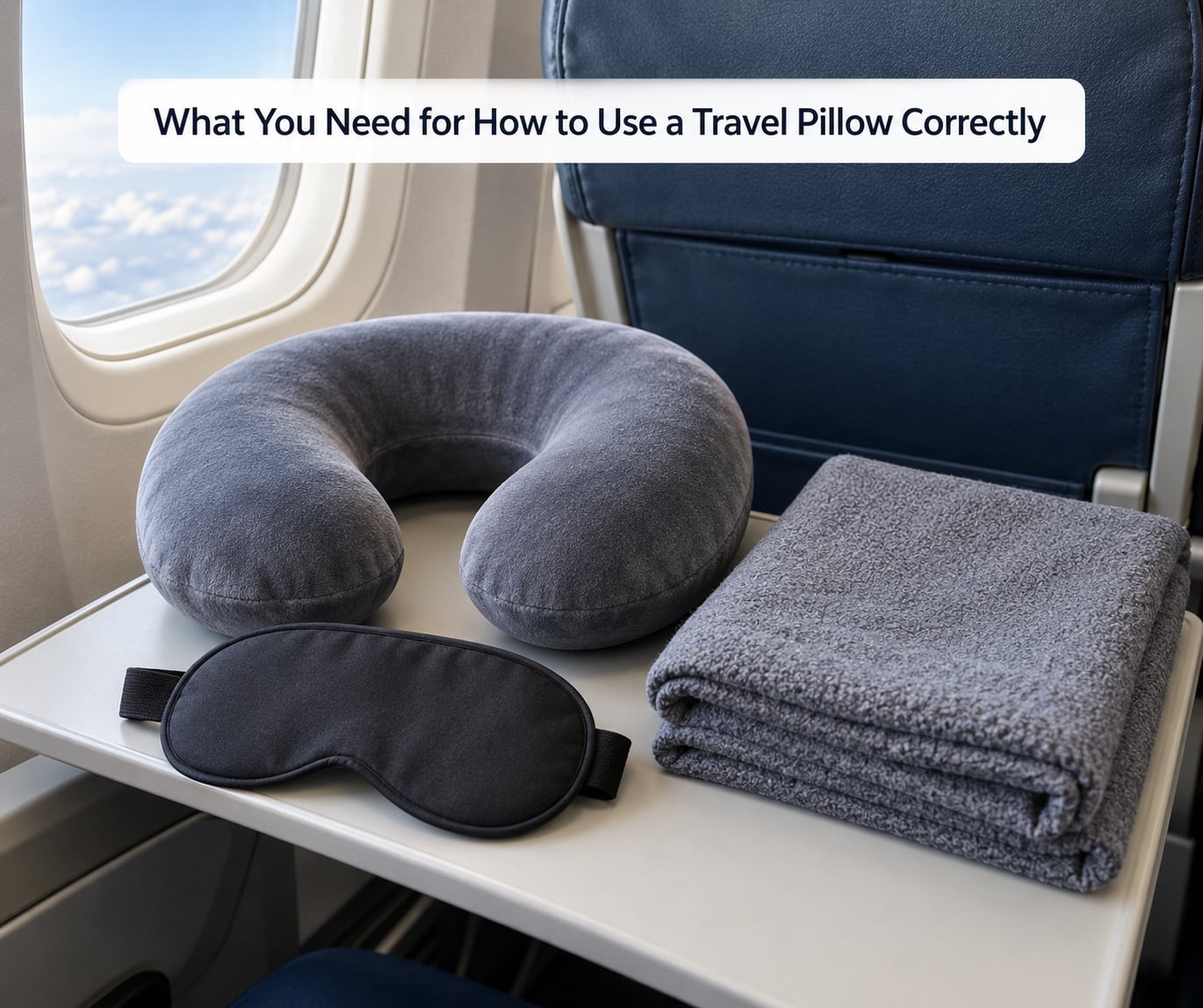
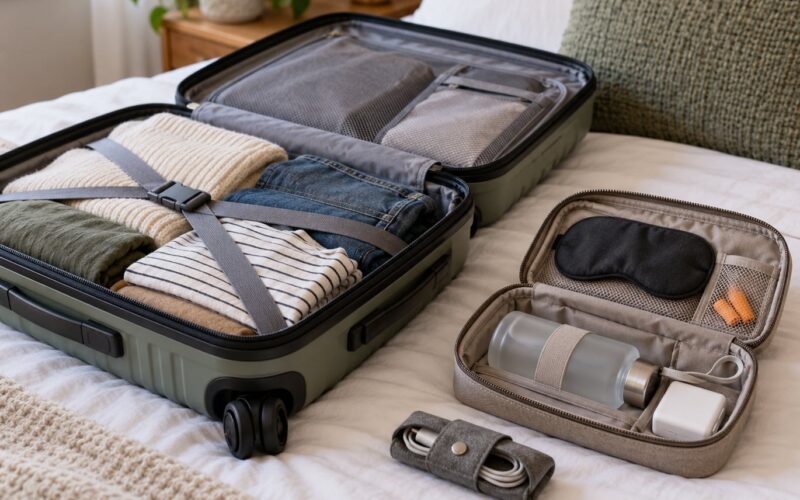
Most people need one pillow and about five minutes. A few extras make a long trip noticeably easier, and none of them take up real space.
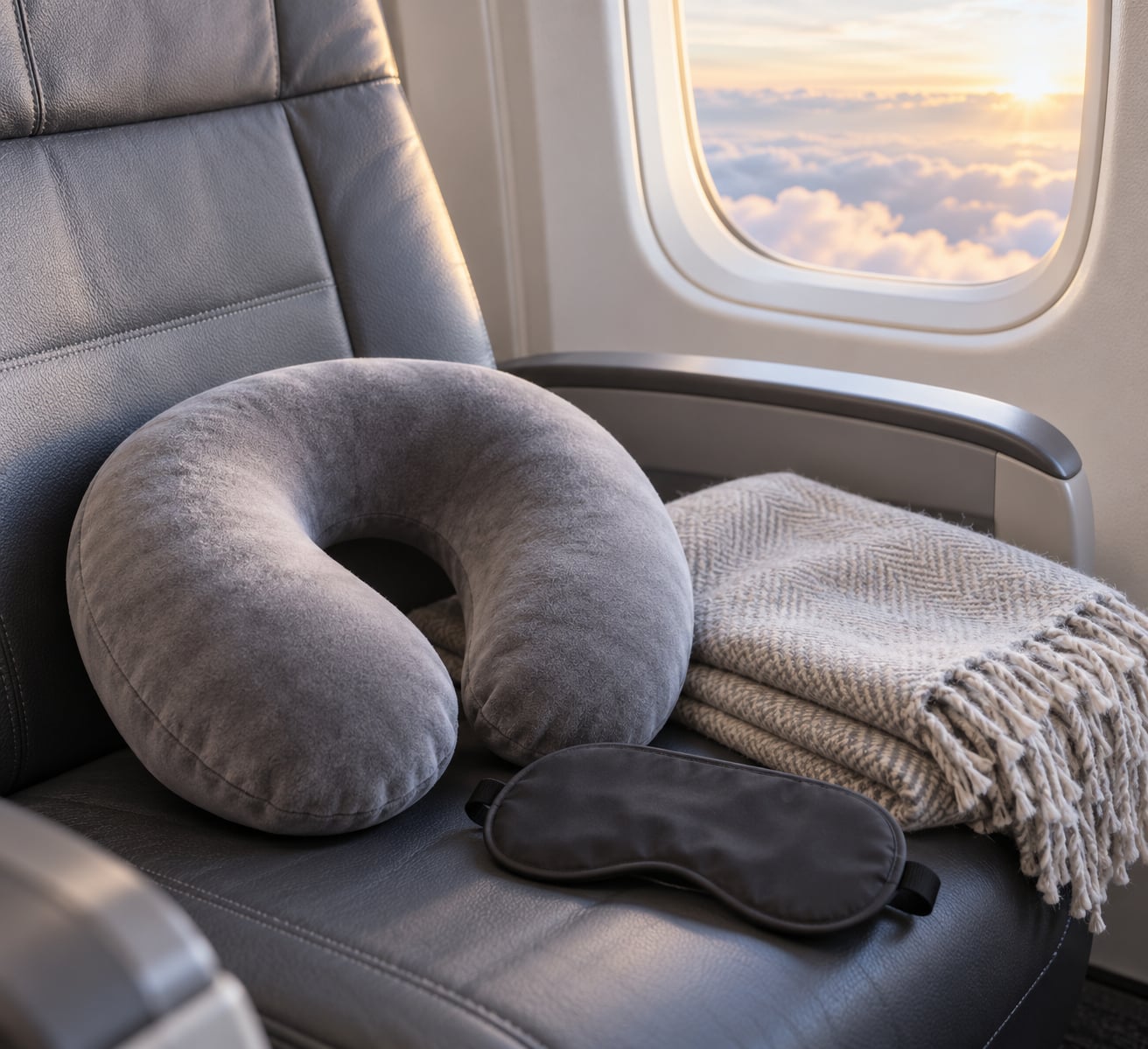
- The pillow, matched to your seat angle. A U-shape works for an upright or slightly reclined economy seat. A J-shape or wrap-around design suits seats that recline further and side sleepers. Rectangular inflatable pillows suit people who want a flat back support as much as a neck cradle.
- Extra height when the pillow is too shallow. A rolled jacket, a folded hood, a scarf, or simply the headrest wings that fold in on many airline seats.
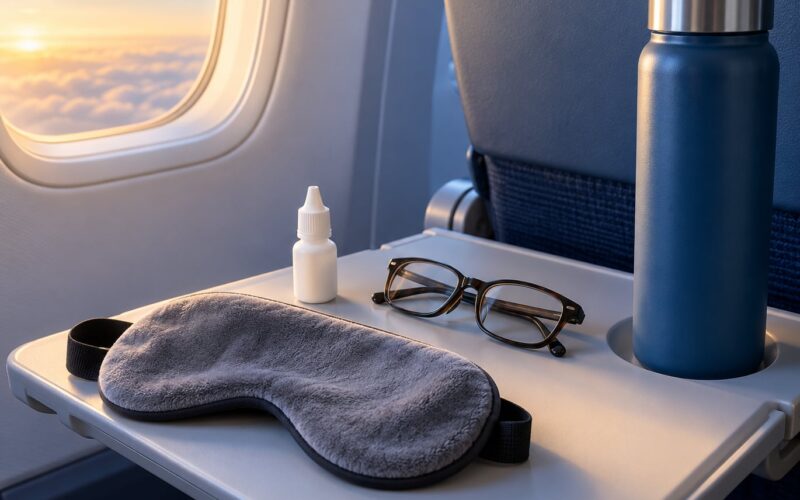
- A sleep mask. Cabin lighting rarely goes fully dark, and light is the thing most likely to wake you after the first hour.
- Ear plugs or noise-cancelling headphones. Even with a pillow, engine noise and seat-back screens pull you out of light sleep.
- A small cloth or wipe for multi-day trips. Face contact areas on foam pillows need a clean every couple of days.
- A lumbar roll if your lower back aches. A rolled magazine in a jacket works; a separate pillow is unnecessary.
Match the shape to how you actually sleep. Reclining to near-flat in business class is a different job from sitting bolt upright in a middle seat, and a pillow built for one does the other badly.
Step-by-Step
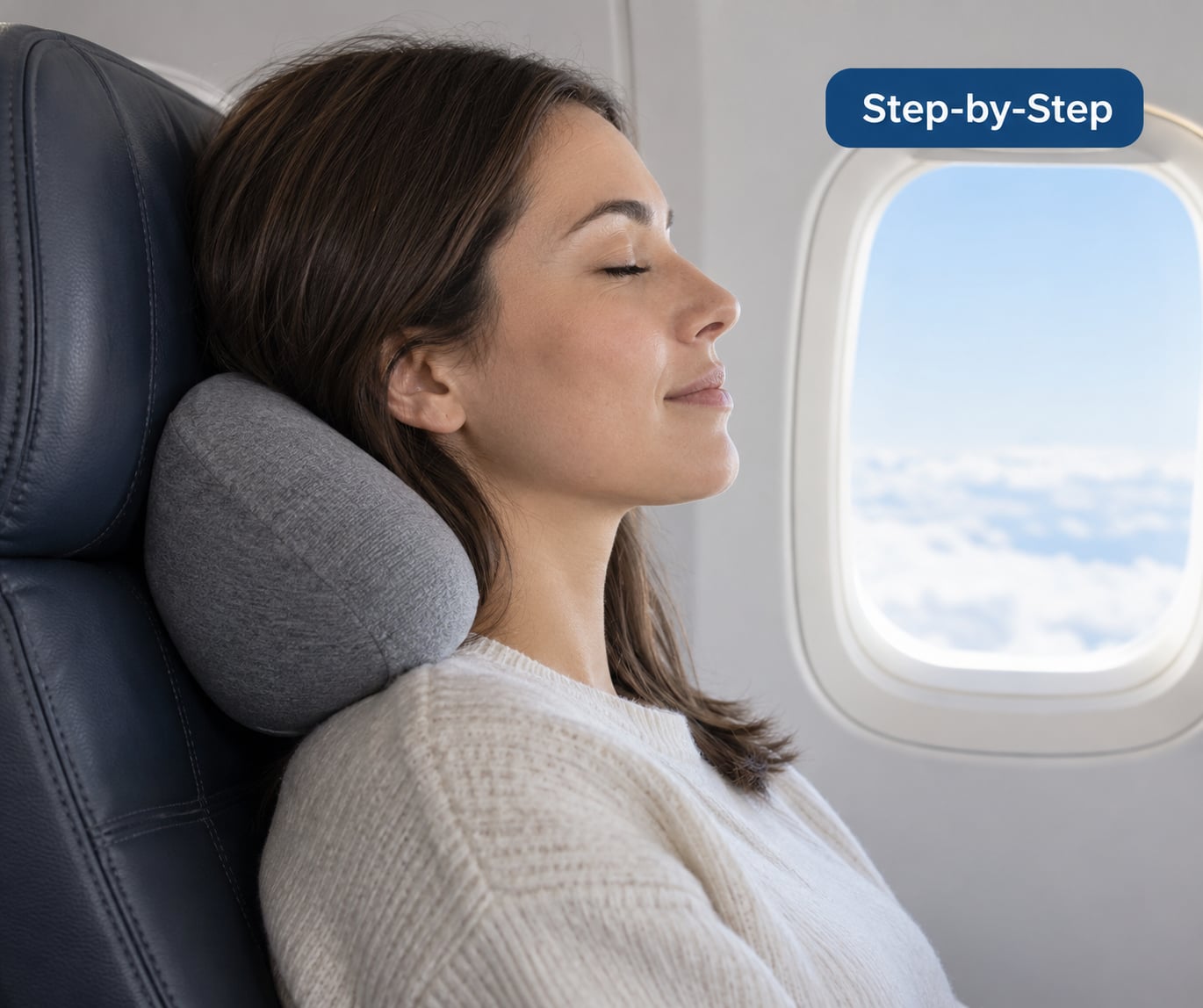
1. Turn the pillow so the opening faces backward
For upright sleep, the U-shaped opening goes at the back of your head, not under your chin. Most people set it the other way round by default because the shape looks like it belongs under the jaw. On a plane it belongs behind the neck.
2. Centre it at the base of your neck
The narrow bottom of the curve rests in the notch between your neck and shoulders. The two arms come up either side of your neck. If the pillow sits high, behind the skull, your head is pushed back and your chin tips up.
3. Set the height so your chin stays level or slightly tucked
Your ear should sit roughly over your shoulder, ear to shoulder in one vertical line. If your chin is pushed upward, you have too much loft. If your chin drops toward your chest, the pillow is too flat and you need a second layer.
4. Anchor the bottom edge
Slip the bottom of the pillow between your shoulder and the seat back, or use the strap if your pillow has one. Some travelers simply hold the lower edge with one hand for the first stretch of the flight while they settle.
5. Re-check and reset every 30 to 45 minutes
Reading, eating, using the toilet and waking properly all push the pillow out of position. Most of the pain people blame on a bad pillow is really a pillow that drifted two inches during a trip announcement. Resetting takes five seconds.
How to Use a Travel Pillow Correctly for Upright Sleep
Upright sleep needs two things: a neutral neck and a back that is not rounded. Lean your upper back into the seat rather than sliding forward over the pillow. Slide forward and the pillow becomes a chest rest, which is not what it is for.
If your chin tilts upward, take one layer out. If your neck bends sideways, the pillow has settled to one side, so lift it and re-centre it while the sides are still even. Once you are asleep, a lopsided pillow stops helping entirely.
Window seats are the easiest case, because the sidewall gives you support a middle seat never will. Middle seats are the hardest, since neither neighbour is helping and everything rests on the pillow itself. Aisle seats let you brace a foot against the seat in front, which stops your lower body drifting forward and keeps the head stack lined up.
How to Use a Travel Pillow Correctly for Side Sleeping
For side sleeping, the pillow belongs between your head and the shoulder, not under your ear. Put the pillow on the seat, lean your head toward the window or the aisle, and let the pillow fill the gap. Your nose, chin and sternum should stay roughly in a line pointing forward rather than curling toward your chest.
If you can feel your ear pressed flat, the pillow is too small or too firm for that side. Add a folded layer on the side facing the wall. Also check the height against your shoulder: on a narrow seat the shoulder rises higher than you expect, and a pillow that works at home will leave your neck bent on a plane.
Adjusting an inflatable pillow
Inflate to roughly 80 percent, sit down, then add or release air until your ear lines up over your shoulder. Blowing it fully hard first and softening afterwards is easier to control than trying to inflate by feel in the air.
Common Mistakes
Wearing the U-shape the same way round for an upright seat. The opening under the chin leaves nothing behind your head, so the head rolls backwards. Turn it around.
Leaving it loose. A pillow that shifts sideways during a nap stops doing its job within minutes. Anchor the base under your shoulder or against the sidewall.
Sitting too far forward. Leaning over the pillow rounds your back and pushes your head forward. Keep your back against the seat and let the pillow do the holding.
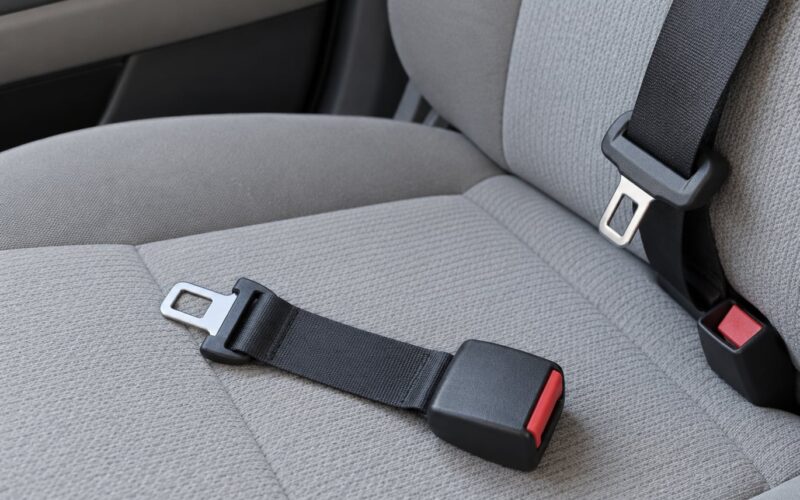
Treating it as a headrest or a seat belt substitute. It is neither. Always keep the seat belt fastened, and fold the headrest wings in for extra height rather than leaning your head into them at an angle.
Choosing a pillow that is too soft. A pillow that flattens under your head gives the same result as no pillow. Firmness that keeps its shape through the flight beats plush memory foam that gives up after an hour.
Leaving it in a hot car or a damp bag. Foam absorbs smells and moisture. A travel pillow stored warm and damp overnight can come back smelling stale before you reach the gate.
Forcing it when it does not suit you. Some travelers get neck pain from any pillow at all, and people with hypermobility or existing cervical problems sometimes do better with a folded blanket and a window seat than with a travel pillow. If a position causes pain that lasts after the flight, stop using it and see your doctor.
Frequently Asked Questions
Where should a travel pillow go when sleeping on a plane?
Sit it in the curve where your neck meets your shoulders, with the opening facing backward for an upright seat. Slide the bottom edge between your shoulder and the seat back so it cannot slide sideways. Your ear should end up roughly over your shoulder, and your chin level or slightly tucked, never pushed up toward the ceiling.
Should I use a travel pillow behind my head or around my neck?
Around your neck, with the arms either side of it. Behind your head is what a normal bed pillow does, and a U-shaped travel pillow behind your skull leaves the neck unsupported. If your seat reclines close to flat and you want back support instead, a rectangular inflatable pillow works better in that position.
What type of travel pillow is best for airplane seats?
A U-shape turned backward for an upright economy seat, or a wrap-around design with a chin support if you tend to nod off mid-drop. A J-shape suits people who sleep on their side, and an inflatable rectangular pillow is the easiest to pack but offers the least neck support. Choose for the seat you will get, not the seat you wish you had.
Can a travel pillow help with neck pain during a flight?
It can reduce the pain that comes from holding your head forward for hours, because the pillow takes some of that weight. It will not treat an existing neck injury, and an ill-fitting pillow can make things worse by forcing an unnatural angle. If you have cervical problems, talk to your doctor before relying on one for long flights.
How do I stop a travel pillow from slipping while sleeping upright?
Anchor the bottom edge between your shoulder and the seat back, or use the Velcro strap if the pillow has one. On a window seat, lean slightly toward the wall so the sidewall takes some of the load. Avoid leaning forward over the pillow, and reset it after eating or using the toilet, since those are when it usually drifts.
How should I clean and pack a travel pillow for travel?
Memory foam and microbead pillows should not be soaked. Wipe the cover, spot-clean the foam with a barely damp cloth and let it air out fully before packing. Removable covers are usually machine washable. Always deflate inflatable pillows before stowing them, and store the whole thing in a dry bag somewhere with airflow rather than sealed while damp.
Conclusion
Do one thing before your next long trip: turn the U-shaped pillow around so the opening faces backward, and sit it at the notch of your neck instead of behind your head. Check that your ear lines up over your shoulder and that your chin is level, then anchor the base against the seat back.
That single adjustment takes about a minute and it is usually the difference between a pillow that works and one that ends up unused in the overhead bin. Test it on a short flight or a long train ride before committing to a 14-hour trip, and reset it every half hour or so. 2026