Air travel feels dirtier than it is because a crowded, sealed, dry cabin with recycled air and no way to step away makes every ordinary human habit register as contamination. The measured numbers say most cabins are cleaner than the average home, yet the feeling is genuinely unpleasant. Both things are true, and the gap between them is where the dread lives.
That gap has three layers stacked on top of each other: the physical environment, the surfaces, and the perceptual one. Flyers on r/Flights put it bluntly. You notice it more on planes because of the close proximity and almost zero privacy, which is exactly right. Knowing the mechanics takes some of the sting out.
Table of Contents
- Why Air Travel Feels Dirtier Than It Is
- How Cabin Air and Ventilation Affect Cleanliness
- Do flights actually have HEPA filters?
- Why cabin air tastes and smells stale even when it is filtered
- Why Shared Surfaces Feel Unsanitary
- How Odors, Motion, and Crowding Change Perception
- Why your brain treats a crowded cabin as a dirty one
- Loss aversion and the one bad flight you never forget
- What Travelers Can Do to Feel Cleaner on a Flight
- What lowers real risk
- What mostly changes how you feel
- Frequently Asked Questions
- Are airplanes genuinely dirty compared with trains or hotels?
- Why do airplane cabins smell stale even after cleaning?
- Should I disinfect the airplane tray table before eating?
- How often are airplane interiors professionally cleaned?
- Can cabin air make travelers feel sick or dirty?
- What can I bring to feel cleaner on a long flight?
Why Air Travel Feels Dirtier Than It Is
Seven things do most of the work, and none of them is a dirty airplane.
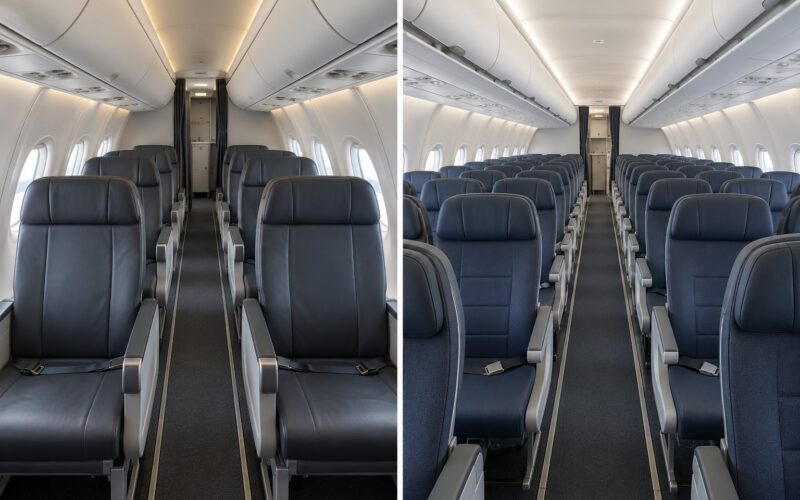
- Crowding compresses everything. A seat is 19 inches wide. Behaviors that are invisible in a house, like unwrapping a sandwich or cracking an elbow, happen inside a foot of your face with nowhere to go.
- You cannot leave. Once the door closes, the smell, the noise and the stranger beside you are the entire world for three hours. A room you dislike, you can walk out of.
- The air is dry, warm and tastes recycled. Cabin humidity typically sits around 10 to 15 percent, well below the 30 to 60 percent most indoor spaces hold. Dryness makes odor molecules stick to your nose and skin.
- You cannot verify the cleaning. Nobody wipes the tray table in front of you. An unknown surface produces a far worse feeling than a visibly cleaned one.
- Every surface is novel. You have never touched that armrest before and never will again. Your own kitchen counter gets no second look precisely because it is familiar.
- Behavior is unusually visible. Shoes come off, sleeves roll up, elbows spread, children spill things. None of it is unusual, but a room of strangers performing it at once is a lot of sensory input.
- You have no fresh-air anchor. A tree-lined street resets you. At altitude, every breath for four hours is cabin air, so the mildest odor becomes the dominant one.
Regular flyers notice something different. Most of them describe the problem as other people rather than the aircraft, and the same commenters say that learning the cabin is HEPA-filtered actually lowers their anxiety. That reaction is the whole subject of this guide.
How Cabin Air and Ventilation Affect Cleanliness
Cabin air is cleaner than you probably assume. Aircraft are pressurized and ventilated to a specification closer to a hospital than to a hotel hallway, and the reason is not marketing. It is engineering around a metal box at 35,000 feet.
Do flights actually have HEPA filters?
Yes. Most modern airliners route recirculated cabin air through HEPA filters rated at 99.97 percent efficiency for particles at 0.3 microns, which is the size most penetrating for airborne particles. Air in the cabin is exchanged roughly every 2 to 4 minutes, and airflow runs from the ceiling diffusers down to the floor returns rather than circulating head to head.
A 0.3 micron figure sounds fussy until you put it next to the size of a relevant particle. Most airborne virus particles travel attached to droplets and aerosols in the 1 to 10 micron range, which is exactly the band a HEPA filter handles well.
One widely cited study run with the U.S. Department of Defense and United Airlines flew a volunteer with a known respiratory virus on board and found no transmission beyond close proximity, even with the infected passenger seated several rows from the sampling probes. Researchers have criticized the setup for not simulating movement through the cabin, so treat the headline as encouraging rather than conclusive.
Why cabin air tastes and smells stale even when it is filtered
Filtration removes particles. It does not remove carbon dioxide, heat, humidity or odors, and a filter cannot freshen recycled air the way an open window would.
Cabin altitude sits near 8,000 feet even when the aircraft cruises at 40,000 feet or more, so passengers are always mildly dehydrated whether they feel it or not. That dryness, combined with recirculated odor from hundreds of people, food, jet fuel and cleaning products, is why a freshly serviced cabin can still smell flat within an hour.
It is also why flight attendants are strict about lids on cups and bins closed. Odors spread by aerosolizing exactly the particles the cabin air system is moving fastest to clear.
Why Shared Surfaces Feel Unsanitary
The surfaces are the one place where the dread is not imaginary. A widely circulated Travelmath swab study put colony-forming units on cabin fixtures, and the numbers are lopsided in a way most people do not expect.
CFU stands for colony-forming unit: a lab count of living bacteria left on a sampled square inch. It is a rough proxy rather than a clinical risk score, and the sample is old, but it is still the clearest public dataset we have.
| Cabin surface | CFU per square inch |
|---|---|
| Airplane tray table | 2,155 |
| Drinking fountain buttons | 1,240 |
| Overhead air vent | 285 |
| Lavatory flush button | 265 |
| Seatbelt buckle | 230 |
| Bathroom stall locks | 70 |
The lavatory is not the dirtiest surface on the aircraft. The tray table carries roughly eight times what the flush button does, which surprises people who describe that bathroom as a biohazard. Stall locks sit at the bottom of the list, comfortably below many household surfaces.
| Home surface | CFU per square inch |
|---|---|
| Pet bowls | 306,000 |
| Tennis balls | 19,000 |
| Kitchen countertops | 361 |
| Toilet seats | 172 |
| Cell phones | 27 |
| Paper currency | 5 |
Put the two tables side by side and the tray table stops being shocking. At 2,155 it is grim, but a kitchen countertop runs higher, a toilet seat runs higher still, and even the cleanest household item in the second table beats most of the cabin fixtures. Plenty of us handle all of these daily without flinching.
What actually explains the tray table is contact frequency and neglect. It is folded into the seat, wiped down as part of the cabin service, and otherwise left alone for an entire flight while dozens of hands touch it, rest elbows on it and set food on it. By contrast, the lavatory is cleaned on a documented schedule by crew with a checklist, which is why its numbers beat the table despite the far worse reputation.
The seat pocket deserves the same scrutiny as the tray table for a different reason. Paper, wrappers and personal items accumulate in a fabric pocket that no quick turnaround visit can fully reset. Aisle or window seats also have more ambient contact than a middle seat, since aisle passengers use the armrest and the wall.
How Odors, Motion, and Crowding Change Perception
Here is the part almost every piece of coverage leaves out. Cleanliness is not a number your brain reads off a swab result. It is a construction built from smell, sound, motion, stress and memory, and a flight loads every one of those inputs at once.
Why your brain treats a crowded cabin as a dirty one
Close proximity makes normal behavior salient. When someone 30 centimeters away coughs, unwraps food or shifts weight, your attention is locked on it because you cannot move away. The same sneeze in a park barely registers.
Motion adds to it. An aircraft is pressurized, slightly humid, constantly vibrating and full of engine and airflow noise. That low-grade physiological load narrows attention toward threat-relevant cues, and a cough is threat-relevant by default.
Stress data shows the same effect in a different register. The FAA recorded more than 2,000 unruly passenger incidents in 2026, a figure CNN reported while writing about air rage, and IATA tracks a global rate as well. Those are behavioral incidents rather than hygiene ones, but they confirm that a pressurized tube with strangers provokes measurable stress in a large share of passengers. Stress and disgust circuits are close neighbors.
Loss aversion and the one bad flight you never forget
Then there is memory. A single flight where the person beside you ate an unwrapped sandwich and coughed for three hours costs you far more than the hundreds of unremarkable flights you cannot recall. Loss aversion means the vivid bad instance outweighs the quiet good ones, and the availability heuristic means the stories you hear are the vivid ones.
Media works the same way. Germ headlines travel; routine cleaning schedules do not. So the available evidence in your head skews grim even when the underlying data is unremarkable, which is why the honest version of this article has to include both the clean-air facts and the grim tray table.
What Travelers Can Do to Feel Cleaner on a Flight
Sorting your options into two piles is genuinely useful here, because some habits lower real exposure and others only change how the cabin feels to you. Both are worth doing, as long as you know which one you are doing.
What lowers real risk
- A well-fitted mask on close, crowded flights. Respiratory particles are the real transmission vector. Crew infection rates have run below the general population, which is consistent with airborne spread being modest rather than rampant.
- Wash or sanitize your hands after the tray table, the seatback and the lavatory. This is about your own hands moving to your face, not about the visible grime.
- Wipe the tray table before eating from it. The swab data supports this more strongly than it supports wiping a bathroom flush button.
- Hydrate. Dry cabin air at 10 to 15 percent humidity dries mucous membranes, which is uncomfortable independently of germs.
- Aim the overhead vent at your face. It draws from the filtered supply, and a thin personal mask or scarf over the nose and mouth on a crowded leg adds a barrier.
What mostly changes how you feel
- Choose a window seat. Nobody needs to squeeze past you, and you control your own contact surface. Exposure is similar; the experience is calmer.
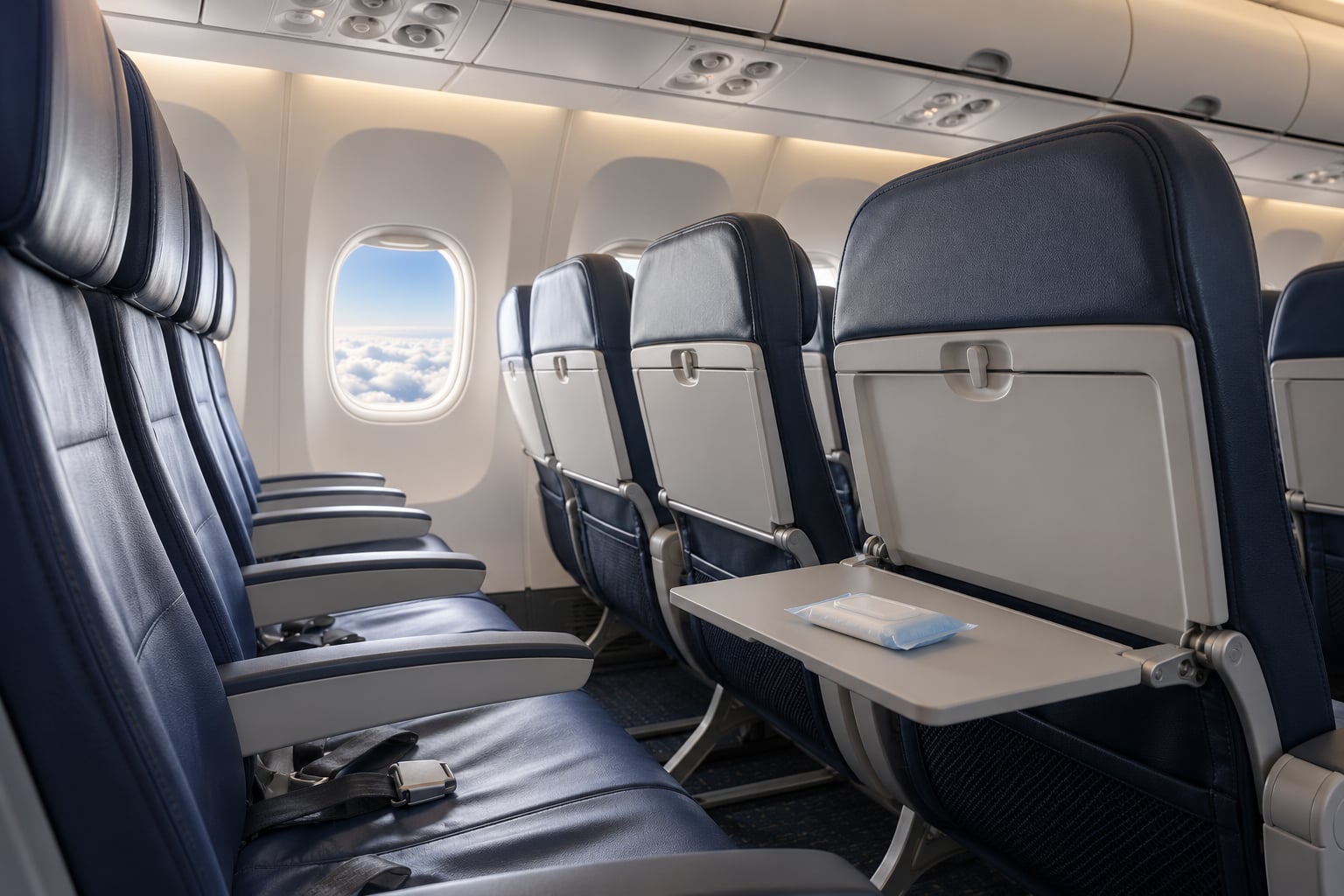
- Bring a small pack of wipes and use it once at boarding. Ten seconds of visible cleaning resets the sense of uncertainty far more than it changes the science.
- Keep your phone, wallet and passport in one bag you can wipe. Your phone carries roughly 27 CFU per square inch, so the item you touch most is worth wiping down along with the tray table.
- Dress for a temperature swing. Cold hands and dry skin make discomfort read as grime. A layer fixes more than any spray.
- Name the real variables. Who sat there, how long ago was it serviced, what is the air doing. Specifics drain dread better than reassurance.
- Change seats or ask for one. Most crews can move you if you are genuinely next to someone unwell. You are not overreacting if it helps.
Travel rules of thumb vary by carrier and aircraft type, so confirm anything specific with your airline rather than trusting a forum post, including anything about turnaround cleaning schedules.
Frequently Asked Questions
Are airplanes genuinely dirty compared with trains or hotels?
Not by the usual measures. Public swab studies put cabin fixtures at counts similar to or below everyday home surfaces like kitchen counters and toilet seats, and filtration specs are stricter than most buildings require. The two genuine standouts are tray tables and the surface under the tray latch. Everywhere else the difference from a hotel corridor is smaller than it feels.
Why do airplane cabins smell stale even after cleaning?
HEPA filtration removes particles, not odors or carbon dioxide. Add very dry cabin air, usually around 10 to 15 percent humidity, and odors from people, food, jet fuel and cleaning products concentrate because the same air recirculates for hours. Doors and windows stay sealed, so there is no fresh-air anchor to compare against. A cabin can be serviced thoroughly and still smell flat within the hour.
Should I disinfect the airplane tray table before eating?
Yes, this is the one surface worth wiping. The widely cited Travelmath study measured the tray table at roughly 2,155 colony-forming units per square inch, about eight times the lavatory flush button. It is also the surface most often used as a table and least often fully reset between flights. A single wipe takes a few seconds and settles the question.
How often are airplane interiors professionally cleaned?
Cabins receive a nightly or end-of-rotation service, and crews handle visible spills, restocking and lavatory servicing during the flight. Deep cleans covering seat fabrics, seatbacks and tray latches typically happen on a weekly to monthly cycle depending on the carrier and aircraft. A regional or short-haul aircraft can turn over faster than the cleaning crew can complete a full pass, so service levels vary a lot by route.
Can cabin air make travelers feel sick or dirty?
Yes, though the mechanism is mostly sensory and stress related rather than toxic. Recirculated dry air, engine noise, mild vibration, crowding and low cabin altitude at about 8,000 feet combine to produce headaches, fatigue, dry eyes and a vague sense of staleness that people describe as feeling grubby. Staying hydrated, aiming the vent at your face and dressing in layers addresses most of it.
What can I bring to feel cleaner on a long flight?
A small wipe packet, a personal hand sanitizer, a refillable water bottle and a layer for the temperature swing cover most of it. A window seat removes the aisle traffic that makes a cabin feel handled. On red-eyes or crowded legs, a well-fitted mask is the item that actually lowers respiratory exposure rather than just calming you.
Start with the tray table and your hands. Everything else on the list is really about the feeling, and the feeling is worth taking seriously, since it changes how you experience the flight and how likely you are to enjoy flying again.