If you want one number to remember before you board, it is this: about 250 ml (8 oz) of water per hour of flight, sipped in small amounts rather than chugged. That works out to roughly 500 ml for a two-hour hop, 1.5 litres on a six-hour leg and about 4 litres across a twenty-hour journey. The reason flying dries you out faster than a normal day is the cabin itself, not the altitude alone, so the whole job is keeping a steady rhythm going without turning every hour into a trip to the lavatory. This guide breaks that rhythm into three phases: what to pack, what to do from boarding to landing, and what to fix if you already get it wrong. It takes about ten minutes to read and works on anything from a two-hour hop to an overnight red-eye, so it is still current for 2026 itineraries when the summer heat makes the cabin feel worse than it should.
Quick answer: drink 200–250 ml of water per hour in small sips, start before you board, front-load most of your intake into the first half of the flight, and use a refillable bottle filled after security. Skip the extreme chugging that leaves you crossing your legs during a film.
Why the cabin works against you: cabin air is recirculated and far drier than what you breathe at ground level, commonly around 10 to 20 percent relative humidity, and the cabin is pressurised to the equivalent of 6,000 to 8,000 feet. That is drier than most deserts, and you lose water through your skin, nose and mouth at a higher rate than normal. Thirst signals lag behind the loss, so the urge to drink always arrives a little late.
Table of Contents
- What You Need
- Step-by-Step: How to Drink Enough Water on a Flight
- Start Hydrated Before You Board
- Use the First Half of the Flight to Build Momentum
- Pair Water With Meals and Movement
- Adjust for Long Flights, Time Zones, and Health Needs
- Avoid the Last-Minute Bottle Run
- Common Mistakes
- Frequently Asked Questions
- How much water should I drink on a 7 hour flight?
- What to drink on a plane to stay hydrated?
- Why am I so dehydrated when I fly?
- Can I bring a water bottle through airport security?
- Will my water bottle pop or burst on a plane?
- How do I stay hydrated on an overnight flight without waking everyone?
- Conclusion
What You Need
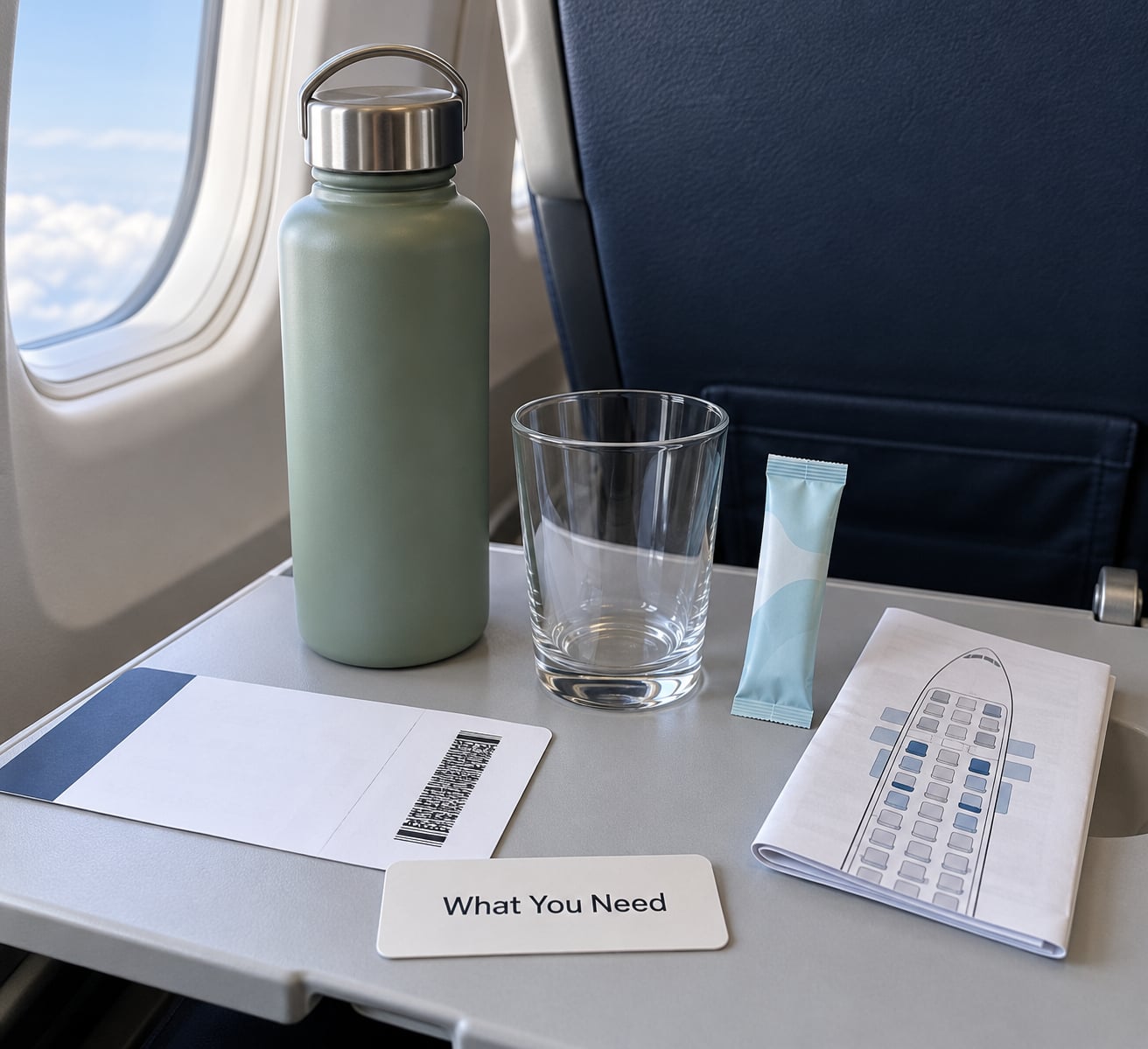
None of this costs money or takes up much room. The list is short because a plane punishes improvisation, not because the problem is complicated.
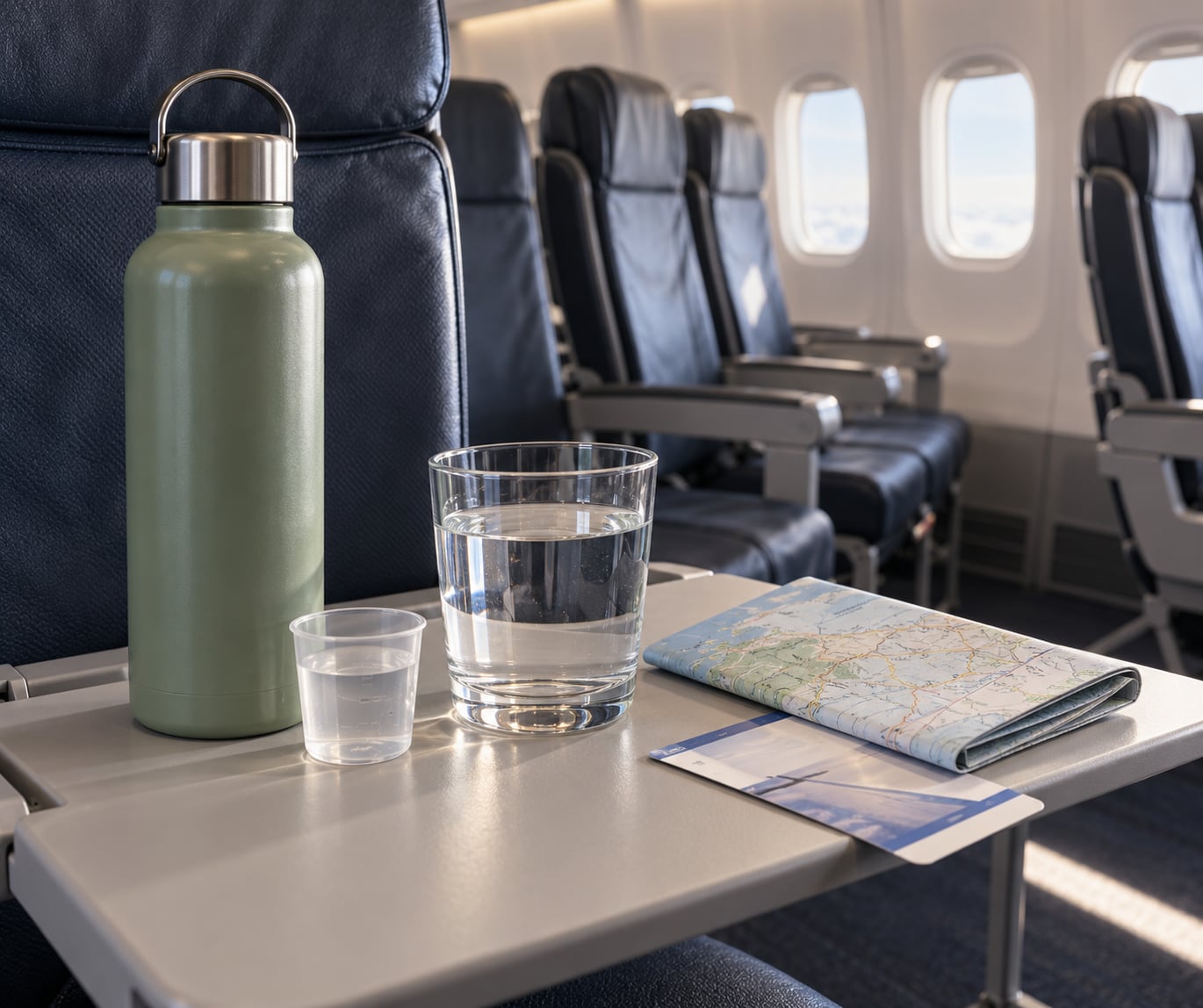
- A refillable bottle you can drink from with one hand. A wide mouth matters more than brand. Most cabin cups are small and arrive once, so your own bottle is the only reliable source.
- Know your flight time, not your boarding time. Block time is what your fluid target is based on. A seven-hour itinerary can mean nine hours of sitting in a seat once delays are counted.
- A plan for water after security. Fill at a bottle-filling station or a cafe tap on the way to the gate. Most terminals have one within a few minutes of the checkpoint.
- An electrolyte option for anything over eight hours. A sachet or tablet in your bag costs nothing to carry and gives you something to do when plain water starts to feel boring.
- A rough idea of your bathroom timing. Window and aisle seats have very different options. Know where the nearest lavatory sits relative to you before takeoff.
One more thing worth packing is a small amount of salty food, because sodium helps your body hold on to the water you drink instead of excreting it. Peanuts, crackers or a sandwich from the terminal beat nothing.
Step-by-Step: How to Drink Enough Water on a Flight
Start Hydrated Before You Board
How to drink enough water on a flight starts on the ground, in the two or three hours before you leave the terminal. Drink normally: a normal glass of water with breakfast, another with lunch, whatever your body asks for. You want a full baseline, not a flood.
I have watched people try to pre-load by drinking a litre of water in the terminal lounge. It does not work and it backfires, because you spend the first hour of the flight in the lavatory queue. Salty food, ordinary hydration and a light meal are enough.
That also answers a question people search for constantly: flying on a full stomach is worse for most people than flying on a light one. Heavy food plus cabin air means bloating, and bloating plus a full bladder is a miserable combination. Eat something simple, and eat it a couple of hours before departure rather than at the gate.
Use the First Half of the Flight to Build Momentum
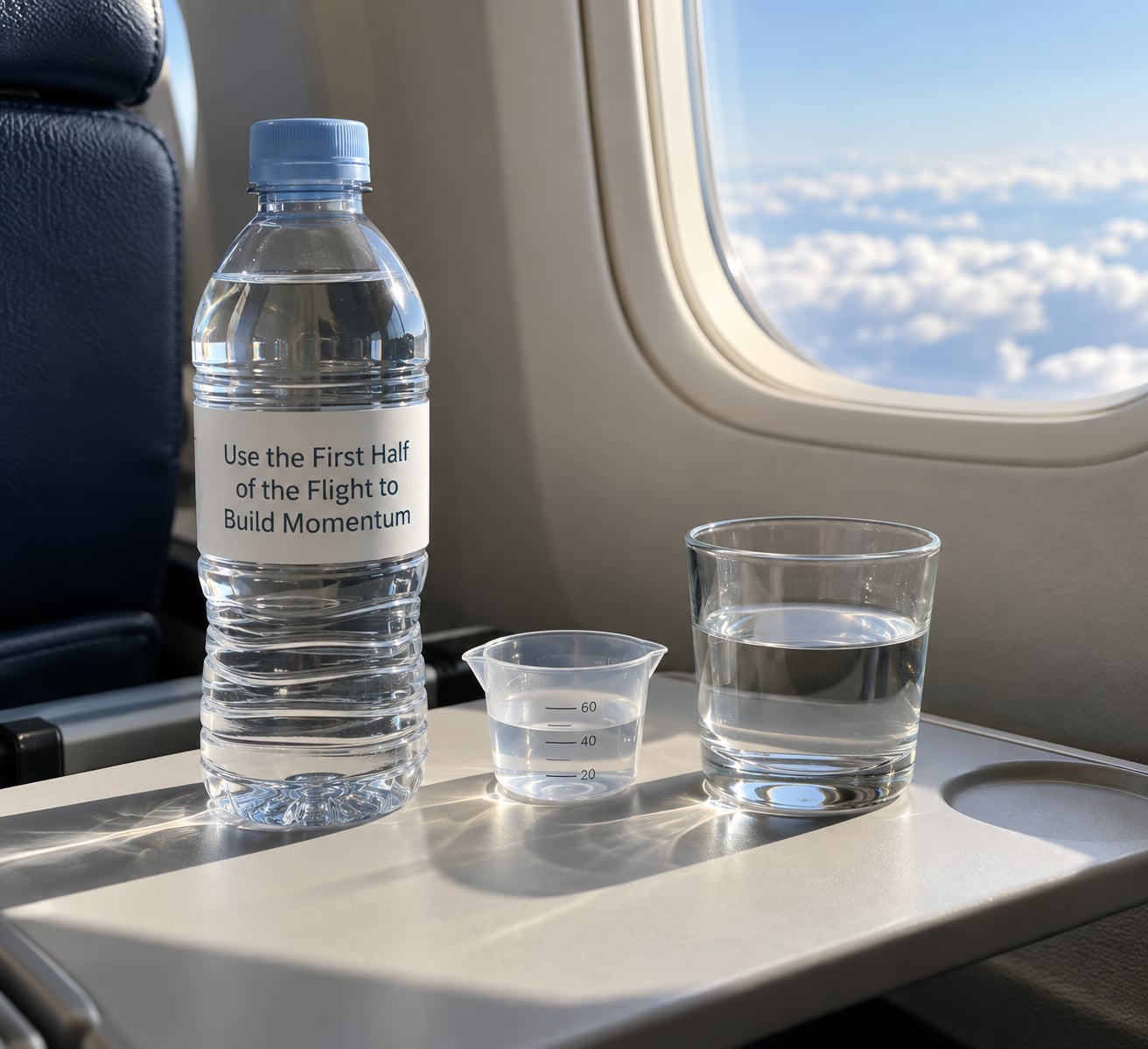
Thirst lags behind fluid loss, which means the moment you feel thirsty you are already behind. Instead of waiting for the signal, use the first ninety minutes of the flight to drink most of what you need. After that, the job is maintenance.
Break the target into ten or fifteen minute blocks. One mouthful every ten minutes sounds almost insulting, and that is exactly why it works: it never produces urgency.
- 90-minute flight: about 350 ml, so one bottle filled at the gate covers the whole trip.
- 6-hour flight: about 1.5 litres. One 750 ml bottle at the gate, a second refill around hour three, and a third in the final half.
- 16-hour flight: about 4 litres. That is a lot of bottle refills, and it is why asking the crew for water in the galley matters. Regular passengers on the r/travel forum say plainly that the carts come round once and the cups are tiny, and that asking is normal and not rude.
Set your bottle where your elbow naturally rests, upright and capped, so the next sip is a movement rather than a decision. A bottle you have to dig out from under a seat bag gets drunk twice and then forgotten. I learned that the hard way on a nine-hour hop in February, which is when I started carrying one that sits in the cup holder instead.
Pair Water With Meals and Movement
Meals are your built-in schedule. Drink a few sips with every bite instead of sitting through a whole tray untouched, and the timing problem solves itself.
Movement helps for a different reason: a slow walk down the aisle or a few minutes of ankle pumps keeps your circulation going, and staying still for nine hours is the part of flying that actually causes discomfort. Long-haul comfort guides tend to pair hydration advice with walking and stretching for that reason.
On caffeine and alcohol, the honest answer is that neither is banned. A coffee is fine; a coffee as your only liquid for five hours is not, because caffeine has a mild diuretic effect and a stiff neck and a full bladder is a poor trade. Alcohol is the bigger problem, since it dries you out and wrecks the sleep you need for the second half of the flight. Drink it, if you want to, and keep your water bottle next to it.
Adjust for Long Flights, Time Zones, and Health Needs
Past eight hours, plain water alone can feel flat. That is the point at which an electrolyte sachet becomes useful, because it replaces some of what you lose and it tastes like something other than nothing. Half a sachet in a full bottle is plenty for most people. Very sugary mixes defeat the point, so pick a sugar-free or low-sugar one if you are sensitive to sweetness.
On overnight flights, the risk is not dehydration so much as sleep. If you plan to sleep through the first half, fill a large bottle before lights go down, set one alarm ninety minutes before you intend to wake, and put the bottle within reach. Forgetting to drink because you were asleep is the most common failure mode on red-eyes, and it is the one an alarm actually fixes.
Warm routes and busy seasons change the maths. Hot tarmac walks, long airport transfers and a cabin that feels overheated all push your needs up, so treat a hot day as a reason for more water rather than less.
For children, older travellers and anyone with a heart, kidney or blood-pressure condition, the general advice above is fine but the specific number is not mine to give. Fluid advice changes completely with certain medications and conditions, and getting it wrong can be dangerous. Ask your doctor or pharmacist before you fly and carry your prescriptions in hand luggage. If you have an ostomy or a recent surgery, ask your clinical team specifically about flying, because they may also want details on lavatory access and timing.
Avoid the Last-Minute Bottle Run
The worst time to drink a lot of water is the last hour before landing. Everyone has stood up then, felt a full bladder, and joined a queue that was already four people deep while the crew announced the arrival.
Front-load instead. Do most of your drinking in the first half, keep sipping steadily in the second, and let the final forty minutes be light. If the flight is long, plan one lavatory visit in the first ninety minutes and one around the meal service, then mostly stay put.
Refills are easier than most people think. The beverage cart comes around, the crew will usually fill a personal bottle, and asking in the galley is fine even on a full flight. On a wide-body with a galley at each end, walk to the back one and check how they do it. If you are flying a long route where the carts are limited, a wide-mouth bottle is the single most useful object in your bag.
After you land, keep drinking for a few hours. You will probably feel thirsty the moment you land, partly because you are dehydrated and partly because you have crossed time zones. Water, a salty meal and a shower do more than any hangover remedy.
Common Mistakes
- Waiting until you are thirsty. Thirst arrives late. Fix: set a repeating ten-minute reminder for the first ninety minutes.
- Drinking a litre at once. It does not work faster and it guarantees a lavatory queue. Fix: a mouthful every ten minutes.
- Treating coffee or tea as hydration. Fine as an addition, poor as a substitute. Fix: one cup, then back to water.
- Drinking alcohol on a long flight. It dries you out and fragments sleep. Fix: limit it to the meal service and keep drinking water alongside.
- Pouring a plastic bottle to the brim before boarding. Cabin pressure changes can expand trapped air, and a sealed full bottle can leak or split. Fix: leave a little room at the top.
- Buying water only once on board. The cart comes once and the cups are small. Fix: bring a bottle, refill it yourself or ask the crew.
- Drinking nothing during a red-eye. You will wake up headachey and blame the flight. Fix: fill a large bottle before sleeping and set an alarm.
- Fixing dehydration only on board. You cannot catch up in one hour. Fix: drink normally the day before and eat something lightly salty.
Frequently Asked Questions
How much water should I drink on a 7 hour flight?
About 250 ml per hour, so roughly 1.5 litres across seven hours of block time, plus whatever you drank before boarding. Spread it out rather than chugging: a mouthful every ten minutes during the first ninety minutes, then steady top-ups. Refill a personal bottle at the gate and again mid-flight, because the beverage cart usually comes around only once.
What to drink on a plane to stay hydrated?
Plain water is the baseline, and it stays the baseline. Add herbal tea or sparkling water if plain water gets boring, and an electrolyte sachet on flights over eight hours. Coffee and tea are fine in normal amounts, but neither should be your main liquid. Alcohol dries you out and ruins sleep, so treat it as an addition rather than a replacement.
Why am I so dehydrated when I fly?
Cabin air is far drier than anything you would breathe on the ground, typically around 10 to 20 percent relative humidity, and the cabin is pressurised to the equivalent of 6,000 to 8,000 feet. That combination pulls moisture out through your skin, nose and mouth faster than usual. Thirst lags behind the loss, so by the time you notice it you are already behind.
Can I bring a water bottle through airport security?
You can bring an empty bottle through the checkpoint in the US and most other countries, then fill it at a bottle station or tap on the other side. You cannot bring a full one through the liquid rules, except where a frozen solid bottle or ice pack is allowed. Rules vary by country, so check your departure airport’s guidance before you travel.
Will my water bottle pop or burst on a plane?
It is unusual but not impossible, and the cause is trapped air rather than the water itself. Cabin pressure changes can expand the air inside a sealed bottle, and a bottle filled completely to the brim has nowhere to expand. Leave headroom, keep the cap tight but not forced, and use a bottle designed for travel if you are filling it before takeoff.
How do I stay hydrated on an overnight flight without waking everyone?
Fill a large bottle before you sleep, keep it upright within arm’s reach of your seat, and set one alarm about ninety minutes before you want to wake. Aisle seats make a mid-sleep lavatory run awkward, so use the alarm for drinking and do your bathroom visit right after it. Wake your seatmates once, briefly, and the queue problem mostly disappears.
Conclusion
Start with one action: fill a bottle at the gate and drink from it in small, regular intervals instead of waiting for thirst. Set the pace at about 250 ml an hour, do most of your drinking in the first half of the flight, and scale it up or down to match how long you are actually in the air, adjusting the routine for overnight flights, hot days and long connections. Everything else, the electrolytes, the alarms, the galley refills, is a detail on top of that habit. And if you are still deciding between seats or cabin classes, knowing how to drink enough water on a flight is one of the few things a long-haul ticket cannot fix for you.