A pre-reclined seat is an airplane seat whose back is fixed at a gentle backward angle instead of fully upright, with no working recline lever or button. You cannot tip it back further and you cannot return it to vertical. Airlines fit them on many low-cost main cabin flights and on some short-haul flights from full-service carriers, and they are the reason a passenger reaches for a lever that is not there.
The phrase sounds like a seat that starts slightly back and then reclines further. It does not. Once you know what the design actually is, the airline questions get much easier.
The details below are current as of October 2026. Seat fit and hardware change by aircraft, not just by airline, so treat every carrier example as a starting point rather than a guarantee.
Table of Contents
- What Is a Pre Reclined Seat?
- How Does a Pre Reclined Seat Work?
- Why Do Some Airplanes Have Pre Reclined Seats?
- Airlines that use pre-reclined or non-reclining seats
- Pre Reclined Seats vs. Standard Airplane Seats
- How Can You Tell If a Flight Has Pre Reclined Seats?
- Are Pre Reclined Seats More Comfortable?
- Are Pre Reclined Seats Good for Long Flights?
- How to Choose the Best Seat for Your Flight
- Frequently Asked Questions
- What is a pre-reclined seat on a plane?
- Which seats do not recline on a plane?
- Can you recline a pre-reclined seat?
- Which airlines have pre-reclined seats?
- Are pre-reclined seats worse for back pain on long flights?
- Do pre-reclined seats give you more legroom?
- Conclusion
What Is a Pre Reclined Seat?
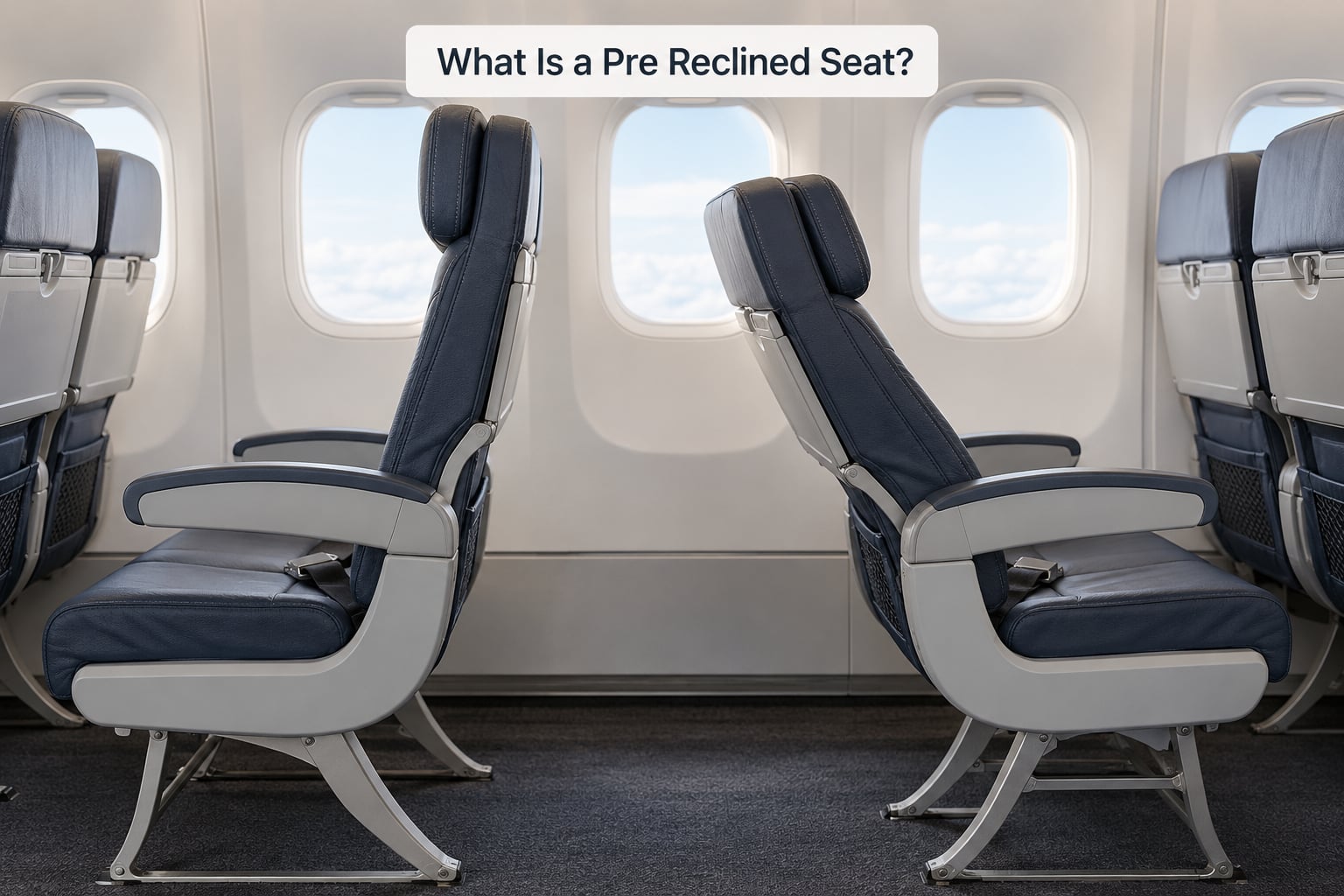
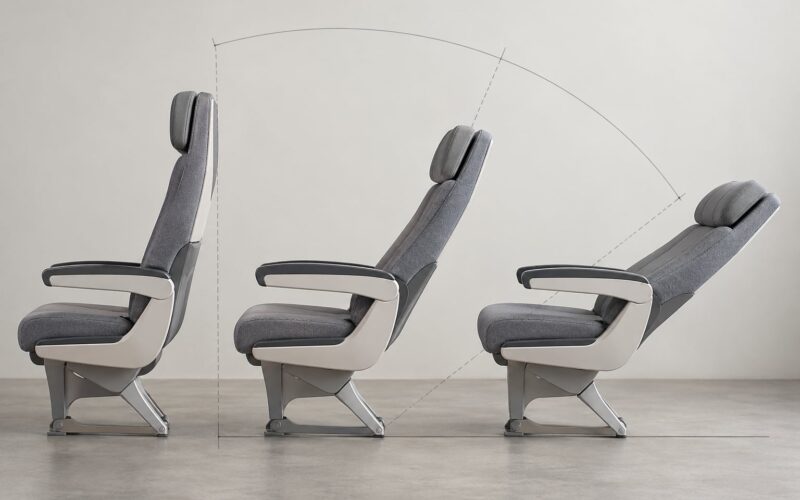
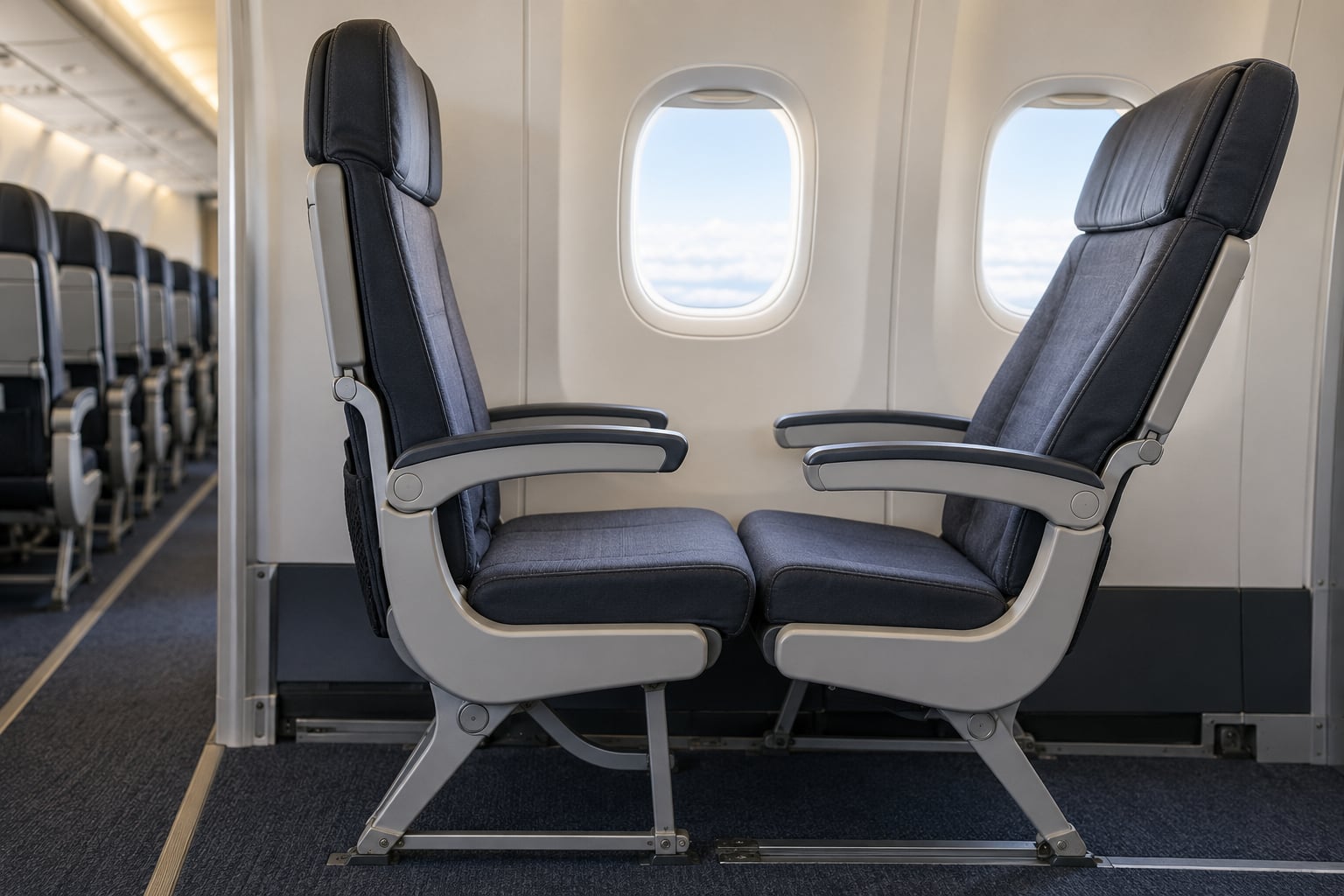
A pre-reclined seat is an economy seat that arrives at the gate already leaned back a few degrees, and stays there. The back is pinned or fixed in its frame at an angle somewhere between fully upright and fully reclined, and there is no recline control anywhere on the seat.
Break the definition into four parts, because every one of them shows up in airline descriptions:
- The back is fixed. It does not travel. There is no lever, no button and no foot pedal that moves it.
- The angle is slight. British Airways calls it “pre-reclined at a gentle angle.” No carrier publishes the angle in degrees, which is why you will rarely see a number attached to the phrase.
- There is no recline control. If you find a button, it usually controls something else, such as the reading light or the screen.
- Legroom is the same for everyone in the row. Because nothing moves, the space in front of your knees cannot change during the flight.
A standard upright economy seat is the opposite on all four counts. Its back starts vertical and stays wherever the passenger puts it, which is exactly the reason airline seats recline at all.
One word of caution: pre-reclined does not mean non-reclining in the safety sense. Some rows are non-reclining because the seat cannot move there, such as many exit rows and the last row behind a bulkhead. Those are different designs with a similar symptom.
How Does a Pre Reclined Seat Work?
A pre-reclined seat works by removing the mechanism, not by limiting it. On a conventional seat, reclining pushes the seat back back and, on many slimline designs, slides the seat pan forward to create the room. On a pre-reclined seat, that entire linkage is either absent or locked out of use.
The frame is built or pinned at a set angle. Some airlines pair that fixed back with a thinner seat shell, and the small amount of tilt then works in your favour: the seat occupies slightly less of the space in front of you, so knee room at the fixed angle can be close to what a vertical seat gives you.
That is the part travelers miss. “Locked back” does not automatically mean “less room.” The tilt is often deliberate, sized so that a passenger of average height sits at roughly the same knee position as on a vertical seat.
It is not a lie-flat option, and no airline describes it as one. If you need a bed or a real backrest change on a long segment, this is not the design that gives it to you.
Why Do Some Airplanes Have Pre Reclined Seats?
Airlines use pre-reclined seats because they are cheaper to build, lighter to fly and easier to manage than adjustable seats.
- Weight and fuel. A seat with no recline mechanism and a thinner frame weighs less. Every pound of cabin furniture shows up in fuel burn on hundreds of sectors.
- Hardware cost. No hinge, no track, no pedal. Fewer parts means cheaper replacement when something does break.
- Fewer conflicts. Most in-flight arguments about reclining start with a passenger behind suddenly losing knee room. Removing the control removes the argument, which airlines value highly.
- Clean product story. “Pre-reclined” turns a limitation into a pitch: the same seat for everyone, no leaning into the row behind, and more space on paper.
That last point is worth naming plainly. In most cases the phrase describes a seat that was not going to recline anyway, repackaged.
The context that pushed more carriers this way is shrinking seat pitch. Economy pitch has fallen from the mid-30s inches common on older widebody layouts to roughly 28 to 31 inches on plenty of low-cost and even mainline aircraft today. When the space behind the seat back gets tighter, a seat that reclines into the passenger behind becomes the main source of friction in the cabin.
Airlines that use pre-reclined or non-reclining seats
| Airline | Cabin | Seat type | Duration rule | Notes |
|---|---|---|---|---|
| Spirit | Main cabin | Pre-reclined | None stated | Marketed as a feature; no recline lever |
| Frontier | Main cabin | Pre-reclined | None stated | Fixed back across most of the cabin |
| Allegiant | Main cabin | Non-reclining | None stated | One of the first US carriers to sell fixed seats as standard |
| British Airways | Economy | Pre-reclined at a gentle angle | Applied on flights of about four hours or less | Longer sectors keep adjustable seats |
| Cathay Pacific | Economy | Trial of non-reclining long-haul seats | Long-haul trial | Trial reversed after passenger pushback |
| Finnair | Business | Pre-reclined on some aircraft | Varies by equipment | Used where a fixed lie-flat product is fitted |
Frontier flyers describe the fixed seats as unremarkable once you are used to them, and Spirit passengers commonly say they prefer not having a stranger lean into their knees. Other flyers feel the loss of movement immediately, especially with a laptop open on the tray table.
Pre Reclined Seats vs. Standard Airplane Seats
The clearest way to compare the three designs is by what the passenger can control.
| Feature | Upright reclinable seat | Pre-reclined seat | Seat that cannot recline |
|---|---|---|---|
| Starting position | Vertical | Fixed gentle backward tilt | Usually vertical, sometimes fixed forward-leaning |
| Recline range | A few degrees, often only a couple of inches of travel | None, the mechanism is absent or locked | None, blocked by safety rules or by design |
| Legroom over the flight | Changes when the person in front moves | Identical for everyone, all flight | Identical for everyone, all flight |
| Knee room created by the tilt | None, and reclining takes it away | Often positive because the shell is thinner | Depends on the row |
| Seat-back conflict risk | Yes | None | None |
| Suits | Long flights, back pain, sleeping | Short hops, tight cabins, laptops and meals | Passengers who want the floor space in an exit row |
Rows that block recline for safety reasons are usually the last row of the cabin, because a reclining seat back there can hit a bulkhead or the galley wall, and some exit rows, where a moving seat back can obstruct an exit path. A bulkhead row blocks recline because there is no passenger behind but the wall is close.
The practical difference between a pre-reclined seat and a structurally blocked one is that the pre-reclined seat is tilted from the start, while the blocked seat usually sits vertical and just will not move.
How Can You Tell If a Flight Has Pre Reclined Seats?
Most seat maps do not label it, so you have to check three things: the airline, the aircraft and the flight length.
- Check the airline’s own cabin page. Low-cost carriers describe their standard seat in the seat selection or fare comparison tool, and that text is usually where the pre-recline language appears.
- Check the aircraft type on your booking confirmation. The same airline flies different seat designs on different jets. A narrowbody on a three-hour run and a widebody on the same route can be set up differently.
- Check the flight duration rule. Where a carrier applies pre-reclining based on sector length, as British Airways does on flights of about four hours or less, the same itinerary on a longer schedule gets adjustable seats.
- Ask the airline directly. A message to the airline’s social team or chat support with the flight number and the seat you want usually gets a straight answer in writing. That written reply is the only confirmation worth relying on.
- Read recent passenger reports for your exact aircraft. Flight reviews and traveler forums often mention the seat type, and the seat model name, such as a slimline series, tells you the recline hardware is different from an older frame.
If you have back pain, treat step four as mandatory rather than optional. A locked seat discovered at the gate is a bad six hours, and there is usually no spare seat on a full flight.
Are Pre Reclined Seats More Comfortable?
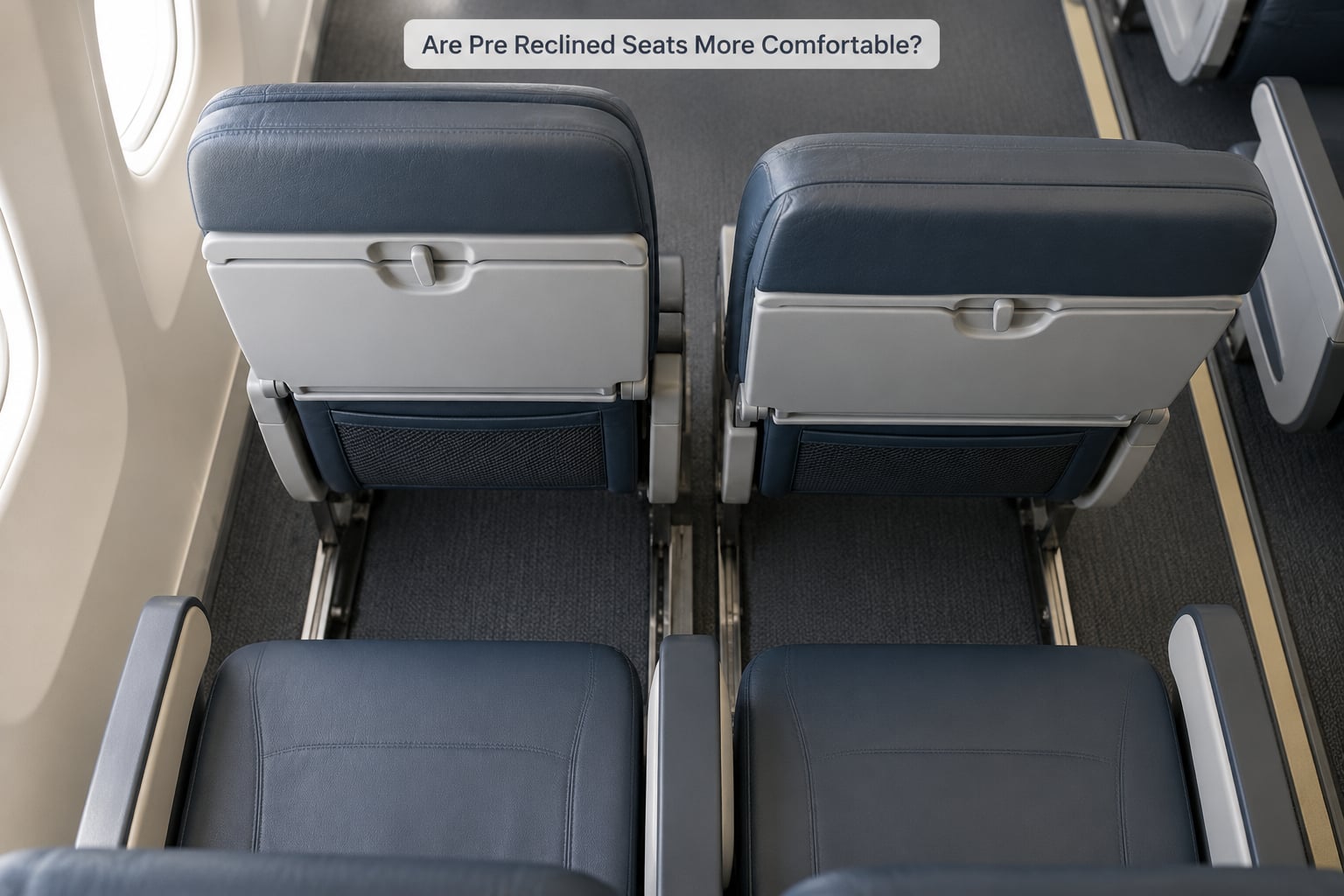
Sometimes, and it depends far more on the seat width, the pitch and the cushion than on whether the back moves.
Where a pre-reclined seat wins is on a short flight in a tight cabin. The fixed tilt can hold the knees in the same place a vertical seat would, nothing changes behind you, and there is no bracing for a seat back that suddenly moves. Plenty of Frontier and Spirit regulars say the absence of surprises is worth more to them than any angle change.
Where it loses is on anything long. You cannot change your posture, you cannot push your back flat against a seat that has already moved its space away from you, and a fixed tilt that felt neutral at 90 minutes can press into the backs of your legs at hour six.
A few forum regulars make the same point in different words: the recline on a standard economy seat is only about a couple of inches of travel, and many able-bodied passengers rate the upright position as equally comfortable. People recovering from back surgery describe the opposite experience and say they need to change position regularly. Both accounts can be true, which is why the deciding factor is your own back, not the seat model.
Are Pre Reclined Seats Good for Long Flights?
They are workable on long flights, but they are not designed for the things long flights ask of a seat.
- Sleeping. A fixed gentle tilt is a poor sleeping position. You cannot get your shoulders back or your head supported the way you can on a reclining seat.
- Hip and knee comfort. Sitting in one position for nine hours without a hinge to shift against is harder than it sounds, particularly for taller passengers who already fight the pitch.
- Posture changes. Ergonomics advice for long-haul sitting is to move roughly every half hour. A seat with no range makes that harder, so a folded blanket or small cushion behind the lumbar helps more than it would in a standard seat.
- Working. The tray table stays clear of a leaning seat back, which is a real advantage if you eat or type the whole flight.
Two commenters described small fixes that work in a fixed seat: a pillow behind the lower back, and a rolled blanket under the ankles to take pressure off the legs. Neither changes the seat, both help more than people expect.
If a long-haul flight is on the calendar and you know you will want to sleep, check for an adjustable seat before booking. On many routes that means the premium cabin, an extra-legroom row, or simply a different carrier.
How to Choose the Best Seat for Your Flight
Work through these in order and the answer usually falls out on its own.
- Decide how much the angle matters to you. If you want to sleep, stretch out or change position, rule out pre-reclined rows first. If you want a predictable seat for a two-hour hop, they stop being a problem.
- Pick the cabin before the row. Cabin choice is the biggest comfort lever on the aircraft, and most long-haul premium products include an adjustable or lie-flat seat as standard.
- Use legroom data, not seat numbers. Look up the seat pitch for your specific aircraft rather than trusting a row letter. Seat letters repeat across aircraft and even across the same aircraft in different configurations.
- Check the row rules. If you want to recline, avoid the last row and any exit row marked non-reclining. If you want leg space instead, a bulkhead or exit row may suit you better.
- Confirm before you pay for selection. Ask the airline in writing which seat design is fitted on your flight number. This is the step people skip and then regret.
- Pack the small fix. A travel cushion and a folded blanket cover most of the gaps in a fixed seat, at almost no cost to your bag space.
One more practical point about rows rather than seat design: window seat 11A is often called out online because it sits near the front of many narrowbody layouts, close to the galley, and because its position changes the trade-offs between leg room and noise. Row numbers are not a proxy for seat comfort, which is why the aircraft check above matters more than the row letter.
Frequently Asked Questions
What is a pre-reclined seat on a plane?
A pre-reclined seat is an airplane seat whose back is fixed at a gentle backward angle instead of starting fully upright, with no working recline lever or button. The passenger cannot lean it back further or push it to vertical. Airlines use the design to cut weight, save money and remove the seat-back conflict that causes most in-flight arguments.
Which seats do not recline on a plane?
Three groups. Pre-reclined seats are fixed by design from the start, most often on low-cost main cabin. Some exit rows block recline so a seat back cannot obstruct the exit path. The last row behind a bulkhead or galley wall blocks it because the back has nowhere to go. Bulkhead rows may also sit close to the wall. Check the seat map notes or ask the airline.
Can you recline a pre-reclined seat?
No. There is no lever, button or pedal, and the back is pinned in its frame. If you find a button on the armrest, it is usually for the reading light or the screen rather than the seat. Trying to force the back will not unlock it, and asking a flight attendant will not produce a recline, because the design does not allow one.
Which airlines have pre-reclined seats?
Spirit and Frontier market pre-reclined main cabin seats as standard, and Allegiant sells non-reclining seats as its standard economy product. British Airways pre-reclines economy seats at a gentle angle on flights of about four hours or less and keeps adjustable seats on longer sectors. Finnair has used them in some business cabins, and Cathay Pacific trialled non-reclining seats on long-haul before reversing the change.
Are pre-reclined seats worse for back pain on long flights?
They can be, and the reason is simple: you cannot change your posture. Ergonomics advice for long sitting is to move every half hour, and a fixed seat removes most of the options. A cushion behind the lumbar and a rolled blanket under the ankles help. If you have a back condition that requires frequent position changes, confirm the seat design before booking.
Do pre-reclined seats give you more legroom?
Sometimes, and it comes from the tilt rather than from extra pitch. Many fixed designs use a thinner seat shell, so the gentle backward angle can leave the knees in roughly the same place a vertical seat would, and the space never changes during the flight. It is not extra inches of pitch, so tall passengers on a 28 inch pitch cabin still feel the squeeze.
Conclusion
A pre-reclined seat is a fixed seat: its back arrives at a gentle backward angle and stays there, with no lever and no recline. That design saves an airline weight and money, removes the seat-back fight, and can hold your knees in roughly the same place a vertical seat would.
Before you choose a seat, check the aircraft on your booking, look for the airline’s seat description, and ask in writing if you have a reason to need a moving seat back. The exact design varies by airline and by aircraft, so the confirmation is worth more than the row letter.