Economy seats keep shrinking for one core reason: an airline’s biggest costs are fixed per aircraft, so every extra seat sold spreads fuel, crew, and airport fees across more passengers and raises revenue from the same metal. Mid-20th-century main cabins offered about 35 inches of seat pitch; many jets today sit closer to 31, and budget carriers go below that. It is not one airline’s decision. It is an industry-wide bet that you will accept a smaller seat in exchange for a fare you will pay.
That is the short version. The rest of this guide covers what actually pushes seat width down, how to read pitch and legroom numbers, which aircraft are tightest, and what you can do about it when you book.
Table of Contents
- Why Economy Seats Keep Getting Smaller
- What Makes Airline Seats Smaller?
- Why Economy Seats Keep Getting Smaller Over Time
- How Seat Width and Legroom Are Changing
- Which Aircraft Have the Tightest Economy Seats?
- Why Newer Planes Do Not Always Have More Room
- What Shrinking Economy Seats Mean for Passengers
- How to Choose a More Comfortable Economy Seat
- Frequently Asked Questions
- Are economy seats actually getting smaller?
- Why are airlines reducing economy seat width?
- Is a wider airplane always more comfortable in economy?
- How can I find the most comfortable economy seat?
- Do economy seats vary between airlines?
- What is the difference between seat width and legroom?
- Conclusion
Why Economy Seats Keep Getting Smaller
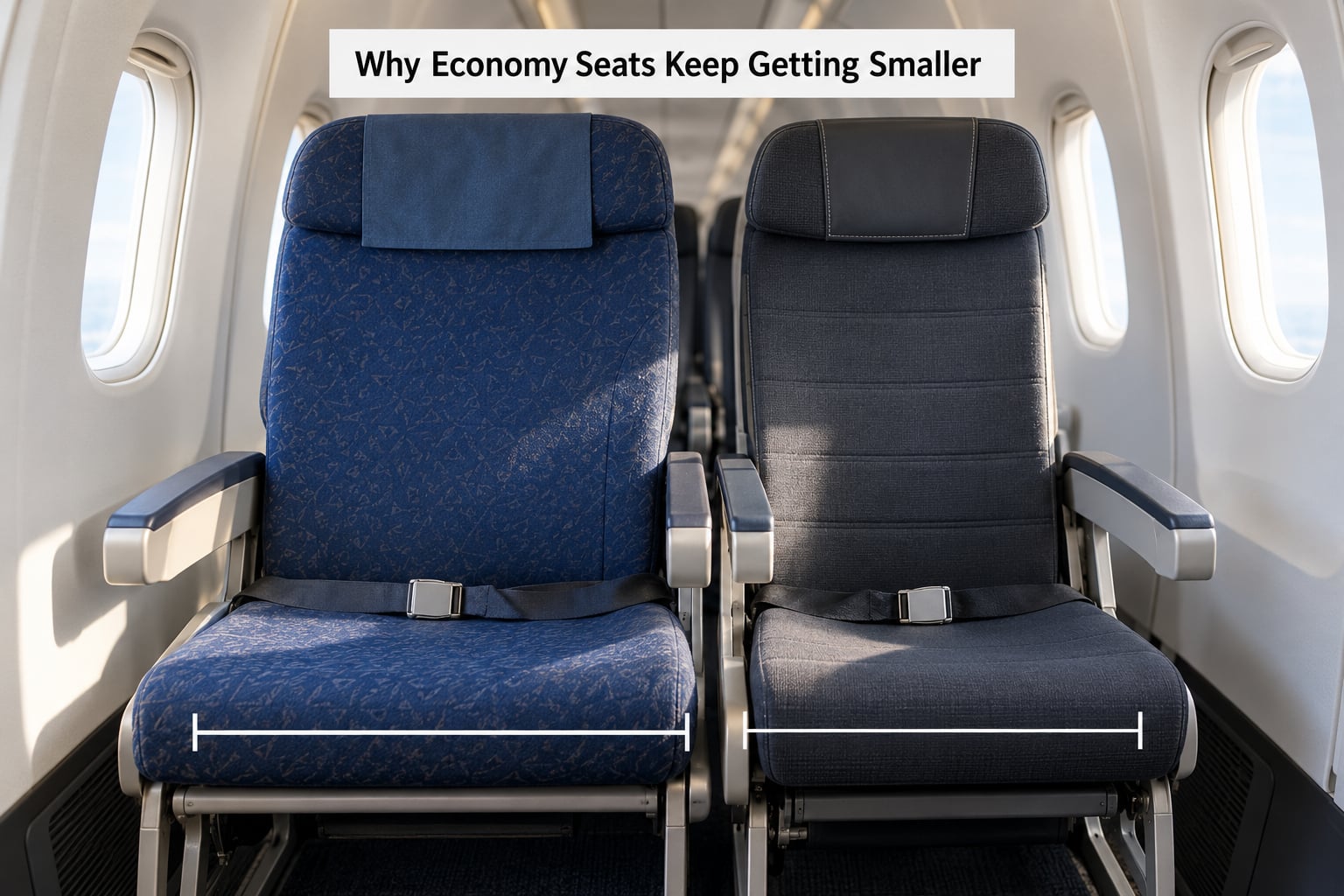
The direct answer is capacity economics. Every seat added to a cabin generates another fare without adding a matching amount of fuel burn, flight time, or crew cost. That arithmetic pushes airlines to fit more rows into the same fuselage, and the easiest place to find space is inside the seat itself.
Narrow the seat an inch and you have recovered roughly an inch of pitch, which can be enough to add a row at the back of the plane. A row at the back of a 180-seat narrowbody is worth real money on every single departure, and there are dozens of departures a day.
The second pressure is pricing. Low-cost carriers built their whole model on a stripped product and a low base fare, so they keep stripping. Legacy carriers chase the same yield targets and copy the densest layouts in the industry because nobody is measuring comfort in the purchase decision.
Shrinking is not universal, and this matters. Seat dimensions still vary by aircraft type, by cabin section, and by airline. A transatlantic widebody economy seat and a domestic narrowbody economy seat are entirely different products that share one label, and treating them as the same thing is why the topic feels confusing.
A useful way to think about it: seat pitch has moved from roughly 35 inches in the mid-20th century to about 31 inches on a typical narrowbody today, while seat width has narrowed from around 18 inches to roughly 16.5 inches in some configurations. Those two numbers explain most of what people mean when they say seats feel smaller.
What Makes Airline Seats Smaller?
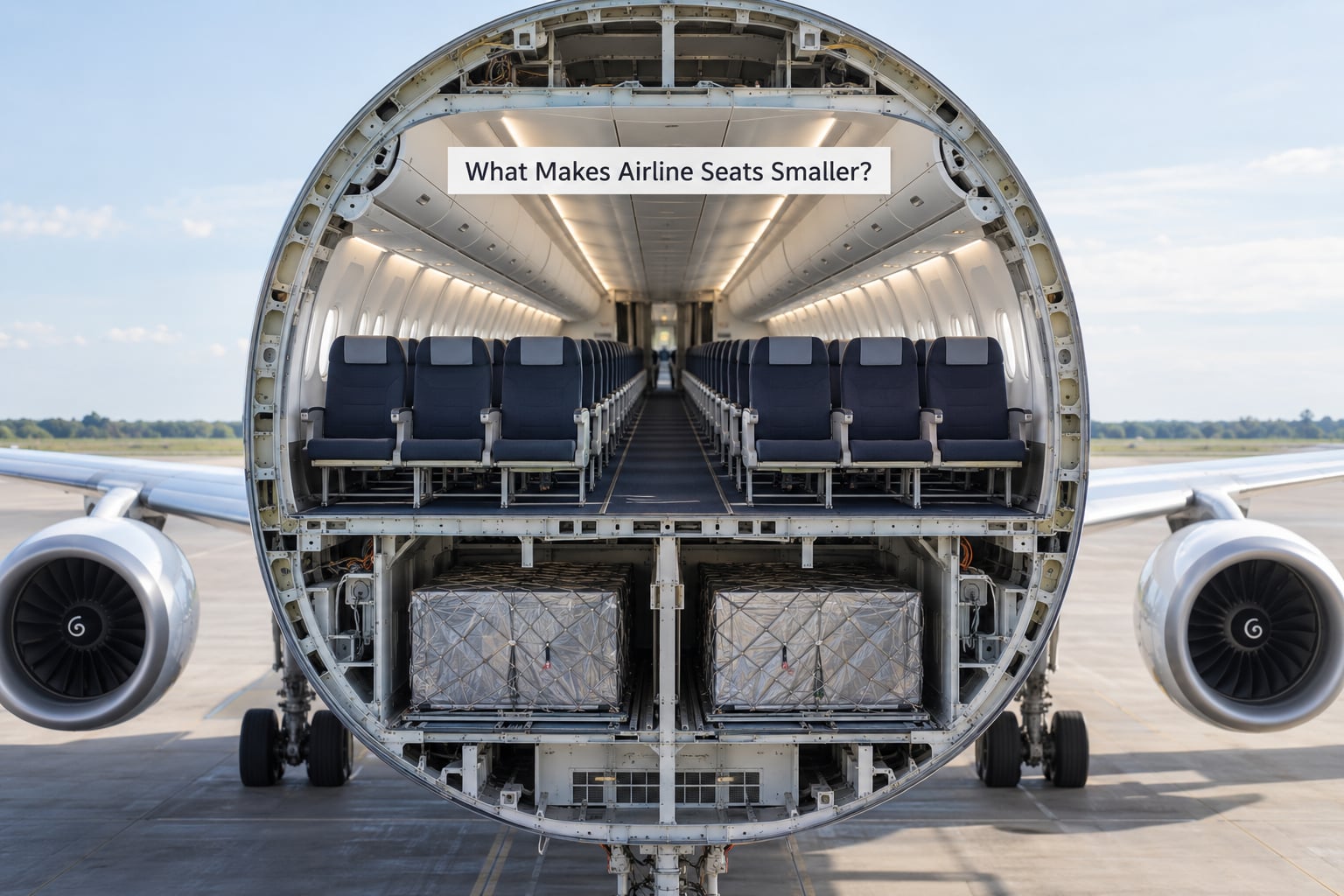
Six pressures do most of the shrinking. They overlap, and on any given aircraft a combination of them is at work.
- Spreading fixed cost across more seats. Fuel, crew, maintenance, and airport charges are largely set before the doors open. Seat count is the one variable the airline controls.
- Demand outrunning capacity. Full loads on dense cabins let airlines raise fares without losing customers, which makes adding seats the safer bet than adding aircraft.
- Consolidation. Fewer, larger carriers mean fewer independent design decisions. When routes get cut, a dense layout that flies profitably at a discount gets kept.
- Deregulation and route economics. Competition on price pushed every carrier to compete on cost per passenger, and a seat that sells at the same fare as a roomier one is pure margin.
- Ancillary revenue. When the base fare is treated as a near-break-even entry point, revenue shifts to bags, seat selection, and priority boarding. The seat itself becomes the thing you economize on.
- Lightweight seat redesign. Slimline seat shells take up less floor depth and weigh less than padded seats from older fleets, freeing up a slice of cabin that used to be dead space.
Weight deserves its own note. Lighter seats reduce fuel burn slightly, but seats are heavy items and the savings are modest next to the payoff of an extra row. Airlines present slimline seats as a comfort-neutral upgrade; passengers generally read them as a way to fit more rows without admitting the trade-off.
Removing seat-back entertainment screens is the same logic with a worse reception. On some retrofits, taking the screen out of every seat pays for a handful of extra rows. Passengers notice, and they notice that the reclaimed space did not come back to their seat.
Why Economy Seats Keep Getting Smaller Over Time
The pattern is easier to see across decades than across airlines. Early jet-age cabins were built on a different assumption: flying was a new luxury, cabins were wide and sparse, and comfort was part of the pitch. Seat pitch in the middle of the 20th century ran around 35 inches, and typical seat widths were close to 18 inches.
The 1978 Airline Deregulation Act changed the competitive target. Routes opened to new entrants, fares became the headline comparison, and the question shifted from what makes a good cabin to what clears the highest load factor at the lowest cost. Pitch became a lever with a number attached, and the number came down.
Bankruptcies through the 1980s and again in the early 2000s compressed the field into the big three and then the big four. A shrinking number of carriers made design decisions for the whole market, and low-cost carriers added a second pressure by making minimal space a visible feature of the brand.
Since then the pitch has settled in the low 30s on many main-cabin narrowbodies, with retrofits pushing some configurations tighter. Widebody economy has held more of its original spacing, which is why an overseas flight often feels roomier than a short domestic hop on the same airline.
How Seat Width and Legroom Are Changing
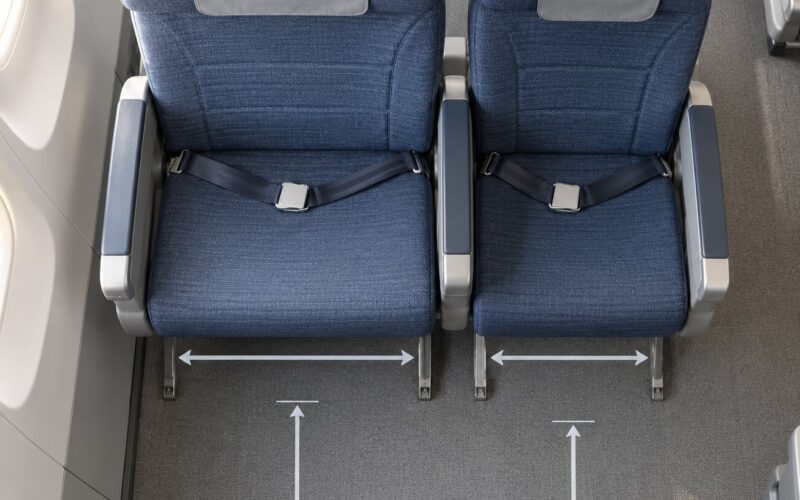
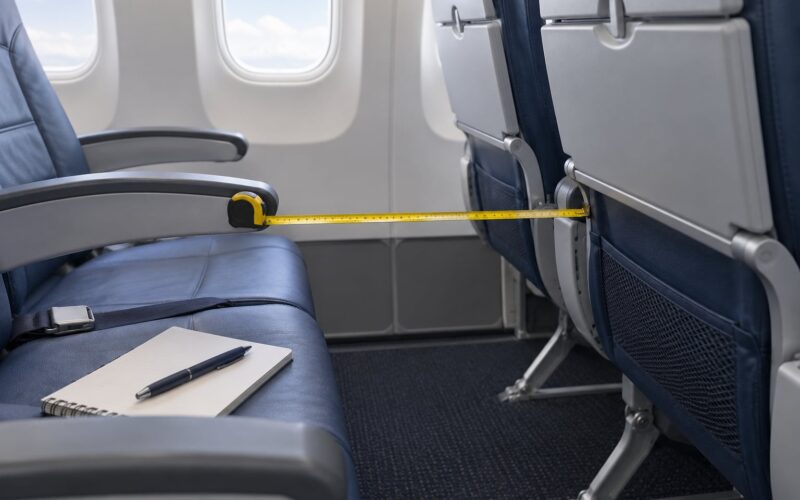
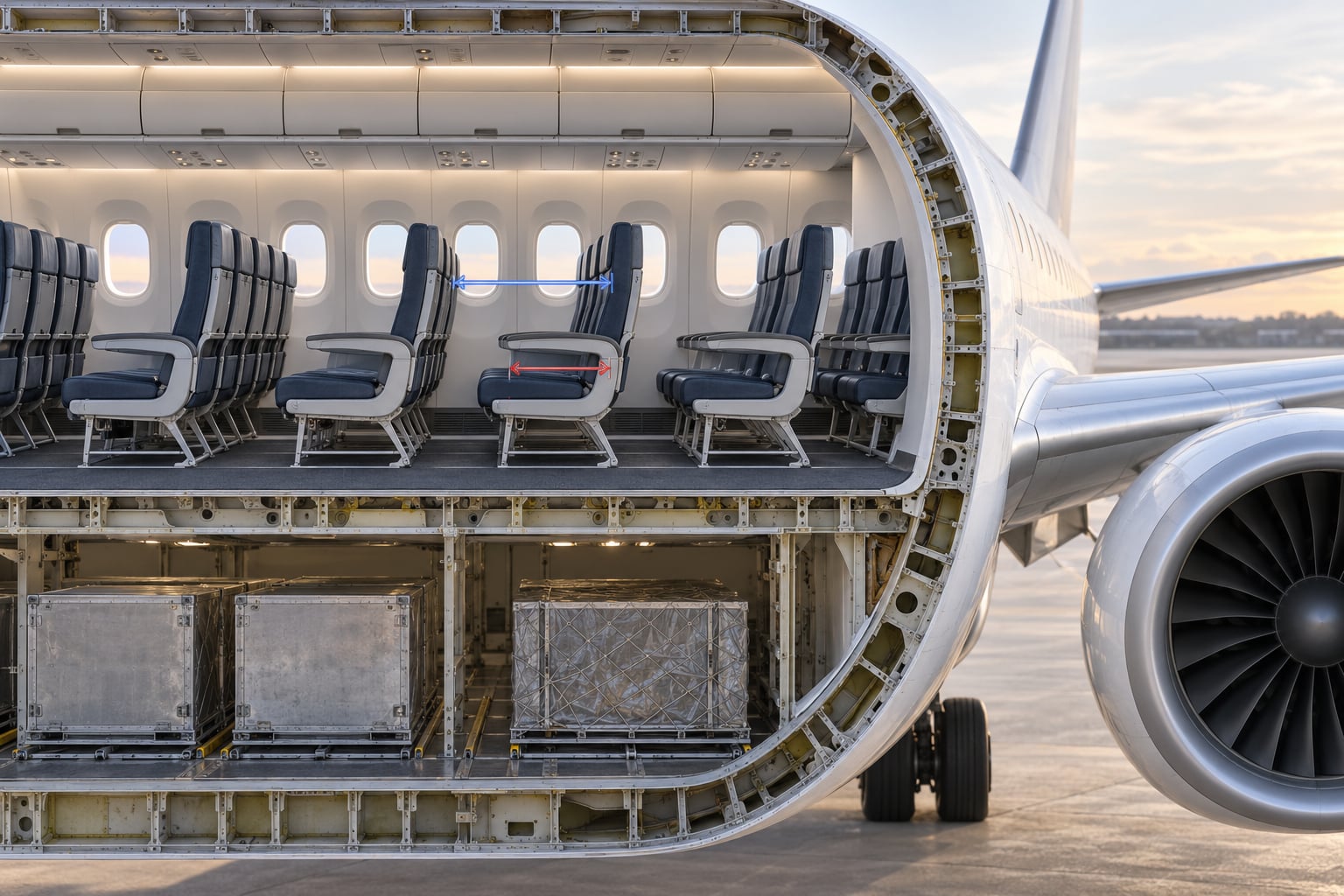
Two measurements cause most of the confusion. Seat width is the horizontal measurement of the seat itself, armrest to armrest. Seat pitch is the front-to-back distance from one row to the next, which is where your knees live. A seat can be wide and still be miserable if the pitch is tight, and narrow with generous pitch can be tolerable on a short hop.
Cushion depth and recline depth matter too, and neither shows up in the headline numbers. A shallow cushion gets uncomfortable faster than its measurements suggest, and a seat that reclines only a few degrees leaves you sitting upright for four hours.
| Era | Typical seat pitch | Typical seat width | What changed |
|---|---|---|---|
| Mid-20th century | About 35 inches | About 18 inches | Wide, sparse cabins; comfort sold as part of the experience |
| Post-deregulation 1980s | Low 30s, roughly 31 to 32 inches | Around 17 inches | Price competition; pitch cut as a cost lever |
| Consolidation era 2000s | 32 to 33 inches | Around 16.5 to 17 inches | Retrofit densification on existing aircraft |
| Today, main cabin narrowbody | About 30 to 32 inches | About 16 to 17 inches | Ultra-low-cost layouts below 30 inches on some routes |
| Today, main cabin widebody | About 31 to 34 inches | About 17 to 18.5 inches | More room per seat, plus seat-back screens and power |
These figures are approximate ranges, not guarantees. A single airline can run two different narrowbody layouts simultaneously, and a code-share partner may put you on an aircraft the booking site never showed. Check the specific flight rather than the airline brand.
Which Aircraft Have the Tightest Economy Seats?
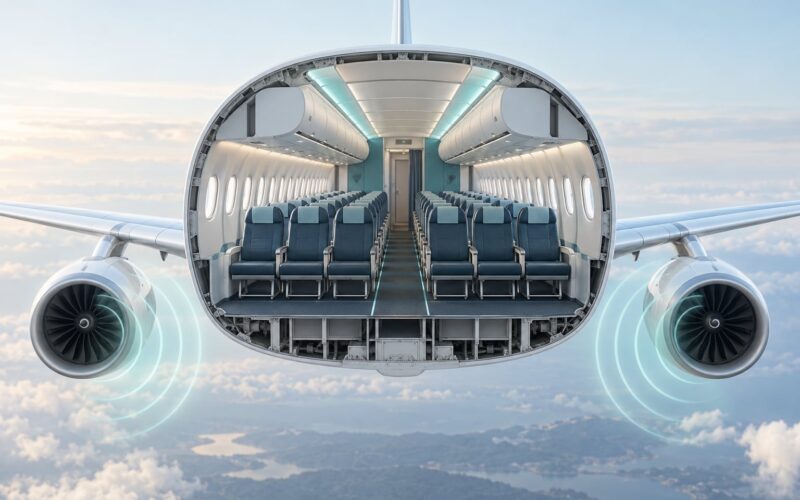
Aircraft type matters more than airline name, because the tightest seats are usually a narrowbody outcome rather than a carrier outcome. A narrowbody cabin is built around a three-abreast arrangement either side of the aisle, so every seat shares a fixed cabin cross-section with more neighbors.
| Cabin type | Typical layout | Seat width | Pitch | What to expect |
|---|---|---|---|---|
| Narrowbody, standard | 3-3 | About 17 to 18 inches | About 31 to 32 inches | Widest seat in a tight cabin; window and aisle on the same side |
| Narrowbody, densified | 3-3 | About 16 to 16.5 inches | About 28 to 30 inches | Ultra-low-cost layouts; some seats do not recline |
| Widebody, single aisle | 2-2 | About 17 to 18.5 inches | About 32 to 34 inches | Everyone has an aisle or window; walkable cabin |
| Widebody, twin aisle | 3-3 or 2-4-2 | About 17 to 19 inches | About 31 to 34 inches | Middle seats vary most; check the seat map before picking |
| Widebody, densified | 3-4-3 | About 16.5 inches | About 31 to 32 inches | Most rows are 4-wide in the middle; research the seat first |
The densest layouts belong to ultra-low-cost carriers, where a narrow seat and a non-reclining seat are brand features rather than accidents. Basic economy fares can also mean a seat in the worst part of the cabin on a full flight, which is a pricing decision rather than a design one.
Community consensus among frequent flyers matches what the tables show: the aircraft and the row matter more than the airline badge. Plenty of flyers would rather pay for a widebody on the same airline than spend that money on a premium cabin on a narrowbody.
Why Newer Planes Do Not Always Have More Room
The assumption that a new plane must be roomier is wrong, and the reason is structural. New aircraft arrive with more cabin volume in some cases and then get fitted out denser than the aircraft they replaced, because that fit-out is a separate decision made for that airline on that route.
Slimline seats, thinner walls, and repositioned galleys and lavatories all free up floor length that an older interior wasted. Airlines then convert that space into rows. So the plane can be physically larger while the seat gets thinner and the pitch stays flat.
Two planes with the same family name can also have different interiors, and a leased aircraft can carry a different layout from when it was delivered. Never assume a new aircraft type equals a freshly designed cabin.
What Shrinking Economy Seats Mean for Passengers
Most of the time a tighter seat is uncomfortable rather than impossible. Long nights and long flights are where it shows: sleep gets harder because you cannot stretch, meals get awkward because the tray table hits your knees, and a window seat turns into a posture test after three hours upright.
For larger passengers it is a different experience. A person around five foot eleven frequently reports trouble fitting comfortably even on carriers usually considered roomy, and passengers with limited mobility can find some layouts genuinely difficult rather than merely unpleasant.
The middle seat is its own problem. When the armrests are fixed rather than movable, the usable width can drop well below the published seat width, which is why many flyers avoid the middle seat on a narrowbody entirely.
Two smaller frictions add up. Seat-back screens that disappear remove the only visual barrier between your knees and the seat in front. And rear galley or crew-rest rows cut usable rows from the back of the plane, which sometimes changes your seat number without changing your seat.
How to Choose a More Comfortable Economy Seat
Most of this is decided before you pay, at the booking screen. Work through it in this order.
- Check the aircraft type, not the airline. The booking page usually shows a plane code. A 737 or A320 family code on a short route means narrowbody conditions.
- Open the seat map and read it before paying. Seat pitch and width vary by row and by section. Note which rows are marked as extra legroom, exit, or bulkhead.
- Look up the specific aircraft and airline combination. Seat maps and regular-flyer forums publish real configurations, and they are often more current than the airline’s own page.
- Avoid the tight rows. Bulkhead rows have no tray table in front of you and sometimes no recline. Rear rows can be tight against the galley and noisy.
- Pick an aisle seat over a middle seat when the layout is 3-wide. On a narrowbody an aisle seat gives you one side to stretch and an easy exit.
- Use seat selection strategically. On an overbooked flight a paid or status-based seat assignment can be the difference between a bulkhead and a middle seat.
- Time the booking for roomier aircraft. On routes flown by several plane types, the larger cabin sometimes appears on certain days of the week or times of day.
- Consider premium economy for overnight long-haul. It is the middle exit: more pitch, often a footrest or screen, at a fraction of business class cost. On a red-eye it is usually worth it.
- For a 4-wide middle block on a widebody, check first. Ask an agent or a frequent-flyer forum about that specific row before you commit.
- Bring a knee stop if your seat does not recline. A small clamp device is cheap and prevents the seat in front from cutting into your legs for the whole flight.
Frequently Asked Questions
Are economy seats actually getting smaller?
Yes, in the sense that published main-cabin dimensions have trended down over decades. Typical seat pitch moved from about 35 inches mid-20th century to roughly 31 inches on many narrowbodies today, and some densified low-cost layouts sit below 30. Widebody economy has narrowed less. Dimensions still vary by aircraft, airline, and cabin section, so check the seat map for your specific flight rather than assuming.
Why are airlines reducing economy seat width?
Airlines reduce seat width to fit more rows into the same cabin, because a seat is the only unit of revenue that does not add proportional fuel burn, crew time, or airport cost. Slimline seat shells also take up less floor depth, which reclaims space the older padded seats wasted. When those savings add up to one more row, that row is sold on every flight.
Is a wider airplane always more comfortable in economy?
Usually, but not always. Widebody economy typically offers a similar or slightly greater pitch with more width, seat-back screens, and power, and the aisle often sits next to every seat. The exception is a densified widebody layout where the middle block is four seats wide, which can leave you with a narrower seat than a standard narrowbody aisle seat. Check the seat map for that exact cabin.
How can I find the most comfortable economy seat?
Start with the aircraft type on your booking page, then open the seat map and look for extra legroom, exit, and bulkhead rows. Check published seat maps for that airline and aircraft, since they vary by configuration. On a three-abreast narrowbody, choose an aisle seat. On a four-abreast middle block, research the specific row first. Book early for better rows.
Do economy seats vary between airlines?
Yes, and sometimes more between aircraft types within one airline than between two carriers. Two different narrowbody layouts on the same airline can differ by several inches of pitch. Seat width, cushion depth, recline angle, power availability, and screen presence also vary. Frequent flyers consistently judge the aircraft and the row more useful than the airline name when choosing a seat.
What is the difference between seat width and legroom?
Seat width is the horizontal measure of the seat, armrest to armrest, and published figures sometimes assume a movable armrest. Legroom usually means seat pitch, the front-to-back distance between rows, which is what your knees feel. A seat can be wide with poor legroom, or narrower with generous pitch. Both matter, and fixed armrests can make a middle seat much tighter than its published width.
Conclusion
Shrinking economy seats are a capacity and cost decision, not a physics problem. Airlines add rows because a seat costs almost nothing to fly and generates revenue on every departure, so space inside the cabin is where the margin lives.
What you can do is narrow the search before you pay. Check the aircraft type, read the seat map for that specific layout, and pick an aisle, exit, or bulkhead row when one is available. Comfort on a flight is decided by numbers, and those numbers are published before you commit.