Basic economy is an airline’s lowest, most restricted fare: you get the same seat and the same legroom as everyone else, but you usually give up free seat selection, ticket changes, upgrades and, on most major carriers as of 2026, mileage earning. Main cabin is the standard full-fare economy product, and the extra money buys back choice rather than space.
Those basic economy vs main cabin differences trip up a lot of people. Nothing about the seat changes between the two fares. What changes is everything around it, and the cheapest fare on the screen is often not the cheapest trip once you add a seat, a bag and a change fee.
Table of Contents
- Basic Economy vs Main Cabin Differences at a Glance
- What Is Basic Economy?
- What Does Basic Economy Usually Include?
- What Does Basic Economy Usually Exclude?
- What Is Main Cabin?
- How Do Seat Selection and Comfort Differ?
- What Are the Baggage Differences?
- Can You Change or Cancel Either Fare?
- How Do Boarding, Refunds, and Upgrades Work?
- Basic Economy vs Main Cabin: Price and Total Value
- Which Should You Choose?
- Frequently Asked Questions
- Is basic economy always cheaper than main cabin?
- Does main cabin always include a free checked bag?
- Can I select a seat with a basic economy ticket?
- Is a basic economy ticket refundable if I cancel my trip?
- What happens if the airline cancels my basic economy flight?
- Is main cabin more comfortable than basic economy?
- Conclusion
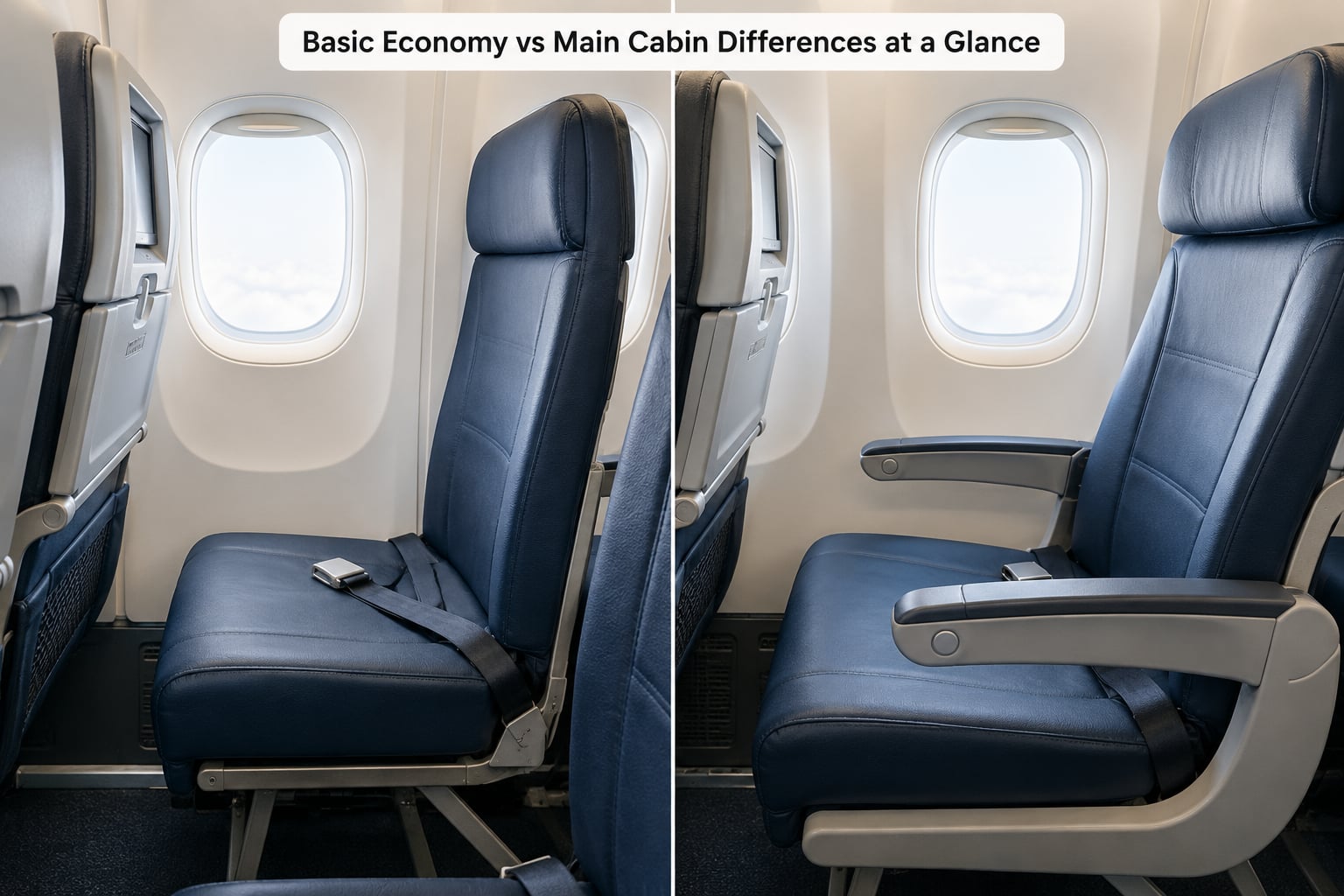
Basic Economy vs Main Cabin Differences at a Glance
| Factor | Basic economy | Main cabin |
|---|---|---|
| Seat | Assigned at check-in, often paid | Choose at booking or online check-in |
| Physical space | Same seat as main cabin | Same seat as basic economy |
| Carry-on bag | Often not included | Usually included |
| Personal item | Usually included | Usually included |
| Checked bag | Paid, on most carriers | Paid, on most carriers |
| Voluntary changes | Not allowed | Allowed, usually with a fee |
| Voluntary cancellation | No refund or credit | Credit or refund depending on fare rules |
| Boarding | Last group, bin space risk | Earlier group or priority options |
| Mileage earning | None on several big carriers | Earns mileage and status credit |
| Upgrades and standby | Excluded | Eligible |
| Best for | Short, firm, solo, light-luggage trips | Families, points earners, longer or changeable trips |
What Is Basic Economy?
Basic economy is a fare class, not a cabin. It is the ticket product airlines added to match ultra-low-cost carrier pricing without cutting the price of their own full-fare tickets.
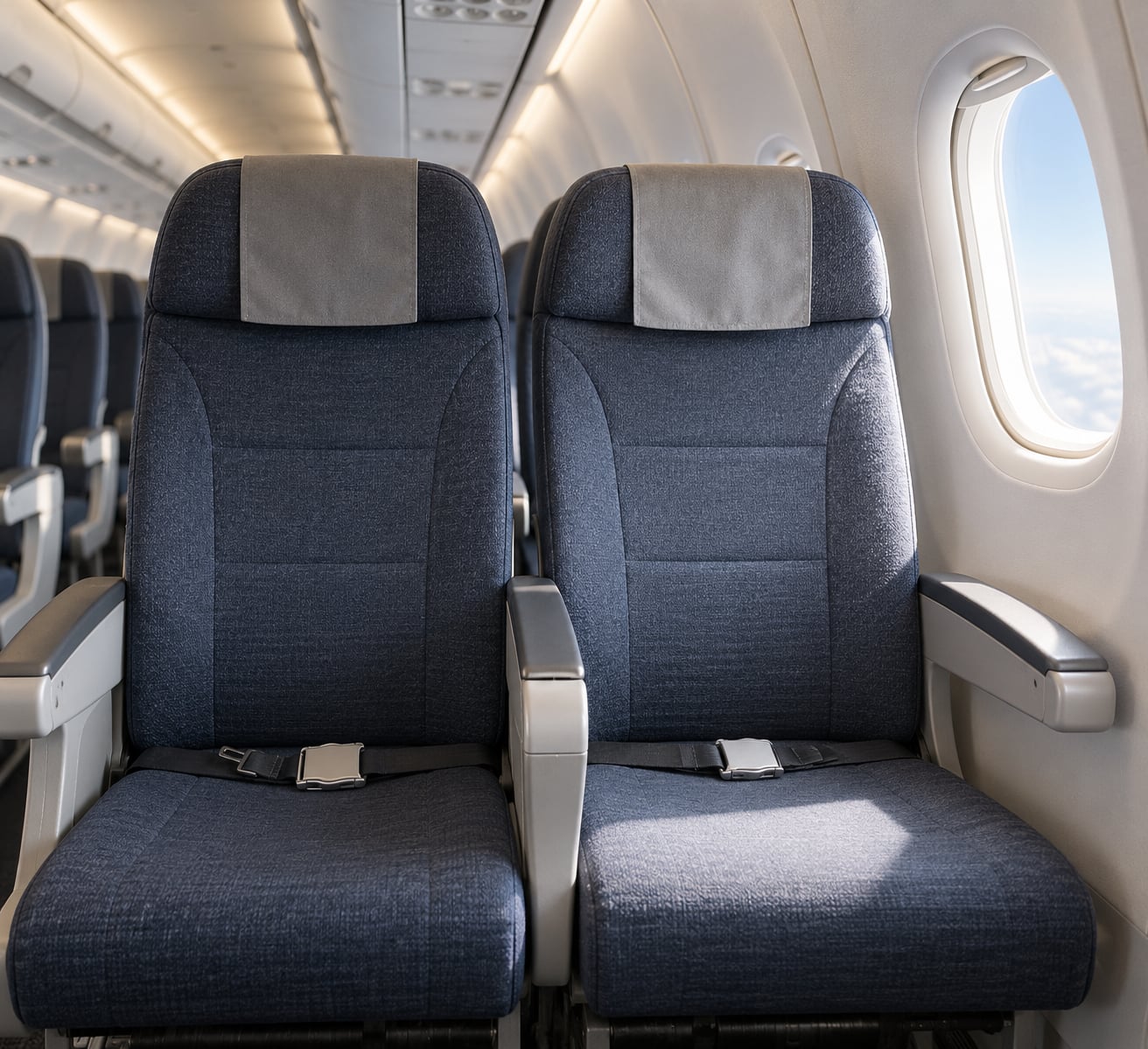
You fly in the same economy cabin, in a seat with the same legroom and the same recline as the traveler who paid 120 dollars more. The fare is simply a bundle with fewer items in it.
What Does Basic Economy Usually Include?
Usually one thing: transportation on the flight you booked. Some carriers add a free personal item, and most add mileage or points, but that has been shrinking rather than growing.
On American Airlines, for example, basic economy has not earned AAdvantage mileage or status credit for a long time. Delta stopped earning SkyMiles on its lowest main fare, and United’s MileagePlus change for its basic fare took effect in the spring. Treat all of that as dated fact that airlines revise without much notice, not as permanent rules.
What Does Basic Economy Usually Exclude?
Free seat selection, changes, cancellations, standby travel, upgrades, priority boarding and, at several carriers, all loyalty credit. Some routes and markets also drop the carry-on bag allowance.
Excluded does not always mean impossible. You can pay for a seat, you can pay to add a bag, and a co-branded credit card sometimes covers the fee. It just is not included in the sticker price.
What Is Main Cabin?
Main cabin is the ordinary full-fare economy ticket, and on Delta it now carries names like Main Classic. It is the fare most people picture when they think of economy, because it is what airlines sold before basic economy existed.
Main cabin is not a premium product and does not promise more space. What it promises is predictability: a seat you can pick before you leave home, a bag allowance in most cases, and change rules that leave you a way out.
How Do Seat Selection and Comfort Differ?
Comfort barely differs at all. Experienced travelers on FlyerTalk have pointed out for years that a basic economy seat and a main cabin seat on the same aircraft are physically the same seat.
Where comfort does change is around the seat. Main cabin lets you pick a window or an aisle, or pay for an exit row or a preferred seat, before check-in opens. On basic economy you get whatever the airline assigns, which on a full flight is frequently a middle seat near the back.
Boarding order follows from that. Basic economy boards in the last group on most carriers, so overhead bins may be full when you reach them and your carry-on gets gate-checked. Main cabin fares, and co-branded card holders, usually board earlier.
One caveat worth carrying: a former flight attendant writing on Thrifty Traveler noted that even a paid exit-row seat can be reassigned at boarding. Paying for a seat improves your odds, it does not lock them in.
What Are the Baggage Differences?
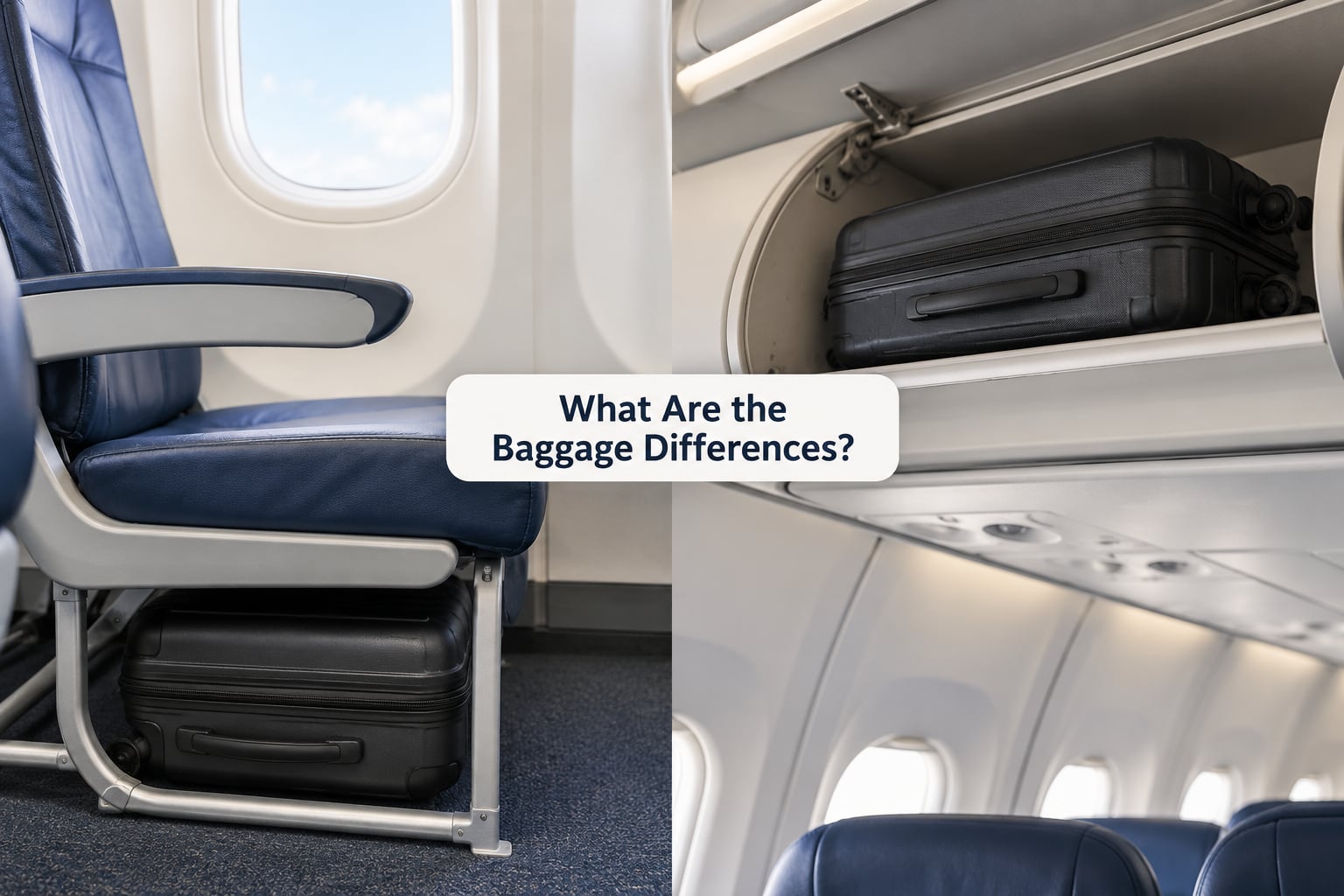
The bag rules cause more surprise than the seat rules do. A carry-on allowance is the single most common reason a cheap fare stops being cheap.
Basic economy on a carrier such as United or American generally covers a personal item only, sized at about 18 by 14 by 8 inches. Main cabin on those carriers normally adds a carry-on bag, about 22 by 14 by 9 inches, which has to fit in the overhead bin.
Checked bags are a different story. Neither basic economy nor main cabin includes a free checked bag on most domestic routes for most travelers, so a rule that “feels” friendlier is often just the carry-on. JetBlue and Alaska are more generous in places, and United allows a full carry-on on transatlantic itineraries even where it does not domestically, which is the kind of market-by-market split that catches people.
Allowances also follow your status and your card, not just the fare label. A frequent flyer with a free checked bag may pay nothing where a first-time flyer pays a per-bag fee twice.
Can You Change or Cancel Either Fare?
Basic economy is normally neither changeable nor refundable by the traveler. If plans move, the fare you paid is gone, and no credit comes back.
Main cabin usually allows both, with conditions. A change fee may apply and you pay the fare difference if the new flight costs more. A cancellation may produce a future travel credit rather than money back to your card.
There is one real safety net that applies to both: the 24-hour cancellation rule. Book a flight directly with the airline at least seven days before departure, and you can cancel within 24 hours of booking for a full refund to the original form of payment, with no restocking fee.
Two things trip people up. Bookings through a third-party site do not always follow the same process, and the rule covers only the 24-hour window, not a whole cancellation policy.
How Do Boarding, Refunds, and Upgrades Work?
Boarding, refunds and upgrades all lean toward main cabin. Basic economy boards last on most major carriers, sits in the last group on the boarding pass, and has no upgrade or standby eligibility, so if a flight is oversold there is nothing to fall back on.
Refunds are the part people misunderstand most. If the airline cancels or significantly changes your flight, your money-back rights come from the airline’s own disruption policy, not from your fare being flexible. A basic economy traveler whose flight is cancelled is typically rebooked on another flight or offered a refund of the original purchase, and that is true whether they bought the cheapest ticket on the plane or the most expensive.
Buying a more flexible fare does not buy a guarantee. It buys the option to move the ticket yourself.
Basic Economy vs Main Cabin: Price and Total Value
The gap between the two fares depends heavily on where you are flying. On US domestic routes the step up often lands somewhere in the 60 to 100 dollar range per round trip. To Mexico, the Caribbean and Canada it runs a bit lower. Europe, Africa and Asia or Oceania price the difference far higher, commonly past 150 dollars, because the base fares themselves are larger.
The real calculation is not the gap between the fares, it is the gap minus what you would have spent anyway. Run this before you book:
- Seat selection on basic economy, if you would have paid for it anyway.
- Carry-on bag fees, if you travel with more than a backpack.
- One checked bag, for a trip longer than a weekend or a trip with the wrong shoes.
- One change, if your dates have any chance of moving.
- The loyalty credit you give up, if you earn miles or hold status.
Take a fare that is 80 dollars cheaper on basic economy, add a 50 dollar seat, a 45 dollar carry-on and a checked bag, and the saving has already vanished before you count the miles. That arithmetic is why the two cheapest tickets on a fare drop page are often not the two cheapest ways to actually fly, and why the basic economy vs main cabin differences that matter most are the paid extras rather than the ticket price.
One dynamic-pricing wrinkle from Reddit travel boards is worth remembering: sometimes main cabin prices below basic economy on the same flight. The buckets move in real time, so if basic economy looks terrible and slightly more expensive, take it.
Which Should You Choose?
Choose basic economy when your plans are fixed, your trip is short, and you are travelling light.
That usually means a solo traveller, a short domestic hop or a weekend away, one backpack, no checked bag, and no reason to move the booking. Bonus points if you already have the airline’s co-branded card, which can waive the seat fee or a bag, or if the route is one where basic economy barely exists.
Choose main cabin when any of these are true:
- You are flying with children, a partner or anyone who needs to sit together.
- Your trip is long enough that a middle seat in the back hurts.
- You are checking a bag and want the price to be predictable.
- Your dates could move for work, weather or family.
- You earn miles or hold status, so the loyalty credit has a value to you.
- You want an exit row, a preferred seat, or any say over where you sit.
Southwest is the outlier worth mentioning: it has never sold a basic economy fare, which makes it a useful yardstick for what the extras are worth. A long-running FlyerTalk Delta thread compared a coast-to-coast trip at roughly 100 dollars more for main cabin, and the consensus was that the extra fare pays for itself on a flight that long.
Families deserve a specific warning. Seats together are not guaranteed on a basic economy fare, and American Airlines places unaccompanied minors under 15 only with the family’s consent. Travelers who booked basic economy while pregnant or travelling with a baby describe the boarding-order and seat-together anxiety in plain terms on Reddit, and they usually wish they had paid up.
Frequently Asked Questions
Is basic economy always cheaper than main cabin?
No. Basic economy usually has the lowest headline price, but fare buckets move in real time and main cabin sometimes prices below it on the same flight. And once you add a paid seat, a carry-on fee or a bag, the cheaper fare can end up costing more. Check the total, not the sticker.
Does main cabin always include a free checked bag?
No. Main cabin usually includes a carry-on bag and a personal item, but a free checked bag is usually a status or card benefit rather than a fare benefit. On many domestic routes both fares charge for the first checked bag. International itineraries and premium routes often include one.
Can I select a seat with a basic economy ticket?
Usually only by paying. Basic economy travelers get an assigned seat at check-in, often a middle seat, unless they hold a co-branded card or the airline assigns seats at no cost on a quiet flight. Some carriers let you pay for a specific seat online or through the app before boarding.
Is a basic economy ticket refundable if I cancel my trip?
Usually not. A voluntary cancellation on basic economy returns no money and no travel credit, because the fare is sold as non-refundable. Two exceptions: the 24-hour cancellation rule applies when booked direct at least seven days out, and airline-caused cancellations come with their own refund rights.
What happens if the airline cancels my basic economy flight?
The airline offers a rebooking on a comparable flight or a refund of the original purchase, and your fare class does not change the right. That protection comes from the airline’s disruption policy, not from your ticket being flexible. You may also get a voucher for future travel.
Is main cabin more comfortable than basic economy?
Barely, and only in ways you choose. The seat, pitch and legroom are identical on most aircraft. Main cabin lets you pick a window or aisle seat, buy an exit row or preferred seat ahead of time, and usually board earlier with better access to overhead bin space.
Conclusion
Basic economy and main cabin put you in the same seat. The gap is baggage, seat choice, changes, boarding order and loyalty credit, and the right fare depends on how fixed your trip is and how much those things are worth to you.
Before you book, open the airline’s fare rules for your exact route, add up the seat and bag fees you would pay on basic economy, and compare that against the main cabin price. If the trip is short and firm, take the cheaper fare. If anything could move, pay for main cabin.