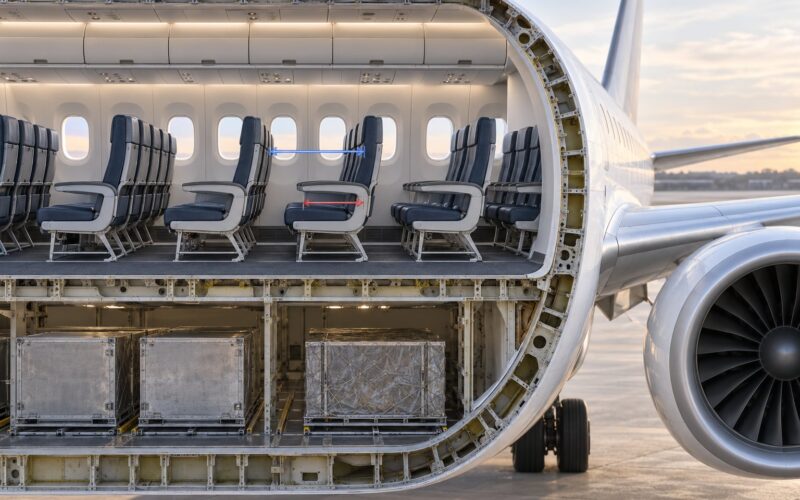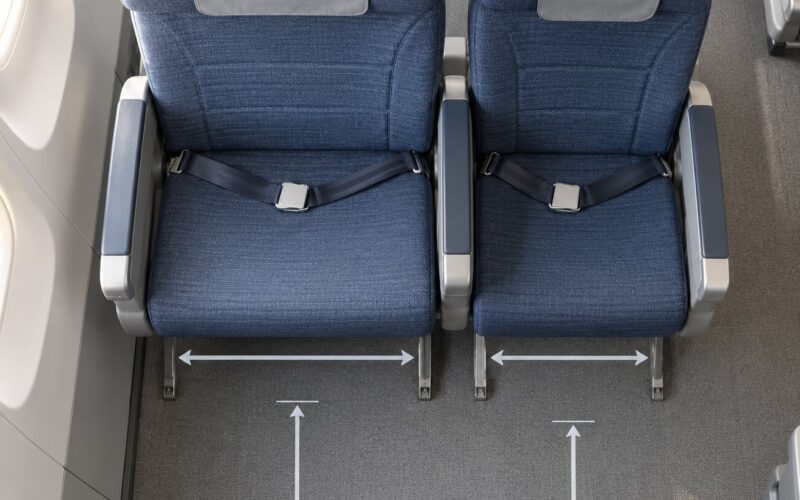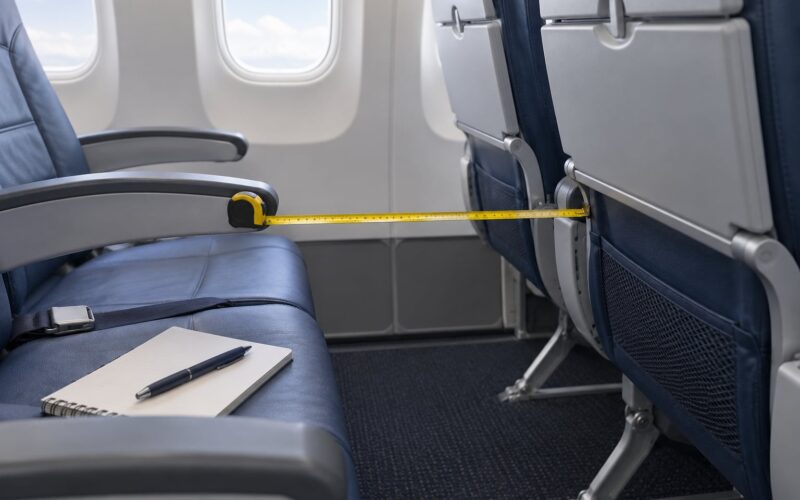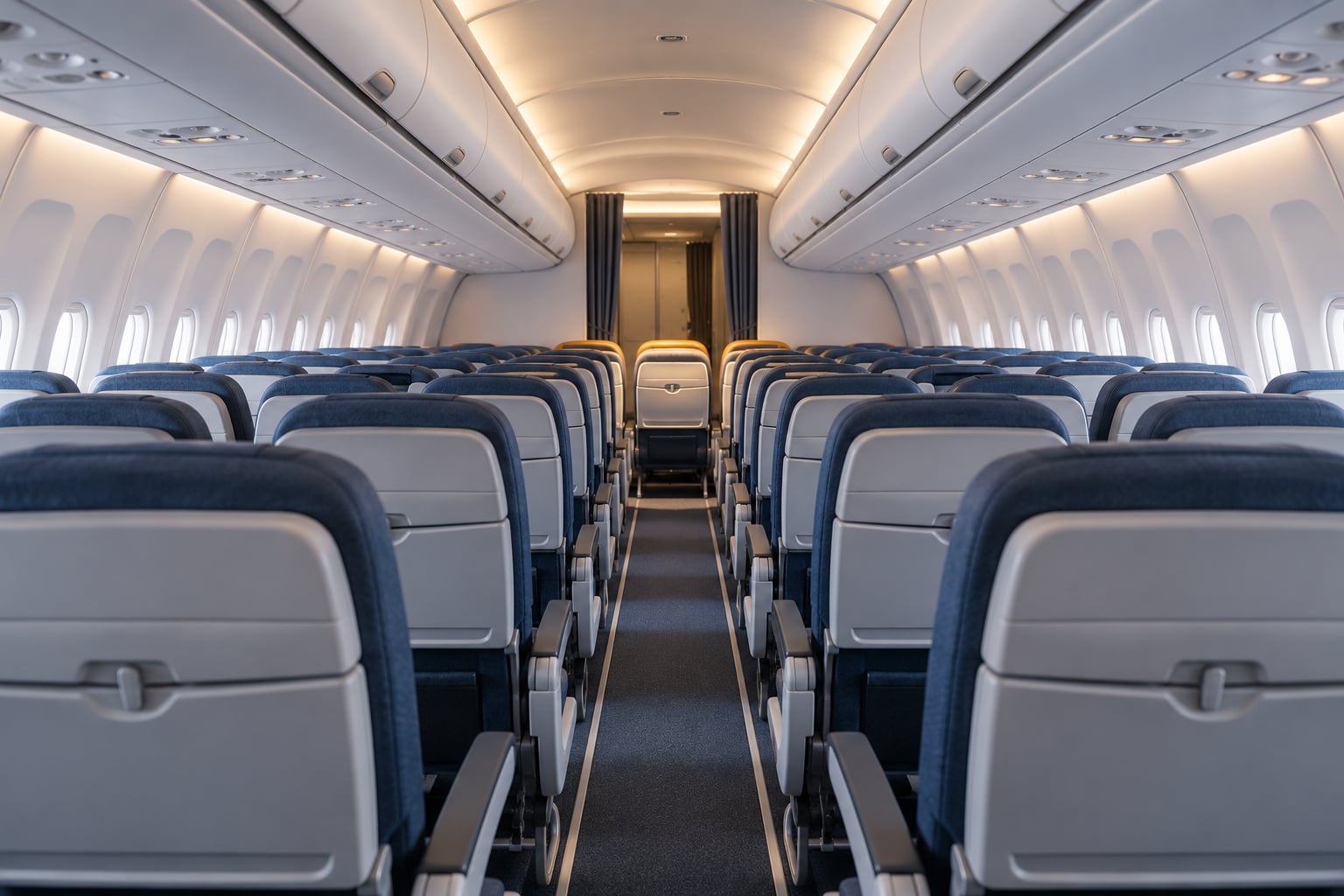
A preferred seat on a flight is a standard economy seat in a more desirable spot, usually toward the front of the cabin or a prime window or aisle position, that you reserve ahead of time. It has the same seat size and legroom as the economy seat next to it. You are paying for location, not space.
That single distinction explains most of the confusion around the label. Passengers click through a seat map expecting a few extra inches of legroom and end up in a perfectly normal row, four rows closer to the galley than they would otherwise be. Nothing was sold falsely, exactly, but the word “preferred” does a lot of vague work.
It also helps to know up front that “preferred” is not a regulated term. No aviation authority defines it. Each airline builds its own version of the product, and the same label can cover different rows, different fare tiers and different inclusions depending on the carrier and the aircraft. Before you pay anything, the seat map in front of you is the only authority that matters.
Here is how the term works across the industry, what you actually get, and how to decide whether it is worth money to you.
Table of Contents
- What Is a Preferred Seat on a Flight?
- Key Features of Preferred Seating
- What You Do Not Get
- Preferred vs. Extra-Legroom Seats
- What Does Preferred Mean on an Airline?
- How Do I Get a Preferred Seat on a Flight?
- Why Choose a Preferred Seat?
- Does a Preferred Seat Cost Extra?
- Is a Preferred Seat Always the Best Choice?
- Frequently Asked Questions
- Is a preferred seat the same as a bulkhead seat?
- Are preferred seats guaranteed to have more legroom?
- Can I select a preferred seat after buying my ticket?
- Is a seat in the first row always a preferred seat?
- Does a preferred seat recline like a standard economy seat?
- Conclusion
What Is a Preferred Seat on a Flight?
The plainest way to describe it: a preferred seat is the same seat you would have been assigned anyway, sold earlier and closer to the front. Everything that makes economy seating uncomfortable on a long flight — the seat pitch, the cushion, the recline mechanism, the tray table — is standard.
Key Features of Preferred Seating
- Same legroom: The pitch in front of you matches the rest of the cabin. If you need real extra space, this is not the product.
- Better location: Usually the front rows of the main cabin or a preferred window or aisle position in that section.
- Quicker exit: You are nearer the door, so you are usually among the first passengers off the aircraft. Useful on a short connection, negligible on a long flight with nothing after it.
- Earlier service: Front-cabin passengers are typically served first during meal and drink service, which means more choice before the cart moves down the aisle.
- Guaranteed aisle access: On some carriers the preferred set is mostly window and aisle seats, so a middle seat is harder to be handed by accident.
Two things are worth being blunt about. A preferred seat is not a priority boarding guarantee — your boarding group comes from your fare class and your airline’s boarding order, not from your seat location. And it is not a checked bag allowance, a free change, or a refundable purchase. In most cases it is a separate line item attached to your itinerary, priced per passenger per flight segment.
Forum threads on the topic repeat the same conclusion from people who were skeptical at first. Multiple posters on United, Delta and Swiss discussions say plainly that preferred and standard seats are identical in physical size and that the difference is where you sit. That candour is the most useful thing the conversation has produced, and it is worth weighing before you buy.
What You Do Not Get
- Extra legroom: The single most common misconception, and the reason some travelers call the product a scam.
- Priority boarding: Boarding order is set by your fare class and your airline’s rules, not by your row.
- A better seat: Seat width and cushion type match standard economy. On some aircraft the front row simply does not recline.
- Free changes or refunds: Seat purchases are typically non-refundable and non-transferable, with narrow exceptions if the airline changes your flight involuntarily.
- A guaranteed seat beside your travel party: Two passengers buying preferred seats separately is not a promise of adjacency, and a fee on one ticket does not cover the other.
Preferred vs. Extra-Legroom Seats
This is the comparison that matters most, because the two products are sold next to each other on the same seat map and only one of them does what people usually assume. Extra-legroom seats are the ones at the bulkhead, immediately ahead of an exit row, or a marked leg-space row on certain aircraft. They give you more pitch in front of your knees, and on an exit row the leg rest does not recline into your space, which is either a gift or a non-starter depending on your knees.
Preferred seats give you none of that. What they give you is speed and position. A useful way to think about it: extra legroom changes how the flight feels, preferred seating changes how the flight ends. If you are six feet or taller, or you have flown a red-eye on a narrow-body and finished with your knees somewhere near your chin, that difference matters more than any door proximity.
Watch for naming traps. United calls its extra-pitch product Economy Plus and describes preferred seats as regular economy seats ahead of Economy Plus, which is exactly the right way to think about the two. Other carriers use “Front Row,” “Front Zone,” “Preferred Zone” or “Comfort” for different products, and some of those do include extra pitch. Read the seat map tooltip rather than trusting the label.
What Does Preferred Mean on an Airline?
There is no single industry definition, which is the honest answer to this question. What follows is how the major carriers describe their own version, based on their published seat and ancillary information. Treat it as a map of the territory rather than a promise about any specific flight, since rows and aircraft swap around constantly on the same route.
| Airline | What “preferred” usually means | Where it sits | Extra legroom? |
|---|---|---|---|
| United Airlines | Regular Economy seats positioned ahead of the Economy Plus cabin | First rows of the main cabin | No — that is the separate Economy Plus product |
| Delta Air Lines | Window and aisle seats toward the front of the cabin | Front section of Main Cabin | No |
| American Airlines | Preferred seating zones in the front of Main Cabin | Varies by aircraft | No — extra pitch is a separate product |
| Air Canada | Preferred seats near the front of Economy, marketed under its Rouge-branded tiers | Front of the Economy cabin | No |
| Southwest | Not sold as a paid product in the same way; open seating means you choose it yourself | Any seat, chosen at boarding | Varies by fare class, not by seat label |
| Alaska Airlines | Front-section main cabin seats offered as an add-on | Rows ahead of the standard cabin | No |
| Qatar Airways | A defined seat product tier between Standard and Extra Legroom | Economy rows near the front, varies by aircraft | No — Extra Legroom is a separate tier |
| Ethiopian Airlines | A “preferred zone” at the front of Economy, directly behind Business or Premium Economy | Front of the Economy cabin | No — extra leg room is listed separately |
| Turkish Airlines | Front-section standard economy seats | Rows behind the premium cabins | No |
| Etihad and Gulf carriers | Commonly a front main-cabin zone with an optional extra-space tier above it | Front of Economy | Usually no, unless labelled otherwise |
Two patterns run through all of them. Preferred sits ahead of the rest of the cabin, behind whatever premium product the airline puts up front, and it almost never adds pitch. Where carriers genuinely diverge is access: some include it in full-fare economy tickets, some grant it to top-tier loyalty members, and some allow only advance purchase.
Southwest is the useful edge case. With open seating, the preferred seat question largely dissolves — you board in boarding order and take what is there, or pay for Early Check-In to get first pick. Nothing about the seat itself is better; only the order is.
How Do I Get a Preferred Seat on a Flight?
On most airlines you buy the seat the same way you buy the ticket, and there are four places to look. The first is the seat map during booking, which appears after you pick your itinerary but before you pay. If your fare includes free selection, the preferred seats show a price of zero; if they do not, each seat carries a fee and the cost usually climbs as you move toward the front and the flight fills.
The second is “Manage booking” or “My trips” on the airline’s website or app, which is where you go after purchase. The same seat map reappears, with your existing assignment shown. Most carriers let you change seats there for free as long as you have not bought a specific seat already, and if you have, the change usually costs a difference rather than a fresh full fee.
The third is online check-in, which normally opens a day or two before departure. Preferred seats that sold out earlier can reappear here, and many carriers drop unsold seat fees as the flight approaches. There is no promise about it, and prices sometimes rise rather than fall, so treat it as a possibility rather than a strategy.
The fourth is the gate. Agents can reassign seats if the flight is not full, and asking is free. It is also the moment when a full cabin reverts to a free upgrade you did not plan on.
Four routes get you there at no charge. Buy a full-fare economy ticket, which on several carriers includes preferred selection outright. Hold top-tier frequent flyer status, which at United and Delta routinely includes free preferred seating and reverts to a status benefit rather than a purchase. Check your credit card, because a number of cards bundle seat-selection credits or a companion seat allowance. And watch for promotional fare classes that include the selection as part of the bundle.
Basic economy is the case to understand before you book. On most carriers it does not include advance seat selection at all. You either pay for the seat, wait until check-in for a random assignment, or accept whatever the auto-assignment gives you. On a full flight that last option regularly lands you in a middle seat at the back.
Why Choose a Preferred Seat?
The case is strongest when the flight is not really the point. A 40-minute connection where you have a tight onward boarding time, an aisle seat that puts you out the door and walking instead of shuffling past two hundred people, a parent hauling a bag who needs a window they can actually get into, someone recovering from surgery who should not be twisted into a middle seat for four hours. Those are real benefits and the fee is small against them.
It also helps on any flight with a long service block. Front passengers get the cart first, and the first round of drinks is the last time the aisle is clear. Travellers who want that aisle-access guarantee rather than a view are among the most consistent supporters of paying for the front.
On long-haul, the honest case weakens. Twelve hours in row 12 versus row 3 is a difference in noise and service order, not comfort. If the trip is the trip, an extra-legroom or premium economy seat delivers far more per unit of money spent, and that is where the budget belongs.
The downsides are worth stating plainly. Front rows sit closest to the galley and the lavatories, so you hear carts, cabin crew conversation and queues. Overhead bins in the first rows are often the smallest and fill first. On some aircraft the bulkhead row in front has a fixed seatback or a bassinet fitting, so your legroom view is a wall or a baby. Tall travelers get the least out of it, because they needed pitch and got a door.
Does a Preferred Seat Cost Extra?
Sometimes, and there is no honest way to quote a single number. Costs vary by carrier, route, aircraft, fare class and how full the flight is when you look. The airline’s own booking interface is the only current price, and it is worth opening the seat map before you commit rather than assuming.
The structural rules are more predictable than the numbers. A seat fee is normally charged per passenger and per flight segment, so a connecting itinerary across three sectors can carry three seat charges for one person. It is an ancillary purchase attached to your itinerary rather than part of the fare, which is why it survives a change of aircraft differently than a ticket does.
Purchases are generally non-refundable and non-transferable. If you cancel the trip, the seat fee rarely comes back. If the airline cancels your flight or rebooks you onto a different one and your paid seat is not available, that is the narrow situation where a refund request usually succeeds, and it is normally handled after departure rather than at the moment you are rebooked.
Pricing is dynamic, and this is the part that irritates people most. The same seat on the same flight can cost substantially more when the aircraft is filling, because the carrier prices against remaining demand and the cheap front rows go first. Airlines argue this is simply supply and demand. Passengers on the American Airlines preferred seats threads describe prices rising rather than dropping as departure nears, even when other seats opened up.
There is a defensible business reason underneath all of this. Base fares carry passenger taxes and fees attached; separate ancillary purchases are generally taxed at a lower rate in several jurisdictions. Unbundling seat selection into its own transaction is part of a wider shift that turned seat choice, bags and boarding priority into revenue lines. Understanding that does not make the fee feel better, but it explains why it exists.
Is a Preferred Seat Always the Best Choice?
No, and on most flights it is not even the closest option to what the buyer wanted. Here is the ladder, ordered by what the seat actually gives you.
| Seat type | What you gain | Watch for |
|---|---|---|
| Standard economy | Baseline pitch and width; free to select on most fares | Middle seats and galley-adjacent rows come with the assignment |
| Preferred / front-cabin seat | Closer to the door, earlier service, usually a window or aisle | Same pitch as standard economy; front-row seats may not recline |
| Extra-legroom seat | Real pitch increase at the bulkhead or in front of an exit row | Limited availability; exit-row leg rest does not recline into your space |
| Economy Plus or equivalent | Extra pitch plus power ports on most carriers | Sells out on busy aircraft and can cost more than the premium cabin fare |
| Bulkhead row | Space to stretch, sometimes bassinet fittings | No underseat storage, fixed seatback, infant bassinet anchoring rules |
| Exit row | Leg space and often the widest place to sit | Age and ability restrictions, no passengers with infants, children or service animals |
| Premium economy | Wider seats, more pitch, separate cabin, larger tray | A different price band entirely on most routes |
Four inputs settle the question for you. Height decides more than anything else: at six feet or so, pitch beats position, and a preferred seat is the wrong purchase. Mobility does the same job in reverse, because getting in and out of a middle seat at row 30 in under a minute is genuinely hard. Trip length tells you whether door proximity saves you anything. And noise sensitivity pushes you away from the front, toward the middle of the cabin, since that is where the galley and lavatory traffic ends.
Exit row rules catch people out. Most carriers require a minimum age, basic ability to understand the safety briefing in English or the cabin language, and they will not seat an exit row passenger who is travelling with an infant, a small child or a service animal. If you want that leg space, book early and confirm the assignment before you fly rather than hoping at the gate.
One last practical tip that regular flyers mention constantly: put your requests in early. Every seat type on this list gets harder to find as the aircraft fills, and the front of the cabin goes first.
Frequently Asked Questions
Is a preferred seat the same as a bulkhead seat?
Not usually. A bulkhead seat sits directly behind a partition wall and often comes with extra legroom and no underseat storage. A preferred seat is simply a standard economy seat placed toward the front. Some carriers use the words loosely, and a few will sell a front bulkhead row under the preferred label, so check the seat map tooltip for what the row includes before you pay.
Are preferred seats guaranteed to have more legroom?
No. Preferred seating almost always means the same seat pitch and seat width as standard economy. If legroom is what you need, look for products labelled extra legroom, Economy Plus, leg space, or a premium economy cabin instead. Those are separate products with their own availability and pricing, and the label on the seat map is the only reliable indicator of which one you are looking at.
Can I select a preferred seat after buying my ticket?
Usually yes. Enter your confirmation code in Manage booking or the airline app and open the seat map again. If your fare includes free selection, changes there are typically free. If you already paid for a different seat, the airline usually charges the difference rather than a fresh fee. Online check-in can also reopen unsold preferred seats, though availability is never guaranteed.
Is a seat in the first row always a preferred seat?
Not necessarily. First-row seats often carry the preferred label, but the term is set independently by each airline and the same row number can be a paid preferred seat on one aircraft and an included seat on the next. First rows also have their own quirks, including a fixed seatback in front, limited recline on some aircraft, and the smallest overhead bins in the cabin.
Does a preferred seat recline like a standard economy seat?
Most do, but some do not. Bulkhead and first-row seats frequently have a fixed or non-reclining seatback in front, and on certain narrow-body aircraft exit-row leg rests stay upright. Check the aircraft type and seat map detail for your specific flight, since this varies between the Boeing and Airbus versions of the same route and the same seat number behaves differently on each.
Conclusion
A preferred seat on a flight is a normal economy seat moved to a better spot near the front of the cabin, sold separately from the ticket and carrying the same legroom as everything else in economy. If a tight connection, easier aisle access or a guaranteed window is what you are after, it can be worth paying for. If you need room to stretch, look at extra-legroom or premium economy products instead, and check the seat map for your exact aircraft before you commit, because the same row number and the same label mean different things on different planes.