Yes, mild ankle swelling on a plane is normal, and the fix is mostly about keeping blood moving out of your legs. Here is how to prevent swollen ankles on a plane in six steps: put on correctly sized compression socks before boarding, walk the aisle about once an hour, pump and rotate your ankles every 20 to 30 minutes, keep water in front of you, wear loose clothing, and raise your feet after you land. Total prep time is under ten minutes.
Most of it costs nothing. The socks are the only optional purchase, and even those stop mattering on a two-hour hop.
Table of Contents
- What You Need
- Step-by-Step
- How to prevent swollen ankles on the plane before you board
- Put compression socks on before you take off
- Walk regularly during the flight
- Keep your legs and ankles comfortably positioned
- Hydrate and limit factors that can worsen puffiness
- Use a gradual routine after landing
- Compression level by flight length
- Common Mistakes
- Tips for making the whole flight more comfortable
- Frequently Asked Questions
- Is it normal for my ankles to swell when flying?
- Do I need compression socks for a 6 hour flight?
- How long does fluid retention last after a flight?
- What drink gets rid of swollen ankles?
- When should I take compression socks off after a flight?
- When is swollen feet after a flight a medical concern?
What You Need
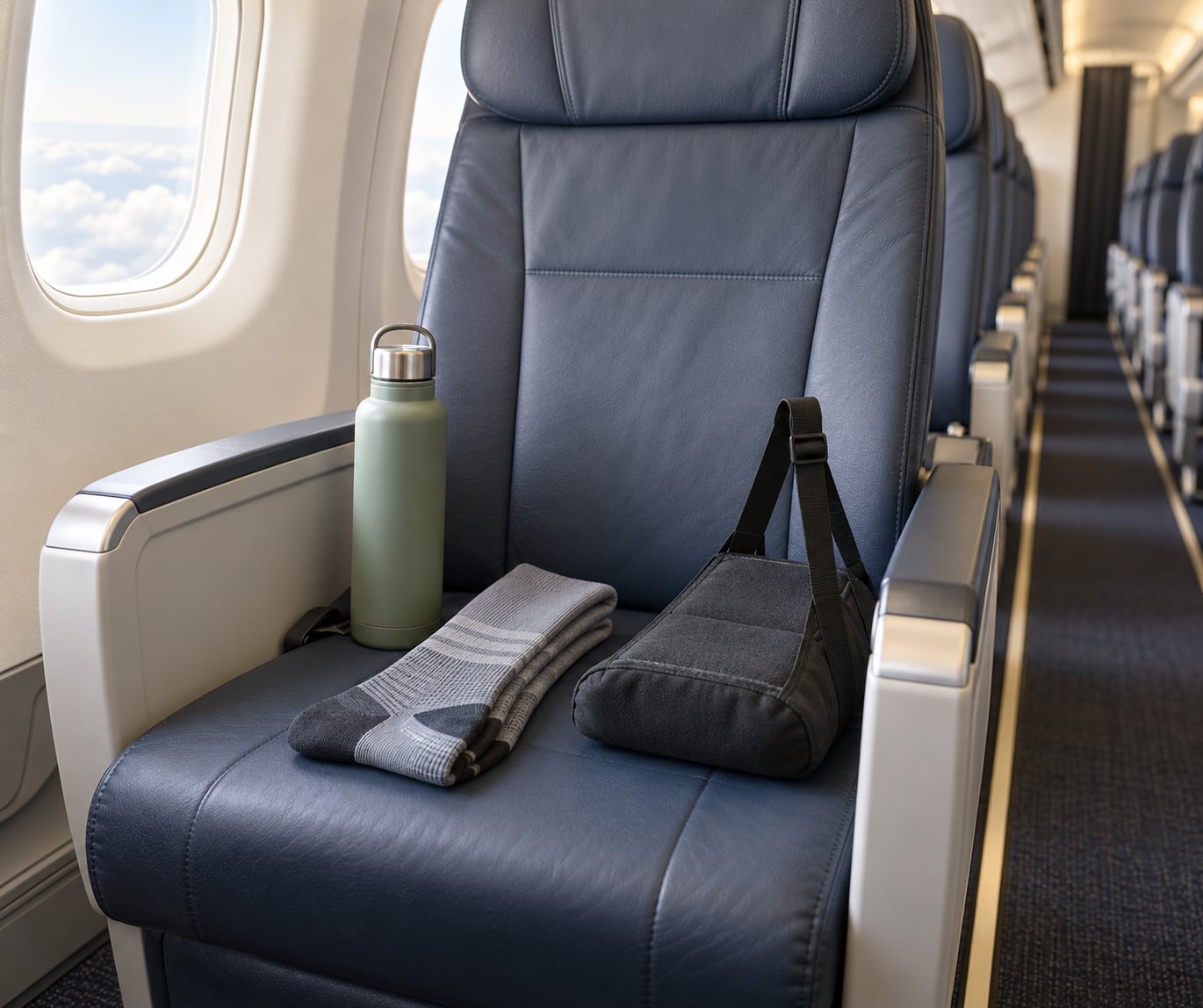
Compression socks in the right size are the one item worth buying. Get them measured at the ankle, calf and thigh, not by shoe size, and try them on at home a few days before you fly.
A refillable water bottle matters more than people expect. Cabin service carts come down the aisle on their own schedule, and a bottle you fill yourself removes the waiting.
For the rest, keep it simple: an aisle seat if one is available, shoes with room for your toes to move, and clothes that do not cut at the waist. A soft travel pillow or a small footrest gives your feet somewhere to go that is not the floor, and a pair of ankle-free socks changes the whole in-flight experience on a long leg.
Step-by-Step
How to prevent swollen ankles on the plane before you board
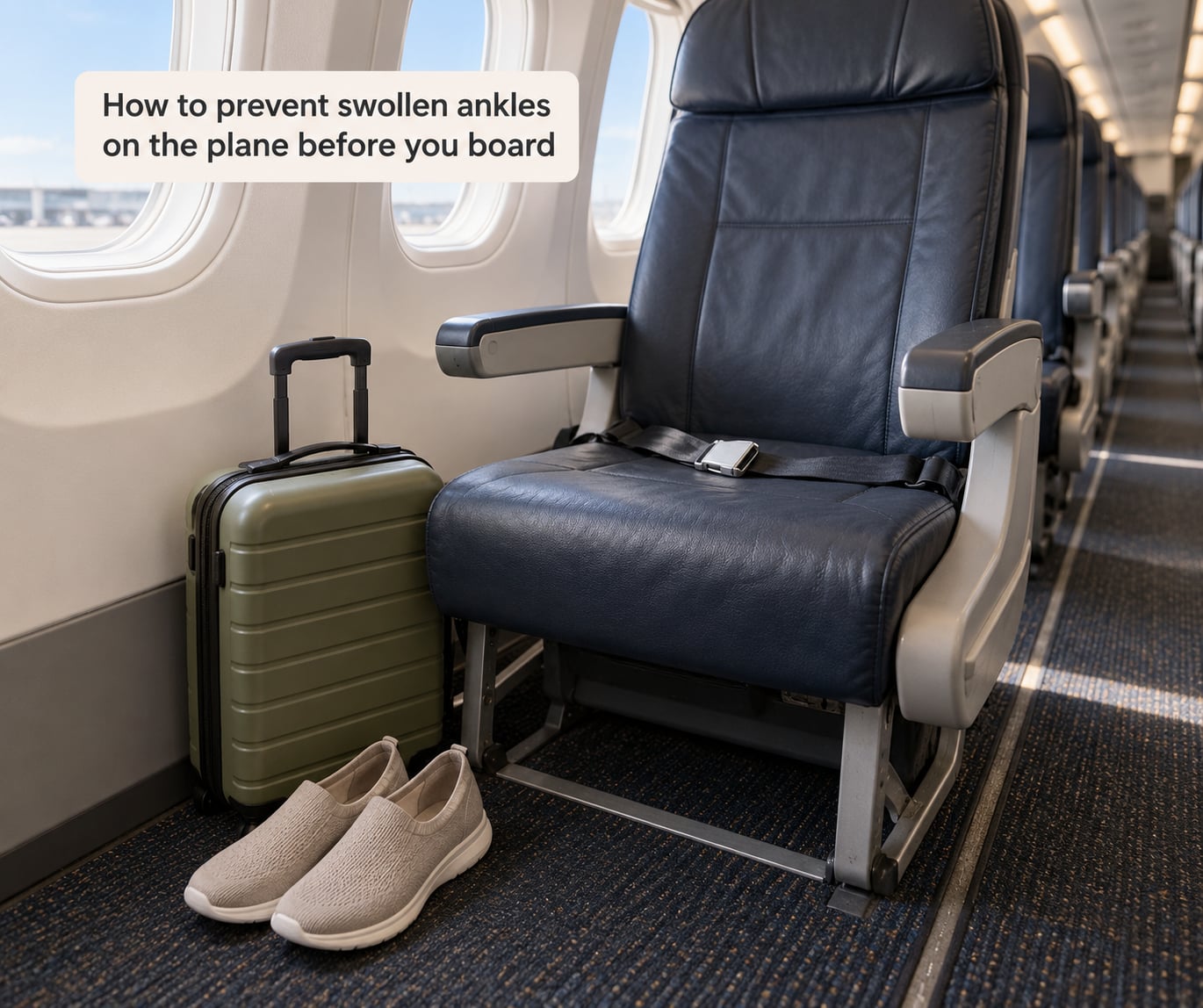
Do the work on the ground, because you will not get a chance to do it at 30,000 feet. Request an aisle seat when you book, because an aisle seat is the difference between a real walk and a shuffle past two strangers every hour.
Avoid sitting still for the two hours before boarding. A long airport wait in a fixed seat does part of the damage before you ever get on the plane, and most of us do it without noticing.
Put your compression socks on at the gate, before you sit down, and check the top band sits just below the knee without rolling. A sock folded over itself is worse than no sock, since the fold becomes a tourniquet.
How do you know it worked? By takeoff, your ankles should feel the same as they did at security, not tighter.
Put compression socks on before you take off
Compression socks help most above four hours of sitting, and they matter most for travelers with varicose veins, a previous blood clot, lymphedema, recent leg surgery, pregnancy, or a long-haul itinerary. If you fall into any of those groups, get them on before the doors close.
Graduated compression works because the pressure is firmest at the ankle and eases upward. That supports the one-way valves in your veins so blood keeps travelling back toward your heart instead of pooling in the lowest point of your body.
On a short flight, under two hours, socks are optional. Movement and hydration will do most of the work.
Walk regularly during the flight
Get up and walk the aisle about once every 60 minutes, on flights long enough for it. Even three or four minutes of slow walking gets your calf muscles contracting, and the calf muscle pump is what moves blood up out of your legs.
When walking is not possible, run seated movements every 20 to 30 minutes. Roll your ankles in slow circles, flex your foot up and down, and lift your heels off the floor with your toes still planted. A few reps of each is plenty.
On a long layover, skip the gate lounge and walk the terminal. Fifteen minutes of walking between flights is worth more than any snack you will eat waiting at the gate.
Keep your legs and ankles comfortably positioned
Change your position often. Crossing your legs, sitting forward with a bag under the seat in front of you, or wedging into a window seat all put pressure exactly where fluid collects.
Use the footwell in front of you. A soft travel pillow, a rolled blanket, or a footrest gives your feet a raised spot that is better than the floor, and a window seat gives you the wall-side footwell for this even though the seat itself is the harder one for walking.
Loosen your seat belt once you are settled. Many travelers tighten it, thinking it is safer, and it does nothing except leave a belt-line mark and a compressed waistband.
Signals that your position is working: shoes still slip on easily at the end of the flight, and your socks do not leave deep marks at the ankle.
Hydrate and limit factors that can worsen puffiness
Aim for roughly 8 to 12 ounces of water per flight hour, spread out rather than chugged. Hydration keeps your blood volume up so your circulatory system is not working to move thicker fluid through narrower vessels.
Pass on the alcohol if you can. It is a diuretic, so it works against you twice: it pulls water into your bloodstream, then sends you to the bathroom, and the fluid you lost takes a couple of hours to replace.
Keep coffee within reason, and skip the salty lounge snack or the pretzels that come round the aisle. More sodium than usual plus more sitting than usual is a good way to wake up with puffy ankles.
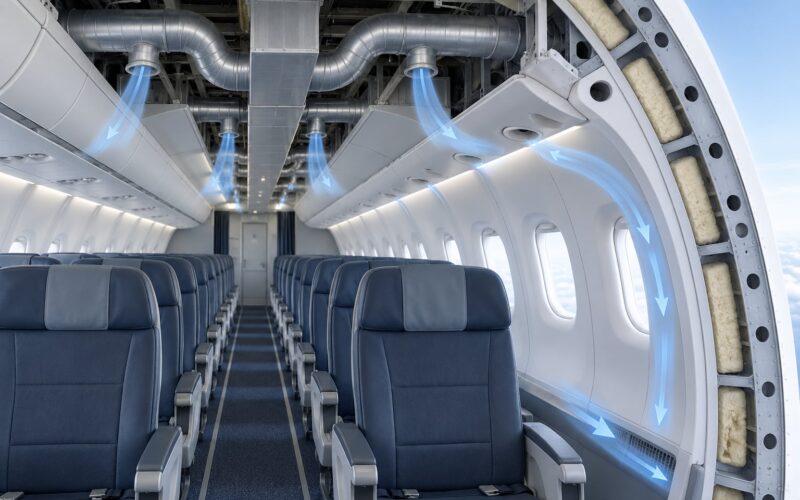
Cabin pressure alone is not the culprit. Low humidity and immobility do most of the work, which is why drinking constantly without moving will not save you.
Use a gradual routine after landing
Most ordinary swelling from a flight eases within a day or two. A few hours of gentle walking, feet raised above heart level when you sit at home, and normal meals without heavy salt will flush it out faster than anything you take.
Keep the compression socks on for the rest of that day if you have them. Many travelers take them off in the arrivals line because their feet look better, and then the swelling returns an hour later.
One-sided swelling that does not settle, or pain, redness and heat in one leg, is a different conversation. See a doctor rather than waiting it out.
Compression level by flight length
Compression sock labels carry a pressure figure in millimetres of mercury, or mmHg. Here is roughly how the strength maps to the trip in front of you.
| Flight length | Compression level | Are socks needed? |
|---|---|---|
| Under 2 hours | Mild, 8-15 mmHg, or none | Optional. Movement and water are enough. |
| 2 to 4 hours | Mild to moderate, 8-20 mmHg | Worth it if you swell easily. |
| 4 to 8 hours | Moderate to firm, 15-30 mmHg | Recommended, especially overnight. |
| 8 hours and up | Firm, 20-30 mmHg | Strongly recommended. Ask a clinician first if you have a circulation condition. |
Anything above 30 to 40 mmHg is prescription territory, and you should not pick that strength on your own. If socks feel like they are cutting into your calf or leaving numbness, the level is too firm or the size is wrong. Take them off and remeasure.
Common Mistakes
Sitting still for the whole flight. The seat is the problem, not the plane. Set a repeating alarm for aisle walks and treat it like a meeting you cannot move.
Wearing restrictive clothing. Tight jeans, a belt sitting at the waist, and over-the-knee socks all create the same problem the socks are supposed to solve. Compression works best when nothing else is squeezing.
Expecting water alone to fix it. Hydration helps, but a traveler who drinks two litres and never moves will still arrive puffy. Fluid needs a pump to move it.
Grabbing salt tablets or diuretic supplements. There is no evidence for any of it before a flight, and taking something that flushes water can leave you worse off. Ordinary water is the answer to what drink gets rid of swollen ankles.
Buying compression socks in the airport shop five minutes before boarding. Sizing is guesswork in that situation, and a bad fit is the fastest way to convince yourself socks do not work.
Assuming all swelling is harmless. Most of it is. Some of it is not, and the difference is written out below.
Tips for making the whole flight more comfortable
Book a bulkhead or extra-legroom row when the fare difference is small, and use an aisle seat for anything over four hours. Window seats are fine on a short flight and miserable on a long one.
Cold cabins make you curl up, and curled-up knees mean bent legs and poor circulation. Bring socks you can change into and skip the heavy blanket if you can sit in a light layer.
Plan connections with a real buffer. A rushed transfer means sitting in an airport chair, then sitting on a plane, with no gap to walk in between.
On a red-eye, you lose the walking. Wear the socks, set an alarm for one walk, and accept that the flight will feel worse than the same route in daylight.
Frequently Asked Questions
Is it normal for my ankles to swell when flying?
Yes. Hours of sitting let blood and fluid pool in the lower legs, and ankles are the lowest point in the body, so that is where it shows. Mild, even swelling in both ankles that goes away with a walk and settles within a day or two is common. One-sided swelling, or swelling with pain, redness or heat, is different and worth a doctor’s visit.
Do I need compression socks for a 6 hour flight?
That is the range where socks earn their place. For a flight of four hours or more, moderate to firm compression around 15-30 mmHg measurably reduces pooling in the lower legs, and the effect is more noticeable overnight. Under two hours they are optional. If you have varicose veins, a previous blood clot, lymphedema, recent leg surgery, or are pregnant, ask a clinician which level suits you before buying.
How long does fluid retention last after a flight?
Ordinary fluid retention from air travel usually starts easing within a few hours of landing and is essentially gone within one to two days. Walking regularly, keeping the compression socks on until the end of the day, and eating less salty food in the hours after you land speeds that up. If both ankles are still noticeably puffy two days later, or the swelling keeps coming back, mention it to your doctor.
What drink gets rid of swollen ankles?
Water, and nothing exotic. Drinking steadily through the flight keeps your blood volume up so circulation does not have to work harder, which makes movement and compression more effective. Alcohol makes it worse by pulling water out of your body. Skip diuretic drinks and supplements, and avoid heavily salted tomato juice or broth, which adds to the problem rather than solving it.
When should I take compression socks off after a flight?
Keep them on for the rest of the day you land, and take them off before bed. Travelers who pull them off in the arrivals hall often see their ankles puff back up within an hour, because the pooling simply returned. They should come off for sleeping, showering and any point where they feel tight, numb or painful, since that means the level or size is wrong.
When is swollen feet after a flight a medical concern?
See a doctor rather than waiting if one leg is more swollen than the other, if the skin is red, hot or tender, or if the swelling has not improved within about two weeks of a long flight. The same applies to swelling that appears during the flight and does not ease with a walk. Clot risk rises on flights longer than twelve hours and is higher after long-haul travel, surgery or immobilisation, so a clinician call is worth making early.
Start with the socks and the hourly walk. Everything else on this list helps, but those two do most of the work, and between them they cost one purchase and one alarm. This is general travel information, so if you have a circulation condition, are pregnant, or have had a blood clot, get personalised advice from a doctor before a long flight.