When you open the seat map and a few seats are greyed out, marked with an X, or simply refuse to click, it usually means the airline’s reservation system has placed a hold on them. That hold can be safety-related, crew-related, tied to a fare or status rule, or just a temporary lock. What matters is that the airline’s seat assignment system changes shape once check-in opens, so below is what each symbol means, why the block exists, and what you can realistically do about it.
This guide covers the 2026 behaviour of the major carriers, from Delta and United to American and British Airways, including how long a typical hold lasts.
Table of Contents
- What Does It Mean When a Seat Is Blocked on a Seat Map?
- Why Are Seats Blocked for Safety or Security?
- What Are the Common Reasons a Seat Is Blocked?
- Status holds and cabin-seats-together rules
- Upgrade inventory
- Revenue management and fare-class inventory
- Deliberate hold-back until the flight projects full
- Crew rest, weight and balance holds
- Family seating requirements
- Middle seat holds on specific layouts
- Schedule changes and aircraft swaps
- Aircraft-specific seating rules
- Auto-assignment at check-in
- Does a Blocked Seat Mean the Aircraft Is Smaller?
- Can You Move or Request a Blocked Seat?
- How to Tell Whether a Seat Is Truly Unavailable
- Frequently Asked Questions
- Can a blocked seat become available before departure?
- Are blocked seats unsafe, or unavailable for another reason?
- Why can the same seat be blocked on one flight but not another?
- Can I select a blocked seat by paying extra?
- Should I contact the airline before check-in to ask about a blocked seat?
- Does a blocked seat mean there is no room in the cabin?
- What to Do First
What Does It Mean When a Seat Is Blocked on a Seat Map?
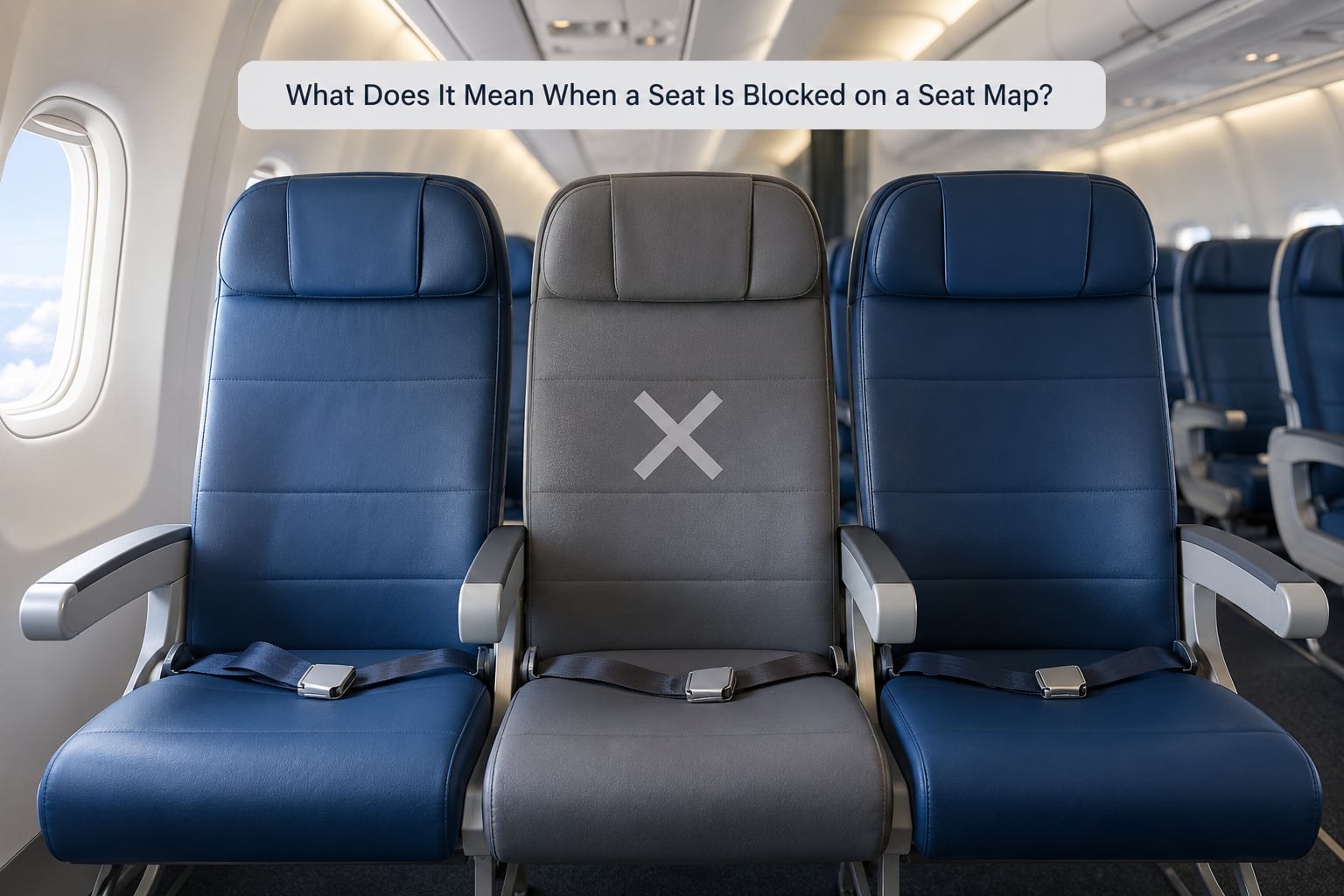
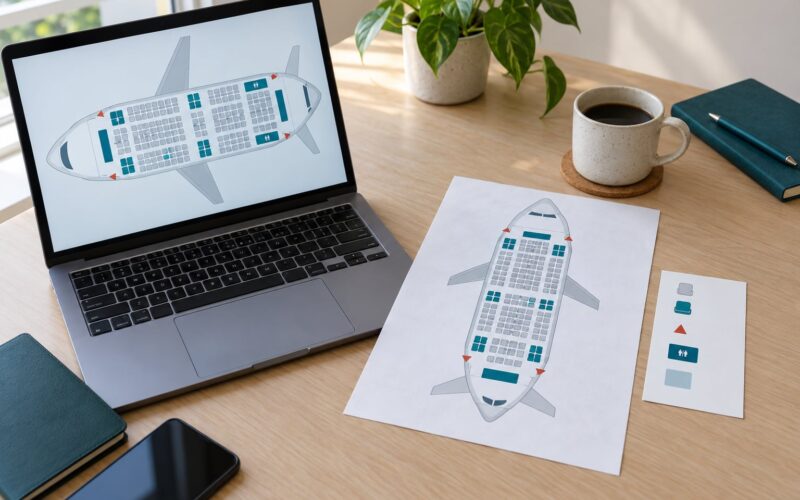
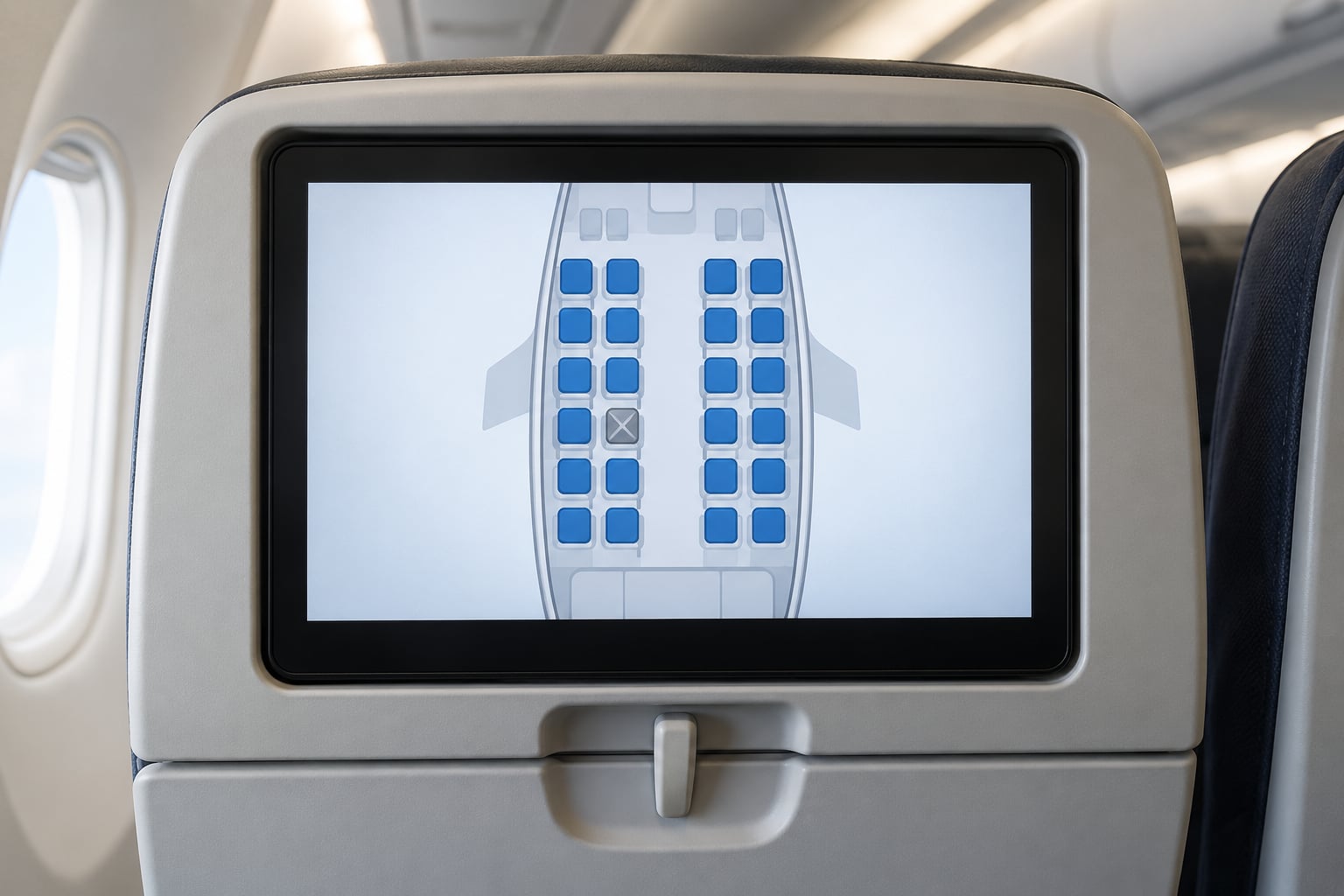
A blocked seat is one the airline is actively withholding rather than selling. It isn’t occupied and it isn’t free: the seat exists on that aircraft, but the reservation system will not let your booking attach to it right now.
The most common on-screen wording comes from Delta, where a blocked seat reads “this seat is unavailable and could be occupied by the time your flight departs.” That sentence is doing a lot of work. It admits the seat may be sold later and tells you not to plan around it.
| Symbol you see | What it means | Can you book it? |
|---|---|---|
| Clickable seat with a price | Open inventory in your cabin | Yes, usually for a fee or with eligible status |
| X or crossed-out seat | Held back by the airline, possibly temporarily | No |
| Greyed or dimmed seat | Unavailable to your cabin, fare or status level | No |
| Person silhouette | Already sold or auto-assigned to someone | No |
| Seat with no symbol and no price | Usually a hold, or inventory reserved for a cabin you are not ticketed in | No |
That last row causes the most confusion. A blank seat is often a hold rather than a bug, which is exactly why a reddit.com/r/delta thread about unavailable seats keeps circling back to the same question: are they being saved for status upgrades?
Why Are Seats Blocked for Safety or Security?
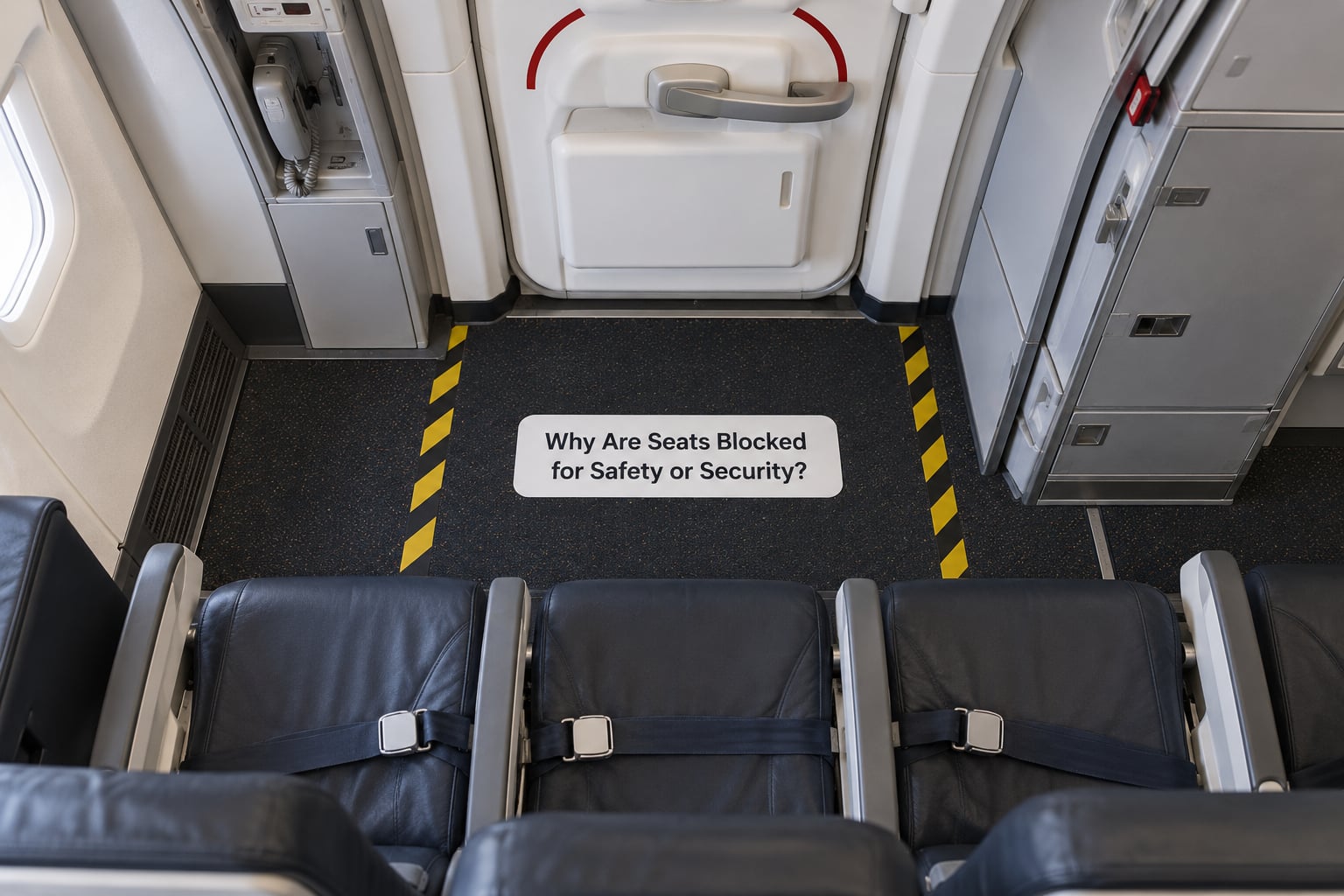
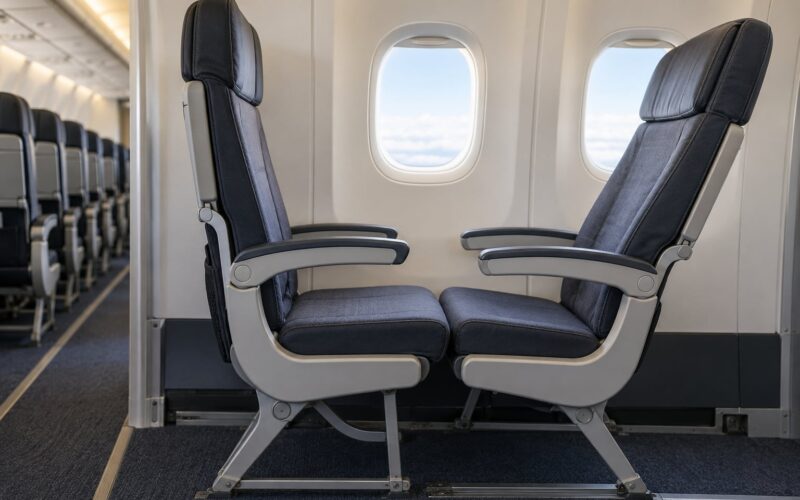
Some blocks are permanent features of the aircraft rather than commercial decisions. Exit rows come with an empty seat beside the exit door, because a passenger seated there is expected to help with the briefing and evacuation. That seat is blocked for the whole life of the seat map.
Crew seating works the same way. Flight attendants need assigned seats for takeoff and landing, usually in the galley area or in specific rear rows, and pilots may occupy seats in the main cabin on some aircraft. Those seats never open to the public.
Regulations also dictate where equipment lives. Life vests, oxygen masks, first aid kits and extinguishers sit in marked floor or cabinet areas, and crew rest areas on long-haul aircraft sometimes block off a block of seats entirely during the cruise.
Larger aircraft leave an open service area near the galley or a lavatory so carts and crew can move. If your aircraft has one, the seats beside it show as unavailable for all passengers on every map, for the same reason every time.
What Are the Common Reasons a Seat Is Blocked?
Once you rule out the fixed safety rules, the block comes from the airline’s commercial systems. The reasons below account for almost every greyed seat a passenger will run into.
Status holds and cabin-seats-together rules
Most major carriers keep adjacent seats empty next to a high-tier passenger so their party can sit together. One Delta medallion member in 4A can grey out 4B, 4C, 4D and 4E for everyone else, which is why the front of a cabin can look completely full when it is not. FlyerTalk members on the Delta forum have described unavailable seats next to their own that persisted for weeks.
Upgrade inventory
Airlines hold back spare seats in premium cabins so there is room for paid and courtesy upgrades on the day. If every premium seat sells out early, nobody can move up. Blocking inventory a week out would make that impossible.
Revenue management and fare-class inventory
Seats sit inside fare-class buckets. Holding a few back keeps higher-fare inventory alive longer, and if you hold a basic economy ticket, seats in the same cabin priced in a different bucket can appear greyed to you.
Deliberate hold-back until the flight projects full
This is the reason forum regulars raise most often on FlyerTalk’s travelbuzz board: an airline adds a late flight attendant only when the aircraft is full enough to justify the cost. Crewing decisions are made against the projected load, so seats get released or held based on where that projection sits, sometimes far earlier than departure.
Crew rest, weight and balance holds
On long sectors, crew rest seats and a small number of cabin seats are held to keep the aircraft within its certified weight distribution. A badly loaded main cabin changes the trim, and the fix is a hold rather than a price change.
Family seating requirements
Unaccompanied minors, lap infants and bassinet positions need specific seats, sometimes with a buffer around them. Airlines block those seats before the passenger who needs them has even picked a date.
Middle seat holds on specific layouts
Some carriers block middle seats on particular narrow-body configurations. A FlyerTalk thread documented rows on United’s A321XLR with every middle seat held, tied to reported plans to block them across the type.
Schedule changes and aircraft swaps
When the aircraft changes, the old seat map can linger as a relic of the re-mapping process, leaving blocks in rows that no longer exist in the same form. Long-running “unavailable but not occupied” reports on FlyerTalk trace back to this, and a United thread saw an entire economy map greyed out for premium-cabin ticket holders as protection against picking a seat in the wrong cabin.
Aircraft-specific seating rules
Exit rows, bulkheads and lie-flat layouts each carry their own restriction, and which row counts as an exit row changes between aircraft types. The same row number can be freely bookable on one jet and permanently unavailable on another.
Auto-assignment at check-in
The real reason many seats are blocked is simpler than any of the above: nobody has been assigned yet. Airlines use theoretical seating, a planning construct where passengers who never chose a seat are provisionally assigned in a workable spread so the crew knows the cabin is legal to load. When online check-in opens, usually 24 to 48 hours before departure, those assignments turn into real holds.
Different carriers lean on this differently. What follows is a general pattern rather than a guarantee, since behaviour changes and every rule here can be altered by the airline at any time.
| Airline | Typical blocking behaviour | When seats usually release |
|---|---|---|
| Delta | Status holds beside high-tier passengers, upgrade space held in premium cabins, X-marked unavailable seats with the “could be occupied” note | At check-in opening, then again close to boarding |
| United | Whole-cabin grey-out protection for premium-cabin tickets, middle-seat holds on some narrow-bodies | Mostly at check-in and during the boarding sequence |
| American | Status-based adjacency holds and fare-bucket inventory, fewer public explanations of the reason | At or after check-in opening |
| British Airways | Holds tied to seat-zoning by cabin and status, with heavy use of theoretical seating on short-haul | At check-in, often earlier than short-haul rivals |
Does a Blocked Seat Mean the Aircraft Is Smaller?
No. Seat map layouts vary by aircraft type, by cabin configuration and by how a particular airline fits out a jet, so a position that is blocked on one aircraft can be an ordinary seat on another. Row 24 might be an exit row on one type and a standard row on the next, and bulkhead rows differ from one aircraft to the next as well.
Retrofit matters too. If a carrier has swapped seats on a jet, or removed or added rows, the map can hold stale blocks from the previous layout until the systems catch up. That is a data artefact, not a physical restriction, and it usually clears with a schedule or aircraft change.
Middle seats get their own patterns. Some layouts block them permanently for spacing, others only while the flight is expected to be full. A seat that reads blocked on one aircraft and open on another is often just two different seat maps.
Can You Move or Request a Blocked Seat?
You cannot unlock a blocked seat yourself. The hold belongs to the airline’s reservation system, so no amount of refreshing or paying a higher fare removes it. Paying extra for seat selection buys access to open inventory, not access to a held seat.
What does work is asking. The most direct route is the airline’s app or website, where a message goes straight to the reservation record and often gets a same-day answer, then a phone call if the hold is a data problem a person can correct.
Useful things to include in the request: the flight date, the route, the aircraft type if you can see it, the row and seat letter, your booking reference, and what you actually want, such as an aisle seat or a seat away from the lavatory. Be specific, because a general “why is seat blocked” gets a generic reply.
At the gate, ask a boarding agent directly rather than waiting to be told. Agents can release seats that systems still show as held when boarding has not started, and if nothing opens, they can offer what is available rather than leaving you in the auto-assigned seat. FlyerTalk regulars are blunt about this: some holds survive all the way to the gate, and the only person with full visibility then is the agent working the door.
How to Tell Whether a Seat Is Truly Unavailable
Start by making sure you are looking at the right map. Compare the seat map on the app, the website and the boarding pass, since they refresh at different times and the same flight can look different on each.
Then look for context. Tooltips and hover text on the seat itself often name the reason, and airline app alerts may explain a cabin change or an aircraft swap. If a block sits in an exit row or beside a galley, it is permanent and no message will change that.
Timing matters more than most travellers expect. When online check-in opens, usually 24 to 48 hours out, the seat map changes shape as theoretical seating becomes real. Refreshing at check-in opening, then again the evening before, catches most releases. Boarding is the last point at which a change can happen.
One myth deserves clearing out: blocked seats do not mean the flight is full. They mean seats the airline is not offering you right now, which is a different statement entirely. Using an availability search on a seat-mapping site, or reading the fare class buckets on a flight’s pricing page, gives a truer picture of how full a flight will be than the seat map does.
One last habit pays off. If you paid for a specific seat, screenshot it at booking. Airlines can and do block the seat beside it later, and having the receipt makes a conversation with the airline much shorter.
Frequently Asked Questions
Can a blocked seat become available before departure?
Sometimes, yes. Most holds shift once online check-in opens, usually 24 to 48 hours before departure, because unassigned passengers are moved into real seats at that point. Others are released as the airline reassigns the cabin closer to boarding. Holds tied to exit rows, crew seating and safety equipment do not release. If you want to catch a release, refresh at check-in opening and again the evening before your flight.
Are blocked seats unsafe, or unavailable for another reason?
Almost never a safety warning. The overwhelming majority of blocked seats are commercial or planning holds: upgrade inventory, status adjacency rules, fare-class buckets, family seating needs and crewing projections. The seats that exist for safety reasons, such as the empty seat beside an exit door or a crew restraint position, stay blocked on every flight of that type. The airline UI simply groups them under the same unavailable marker.
Why can the same seat be blocked on one flight but not another?
Because holds are applied per flight, not per seat number. Row 24 might be an exit row on one aircraft and a standard row on another, and an identical row can carry a status hold on one departure and none on the next. Layout differences, cabin fittings and retrofit changes all affect it. Seat letters also move if the aircraft is swapped or reconfigured, so never assume the same number means the same physical place.
Can I select a blocked seat by paying extra?
No. A seat selection fee or an upgrade to a higher fare class buys you access to inventory that is open, not inventory the airline is holding. Held seats stay held until the airline’s own systems release them, and no payment option exists to bypass that. If every seat you want is blocked, your realistic choices are to choose among the open seats, ask the airline directly, or ask at the gate when boarding has not yet started.
Should I contact the airline before check-in to ask about a blocked seat?
Yes, if it matters to you and check-in has not opened. A message with your flight date, route, booking reference and the exact row and seat gets a specific answer faster than a general query. After check-in opens, changes happen automatically and a message is less useful. Keep in mind that agents can see the hold reason and sometimes release a stale one, but they cannot override a permanent restriction such as an exit row.
Does a blocked seat mean there is no room in the cabin?
Not at all. Blocked seats can make a cabin look fuller than it is, particularly when a status passenger has several adjacent seats held. Load factor is a separate measure that reflects how full the aircraft is overall, and it has little relationship to how many seats you can click. For a better read on how busy a flight will be, check an availability search or look at which fare classes remain on the flight’s pricing page.
What to Do First
Open the airline app and pull up the seat map for your exact flight, not the route, then look at the blocked seat’s row and its neighbours. If the block sits in an exit row, beside a galley or in a crew area, it is permanent and you should pick something else. If it looks like a hold, refresh again when online check-in opens and once more before boarding.
Still unclear after that? Contact the airline with the flight date, route and aircraft, plus the row and seat letter, and ask for the reason. Agents can see the hold type even when the website cannot, and they can release a stale block left over from an aircraft swap.
Last reviewed for 2026. Seat map behaviour changes with each schedule cycle and differs by airline, so treat the carrier-specific patterns above as a guide rather than a rule.