If you have seen the phrase on a seat map or in a crew forum, here is the short version: a jump seat is a foldable or retractable auxiliary seat that collapses out of the way when nobody is using it. On an aircraft it is a compact crew perch with a full harness. In a car or van it is a folding seat between the rows.
Regular passengers almost never get to use one. This guide covers what the term means, where jump seats sit on an aircraft, why airlines fit them, and what a flyer should ask before planning around one. Last updated October 2026.
Table of Contents
- What Is a Jump Seat?
- How Does a Jump Seat Work?
- Jump Seats vs. Standard Passenger Seats: What Is the Real Difference?
- Where Can You Find a Jump Seat on an Airplane?
- Why Do Airplanes and Airlines Use Jump Seats?
- Why Can’t Passengers Usually Choose One?
- What Should You Consider Before Requesting a Jump Seat?
- Frequently Asked Questions
- Can passengers use a jump seat on a commercial airplane?
- Is a jump seat more comfortable than a regular airplane seat?
- Where are jump seats usually located?
- Is a jump seat the same as a crew rest seat?
- Can I request a jump seat when booking my flight?
- Conclusion
What Is a Jump Seat?
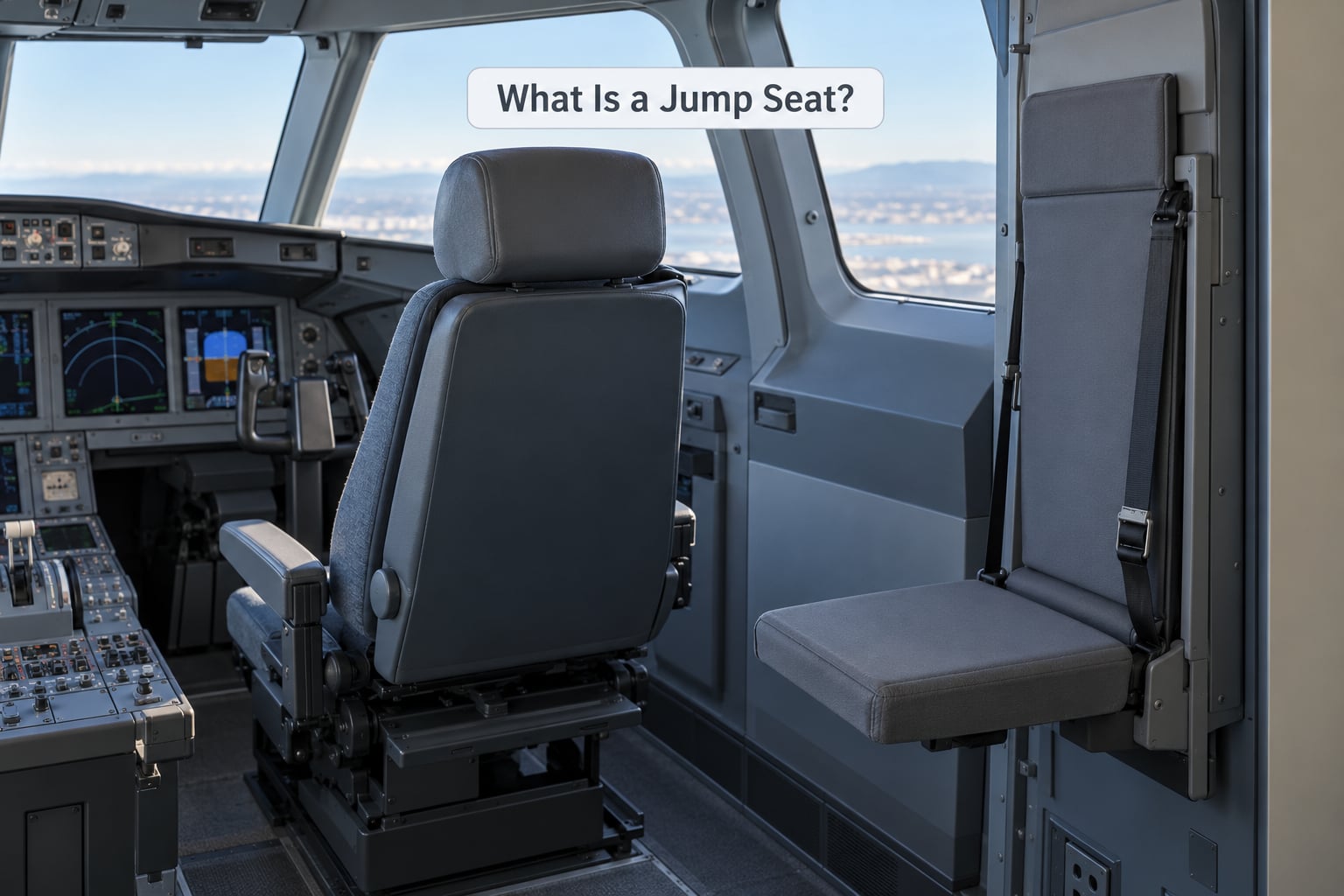
A jump seat is a foldable or retractable auxiliary seat that stows into a wall, bulkhead or floor so the space returns to cargo room or standing space when nobody is sitting there. The name comes from horse-drawn carriages around 1860 to 1864, where the seat could be moved or jumped into position by a passenger.
The word shows up in three separate meanings, and mixing them up is the most common source of confusion.
- In aviation, a jump seat is a small crew seat in the cockpit or cabin, used by flight attendants, deadheading pilots, trainee pilots and inspectors.
- In a car, van or limousine, it is the folding or spring-loaded seat that sits between the front and rear rows, or a small bench behind a delivery van seat for a helper.
- On buses and trains, it can mean a stowed seat in the vestibule or the wheelchair securement area, both of which fold or latch up when a wheelchair boards.
There is also the older figurative use, assigned the jump seat, which means being given the least desirable place in the room. That expression has nothing to do with aircraft equipment.
How Does a Jump Seat Work?
The mechanism is simple. In the stowed position the seat is flat against a sidewall, inside a bulkhead, or flush with the floor, held by a latch or a light spring. Someone authorized to use it releases the latch, pulls it down, and the frame locks into place.
Once it locks, the occupant fastens a lap belt and, on most aircraft, a shoulder harness. The restraint is the point of the seat. A jump seat has to hold a person through takeoff, landing and turbulence, so the hardware is far more serious than the cushioning.
Padding is minimal by design. A cockpit observer perch or an attendant jump seat is built to be sat in for short operational periods, not for a six-hour cruise. Under-seat space is usually given up to the seat frame or to a stowed life vest, which means less carry-on room than a normal row.
Because the seat is occupied mainly during critical phases, an authorized rider is expected to be in it for takeoff and landing, and to be seated and restrained whenever the captain or purser calls for it.
Jump Seats vs. Standard Passenger Seats: What Is the Real Difference?
A jump seat is an operational seat, never a comfort upgrade. Here is how the two compare.
| Factor | Jump seat | Standard passenger seat |
|---|---|---|
| Purpose | Operational crew and observer seating | Carrying paying passengers |
| Typical location | Cockpit, crew rest area, forward or aft galley area | Cabin rows across the aircraft |
| Restraints | Lap belt plus shoulder harness | Lap belt, or belt plus harness on newer aircraft |
| Stowability | Folds or retracts when not in use | Fixed in place |
| Comfort | Minimal padding, upright perch | Full cushion, recline, armrests on most models |
| Meal and service | Not served as a passenger meal | Included with the ticket |
| Who may use it | Crew, deadheading crew, trainees, authorized inspectors | Ticketed passengers |
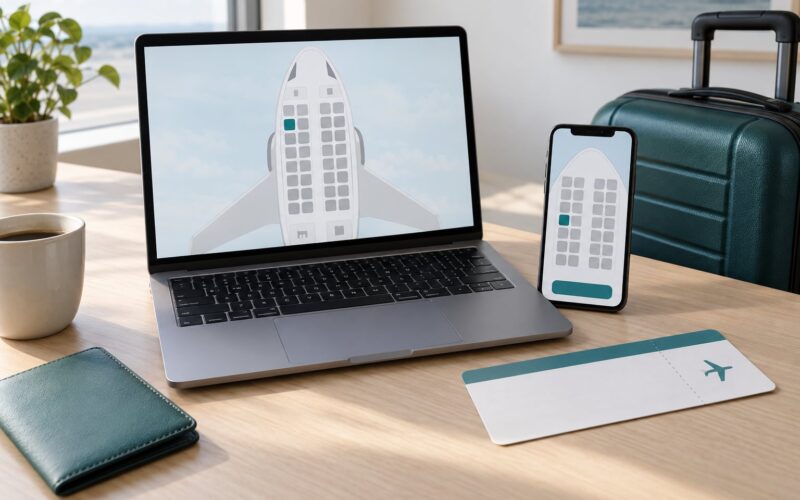
If you see an empty jump seat, that does not make it available to you. Seat selection tools map it as an operational fixture, not as inventory.
Where Can You Find a Jump Seat on an Airplane?
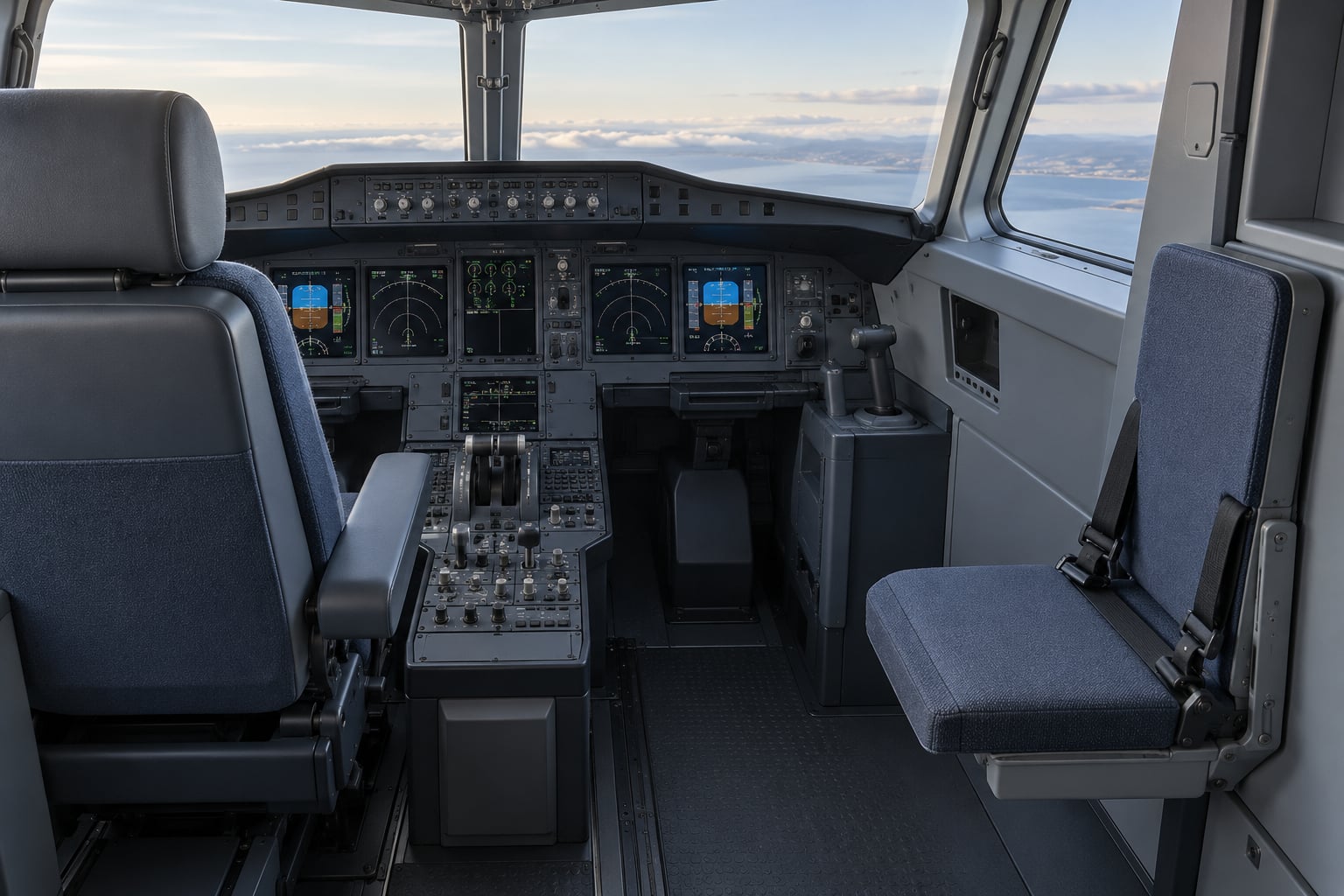
The cockpit is the most familiar location. Most airliners carry a third seat beside or behind the two pilot seats, sometimes facing forward and sometimes facing aft. It holds a third officer, an instructor, a check airman, an airline or regulatory inspector, or a pilot riding to a crew pairing.
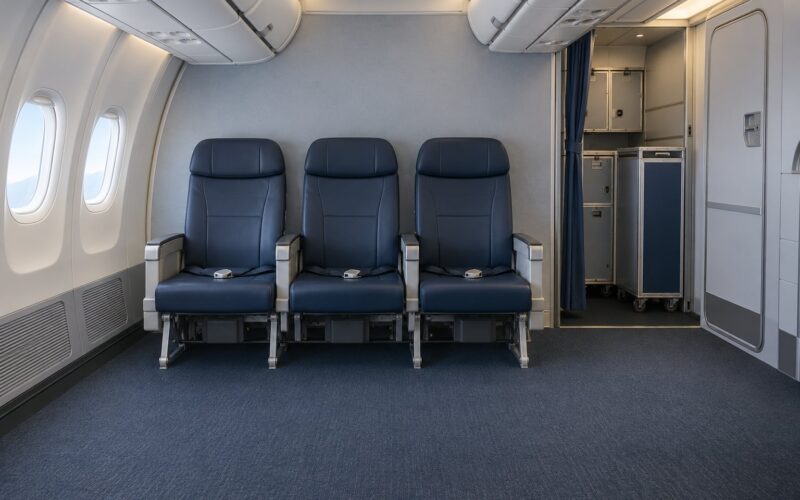
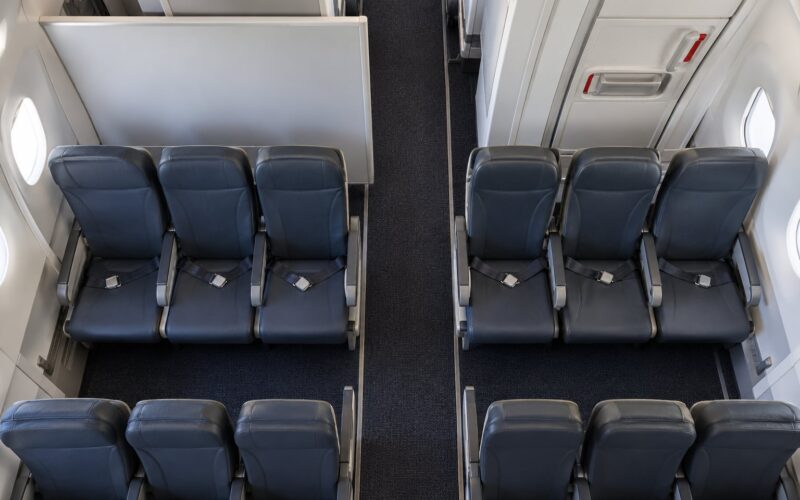
In the cabin, flight attendant jump seats are usually tucked into a sidewall near a galley, sometimes right next to an emergency exit row, and sometimes inside a crew rest area on a long-haul aircraft. Their exact position changes with the aircraft type, so the same airline can have them in different spots on different models.
Smaller aircraft and private or charter jets often use a folding bench or a single side-facing perch instead of a dedicated jump seat. Older or high-density configurations sometimes place them in utility areas or lower-deck spaces, where they double as crew seating during service.
None of this is something you can assume at booking. Availability is decided by the airline and the specific aircraft on your rotation, not by the seat map.
Why Do Airplanes and Airlines Use Jump Seats?
There are four solid operational reasons, and they all come down to usable seating without giving up cabin space.
- Observer and training position. A third cockpit seat lets an instructor, an inspector or a new first officer watch the flight without displacing a working crewmember.
- Getting crew between bases. A pilot finishing a duty pairing in one city may need to travel to the city where the next pairing starts. If the aircraft is full, a jump seat is often the only legal, available place to sit.
- Duty rotations and crew rest. On long-haul flights, attendants need a secured, upright seat for critical phases and a place to sit that is not in the passenger rows.
- Flexible space. Stowable seating lets an airline carry more seats on some configurations and more cargo or crew capacity on others, using the same airframe for different missions.
Cabin crew also jumpseat for practical reasons outside the cockpit. When a duty assignment starts at a different base, or when a flight is full and crew need to reposition, the jump seat keeps them moving without a revenue ticket.
Why Can’t Passengers Usually Choose One?
Five separate rules get in the way, and each one alone is enough.
First, manifests and seating charts do not treat a jump seat as sellable inventory. It belongs to the crew complement, and the load controller assigns the cabin to ticketed passengers.
Second, the occupant has to be qualified and briefed. Under 14 CFR 121.571, anyone carried on board has to be briefed on the safety equipment and procedures, and a crew rider receives the same passenger briefing even though they work for the airline.
Third, weight and balance. A jump seat is a certified restraint position with a maximum occupant weight. Adding an unbriefed person to it changes the loading calculations the flight was planned around.
Fourth, security. Flight deck access has been tightly controlled since 2001. A cockpit observer seat is not a spectator seat, and the captain in command decides who is allowed to occupy it.
Fifth, airline policy. Carriers publish rules for crew jumpseating through their own booking systems, and the list is usually restricted to employees of that airline. Forum discussions about jumpseat listings and priority come up constantly because access is limited, not open.
The short version: a visible, empty jump seat is never automatically open to a passenger.
What Should You Consider Before Requesting a Jump Seat?
For a paying passenger, the honest answer is that you will rarely get one. Still, a few questions are worth asking if the term comes up in your booking or on your trip.
Ask the cabin crew what they mean by jump seat. They may be describing a crew rest seat, an observer seat, or an empty row that has been converted for crew use, and those are different things.
Ask whether the seat is authorized for passenger use. If the answer is that it is a certified operational seat with a harness briefing attached, take the normal row.
Think about what you would give up. Legroom is minimal, armrests are usually absent, under-seat storage is limited or gone, and turbulence protection comes from the harness rather than a padded seat back.
Consider service access. Jump seats sit outside the galley and service flow, so meal service and drink refills work differently than in a row.
Leave the decision with the airline. Crew and airline policy decide who rides where, and no amount of asking at the gate changes a certified seating plan.
Frequently Asked Questions
Can passengers use a jump seat on a commercial airplane?
No. Jump seats on commercial aircraft are reserved for crew, deadheading pilots, trainee pilots and authorized inspectors. A ticketed passenger is never assigned one, and the cabin crew cannot offer it as a workaround if the flight is full. The seat is a certified restraint position tied to the aircraft’s load plan, so it is not available inventory at booking.
Is a jump seat more comfortable than a regular airplane seat?
No. A jump seat is a thin, upright perch with a lap belt and shoulder harness, built for short operational periods during takeoff, landing and turbulence. A regular passenger row has a full cushion, recline and usually armrests. Anyone who can choose between them for a normal flight should take the row.
Where are jump seats usually located?
In the cockpit, beside or behind the two pilot seats, for a third officer, instructor or inspector. In the cabin, flight attendant jump seats sit near a galley, beside an emergency exit row, or inside a crew rest area on long-haul aircraft. Positions vary by aircraft type, so check the specific aircraft rather than assuming from the airline.
Is a jump seat the same as a crew rest seat?
Not quite. A jump seat is a foldable auxiliary seat that stows away and secures a crew member for critical phases of flight. A crew rest seat is part of a dedicated rest area with bunks or recliners, built for sleep on long duty periods. Some aircraft combine both, with a jump seat positioned inside a crew rest compartment.
Can I request a jump seat when booking my flight?
You can ask, but expect a no. Booking systems do not sell jump seats to passengers, and any carrier that permits crew jumpseating manages it through an internal list for its own employees. If you are looking for extra space, an empty row, a bulkhead seat or a paid upgrade is a realistic alternative.
Conclusion
A jump seat is a specialized fold-down seat for operational or crew use, not a normal passenger upgrade. It folds away when nobody needs it, secures its occupant with a full harness, and belongs to the crew complement rather than to ticket inventory.
Before you plan around one, check what the aircraft actually has and confirm availability with the airline. If you want more room, an empty row or a bulkhead seat is the way to ask for it.