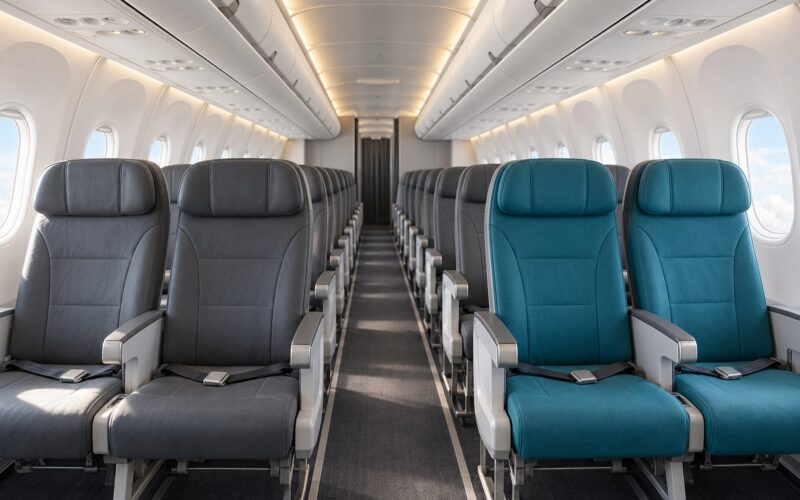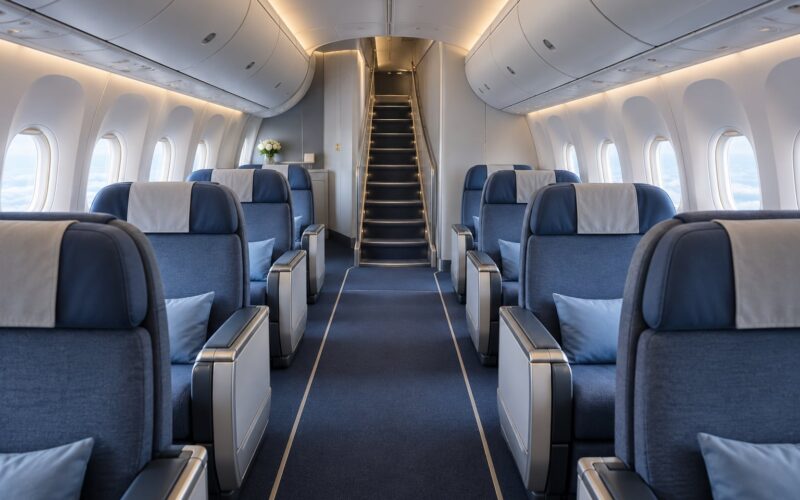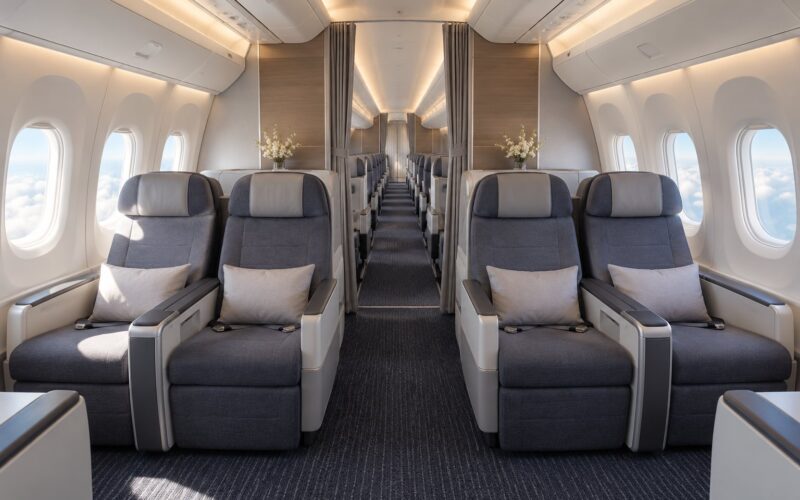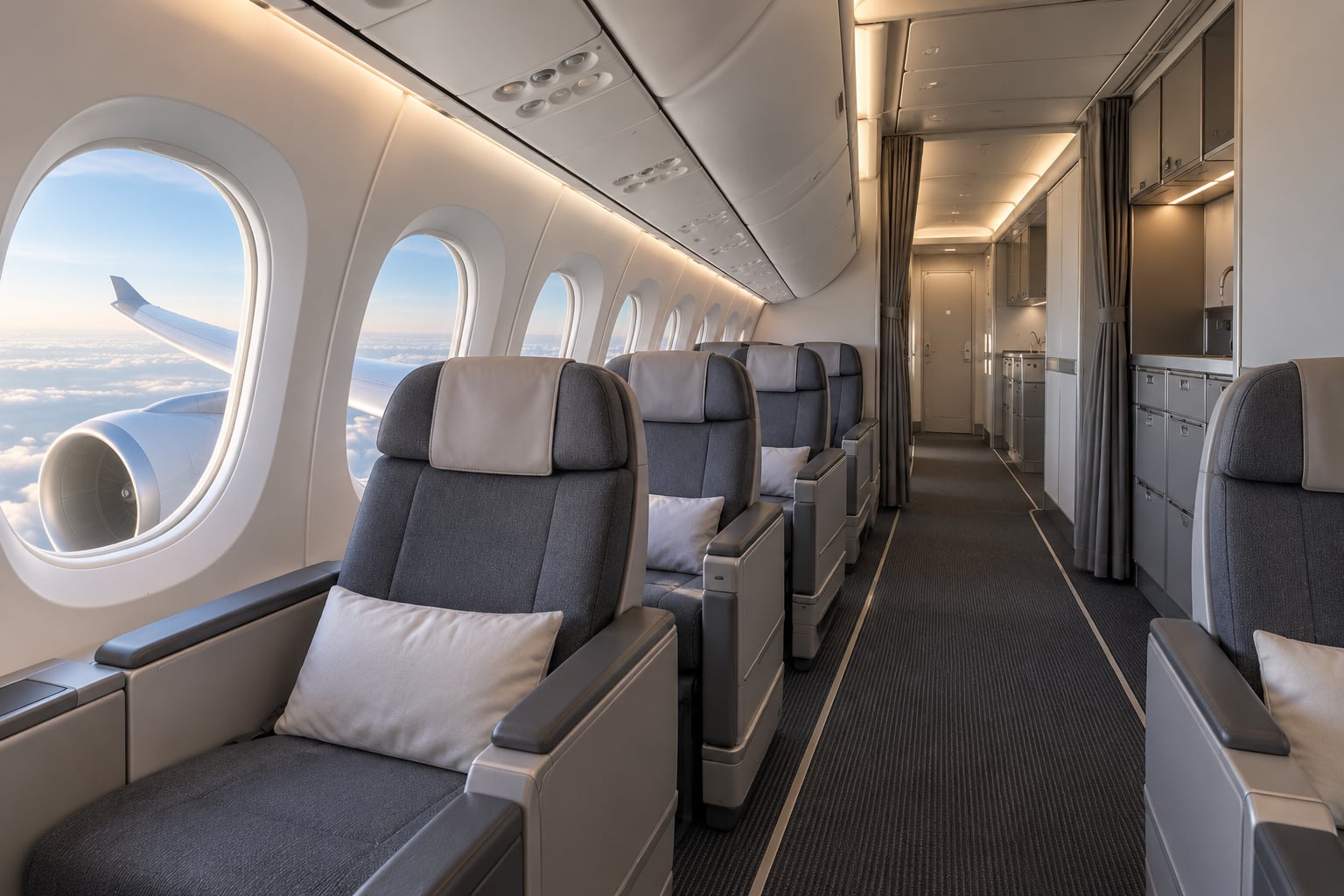
The best seats on a Boeing 777 300er are not a single row. They are a short list of row types that moves every time an airline fits a new interior, so the honest answer depends on your cabin, your ticket and whether you want space, sleep, quick access or a real view.
That is the trap with this aircraft. It has four pairs of doors along a very long cabin, several lavatory and galley complexes wedged between them, and two common economy layouts. Row 41 might be a quiet mid-cabin window on one aircraft and back onto a galley on another, with the same seat letter and the same number.
So this guide ranks seat types rather than declaring one universal row, and tells you how to check the exact Boeing 777-300ER map before you commit. Updated for October 2026.
Table of Contents
- Best Seats on a Boeing 777 300er at a Glance
- 1. Bulkhead Window Seats in Economy
- Best Seats on a Boeing 777 300er: Window-Row Tradeoffs
- 2. Standard Window Seats Away from Galleys
- 3. Premium Economy Window Seats
- 4. Business-Class Window Seats with Direct Aisle Access
- 5. Standard Aisle Seats in Economy
- 6. Exit-Row Window Seats
- 7. Quiet Economy Window or Aisle Rows Near the Rear
- 8. Middle Seats in Three-Accessor Blocks
- 9. Seats in a Two-Accessor Premium or Business-Cabin Block
- 10. Flexible-Productivity Seats Near a Power Outlet
- Frequently Asked Questions
- Are the best seats on a Boeing 777 300er always in First or Business Class?
- Why do Boeing 777-300ER seat letters differ between airlines?
- How can I tell whether a flight will use a Boeing 777-300ER?
- Are bulkhead seats on the Boeing 777-300ER better than standard window seats?
- Which seats should families with children book on a Boeing 777-300ER?
- Can I see a Boeing 777-300ER power outlet before choosing a seat?
- Conclusion
Best Seats on a Boeing 777 300er at a Glance
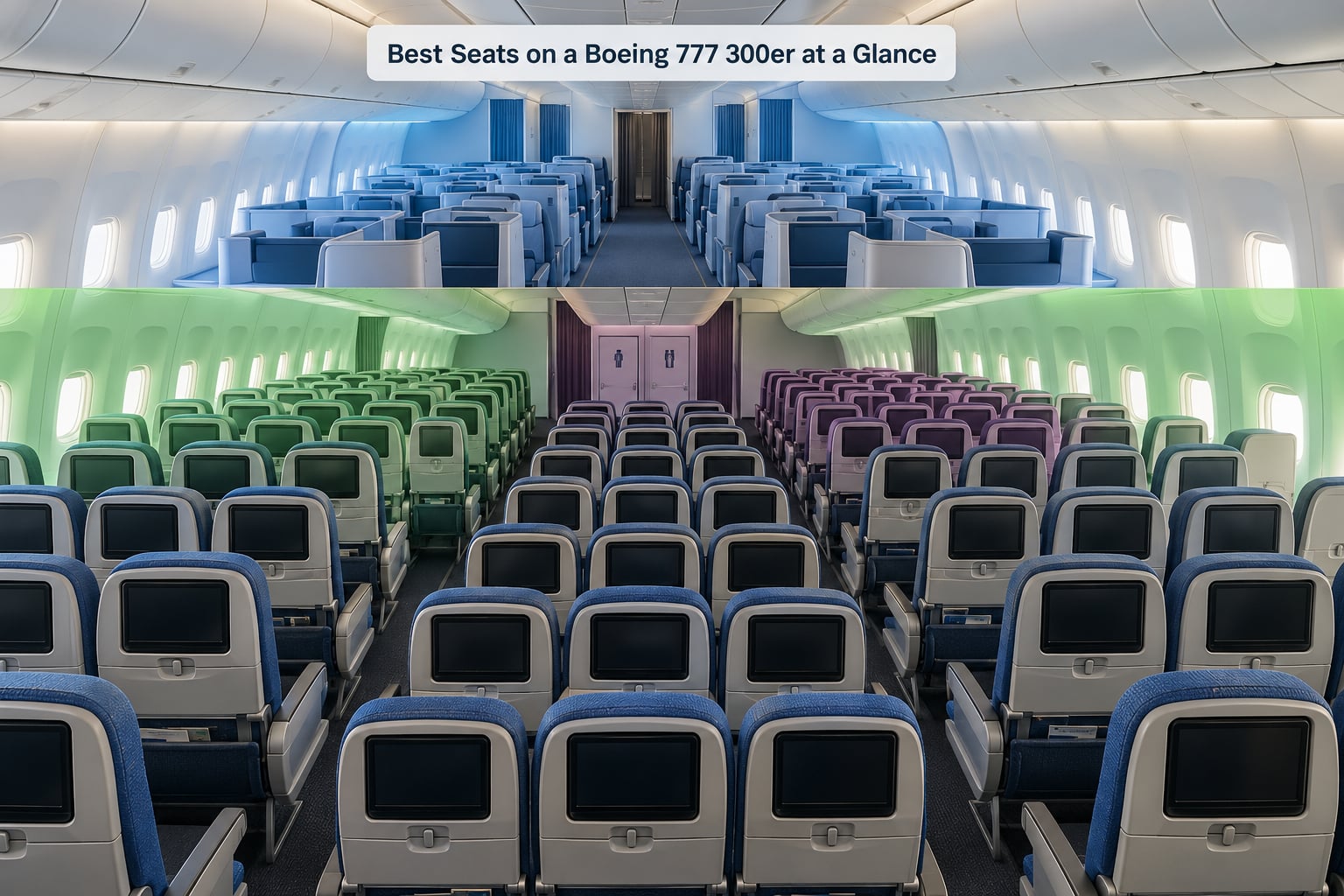
| Rank | Seat choice | Best for | Main advantage | Trade-off | Where you will find it |
|---|---|---|---|---|---|
| 1 | Bulkhead window seat, economy | Legroom seekers | Extra pitch with a clean wall and no seat in front | No under-seat storage, often an armrest tray, sometimes no recline | First row of each economy cabin section |
| 2 | Standard window seat away from galleys | Almost everyone else | Full recline, natural light, controlled sleeping | Limited pitch on most sub-fleets | Any middle window row with no adjacent galley |
| 3 | Premium economy window seat | Long-haul comfort seekers | Wider seat, deeper pitch, larger screen, real storage | Cabin may recline only semi-flat | Front or rear premium cabin block |
| 4 | Business window with direct aisle access | Light sleepers in business | Enter and lie down without climbing over anyone | Direct-access seats fill first and cost more | 1-2-1 layouts and staggered business cabins |
| 5 | Standard aisle seat, economy | Families, quick exits, big legroom needs | Stretch out, stand up often, easy with children | Aisle traffic all flight, awkward sleeping posture | Every cabin, both sides |
| 6 | Exit-row window seat | Travellers who want maximum pitch | The most legroom in economy on most layouts | Door intrusion, no under-seat storage, tray restrictions | Rows beside doors L2, L3, R2 and R3 |
| 7 | Quiet window or aisle row near the rear | Light sleepers, hot flights | Distance from the forward galley and from engine noise | Farther from the exit, often beside a rear lavatory | Last third of the economy cabin |
| 8 | Middle seat in a three-abreast block | Solo travellers who value quiet | Nobody climbing past you at any point in flight | Trapped both sides, two armrests to negotiate | Seat B or H in a 3-3-3 economy |
| 9 | Two-abreast premium or business seat | Couples and solo travellers wanting width | Two seats per row means far more usable width | Alternating seats need aisle access to pass | 2-2-2 and angled lie-flat cabins |
| 10 | Seat next to a power outlet | Travellers who work or edit on board | Laptop or phone stays charged through a long-haul | Outlet positions are rarely published | Often seat-back or console-mounted ports |
Seat letters, row numbers and cabin sizes differ by airline, so treat the table as a map of seat types and confirm the exact row on your own aircraft.
1. Bulkhead Window Seats in Economy
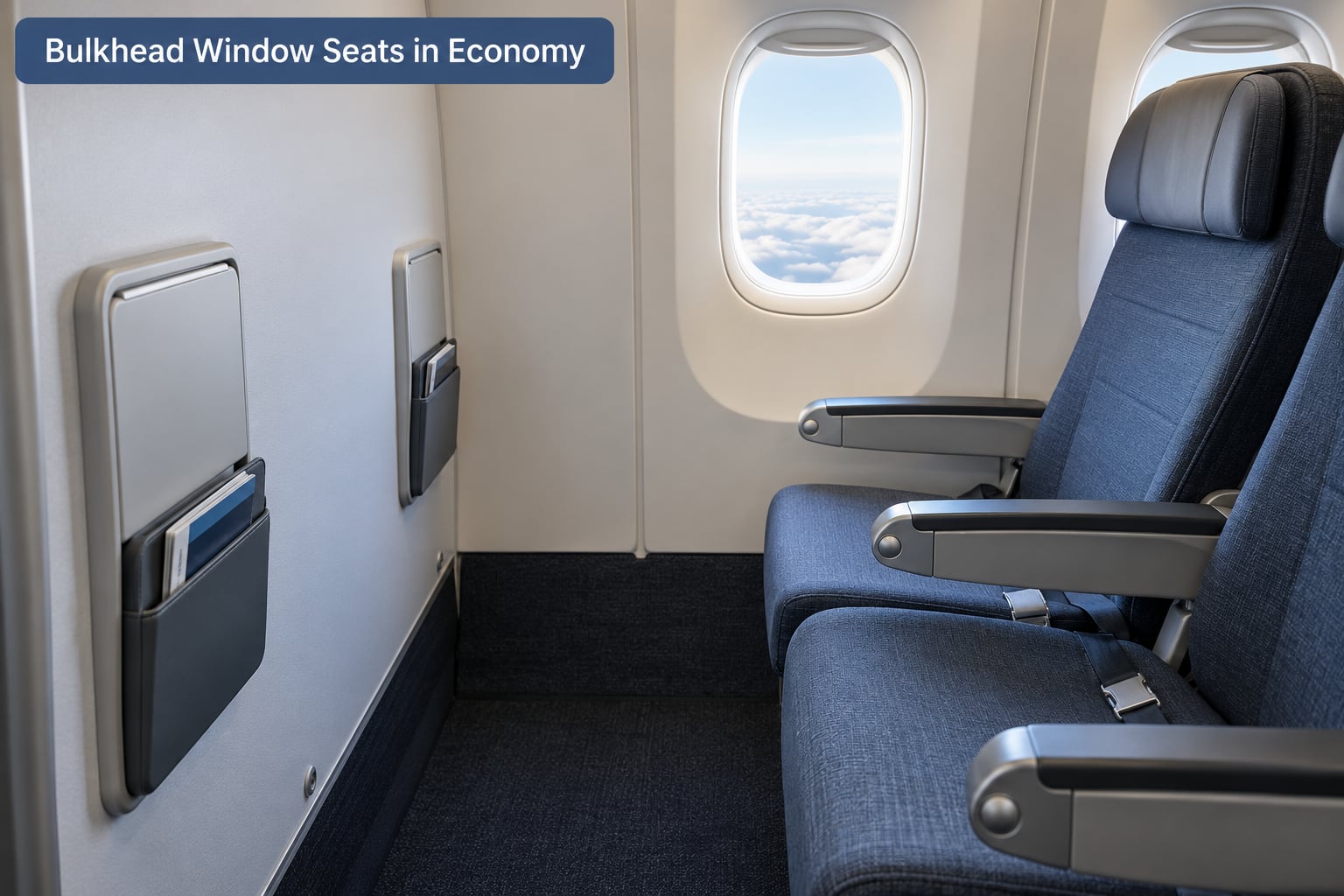
A bulkhead seat is the first row of a cabin section, with a wall or partition instead of a seat in front. On a 777-300ER that wall buys you roughly three to eight extra inches of pitch, which is the difference between folding your knees and settling in.
The cost is storage. With no seat in front, there is usually no under-seat bin, so your bag goes into the overhead locker and your feet have nowhere to go. Many carriers then move the tray table into the armrest, which narrows the seat and gives you a hard edge against your hip.
Check two more things before you commit. Bassinet positions sit at bulkheads, so a fold-down fixture may take the outer part of the seat, and many airlines fix the seatback upright at the front row, which is a real loss on a ten-hour flight.
Cabin service noise is also at its worst here because the forward galley is right behind the wall. To confirm what you are getting, look for a bulkhead or no-storage note on the airline’s seat map, then check recent traveller reports on SeatGuru or SeatMaps.com before you pay for the seat.
Best Seats on a Boeing 777 300er: Window-Row Tradeoffs
Not all window rows are equal, which is why a window seat is not automatically the comfortable choice. Forward bulkhead windows give space but face service noise; mid-cabin windows by the wing give you an engine and wing view with slightly more vibration; rear windows are calm but the fuselage has narrowed and the window sits noticeably lower.
Watch for phantom windows. Some rows are sold as window seats with a wall panel, a shade or a blanked-off frame instead of usable glass, particularly where a dropped structural column sits. A passenger on r/CathayPacific booked a bassinet window seat and could not get confirmation either way, because the airline and SeatGuru were both ambiguous.
A practical check: on the seat map, look at whether the window symbol aligns with the seat letter you are booking. If it is offset by half a seat, you may be looking at the wall.
2. Standard Window Seats Away from Galleys
This is the pick for most economy passengers, and it is the one I would book if someone handed me the booking and asked me to finish it. You keep a full recline, a real window, an armrest that moves and a stable place to put a laptop or a book.
Your job is to find a row that is not near a noise source. Cross out anything within one or two rows of a lavatory or galley complex, and any row that sits directly beside a door. On the 777-300ER those complexes fall between each door pair, so the quiet stretches are the middles of each cabin section.
Rows over the wing feel rockier on the ground and in turbulence, so pick a window just ahead of or just behind the wing if you are sensitive to it. The wing itself is a decent view, and it is where the engine sits below you, which is the whole reason widebody window shots look the way they do.
3. Premium Economy Window Seats
If a premium cabin exists on your aircraft, a window seat there is usually the biggest single upgrade you can get without moving up to business. The pitch jumps into the mid-30s, the seat is genuinely wider, the screen is larger and under-seat storage returns.
Take the forward or rear block of the cabin rather than the middle. Front premium seats get the quietest ride because the wing is behind you; rear premium seats get the best view and the least engine noise, and they are usually the ones that sell last.
Two things to verify: whether the premium cabin reclines to a true flat angle or only to a semi-flat preset, and whether storage was sacrificed for legroom. Cabin layouts are redone during refits, and the seat you read about six months ago may not be the one on today’s aircraft.
4. Business-Class Window Seats with Direct Aisle Access
Direct aisle access means you can stand up, stretch and lie down without climbing over a neighbour. On a 1-2-1 layout those are the outer seats of the pair, and on a staggered cabin they are whichever seats sit next to the walking path.
That access matters more than most guides admit. A window seat wedged against a sleeping stranger gives you the surface area of a bed with somebody on the edge of it, and you cannot shift position for eight hours.
Recline still depends on the seat design, not the cabin label. Angled lie-flat shells are comfortable but narrow you down as the seat rotates; sliding-door suites give privacy but vary a lot in how the bed is padded. Pick on seat width and door layout, not on the words in the fare bucket.
5. Standard Aisle Seats in Economy
An aisle seat wins when you need to move. Frequent bathroom breaks, travelling with a child, a long aisle to the back galley, or simply wanting to stand and stretch during a long flight all argue for one.
There is also a comfort factor people miss: in an aisle seat nobody can lean over you to get past, so you keep a usable armrest and a clear shoulder line.
The trade-offs are real. You get stepped over during meal and lavatory runs, the seat reclines less far because the armrest has to stay usable, and sleeping across an aisle means twisting at an angle. Sharing with a partner works badly here; if you are two, book the window pair instead.
6. Exit-Row Window Seats
An exit row gives the most legroom in economy on most 777-300ER layouts, and often the widest opening to look out of. That is why they are the first seat most people search for.
It is also why a passenger on r/BritishAirways told others to skip them: unless you need the legroom, the exit rows on this type tend to become the toilet queue. Lifts on a long-haul are frequent, and the seats next to a door are exactly where the queue forms.
Before you take one, confirm you meet the airline’s physical requirement, check whether a footrest is fitted (it varies, and it was an open question on an Air France 777-300ER thread on r/AirFranceKLM), and accept that the tray table may have to stay upright and that under-seat storage is usually lost.
Also cross out the row directly behind an exit row. Flyers on Air Canada’s 77W report those seats back onto the door area and have limited recline despite looking like good seats on the map.
7. Quiet Economy Window or Aisle Rows Near the Rear
The rear third of the economy cabin is the sleeper’s zone on this aircraft. You are past the forward galley and the main lavatory queue, past the wing, and usually in the stretch where the engines contribute less vibration.
Choose a window row roughly six to ten rows behind the last exit door, away from the rear galley and rear lavatories, and away from the bassinet positions some carriers place at the very back. If a row number is skipped on the map because a galley or lavatory occupies it, that gap is your signal that you are near the noisy zone.
The cost is distance from the exit door and a slightly narrower feel as the fuselage tapers, which is also why the rear window sits lower than the front one. Flyers on r/unitedairlines recommend the side away from the sun for long-haul window seats and using AeroLOPA to confirm window alignment first.
8. Middle Seats in Three-Accessor Blocks
A three-abreast economy block gives nine seats per row, so in a 3-3-3 layout the middle seat is B or H. It is a conditional choice for solo travellers who want to be surrounded on both sides and disturbed by nobody.
What you gain is quiet and an improvised shelf: both armrests are yours, or shared, and nobody climbs past to reach a window. Some travellers build a small backrest out of a pillow and settle in for the flight.
What you give up is access and dignity. Getting in and out means climbing over or waking two people, you must negotiate armrests during sleep, and there is no window. Book it only if you are flying alone and light on sleep is not your priority.
9. Seats in a Two-Accessor Premium or Business-Cabin Block
Two-abreast blocks are the opposite trade to a middle seat: far more usable width per person, at the cost of not everyone having an aisle. You see them in angled lie-flat business products and some premium cabins, and in 2-2-2 layouts on aircraft that have not been refitted.
Read the diagram rather than the cabin name. Two seats per row means each bed is noticeably wider, and in angled products the seat closest to the window can be the narrowest. Also check whether the seats are aligned in pairs or staggered, because staggered seats line up with the aisle and the alternating ones do not.
This is the best option for a solo traveller who wants space and does not mind a short squeeze to get out.
10. Flexible-Productivity Seats Near a Power Outlet
On an eight-to-seventeen-hour flight, a dead laptop ends the working day. Seats beside a mains outlet or a seat-back USB port rank well above their ordinary pitch for anyone who needs to charge two devices or edit photos in transit.
The catch is that outlet positions are rarely published. Seat maps usually show ports as a small symbol, airline apps often mark them, and recent traveller reports sometimes carry a photo of the row. Some carriers fit USB only in economy and no mains power at all, which is worth checking before you promise yourself a full working flight.
Bulkhead and window rows are often the ones with a wall panel containing sockets, so items one and ten often overlap. A bulkhead window with a confirmed outlet is the single strongest seat on this aircraft for a working traveller.
Frequently Asked Questions
Are the best seats on a Boeing 777 300er always in First or Business Class?
No. Cabin class changes what you can get, not what the aircraft can give you. Economy on a 777-300ER includes the largest legroom in the cabin at bulkhead and exit rows, and those rows often go first even for paid upgrades. The right question is which seat type matches your priority: space, sleep, access, view or power.
Why do Boeing 777-300ER seat letters differ between airlines?
Seat letters follow industry convention, but the cabin sizes around them do not. A 3-3-3 cabin uses A B C and J K L, while a 3-4-3 cabin inserts D E H in the middle block. Airlines also add or drop letters when a seat is blocked, and some block centre seats in business, so the same letter can sit in a different position on the same aircraft type.
How can I tell whether a flight will use a Boeing 777-300ER?
Check the flight number rather than the aircraft name. Airline apps and booking pages show the equipment code, and 77W is the code for the 777-300ER on most schedules. Type the flight number into a tracker such as FlightRadar24 or FlightAware to see the tail number flown that day, then look that registration up on SeatMaps.com to confirm the cabin layout.
Are bulkhead seats on the Boeing 777-300ER better than standard window seats?
They are better if legroom is your top priority, and worse if storage and a deep recline matter. Most bulkhead rows have no under-seat bin, often an armrest tray table instead, and frequently a fixed upright seatback. Choose a bulkhead window when you want space; choose a standard window a few rows back when you want a normal seat and a quiet wall-free night.
Which seats should families with children book on a Boeing 777-300ER?
An aisle seat near a bulkhead gives a child floor space under the tray and easy movement during service, though it puts you in the walking lane. Bassinet positions sit at certain bulkheads in the main cabin and at bulkhead rows in business, and they must be requested from the airline before you fly. Book both together or the crew may have to reassign a neighbour.
Can I see a Boeing 777-300ER power outlet before choosing a seat?
Usually, but not always in one place. Many airline seat maps mark outlets with a small plug symbol, and SeatMaps.com shows which rows carry mains power, USB or nothing. Airlines differ sharply: some economy rows have USB only, some have no power at all, and some hide outlets in the window-side console, which only appears in cabin photos and recent traveller reports.
Conclusion
Start by identifying four things, in this order: the operating airline, the flight number, the specific aircraft sub-fleet, and the seat number. Then open the airline’s current seat map and run it against the ranked list here.
If legroom wins, take a bulkhead window and accept the lost storage. If sleep wins, take a quiet rear window or a direct-aisle-access business window. If access wins, take an aisle seat or the exit row, knowing the queue. If power wins, confirm the outlet first, then pick the window beside it.