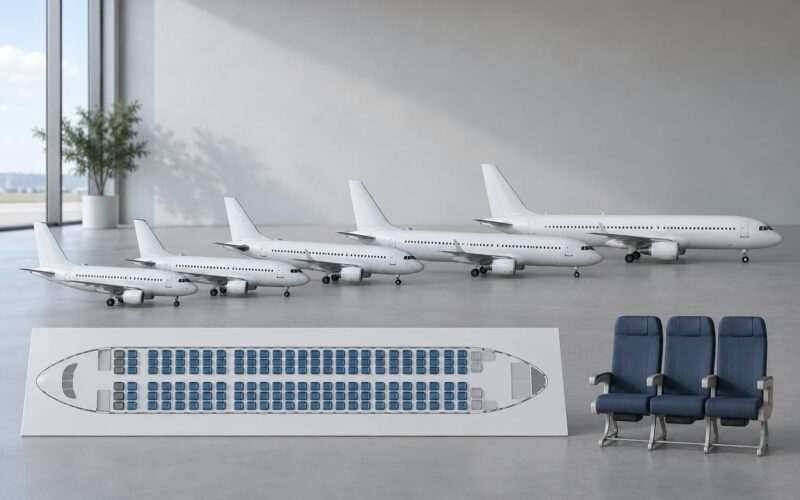
On an Airbus A321neo, the best seats are decided by position, not by fare class. The rows behind an emergency exit hold the most legroom, the front bulkhead wins on foot space, and the window seats in the middle of the cabin give you a real view without a lavatory door in your ear. Row numbers change between airlines, so this guide explains the physical reasons each zone works and how to spot them on any A321neo seat map.
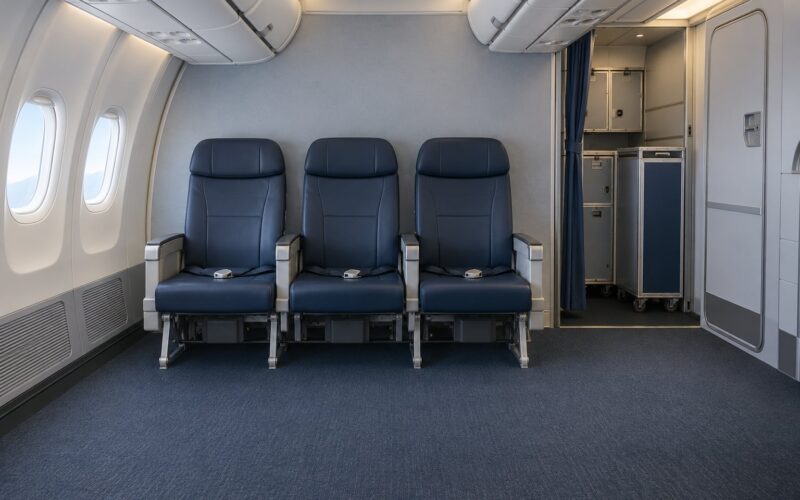
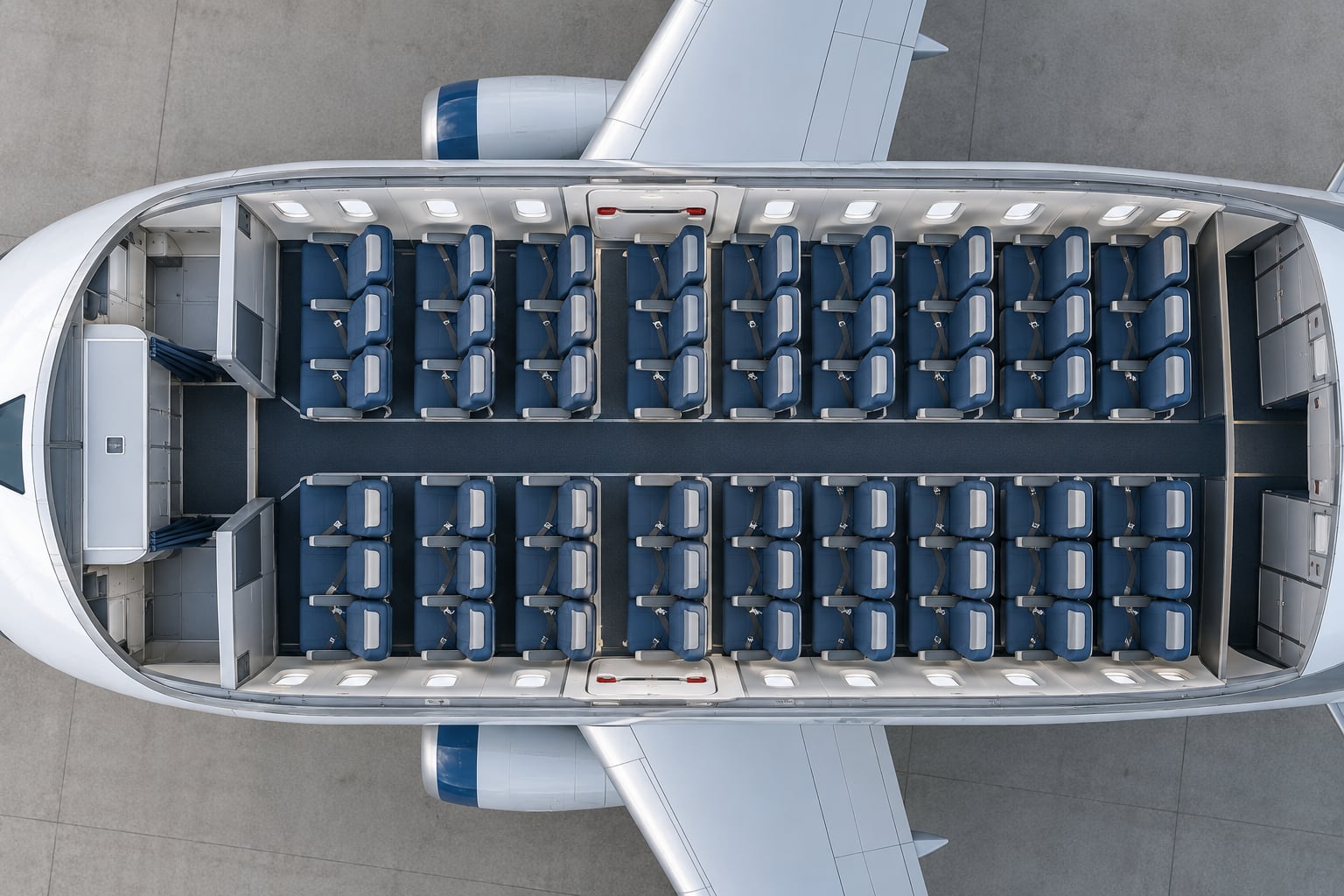
The A321neo is a single-aisle jet, so the cabin is almost always 3-3. That single fact drives everything else: only the two aisle seats per row have direct aisle access, every window seat means stepping past a neighbour, and legroom differences of three or four inches matter far more than the cabin pitch difference between carriers. This page is written for anyone who has an A321neo on their itinerary and has not yet picked a seat.
Table of Contents
- Best Seats on an Airbus A321neo at a Glance
- 1. Bulkhead Seats in Business Class for Extra Legroom
- When the front bulkhead wins in business class
- How to check your specific aircraft
- 2. Rearward Aisle Seats in Economy for Easier Sleep
- 3. Window Seats Away From Galleys for a Better View
- Three grades of A321neo window
- 4. Standard Aisle Seats for Fast Entry and Exit
- 5. Emergency-Row Seats for Maximum Legroom
- Who can actually sit there
- The row behind the exit is often the smarter seat
- 6. Bulkhead Economy Seats for Families With Children
- 7. Seats Behind Bulkheads for Added Legroom Without Premium Fares
- 8. Twin-Aisle Pair Seats for Couples and Business Travelers
- 9. Seats Near the Front for Easy Exit and Short Walking
- 10. Seats Near the Back for a Quieter, More Relaxed Ride
- Frequently Asked Questions
- Which seats don’t recline on the Airbus A321neo?
- Are exit row seats worth it on a narrow-body plane?
- Which seats on an A321Neo are the best?
- Where are the best window seats on an A321?
- Is the A321neo a comfortable plane?
- How do I pick a seat on a narrow-body plane?
- Conclusion: Choose the Seat That Matches Your Priorities
Best Seats on an Airbus A321neo at a Glance
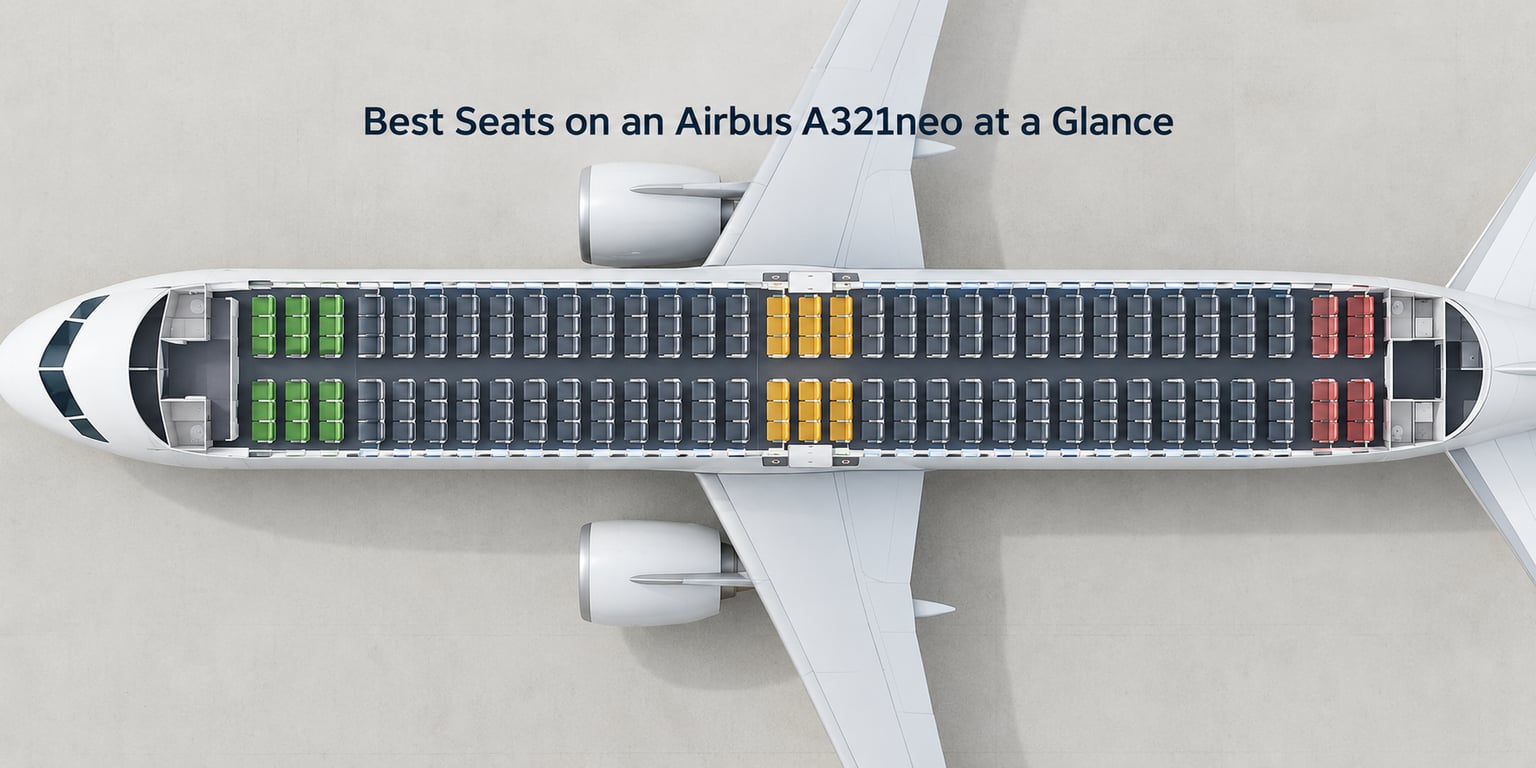
The table below ranks the eleven seat positions worth aiming for, the passenger priority each one serves, and the trade-off you accept by taking it. The last column matters most: a configuration change or a different operator can move any of these answers by several rows.
| Seat position | Suits | Main benefit | Trade-off | Availability |
|---|---|---|---|---|
| Business-class front bulkhead | Tall flyers, anyone who wants their feet flat | No seat in front, deep legroom, quiet if the cabin is not full | Fixed seatback or limited recline on many operators; no under-seat bin | Only 2-4 seats per cabin; varies by operator |
| Rear-cabin economy aisle | Solo travellers, sleepers, people who stand often | Low foot traffic, quick walk to the lavatory, easy to stretch | Rear galley noise if too far back; some last rows cannot recline | Wider; consistent across most layouts |
| Mid-cabin window away from doors | View-seekers who hate noise | Clear, aligned window plus a calm location | Must step over a neighbour; shade may not open fully | Narrow, so pick carefully |
| Standard economy aisle | Almost everyone | Direct aisle access, no climbing, easy restroom trips | Armrest shared with a stranger | Widely available |
| Row behind an overwing exit | Long-haul comfort seekers | Most legroom in the cabin and usually a full recline | Longer walk to the lavatory | Two or three rows per aircraft |
| Exit row itself | Tall, able-bodied flyers who will not sleep | Maximum legroom, sometimes an extra underseat compartment | Restricted or no recline, plus eligibility rules | Blocked until check-in on many operators |
| Economy front bulkhead | Parents with children, travellers with bulky bags | Floor space for a cot, legs or baggage | Fixed armrests, no under-seat bin, bassinet fittings may block the row | 2 or 3 seats per row |
| Row directly behind a bulkhead | Budget flyers who want extra legroom free | Often noticeably more knee room than a standard row | Not guaranteed; some layouts add nothing | One row per cabin boundary |
| Paired aisle or window seats | Couples, colleagues, families of three | Better chance of sitting together, shared tray table access | No privacy, no guarantee the pair is together | Depends on party size and load |
| Front-cabin standard seats | Short flights, tight connections, small children | First off the plane, shortest walk, fastest catering | Louder galley and lavatory traffic | Common; often a paid row on some operators |
| Rear-cabin window, mid zone | Calm long-haul flyers | Quietest combination of legroom, window and low traffic | Far from the front galley and sometimes beside a door | Wide availability |
1. Bulkhead Seats in Business Class for Extra Legroom
A business-class bulkhead seat removes the single worst part of any aircraft seat: the knees of the passenger in front. On the A321neo that space is often 45 inches or more of pitch, and because there is no seat in front, nothing limits how far you can stretch.
When the front bulkhead wins in business class
It wins when you are tall, when you want to work, and when the cabin is quiet enough that galley noise does not reach you. On most operators the business cabin is two rows of 2-2, so the bulkhead seats are also the only seats with both armrests, a real tray table and an underseat compartment you do not have to share.
The catch is the seatback. Several operators fit fixed or semi-fixed frames in the front row of a premium cabin to stop passengers leaning forward into the galley. If you plan to sleep, look at the seat map legend before you commit, because a fixed back in row one cannot be beaten by anything further down the cabin.
How to check your specific aircraft
Open the seat map for the actual aircraft, not the generic one. If the front row is drawn with a seat belt pictogram instead of a normal cushion, treat it as fixed. If the legend shows a bassinet pictogram, the row is reserved for bassinet bookings and will look unavailable to everyone else.
2. Rearward Aisle Seats in Economy for Easier Sleep
Rear-cabin aisle seats are the sleeper’s pick in the main cabin. The foot traffic that runs past the forward galley for the first hour and a half thins out considerably toward the back, so the cabin noise usually settles into a low hum instead of trolleys and announcements.
There is a second, less obvious benefit. On a narrow-body with a low lavatory-to-passenger ratio, walking to the back of the cabin for a restroom break is often quicker than squeezing past two rows in the middle. Passengers over about sixty, and anyone who gets up on a long flight, notice the difference quickly.
Two cautions. The very last rows sit close to the rear galley, where carts rattle and crew restock during service. And on some layouts the last row ahead of that galley is fitted with a non-reclining seat, so check the recline pictogram on the map. Pick the second or third row back rather than the final row and you keep the calm without taking the risk.
3. Window Seats Away From Galleys for a Better View
The best window seat on an A321neo is not the first one you find, it is the one in the middle third of the cabin on the side opposite the busiest door. Out of the forward galley zone, away from a lavatory door, and clear of any plugged door position, that seat gives you a properly aligned window with a quiet seat beside it.
Three grades of A321neo window
A window is not a window. On some layouts the frame is set behind the seat line, so you lean forward and look at a plastic panel. On others the position corresponds to a door that has been plugged and blanked off, giving you a wall and no legroom benefit even when the seat is sold as extra legroom. The genuine article has its own frame with a working shade that slides all the way.
Blanked-off and plugged positions mostly cluster in the forward cabin, where the fuselage tapers. If a window seat is described as extra legroom and the map shows no frame, ask the airline before paying. A parent travelling alone with two children will tell you quickly that a window behind a lavatory door is a bad trade, no matter how much legroom comes with it.
4. Standard Aisle Seats for Fast Entry and Exit
The plain aisle seat in a standard row is the strongest all-round choice on this aircraft and the one most flyers ignore. You stand up without asking anyone, you can get out in a hurry when the belt sign comes on, and you are not paying a premium cabin fare for it.
It also solves the restroom problem. On a 3-3 layout, an aisle seat is the only economy position where you can reach the lavatory without negotiating past a sleeping stranger. If you have a tight connection on the other side, a front aisle seat plus an early deplaning usually beats a rear seat with more legroom.
The trade-off is armrests. You share one with a neighbour, and on some low-cost operators the middle armrest stays fixed up. On full-service carriers the armrest usually lowers, so check the seat map description for your operator before assuming it moves.
5. Emergency-Row Seats for Maximum Legroom
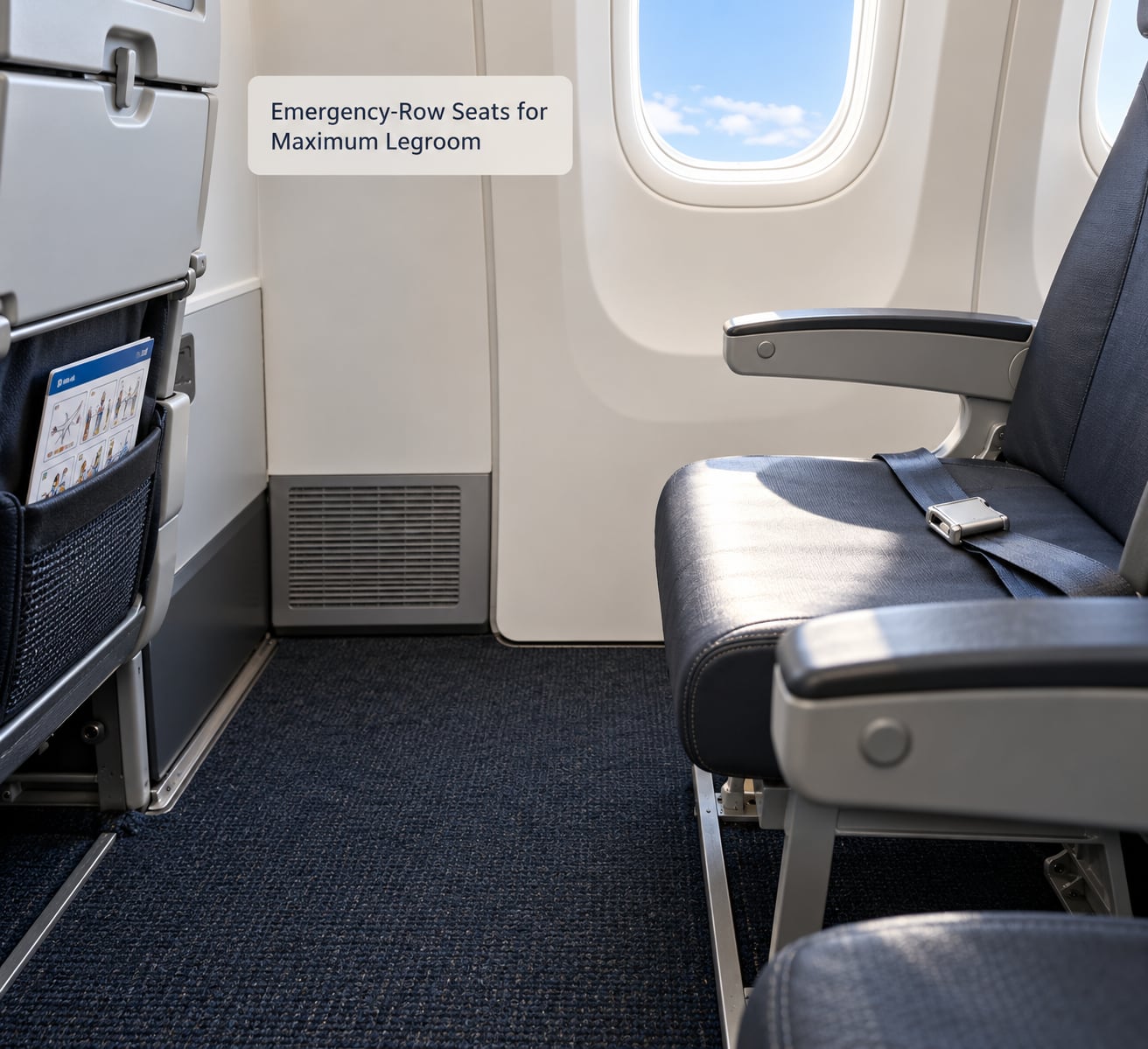
Exit rows hold the most legroom of any standard seat on the A321neo, usually 39 to 45 inches of pitch, because the seat track is set forward of the normal line. Some layouts also put an extra underseat compartment or a slim carrier in front of you. The catch is that these seats generally do not recline, and the row immediately in front of the exit row usually cannot recline fully either.
Who can actually sit there
Airlines publish their own rules and they are strict about them. Expect a minimum age of 15 or 16, a requirement that you can reach the floor latch and the window mechanism unaided, and no obligation to assist another passenger. Passengers who cannot lift their arms above shoulder height, or who use a walking aid that cannot be stowed, are usually not eligible.
Tall passengers frequently ask whether height disqualifies them. It usually does not, because the requirement is about reach and mobility rather than stature. On the other hand, someone near the upper limit of the carrier’s guidance will find that area uncomfortable, so a full-recline row behind the exit is the better pick.
The row behind the exit is often the smarter seat
You get most of the legroom, a working recline and a normal window. The cost is a longer walk to a lavatory that might be behind you, so check where the doors sit on your aircraft. FlyerTalk and r/delta threads on the A321neo repeat one complaint more than any other: not the legroom, but the upright posture for a full flight, and one passenger being moved out of the row because the person behind them objected.
6. Bulkhead Economy Seats for Families With Children
The economy front bulkhead gives you floor space where a seat would normally be. That is the row to book when you are flying with a child under two and want a travel cot space, when you need to stroller a bag rather than lift it, or when you want your knees free during a long sector.
What you give up is storage. There is no under-seat bin, and on many layouts the tray table lives in a fixed armrest, so you lose the one you would have had. Bassinet fittings also occupy part of the row on operators that offer them, and a row marked with a bassinet pictogram will look unavailable to a family booking standard seats.
A parent travelling alone with two children described the choice clearly in an r/americanairlines thread: a middle seat in the extra-legroom cabin beats an exit row next to the restroom, because getting two children in and out of an aisle position quickly is worth more than the extra inches. That logic applies to any A321neo.
7. Seats Behind Bulkheads for Added Legroom Without Premium Fares
Where a premium cabin ends, the main cabin’s first row sometimes gains several inches of pitch because the dividing wall removes the seat track behind it. On some airlines that row is a free upgrade in effect, on others the same row measures the same as the one behind it.
Ask three questions before you pay for it. Does the airline’s seat map describe the row as extra legroom in writing, does the recline pictogram show a normal reclining seat, and is there a bassinet symbol occupying the row? If the first answer is no, book a standard aisle seat and save the difference for a longer trip where legroom matters more.
Regular flyers on United’s A321neo raise a simpler point in FlyerTalk threads: that the window is the reason most people book a row at all, and that layout has plenty of good window seats worth selecting right across the cabin. That is easier to act on than chasing pitch numbers.
8. Twin-Aisle Pair Seats for Couples and Business Travelers
On a 3-3 cabin, requesting two aisle seats together, or two window seats together, is worth doing if you travel with someone. A pair of aisle seats in the same row gives you both a direct route to the aisle and one fewer stranger to pass on the way to the lavatory, which is the setup people choose when they plan to sleep through a red-eye.
Two window seats give a shared view and no aisle interruptions at all. It is also the configuration a traveller with a laptop often prefers, because nobody squeezes past during service.
Privacy is what you lose. The shared armrest becomes a negotiation, and on a busy flight the middle seat can leave you with one square of elbow room. Nothing guarantees the pair anyway, since pairing rules and seat-map logic differ by operator, so apply to the flight number rather than the booking.
9. Seats Near the Front for Easy Exit and Short Walking
Front-cabin seats are the practical choice for a short sector, a tight connection or a passenger who would rather not walk. You are often off the aircraft and down the jet bridge before the rear rows reach the aisle, and the forward lavatory is always the closest one to the door.
Choose a window seat in the forward cabin if you value quick deplaning, or an aisle seat if you value standing up often. Business-class bulkheads sit here too, so a forward request can put you beside a cabin divider for the whole flight.
The cost is noise. Galley service starts immediately, boarding conversations happen at your elbow, and the crew stow bags overhead a few rows away. Several operators also charge for the front rows in economy precisely because of that traffic, so decide whether paying it buys anything for a three-hour flight.
10. Seats Near the Back for a Quieter, More Relaxed Ride
The back third of the cabin is the calm end of an A321neo, for the same reason the front is not: nobody needs to walk there. After the first hour the traffic concentrates forward, and the rear settles into the low engine hum most sleepers need.
Pick a rear window seat in the middle of that zone, or a rear aisle seat if you stand often. Both give you a full recline on most layouts and a legroom figure close to the exit-row-adjacent rows without the upright penalty.
Read the map before you commit to the final rows. Where a lavatory sits at the back, the last two rows face constant foot traffic, queueing and door noise. Configurations with a low lavatory-to-passenger ratio concentrate that traffic even more. One row back from the rearmost position is usually the sweet spot, and it also avoids the rear-galley rattle that comes with the very last row.
Frequently Asked Questions
Which seats don’t recline on the Airbus A321neo?
On most A321neo layouts the exit rows themselves cannot recline, and the row immediately in front of an exit is usually limited to a partial recline for the same reason: both sit in the evacuation path. The bulkhead row directly behind a premium cabin generally reclines normally. Check the recline pictogram on your airline’s seat map, because fittings differ between operators and configurations.
Are exit row seats worth it on a narrow-body plane?
Worth it if legroom beats sleep to you and you can pass the carrier’s eligibility rules, usually a minimum age of 15 or 16 plus the ability to reach the exit latch unaided. You get the most legroom in the cabin, sometimes with extra storage. You give up recline, and the seat beside you also sits upright for the whole flight.
Which seats on an A321Neo are the best?
The rows directly behind an overwing exit give the best balance, with the most legroom and a full recline. For legroom alone, choose the exit row itself. A front-cabin bulkhead wins on foot space, and a mid-cabin window away from galleys and lavatories wins for quiet and view. Row numbers differ per airline, so locate the zones on your own seat map rather than copying a row number from a guide.
Where are the best window seats on an A321?
Mid-cabin windows, on the side away from the busiest door, with a frame aligned to your seat and a working shade. Avoid windows set behind the seat line and positions next to a plugged or blanked-off door, which give a wall instead of a view. Passengers on r/americanairlines routinely place an exit-row window beside a restroom in their avoid list, however much legroom it carries.
Is the A321neo a comfortable plane?
It is one of the more comfortable narrow-bodies, thanks to a quieter cabin than older A320-family jets, larger windows and up to 18 minutes of fuel-burn savings that airlines often pass on as wider seats or added bins. It is still a 3-3 narrow-body, so legroom is around 29 to 32 inches in economy. Seat position matters more than the aircraft here.
How do I pick a seat on a narrow-body plane?
Work from the seat map outwards. First find the exit rows, then take the row behind them for legroom plus a full recline. Next check the bulkhead row for foot space and confirm whether the seatback is fixed. Finally avoid rows beside a lavatory door, a galley or a plugged door position. Reopen the map after the aircraft is assigned, since the layout can change.
Conclusion: Choose the Seat That Matches Your Priorities
Start by opening the seat map for the specific aircraft and finding the exit rows. Everything else follows from that: take the row behind the first exit for legroom with a working recline, or the exit row itself if legroom comes first and you meet the carrier’s rules. Then decide whether your priority is a window away from the doors, an aisle for easy standing, or a bulkhead for floor space.
Reopen the map once the aircraft is assigned. Row numbers shift between an A321neo and the original A321, and an equipment swap can change the layout entirely, so re-select rather than assuming your earlier choice carried over. Last updated October 2026.