What is the difference between first and business class? Both sit above economy and premium economy, but business class gives you a wide lie-flat seat or small semi-enclosed suite with direct aisle access, priority boarding and lounge access, while first class gives you a private room: a suite with a door, a separate bed, fewer passengers per attendant and dedicated ground facilities. In short, business class is built around a very good bed, and first class is built around space, privacy and being left alone.
The category comparison, in the format search engines pull out most often:
- Seats and space — Business class: 20 to 23 inch wide seat, roughly 40 to 47 inches of pitch, fully flat or angled-flat. First class: suite 30 to 40 inches wide, separate bed and armchair, closing door.
- Service and staff — Business class: about one attendant for every eight to ten passengers. First class: roughly one for every four to six, often a dedicated suite attendant.
- Dining — Business class: multi-course plated meals on request. First class: on-request dining from a larger menu, often with more premium drinks.
- Ground experience — Business class: lounge access and priority check-in. First class: lounges, terminals or transfers reserved for the cabin.
Last updated: October 2026.
Table of Contents
- What Is the Difference Between First and Business Class at a Glance?
- How Do First-Class and Business-Class Seats Differ?
- How Does the Difference Between First and Business Class Vary by Aircraft?
- Is First Class More Private Than Business Class?
- What Service and Dining Can You Expect?
- Which Cabin Has Better Lounge and Airport Benefits?
- How Do In-Flight Amenities and Sleep Compare?
- What Is the Value Difference Between First and Business Class?
- Which Should You Choose?
- Frequently Asked Questions
- Is first class always better than business class?
- Is business class worth it on a short flight?
- What is the main difference between lie-flat and recliner seats?
- Does business class include lounge access?
- How do I know which premium seat is best before booking?
- Can first or business class seats be unsuitable for sleeping?
- The Bottom Line
What Is the Difference Between First and Business Class at a Glance?
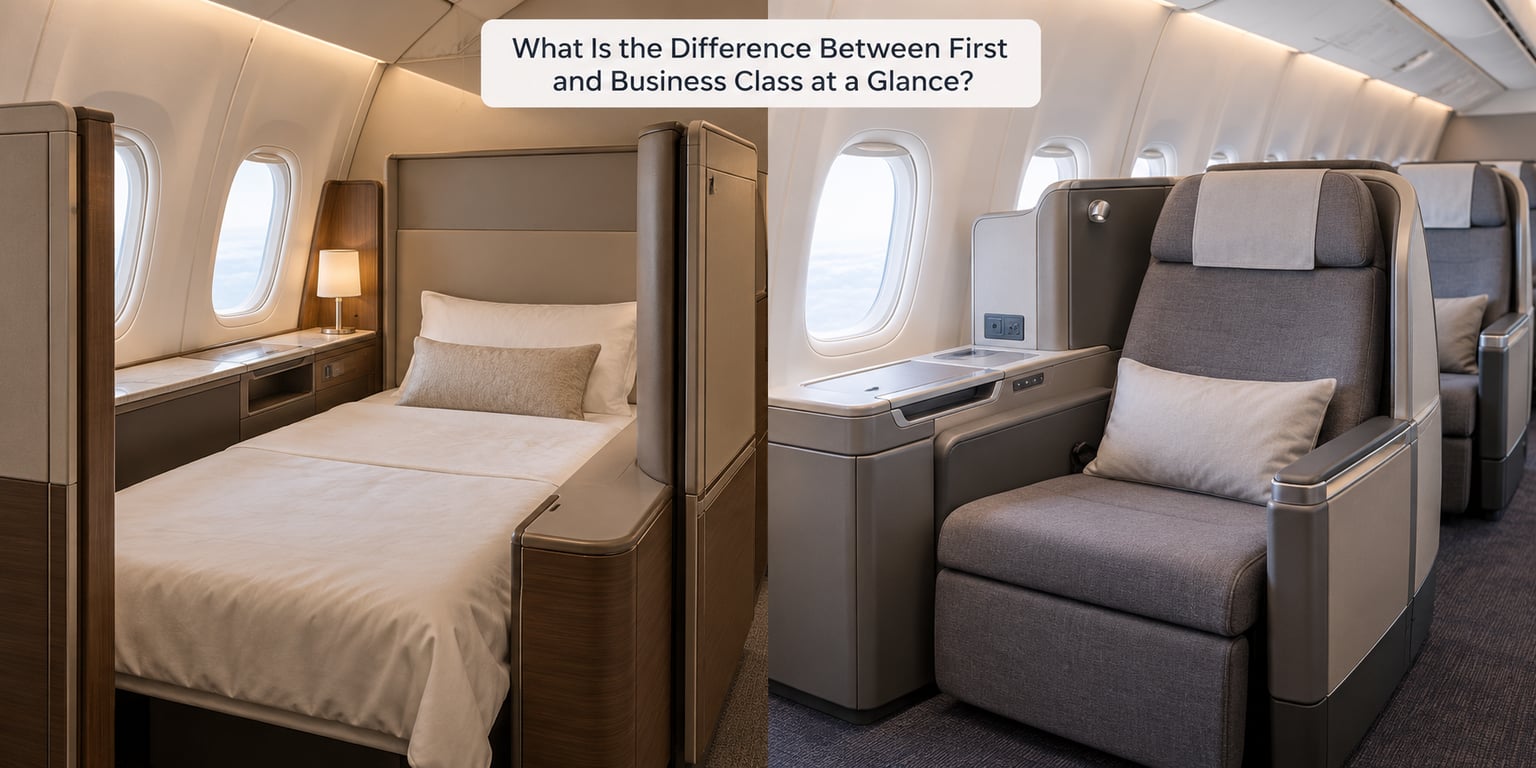
Here is the short version before we go cabin by cabin. The labels are less reliable than most travellers assume, because each airline defines its own cabins, and the same branded product can look completely different on a narrowbody jet than it does on a 777.
| What changes | Business class | First class |
|---|---|---|
| Seat type | Lie-flat or angled-flat seat, semi-enclosed suite, or a recliner on some aircraft | Private suite with a closing door, separate bed and armchair |
| Typical seat width | About 20 to 23 inches | About 30 to 40 inches across the suite |
| Layout on a large widebody | Usually 1-2-1, sometimes staggered or 2-2 | Usually 1-2-1 or 1-1-1 |
| Bed length when flat | Typically 78 to 80 inches, angled on some products | Typically 83 to 85 inches, level |
| Privacy | High divider and shell, aisle access both sides | Full-height door, enclosed on three sides |
| Number of seats onboard | Roughly 20 to 40 on a long-haul aircraft | Often fewer than 15, sometimes as few as 4 to 8 |
| Attendants per cabin | About 1 per 8 to 10 passengers | About 1 per 4 to 6 passengers |
| Meal service | Multi-course plated meals, served on request | On-request dining from a wider menu, more courses |
| Bedding | Blanket, pillow, mattress pad on longer flights | Mattress pad, duvet, pyjamas, turndown service |
| Lounge | Airport lounge access on most international itineraries | Dedicated first lounge, private terminal or lounge invitation |
| Boarding and arrival | Priority check-in and boarding, faster immigration lane where offered | Priority plus separate check-in, earlier boarding, sometimes private screening |
| Ground transfers | Occasional chauffeur or lounge transfer on some carriers | Chauffeur or private transfer offered on some premium routes |
| Checked baggage | Often two bags on international itineraries | Usually matches business, sometimes one more |
| Best on | Overnight long-haul, transcon, hub connections | Ultra-long-haul overnight, milestone trips |
Those numbers are typical ranges, not guarantees. Seat width in particular changes between aircraft in the same airline, which is why comparing two fares by cabin name alone is a trap.
How Do First-Class and Business-Class Seats Differ?
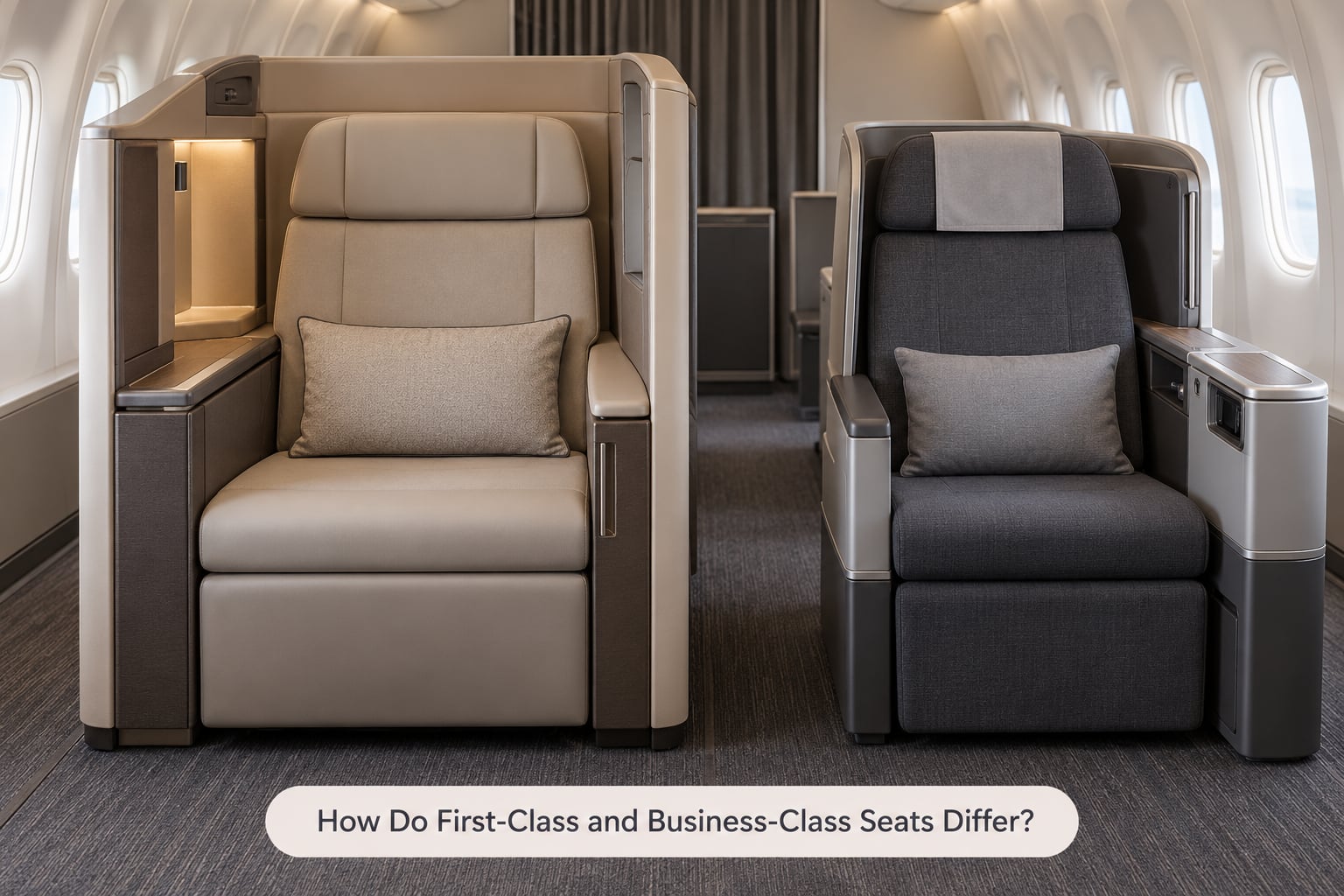
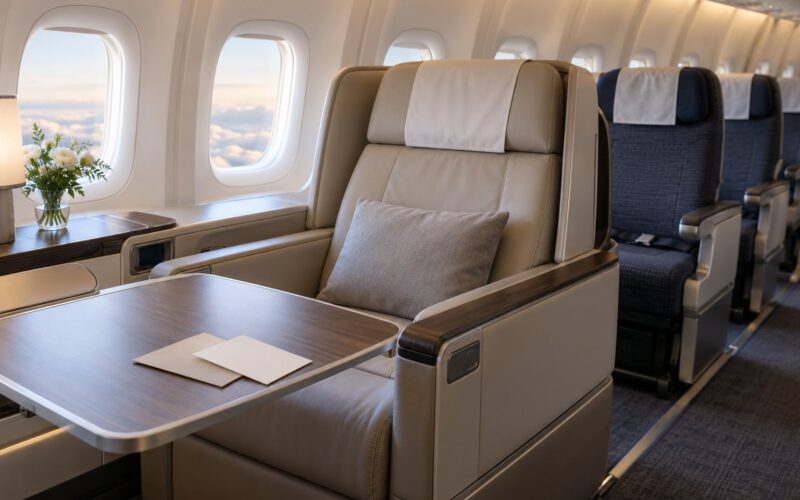
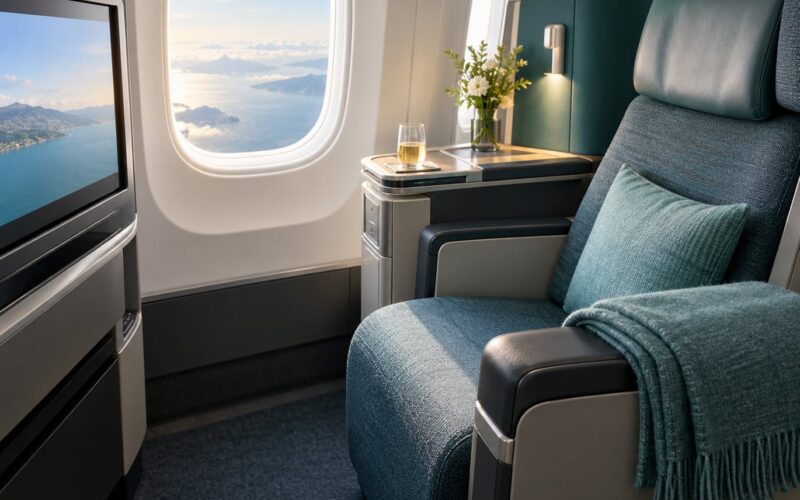
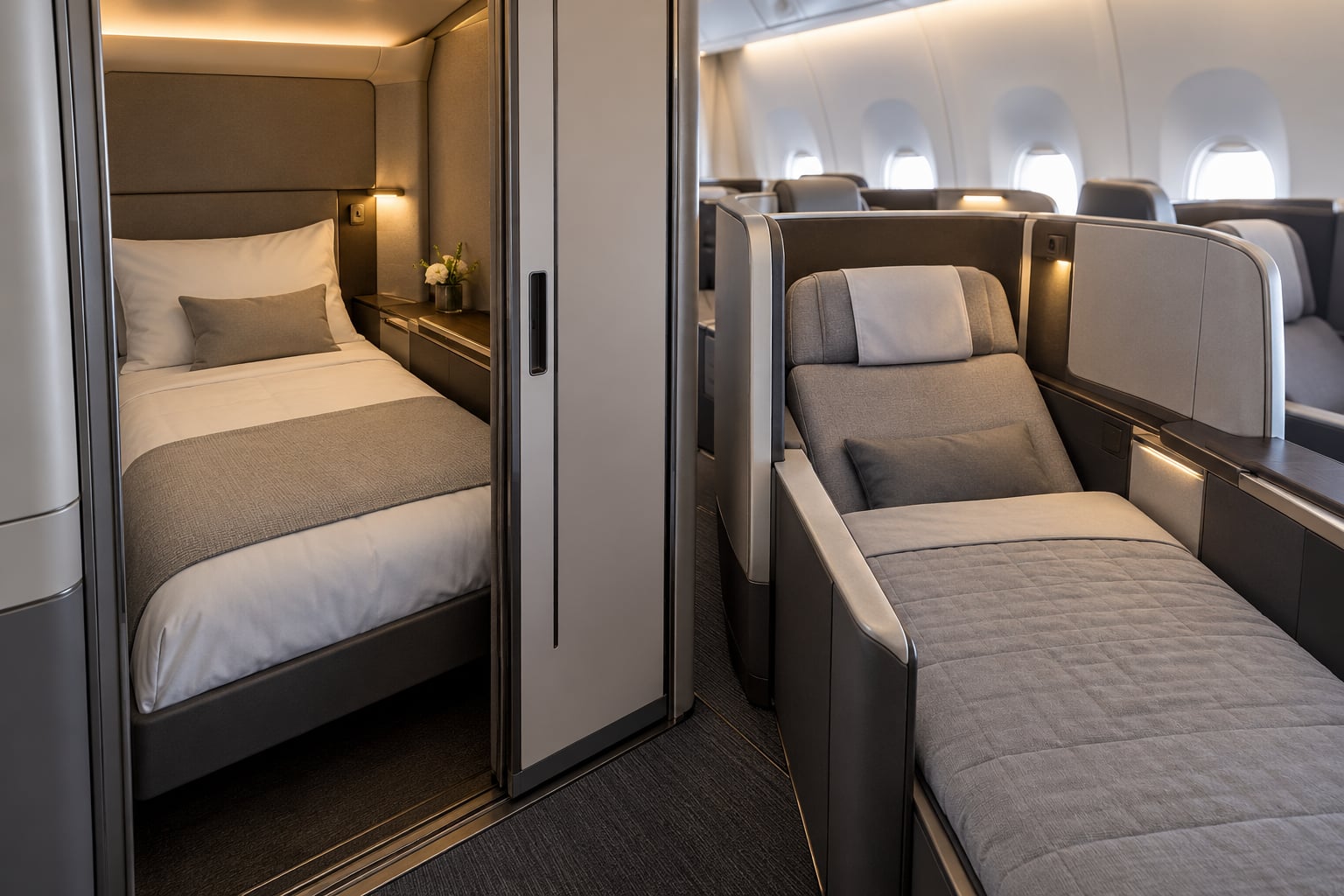
The seat is where most of the money goes, and it is the easiest thing to check. A business-class seat is essentially a wide, powered recliner with a headrest, footrest and reading light, and on the better products it reclines to 180 degrees so you can sleep flat. A first-class suite is a small room: a bed that stays made up, an upright armchair for eating and working, a side console, and on most carriers a door you close. That physical gap is what is the difference between first and business class in concrete terms.
Three terms come up constantly, and it helps to know which one you are actually buying. A recliner is a seat that leans back to maybe 130 or 140 degrees. It is comfortable for reading and eating, and it is not a bed. An angled-flat seat reclines fully but leaves your knees raised a few inches, which some sleepers tolerate and many do not. A lie-flat seat puts you level. Suites add the door and the extra width on top of that.
Storage, power and work surface follow from the size of the shell. A business seat gives you a footwell, a small side console and one or two power outlets. A suite gives you a console wide enough for a laptop, a dedicated dimmable reading light, several outlets and often a storage bin large enough for a carry-on to disappear into.
How Does the Difference Between First and Business Class Vary by Aircraft?
The same cabin name can deliver very different seats depending on the aircraft, which is the single most common complaint in travel forums. On a transcon narrowbody such as an A321neo or a 737-800, a business-class seat may be a wide recliner in a 2-2 layout with no lie-flat option at all. On a Boeing 777 or an Airbus A350 in a long-haul configuration, the same airline might sell the same branded cabin as a 1-2-1 suite with a door.
Domestic US first class is a good example of the confusion. On most domestic aircraft it is a wide leather recliner in a 2-2 layout with extra legroom and priority boarding. There is no bed, no door and no separate seat. It sits above main cabin, and it is not the first class that European or Asian carriers sell on the same transatlantic route.
Layouts matter as much as seat type. A 2-2 configuration gives every passenger direct aisle access but forces window-seat passengers to climb over their neighbour, and it halves the number of premium seats the airline can sell. Staggered layouts smooth the climbing problem but remove the window from one seat in each pair, which matters more than most brochures suggest.
Before you pay for a specific seat, check three things: the aircraft type on your itinerary, the seat map for that aircraft, and whether the seat you are booking is a lie-flat, an angled-flat or a recliner. A seat map site like SeatGuru or the airline’s own seat picker will show you the configuration and the exact seat numbers that have doors.
Is First Class More Private Than Business Class?
Yes, and this is the difference travellers notice first. Business class gives you a high shell and a divider, plus aisle access on both sides when the layout is 1-2-1, and that is enough to work or sleep beside a stranger without conversation. It is not enough to change clothes comfortably, and it is not enclosed on the aisle side unless the seat sits in a middle position with a wall.
First class adds a sliding or hinged door, a taller partition, and in many products a partition that raises when the seat reclines so the neighbour cannot see in. You also get fewer people nearby, both because first cabins are small and because meal and drink service is done seat by seat rather than by trolley, which cuts the number of times a stranger walks past your door.
On r/CreditCards, posters described the real driver as privacy and being able to work undisturbed, rather than food or champagne. That matches what the seats actually deliver. A door you can close is worth more on a daytime work flight than on a red-eye where you are asleep anyway.
There is one honest exception. Some carriers now sell a business-class product with a door, and some of those products deliver more usable space than an older first-class seat on a different aircraft. Cabin labels drift; the physical product on your flight day is what counts.
What Service and Dining Can You Expect?
Service is a staffing story more than a menu story. In business class, one flight attendant typically looks after eight to ten passengers in the cabin, which usually means a short pre-departure drink, a plated main course, a reasonable wine list and a tray rather than table service. In first class, the ratio often drops to one attendant for four to six passengers, so meals arrive when you ask for them and the attendant remembers what you drank an hour ago.
Dining differences show up in menu scope and choice rather than in the quality of a single dish. Business class on a long-haul flight is typically a multi-course meal: a starter, a main, dessert, with a second or third course available if you want it. First class usually adds on-request dining from a larger menu, more courses, and a wider drinks list that can include premium sparkling wine, tastier wine or spirits at no extra charge.
Some first-class cabins also add a cabin chef, a standing bar, or a table-service element that business never offers. Cheaper is not the point; the point is that the meal arrives when you are hungry rather than when the schedule says.
Two practical warnings. Neither cabin guarantees a specific dish on a specific flight, because catering is planned days ahead and equipment has to fit the aircraft. And a very slow dinner is a real risk in first class, as people on r/FATTravel note when service is generous to the point of eating into the flight time they paid premium money for. Ask for the main course early and the timing usually works out.
Which Cabin Has Better Lounge and Airport Benefits?
Business class almost always includes airport lounge access on an international itinerary, usually for you and one guest on many carriers, sometimes for the whole party. On domestic US itineraries it is more patchy: some airlines include lounge access with first class but not business, and some restrict it to specific terminals, cards or membership tiers. Always read what your ticket actually grants rather than assuming from the cabin name.
First class layers more on top, and it varies a lot by airline. Some run a separate first lounge with showers, quiet rooms and a proper sit-down menu. Some give first-class passengers access to a private terminal for check-in, security and boarding, which is worth more than any lounge because it removes the queue entirely. Others use invitation-only lounges or restaurant credits rather than open access.
Ground transfers are the least consistent benefit. A handful of carriers offer chauffeur or car service to and from the airport on premium routes, sometimes as a flat allowance, sometimes only on specific flights. Treat it as a possibility, not a promise, unless the airline states it in writing for your route.
Boarding and arrival are more predictable. Business class gets priority check-in, a priority security lane where one exists, and earlier boarding. First class usually adds a dedicated check-in row, boarding at the very front of the group, and on a few routes separate security screening and an expedited immigration lane on arrival. Those minutes are where the ground experience gap is widest.
How Do In-Flight Amenities and Sleep Compare?
Bedding is the clearest sleep upgrade. Long-haul business class typically gets a blanket, a pillow and a thin mattress pad over the seat cushion. First class commonly adds a mattress pad plus a duvet and pyjamas, and many cabins run turndown service in the second half of the flight while the lights are low. Bedding brands differ too: some carriers use a decent mid-weight blanket and a standard pillow in business, while first-class amenity kits from names like Bamford or La Prairie are the ones people keep.
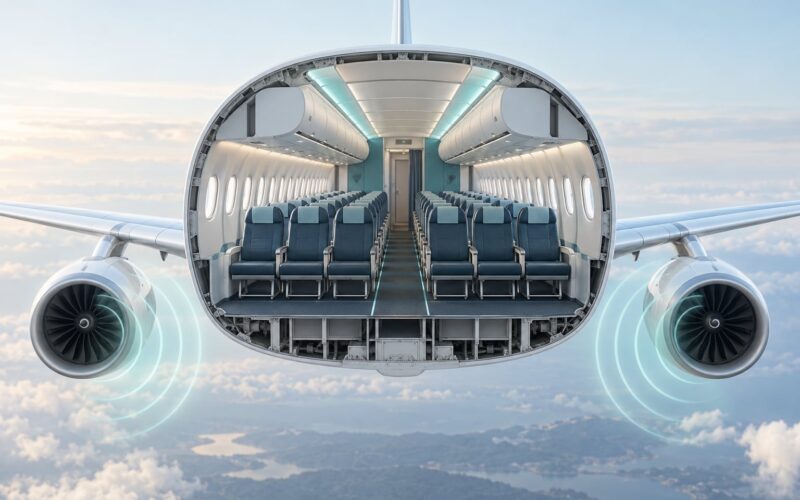
The rest of the amenity list overlaps more than people expect. Both cabins usually get noise-canceling headphones, a personal screen, power at the seat and Wi-Fi. First class tends to get larger screens, better Wi-Fi hardware and a wider drinks list. Cabin temperature control is identical in both, and that matters: a premium seat with a duvet is miserable if the cabin is two degrees too warm.
Sleep quality depends on more than the cabin. Seat position and direction matter enormously, and so does who is beside you. A business pod on an upper deck away from the galley and the toilets sleeps better than a first-class window suite at the wrong end of the aircraft. Check the seat map for galley and lavatory proximity, and pick a window seat over a middle seat unless you plan to work. If you only take one idea from the amenity comparison, take this: what is the difference between first and business class for sleep is mostly whether you can close a door and whether the bed is long enough for you.
One more thing for tall travellers. Check the flat bed length, not the seat pitch, because a 6 foot 4 inch passenger can be cramped on an angled-flat business seat even at 180 degrees, while a first-class suite is sized for a tall frame. This is the one place where the price gap tends to pay off fastest.
What Is the Value Difference Between First and Business Class?
The price gap is wide and it varies by route, season and how far ahead you book, so treat any figure you see as a snapshot rather than a rule. What matters more is what you are buying with the extra money, and the list is short and specific: a private room instead of a partitioned seat, roughly half as many passengers per attendant, dedicated ground infrastructure that removes queues, and scarcity.
Scarcity is the part people forget. A widebody might carry 30 business-class seats and as few as 4 to 14 first-class seats. Those seats sell out earlier, they are harder to redeem, and on many aircraft the flight attendant ratio, the meal service and the lounge all scale directly with that small number. One poster on r/americanairlines put it well: first class is not worth it over business in a value sense, which is rather the point, because there is a fraction of the number of seats.
Points change the arithmetic more than most guides admit. Award charts price a first-class seat at far more points than a business seat, which makes the upgrade look far more expensive than the cash difference suggests. Frequent flyer communities generally split on how to handle it, with the common view being that first class is worth burning extra points on for a once-in-a-lifetime trip rather than a trip you take every month. If you travel often enough for that to matter, price the upgrade in points rather than in cash before deciding.
The upgrade is easiest to justify on an overnight flight of eight hours or more, where a bed and a door change the whole trip. It is hardest to justify on a daytime short flight, where you sit upright most of the time and the difference you feel is a nicer chair and a better lounge.
Which Should You Choose?
Choose first class when the flight is long enough that you intend to sleep in it, when privacy drives your work, or when the trip is a milestone. The enclosed suite, the small cabin and the dedicated ground facilities are all consumed over hours, so the spend goes further the longer you are airborne. Choose business class when you want a genuinely good bed and a lounge without paying for a private room you will only sit in upright.
A few situations in more detail:
- Overnight long-haul: first class wins comfortably. You get a level bed, a door and a quiet cabin for most of the night.
- Daytime flights under four hours: business class is usually the smarter call. The lounge, the wider seat and priority boarding carry most of the value.
- Travelling with children: business class. A suite door that closes is a nice novelty but a hard surface to sleep on for a child is not, and the price difference on a family booking multiplies quickly.
- Working on a long flight: first class if the trip is long and you need to sleep afterwards, business class if uninterrupted daytime focus is the goal and a wider work surface is enough.
- Points redemptions: business class almost always. The cash or points difference for the upgrade is usually larger than the experience difference for a normal trip.
- Short-haul and transcon: check the seat type before paying. A domestic first-class recliner and a transcon business-class recliner are often the same seat at different prices.
Two checks before you commit. Confirm the aircraft, because the same cabin name means different things on different aircraft. And read the fare rules, because lounge access, guest access and baggage allowance are where airline-to-airline differences hide, not in the seat.
Frequently Asked Questions
Is first class always better than business class?
No. On a daytime domestic flight the extra money often buys a nicer chair and a lounge rather than a better journey, and some first-class products are recliners you cannot lie flat in. First class clearly wins on overnight long-haul flights, where the longer bed, closing door and quieter cabin genuinely change how well you rest.
Is business class worth it on a short flight?
On a flight under four hours it is usually worth it for the lounge, priority boarding and a wider seat, because you rarely lie down. It pays off even more on a transcon trip with a long connection, where the extra lounge time and the wider seat remove most of the discomfort. Skip it for short flights where the airport is close and check-in is quick.
What is the main difference between lie-flat and recliner seats?
A recliner leans back to roughly 130 to 140 degrees and is not a bed. A lie-flat seat reclines fully so you can sleep level. Between the two sits the angled-flat seat, which reaches 180 degrees but leaves your knees raised a few inches. Whether that matters depends on your height and how sensitive you are to sleeping with bent knees.
Does business class include lounge access?
Usually on international itineraries, often covering you plus a guest on many airlines. It is less reliable on domestic US flights, where some airlines include lounge access with first class only or limit it to certain terminals and cardholders. First class may add a dedicated lounge, a private terminal, or an invitation-only space. Check what your specific ticket grants.
How do I know which premium seat is best before booking?
Check three things: the aircraft type on your itinerary, the seat map for that aircraft, and the seat category offered in each cabin. Then look for the configuration, one-two-one is best, whether the seat has a door, whether it is a lie-flat or angled-flat, and how far it sits from the galley and toilets. That tells you most of what you need before you pay.
Can first or business class seats be unsuitable for sleeping?
Yes, in both cabins. Angled-flat business seats leave your knees raised, some seats in staggered layouts have no window, and a bed that is level but short can cramp a tall passenger. Proximity to the galley or toilets, cabin noise and light all matter too. If sleep is the priority, pick a window seat on a quiet aircraft and check the flat bed length first.
The Bottom Line
If you remember one thing about what is the difference between first and business class, make it this: business class gets you a very good flat bed and easier airport logistics, while first class gets you a private room, fewer people, better staff-to-passenger ratios and ground facilities that skip the queues, at a much higher cost that only tends to pay off on long overnight flights. Before you book either, check the exact aircraft and seat map, the flat bed length, whether the seat has a door, what your fare includes for lounge and guest access, and how the fare fits the rest of your itinerary.