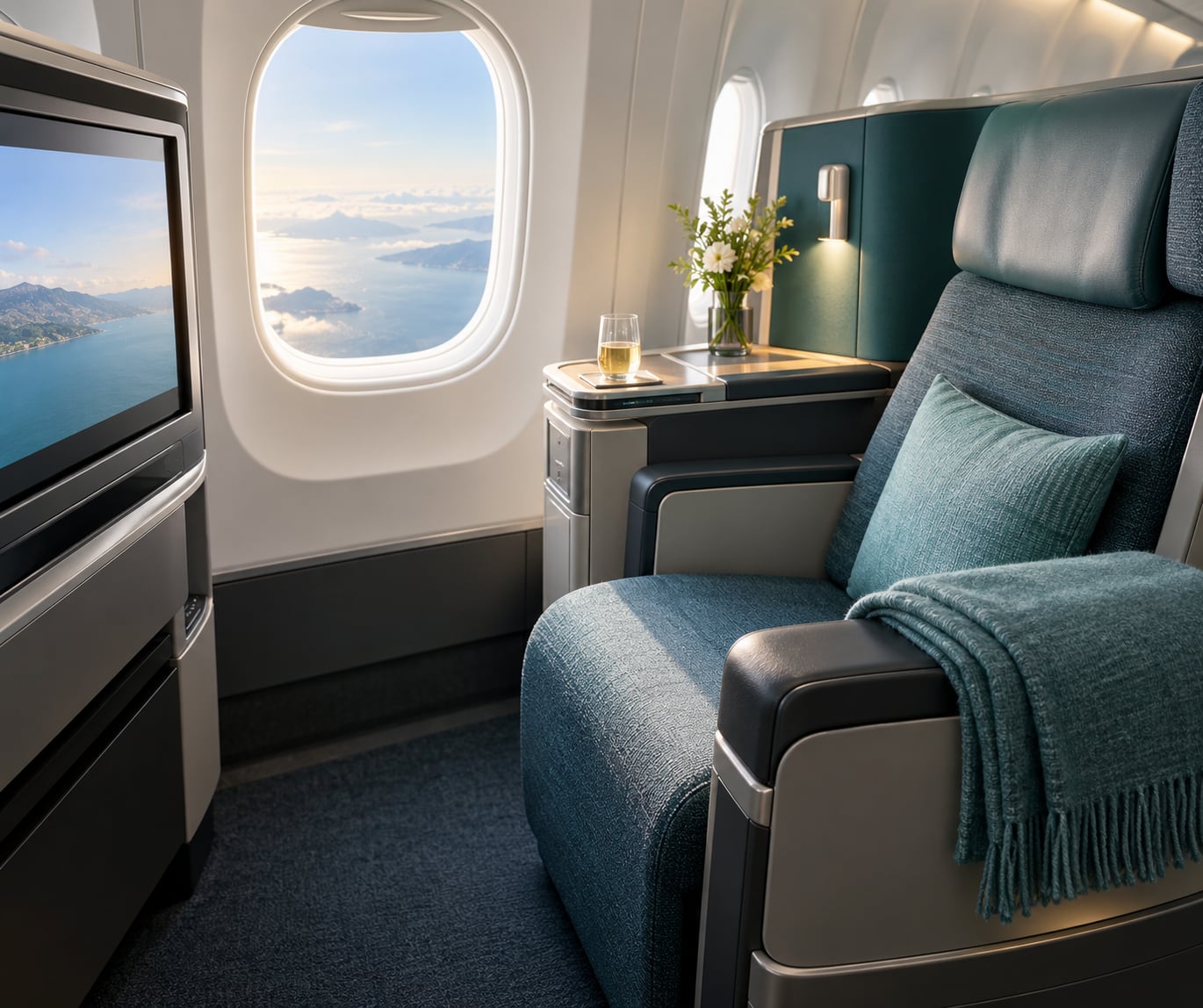
Domestic first class is the premium cabin on a US domestic flight: a wider, more reclinable seat with extra legroom, a larger seatback screen, priority check-in and Group 1 boarding, complimentary food and drinks, and often lounge access. It is a clear step above main cabin, but it is not the lie-flat, suite-style product found on international first class flights.
Whether you actually get that cabin depends on the airline, the route, the aircraft assigned to your departure and how full the flight is. On many domestic routes there is no first class at all, and on some the cabin is only two rows wide.
What follows is what the experience is actually like, aircraft by aircraft and airline by airline, including the parts that disappoint people. Updated for October 2026.
Table of Contents
- What Is Domestic First Class Like, Exactly?
- What Is Domestic First Class Like on a Short-Haul Flight?
- Seats, Legroom, and Privacy
- Meals, Drinks, and In-Flight Service
- Amenities That May Differ From Economy
- Is Domestic First Class Always Better Than Business Class?
- Which Domestic Airlines May Offer First Class?
- How to Know What Your Ticket Includes
- Is Domestic First Class Worth It?
- Frequently Asked Questions
- Is there first class on domestic flights?
- Does domestic first class have lie-flat seats?
- What is the difference between domestic first class and business class?
- How long should a flight be before I pay for first class?
- Are lounge and priority boarding benefits included with domestic first class?
- Can I use a free upgrade to upgrade to domestic first class?
- Conclusion
What Is Domestic First Class Like, Exactly?
Here is the honest version: domestic first class is a roomier economy-adjacent cabin with better service, not a miniature international cabin.
A typical domestic first class ticket gives you these things, though not every airline includes every one on every route:
- A seat noticeably wider than economy, with more room in front of you
- A recline that usually goes a little further back than a standard economy seat
- A larger seatback entertainment screen than the economy rows behind you
- Priority check-in counter and sometimes a priority security lane
- Boarding first, usually in Group 1, and deplaning first
- Complimentary drinks and food served in the cabin
- Dedicated overhead space and, on some carriers, a slightly larger carry-on allowance
- Access to an airport lounge on some tickets, and on a scheduled boarding pass on others
What you almost never get domestically: a lie-flat seat, a door, a separate seatback screen per passenger on every aircraft, a multi-course meal, or a dedicated crew member for a four-row cabin.
Two distinctions trip people up constantly. First, international first class is a different product entirely, with lie-flat or angled-flat beds, doors on some airlines, bedding, and much longer meal service. Second, many US airlines do not sell a separate domestic business class, so what some travelers call domestic business class is really the airline’s premium economy product, which is one tier below first on most routes.
What Is Domestic First Class Like on a Short-Haul Flight?
On a flight under two hours, the premium cabin barely gets used. You board first, sit down, accept a drink, eat a snack, and land.
Service on a short sector is more like a hospitality stop than a meal service. Crew will typically offer water, coffee, tea and a pour of spirits, then bring a light bite from a short menu. That is normal and not a sign you were shortchanged. A two-hour domestic hop does not generate enough service volume for hot entrees or multiple courses.
The bigger disappointment on short routes is the aircraft. When a regional jet handles the flight, the premium cabin can be two rows of four seats in a small tube with no real sense of space. That is what fliers on r/delta and r/AlaskaAirlines tend to mean when they describe the experience as economy with a bigger seat.
Seats, Legroom, and Privacy
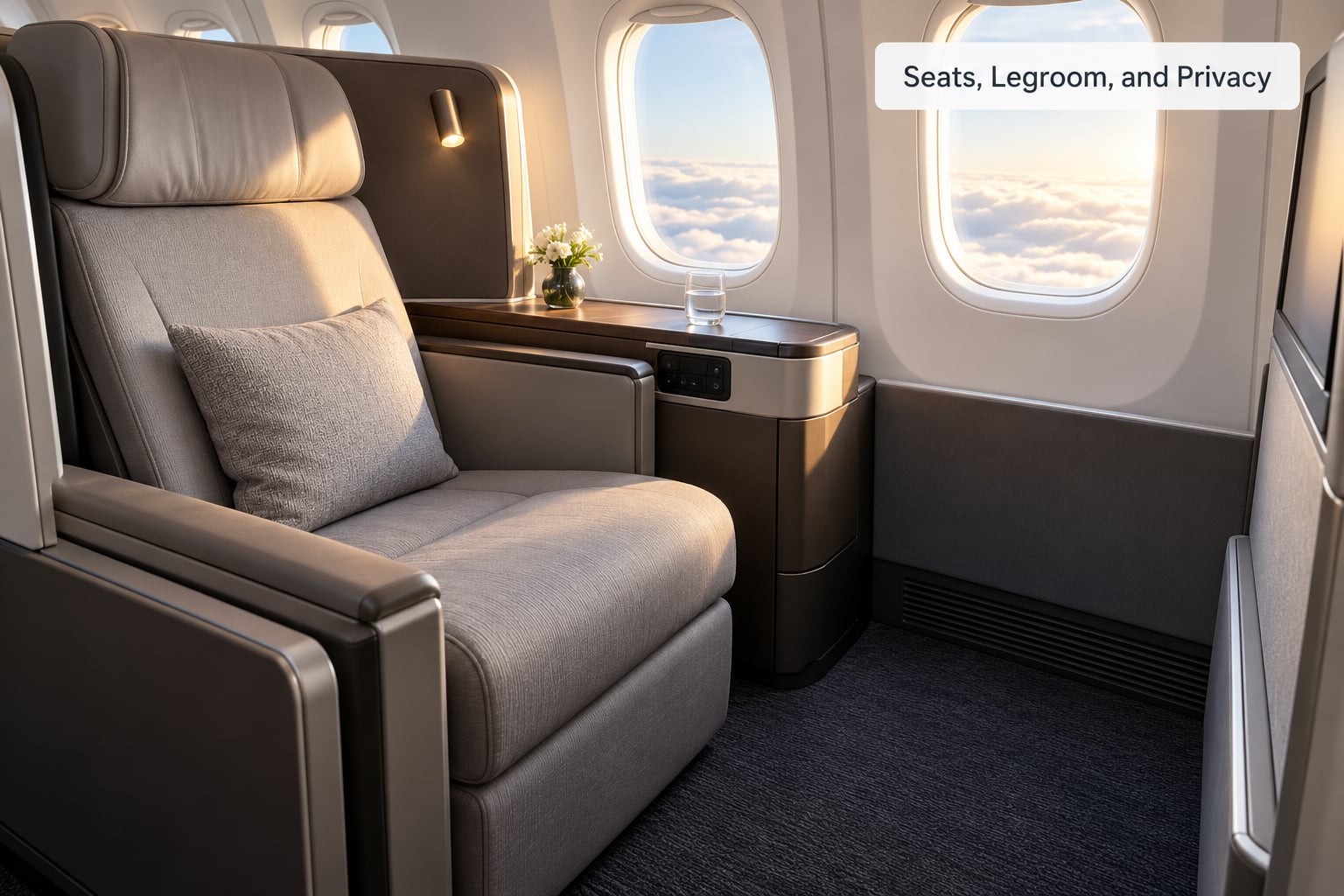
Domestic first class seats are usually arranged two across on each side of the aisle, so there is no middle seat. That is the single best structural feature of the cabin: you get either a window or an aisle seat, always.
The differences that matter between carriers and between aircraft are pitch, width and recline:
- Pitch is the distance from the seat back in front of you to yours. Narrowbody premium seats typically sit somewhere in the 36 to 40 inch range, which sounds generous until you compare it to an international product.
- Width is the seat itself. Premium seats on a narrowbody usually run about 2 inches wider than economy, which you feel in the shoulders rather than in a spec sheet.
- Recline varies more than anything else. Some narrowbody premium seats recline close to flat, some are noticeably blocked by the seat in front, and on some regional aircraft the recline is minimal.
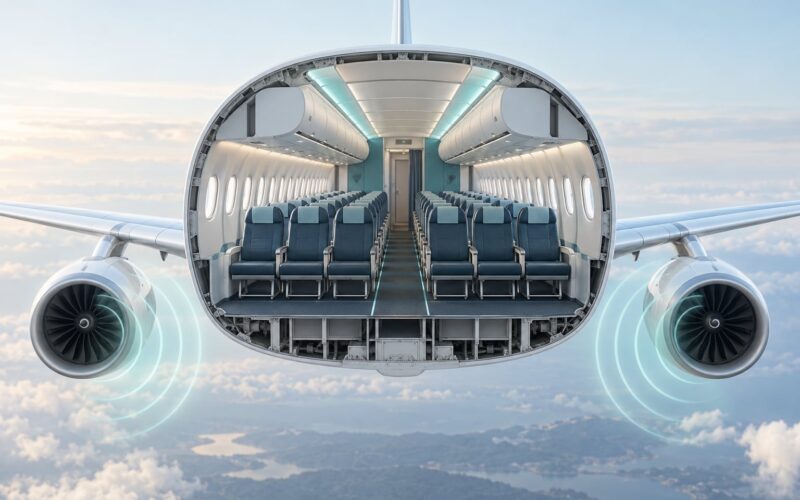
Privacy is limited. There may be a small divider between seats, but there is no shell around you, and your neighbor is one armrest away. On a 2-2 layout the cabin is quiet enough that conversation carries, which some travelers like and some do not.
Row choice deserves real thought. The first row of the premium cabin is a bulkhead row: extra legroom and a bassinet spot, but no in-seat screen because the wall is where the screen would be. The last row can sit near a galley and lavatory, which means noise and queue traffic. Exit rows in a premium cabin are rare but come with the same responsibility of staying upright when the armrest is lifted. If your cabin is only two rows, all of this compresses into a coin flip, so pick the seat you prefer and stop worrying.
One numbering note that confuses people searching for advice: on a narrowbody, the premium cabin usually sits at the front of rows 1 through 4. A seat like 11A is nearly always in the main cabin, so advice about avoiding 11A is not about first class at all.
Meals, Drinks, and In-Flight Service
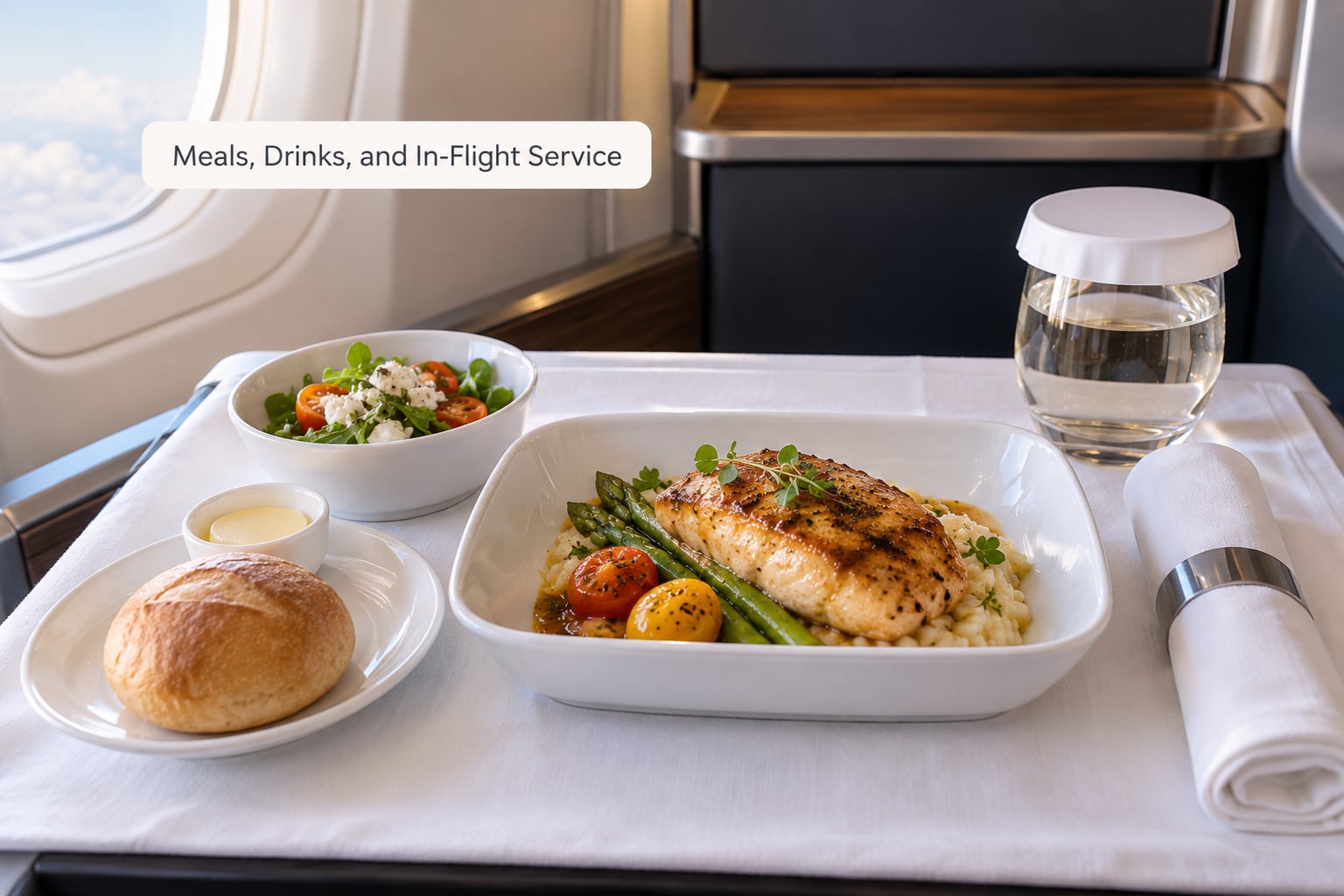
Food and drink are the most variable part of the experience. A redeye transcon on a large aircraft might get a hot entree with a choice of sides. A 90-minute hop usually gets a snack plate, and a regional jet flight may get pretzels and a drink.
Service style varies by carrier and by how many premium passengers are on board. On some domestic first cabins a flight attendant works the cabin once and handles requests individually. On others the snacks appear on the armrest as you settle in. On a recent American Airlines 737-800 domestic first report, TravelGuys described snacks placed on the armrest, cocktails on request including a double Irish cream, and no pre-departure drink at all.
Whether the crew is warm, brisk or flat matters as much as what is on the tray. Fliers on r/unitedairlines described attendants ranging from poor to genuinely excellent on the same domestic first product. That variation is normal in a four-row cabin where one crew member covers two cabins.
Alcohol is normally complimentary in the premium cabin, and on some flights that includes a glass of wine or a pour of spirits. Hot meals are not standard, so if eating matters to you, check whether the flight is long enough to serve one and consider eating before you board.
Amenities That May Differ From Economy
Amenities are where the premium label shows up most clearly on the ground rather than in the air.
Priority check-in and security. Premium cabins usually get a dedicated check-in line or counter, and some airports run a TSA PreCheck-style priority lane for premium tickets. Both are heavily used and worth the early arrival on a busy bank.
Boarding. Premium cabins board first, which means your bag goes in the bin first and you get a settled seat before the rest of the plane files past. On a full flight that is the difference between overhead space and checking a bag at the gate.
Deplaning. Early deplaning is often the most undervalued perk, particularly on a connection where the premium cabin lets you walk off while the main cabin is still packed in.
Lounge access. This is the variable people get wrong most. Access depends on the carrier, the fare family and sometimes the departure airport. Admirals Club, Delta Sky Club and United Club all appear as benefits on some domestic premium itineraries and not others, and regional departures may use a different lounge or none at all. Check the specific ticket.
Power and connectivity. Premium seats on newer narrowbodies usually have a power outlet; older equipment may only offer USB. In-flight Wi-Fi is a paid add-on on most domestic flights regardless of cabin, though some premium tickets include a free messaging pass.
Entertainment. Larger screens than economy, sometimes with seatback streaming rather than a shared overhead screen. Quality varies wildly. On older 737s, fliers on r/delta complained that the premium seatback screen is comically tiny, in some cases smaller than the economy screen on a different aircraft.
Bedding and amenity kits. Some carriers provide a blanket or pillow, some provide a small kit with headphones and skincare items, and some provide nothing beyond a cup of water. Do not plan a sleep strategy around a pillow that may not exist.
Is Domestic First Class Always Better Than Business Class?
Not always, because on most domestic routes business class does not exist as a separate cabin. What the airline sells as domestic business class is usually premium economy, and the first-class cabin is still one tier above it.
Here is how the two compare on the routes where both appear:
| Factor | Domestic first class | Domestic business class or premium economy |
|---|---|---|
| Seat position | Reclines further, sometimes close to flat on larger aircraft | Reclines slightly beyond standard economy |
| Space | Widest cabin on the aircraft, 2-2 layout, no middle seat | Typically 2-2 or 3-3, seat width varies by carrier |
| Meals | Hot entree on longer flights, snacks on shorter ones | Snacks and drinks, sometimes a light meal |
| Service | Dedicated cabin service, drinks and food in the seat | Mostly self-service, food carried from the back |
| Privacy | Divider on some aircraft, no shell | Divider on some aircraft, less space between seats |
| Ground benefits | Priority check-in, priority security, Group 1 boarding, lounge on many fares | Priority boarding, lounge often included |
| Best for | Three hours or longer, red-eyes, arriving rested | Short hops where the price gap is large |
On a five-hour domestic flight, first class is usually worth it. On a 75-minute hop, the extra spend buys a nicer seat for less than the time you will spend in it.
Which Domestic Airlines May Offer First Class?
The reliable way to identify a domestic first class product is to check the airline’s cabin page and then confirm it on the seat map for your specific flight, because the same airline sells different products on different aircraft.
Delta Air Lines (Delta First). Offered on many mainline narrowbody routes, generally with a 2-2 layout at the front of the aircraft. Cabin rows vary in number by aircraft, so check the seat map. Delta’s lounge network is broad, but access is tied to the fare and route rather than automatic.
United Airlines (United First). Available on domestic routes where the aircraft has a premium cabin, commonly two rows of 2-2 at the front. Red-eye domestic first runs frequently get a fuller amenity treatment than daytime departures.
American Airlines (First Class). Sold as First Class on domestic itineraries, usually a small cabin at the front of the 737 and A321 family. It is one of the most frequently reviewed domestic first products, and the reviews are honest about modest screens and uneven service.
Alaska Airlines (Premium First Class). Available on domestic routes from its hubs. Fliers on r/AlaskaAirlines are the least enthusiastic, describing it as economy with a bigger seat. Worth checking for your route before paying a premium.
JetBlue Mint is worth mentioning only as a contrast. It is an international-style premium product and is not sold on most domestic segments, so do not expect to find it on a short US hop.
Regional operators matter here too. Flights operated by a CRJ700 or Embraer E175 on behalf of a mainline airline may have a very small premium cabin, sometimes only two rows, sometimes with limited recline. A first-class ticket on a regional jet is the weakest version of this product.
How to Know What Your Ticket Includes
Five checks before you pay will answer most of your questions:
- Confirm the aircraft. The seat map on the booking page shows whether a premium cabin exists at all. Check again closer to departure, because domestic aircraft swaps are common and your seat class can change with the plane.
- Read the fare family, not just the cabin. Domestic premium fares vary in what they bundle. Look for the benefits line on the fare details page.
- Check lounge rules specifically. Look for whether access is included, which lounge applies at your departure airport, and whether the number of guests traveling with you is covered.
- Read the change and cancellation policy. Premium domestic fares are often more flexible than the base fare on the same flight, and sometimes less.
- Look at award availability separately. If you plan to redeem miles, the number of premium seats on a flight can be far smaller than the number of economy seats, and the cabin can sell out weeks ahead.
Seat selection is the last step. Window for sleep, aisle for getting in and out on a short flight, and avoid the bulkhead row if you want a seatback screen.
Is Domestic First Class Worth It?
My honest answer: on flights of roughly three hours or longer, usually yes. Under 90 minutes, usually no. The break-even point depends on how much the fare gap is and what else it unlocks.
Worth upgrading when:
- The flight is three hours or longer, especially a red-eye you want to sleep through
- You need to arrive working, on a laptop, video call or with a presentation
- Lounge access matters because your airport has long security or gate walks
- You have status, a milestone or points and the upgrade is free or near-free
- You are traveling on an occasion where the experience is part of the gift
Skip it when:
- The flight is short and the fare gap is wide
- The upgrade is bought rather than earned, on a route where premium cabins are often empty
- The aircraft is a regional jet with a two-row cabin
- All you would do is sit slightly wider for 70 minutes
That last point deserves attention. Fliers on r/delta have asked whether anybody wants domestic first class at all, because empty premium cabins mean upgrades are increasingly handed out at the gate for free. If you hold any status at all, check your fare family before paying to buy the same seat with cash or miles.
On first-timer nerves: nobody is watching you. The cabin is a row of adults reading and working, boarding is a queue, and the dress code is whatever you would wear to a working lunch. Wear jeans if you like. Fliers who upgraded from economy for the first time tend to remember the food and the legroom, not the outfit.
Frequently Asked Questions
Is there first class on domestic flights?
Yes, but not on every flight. Most full-service US carriers sell a front-cabin premium product on many mainline routes, typically two to four rows of 2-2 seats at the front of the aircraft. Regional jets often have an even smaller version, and many short-haul routes have no premium cabin at all. Check the seat map for your specific flight before you book, and check it again before departure because aircraft swaps change what is available.
Does domestic first class have lie-flat seats?
Almost never. Domestic first class seats on narrowbody aircraft are wide recliners, sometimes reclining close to flat, and none of the major US carriers sell a true lie-flat seat within the United States. Lie-flat products belong to international first and business class on widebody aircraft. If sleeping flat is the goal, look at a long international itinerary or pick a premium seat row with the least recline blocking.
What is the difference between domestic first class and business class?
On domestic US routes, most airlines do not sell a separate business class cabin. What appears as domestic business class is usually premium economy, one tier below first, with a slightly wider seat, priority boarding and often lounge access but self-service food. First class adds a wider and more reclinable seat, a larger screen, complimentary food served in the cabin and priority check-in. On international flights, business class becomes a real separate cabin with lie-flat seats.
How long should a flight be before I pay for first class?
Most fliers put the break-even point around three hours of block time. Under 90 minutes you are paying for a nicer seat for less than the time you spend in it. Three hours or longer, the legroom, meal and ability to work or sleep start to pay for themselves. A five-hour domestic flight is where the difference is clearest. Short flights can still be worth it if the upgrade is free or included with your fare.
Are lounge and priority boarding benefits included with domestic first class?
Priority check-in, priority security lanes and Group 1 boarding usually come with the cabin, and almost every premium passenger boards first. Lounge access is the variable one. It depends on the carrier, the fare family and the departure airport, and regional departures may use a different lounge or offer none. Read the benefits listed on your specific ticket rather than assuming, since the same cabin on two airlines can include very different things.
Can I use a free upgrade to upgrade to domestic first class?
Sometimes. Elite status, a milestone coupon, a premium card benefit or a complimentary upgrade certificate can all get you into the front cabin, though certificates sometimes exclude the first cabin on domestic routes. Free operational upgrades at the gate are also common on domestic flights where the premium cabin is not full, and fliers have noted those are increasingly routine. Always confirm the certificate rules before booking, since domestic first is frequently excluded.
Conclusion
What is domestic first class like in 2026? A roomier seat, better recline, priority boarding, food and drinks in the cabin, and on longer flights a real chance of arriving rested. What it is not, is an international first class cabin in miniature.
Start with the aircraft. Check the seat map for your exact departure, read the fare family benefits, confirm lounge rules, then decide whether the flight is long enough to justify the fare difference. If it is three hours or more, most fliers say yes. If it is under 90 minutes and you could earn the seat instead of buying it, save your money.