To protect your hearing on a flight without earplugs, you need to handle two separate problems: turning down the noise reaching your ears, and equalising the pressure in your middle ear during climb and descent. A cabin sits around 80-85 dB in cruise and can hit roughly 105 dB during takeoff and landing, against the 85 dBA exposure limit safety guidelines use. Most of the work happens in the hour before you board.
The good news is that most of the useful tactics cost nothing. Seat choice does more than most people expect, and the pressure side is entirely about jaw movement and timing rather than equipment.
Table of Contents
- What You Need
- Step-by-Step
- 1. Lower the risk before you board
- 2. Choose a comfortable hearing-protection option
- 3. Protect your ears without blocking important sounds
- 4. Use simple techniques during the flight
- 5. Check for warning signs after landing
- Common Mistakes
- Frequently Asked Questions
- What is the best way to protect your hearing on a flight without earplugs?
- Are noise-cancelling headphones safe to wear for a whole flight?
- Can I sleep with noise-cancelling earbuds in?
- How can I reduce cabin noise without blocking flight announcements?
- When should ringing or hearing changes after a flight see a doctor?
- Conclusion
What You Need
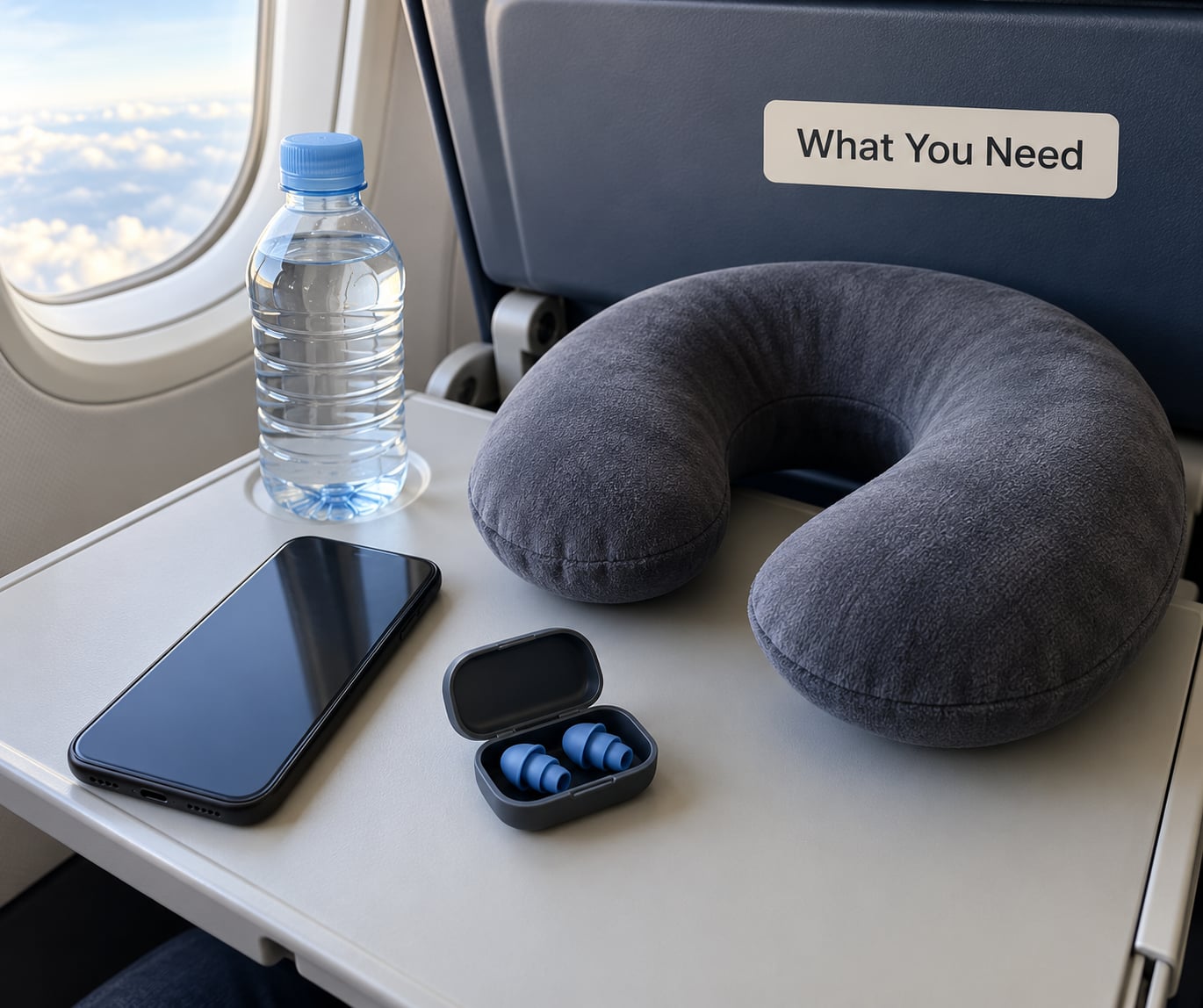
Nothing on this list is expensive, and none of it is mandatory. You can protect your hearing on a flight with a seat choice and a water bottle if that is all you have.
- A seat assignment you can pick. Front of the cabin, away from engines, wings and galleys.
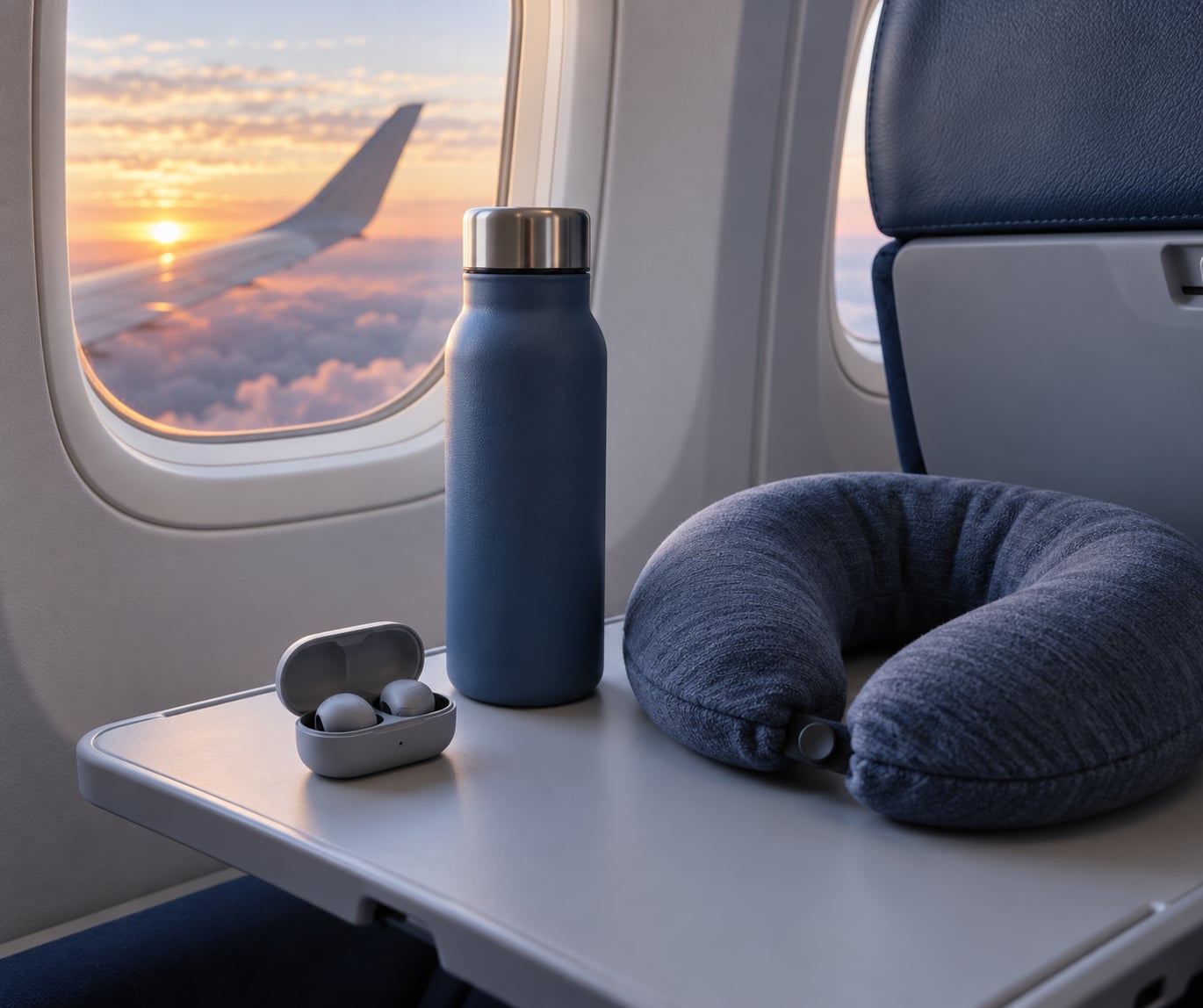
- Noise-cancelling earbuds or over-ear headphones with a transparency or hear-through mode if you already own them.
- Chewing gum, a lolly, or a water bottle for keeping your jaw moving on descent.
- A travel pillow if you plan to sleep, so you are not adjusting your head position all flight.
- Your hearing aids or any assistive device, charged. A dead aid in the middle of a long flight is a safety problem, not just a comfort one.
Skip anything marketed as a dedicated “aviation hearing” gadget. Over-ear defenders designed for firing ranges reduce the cabin noise, but they also block announcements, and they are hot to wear for hours.
Step-by-Step
1. Lower the risk before you board
Pick the quietest sensible seat you can get. The front of the cabin sits farther from the engines and the aft galley, and forward of the wing is measurably calmer than behind it.
If you have to choose between an aisle and a window seat, take the aisle. You hear more conversation and movement beside you than you do outside the glass. Rear-facing bulkhead seats avoid the legroom argument but put you next to the galley, so they are a poor trade for a noise-sensitive flyer.
Review the aircraft type and route when you can. Older jets and some regional aircraft are noticeably louder than newer wide-bodies, and a short hop with several takeoffs and landings is more exposure than one smooth long-haul flight.
Deal with the ground noise too. The loud part of many airport trips is the jet bridge, the tug, or the gate announcement speaker, and headphones worn through boarding cut all of it.
2. Choose a comfortable hearing-protection option
Noise-cancelling earbuds are the easiest option for someone who does not want earplugs. Active noise cancellation handles the low, steady engine rumble well, which is most of what you hear in cruise.
Over-ear headphones do the same job better, since the ear cups add passive isolation. They are harder to wear with glasses and get warm over a long flight, so they suit a passenger who wants maximum reduction rather than minimal fuss.
A quiet-flight strategy is the third option and costs nothing: sit forward, keep media at a low level instead of high, skip the loudest announcements on a personal speaker, and use the seat belt chime and crew as your only alert channels. Many regular flyers get through a long haul with nothing in their ears at all.
Comfort decides this, not specification. You will wear the option you forget you have on, and you will abandon the one that makes your ear canals sore after 90 minutes.
3. Protect your ears without blocking important sounds
Safety sounds matter more than comfort noise. If you cannot hear the crew, the seat belt chime, or an announcement, your protection has gone too far.
Use a transparency or hear-through mode on your earbuds, and keep the volume low enough that announcements cut through. Crew who fly regularly tend to prefer hear-through style plugs for exactly this reason: they still hear the aircraft and the cabin, which matters when something goes wrong.
Plan removal points rather than wearing one thing start to finish. Put protection in for takeoff and the first part of the climb, take it out when the seat belt sign comes back on, and put it back on before the seat belt sign returns for landing. That single habit solves most of the “I missed the announcement” complaints.
4. Use simple techniques during the flight
Your ears pop because cabin pressure changes faster than the pressure in your middle ear can equalise through the Eustachian tubes. Movement of the jaw opens those tubes, so chew, yawn, swallow, or sip water during the climb and again on the way down.
Gentle pressure equalisation helps too. Pinch your nose, close your mouth, and push out slowly as if checking your tyres. Do not force it. Forcing a Valsalva hard can cause sharp ear pain, and stopping when it hurts is the correct response rather than pushing harder.
Set your personal media volume lower than usual rather than higher. A cabin that has had a minute to acclimatise sounds quieter than it is, and people routinely turn things up to compensate, which undoes the point.
Take listening breaks. An hour of media, then ten minutes of quiet, keeps you more comfortable than one continuous stretch, and your ears get a break from a sealed canal.
5. Check for warning signs after landing
Watch how your ears feel over the day, not just on the gate. A little fullness that clears within an hour is normal and common.
Get medical advice from a healthcare professional if ringing in your ears, ear pain, dizziness, or a change in your hearing persists after the flight or shows up over the following days. Persistent blockage that does not equalise on its own is worth reporting rather than waiting out.
Be more cautious if you already have ear or hearing conditions, an active ear infection, recent ear surgery, or a cold with heavy congestion. Ask your doctor before flying rather than after, because pressure changes during descent can make an existing problem much worse.
This is general information, not medical advice. If anything about your ears worries you, a doctor is the right person to ask.
Common Mistakes
Wearing protection too loosely. A plug that has dropped out of a good seal gives you almost nothing. Roll it into a thin crease, pull the ear up and back, and hold it until it expands into place.
Blocking every announcement. If you have no idea whether the seat belt sign is on, your protection is too complete. Use hear-through mode, or take protection off for announcements.
Turning your media volume up mid-flight. A quiet cabin invites compensation. Set the volume before boarding and leave it alone.
Using poor-quality earplugs. Cheap foam plugs that crumble, or reused silicone plugs that have gone stiff, seal badly and can irritate the canal. Replace foam ones every few flights and clean reusable plugs properly.
Pushing hard on a Valsalva. Gentle pressure that will not equalise on its own is fine. Forceful blowing against a closed nose and mouth can hurt, so stop and try swallowing instead.
Ignoring symptoms that stick around. A blocked ear that lasts into the next day, or hearing that feels muffled for days, is not something to wait out. Contact a healthcare professional.
Frequently Asked Questions
What is the best way to protect your hearing on a flight without earplugs?
Start with the seat: sit forward and ahead of the wing, away from engines and the galley, and choose an aisle seat over a window. Then use noise-cancelling earbuds or over-ear headphones with a transparency mode for takeoff and the loudest parts of the flight. Keep media volume low, and use swallowing, chewing, or yawning to equalise pressure on descent. None of these steps need special equipment.
Are noise-cancelling headphones safe to wear for a whole flight?
Yes, most over-ear noise-cancelling headphones are comfortable enough for a full flight and reduce both the low engine rumble and higher cabin noise. The things to watch are comfort and awareness. They get warm over several hours, they can sit badly with glasses, and in noise-cancelling mode some models make it harder to hear announcements and the seat belt chime. Keep a transparency mode available and check in with the cabin crew now and then.
Can I sleep with noise-cancelling earbuds in?
You can, and many people do on long-haul flights. Two cautions. Keep at least one ear free, or use a transparency mode on your earbuds, so you can hear the seat belt chime and crew instructions during the flight. And keep the volume low enough that the earbuds are not pressed against your ear canal all night. Take them out after landing if your ears feel sore or blocked.
How can I reduce cabin noise without blocking flight announcements?
Use active noise cancellation rather than sealing everything off, because ANC cuts steady engine rumble while your ears still pick up speech. Most earbuds and headphones have a transparency or hear-through mode for exactly this. A practical routine is to wear protection during takeoff and climb, remove it once the seat belt sign goes off, and put it back on before landing. Keeping a window seat also reduces how much cabin conversation you hear.
When should ringing or hearing changes after a flight see a doctor?
Arrange to see a healthcare professional if ringing, ear pain, dizziness, blocked ears, or reduced hearing continues for more than a day or two after landing, or if symptoms appear over the following days rather than easing. Ask before you fly if you have an ear infection, recent ear surgery, or heavy congestion from a cold. A doctor can advise on your situation; this is general information only.
Conclusion
If you want to protect your hearing on a flight without earplugs, the first thing to do is book a seat forward of the wing, ideally in an aisle. From there, add noise-cancelling protection for takeoff and landing, keep your jaw moving during the climb and descent, and take your protection off whenever you need to hear the crew.