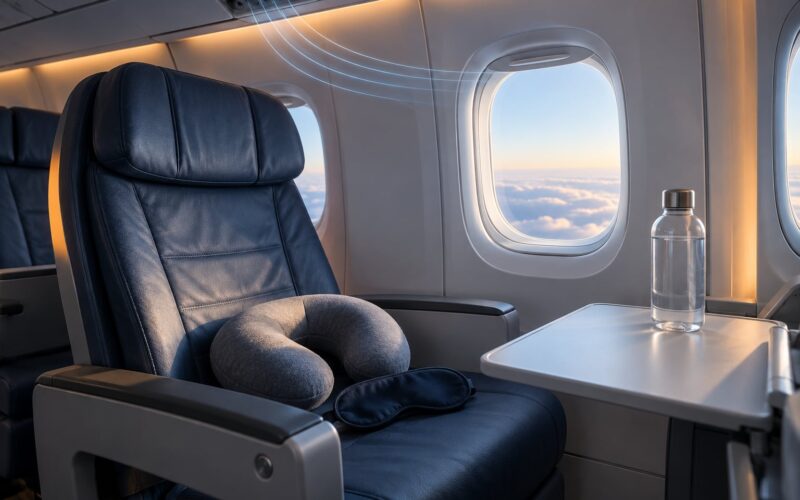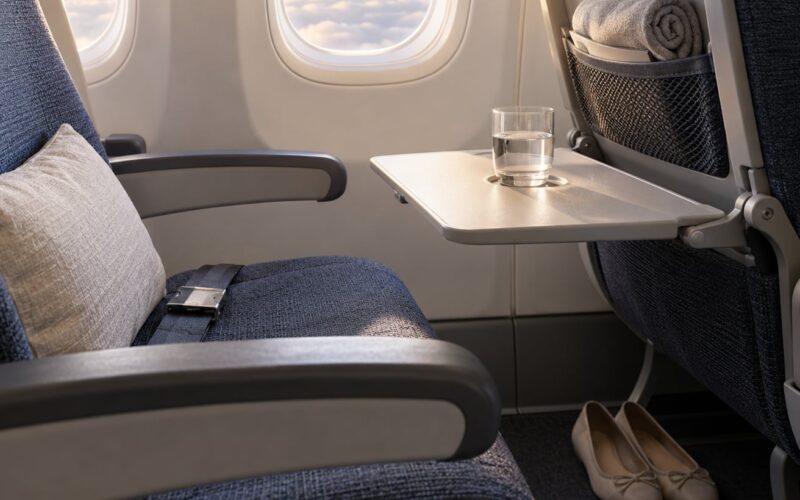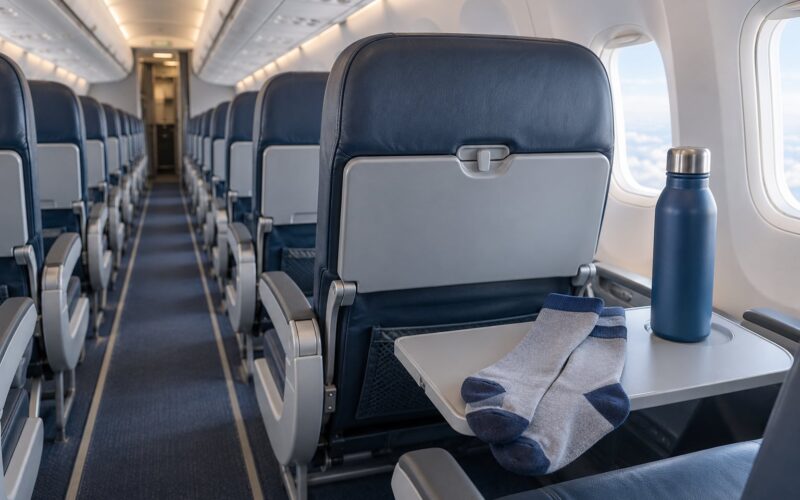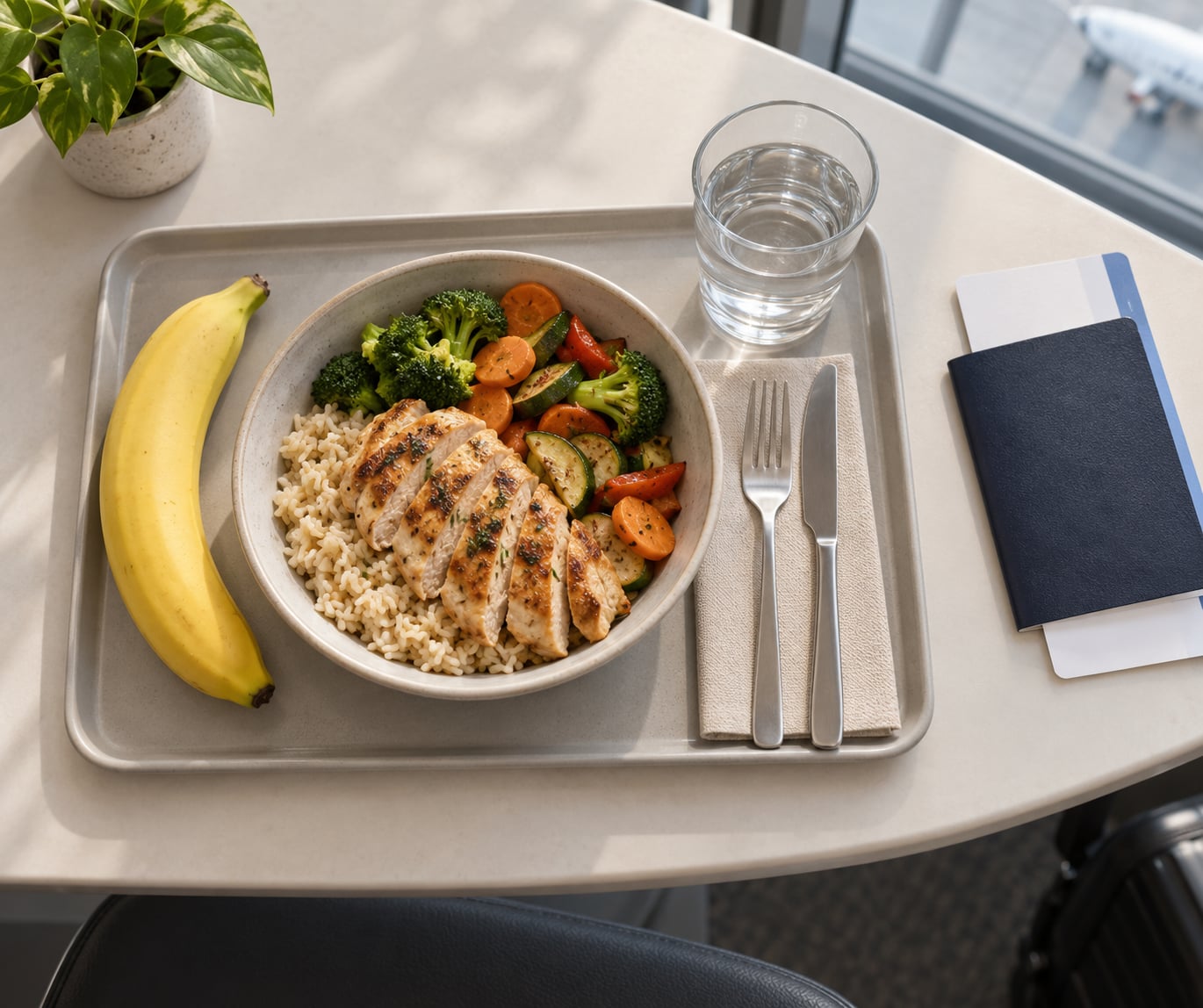
If you’re wondering what to eat before a long flight, keep it simple: a familiar, balanced meal with lean protein, easy-to-digest carbohydrates and a vegetable or piece of fruit, eaten two to three hours before departure. Think grilled chicken with rice and cooked vegetables, or a tuna sandwich with a banana. Skip the heavy, greasy or gassy stuff.
Most of the discomfort people blame on flying — the bloating, the nausea, the 3 p.m. crash — starts on the ground. Once you’re strapped into a seat with a tiny bathroom and no food options, it’s much harder to fix. Getting the meal right beforehand is the single cheapest upgrade to a long-haul trip.
Table of Contents
- What to Eat Before a Long Flight
- Why Your Preflight Meal Matters
- How Far Before the Flight Should You Eat?
- Best Foods for a Long Flight
- What to eat before a short-haul flight under 3 hours
- What to eat before a 4 to 8 hour flight
- What to eat before a long flight over 8 hours
- What to Eat Before a Long Flight If You Get Motion Sickness
- What to Eat Before a Long Flight for More Energy
- What to Eat Before a Long Flight If You Have a Sensitive Stomach
- Foods to Avoid Before a Long Flight
- What to Pack or Buy at the Airport
- Frequently Asked Questions
- Is it better to fly on an empty stomach?
- What not to eat before a long flight?
- Why do I get so bloated on a plane?
- How much water should I drink before a flight?
- What should I eat before an overnight flight to sleep?
- What snacks can I bring through airport security?
- A Simple Preflight Meal Plan
What to Eat Before a Long Flight
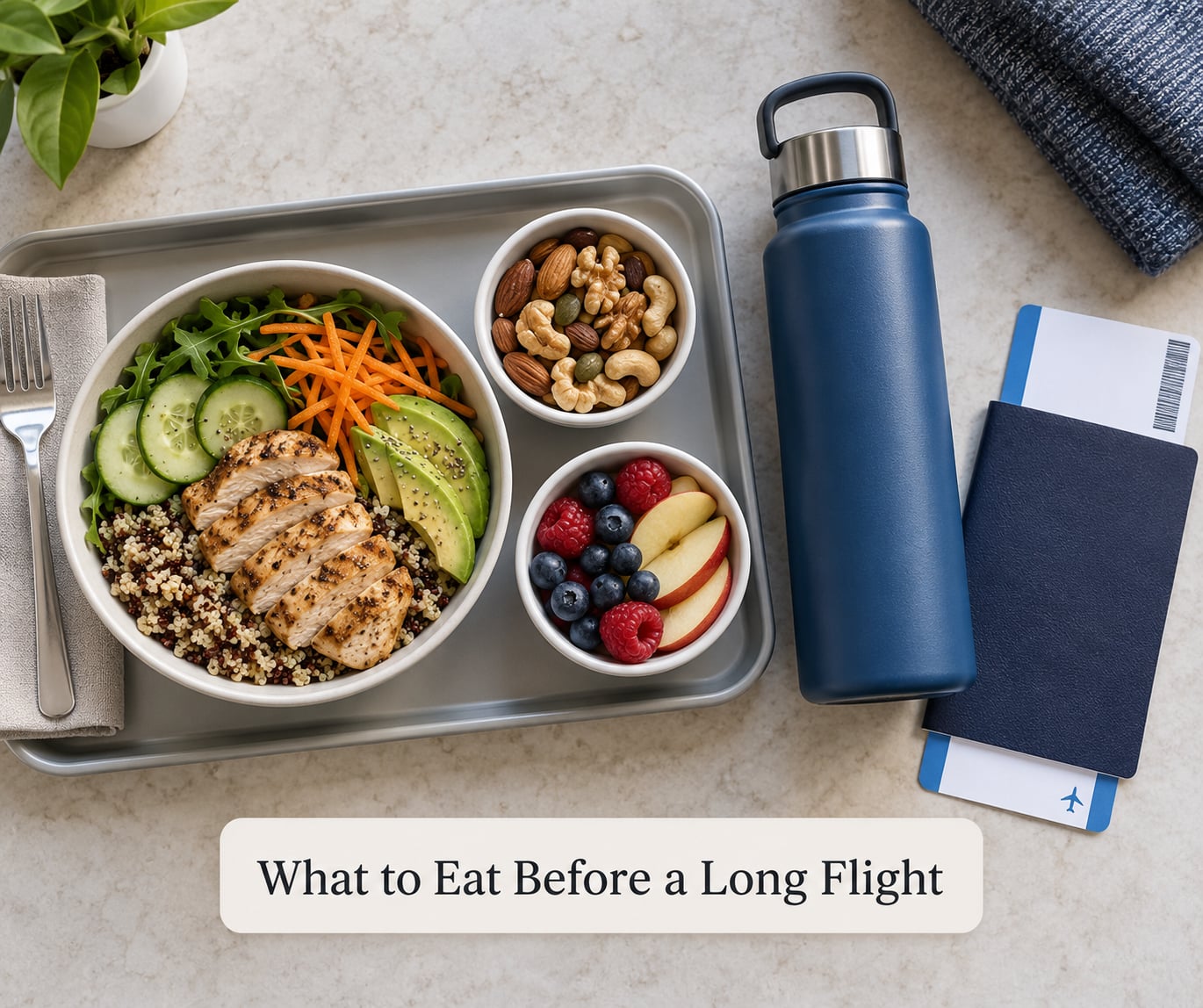
The short answer is a light, balanced meal of lean protein and low-fiber complex carbohydrates, like grilled chicken with quinoa or a banana with a handful of nuts, a few hours before your long flight. Here’s what that looks like in practice, grouped the same way nutrition guidance groups it.
- Potassium-rich foods. Bananas, oranges, melon, potatoes and avocado. Potassium and magnesium help offset the fluid shifts that come with low cabin humidity, and they keep blood pressure steadier on a long haul.
- Lean protein with healthy fats. Grilled chicken, turkey, tuna, eggs, plain yogurt, nuts and nut butter. Protein is what stops you getting ravenous at hour nine.
- Low-fiber complex carbohydrates. White rice, pasta, quinoa, couscous, white bread, plain crackers, potatoes without skins. These digest quickly and won’t leave you feeling heavy.
- Hydrating produce. Cucumber, watermelon, oranges, berries. Cabin air is dry — often around 10 to 20 percent relative humidity, far below the 30 to 60 percent most rooms sit at — so water-rich foods help before you’ve even had a glass of water.
None of this needs to be exciting. Familiar food is genuinely the safer bet, because you already know how your body handles it.
Why Your Preflight Meal Matters
Four things happen on a flight that work against whatever you ate: the air gets dry, the cabin pressure drops, you sit still for hours, and if you’re crossing time zones your body clock gets confused.
Cruise cabins are typically pressurized to the equivalent of about 6,000 to 8,000 feet, and gas trapped in your gut expands as the pressure falls — commonly cited at up to about 25 percent. Anything that ferments or produces gas gets bigger and more uncomfortable up there. Low humidity pulls fluid out of you faster than you’d expect, and the mild reduction in available oxygen slows digestion, which is why a big meal can still feel like it is sitting there hours later.
Immobility adds a third problem: without the normal walking and squeezing motion, digestion slows further, and travel constipation is a very common complaint on long routes. Getting some water and some fiber early helps, but the week before matters too.
Individual tolerances vary more than any expert would like to admit. Some people breeze through a plate of pasta and get a stomachache from a banana. The categories below are a sensible starting point; your own history is the better guide.
How Far Before the Flight Should You Eat?
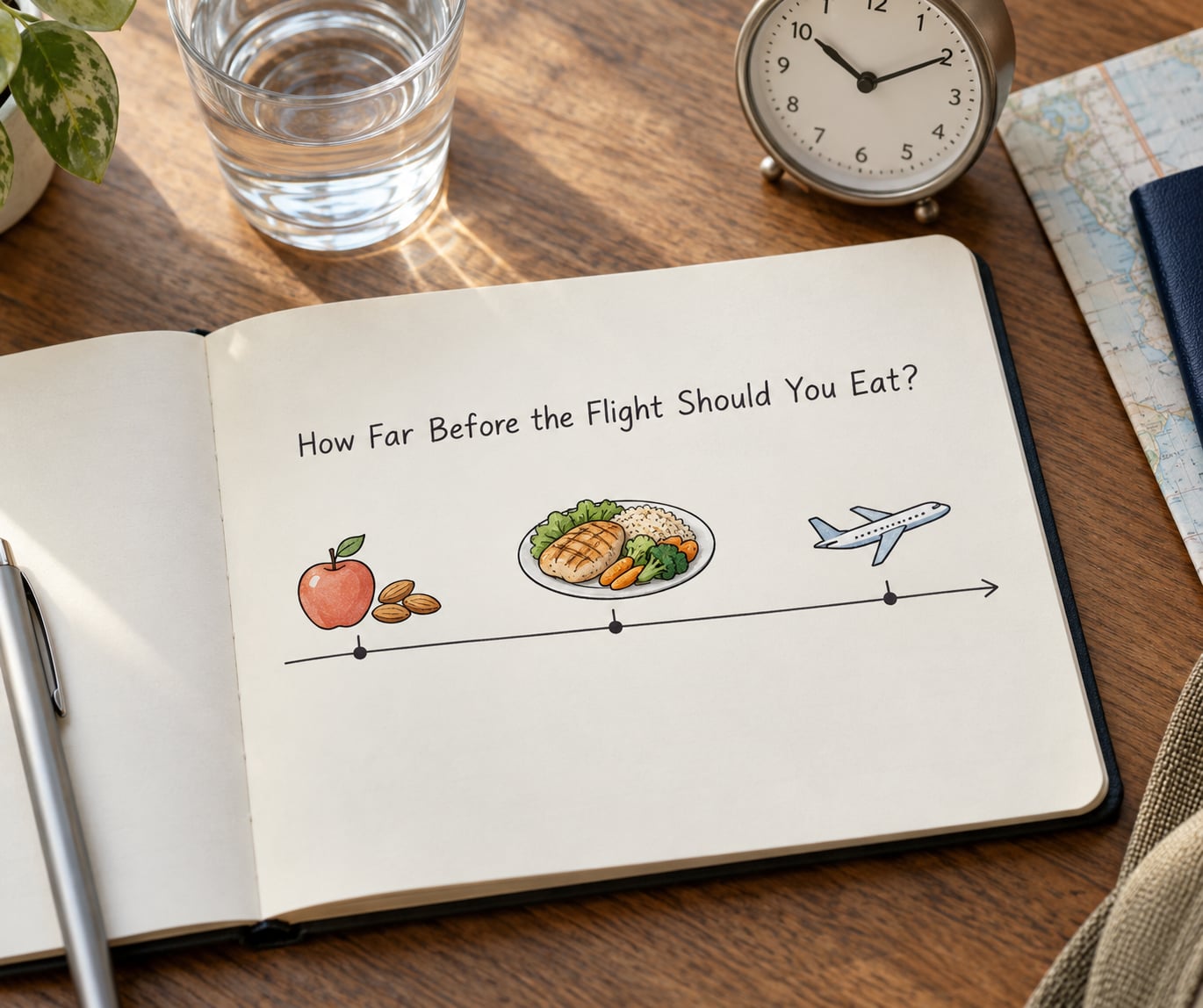
Eat your main meal two to three hours before departure, then stop. That’s the answer for flights over six hours. Eating right at the gate gives you a full stomach during takeoff, when pressure changes are already making your ears and sinuses uncomfortable, and heavy food in a small seat is miserable.
Flying on an empty stomach is the wrong call for long flights. For a two-hour hop it genuinely doesn’t matter much. For anything longer, low blood sugar plus cabin pressure amplifies nausea and hunger at exactly the wrong time — around hour four, when you can’t fix it.
Here’s a timeline that works for most itineraries:
| When | What to do |
|---|---|
| 24 hours before | Keep meals light and lower-fiber than usual. Start drinking water now rather than at the airport. Skip alcohol. |
| 6 hours before | Normal balanced meal. Add a piece of fruit or a glass of water an hour or two before you leave for the airport. |
| 2 to 3 hours before departure | Light, protein-forward meal: rice and chicken, a sandwich, yogurt with granola. This is your anchor meal. |
| At the gate | Water, a plain cracker or a few unsalted nuts if you need a top-up. Nothing heavy, nothing smelly. |
| In the air | Small amounts every few hours rather than one big meal. Keep drinking water. |
If your schedule is unpredictable, eat by when you’ll be hungry rather than by the clock, and pull the anchor meal forward so at least two hours pass before boarding.
Best Foods for a Long Flight
The categories above apply to everyone, but the exact shape of the meal should match the length of your flight.
What to eat before a short-haul flight under 3 hours
Almost anything you tolerate well. A sandwich and a piece of fruit at the airport is fine. The main thing is not to eat so much that you sit through three hours feeling stuffed and immobile.
What to eat before a 4 to 8 hour flight
This is where the rules start to matter. Go for a proper but modest meal — protein, rice or bread, a cooked vegetable — two to three hours out. Bring one or two packable snacks as insurance, because a mediocre in-flight meal served at an odd hour rarely fills the gap well.
What to eat before a long flight over 8 hours
Treat it like a long day with restricted access to food. Your anchor meal carries you roughly four to five hours, so bring backup: unsalted nuts, dried fruit, crackers, a granola bar, cheese, or plain crackers with nut butter if it’s within airport security limits. Eat small amounts every couple of hours rather than saving everything for the meal service.
Ask for a vegetarian, vegan or gluten-free special meal if you need one. Regular travelers frequently report that special meals arrive as the blandest option on the plane, so have your own snack regardless.
What to Eat Before a Long Flight If You Get Motion Sickness
Keep it bland, familiar and small, and eat it early rather than close to departure. Plain crackers, dry toast, a banana, plain rice or pasta, and cool water are the usual recommendations. Strong smells and rich food are common triggers, and a full stomach often makes nausea worse, not better.
Chewing gum and staying hydrated help some people, others find gum makes things worse. Ginger products and peppermint are popular, but the evidence is modest and they don’t work for everyone — which is fine, the list is long enough.
Movement matters at least as much as food. Looking out the window at the horizon rather than at a screen helps many people, as does getting up for a walk when the seatbelt sign allows.
Don’t treat this as medical advice. If you get motion sick regularly or it disrupts your travel, talk to a pharmacist or doctor before your next trip — they can talk through prevention options that suit you.
What to Eat Before a Long Flight for More Energy
Energy on a long flight comes from steadiness, not volume. Protein plus carbohydrates that digest slowly gives you a flatter, longer curve than a pastry and a coffee.
A few things make that steadier: water first, because mild dehydration reads as fatigue; a protein source at the anchor meal; unsalted nuts or avocado for unsaturated fat; and a carbohydrate you already know sits well with you. A banana carries roughly 2 to 3 grams of fiber, which is plenty — you do not need a high-fiber meal to “stay regular” in the air.
What breaks the curve is a big hit of sugar on an empty stomach. You get a short lift, then a drop, and you end up hungry and cranky somewhere over the Atlantic.
What to Eat Before a Long Flight If You Have a Sensitive Stomach
Go simple and go familiar. Rice, noodles, boiled potatoes, bananas, peeled apples, plain yogurt, oatmeal, cooked carrots or zucchini, and clear soups are all easy on most stomachs. Cooked vegetables beat raw here, and peeled fruit beats whole.
Two rules matter more than any specific food. First, don’t try anything new before you travel — this is not the time to find out whether that nice Thai place agrees with you. Second, eat smaller than you think you need, more often, rather than one large meal.
People with IBS, recurring reflux or a diagnosed food intolerance have more specific triggers, and generic lists will only take you so far. A registered dietitian or your doctor can build you a plan that accounts for the foods you actually react to.
Foods to Avoid Before a Long Flight
Each of these is a common trigger, and each has a physical reason behind it.
- Beans, lentils and large portions of cruciferous vegetables. Broccoli, cauliflower, cabbage and Brussels sprouts ferment in the gut, producing gas that expands at cabin pressure. Swap in cooked carrots, potatoes or zucchini.
- Very greasy or fried food. Heavy fat slows gastric emptying, so a burger and fries eaten at the gate can still feel like a decision hours later. Swap in grilled protein.
- Carbonated drinks and chewing gum. Extra air in the gut, plus the same problem at altitude. Swap in still water or plain tea.
- Alcohol. It’s a diuretic, so it works against you in dry cabin air, and it fragments sleep in a way that leaves you jet-lagged on arrival. Swap in water or sparkling water in a glass, no straw.
- Very salty, ultra-processed snacks. Sodium encourages fluid retention, which is the last thing you want in a seat. Swap in unsalted nuts or plain crackers.
- Strongly scented or messy food. Tuna salad, fried chicken and anything with a sharp smell fill the cabin and can make nearby passengers genuinely ill. It’s an etiquette issue as much as a comfort one. Swap in wrapped, low-odor snacks.
- Spicy food. Hard on digestion and a common reflux trigger. Skip it if reflux is something you deal with.
- Sugar-free gum and candies with artificial sweeteners. Sorbitol and xylitol commonly cause gas and bloating. Choose the regular version, or skip it.
If a specific food reliably makes you feel unwell, that’s your list regardless of what’s written here.
What to Pack or Buy at the Airport
Pack solid snacks that don’t need refrigeration and that clear airport security easily: unsalted nuts, trail mix, dried fruit, crackers, granola bars, protein bars, jerky, cheese portions, and dark chocolate. Those all pass through the checkpoint as solids.
Liquids are the rule people get wrong. In the US, carry-on liquids, including yogurt, soups, jams and nut butter in a tub, must be 100 millilitres (about 3.4 ounces) or less per container and fit in a single quart-sized bag. Elsewhere the numbers differ, so check your own airport’s guidance. Buying snacks after security removes the problem entirely, which is why experienced travelers often eat at an airport restaurant before boarding.
Airline rules come next. Long-haul carriers usually include a meal, short-haul and low-cost carriers often do not, and on some routes meal service is cut back to a snack. Knowing which you’re on decides how much backup you need. Airlines also publish their own restrictions on what you can bring onboard, so read those before you pack.
Finally, follow current food-safety guidance: perishable food should not sit unrefrigerated for more than two hours, or one hour in hot conditions. That applies to anything you carry, including airport purchases.
Frequently Asked Questions
Is it better to fly on an empty stomach?
For flights under about three hours, it makes little difference either way. For anything over six hours, an empty stomach is the worse option: low blood sugar combined with cabin pressure tends to amplify nausea and hunger around the four-hour mark, when you cannot fix it. Most travelers do best with a light, protein-forward meal two to three hours before departure and then nothing heavy until you are in the air.
What not to eat before a long flight?
Skip beans and lentils, large portions of broccoli, cauliflower, cabbage and Brussels sprouts, greasy or fried food, carbonated drinks, alcohol, very salty processed snacks, strongly scented foods, spicy dishes, and sugar-free gum or candy containing sorbitol or xylitol. These produce gas, slow digestion, pull water out of you, or bother the people sitting next to you.
Why do I get so bloated on a plane?
Cabin pressure at cruising altitude expands gas trapped in your gut, commonly cited at up to about 25 percent, so anything already producing gas gets worse. Low humidity, reduced oxygen and sitting still all slow digestion at the same time. You cannot fully prevent it, but you can remove the foods and drinks that make it noticeably worse.
How much water should I drink before a flight?
A common guideline is about 8 ounces of water per hour of flight, plus a reasonable amount in the two hours before you leave for the airport. Sip steadily rather than gulping, because chugging water means more trips to the small lavatory and a longer disrupted sleep on an overnight flight. Electrolyte drinks are optional and mainly useful on very long routes.
What should I eat before an overnight flight to sleep?
Eat earlier in the evening than usual and keep dinner protein-forward and light, which tends to be less disruptive than a heavy or high-sugar meal. Skip the dessert, keep the carb portion moderate, and finish alcohol well before you board. Have your anchor meal two to three hours ahead, then a small snack in the terminal so you are not hungry in the middle of the night.
What snacks can I bring through airport security?
Solid foods are the easy answer: nuts, trail mix, dried fruit, crackers, granola bars, jerky, cheese portions and chocolate. In the US, anything liquid, including yogurt, soup and tub-style nut butter, must be in a container of 100 millilitres or less and fit in one quart-sized bag. Rules vary by country, so check your departure airport before you pack.
A Simple Preflight Meal Plan
Start with one action: pick one familiar protein, one easy carbohydrate, one simple vegetable or fruit, and a bottle of water. That’s the whole meal. Eat it two to three hours before departure, adjust the portion to your own tolerance, and pack one solid snack you know you can eat later.
Everything else — the timing, the hydration, what to skip — is a refinement on that. If you tell me your departure time and flight length, I can suggest a specific meal and a small packing list for the route.